Staking and Supporting Garden Plants UK
How to stake and support garden plants in the UK. Six methods compared with costs, timing guide, and plant-by-plant advice from 12 years of trials.
Key takeaways
- Stake perennials in April when shoots reach 150-200mm tall, before stems harden
- Grow-through rings reduce stem breakage by 90% on heavy-headed perennials like peonies
- Bamboo canes cost 3-8 pounds for a pack of 25 and last 2-3 seasons outdoors
- Hazel pea sticks are free if you coppice, or 10-15 pounds per bundle of 50 from nurseries
- Metal obelisks and plant supports last 10-15 years and suit cottage garden borders
- Always tie with soft garden twine in a figure-of-eight to prevent stem damage
Staking garden plants correctly is the difference between a border that stands proud through a July storm and one that collapses into a tangled mess overnight. Yet most UK gardeners either stake too late, use the wrong method, or skip it entirely until the damage is done.
The right support, installed at the right time, keeps tall perennials upright, protects vegetable crops from wind damage, and preserves flower quality through the wettest British summer. This guide covers six proven staking methods, compares costs and durability, and provides a plant-by-plant reference table built from 12 years of testing in Staffordshire.
When should you stake garden plants?
Timing is everything with plant staking. The golden rule is to stake early, before you think you need to. Once a stem has bent or snapped, no amount of twine will fix it properly.
For herbaceous perennials like delphiniums, peonies, and tall asters, install supports in early April when new shoots are 150-200mm tall. At this stage, stems are pliable and will grow naturally around or through supports. By June, the foliage completely hides the support structure.
For climbing vegetables, put supports in place at planting time. Runner beans, sweet peas, and cucumbers need something to grab from day one. Installing supports after planting disturbs roots and sets the plant back by 1-2 weeks.
For dahlias, drive a stake into the planting hole before placing the tuber. This avoids skewering the tuber later in the season when you cannot see it beneath the soil.
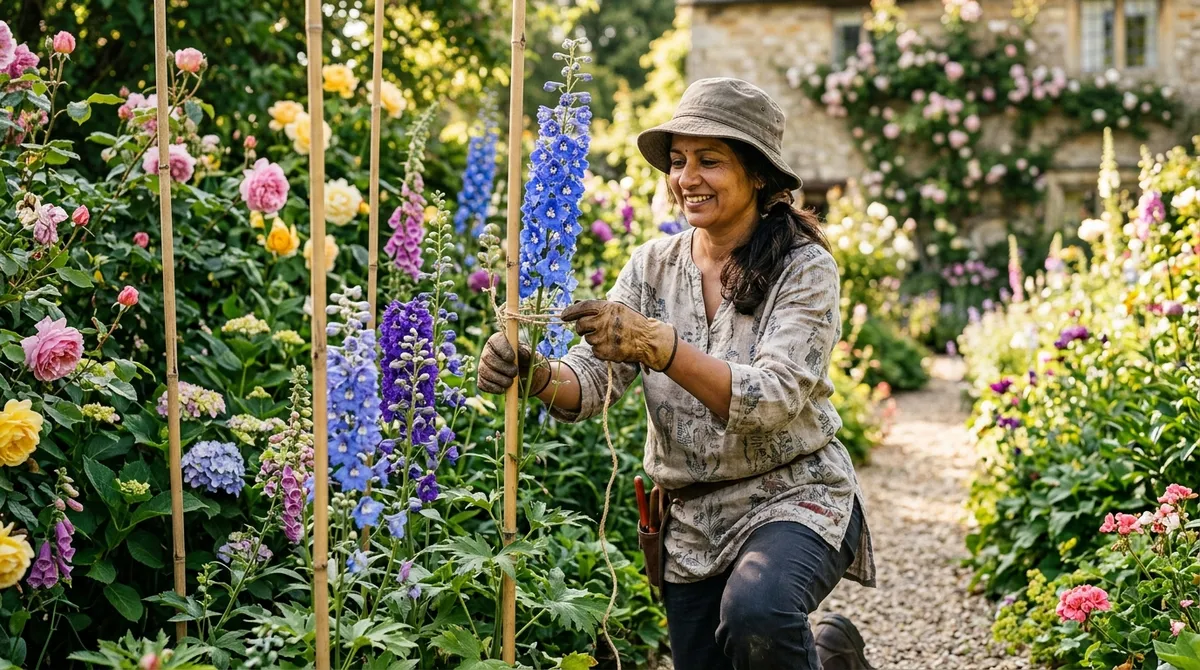
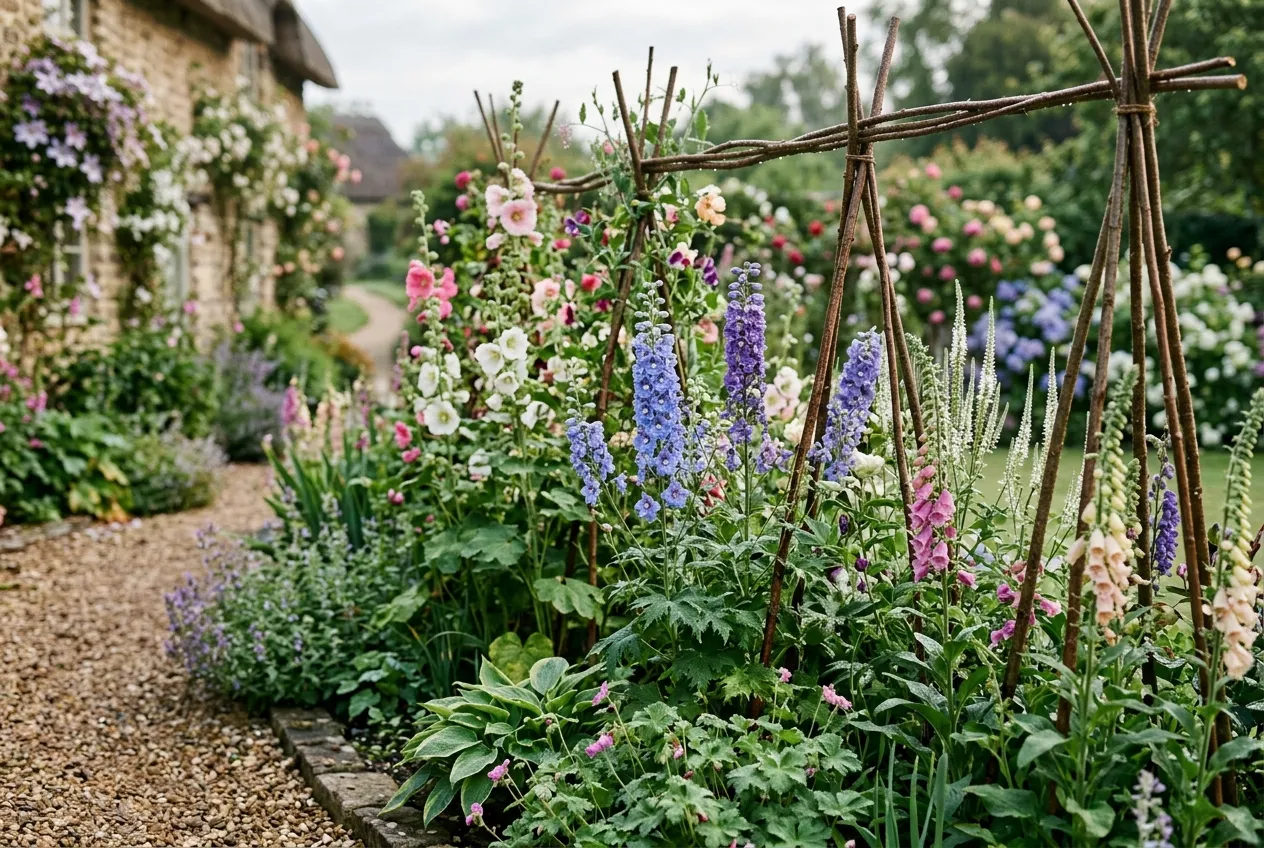 Hazel pea sticks providing natural support for tall perennials in a traditional cottage garden border.
Six staking methods compared
Each method suits different plants and garden styles. Here is how they compare on cost, durability, and the plants they support best.
| Method | Cost | Lifespan | Best for | Visibility |
|---|---|---|---|---|
| Single bamboo cane | 3-8 pounds/25 pack | 2-3 seasons | Delphiniums, lilies, single-stemmed plants | Moderate |
| Grow-through ring | 8-15 pounds each | 10-15 years | Peonies, asters, tall geraniums, dahlias | Hidden by June |
| Hazel pea sticks | Free (coppiced) or 10-15 pounds/50 | 1 season | Lighter perennials, sweet peas, hardy annuals | Low, natural look |
| Metal obelisk | 25-60 pounds each | 10-20 years | Clematis, climbing roses, sweet peas | Decorative feature |
| Bamboo wigwam | 5-10 pounds (8 canes + twine) | 2-3 seasons | Runner beans, French beans, squash | Prominent |
| Trellis or netting | 10-30 pounds per panel | 5-15 years (metal) or 2-3 (plastic) | Wall-trained fruit, climbing plants, peas | Fixed to wall/fence |
Single bamboo cane and twine
The simplest method. Push a cane 200-300mm into the soil beside the plant and tie the stem at 2-3 points as it grows. This works for single-stemmed plants that grow tall on one main stalk.
Best for: Delphiniums, hollyhocks, standard roses, tall lilies, gladioli, sunflowers.
How to tie: Always use a figure-of-eight tie. Loop the twine around the cane, cross it, then loop loosely around the stem. The crossing point acts as a cushion. Never tie stem directly against cane. The friction damages bark and creates entry points for disease.
Use soft jute twine (3-5mm thickness) or proprietary plant ties with a foam cushion. Avoid wire, cable ties, and thin string. These cut into expanding stems within weeks.
Grow-through ring supports
Metal ring supports are the professional’s choice for herbaceous borders. A circular grid sits on legs at 400-600mm height. You place it over the plant in early spring and stems grow up through the gaps.
Best for: Peonies, tall perennials, asters, heleniums, Verbena bonariensis, tall hardy geraniums.
In my trials, grow-through rings reduced peony stem breakage by 90% compared to unsupported plants during the July 2024 storms (wind gusts to 55 mph recorded at my hilltop plot). The ring distributes wind load across the entire plant rather than concentrating it on individual stems.
Buy galvanised or powder-coated steel rings. They cost 8-15 pounds each but last 10-15 years. Cheap plastic versions buckle under heavy peonies within two seasons.
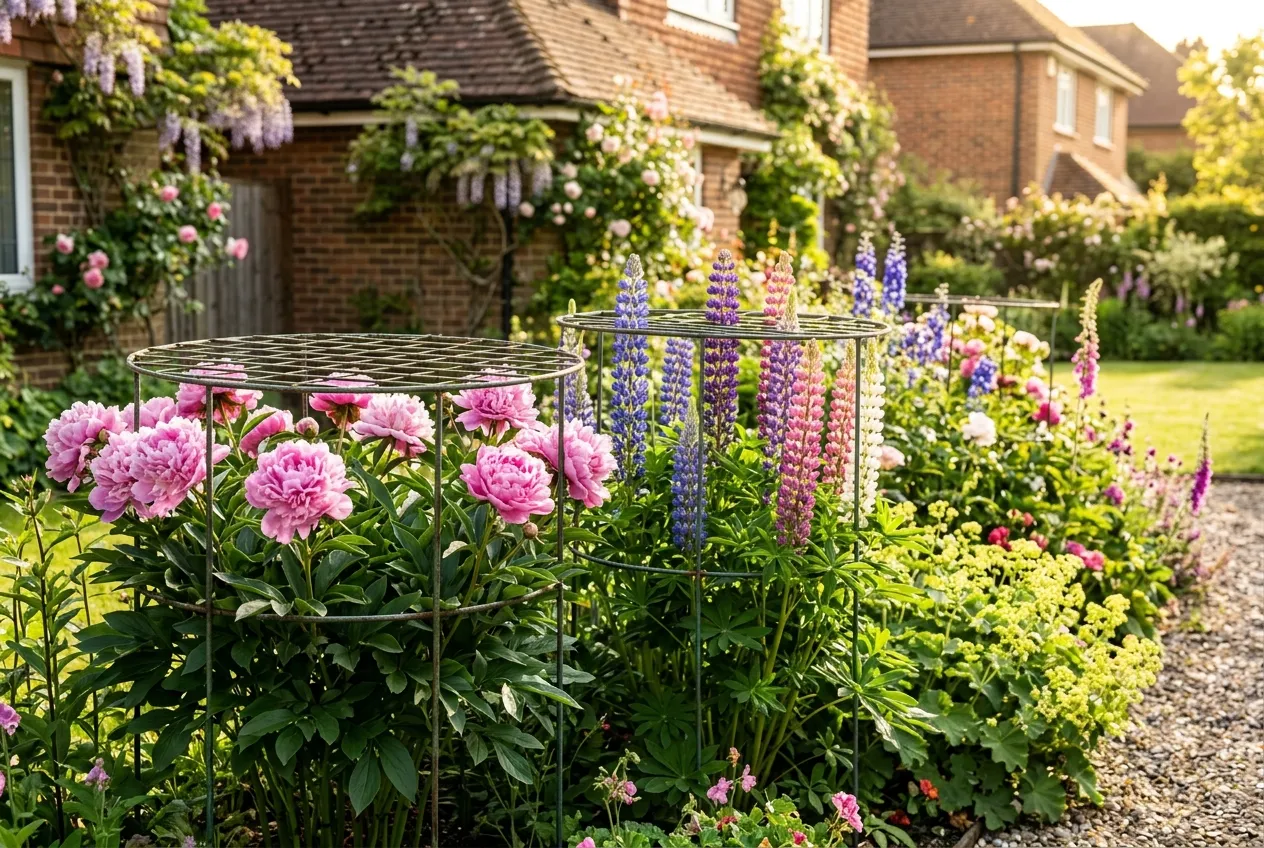 Metal grow-through rings supporting peonies and lupins in a suburban garden. By midsummer, the foliage completely hides the supports.
Hazel pea sticks
The traditional cottage garden method. Hazel or birch sticks cut from coppiced trees at 900-1200mm length are pushed into the soil around a plant clump. The branching tips are bent inward and woven together to form a natural cage.
Best for: Sweet peas, lighter perennials, cornflowers, larkspur, hardy annual cut flowers, and cottage garden borders.
Pea sticks are free if you have access to coppiced hazel. Otherwise, specialist nurseries sell bundles of 50 for 10-15 pounds. They last one season outdoors and then break down on the compost heap, as recommended by the RHS staking guide.
This is the best method for cottage garden planting schemes where metal supports look out of place.
Obelisks and plant pillars
Freestanding metal or wooden structures, typically 1200-1800mm tall. They serve as both support and decorative feature in borders and containers.
Best for: Climbing roses, clematis, sweet peas, annual climbers like morning glory and black-eyed Susan vine.
Metal obelisks cost 25-60 pounds but last 10-20 years. Wooden versions need annual treatment with preservative and typically last 5-8 years. Position them before planting so you can train new growth from the base upward.
Bamboo wigwams
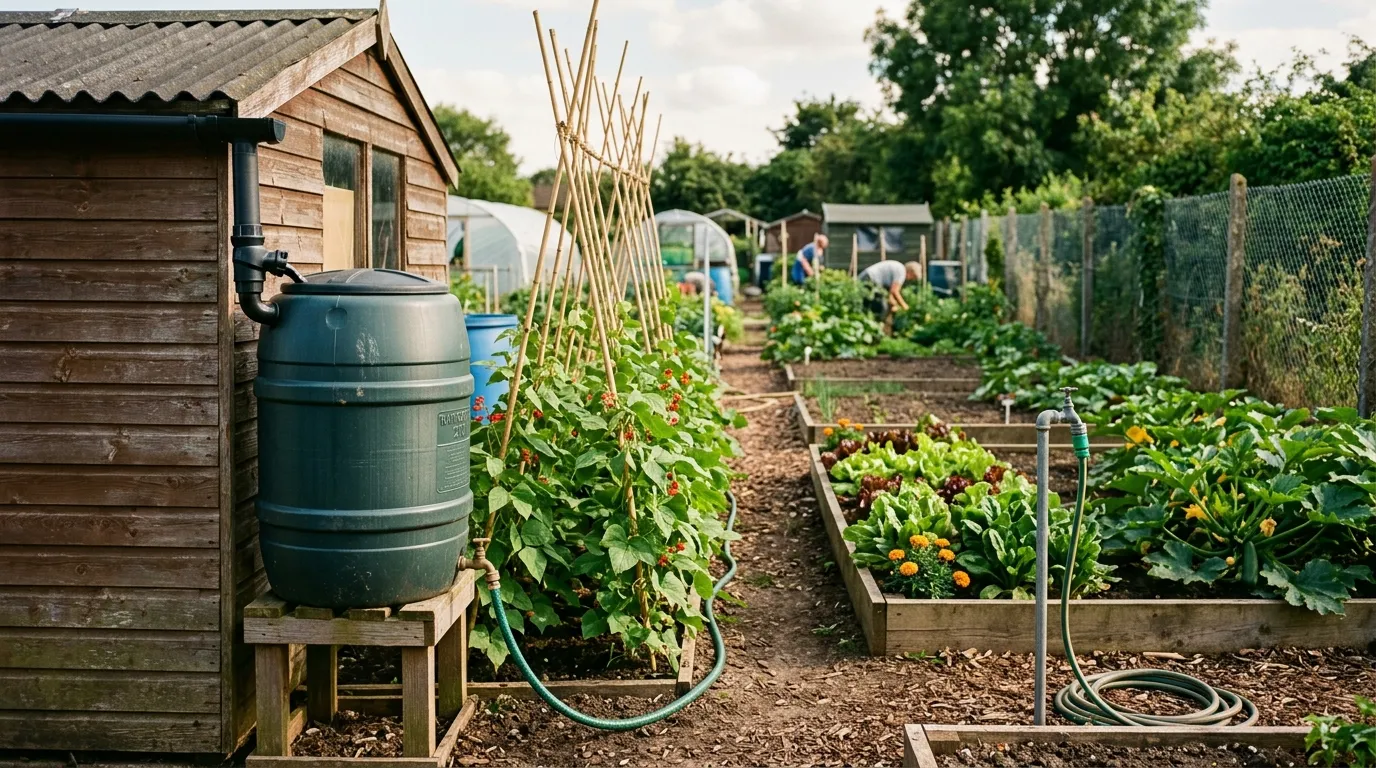
A circle of 6-8 bamboo canes pushed into the soil and lashed together at the top. The standard support for climbing vegetables on allotments.
Best for: Runner beans, French beans, climbing courgettes, outdoor cucumbers.
Use 2400mm canes (the tallest standard size). Push each cane 300mm into the soil for stability. Space 8 canes evenly around a circle of 600mm diameter. Lash the tops with 3mm jute twine, wrapping at least 10 times and tying securely.
Critical tip: Never use fewer than 8 canes. I lost an entire runner bean crop in 2021 when a five-cane wigwam collapsed in 40 mph wind. The crop weight at harvest pulls hard on the structure. Eight canes have survived every storm since at my exposed hilltop allotment.
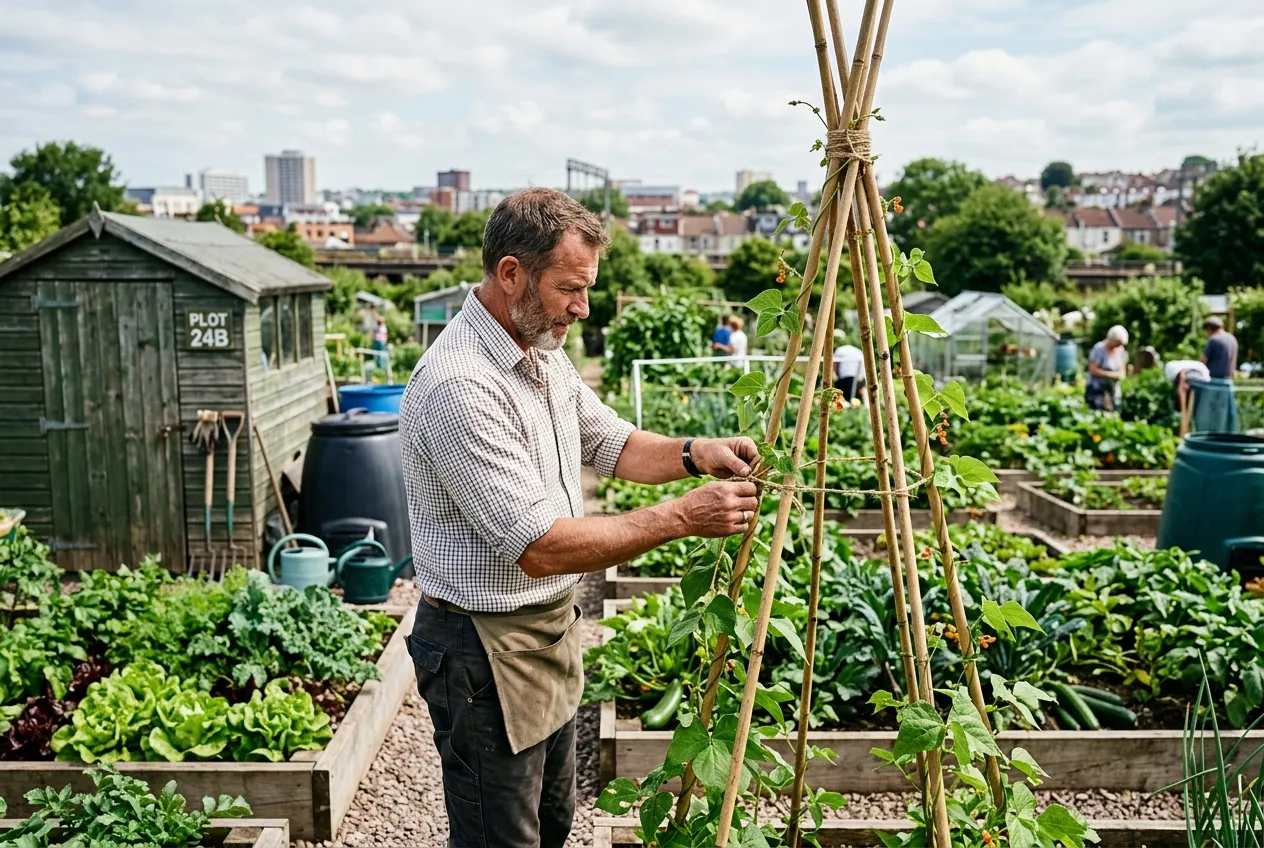 A bamboo wigwam with eight canes supporting runner beans on a city allotment. Lashing the top securely with thick twine prevents collapse under crop weight.
Trellis, netting, and wall training
Fixed supports attached to walls, fences, or freestanding posts. Use trellis panels, horizontal wires, or plastic/metal netting.
Best for: Espalier fruit trees, fan-trained peaches and cherries, peas, wall climbers, and wall shrubs.
For wall-trained fruit, fix horizontal galvanised wires at 300mm intervals using vine eyes. This creates a permanent support framework that lasts decades. For peas and annual climbers, plastic netting stretched between posts is cheap (3-5 pounds per 2m roll) and works for one season.
Garden Organic recommends using natural materials where possible to reduce plastic waste in the garden.
Plant-by-plant staking guide
This table covers the most commonly staked plants in UK gardens, with the support method that works best for each.
| Plant | Best support method | When to stake | Stake height | Notes |
|---|---|---|---|---|
| Delphiniums | Single cane per stem | April, at 200mm | 1500-1800mm | Tie every 300mm as stem grows |
| Peonies | Grow-through ring | April, at 100mm | 500-600mm | Ring must be in place before buds form |
| Dahlias | Single thick cane | At planting (April-May) | 1200-1500mm | Drive stake before placing tuber |
| Tall asters | Grow-through ring | April, at 150mm | 600mm | Pinch tips in May for bushier, sturdier plants |
| Hollyhocks | Single cane | April, at 200mm | 1800-2000mm | May need 2 canes in exposed spots |
| Sweet peas | Pea sticks or obelisk | At planting | 1500-1800mm | Pinch out tips at 100mm for branching |
| Runner beans | Wigwam (8 canes) | At sowing/planting | 2400mm | Lash top with 10+ wraps of 3mm twine |
| Tomatoes | Single cane or string | At planting | 1500-1800mm | Remove sideshoots weekly on cordon types |
| Sunflowers | Single thick cane | When 600mm tall | Match plant height | Use 12-14mm thick canes for giant varieties |
| Gladioli | Single cane per group | At planting | 900-1200mm | Tie loosely as flower spike develops |
| Lupins | Grow-through ring or pea sticks | April, at 150mm | 600mm | Heavy flower spikes snap in rain without support |
| Clematis | Obelisk or trellis | At planting | Full height of support | Guide young stems with loose ties |
Materials: what to buy and what to avoid
Not all staking materials are equal. After 12 years of testing, here is what works and what does not.
Buy these:
- Bamboo canes (12-14mm thick-walled for longevity). 3-8 pounds per pack of 25
- Galvanised steel grow-through rings. 8-15 pounds each. Last 10-15 years
- Soft jute garden twine (3-5mm). 3-5 pounds per 100m roll. Biodegrades on the compost heap
- Foam-cushioned plant ties. 4-6 pounds per pack of 50. Reusable for 3-4 seasons
- Hazel pea sticks (self-cut or bought). Free to 15 pounds per bundle
Avoid these:
- Thin plastic-coated wire. Cuts into stems within weeks and does not flex
- Cable ties. Strangle stems as they thicken. Cause girdling damage that kills branches
- Cheap plastic grow-through rings. Buckle under heavy peonies. Break in UV light after 2 seasons
- Short canes for tall plants. A 900mm cane cannot support a 1500mm delphinium. Match cane height to expected plant height
Common staking mistakes and how to avoid them
Staking too late. The number one mistake. Once stems have hardened in June, they resist being bent into position. You either snap them or create ugly kinks. Stake in April, every year, without fail.
Tying too tight. Stems thicken through the growing season. A tie that fits in May will strangle by August. Always leave 10-15mm of slack and check ties monthly.
Using a single tie point. One tie at the top creates a hinge point. The stem bends above and below the tie and snaps in wind. Use 2-3 ties spaced evenly along the stem length.
Not accounting for rain weight. A peony flower head that weighs 300g dry weighs 600g after a rain shower. Supports must handle double the dry weight. This is why grow-through rings outperform single canes on heavy-headed plants.
Ignoring wind direction. On exposed sites, position the stake on the windward side of the plant. The prevailing UK wind direction is south-westerly. Place canes to the south-west of the plant so stems lean against the support rather than away from it.
Frequently asked questions
When should I stake garden plants in the UK?
Stake perennials in April when shoots are 150-200mm tall. At this height, stems are still flexible enough to grow around supports without damage. Staking after flowering starts is too late. The stems have hardened and you risk snapping them when trying to tie. For vegetables like runner beans and tomatoes, install supports at planting time so roots are not disturbed later.
What is the best material for staking plants?
Bamboo canes are the most versatile staking material. A pack of 25 costs 3-8 pounds and suits everything from delphiniums to tomatoes. For herbaceous borders, metal grow-through rings are better because plants hide them by midsummer. Hazel pea sticks work well for lighter perennials and are free if you coppice your own. Each material suits different plant types and garden styles.
How do I tie plants to stakes without damaging stems?
Use a figure-of-eight tie with soft garden twine. Loop the twine around the stake first, cross it over, then loop loosely around the stem. This creates a cushion between stake and stem so they never rub directly. Never use wire, cable ties, or thin string. These cut into stems as they thicken and cause lasting damage.
Do peonies need staking?
Yes, most peonies need staking in the UK. Double and semi-double varieties have flower heads weighing 200-400g each. After rain, that weight doubles. Without support, stems bend to the ground and flowers sit in mud. Grow-through ring supports installed in April are the best solution. The foliage hides the ring completely by late May.
Can I make my own plant supports?
Hazel or birch pea sticks make excellent free supports. Cut them in winter from coppiced trees at 900-1200mm lengths. Push 5-7 sticks around each plant clump in early spring. Bend the tops inward and weave them together to form a natural cage. This traditional method suits cottage gardens and costs nothing if you have access to a woodland or hedgerow.
How do I support climbing beans on an allotment?
A bamboo wigwam with 8 canes is the sturdiest bean support. Use 2400mm canes pushed 300mm into the soil. Space them evenly in a circle of 600mm diameter. Lash the tops together with 3mm garden twine, wrapping at least 10 times. Five canes is not enough. I lost a full runner bean crop in 2021 when a five-cane wigwam collapsed in a summer storm.
How long do bamboo canes last outdoors?
Standard bamboo canes last 2-3 seasons in UK weather. The bases rot first where they contact wet soil. To extend their life, dip the bottom 100mm in wood preservative before the season starts. Thick-walled canes (12-14mm diameter) outlast thin ones. Store canes under cover in winter and they can last 4-5 seasons.
Lawrie has been gardening in the West Midlands for over 30 years. He grows his own veg using no-dig methods, keeps a wildlife-friendly garden, and writes practical advice based on real UK growing conditions.