Crab Apple
Malus sylvestris
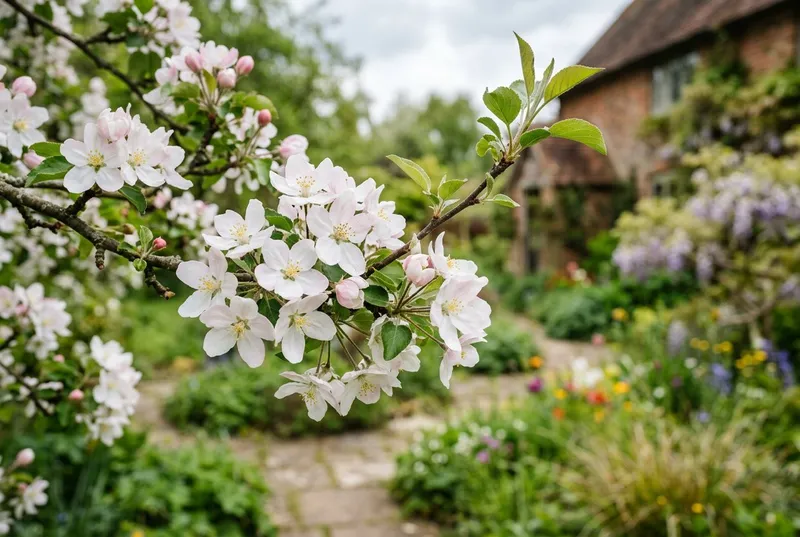
The native crab apple is a compact, wildlife-friendly tree that produces clouds of white blossom in spring followed by small, colourful fruits in autumn. The fruit is excellent for making jelly and provides vital winter food for thrushes, fieldfares, and redwings. Tolerant of most soils and exposures, it suits gardens of all sizes across the UK.
How to grow crab apple
Plant bare-root trees from November to March in a sunny or lightly shaded position. Crab apples tolerate virtually any soil, including heavy clay, and cope with exposed sites. They make superb pollination partners for fruiting apple trees, so plant one within 15 metres of your orchard. Water well during the first growing season and mulch with well-rotted compost each spring. Once established, crab apples need very little attention. Ornamental cultivars such as 'John Downie' and 'Evereste' offer larger fruit and better disease resistance than the wild species.
Pruning
Prune between November and February while dormant. Remove dead, diseased, or crossing branches to create an open, goblet-shaped crown that allows good air circulation. Cut back any water shoots from the trunk or main limbs. Avoid heavy pruning, which encourages excessive regrowth.
Propagation
- Seed
- Grafting
Common problems
- Apple scab
- Fireblight
- Powdery mildew
- Codling moth
Good companions
Related guides
How to Grow Apple Trees in the UK
Complete UK guide to growing apple trees. Covers rootstocks, pollination groups, best dessert and cooking varieties, planting, pruning, and pest control.
How to Grow Fruit Trees in the UK
UK guide to growing fruit trees from apple and pear to plum, cherry, and fig. Rootstock choices, pruning, and the best varieties for British gardens.
How to Create a Wildlife Garden UK
Turn any UK garden into a wildlife haven. Covers ponds, native planting, hedgehog access, bird feeding, bug hotels, and seasonal wildlife tasks.