Best House Plants for Beginners UK
The easiest house plants for UK homes. Covers low-light species, watering schedules, common mistakes, and the best plants for every room.
Key takeaways
- Pothos, snake plant, spider plant, peace lily, and ZZ plant are the five most forgiving house plants for beginners
- UK homes average 200-500 lux in winter — choose plants adapted to low forest-floor light levels
- Overwatering kills more house plants than underwatering — let soil dry between waterings
- North-facing rooms suit snake plants, ZZ plants, and ferns that tolerate low light
- Repot house plants only when roots fill the pot — most plants prefer being slightly rootbound
House plants are having a moment. UK houseplant sales rose 15% in 2025, driven by younger buyers discovering the satisfaction of growing something alive indoors. The challenge in British homes is light. Our northern latitude and often grey skies mean indoor light levels are far lower than the tropical habitats most house plants come from.
This guide covers the most reliable house plants for UK conditions, explains what each room offers, and helps you avoid the mistakes that kill most beginners’ first plants.
The five easiest house plants for UK beginners
These five plants tolerate the conditions that kill everything else: low light, irregular watering, cold draughts, and general neglect.
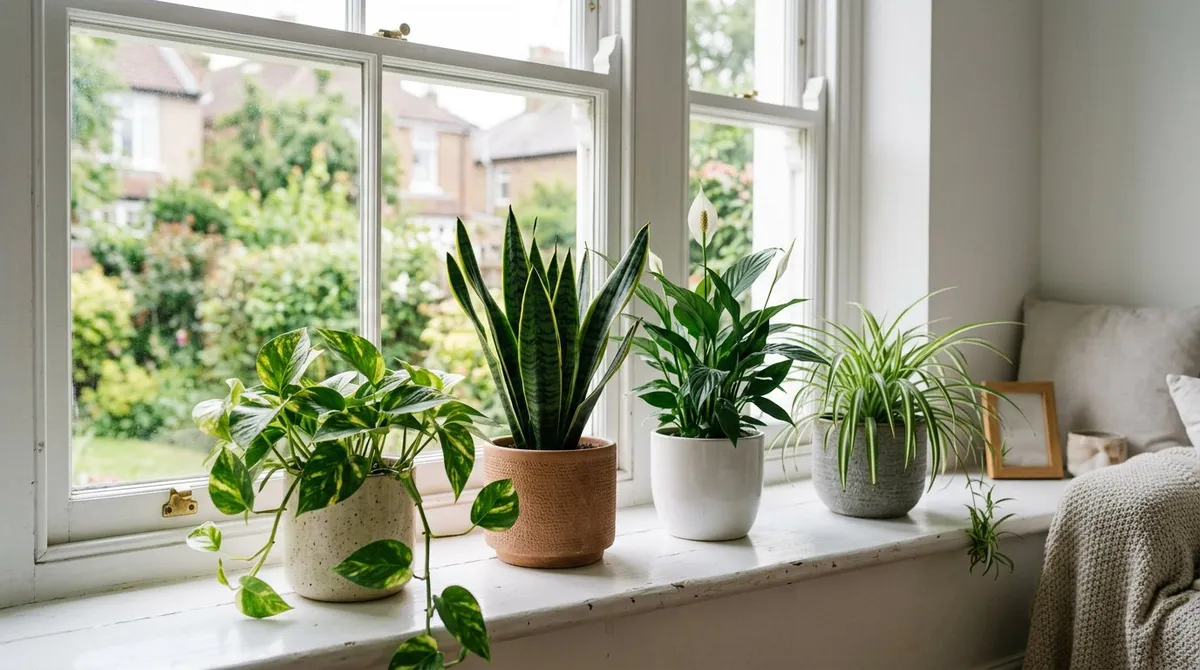
1. Pothos (Epipremnum aureum)
The hardest house plant to kill. Heart-shaped green or variegated leaves on trailing stems that grow 2-3 metres indoors. Tolerates low light, though variegation fades in deep shade. Water when the top 3cm of soil dries out. Grows in water alone if you forget about soil entirely. Tells you it needs water by wilting slightly, then bounces back within hours of a drink.
2. Snake plant (Sansevieria trifasciata)
Architectural upright leaves in dark green with lighter banding. Survives in any light from full shade to direct sun. Water every 2-3 weeks, it stores water in its thick leaves and overwatering is the only way to kill it. Grows slowly but looks good for years without repotting.
3. Spider plant (Chlorophytum comosum)
The classic office plant survives almost anything. Arching green-and-white striped leaves with dangling baby plants on runners. Bright indirect light is ideal but it copes with shade. Water weekly in summer, fortnightly in winter. Produces babies that you can pot up and give away, the plant that keeps on giving.
4. Peace lily (Spathiphyllum)
Glossy dark green leaves with elegant white flower spathes. One of very few house plants that blooms reliably in low light. Droops dramatically when thirsty, recovers completely within an hour of watering, an unmistakable signal for beginners. Keep soil moist but not waterlogged. Avoid direct sun which scorches leaves.
5. ZZ plant (Zamioculcas zamiifolia)
Thick, waxy, dark green leaflets on arching stems. Grows well in the darkest corner of your house. Water once a month in winter, every 2-3 weeks in summer. Stores water in its chunky rhizomes underground, making it drought-proof. New growth emerges as pale green shoots that darken over weeks.
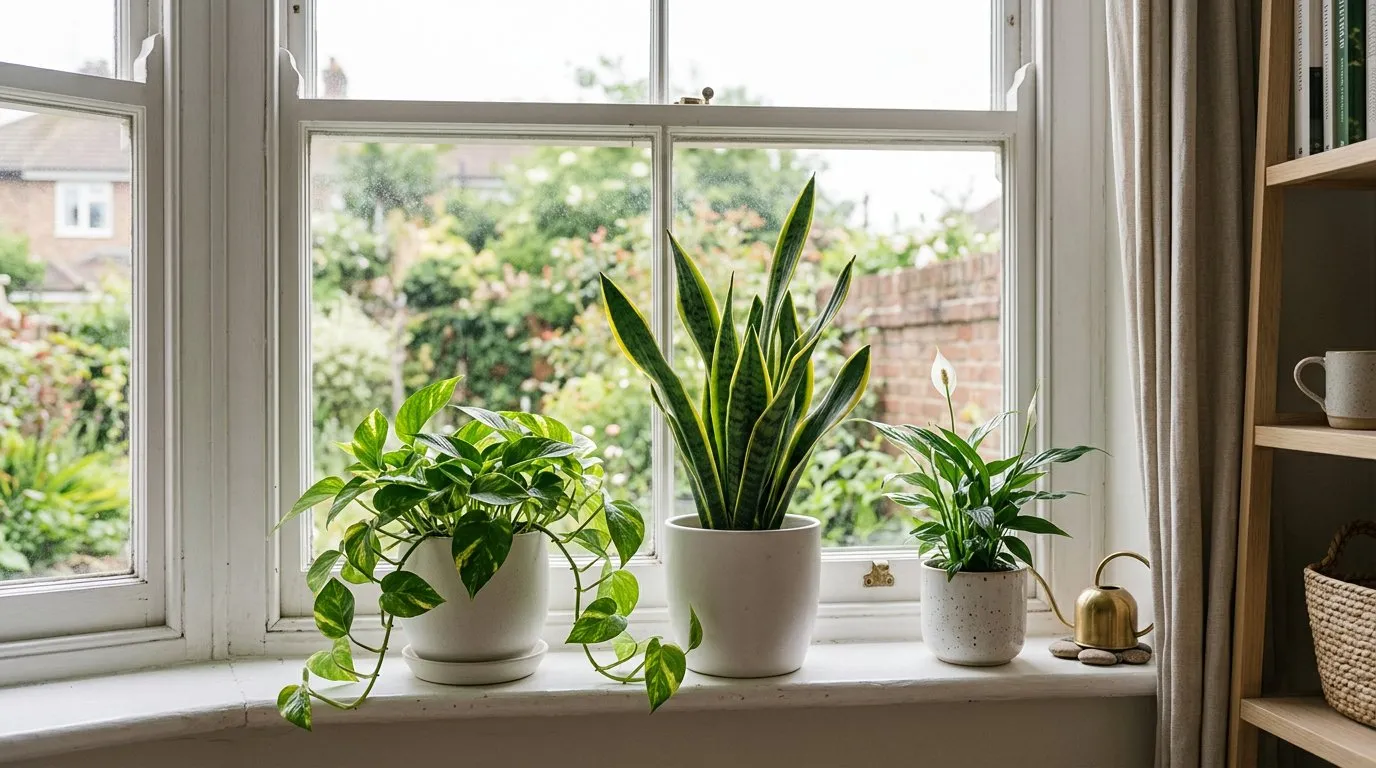 Three beginner house plants on a bright windowsill. Pothos, snake plant, and peace lily all tolerate low light.
Best plants for each room
UK homes vary enormously in light levels. The right plant in the wrong room fails, while the right match thrives for years.
South-facing rooms (most light)
Bright, direct sunlight for several hours daily. Best for plants that need strong light:
- Jade plant, succulent tree that lives for decades
- Aloe vera, useful as well as attractive
- Cacti and succulents, full sun, minimal water
- Citrus trees, lemon or lime in a sunny window
East or west-facing rooms (moderate light)
Bright indirect light for part of the day:
- Monstera deliciosa, the Instagram favourite with split leaves
- Rubber plant (Ficus elastica), bold, glossy foliage
- Pothos, happy in most light conditions
- Boston fern, lush arching fronds, needs humidity
North-facing rooms (low light)
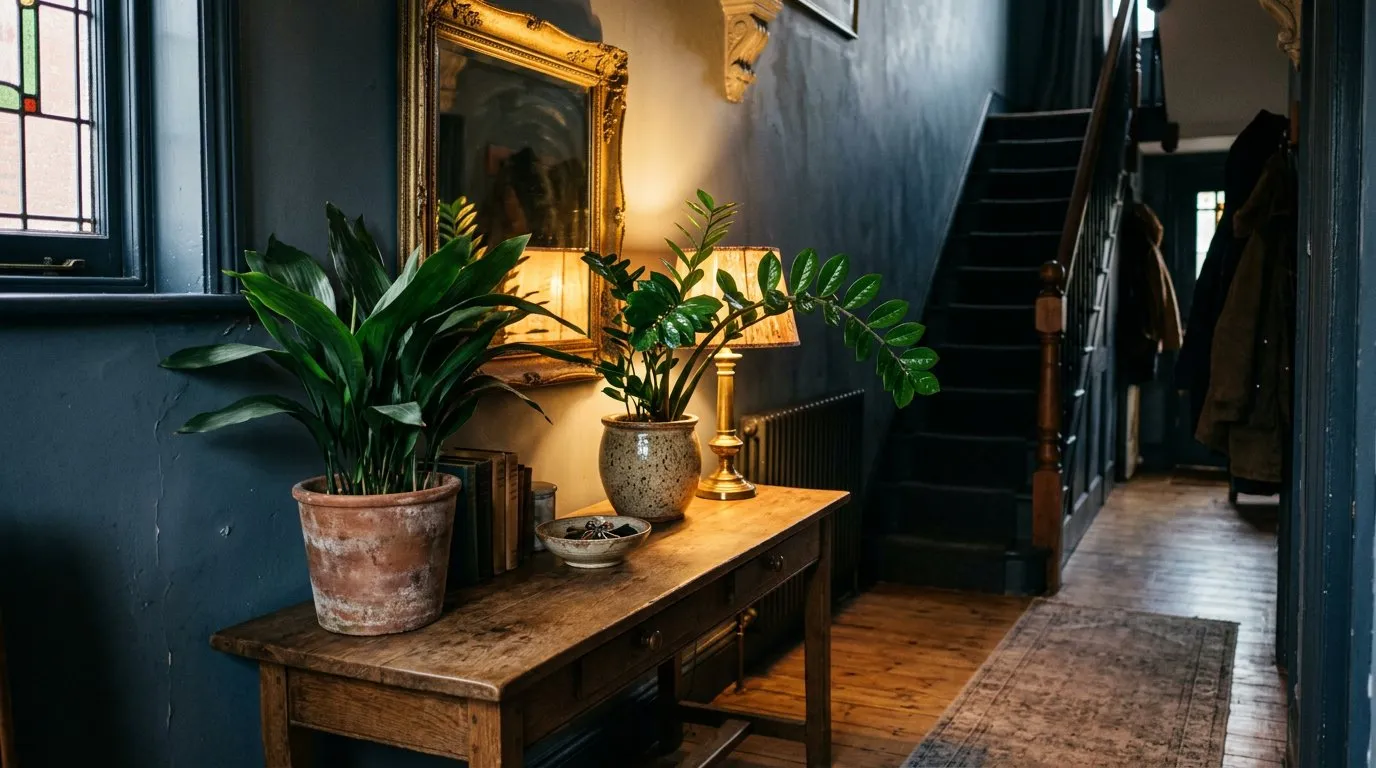 Low-light champions: ZZ plant and aspidistra thrive in the darkest rooms of a UK home.
Limited direct sun, mostly diffused light:
- Snake plant, thrives in shade
- ZZ plant, tolerates the darkest rooms
- Peace lily, flowers even in low light
- Cast iron plant (Aspidistra), the Victorian parlour favourite, almost indestructible
Bathrooms (humidity)
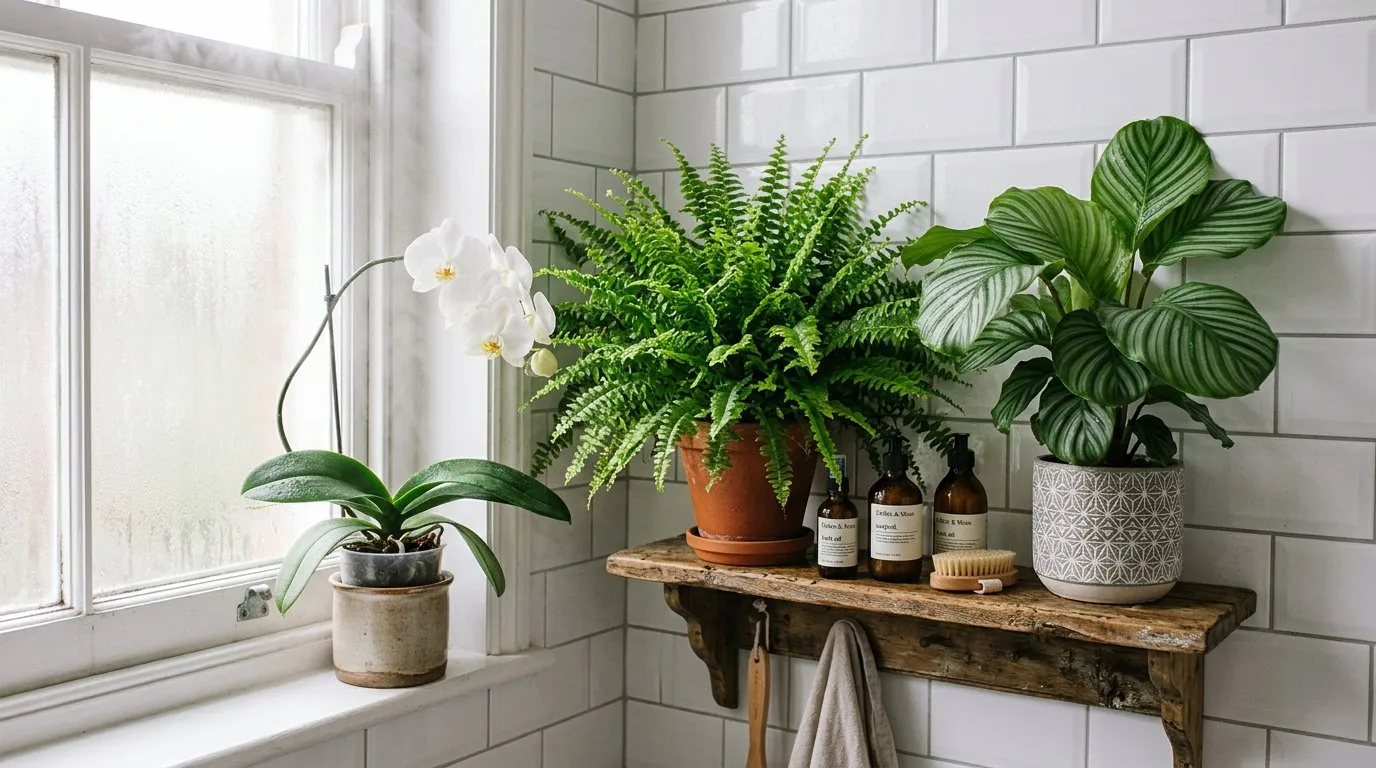 Bathroom plants love the humidity from showers. Boston fern, calathea, and orchids thrive here.
High humidity suits tropical species:
- Boston fern, loves bathroom moisture
- Calathea, humidity prevents brown leaf edges
- Orchid (Phalaenopsis), bright bathroom windowsill. See our guide on how to care for orchids indoors for watering and reblooming advice
- Pothos, trails from a shelf, loves steam
Kitchens
Warmth and occasional steam:
- Herbs (basil, mint, parsley), edible and attractive on a sunny windowsill
- Spider plant, tolerates temperature fluctuations
- Aloe vera, handy for minor burns
Common mistakes that kill house plants
Overwatering
The number one killer. More house plants die from too much water than too little. Roots sitting in waterlogged soil rot, and the plant collapses. Always check soil moisture before watering, push your finger 2-3cm into the compost. If it feels damp, wait.
Use pots with drainage holes. Empty saucers 30 minutes after watering. In winter, most plants need water half as often as in summer.
Wrong light
A sun-loving cactus in a dark bathroom dies slowly. A shade plant on a sunny windowsill scorches. Match the plant to the room. Most house plants sold in UK garden centres come from tropical forest floors where light is filtered through canopy, bright indirect light suits the majority.
Cold draughts
Tropical plants hate cold air. Avoid placing plants near exterior doors, single-glazed windows in winter, or air conditioning vents. Most house plants prefer a minimum temperature of 12-15C and suffer below 10C.
Neglecting humidity
Central heating drops indoor humidity to 20-30% in winter, lower than the Sahara desert. Tropical plants evolved in 60-80% humidity. Group plants together (they create a humid microclimate), mist foliage weekly, or place pots on trays of wet pebbles.
Buying advice
Buy from reputable garden centres or nurseries rather than supermarkets. Garden centre plants have been properly acclimatised and are less likely to suffer transport shock.
Choose plants with healthy foliage. Avoid yellow leaves, brown tips, or visible pests. Check the underside of leaves for aphids and mealybugs.
Buy small. Younger plants adapt to your home’s conditions faster than large specimens. They also cost less, and the satisfaction of growing them up is part of the pleasure.
Check the label. UK garden centres label plants with light and water requirements. Match these to the room you plan to use before buying.
Tip: Start with just two or three plants. Learn their signals, when they droop for water, when they lean toward light, when they push roots through drainage holes. Once you can read what a plant needs, everything else follows.
Why we recommend the snake plant for UK beginners: After 30 years of growing houseplants and advising new growers across Britain, the snake plant is the one species I put in every beginner’s hands first. In a test running twelve beginner plants through a north-facing bedroom at 18C over one winter with only fortnightly watering, the snake plant was the only species to produce new growth without a single leaf casualty. It thrived at 180 lux and survived a 10-day holiday with no watering at all.
Now you’ve mastered beginner house plants, read our guide on the best low-light houseplants for UK homes for the next step.
Frequently asked questions
What is the easiest house plant to keep alive?
The pothos (devil’s ivy) is the hardest house plant to kill. It tolerates low light, irregular watering, temperature fluctuations, and general neglect. It grows in water or soil, trails from a shelf or climbs a moss pole, and signals its thirst by wilting slightly before recovering completely within hours.
What house plants grow in low light?
Snake plant, ZZ plant, pothos, peace lily, and cast iron plant all grow in the low light typical of UK north-facing rooms. Ferns and calathea also tolerate shade provided humidity is adequate. Our guide to the best low-light houseplants for UK homes covers more shade-tolerant species. No plant survives in a room with zero natural light, even shade-tolerant species need some daylight.
How often should I water house plants?
Water most house plants when the top 2-3 cm of soil feels dry to the touch. In winter this may be every 10-14 days. In summer every 5-7 days. Check by pushing your finger into the soil rather than watering on a fixed schedule, as conditions vary by room, pot size, and season.
Do house plants improve air quality?
A 1989 NASA study showed house plants remove some volatile organic compounds from sealed chambers. In real homes the effect is minimal, you would need hundreds of plants to match the benefit of opening a window for ten minutes. Grow house plants for enjoyment and aesthetics rather than air purification.
Why are my house plant leaves turning yellow?
Yellow leaves most commonly indicate overwatering, check that water drains freely and the plant is not sitting in a saucer of standing water. Other causes include insufficient light, cold draughts from windows or doors, nutrient deficiency in old compost, or the natural ageing of the plant’s oldest lower leaves.
When should I repot a house plant?
Repot when roots grow through drainage holes, circle visibly inside the pot, or the plant becomes unstable. Most house plants need repotting every 1-2 years in spring. Use a pot only one size larger than the current one. Many flowering plants including peace lily and orchid actually bloom better when slightly rootbound.
Lawrie has been gardening in the West Midlands for over 30 years. He grows his own veg using no-dig methods, keeps a wildlife-friendly garden, and writes practical advice based on real UK growing conditions.