Key takeaways
- Carnivorous plants must be watered with rainwater - tap water kills most species within months
- Use peat-based or peat-free bog mix, never standard compost or houseplant mix
- Hardy species (Venus flytrap, Sarracenia, most Drosera) need winter dormancy at 0-10C
- Easiest beginner species: Cape sundew, Sarracenia purpurea, Venus flytrap (in that order)
- Do not feed insects manually - the plant catches its own and stress-feeds harm growth
- Outdoor UK bog garden grows hardy carnivores year-round with no greenhouse needed
- Avoid plants sold as ornaments in supermarkets - quality nurseries sell named cultivars
A Venus flytrap on a kitchen windowsill is the gateway carnivorous plant for most UK growers. It also has a 90% mortality rate within the first year. The plant did not fail - the watering, soil, and winter conditions did.
Carnivorous plants are not exotic or difficult. They evolved in bogs - nutrient-poor wet ground - and most are perfectly happy in a UK garden if you give them what they actually need rather than what you would give a normal houseplant. This guide covers the species that work in the UK, the things that go wrong, and the four easy decisions that determine whether your plants thrive or die within a season.
What makes a carnivorous plant carnivorous
Carnivorous plants are normal flowering plants with one extreme adaptation: they catch and digest small animals (mostly insects) to supplement nutrient-poor soil. They evolved in habitats where conventional root nutrition was impossible - peat bogs, sandy seepage slopes, sphagnum moss meadows.
There are around 600 species of carnivorous plant worldwide, divided into five trap mechanisms:
| Mechanism | Examples | UK suitability |
|---|---|---|
| Pitfall trap | Sarracenia, Nepenthes, Cephalotus | Sarracenia hardy outdoors; others indoor only |
| Snap trap | Venus flytrap (Dionaea), Aldrovanda | Hardy outdoors with care |
| Flypaper trap | Sundew (Drosera), Butterwort (Pinguicula) | Many species hardy outdoors |
| Bladder trap | Bladderwort (Utricularia) | Aquatic only, niche interest |
| Lobster-pot trap | Genlisea | Tropical only, very rare in cultivation |
For a UK grower, the four genera that matter are Sarracenia (American pitcher plants), Dionaea (the single Venus flytrap species), Drosera (sundews - over 200 species), and Pinguicula (butterworts). Almost everything you will see in nurseries falls into one of these four.
The four decisions that determine success
Whether your carnivorous plants live or die comes down to four straightforward choices.
1. Rainwater, not tap water. UK tap water contains 100-300 mg per litre of dissolved minerals, mostly calcium and magnesium. Carnivorous plants evolved with rainwater (5-30 mg per litre minerals) and cannot tolerate the build-up. Tap-watered Venus flytraps die within 2-6 months. Use rainwater from a water butt, distilled water, or reverse-osmosis water. This is the single biggest decision and the one most beginners get wrong.
2. Bog mix, not compost. Carnivorous plants need nutrient-poor, acid (pH 4-5) substrate. Standard houseplant compost contains too much fertiliser and too much organic matter, which fertilises the plant to death. Use a specific carnivorous plant mix - typically 50% peat or peat-free bog medium, 25% perlite, 25% sharp silica sand.
3. Bright light. Most carnivorous plants need direct sunlight. Sarracenia, Venus flytraps, and most Drosera want the brightest position you can give them - south-facing windowsill, sunny conservatory, or outdoor bog garden in full sun. Indoor plants in shaded rooms grow weak and stretch.
4. Winter dormancy for hardy species. Venus flytraps and most Sarracenia and North American Drosera need a cold period of 0-10C from November to February. Without dormancy they exhaust themselves and die within 1-2 years. Tropical species (Cape sundew, tropical Nepenthes) need no dormancy and stay actively growing year-round.
Get these four right and the plants are easy. Get any one wrong and the plants slowly die.
The easiest beginner species
Five species that are forgiving, available, and rewarding for new UK growers.
1. Cape sundew (Drosera capensis)
The single best carnivorous plant for beginners. South African origin, no dormancy required, grows year-round on a windowsill, self-seeds prolifically, catches fruit flies and fungus gnats indoors. Available in green and red-leaf forms. £4-8 from specialist nurseries.
The Cape sundew tolerates all the beginner mistakes: occasional dry spells, slightly mineralised water, lower light. It will not thrive on tap water but it will limp through where a Venus flytrap would die. Most UK carnivorous plant collections start with a Cape sundew.
2. Purple pitcher plant (Sarracenia purpurea)
The most cold-hardy Sarracenia. Native to North American bogs as far north as Canada. Survives UK winters easily in a bog garden or outdoor pot. Squat purple-veined pitchers fill with rainwater and digest insects passively. £12-20 from nurseries.
S. purpurea is the gateway pitcher plant. Once you have grown one for a year you can move on to the more dramatic Sarracenia hybrids - tall yellow S. flava, the elaborate S. leucophylla with white-frosted hoods, and named hybrids like ‘Adrian Slack’ or ‘Diane Whittaker’.
3. Venus flytrap (Dionaea muscipula)
The famous one. Single species. Native to a small wetland area on the North Carolina/South Carolina border. Hardy in UK if given dormancy. Available in dozens of named cultivars: classic green forms, all-red ‘Akai Ryu’ or ‘B52’, tooth variants like ‘Long Red Fingers’, and the odd ‘Cupped Trap’. £6-12 for a small plant; £20-50 for named cultivars.
Venus flytraps are easier than their reputation. The reputation came from supermarket plants that died because of tap water and no dormancy. A specialist-nursery flytrap kept on rainwater with a cold winter is reliable for years.
4. Common butterwort (Pinguicula vulgaris) or Mexican butterwort (Pinguicula moranensis)
Butterworts are flat rosettes of sticky leaves that catch fungus gnats and small flies. The native UK butterwort (P. vulgaris) is hardy outdoors. Mexican butterworts (P. moranensis, P. agnata, P. emarginata) are more colourful and grow indoors year-round. £8-15.
Mexican butterworts are particularly good for indoor growers because they tolerate harder water than most carnivorous plants and they bloom with attractive purple, pink, or white flowers in spring.
5. Pale pitcher plant (Sarracenia alata)
A medium-tall Sarracenia with cream-yellow pitchers. Hardy in UK outdoor bog gardens. More dramatic than S. purpurea but still beginner-friendly. £15-25.
For a complete bog-garden mix, plant S. purpurea in front, S. alata or S. flava in the middle, and Drosera capensis or D. binata around the edges. Add a clump of cotton grass for ornament. The whole arrangement thrives outdoors year-round.
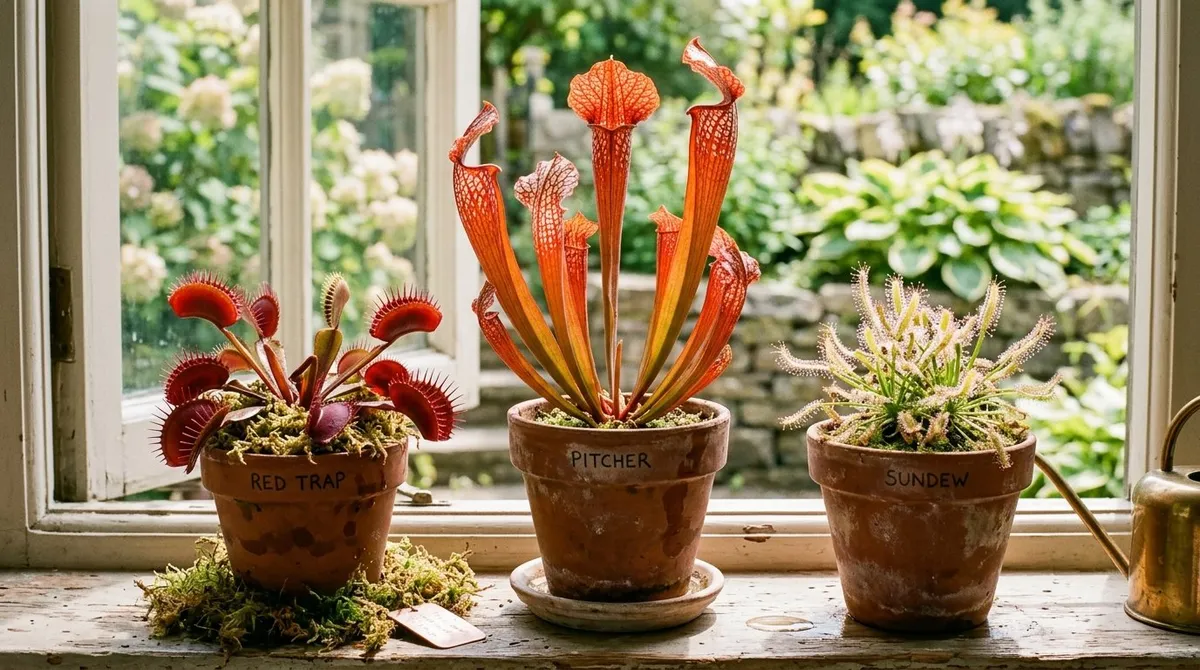
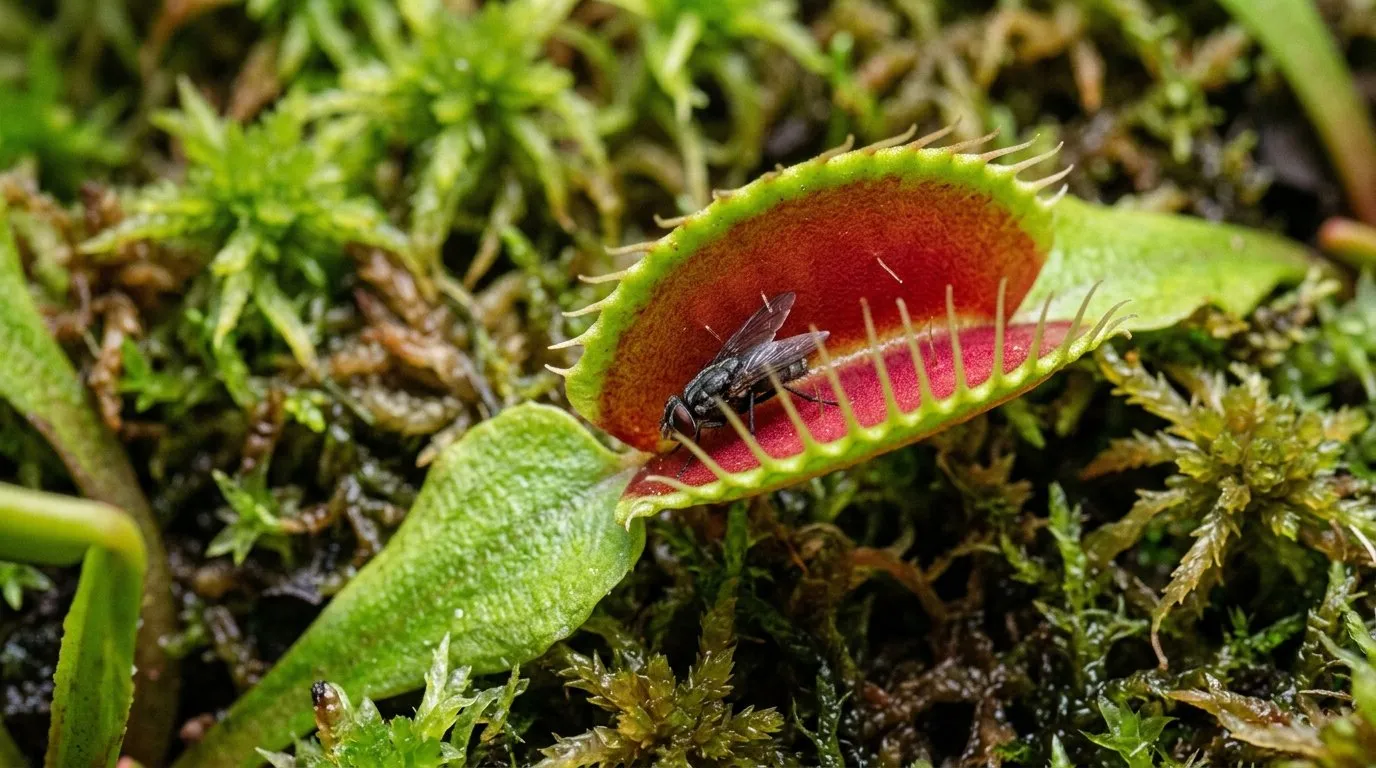 A Venus flytrap (Dionaea muscipula) is the most-recognised carnivorous plant. With rainwater, peat-based bog mix, and a cold winter dormancy, a Venus flytrap thrives for 10+ years and produces dozens of traps per season. Skipping any of these conditions kills the plant within a year.
Indoor growing: windowsill carnivorous plants
For renters, flat-dwellers, or anyone without outdoor space, carnivorous plants do well indoors with the right setup.
Best indoor species:
- Cape sundew (Drosera capensis) - the easiest of all
- Mexican butterworts (Pinguicula moranensis and others)
- Tropical pitcher plants (Nepenthes alata, N. ventrata) - on a humid bathroom windowsill
- Tropical sundews (Drosera adelae, D. spatulata)
The setup:
- South or south-west facing windowsill (6+ hours of direct sunlight)
- A saucer or tray to hold rainwater under the pot at all times
- Plant in a 50/50 peat-perlite mix or commercial carnivorous plant compost
- Top up the saucer with rainwater so the bottom 1-2cm of pot is always wet
- Mist occasionally if humidity is very low (rare in UK homes)
The “tray method” of standing pots in 1-2cm of rainwater is the foundation of indoor growing. Carnivorous plants want consistently wet feet - completely different from normal houseplants.
Avoid for indoor growing:
- Venus flytrap (does survive indoors but suffers without proper dormancy)
- Most Sarracenia (need outdoor light for tall pitchers)
- North American hardy Drosera (need cold winters)
- Cephalotus (tricky humidity requirements)
For an indoor windowsill collection, three pots of Cape sundew plus a Mexican butterwort plus a tropical Drosera will catch enough fruit flies and gnats to be visibly working within weeks.
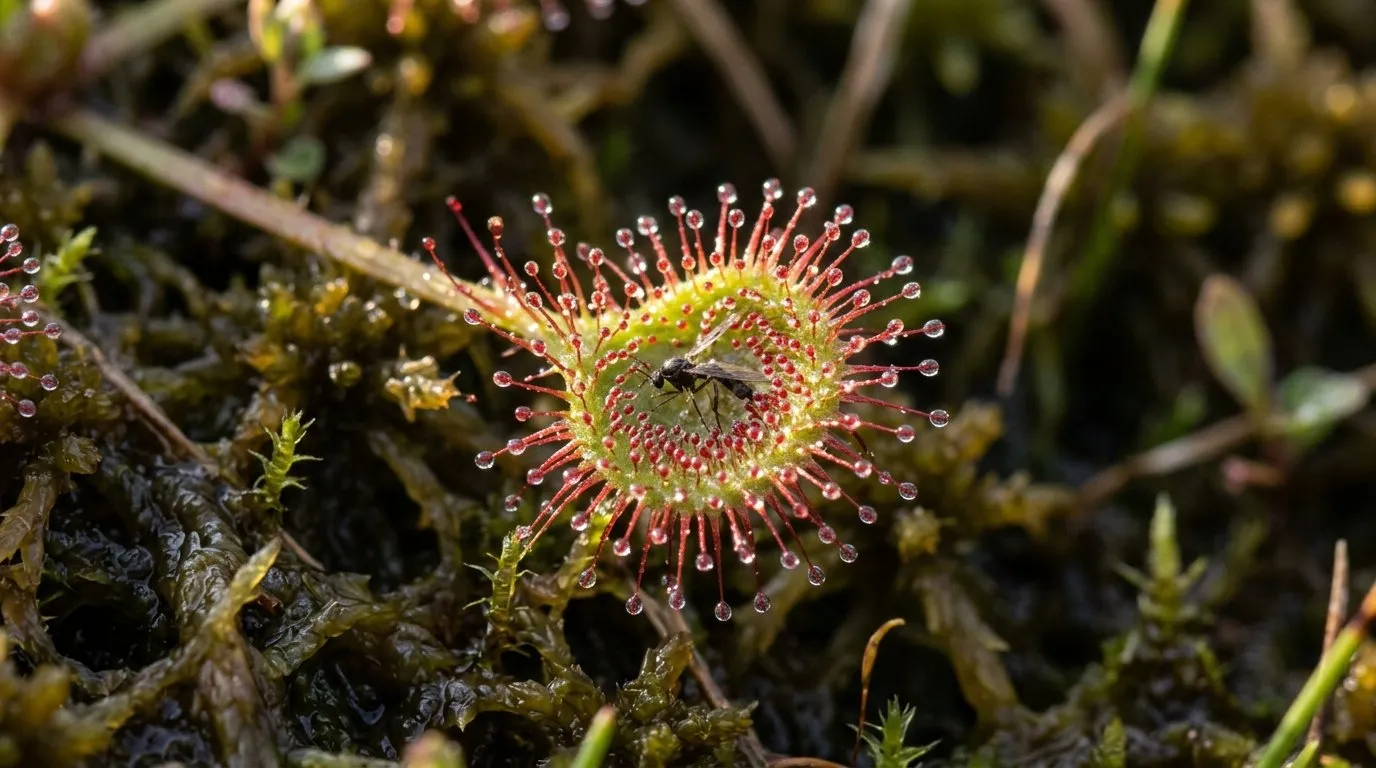 Sundews catch insects on sticky droplets at the tip of each tentacle. The trap closes slowly around the prey - the leaf curling over the captured insect to maximise digestive contact. Cape sundews (Drosera capensis) are the easiest carnivorous plant for any UK grower and self-seed prolifically once established.
Outdoor bog garden: the hardy collection
The most rewarding way to grow UK-hardy carnivorous plants is in a small outdoor bog garden. They thrive in conditions impossible to create indoors.
Building a bog garden:
A bog garden is a permanently waterlogged section of soil where bog plants thrive. Build one in a sunny corner of any UK garden in a single afternoon.
- Dig a hole 60-100cm wide and 30-50cm deep.
- Line with butyl pond liner or thick polythene. The liner traps water. Fold up the edges to ground level.
- Pierce small drainage holes 5cm below the soil surface. Stops the bog flooding completely - excess water drains slowly.
- Fill with bog mix: 70% peat or peat-free bog medium, 20% sharp sand, 10% perlite. No garden topsoil.
- Top with sphagnum moss (live or dried) for surface cover and aesthetic.
- Soak with rainwater until saturated.
- Plant in spring or early summer.
A 1m x 1m bog garden takes about 200 litres of bog mix and 2-3 hours to build. Materials cost £40-60.
What to plant:
- 2-3 Sarracenia (mix of S. purpurea, S. flava, S. leucophylla)
- 2-3 Drosera capensis or D. binata
- 1-2 Venus flytraps
- 1 clump of cotton grass (Eriophorum) for non-carnivorous interest
- Sphagnum moss as ground cover
Maintenance:
- Top up rainwater in dry spells (water butt nearby is essential)
- Cut back dead Sarracenia pitchers in February before new growth
- Divide overcrowded plants every 3-4 years
- Top up bog mix as it slowly decomposes
The bog garden looks better every year. By year three the plants have spread, the moss has filled in, and the colours through the seasons - red Sarracenia in spring, white S. leucophylla in summer, golden autumn colours - become a feature of the garden.
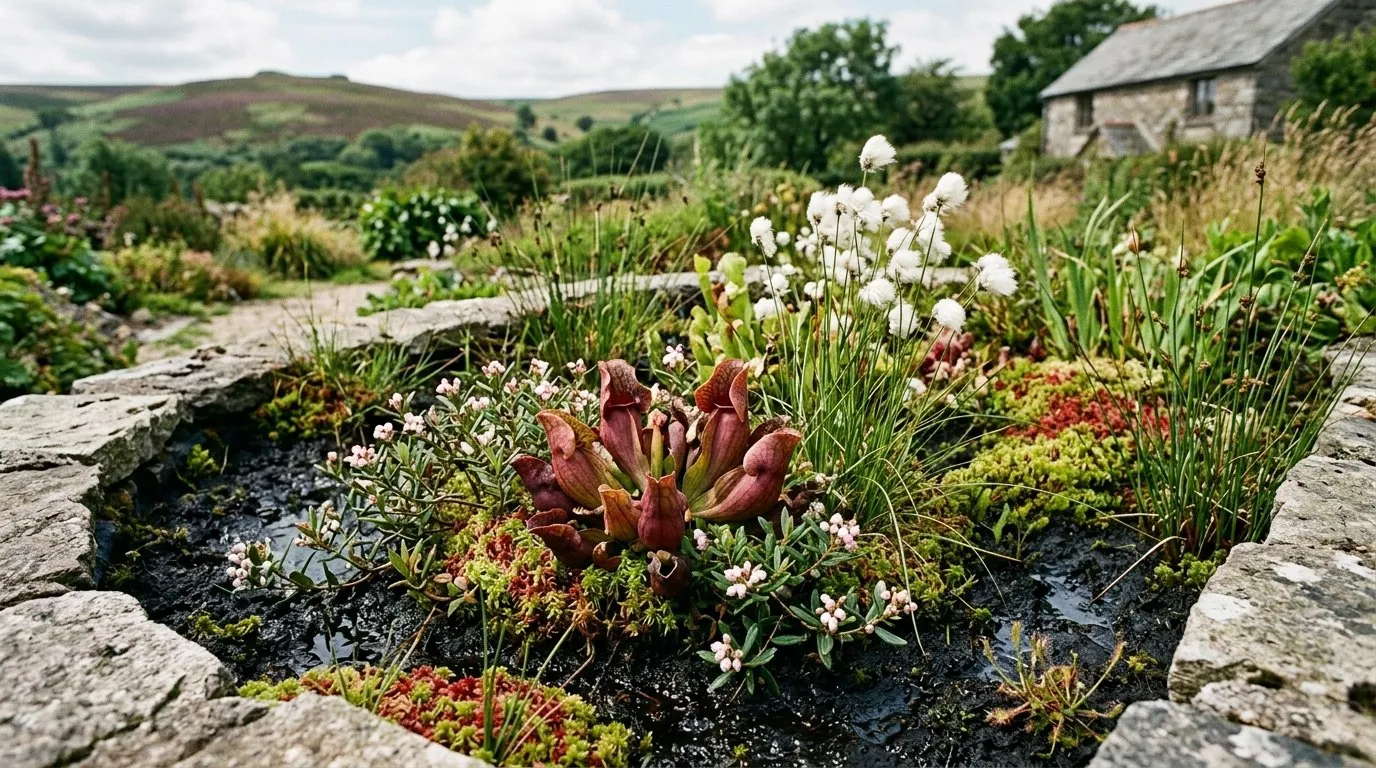 An outdoor UK bog garden is the most natural environment for hardy carnivorous plants. The setup uses pond liner to trap water, a bog mix substrate, and sphagnum moss surface cover. Plants thrive year-round with no greenhouse and minimal maintenance once established.
Watering: the rule that breaks beginners
Tap water kills carnivorous plants. This is the rule that surprises most new growers and the one that most often gets ignored.
Rainwater: The default and the cheapest. A water butt connected to any greenhouse, shed, or house downpipe captures 100-200 litres after a normal UK rainfall. The user costs nothing after the initial £30-50 for the butt.
Distilled water: Available from supermarkets and pharmacies for £1-2 per litre. Practical for one or two indoor plants. Expensive for a collection.
Reverse-osmosis (RO) water: Available from aquatics shops for around 25p per litre or £200 for a home RO unit. Best option for serious indoor growers in hard-water areas.
Boiled tap water: Does not work. Boiling does not remove dissolved minerals.
Filtered tap water (Brita-style filter): Does not work. Filters remove chlorine and some chemicals but do not significantly reduce dissolved minerals.
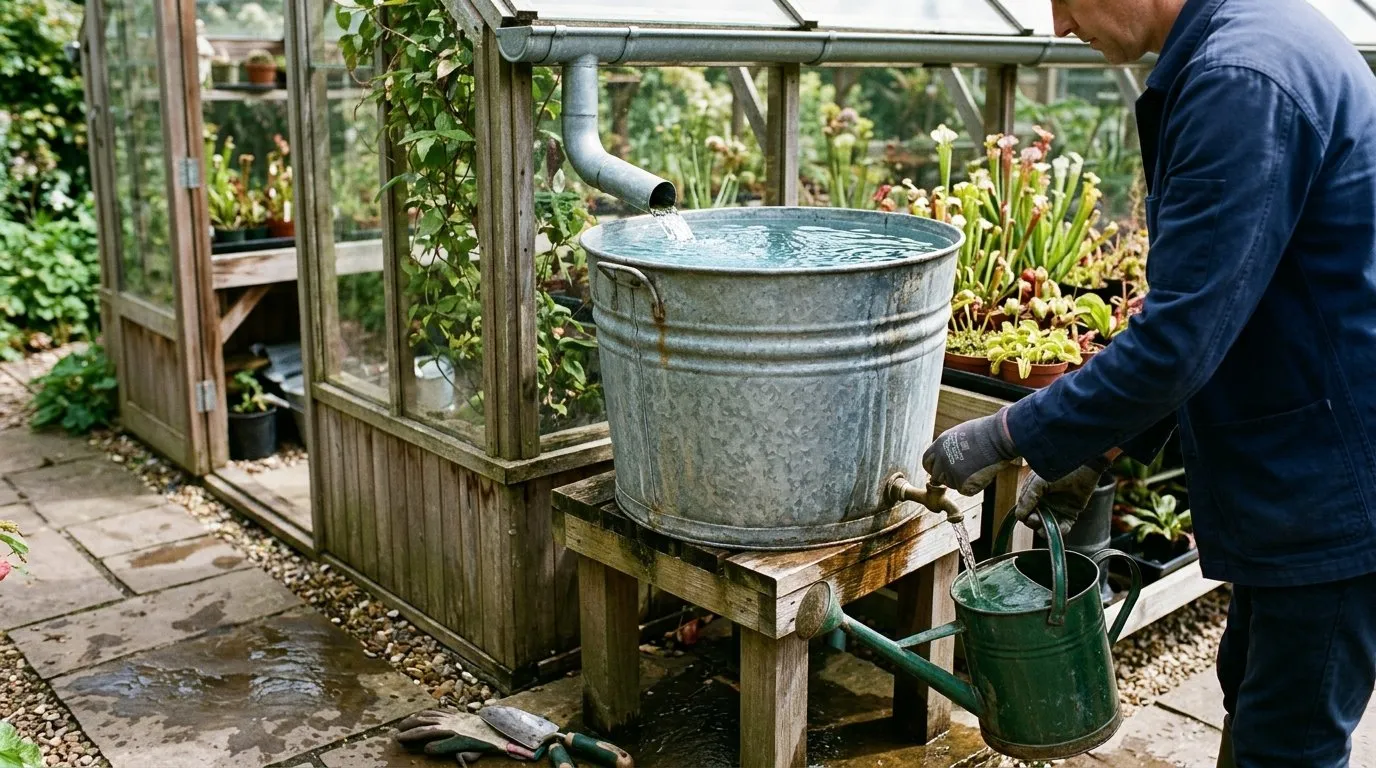 Rainwater is essential for carnivorous plants. A simple water butt at the foot of a downpipe collects enough rainwater for a small collection. Tap water kills most species within 2-6 months due to mineral build-up. Distilled or reverse-osmosis water works as a backup but is expensive at scale.
Winter dormancy: the second rule beginners miss
Hardy carnivorous plants need a cold winter to thrive. The dormancy period (typically November to February in the UK) lets them rest, store energy, and produce strong growth in spring.
Plants that need dormancy:
- Venus flytrap (Dionaea muscipula)
- Sarracenia (all species and hybrids)
- North American sundews (Drosera filiformis, D. binata, D. rotundifolia)
- North American butterworts (Pinguicula vulgaris, P. macroceras)
Plants that do NOT need dormancy:
- Cape sundew (Drosera capensis)
- Mexican butterworts (Pinguicula moranensis and others)
- Tropical sundews (Drosera adelae, D. spatulata, D. capillaris)
- Tropical pitcher plants (Nepenthes - all species)
How to provide dormancy:
- Outdoor bog garden: Dormancy happens automatically with the British winter
- Greenhouse, cold frame, or unheated porch: Move pots in November, leave until late February
- Garage or shed: Works if temperatures stay above freezing but not above 10C
- Cold windowsill (north-facing): Marginal but possible for small plants in cold-tolerant homes
- Refrigerator: Last resort - bare-rooted plants in damp sphagnum in a sealed bag in the salad drawer for 3 months. Works for Venus flytraps but not Sarracenia.
During dormancy, water sparingly (substrate stays just damp), provide minimal light, and do not feed. The plant looks dead - this is correct. New growth in March confirms it is still alive.
Skipping dormancy on hardy species is the second-most-common cause of carnivorous plant death after tap water. A dormancy-skipped Venus flytrap looks fine for 6-12 months, then produces weak growth, then collapses.
Where to buy: the supermarket trap
Specialist nurseries sell healthy plants. Supermarkets and high-street garden centres usually do not.
Why supermarket carnivorous plants fail:
- Grown in tap-water-tolerant peat that contains too many nutrients
- Sold without species labels or dormancy information
- Often kept indoors at supermarket warmth, breaking dormancy
- Frequently mass-imported and stressed by transport
- Sold near the height of growing season at peak demand, then discounted
Quality UK suppliers:
- Hampshire Carnivorous Plants - the largest UK mail-order specialist
- Triffid Nurseries - quality producer with named cultivars
- Wack’s Wicked Plants - Sussex-based, attends RHS shows
- Carnivorous Plants UK (CPUK) - online community and small grower network
- Specialist sections at major RHS shows (Chelsea, Hampton Court, Tatton)
A first-time buyer should expect to pay £5-10 for a small Cape sundew, £8-15 for a Venus flytrap, £15-25 for a Sarracenia. Specialist plants (rare cultivars, large named hybrids) range up to £100+.
The Carnivorous Plant Society is the UK national organisation. Membership is £15 a year, includes a quarterly journal, regional meetings, and a seed exchange. The fastest way to learn is to join the local meeting and talk to growers.
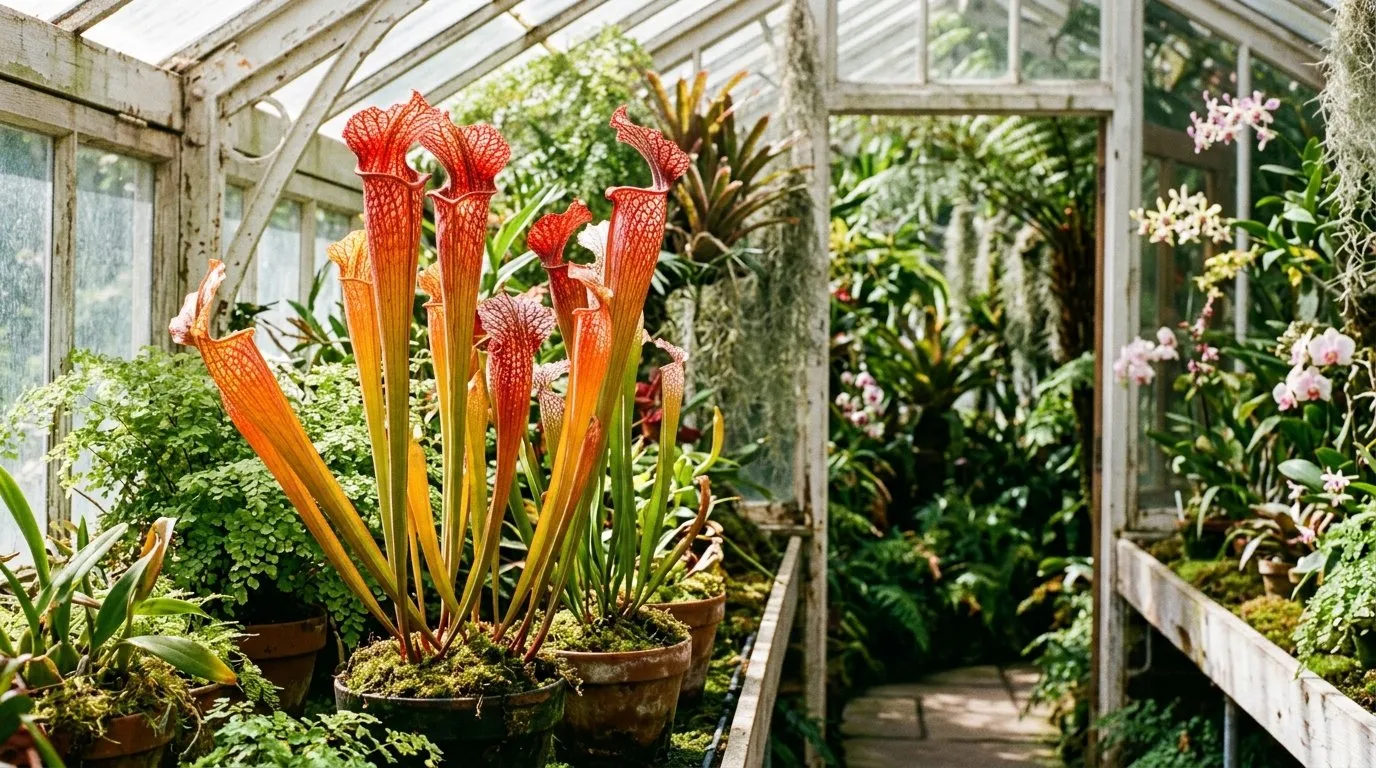 Sarracenia pitcher plants are the showpiece of any UK carnivorous collection. Tall trumpet pitchers in yellow, red, and white-frosted forms catch insects passively. Hardy outdoors year-round in a bog garden, they peak in late summer with vivid colours and high pitcher counts.
Common mistakes and how to fix them
Mistake 1: Tap water. Symptom: yellowing leaves, weak growth, gradual death over 2-6 months. Fix: switch to rainwater immediately and flush the substrate by repeatedly watering with rainwater for 2-3 weeks. Some plants recover; established mineral damage is permanent.
Mistake 2: Wrong soil. Symptom: black mushy roots, fungal growth on substrate, plant collapse within weeks. Fix: repot urgently into proper bog mix. Wash roots gently to remove standard compost.
Mistake 3: No dormancy on hardy species. Symptom: plant looks fine for a year, then weak in year two, dead in year three. Fix: provide proper cold winter from the next dormancy period; takes 1-2 seasons to recover.
Mistake 4: Manual feeding with meat or large insects. Symptom: traps blacken and die after a single feeding. Fix: stop feeding. Adult plants catch their own. Trap death from manual feeding is permanent for that trap.
Mistake 5: Indoor plants in shaded rooms. Symptom: pale, stretched, weak plants with no insect catching. Fix: move to brightest available windowsill or supplement with grow light.
Mistake 6: Letting the plant dry out completely. Symptom: substrate completely dry, plant wilts and crisps. Fix: re-saturate slowly with rainwater. Some plants recover; bone-dry Venus flytraps often die.
Mistake 7: Buying from supermarkets without species information. Symptom: plants die for reasons that are hard to diagnose. Fix: shop with specialist nurseries and ask questions about the species, source, and care.
For an indoor-plant comparison, our best low-light houseplants UK guide covers conventional houseplants for darker rooms.
What carnivorous plants teach you about gardening
Carnivorous plants are a small lesson in how species evolved to specific conditions. Try to grow them like normal houseplants and they die. Match the conditions they came from and they thrive with minimal effort.
The same principle applies to most plants in any garden. Mediterranean herbs do not need watering. Acid-loving plants do not need garden lime. Bog plants want wet feet. The plants tell you what they need by where they grow in nature. Listening to that is the difference between fighting a garden and working with it.
Carnivorous plants are also genuinely useful indoors. A Cape sundew on a kitchen windowsill catches more fruit flies than any chemical trap. A bog garden of Sarracenia in a sunny corner of the patio reduces the wasp population by autumn. The plants do their own pest control.
For more on growing plants in unusual UK conditions, see our bog plants guide (covering aquatic and bog edge species) and the houseplant guides for UK conditions.
Quick checklist
Before buying your first carnivorous plant:
- Have a rainwater source (water butt or distilled water supply) ✓
- Have a bog mix or specialist carnivorous plant compost ✓
- Have a south-facing windowsill or sunny outdoor position ✓
- Know the species and whether it needs winter dormancy ✓
- Have a cold winter location for hardy species (porch, shed, cold frame) ✓
- Buying from a specialist nursery, not a supermarket ✓
- Ready to leave the plant alone (no manual feeding) ✓
Get these right and a Cape sundew or Sarracenia purpurea will live for 10+ years and produce flowers and seedlings each year. The reputation for difficulty comes from beginners trying to grow them like houseplants. Treat them like the bog plants they are and they thrive.
Related articles
Our team produces practical UK gardening guidance from source research, contributor records and established horticultural practice. Editorial standards are overseen by Matt W.