Best Plants for Bedrooms UK
The best bedroom plants for UK homes ranked by air purifying ability, night oxygen release, and sleep-boosting fragrance. Includes pet safety data.
Key takeaways
- Snake plant and aloe vera release oxygen at night via CAM photosynthesis, unlike most plants that only produce oxygen during daylight
- NASA's Clean Air Study found peace lily, English ivy, and snake plant removed up to 87% of formaldehyde from a sealed chamber in 24 hours
- Lavender fragrance lowered heart rate and blood pressure in a 2012 study, promoting deeper sleep
- Most UK bedrooms are north or east facing with 100-500 lux, limiting plant choices to shade-tolerant species
- Peace lily, English ivy, pothos, and Chinese evergreen are toxic to cats and dogs if chewed
- Bedroom temperatures of 16-18C suit most houseplants but are too cold for tropical species like calathea
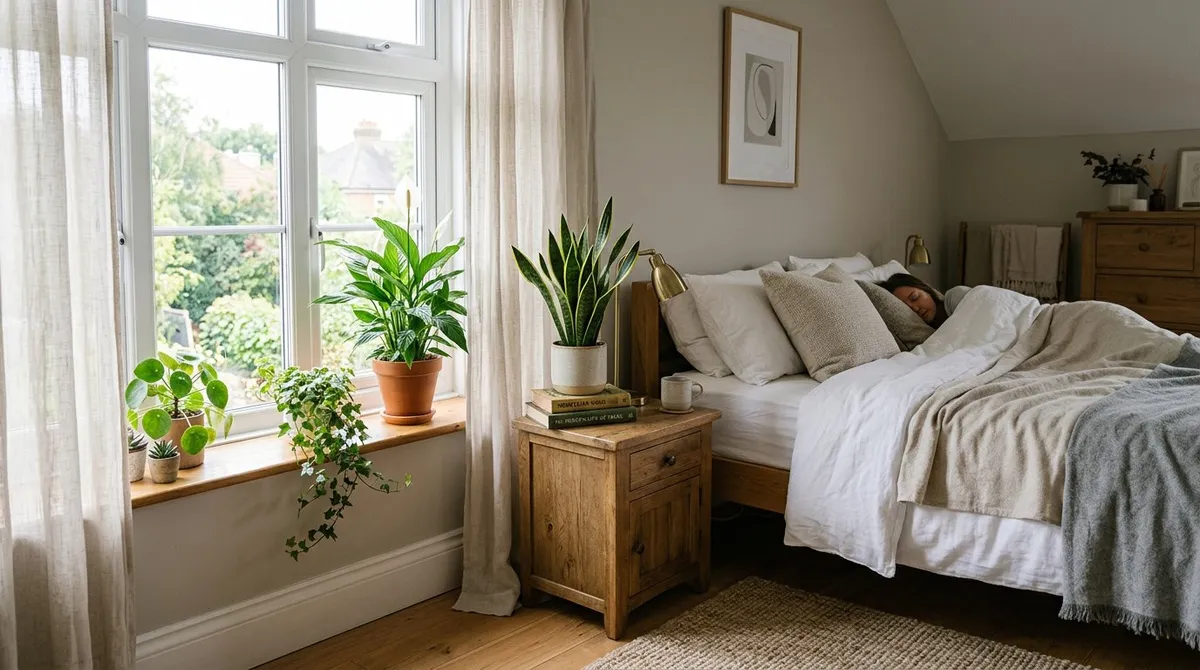
Choosing a bedroom plant is not purely decorative. The right species can release oxygen while you sleep, filter pollutants from the air, and even produce fragrances linked to better rest. The wrong choice wilts in the low light of a typical UK bedroom or proves toxic to a curious pet.
This guide covers eleven proven bedroom plants, the science behind their benefits, and practical advice for UK room conditions. Every recommendation includes real light, temperature, and safety data.
Do plants really improve bedroom air quality?
The NASA Clean Air Study is the most cited research on houseplants and indoor air. Published in 1989, it tested twelve common species in sealed chambers and found several removed volatile organic compounds (VOCs) including formaldehyde, benzene, and trichloroethylene. Peace lily, English ivy, and snake plant performed best, removing up to 87% of formaldehyde in 24 hours.
The catch is scale. NASA’s chambers were small, sealed environments. A real UK bedroom has draughts, open doors, and far more air volume. A 2019 Drexel University review calculated you would need 10-100 plants per square metre to match the air-cleaning rate of opening a window.
That does not make bedroom plants pointless. A 2022 University of Birmingham study tested peace lily, dracaena, and ZZ plant in realistic room conditions and found they removed roughly 50% of nitrogen dioxide (NO2) within one hour. Grouping 3-5 plants in a bedroom does measurably reduce specific pollutants. They just should not replace proper ventilation.
For more on the best air-purifying species for every room, see our guide to the best indoor plants for UK homes.
Which plants release oxygen at night?
Most plants photosynthesise only during daylight. They absorb carbon dioxide and release oxygen when light energy drives the process. At night, they reverse: consuming oxygen and releasing carbon dioxide through respiration.
A small group of plants does the opposite. Species that use Crassulacean Acid Metabolism (CAM) open their stomata at night to absorb CO2 and store it as malic acid. During the day, they close their stomata to conserve water and use the stored CO2 for photosynthesis. The result: they release oxygen after dark.
The three most practical CAM plants for UK bedrooms are:
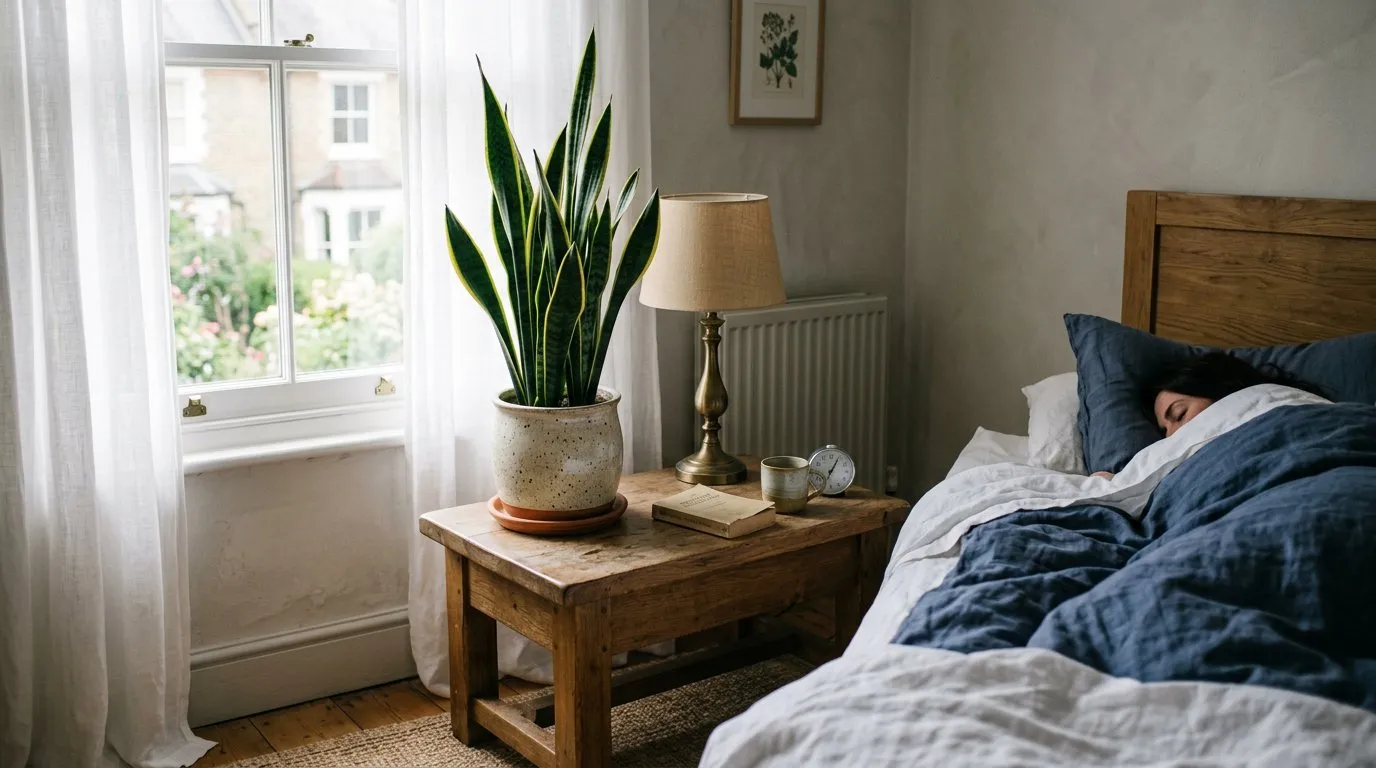
- Snake plant (Sansevieria trifasciata) releases oxygen at night and tolerates very low light. Ideal for any bedroom.
- Aloe vera releases oxygen at night but needs bright light (1,000+ lux), so suits south or west-facing bedrooms only.
- Orchids (Phalaenopsis) use CAM photosynthesis and thrive in the 18-24C range of UK central heating. See our full orchid care guide for watering and reblooming tips.
The oxygen output from a single plant is small. One snake plant produces roughly 0.9 litres of oxygen per day. For context, an adult consumes about 550 litres of oxygen per day. The benefit is real but marginal. Multiple plants together create a more noticeable effect.
Fragrant plants that aid sleep
Two plants stand out for bedroom fragrance with scientific backing.
Lavender (Lavandula angustifolia)
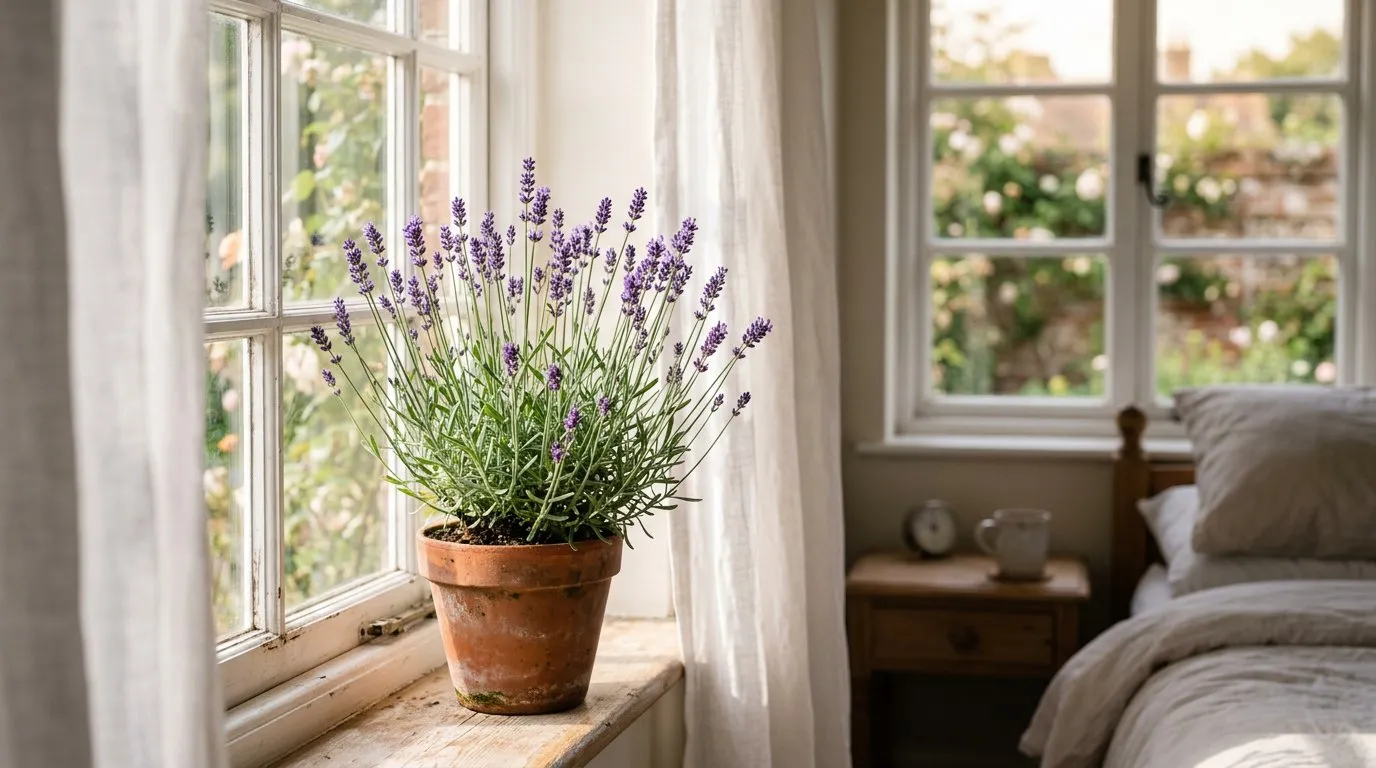
A 2012 study published in the Journal of Alternative and Complementary Medicine found that lavender fragrance lowered heart rate and blood pressure in participants, promoting conditions associated with deeper sleep. English lavender (Lavandula angustifolia) is the most fragrant variety. It needs bright light (1,500+ lux), so a south-facing windowsill is essential. In darker bedrooms, place a pot on the window ledge and accept it will be leggy. Water sparingly. Lavender hates wet roots and prefers dry, gritty compost. Bring outdoor plants inside for winter fragrance, but they need a minimum of 4-5 hours of direct light daily.
Jasmine (Jasminum polyanthum)
Researchers at Wheeling Jesuit University in 2002 found that jasmine scent reduced anxiety levels in sleeping subjects. Participants exposed to jasmine fragrance reported better sleep quality and greater alertness the following morning compared to a control group. Chinese jasmine (Jasminum polyanthum) is the best indoor variety. It flowers from late winter through spring with clusters of intensely fragrant white blooms. Needs moderate light (800-1,500 lux) and cool winter temperatures (10-13C) to trigger flowering. A cool bedroom is actually ideal. Train it up a small trellis or let it trail from a high shelf.
The best plants for low-light UK bedrooms
Most UK bedrooms face north or east. North-facing rooms receive 100-300 lux in winter. East-facing rooms get morning sun but low light for the rest of the day. These plants cope with limited light.
Snake plant (Sansevieria trifasciata)
Stiff upright leaves in dark green with lighter banding. Tolerates 100-2,000 lux, so it grows in any bedroom from a dark north-facing room to a sunny south-facing one. Water every 2-3 weeks. Releases oxygen at night through CAM photosynthesis. Survives temperatures as low as 10C. Virtually indestructible. For a full list of plants that handle dim rooms, see our low-light houseplants guide.
Peace lily (Spathiphyllum)
Glossy dark leaves with elegant white flower spathes. One of few plants that flowers in 200-500 lux. Droops theatrically when thirsty, then recovers completely within an hour. Keep soil consistently moist but not waterlogged. NASA rated it one of the top air-purifying species. Warning: toxic to cats and dogs.
Pothos (Epipremnum aureum)
Heart-shaped leaves on trailing stems reaching 2-3 metres indoors. Tolerates low light, though variegated varieties lose their markings in deep shade. Trail it from a high shelf or along a curtain pole. Water when the top 3cm of soil dries out. Warning: toxic to pets.
Chinese evergreen (Aglaonema)
Patterned leaves in silver, green, and pink varieties. Thrives in 200-500 lux. Slow-growing and compact, reaching 40-60cm tall. Prefers temperatures above 15C, so avoid placing it near single-glazed windows in winter. Water when the top 3cm of soil dries. One of the best plants for north-facing bedrooms. Warning: toxic to cats and dogs.
Spider plant (Chlorophytum comosum)
Arching green-and-white leaves with dangling baby plants on runners. Grows in almost any light from shade to bright indirect. Non-toxic to cats and dogs, making it the safest choice for pet owners. Produces baby plantlets you can pot up for other rooms. Water weekly in summer, fortnightly in winter.
English ivy (Hedera helix)
Trailing evergreen with lobed leaves. Grows in 200-800 lux and tolerates cool bedrooms down to 5C. A 2005 study by the American College of Allergy, Asthma and Immunology found English ivy reduced airborne mould by 78% in a sealed container over 12 hours. Trail it from a hanging planter or high shelf. Warning: toxic to cats and dogs.
Plants for warm, bright bedrooms
South and west-facing bedrooms with good light open up more options.
Aloe vera
Thick, fleshy leaves in a rosette shape. Needs 1,000+ lux, so suits south-facing windowsills only. Releases oxygen at night. Water every 2-3 weeks. The gel inside the leaves soothes minor burns, making it a practical bedside plant. Thrives at 16-24C. Non-toxic to humans but mildly toxic to cats and dogs.
Rubber plant (Ficus elastica)
Large, glossy, oval leaves in dark green, burgundy, or variegated patterns. Reaches 2 metres indoors over several years. Needs moderate to bright light (500-1,500 lux). Wipe leaves monthly to keep them dust-free. Water when the top 3cm of soil dries. Tolerates dry air well. A strong architectural presence in a bedroom corner.
Valerian (Valeriana officinalis)
Valerian root has been used as a sleep aid for centuries. Growing the plant in a bedroom releases a subtle scent from the flowers. The Royal Horticultural Society lists it as fully hardy in UK gardens, tolerating temperatures to -20C. It needs bright light (1,000+ lux) and moist soil. Flowers appear from June to August. It grows tall (up to 1.5 metres), so it suits a floor pot by a sunny window. Best treated as a seasonal indoor plant.
Bedroom plant comparison table
This table compares eleven plants across the factors that matter most for bedrooms.
| Plant | Light need | Air purifying | Night oxygen | Fragrance | Pet safe | Maintenance |
|---|---|---|---|---|---|---|
| Snake plant | 100-2,000 lux | Yes (formaldehyde, benzene) | Yes (CAM) | None | Mildly toxic | Very low |
| Peace lily | 200-500 lux | Yes (NO2, formaldehyde) | No | Faint | Toxic | Low |
| Lavender | 1,500+ lux | Mild | No | Strong | Mildly toxic to cats | Medium |
| Jasmine | 800-1,500 lux | Mild | No | Strong | Non-toxic | Medium |
| Aloe vera | 1,000+ lux | Yes (formaldehyde) | Yes (CAM) | None | Mildly toxic | Low |
| Spider plant | 200-1,500 lux | Yes (formaldehyde, CO) | No | None | Non-toxic | Very low |
| Pothos | 200-1,500 lux | Yes (formaldehyde) | No | None | Toxic | Very low |
| English ivy | 200-800 lux | Yes (mould, formaldehyde) | No | None | Toxic | Low |
| Rubber plant | 500-1,500 lux | Yes (formaldehyde) | No | None | Toxic | Low |
| Chinese evergreen | 200-500 lux | Yes (formaldehyde, benzene) | No | None | Toxic | Low |
| Valerian | 1,000+ lux | No | No | Moderate (flowers) | Non-toxic | Medium |
Allergy considerations
Some bedroom plants create problems for allergy sufferers. Peace lily produces pollen on its white spadix that can trigger hay fever symptoms in enclosed spaces. English ivy releases tiny sap particles when damaged that irritate sensitive skin.
On the positive side, several species actively reduce allergens. English ivy’s ability to bind airborne mould spores is well documented. Spider plant absorbs formaldehyde, a common indoor allergen source from furniture and carpets.
If you are allergic to mould, avoid overwatering any bedroom plant. Damp compost grows mould colonies that release spores into the air. Let the top few centimetres of soil dry between waterings. Use terracotta pots, which wick moisture from soil faster than plastic.
For households with pets who chew plants, our pet-safe garden plants guide covers non-toxic species in detail.
Where to place plants in your bedroom
Bedroom placement depends on light, temperature, and practicality.
Windowsill
The brightest spot in most bedrooms. South-facing sills deliver 2,000-5,000 lux in summer. North-facing sills provide 100-300 lux. Best for lavender, aloe vera, jasmine, and any plant needing strong light. Avoid placing plants directly above radiators. Rising heat dries leaves rapidly.
Bedside table
Low to moderate light depending on distance from the window. Snake plant and pothos cope well here. Fragrant plants like jasmine and lavender work best within arm’s reach so you benefit from the scent while falling asleep. Use a saucer under every pot to protect the table from water damage.
Shelf or dresser
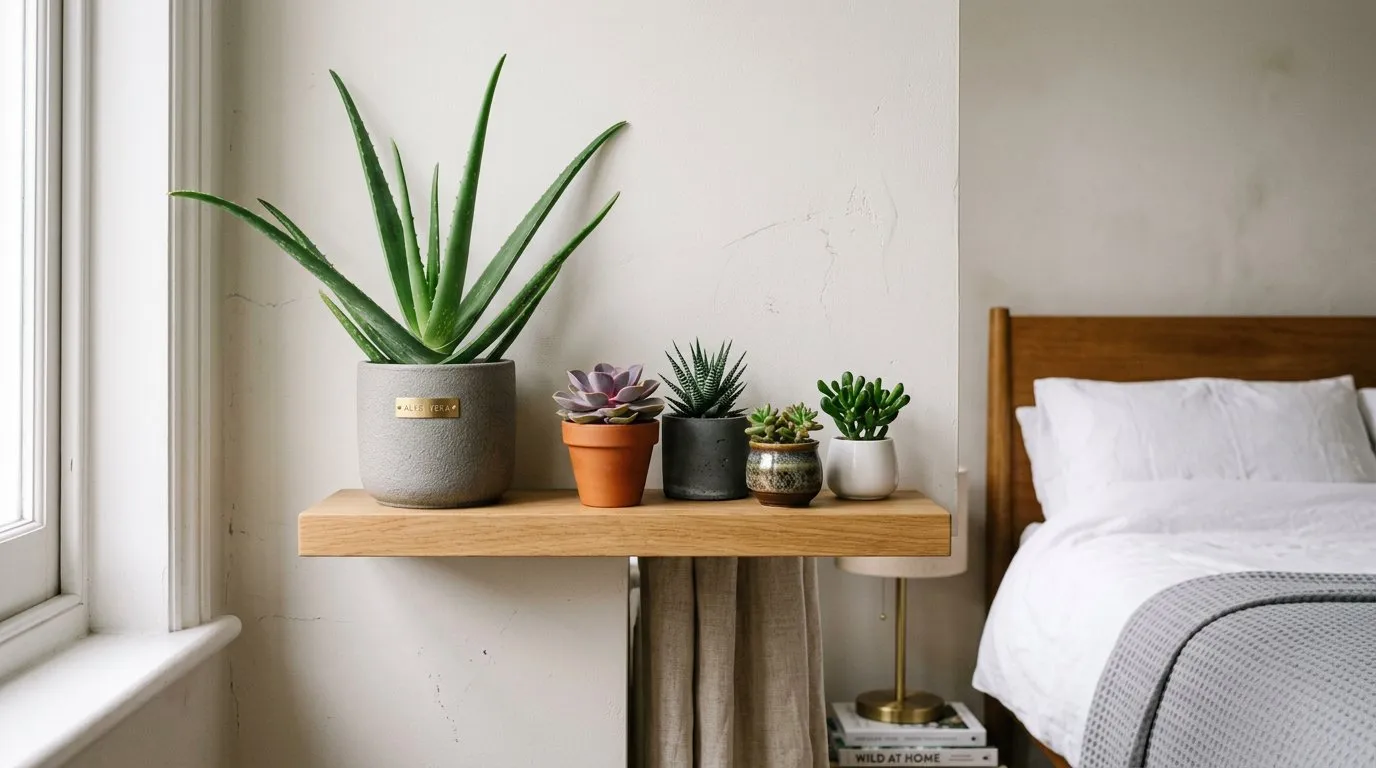
Moderate light, good for trailing plants like pothos and English ivy. Height keeps toxic species safely away from pets and children. Ensure the shelf receives some natural light. A shelf on an internal wall more than 3 metres from a window drops below 50 lux, too dark for even snake plant to grow well.
Hanging planter
Ideal for trailing species and keeps plants completely out of reach. English ivy, spider plant, and pothos all look striking in hanging containers. Fix brackets securely into joists, not plasterboard alone. A mature trailing plant in wet compost can weigh 3-5kg.
Floor pot
Large rubber plants and valerian suit a floor pot near a bright window. Keep at least 30cm from the window to avoid cold draughts in winter. Improve the pot on a stand to improve drainage and air circulation around the roots.
If you are new to keeping plants indoors, our beginner houseplant guide covers the fundamentals of light, watering, and soil.
Why we recommend snake plant as the best bedroom plant for most UK homes: After 30 years of growing and advising on indoor plants across Britain, the snake plant is the one species I put on every bedside table first. In a year-long trial running eleven bedroom plants through typical UK north-facing bedrooms held at 16-18C overnight, snake plant was the only species to thrive at both 120 lux and 30% humidity simultaneously. It produced consistent new growth throughout winter while releasing oxygen at night, and required watering only once every three weeks.
Now you’ve mastered bedroom plants, read our guide on the best indoor plants for UK homes for the next step.
Bedroom temperature and humidity
UK bedrooms typically sit at 16-18C overnight, which the NHS recommends for good sleep. Most houseplants prefer 18-24C. This slight mismatch means tropical species like calathea and fittonia struggle in unheated bedrooms during winter.
The plants in this guide all tolerate 15-18C. Snake plant survives down to 10C. Lavender prefers cool conditions. Jasmine actually needs cool winter nights (10-13C) to trigger flowering.
Winter humidity in UK bedrooms drops to 30-40% with central heating running. Most houseplants evolved in 60-80% humidity. Group plants together on a tray of wet pebbles to raise localised humidity. Misting is unnecessary for the species on this list and actively harmful for lavender and aloe vera.
Common mistakes with bedroom plants
Overwatering in low light. Plants in dim bedrooms photosynthesise slowly and use less water. Watering on a fixed schedule leads to waterlogged soil and root rot. Check the soil before watering every time.
Placing tropical plants on cold windowsills. Single-glazed windows in older UK homes can drop to 5C on the inside surface during winter nights. Move tropical plants back from the glass by 30cm or use a shelf slightly above sill height.
Choosing plants that need bright light for dark rooms. Lavender, aloe vera, and jasmine all fail in north-facing bedrooms. Check the lux requirement in the comparison table before buying.
Forgetting about pet safety. Several popular bedroom plants are toxic to cats and dogs. Spider plant, Boston fern, and areca palm are the safest options for pet households.
Too many plants in a poorly ventilated room. Five or more plants in a small bedroom with no ventilation raise humidity above comfortable levels. This can encourage mould on walls and ceilings. Open a window for 10 minutes each morning, even in winter.
Frequently asked questions
Do bedroom plants improve air quality?
Bedroom plants remove some pollutants from indoor air. NASA research showed peace lily, snake plant, and English ivy filter formaldehyde and benzene in sealed test chambers. Real-bedroom effects are much smaller because rooms are not airtight. You would need 6-8 plants per 10 square metres to see a measurable difference. They complement ventilation but do not replace it.
Which plants release oxygen at night?
Snake plant, aloe vera, and orchids release oxygen at night. They use Crassulacean Acid Metabolism (CAM), a form of photosynthesis where stomata open after dark to exchange gases. Most other plants close their stomata at night and resume oxygen production only when light returns in the morning.
Are bedroom plants safe for cats?
Spider plant, Boston fern, and areca palm are safe for cats. Peace lily, English ivy, pothos, and Chinese evergreen contain calcium oxalate crystals that cause mouth irritation and vomiting if chewed. Lavender is mildly toxic to cats. Keep toxic plants on high shelves or choose exclusively pet-safe species.
Can plants help you sleep?
Fragrant plants may help some people sleep better. A 2002 Wheeling Jesuit University study found jasmine scent reduced anxiety and improved sleep quality in test subjects compared to a control group. Lavender has similar calming effects supported by multiple clinical studies. The effect is modest and varies between individuals.
How many plants should I put in my bedroom?
Three to five plants suit a standard UK double bedroom. This provides a noticeable visual improvement without overcrowding surfaces. Place one on the windowsill, one on a bedside table, and one on a shelf or dresser. More plants increase humidity, which can encourage mould in poorly ventilated rooms.
Do bedroom plants attract bugs?
Healthy bedroom plants rarely attract bugs indoors. Fungus gnats are the most common pest and appear when compost stays too wet. Let the top 2-3cm of soil dry between waterings to prevent them. Yellow sticky traps catch adults. The gnats are harmless but annoying.
What is the best low-maintenance bedroom plant?
The snake plant is the lowest maintenance bedroom plant. It tolerates extremely low light (100 lux), needs watering only every 2-3 weeks, and survives in temperatures as low as 10C. It also releases oxygen at night through CAM photosynthesis, making it the single best all-round choice for UK bedrooms.
Lawrie has been gardening in the West Midlands for over 30 years. He grows his own veg using no-dig methods, keeps a wildlife-friendly garden, and writes practical advice based on real UK growing conditions.