Best Pond Plants for UK Gardens
Native UK pond plants for every planting zone. Covers water lilies, oxygenators, marginals, and bog plants with depths, spreads, and wildlife value.
Key takeaways
- Plant in four zones: deep water, submerged oxygenators, marginals, and bog edge
- Hornwort is the best oxygenator for UK ponds and needs no soil or planting
- Native pond plants support far more invertebrate species than exotic alternatives
- Five invasive species are illegal to plant in UK waterways — check before buying
- Use aquatic baskets with aquatic compost and gravel topping to control spread
- A pond with 8-10 native species attracts dragonflies, newts, and frogs within one season
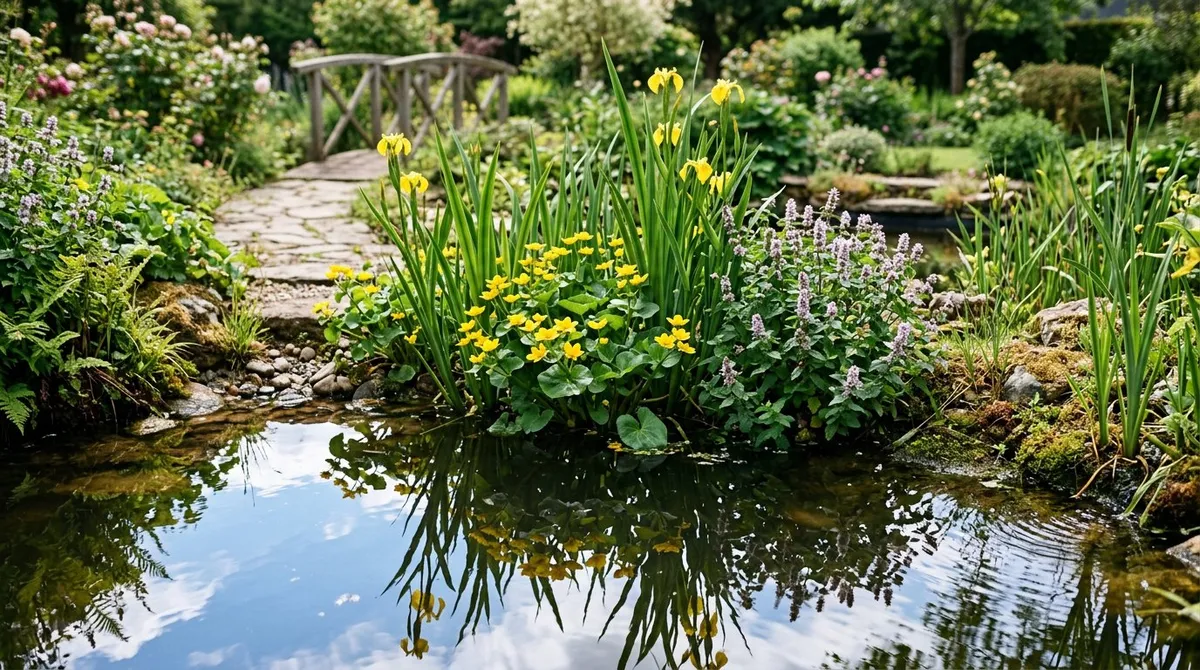
A wildlife pond without plants is just a hole full of water. Plants provide oxygen, food, shelter, and breeding habitat for everything from dragonfly larvae to great crested newts. The right native species turn a bare pond into a functioning ecosystem within a single growing season. The Freshwater Habitats Trust is an excellent resource for understanding which species work best in different settings.
This guide covers the best native and wildlife-friendly pond plants for UK gardens, organised by planting zone. Whether you are planting a new wildlife pond, building a garden pond, or improving an existing one, choosing the right plants for each depth creates the layered habitat that wildlife needs.
Understanding pond planting zones
Every pond has four distinct planting zones. Each zone sits at a different water depth and supports different plant types. Planting across all four zones creates the most diverse habitat.
Zone 1: Deep water (45-90cm), the centre of the pond. Water lilies and deep aquatic plants with floating leaves that shade the surface and reduce algae.
Zone 2: Submerged oxygenators (10-90cm), plants that grow entirely underwater. They produce oxygen, absorb excess nutrients, and provide dense cover for aquatic invertebrates and tadpoles.
Zone 3: Marginal shallows (0-15cm), the pond edges where water meets land. The most species-rich zone, supporting plants with their roots in shallow water and stems in the air.
Zone 4: Bog garden (damp soil, not submerged), the wet ground immediately around the pond. Permanently moist but not waterlogged. A transition between pond and garden that supports moisture-loving wildflowers.
Zone 1: Deep water plants
These plants root in the deepest part of the pond. Their floating leaves shade the water surface, which suppresses algae and gives fish and amphibians cover from herons.
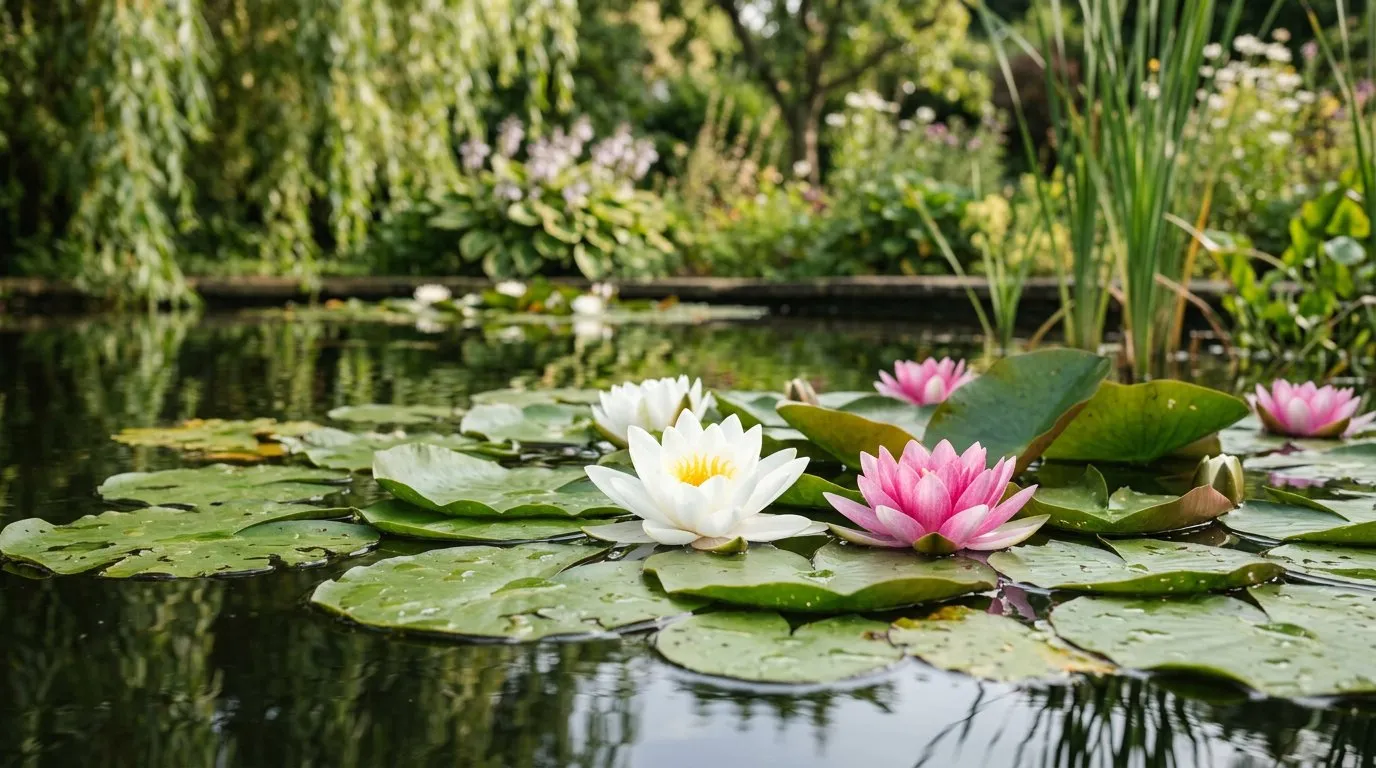
White water lily (Nymphaea alba)
The native UK water lily. Large white flowers from June to September. Needs a planting depth of 45-90cm and spreads to 1.5-2m across. Too vigorous for small ponds. One plant covers 2-3 square metres of surface. Plant in a large aquatic basket (30cm or wider) with aquatic compost, topped with gravel to stop the soil floating out. Place the basket on the pond bottom in May.
Wildlife value: floating leaves provide basking platforms for dragonflies and damselflies. Underside of leaves shelters water snails and insect larvae. Flowers attract hoverflies and beetles.
For small ponds, use Nymphaea ‘Pygmaea Helvola’ instead. This miniature hybrid has pale yellow flowers and suits depths of 30-45cm with a spread of just 60cm.
Water hawthorn (Aponogeton distachyos)
An underrated deep water plant with white, vanilla-scented flowers from April to November. One of the longest flowering aquatic plants available. Plant at 30-60cm depth. Spreads to around 1m. Semi-evergreen, with leaves persisting through mild winters. It fills the flowering gap before water lilies start in June.
Wildlife value: early and late flowers provide nectar for pond-edge insects when little else is blooming. Floating leaves offer surface cover similar to water lilies.
Zone 2: Submerged oxygenators
Oxygenating plants are the life-support system of a healthy pond. They produce oxygen during daylight, absorb nitrates and phosphates that feed algae, and provide shelter for aquatic invertebrates. Every pond needs them.
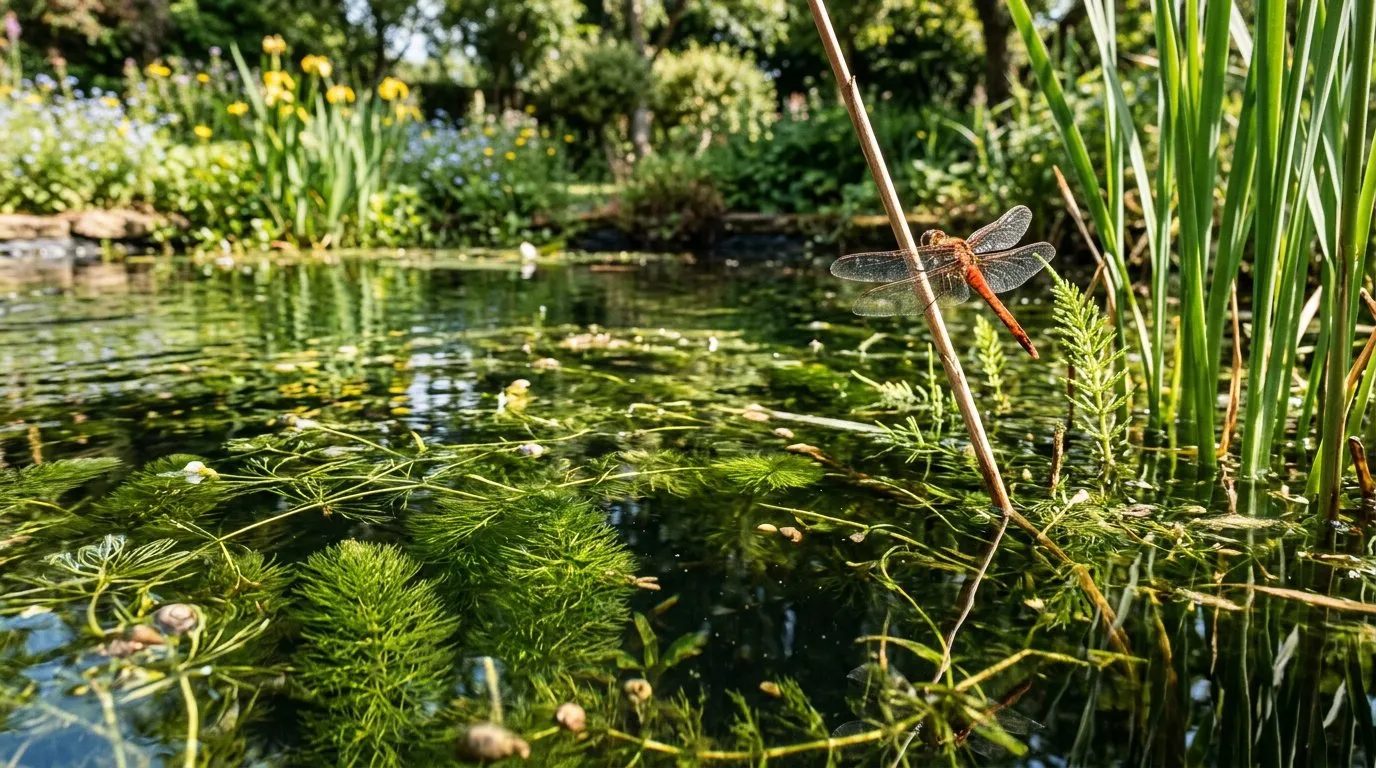
Hornwort (Ceratophyllum demersum)
The single best oxygenator for UK ponds. Hornwort floats freely in the water column. It has no roots, so it needs no soil, no basket, and no planting. Drop bunches into the pond from April onward. It stays green year-round and survives British winters without dying back.
Hornwort absorbs excess nutrients directly through its feathery foliage. A few bunches in a new pond significantly reduce the green-water algae bloom that plagues new ponds in their first summer.
Wildlife value: dense whorls of foliage shelter tadpoles, newt larvae, and dragonfly nymphs. Water beetles and damselfly larvae hide among the stems.
Water crowfoot (Ranunculus aquatilis)
A native buttercup relative that produces white flowers above the water surface in May and June. Submerged leaves are finely divided and thread-like. Floating leaves are rounded and lobed. Grows in still or slow-moving water at depths of 15-60cm.
Wildlife value: flowers attract early pollinators. Submerged foliage provides excellent invertebrate habitat. One of the best plants for supporting the aquatic food chain that feeds garden birds like grey wagtails.
Water starwort (Callitriche stagnalis)
A delicate native oxygenator with small, paired leaves forming rosettes on the water surface. Grows in shallow to moderate depths (5-50cm). One of the first aquatic plants to grow in spring. Semi-evergreen in mild winters.
Wildlife value: dense mats of starwort are a key egg-laying site for newts. Female smooth newts fold individual leaves around each egg for protection.
Zone 3: Marginal plants
The marginal zone is where most of the visible beauty and wildlife action happens. These plants grow with their roots in shallow water and their stems and flowers in the air. They soften the pond edge and provide the vertical structure that emerging insects need to climb out of the water.
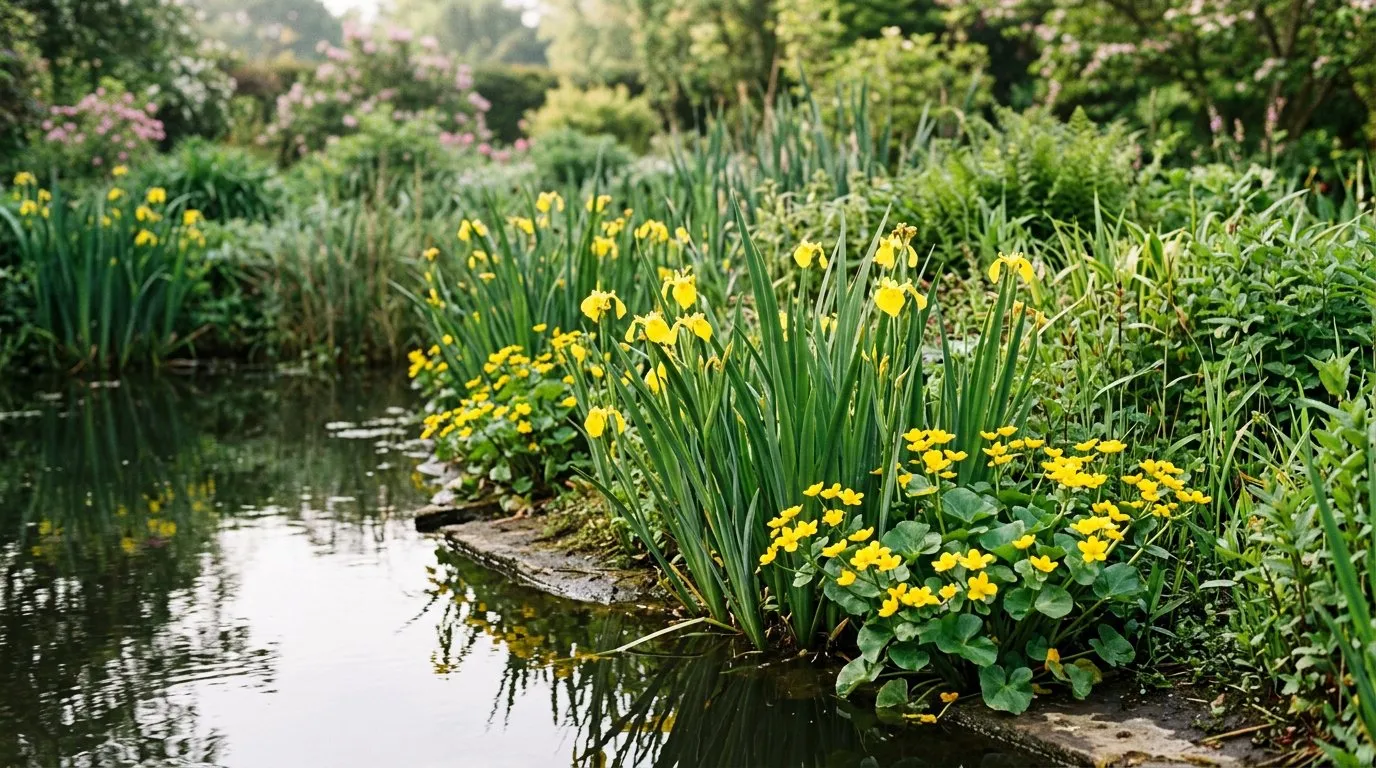
Marsh marigold (Caltha palustris)
One of the first native pond plants to flower. Bright golden-yellow buttercup flowers from March to May. Grows 30-40cm tall. Plant at 0-10cm water depth or in boggy soil. Clump-forming and well-behaved. Easy to control.
Wildlife value: early nectar source for queen bumblebees emerging from hibernation. Flowers coincide with early-season hoverflies and bee-flies. See our guide to bee-friendly plants for more early nectar sources.
Water forget-me-not (Myosotis scorpioides)
Clouds of small blue flowers from May to September. Grows 15-25cm tall. Spreads by runners along the water’s edge to form a low mat. Plant at 0-10cm depth. Cut back after flowering if it spreads too far. One of the prettiest and most reliable marginals.
Wildlife value: long flowering period provides nectar throughout summer. Dense ground cover shelters frogs and newts along the pond edge. A key plant for frogs and toads seeking damp shelter near water.
Yellow flag iris (Iris pseudacorus)
Bold, architectural native plant with sword-shaped leaves and bright yellow flowers in June and July. Grows 60-120cm tall. Plant at 0-15cm depth. Vigorous and spreading in small ponds. Use a large basket to restrict root run. In larger ponds and natural settings, let it colonise freely.
Wildlife value: hollow stems used by reed-nesting insects. Leaves provide vertical structures for dragonfly and damselfly larvae to climb during emergence. Seedheads feed seed-eating birds in autumn.
Brooklime (Veronica beccabunga)
Low-growing marginal with small blue flowers from May to September. Creeps along the pond edge at 0-5cm depth, rooting at leaf nodes. Evergreen in mild winters. Easy to manage and good for small ponds where flag iris would be too dominant.
Wildlife value: dense evergreen cover shelters pond-edge invertebrates year-round. Flowers attract hoverflies and small bees.
Purple loosestrife (Lythrum salicaria)
Tall spikes of magenta-purple flowers from June to September. Grows 60-120cm tall. Plant at 0-5cm depth or in boggy soil. Spectacular when established in drifts. Self-seeds moderately.
Wildlife value: outstanding nectar plant for bumblebees, honeybees, and butterflies. The elephant hawk-moth caterpillar feeds on its leaves.
Marginal and deep water plants comparison
| Plant | Zone | Depth | Height | Flowers | Spread | Wildlife value |
|---|---|---|---|---|---|---|
| White water lily | Deep | 45-90cm | Surface | Jun-Sep, white | 1.5-2m | Dragonfly basking, cover |
| Water hawthorn | Deep | 30-60cm | Surface | Apr-Nov, white | 1m | Long-season nectar |
| Hornwort | Oxygenator | Floating | Submerged | None | Variable | Tadpole shelter, water quality |
| Water crowfoot | Oxygenator | 15-60cm | Surface | May-Jun, white | 60cm | Newt habitat, invertebrates |
| Marsh marigold | Marginal | 0-10cm | 30-40cm | Mar-May, yellow | 40cm | Early bee nectar |
| Water forget-me-not | Marginal | 0-10cm | 15-25cm | May-Sep, blue | 50cm+ | Frog and newt shelter |
| Yellow flag iris | Marginal | 0-15cm | 60-120cm | Jun-Jul, yellow | 1m+ | Dragonfly emergence |
| Brooklime | Marginal | 0-5cm | 10-20cm | May-Sep, blue | 60cm | Year-round invertebrate cover |
| Purple loosestrife | Marginal | 0-5cm | 60-120cm | Jun-Sep, purple | 40cm | Bee and butterfly nectar |
Zone 4: Bog garden plants
The bog zone is the damp margin between pond and dry garden. It extends 30-60cm from the water’s edge. These plants need permanently moist but not waterlogged soil. A bog area doubles the planting opportunities around your pond and creates the gradual transition from water to land that wildlife needs.
If your pond has a liner, extend it outward beneath the bog area and pierce it with a fork to create slow drainage. Fill with a mix of garden soil and peat-free compost. This holds moisture without becoming stagnant.
Ragged robin (Silene flos-cuculi)
Pink, deeply fringed flowers from May to July. Grows 30-60cm tall. Once common in UK meadows, now declining. The ragged petals give it a distinctive, wild appearance. Grows well in damp soil that would drown many garden perennials.
Wildlife value: excellent nectar plant for long-tongued bumblebees and butterflies. Seeds feed finches in autumn. A beautiful addition to any wildflower area near a pond.
Meadowsweet (Filipendula ulmaria)
Clouds of creamy-white, honey-scented flowers from June to August. Grows 60-120cm tall. Native to damp meadows and stream banks. The scent is rich and sweet. Historically used to flavour mead.
Wildlife value: supports over 40 invertebrate species. Flowers attract bees, hoverflies, and beetles. Dense foliage shelters ground-dwelling insects. A key plant for the insect food chain.
Hemp agrimony (Eupatorium cannabinum)
Tall, pink-purple flower clusters from July to September. Grows 100-150cm tall. The flowers are a magnet for butterflies, particularly painted ladies, red admirals, and commas. One of the best late-summer nectar sources for a butterfly garden.
Wildlife value: rated one of the top five butterfly plants in the UK. Also attracts bees, hoverflies, and moths. Provides late-season nectar when many other plants have finished.
Planting technique
Pond plants need different planting methods than border perennials. Getting this right prevents cloudy water and uncontrolled spreading.
Aquatic baskets
Use open-mesh aquatic baskets for all pond plants except free-floating oxygenators. Line the basket with hessian or aquatic basket liner. Fill with aquatic compost (not garden compost or multipurpose). Aquatic compost is low in nutrients, which prevents it feeding algae.
Firm the plant in, then top the basket with 2cm of pea gravel. The gravel stops fish disturbing the soil and prevents compost floating out when you lower the basket into the water.
Planting depth
Place baskets at the correct depth for each species. Rest them on bricks or upturned pots to achieve the right level. For water lilies, start the basket shallow and lower it gradually over several weeks as the leaves grow to reach the surface.
When to plant
Late April to June is the ideal window. Water temperatures above 10C allow roots to establish before winter. Spring planting gives plants a full growing season. Avoid autumn planting. Roots do not establish well in cold water, and plants may rot over winter.
Plants to avoid: invasive non-natives
Five aquatic plants are banned under the Wildlife and Countryside Act 1981. Selling, planting, or releasing them into the wild is illegal. Fines reach five thousand pounds.
| Banned plant | Why it is dangerous |
|---|---|
| Parrot’s feather (Myriophyllum aquaticum) | Forms dense mats that smother native plants and block waterways |
| Floating pennywort (Hydrocotyle ranunculoides) | Grows 20cm per day, covering entire water surfaces within weeks |
| Water fern (Azolla filiculoides) | Tiny floating fern that forms impenetrable mats, blocking light entirely |
| New Zealand pygmyweed (Crassula helmsii) | Extremely aggressive, grows underwater and on damp land, impossible to eradicate |
| Water primrose (Ludwigia grandiflora) | Fast-spreading South American species that outcompetes all native marginals |
Never buy pond plants from unverified sources. Purchase from specialist UK aquatic nurseries that label plants correctly. If you see any of these species in a garden centre, report it.
Other non-native plants like Canadian pondweed (Elodea canadensis) are not banned but can become invasive. Native alternatives like hornwort and water crowfoot are always the better choice for wildlife value and manageable growth.
Why we recommend hornwort as your first oxygenator: After 30 years of planting and maintaining wildlife ponds, hornwort consistently outperforms every other oxygenating plant I have tried. It requires no soil, no basket, and no preparation, just drop bunches into the water. In a new 2m x 3m pond, three bunches of hornwort cleared green algae bloom within four weeks compared to six to eight weeks in ponds without it.
Seasonal interest calendar
A well-planted pond offers colour and interest from March to November. Plan your planting to cover as much of the year as possible.
| Season | In flower | What to watch |
|---|---|---|
| Early spring (Mar-Apr) | Marsh marigold, water hawthorn | Frogs spawning, newts returning |
| Late spring (May) | Water forget-me-not, water crowfoot, brooklime | Dragonfly larvae emerging, tadpoles growing |
| Early summer (Jun-Jul) | Water lily, flag iris, ragged robin, purple loosestrife | Damselflies on the wing, newt larvae |
| Late summer (Aug-Sep) | Meadowsweet, hemp agrimony, purple loosestrife | Dragonflies hawking, froglets leaving pond |
| Autumn (Oct-Nov) | Water hawthorn (second flush) | Newts leaving water, pond snails active |
For more on seasonal garden wildlife, our bird feeding guide covers how pond and garden habitats complement each other through the year.
Building a complete pond habitat
Plants alone do not make a wildlife pond. Combine them with structural features for the richest habitat. Leave a shallow, gently sloping beach of pebbles at one edge so hedgehogs, birds, and amphibians can climb in and out safely. Place a few flat stones at the pond edge for basking amphibians.
Add a log pile near the pond for creatures moving between water and land. A compost heap nearby provides winter shelter for the toads and newts that breed in your pond. Dense planting of native shrubs and shade-tolerant plants around the pond gives amphibians cover from predators as they travel to and from the water.
Avoid adding fish to a wildlife pond. Fish eat frog spawn, tadpoles, newt larvae, and dragonfly nymphs. A fish-free pond supports far more biodiversity. If you want fish, keep them in a separate pond away from the wildlife pond.
For a full guide to building a wildlife pond, see our article on how to build a wildlife pond. For ideas on water-wise garden design that complements a pond, our water-efficient gardening guide covers strategies for every garden style.
Now you’ve chosen the right plants, read our guide on how to build a wildlife pond for the next step.
Frequently asked questions
How deep should a wildlife pond be?
A wildlife pond needs 45-60cm at its deepest point. This prevents freezing solid in harsh winters, which would kill overwintering invertebrates and amphibians. Shallow margins of 5-15cm are equally important for marginal plants and amphibian access.
Can I plant pond plants in ordinary garden soil?
No, garden soil is too rich in nutrients. It releases phosphates and nitrates into the water, feeding algae and turning the pond green. Use low-nutrient aquatic compost specifically formulated for pond planting. Top with gravel to prevent soil particles clouding the water.
How do I stop pond plants taking over?
Plant in aquatic baskets rather than directly into pond substrate. The mesh restricts root spread. Cut back vigorous plants like flag iris and purple loosestrife in autumn. Remove excess floating duckweed by dragging a net across the surface. Leave removed plants on the pond edge overnight so invertebrates can crawl back into the water.
Do pond plants need fertiliser?
No. Never add fertiliser to a wildlife pond. Fertiliser feeds algae, not pond plants. Aquatic plants extract nutrients from the water and pond sediment. This natural nutrient uptake is exactly what keeps the water clear. Adding fertiliser reverses this balance.
How do I control blanketweed?
Blanketweed (filamentous algae) is common in new ponds and sunny ponds. Twirl it around a stick and lift it out. Leave the removed weed on the bank overnight for invertebrates to escape back to the water. Increase submerged oxygenators and floating leaf cover to shade the water and absorb the nutrients blanketweed needs.
For authoritative guidance on creating and managing wildlife ponds, the Freshwater Habitats Trust’s pond creation advice covers everything from design and liner choice to long-term management of established ponds.
Lawrie has been gardening in the West Midlands for over 30 years. He grows his own veg using no-dig methods, keeps a wildlife-friendly garden, and writes practical advice based on real UK growing conditions.