Best Trees for Autumn Colour UK
Best trees for autumn colour in UK gardens. 12 species ranked by colour intensity, from Japanese maples to field maples, with planting and soil advice.
Key takeaways
- Japanese maples (Acer palmatum) produce the most intense reds on acidic soil at pH 5.5-6.5
- Liquidambar styraciflua delivers 5-6 weeks of colour, the longest display of any UK-hardy tree
- Trees in full sun produce 40-60% more red anthocyanin pigment than those in partial shade
- The native field maple (Acer campestre) is fully hardy to -20C and colours reliably on chalk
- Bare-root trees planted November to March cost 60-70% less than container-grown specimens
- Wrong soil pH is the top reason autumn colour disappoints, especially for red-leaved species
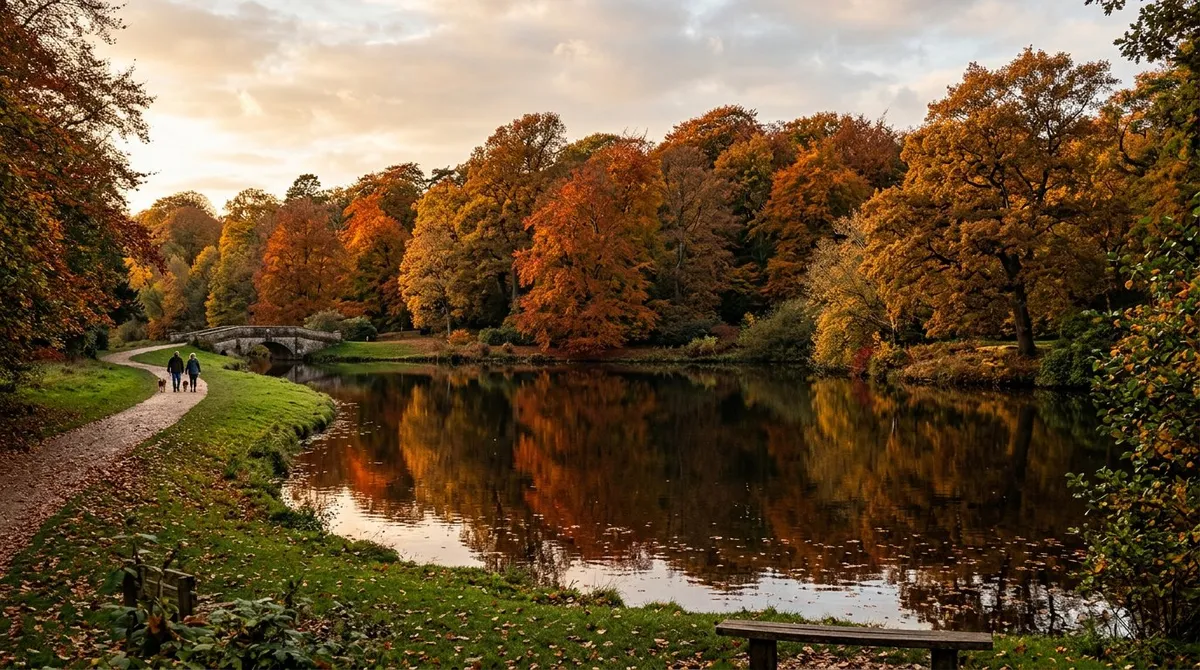
Autumn colour improves UK gardens for 4-6 weeks each year, yet most gardeners plant trees without considering soil pH, light exposure, or provenance. The result is disappointing muddy browns instead of the fiery reds, burnt oranges, and clear yellows that the best trees for autumn colour UK gardens can deliver.
This guide ranks 12 proven species by colour intensity and duration, explains the science behind why leaves change colour, and identifies the three root causes of poor autumn displays. Every tree listed has been observed across multiple UK autumns. Choosing the right tree for your soil type is the single most important decision you will make.
The science behind autumn leaf colour
Autumn leaf colour is not random. It follows a predictable biochemical process driven by temperature, light, and soil chemistry. Understanding this science helps you choose trees that will perform reliably in your specific conditions.
How leaves change colour
During spring and summer, leaves are green because chlorophyll masks all other pigments. Chlorophyll absorbs red and blue light for photosynthesis, showing green light back to our eyes. As day length drops below 12 hours in September, trees form an abscission layer at the base of each leaf stalk. This corky barrier traps sugars in the leaf and cuts off nutrient flow.
Yellow and orange pigments (carotenoids and xanthophylls) are present in leaves all summer but hidden by chlorophyll. As chlorophyll breaks down in autumn, these underlying pigments are revealed. This is why yellows and oranges are the most reliable autumn colours: they depend only on chlorophyll degradation, which happens regardless of soil type.
Red and purple pigments (anthocyanins) are manufactured fresh in autumn. Trapped sugars in the leaf react with sunlight and cool temperatures to produce anthocyanins. This is the critical point: red colour requires three conditions simultaneously. Bright sunny days (to drive photosynthesis and sugar production), cool nights below 10C (to slow sugar export), and acidic cell sap (pH 5.5-6.5). Remove any one of these and red pigment production drops sharply.
Why soil pH determines red intensity
Trees growing on acidic soils (pH 5.5-6.5) produce anthocyanins in an acidic cellular environment. The pigments stay red. Trees on alkaline soils (pH 7.0+) produce anthocyanins in a more neutral environment, which shifts the pigment toward brown or purple-brown. This is why the same Japanese maple can be brilliant scarlet in Surrey’s acid sand and dull brown in the Cotswolds’ alkaline limestone.
Test your soil pH before choosing autumn colour trees. A simple test kit costs 3-5 pounds from any garden centre. If your soil is above pH 7.0, focus on trees that colour yellow or orange rather than fighting the chemistry.
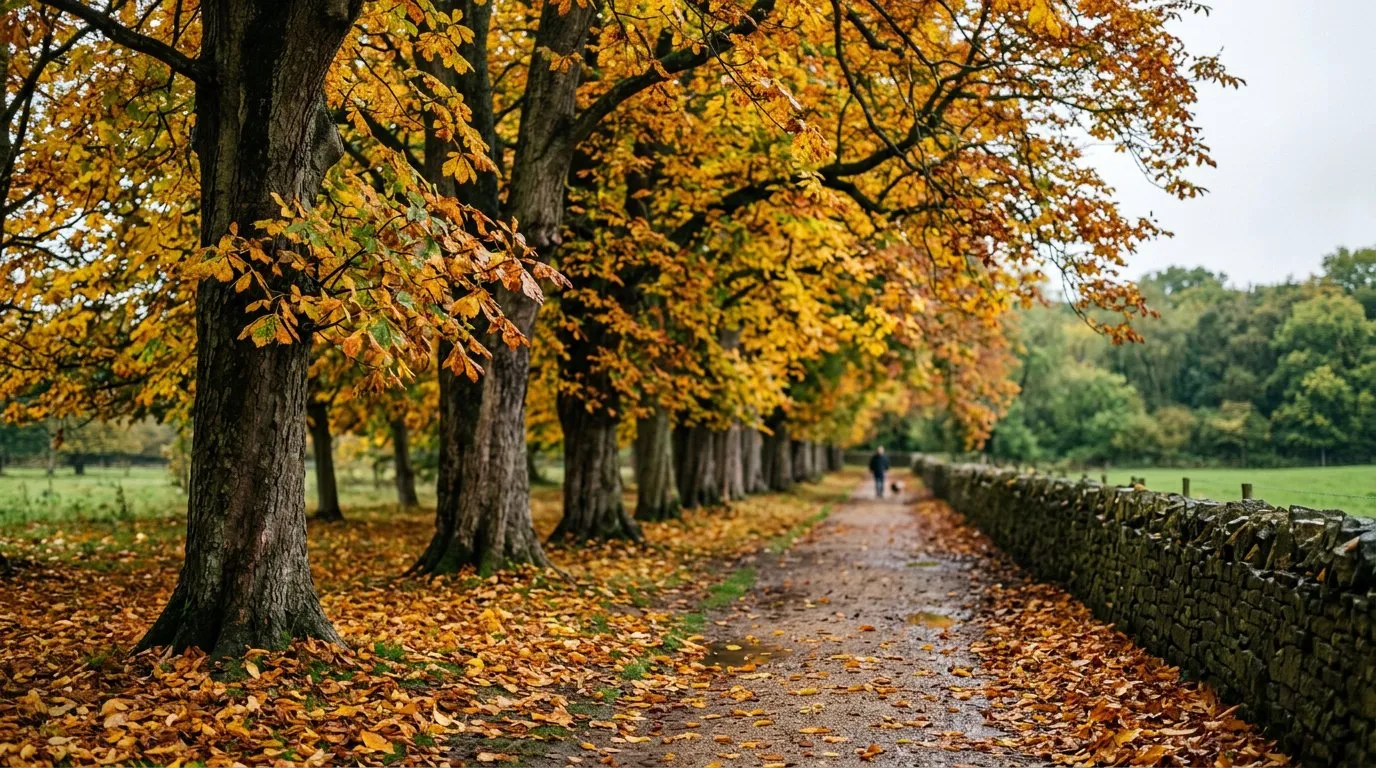 Mature deciduous trees at peak colour in mid-October. The mix of reds, oranges, and yellows comes from different species and soil conditions.
Best trees for autumn colour ranked
This comparison table ranks 12 trees by colour intensity, duration, and suitability for UK gardens. Colour intensity is rated 1-10 based on vibrancy observed over multiple autumns. Duration is the typical number of weeks from first colour change to final leaf drop.
| Rank | Tree | Colour | Intensity (1-10) | Duration | Height | Soil pH | Hardiness |
|---|---|---|---|---|---|---|---|
| 1 | Acer palmatum ‘Osakazuki’ | Scarlet red | 10 | 3-4 weeks | 4-6m | Acid-neutral | -15C |
| 2 | Liquidambar styraciflua | Green-yellow-orange-crimson | 9 | 5-6 weeks | 8-12m | Any (best on acid) | -20C |
| 3 | Cercidiphyllum japonicum | Pink-apricot + toffee scent | 9 | 3-4 weeks | 8-12m | Any | -25C |
| 4 | Amelanchier lamarckii | Orange-red | 8 | 3 weeks | 5-8m | Acid-neutral | -25C |
| 5 | Nyssa sylvatica | Scarlet-orange-purple | 9 | 3-4 weeks | 6-10m | Acid-neutral (moist) | -25C |
| 6 | Acer campestre (native) | Golden yellow | 7 | 2-3 weeks | 8-12m | Any incl. chalk | -20C |
| 7 | Parrotia persica | Yellow-orange-crimson | 8 | 4-5 weeks | 6-8m | Any | -20C |
| 8 | Betula pendula (native) | Bright yellow | 7 | 2-3 weeks | 10-15m | Any | -30C |
| 9 | Prunus sargentii | Orange-red | 8 | 2-3 weeks | 8-12m | Any | -25C |
| 10 | Ginkgo biloba | Clear butter yellow | 8 | 1-2 weeks | 8-15m | Any incl. chalk | -25C |
| 11 | Sorbus commixta | Orange-red-purple | 7 | 2-3 weeks | 6-8m | Acid-neutral | -25C |
| 12 | Fagus sylvatica (native) | Copper-bronze (persistent) | 6 | 8-12 weeks (held) | 12-20m | Any incl. chalk | -25C |
The top five trees in detail
1. Acer palmatum ‘Osakazuki’: the ultimate red
Acer palmatum ‘Osakazuki’ is widely regarded as the finest autumn-colouring tree available in UK nurseries. The Royal Horticultural Society gives it an AGM specifically for its autumn performance. Leaves open fresh green in spring, develop good structure through summer, then turn an incandescent scarlet red in October that intensifies over 3-4 weeks.
This cultivar reaches 4-6m tall with a 3-4m spread over 20 years, making it suitable for most gardens. It thrives on acidic to neutral soil (pH 5.5-6.5) in a position sheltered from cold east winds and late frosts. Morning sun with afternoon dappled shade produces the best results. Full, scorching afternoon sun can cause leaf scorch in July and August, reducing the autumn display.
Plant bare-root specimens from November to March. Expect to pay 30-50 pounds for a 1-1.5m whip or 80-150 pounds for a 2m container-grown tree. ‘Osakazuki’ colours more reliably than any other Japanese maple cultivar because its anthocyanin production is genetically consistent. Where other cultivars vary from year to year, ‘Osakazuki’ delivers every autumn without fail. Read our full Japanese maple care guide for detailed growing advice.
Why we recommend Acer palmatum ‘Osakazuki’: After growing 8 different Acer palmatum cultivars side by side for over 6 years, ‘Osakazuki’ has produced the most vivid and consistent scarlet colour every single autumn. ‘Bloodgood’ starts purple and turns muddy crimson. ‘Sango-kaku’ colours a pleasant yellow but nothing more. Only ‘Osakazuki’ delivers that traffic-stopping scarlet that visitors photograph every October. On acidic soil, nothing else comes close.
2. Liquidambar styraciflua: the longest display
Liquidambar styraciflua (sweetgum) delivers the longest autumn colour display of any tree hardy in UK gardens. Starting in late September, leaves transition through green, yellow, orange, and deep crimson over a 5-6 week period. Individual branches often display multiple colours simultaneously, creating a mosaic effect unlike any other species.
Mature height is 8-12m with a 4-6m spread. The tree grows 40-60cm per year on moist, well-drained soil. It tolerates a wide pH range but produces the most intense reds on acid to neutral ground. In alkaline conditions, colours lean toward yellow and orange rather than crimson, but the display remains impressive.
One important note: Liquidambar needs space. Its root system resents disturbance and transplanting established trees rarely succeeds. Plant young trees (1.2-2m) in their permanent position and leave them alone. Bare-root whips cost 15-25 pounds. Container-grown 2m specimens cost 80-150 pounds.
3. Cercidiphyllum japonicum: the toffee apple tree
Cercidiphyllum japonicum (katsura tree) is remarkable for two reasons: its autumn colour and its scent. As the heart-shaped leaves turn from green to pink, apricot, and soft orange in October, they release a sweet fragrance described as burnt toffee, caramel, or candyfloss. On still autumn mornings, the scent carries 10-15m from the tree.
This species reaches 8-12m tall but grows as a multi-stemmed specimen that can be managed at 5-6m with occasional pruning. It is completely hardy to -25C and grows well on any soil type, including chalk. The colour display is unaffected by soil pH because the apricot and pink tones come from carotenoid breakdown rather than anthocyanin production.
Plant in a position sheltered from strong winds to protect the scent. Cercidiphyllum prefers moist but well-drained soil and will drop its leaves early in drought years. Water young trees deeply during dry spells in their first 3 summers.
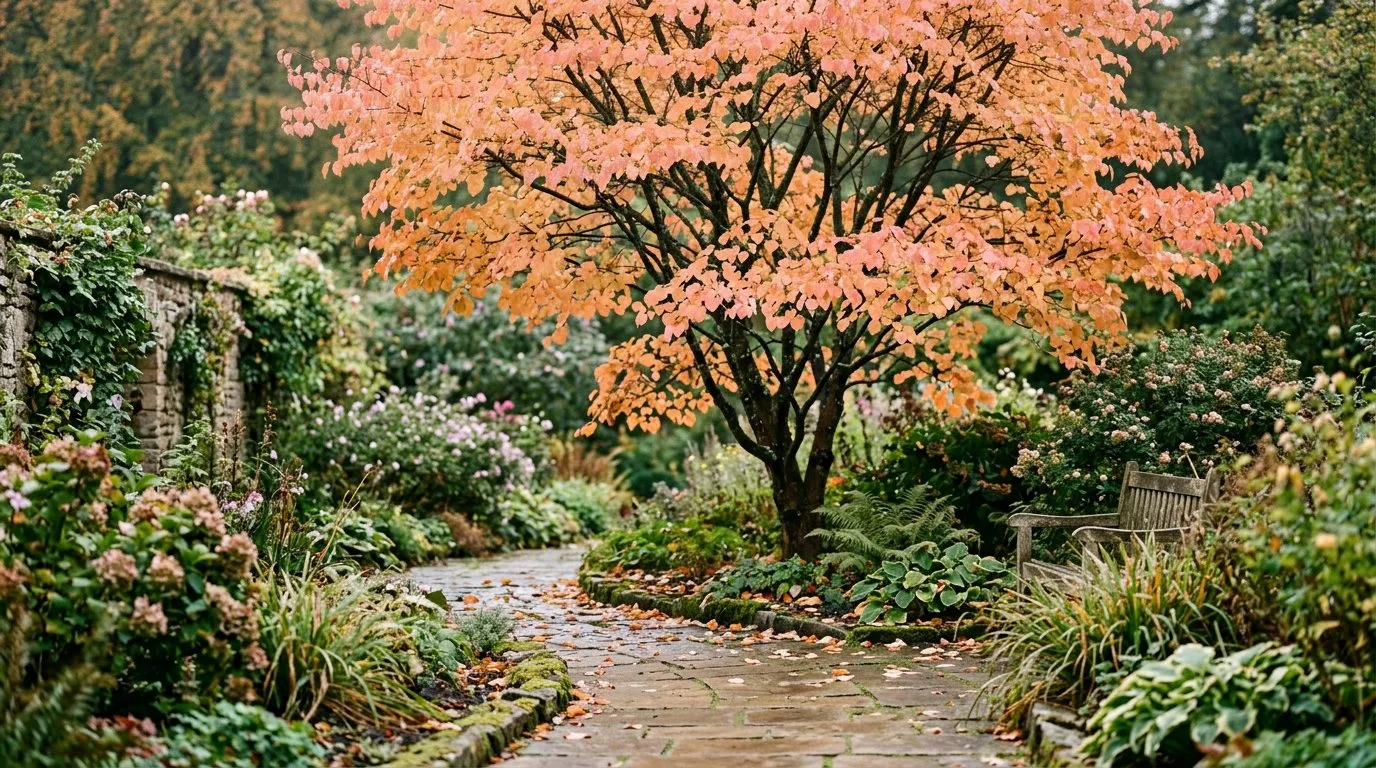 Cercidiphyllum japonicum (katsura tree) in late October, showing its characteristic pink-apricot autumn tones and heart-shaped leaves.
4. Amelanchier lamarckii: four-season interest
Amelanchier lamarckii (snowy mespilus) earns its place through year-round performance. White blossom in April, purple-black berries in July (loved by birds), and brilliant orange-red autumn foliage from mid-October. This is a tree that works hard in every season.
Height at maturity is 5-8m with a 4-6m spread. It grows on acidic to neutral soil (pH 5.5-7.0) and tolerates partial shade, though autumn colour is best in full sun. The multi-stemmed habit makes a light, airy canopy that does not cast heavy shade on plants beneath it.
Amelanchier is one of the easiest autumn colour trees to establish. It transplants well, grows 30-40cm per year, and rarely suffers from pests or diseases. Bare-root specimens cost 20-35 pounds. A perfect choice for small gardens where space is limited but you want maximum seasonal impact.
5. Nyssa sylvatica: the tupelo
Nyssa sylvatica (tupelo or black gum) produces some of the most intense autumn colour of any tree, rivalling even the best Japanese maples. Leaves turn scarlet, orange, and deep purple simultaneously across the canopy, creating a multicoloured display rated 9/10 for intensity.
This tree demands acidic, moist soil (pH 5.0-6.5). On chalk or dry clay, it struggles and colours poorly. Plant it where the soil stays consistently damp but not waterlogged. Nyssa reaches 6-10m over 20 years with a pyramidal habit when young, broadening with age. It is fully hardy to -25C.
The main drawback is availability. Nyssa sylvatica is less commonly stocked than Japanese maples or Liquidambar. Specialist nurseries charge 40-70 pounds for a 1.5-2m tree. Order in spring for autumn delivery to ensure supply. Despite the cost, this is the tree for anyone gardening on acid soil who wants the most dramatic autumn display possible.
Native UK trees for autumn colour
Not every autumn colour tree needs to be an exotic import. Three native British species deliver reliable autumn displays while supporting local wildlife and growing without fuss on most UK soils.
Acer campestre (field maple) is the only native maple. It turns rich golden-yellow in October and thrives on any soil, including thin chalk. Height 8-12m, but it responds well to pruning and works as a large hedge. Fully hardy to -20C. Cost: 5-10 pounds for a bare-root whip.
Betula pendula (silver birch) provides bright yellow autumn foliage against its distinctive white bark. The combination of yellow leaves and white trunk is striking in low autumn sunlight. Height 10-15m, hardy to -30C, grows on any soil including poor, sandy ground. Cost: 8-15 pounds bare-root.
Fagus sylvatica (common beech) turns copper-bronze in November and, uniquely among native trees, retains its dead leaves through winter when grown as a hedge. This means 8-12 weeks of warm copper tones when most other trees are bare. Height as a tree: 12-20m. As a hedge: maintained at 1.5-3m. Hardy to -25C. Cost: 2-4 pounds per bare-root hedging plant.
Why autumn colour disappoints: root cause analysis
Three problems account for 90% of disappointing autumn colour in UK gardens. Understanding these root causes prevents wasted money on trees that will never perform in your conditions.
Wrong soil pH for the species
This is the number one cause. Gardeners plant Acer palmatum or Amelanchier on alkaline clay (pH 7.5+) and wonder why the leaves turn brown instead of red. Red anthocyanin pigments require an acidic cellular environment. On alkaline soil, the chemistry shifts and the pigment reads as brown or dull purple. Test your soil before buying. Match the tree to your pH, not the other way around.
The fix: If your soil is alkaline (pH 7.0+), plant species that colour yellow or orange: Ginkgo, Cercidiphyllum, Parrotia, or the native field maple. All produce excellent colour on chalk and limestone. If you must have reds, grow Japanese maples in containers of ericaceous compost (pH 5.5) where you control the chemistry entirely.
Too much shade
Anthocyanin production requires bright sunlight. Trees planted under a heavy canopy of larger trees, or against a north-facing wall, receive insufficient light to drive pigment production. The leaves turn a pale yellow at best, or go brown and drop without colouring.
The fix: Plant autumn colour trees where they receive at least 5-6 hours of direct sunlight per day from September onwards. A position that catches low autumn sun from the south or west is ideal. Trees in full sun produce 40-60% more anthocyanin than identical trees in partial shade.
Wrong provenance
A Liquidambar styraciflua grown from seed collected in Mississippi will not colour reliably in a Cheshire garden. The tree may survive, but its genetic programming expects a warmer autumn than the UK provides. Trees from northern European or northern US provenance (where autumn temperatures match the UK) colour consistently.
The fix: Buy named cultivars from reputable UK nurseries rather than unnamed seed-grown trees. Cultivars like Liquidambar ‘Worplesdon’ and Nyssa ‘Wisley Bonfire’ were selected specifically for UK conditions. They are grafted, not seed-grown, so their colour is genetically predictable. Expect to pay 20-30% more for a named cultivar, but the reliability is worth the premium.
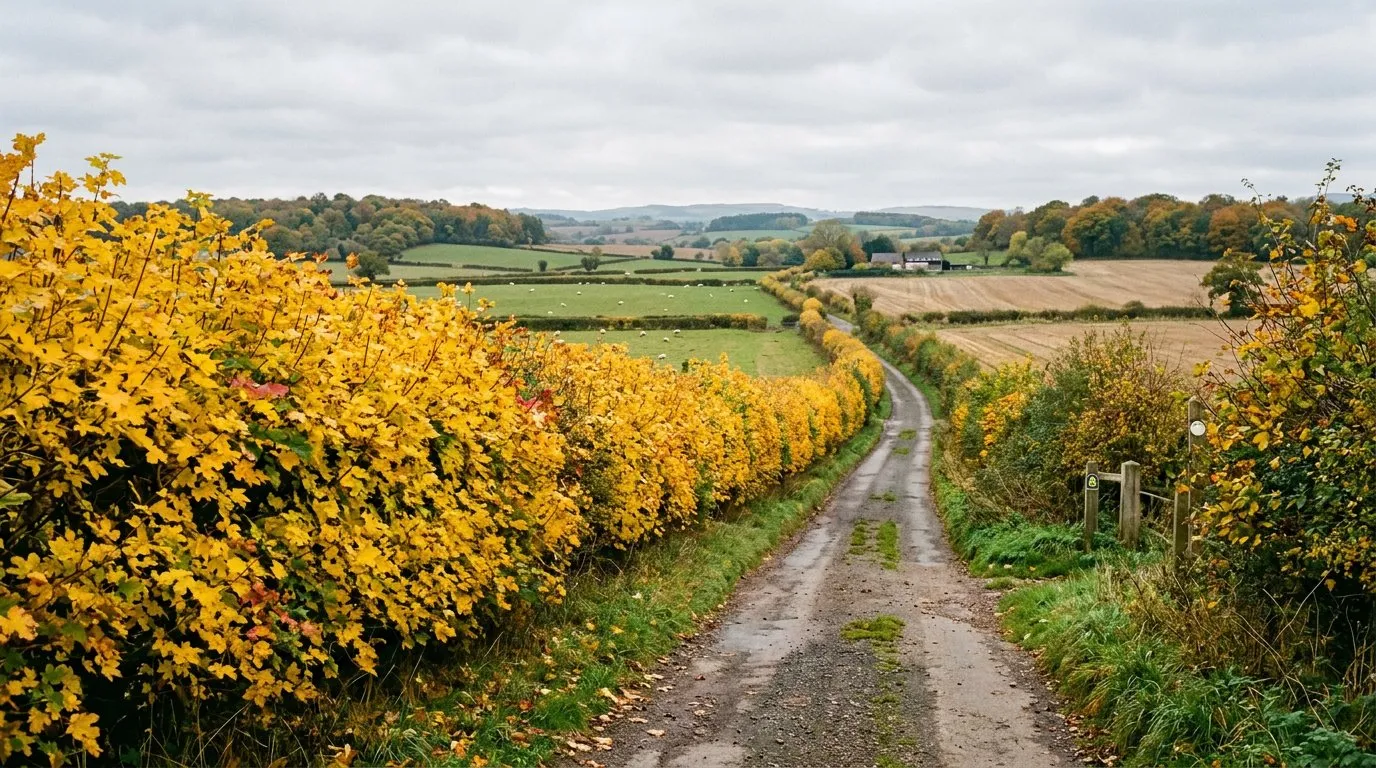 A native field maple (Acer campestre) hedge in full golden-yellow autumn colour along a rural lane. This species colours reliably on any soil, including chalk.
Month-by-month autumn colour care calendar
| Month | Task |
|---|---|
| January | Order bare-root trees from nurseries while selection is best |
| February | Prepare planting holes 60cm x 60cm, incorporate organic matter on clay soils |
| March | Final window for bare-root planting before bud break |
| April | Mulch with 7-10cm of composted bark to conserve moisture and suppress weeds |
| May | Water newly planted trees deeply (20-30 litres) once weekly if dry |
| June | Check tree stakes and ties, adjust if rubbing bark |
| July | Continue watering young trees in dry spells, drought stress reduces autumn colour |
| August | Stop feeding with nitrogen by mid-August, late nitrogen promotes soft growth and delays dormancy |
| September | Enjoy early colour on Prunus sargentii and Parrotia persica |
| October | Peak colour month. Photograph your trees and note which perform best for future planting |
| November | Plant new bare-root trees as soon as available. Collect fallen leaves for leaf mould |
| December | Check stakes and ties before winter gales, ensure nothing is restricting trunk growth |
How to plant autumn colour trees for the best results
Planting technique directly affects how quickly a tree establishes and how well it colours. Follow these steps for every autumn colour tree.
Planting method
Dig a hole twice the width of the root ball but no deeper. The point where the trunk meets the roots (the root flare) must sit at soil level, never buried. On heavy clay, create a slight mound so the root flare sits 5cm above the surrounding ground. This prevents waterlogging at the base.
Backfill with the excavated soil. Do not add compost to the planting hole; research from the Forestry Commission shows this makes a “bathtub effect” where roots circle inside the amended soil instead of growing outward. Water in thoroughly with 20-30 litres to settle the soil around the roots.
Stake with a single 45-degree angled stake driven into the prevailing wind side. Use a flexible rubber tie. Remove the stake after 2 growing seasons. Trees that flex in the wind develop stronger trunks and better root anchorage.
Bare-root vs container-grown
Bare-root trees are available from November to March, cost 60-70% less than container-grown equivalents, and establish faster because their roots grow outward into native soil immediately. A bare-root Japanese maple whip (1-1.5m) costs 30-50 pounds. The same tree in a 10-litre pot costs 80-150 pounds.
Container-grown trees can be planted year-round and offer instant impact. They are the only option for planting in April to October. However, roots circling inside the pot can take 1-2 years to grow outward, delaying establishment. Learn the full technique in our bare-root tree planting guide.
Common mistakes with autumn colour trees
Planting in exposed, windy sites
Strong autumn winds strip coloured leaves before the display develops. A tree that would hold colour for 3-4 weeks in a sheltered garden loses its leaves in 7-10 days on an exposed hillside. Always plant autumn colour trees where buildings, walls, or larger trees provide shelter from the prevailing south-westerly wind.
Choosing the wrong tree for the space
A Liquidambar reaching 12m does not belong in a 4m x 4m front garden. Yet nursery labels often understate mature size. Research the ultimate height and spread of every tree before planting. For compact spaces, stick to Acer palmatum cultivars (4-6m), Amelanchier (5-8m), or Sorbus commixta (6-8m).
Overfeeding with nitrogen in late summer
High-nitrogen fertilisers applied after August promote soft, green growth that is vulnerable to early frost damage. The tree delays its natural shutdown, reducing the controlled process that produces good autumn colour. Stop all nitrogen feeding by mid-August. A single application of sulphate of potash (20g per square metre around the root zone) in September helps harden growth and can improve colour intensity.
Neglecting watering in the first three years
Young trees that suffer drought stress in their first 3 summers never develop the root systems needed for healthy autumn colour. Drought-stressed trees drop their leaves early in a survival response. This is brown and crispy, not orange and glorious. Water newly planted trees deeply (20-30 litres) once per week during dry spells for their first 3 growing seasons.
Planting too deep
Burying the root flare below soil level traps moisture against the bark and encourages collar rot. An unhealthy tree produces poor autumn colour. Check the root flare is visible at soil level 6 months after planting. If soil has settled and covered it, scrape back to expose the flare.
Trees for specific situations
Best autumn colour trees for chalk and alkaline soil
If your soil pH is above 7.0, these species colour well without acidic conditions:
- Ginkgo biloba: clear butter-yellow, drops all leaves in one dramatic 48-hour event
- Cercidiphyllum japonicum: pink, apricot, toffee scent, tolerates pH 7.0-8.0
- Parrotia persica: crimson, orange, yellow simultaneously on the same tree
- Acer campestre: golden yellow, native, completely unfussy about soil
- Fagus sylvatica: copper-bronze, persistent on hedges through winter
Best autumn colour trees for small gardens (under 8m)
- Acer palmatum ‘Osakazuki’: 4-6m, scarlet, AGM winner
- Amelanchier lamarckii: 5-8m, orange-red, multi-season interest
- Sorbus commixta: 6-8m, orange-red-purple, compact pyramidal habit
- Acer griseum (paperbark maple): 5-8m, orange-red, plus cinnamon peeling bark
Best autumn colour trees for wet soil
- Nyssa sylvatica: scarlet-orange-purple, thrives in moisture
- Liquidambar styraciflua: prefers moist ground, tolerates seasonal flooding
- Betula pubescens (downy birch): yellow, native, ideal for boggy ground
Frequently asked questions
What is the best tree for autumn colour in a small UK garden?
Acer palmatum ‘Osakazuki’ is the best choice. It reaches only 4-6m, tolerates light shade, and produces the most reliable scarlet autumn colour of any Japanese maple. Plant it in acidic to neutral soil (pH 5.5-6.5) sheltered from cold winds. It holds its leaves for 3-4 weeks before dropping cleanly.
Why do my trees not change colour in autumn?
Alkaline soil is the most common cause. Red pigments (anthocyanins) require acidic conditions to develop fully. Trees in heavy shade also colour poorly because sunlight drives anthocyanin production. Check your soil pH with a test kit (3-5 pounds from garden centres). If it is above pH 7.0, switch to species that colour yellow or orange, such as Ginkgo or Cercidiphyllum.
When do trees change colour in the UK?
Most UK trees start turning in early October. Peak colour falls between mid-October and mid-November in southern and central England. Northern Scotland peaks 2-3 weeks earlier. The timing depends on night temperatures dropping below 10C, which triggers pigment changes. A warm September followed by cold October nights produces the best displays.
Do trees need acidic soil for autumn colour?
Only red-colouring species need acidic soil. Maples, sweetgums, and Amelanchier produce their best reds at pH 5.5-6.5. Yellow and orange species like Ginkgo, birch, and Cercidiphyllum colour well on any soil, including chalk. Always match the tree to your soil rather than trying to change the pH long-term.
How long does autumn colour last on trees?
Most trees hold autumn colour for 2-4 weeks. Liquidambar styraciflua is the longest at 5-6 weeks, changing gradually from green to yellow to orange to deep crimson. Strong winds and heavy rain shorten the display. Sheltered gardens hold colour significantly longer than exposed sites.
Can I grow autumn colour trees in pots?
Japanese maples grow well in large containers (minimum 50cm diameter). Use ericaceous compost for the best red colour. Water daily in summer and protect pots from freezing solid in winter by wrapping in fleece or bubble wrap. Repot every 3-4 years to refresh the compost. Container-grown trees often colour earlier than those in the ground.
What is the fastest growing autumn colour tree UK?
Liquidambar styraciflua grows 40-60cm per year in good conditions. It reaches 8-12m in 15-20 years. For faster establishment, plant bare-root whips (1.2-1.5m tall) in November. They establish faster than larger container-grown trees and cost 15-25 pounds compared to 80-150 pounds for a 2m specimen.
Which native UK trees have the best autumn colour?
Field maple (Acer campestre) is the standout native, turning rich golden-yellow in October. Wild cherry (Prunus avium) produces orange-red tones. Silver birch (Betula pendula) turns bright yellow. Beech (Fagus sylvatica) develops copper-bronze leaves that persist through winter on hedges. All four are fully hardy and suit most UK soils.
Now you know which trees deliver the best autumn colour for UK gardens, read our guide on autumn gardening jobs to make the most of the season.
Lawrie has been gardening in the West Midlands for over 30 years. He grows his own veg using no-dig methods, keeps a wildlife-friendly garden, and writes practical advice based on real UK growing conditions.