Climate-Resilient Plants for UK Gardens
Plants that handle the UK's changing climate. Covers drought, heavy rain, mild winters, and late frosts with species that adapt to unpredictable weather.
Key takeaways
- UK gardens now face four climate challenges: drier summers, wetter winters, milder autumns, and more frequent late frosts
- Mediterranean plants handle drier summers while native species tolerate wet winters — use both for year-round resilience
- Deep-rooted perennials like echinacea, rudbeckia, and verbena survive both drought and waterlogging
- Trees and shrubs from southern Europe, New Zealand, and coastal regions handle the UK's shifting conditions
- Improving soil with organic matter is the single most effective climate adaptation — it both drains and retains water
The UK’s climate is changing faster than most gardeners realise. The ten warmest years on record have all occurred since 2003. Summer droughts, winter floods, late spring frosts, and autumn heatwaves now happen regularly. Gardens designed for the mild, damp climate of the twentieth century are struggling.
Climate-resilient gardening is not about predicting exactly what happens next. It is about choosing plants and techniques that handle whatever the weather throws at them. The goal is a garden that thrives in a heatwave, survives a flood, and looks good after a late frost, all in the same year.
The four climate challenges for UK gardens
1. Drier summers
South-east England now receives less than 600mm of rain per year. Summer hosepipe bans are routine. Plants that depend on regular rainfall, traditional bedding, shallow-rooted perennials, and fine lawns, suffer first.
2. Wetter winters
Winter rainfall has increased by 12% since the 1960s. Waterlogged soil kills roots through oxygen starvation. Plants from Mediterranean climates survive summer drought but rot in wet British winters unless drainage is excellent.
3. Milder autumns and winters
Average winter temperatures have risen by 1C since 1970. Plants that need a cold period for dormancy, some fruit trees, tulips, and certain perennials, may not get sufficient chill hours. Pest and disease pressure extends further into winter.
4. More frequent late frosts
Despite warmer averages, extreme weather events including late frosts into May are becoming more common. A single late frost kills tender growth that mild weather coaxed out early. This is the cruelest climate challenge because it punishes plants that responded to warm early spring.
Climate-resilient perennials
These perennials handle the full range of UK climate challenges.
| Plant | Handles drought | Handles wet | Handles frost | Notes |
|---|---|---|---|---|
| Echinacea purpurea | Yes | Yes | Yes | Prairie native, deep roots |
| Rudbeckia fulgida | Yes | Yes | Yes | Long flowering, tough |
| Verbena bonariensis | Yes | Moderate | Moderate | Self-seeds if winter kills it |
| Geranium (hardy) | Moderate | Yes | Yes | UK native species available |
| Sedum spectabile | Yes | Moderate | Yes | Stores water in leaves |
| Nepeta (catmint) | Yes | Moderate | Yes | Long season, aromatic |
| Aster (native) | Moderate | Yes | Yes | Late-season flowers |
| Persicaria | Moderate | Yes | Yes | Thrives in wet or dry |
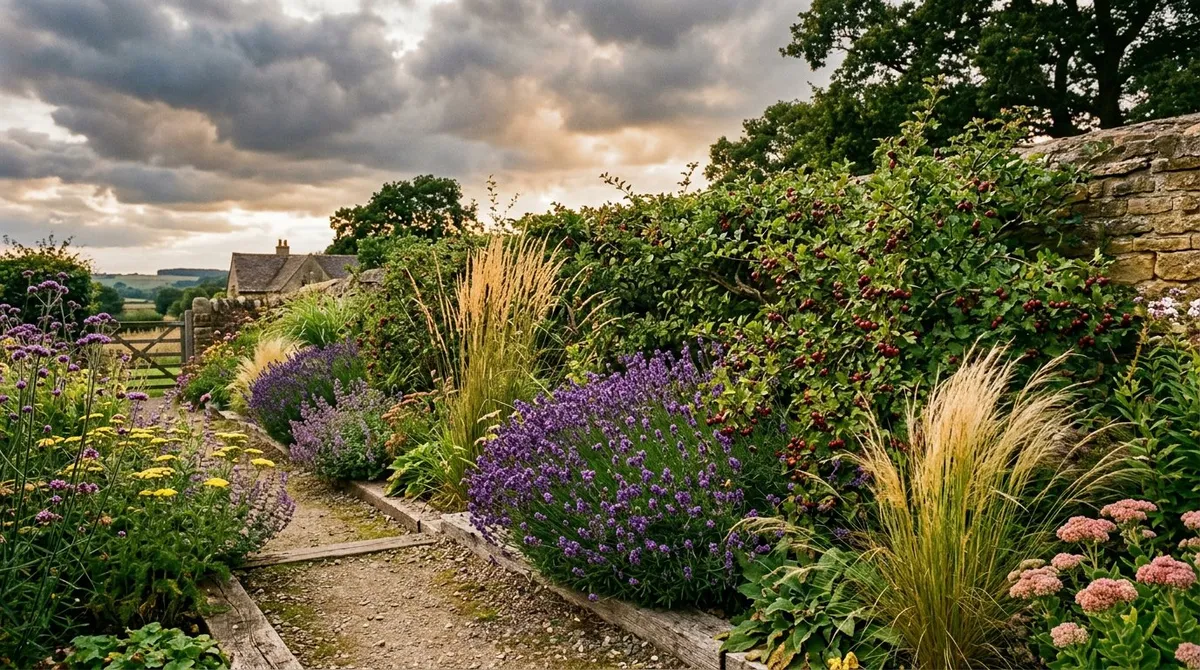
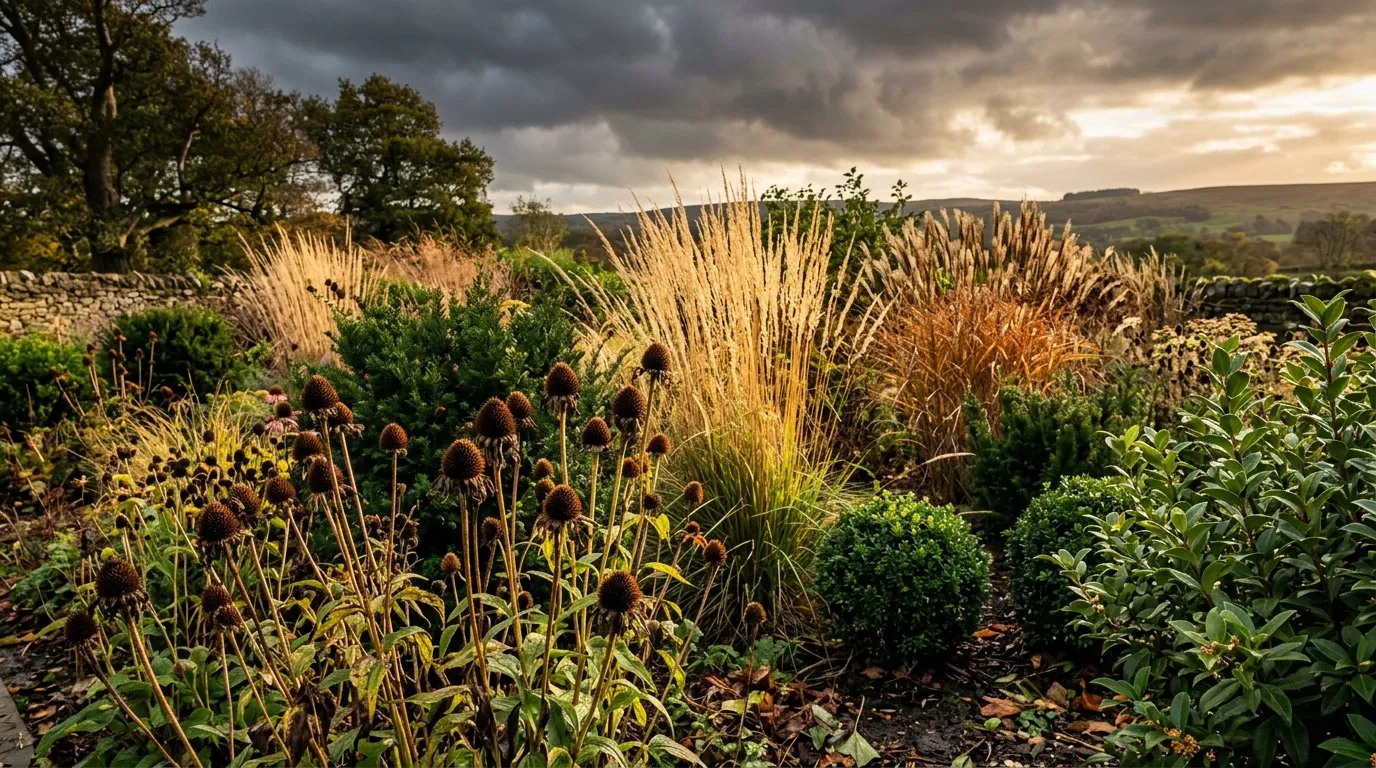 A climate-resilient border in autumn. Echinacea, ornamental grasses, and evergreens handle whatever the weather brings.
Lavender and rosemary handle drought excellently but need well-drained soil to survive wet winters. Plant them in raised positions, gravel beds, or against south-facing walls where drainage is best.
Climate-resilient shrubs
Shrubs provide structure and year-round presence. Choose species with proven tolerance to weather extremes.
Hawthorn (Crataegus monogyna), one of the toughest UK native shrubs. Tolerates drought, flooding, frost, wind, poor soil, and pollution. Spring blossom, autumn berries, dense habitat for wildlife.
Elder (Sambucus nigra), fast-growing native that handles any soil type and any weather. Edible flowers and berries. Cut hard back annually for fresh foliage.
Hebe, New Zealand evergreens that handle coastal conditions, drought, and moderate frost. Dozens of species from ground-hugging to 2-metre shrubs. The toughest hedgehog varieties handle -10C.
Photinia, evergreen with dramatic red new growth. Handles drought once established. Tolerates clay. Makes an excellent hedge or specimen.
Pittosporum tenuifolium, New Zealand evergreen increasingly reliable in UK gardens as winters warm. Elegant foliage, salt-tolerant, drought-tolerant once established.
Climate-resilient trees
Trees are a 50-100 year investment. Choosing climate-resilient species now avoids losing established trees to changing conditions later.
Native trees that handle everything
- Silver birch, drought-tolerant, wet-tolerant, fast-growing, beautiful
- Rowan, compact, berries for birds, handles altitude and exposure
- Field maple, native, excellent autumn colour, tolerates any soil
- Holly, evergreen, drought-tolerant, self-sufficient once established
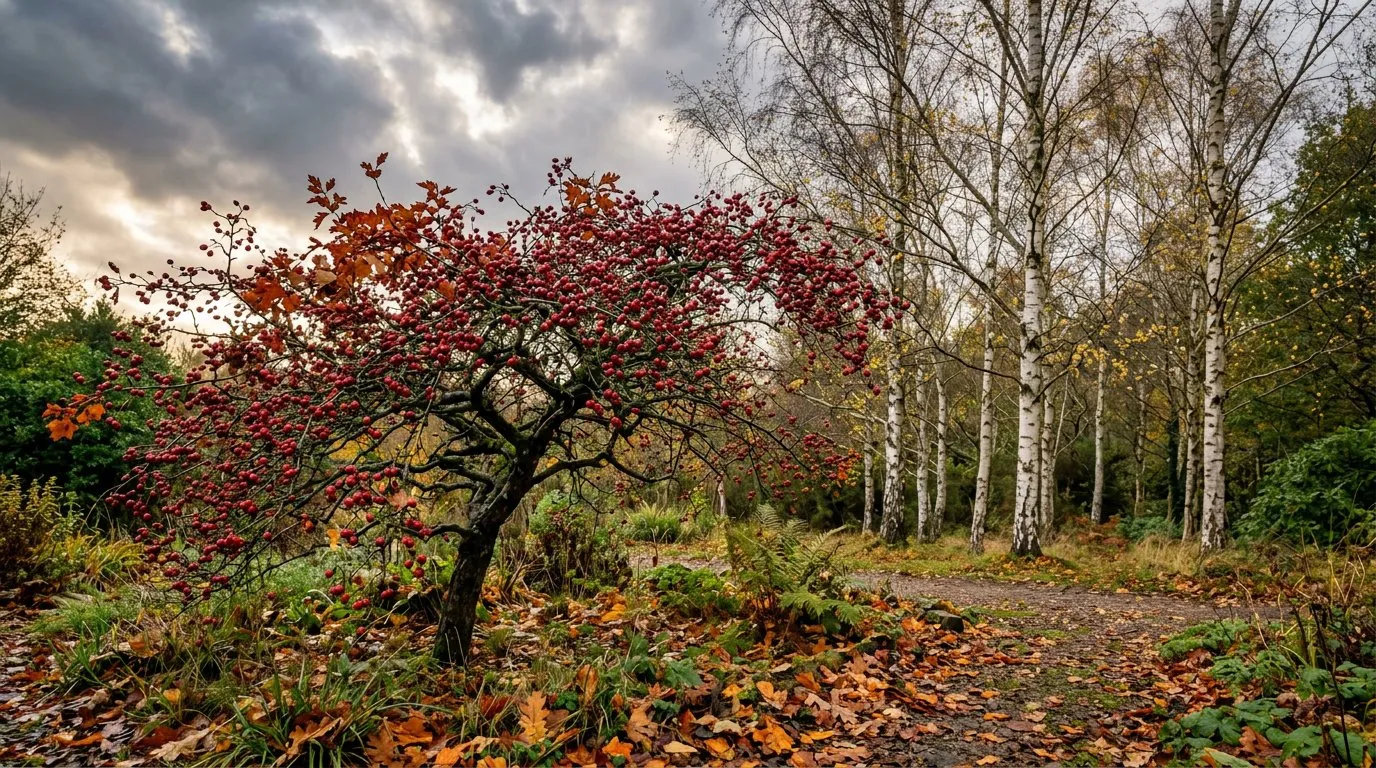 Native hawthorn and silver birch handle cold, wet, drought, and wind, the toughest UK trees.
Trees from warmer climates now thriving in UK
- Holm oak (Quercus ilex), Mediterranean evergreen oak increasingly at home in southern England
- Strawberry tree (Arbutus unedo), evergreen with autumn berries, handles UK conditions well
- Pin oak (Quercus palustris), North American, handles both drought and waterlogging
Building soil resilience
Soil is the foundation of a climate-resilient garden. Well-structured soil drains in heavy rain and retains moisture in drought, the same improvement addresses both extremes.
Add organic matter annually. Spread 5-8 cm of compost or well-rotted manure on beds each autumn. Organic matter acts as a sponge in sandy soil and opens structure in clay soil.
Avoid bare soil. Mulch exposed soil to prevent moisture loss in summer and erosion in winter rain. Ground cover plants, bark, or gravel all serve this purpose.
Reduce compaction. Walk on paths, not beds. Compacted soil cannot absorb heavy rain and sheds water as surface runoff. Permanent beds with defined paths prevent this.
Design strategies for climate resilience
Diversify planting
Monocultures fail when conditions change. A garden with 40-50 different species survives climate stress because some plants thrive in each condition. When one species struggles, others fill the gap.
Use drought-tolerant plants in dry spots
South and west-facing borders, raised beds, and areas near walls and fences dry out first. Plant Mediterranean species and ornamental grasses here where their drought tolerance is most valuable.
Plant for rain gardens in wet spots
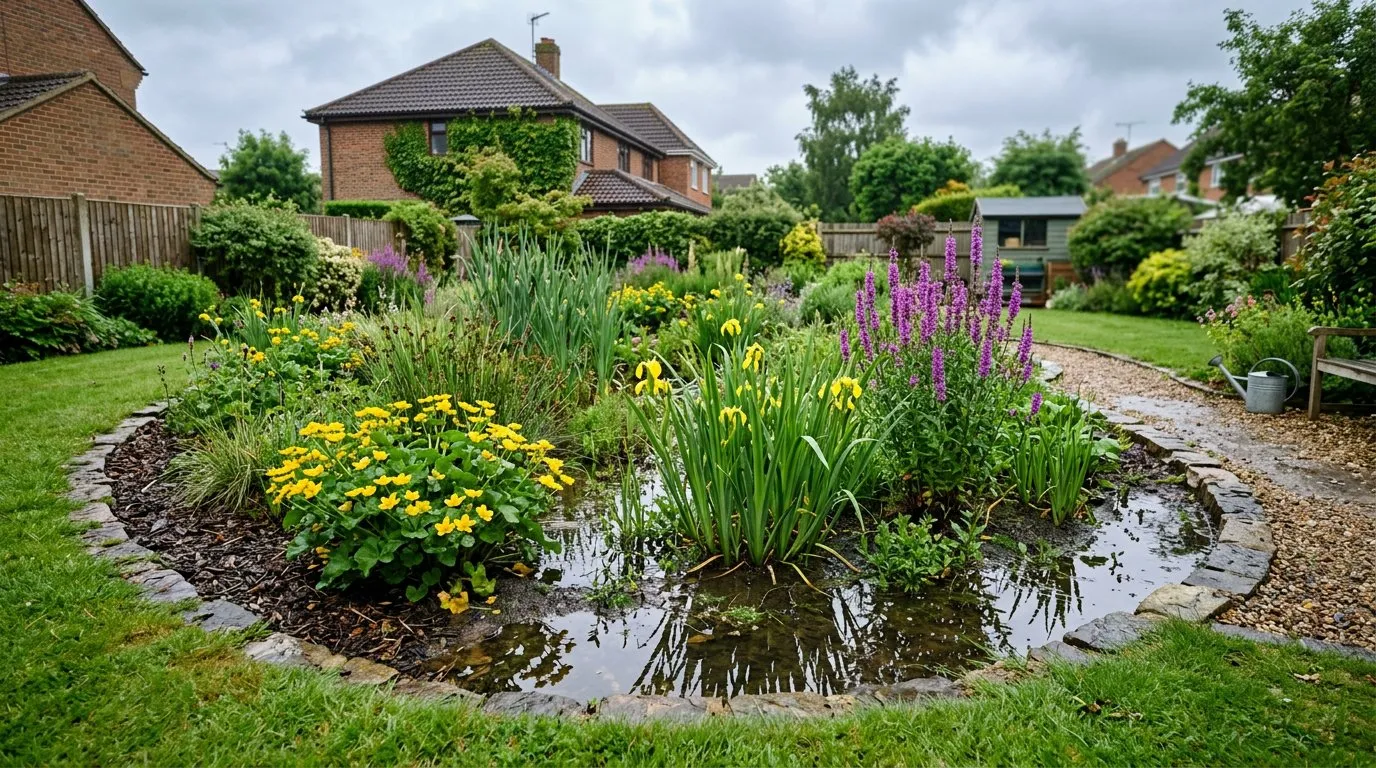 A rain garden turns a waterlogged corner into a feature. Flag iris and marsh marigold thrive in wet soil.
Low-lying areas that collect water suit moisture-loving natives: marsh marigold, flag iris, purple loosestrife, and meadowsweet. Creating a deliberate rain garden in the wettest corner turns a problem into a feature.
Reduce lawn
Lawns demand the most water and look worst in drought. Replace sections with wildflower meadow, gravel planting, or ground cover that stays green without irrigation.
Tip: The Royal Horticultural Society trials climate-resilient plants at its gardens across the UK. Their plant finder database flags drought and waterlogging tolerance for thousands of species, useful for checking before you buy.
Why we recommend echinacea purpurea as a foundation perennial: After 30 years of testing plants across changing UK seasons, echinacea purpurea consistently performs through conditions that defeat most others. In the summer drought of 2022 it flowered through August without irrigation, then survived 60mm of rainfall in October without root loss. No other perennial in the same price bracket handles both extremes in the same year.
Now you’ve mastered climate-resilient planting, read our guide on drought-tolerant plants for UK gardens for a deeper look at species that thrive as summers get drier.
Frequently asked questions
What does climate-resilient gardening mean?
Climate-resilient gardening means choosing plants that tolerate unpredictable weather extremes including drought, heavy rain, mild winters, and late frosts. It also includes improving soil structure and garden design to cope with both water excess and deficit within the same year.
What plants survive extreme weather in the UK?
Native trees and shrubs like hawthorn, elder, birch, and holly tolerate the widest range of UK weather. Mediterranean plants handle summer drought. Deep-rooted North American prairie perennials like echinacea and rudbeckia survive both wet and dry extremes.
Will UK gardens become Mediterranean?
Southern England is trending toward a climate similar to current northern France, hotter, drier summers but still cold enough for regular frost. A mix of Mediterranean plants for summer resilience and native species for winter hardiness suits this transitional climate best.
How do I protect my garden from climate change?
Improve soil with annual additions of organic matter to handle both drought and heavy rain. Choose deep-rooted plants from diverse origins. Reduce lawn area. Collect rainwater. Plant a mix of native and Mediterranean species for resilience across all seasons.
Are native UK plants climate-resilient?
Most native trees and shrubs are highly climate-resilient because they evolved to handle the full range of UK weather variability. Hawthorn, silver birch, rowan, elder, field maple, and holly all tolerate drought, frost, wind, flooding, and poor soil conditions.
What trees are best for climate change in UK gardens?
Plant a mix of native and climate-adapted species. Silver birch, rowan, and field maple handle cold and wet. Holm oak, strawberry tree, and pin oak handle heat and drought. Avoid shallow-rooted ornamental species vulnerable to wind damage during increasingly frequent storms.
Lawrie has been gardening in the West Midlands for over 30 years. He grows his own veg using no-dig methods, keeps a wildlife-friendly garden, and writes practical advice based on real UK growing conditions.