How to Grow Camellias in the UK
Grow camellias in UK gardens with acid soil and a sheltered spot. Covers three main species, variety picks, container growing, and monthly care.
Key takeaways
- Camellias need acid soil at pH 5.5-6.5 — use ericaceous compost in containers or on neutral ground
- Shelter from morning sun is critical: frozen buds that thaw too fast turn brown and drop
- C. × williamsii varieties drop spent blooms; C. japonica holds them — deadhead japonica manually
- Water with rainwater only — tap water contains lime that raises pH and causes yellowing leaves
- C. sasanqua flowers in autumn (October to December), giving colour when little else is in bloom
- Yellow leaves indicate lime-induced chlorosis — treat with sequestered iron and switch to rainwater
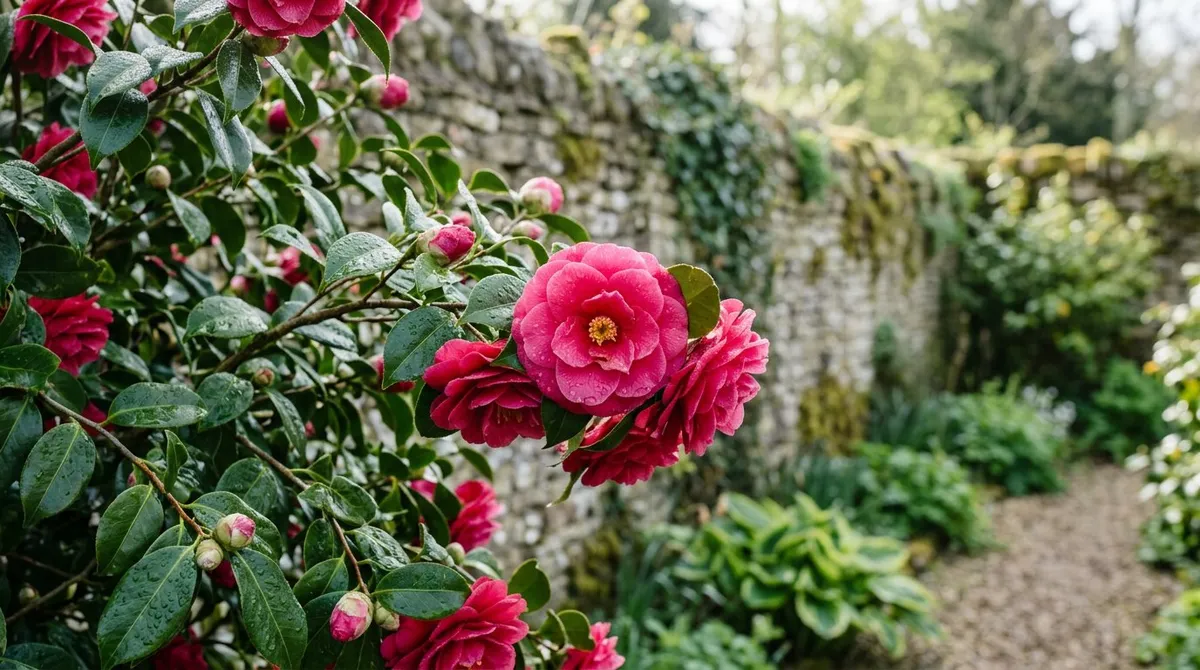
Camellias rank among the finest flowering shrubs available to UK gardeners. Glossy evergreen foliage provides year-round structure, and the flowers arrive in late winter and spring when colour in most gardens is scarce. Get the conditions right, acid soil, a sheltered spot away from morning sun, and rainwater, and a camellia will reward you for decades with little attention.
The RHS guide to growing camellias provides a useful technical reference. This guide focuses on practical decisions: which species to choose, where to plant, how to manage soil chemistry, and what to do each month.
Which camellia species should you grow?
Three main species matter to UK gardeners. Each has a different flowering season, habit, and set of strengths.
Camellia japonica, the classic
C. japonica is the most widely grown camellia in the UK. Mature plants reach 2-4m tall over many years, making a substantial evergreen specimen. Flowers appear from February to May, often when frost is still a real risk. The petals are large and formal, single, semi-double, and fully double forms are all available.
The key limitation with japonica is that spent flowers cling to the plant. Dead brown blooms among the glossy leaves look unsightly. You need to deadhead by hand after flowering, not a huge task on a young plant, but time-consuming on a large specimen. Recommended varieties:
- ‘Adolphe Audusson’, deep red, semi-double, AGM. One of the most reliable japonicas for UK conditions. Flowers from March to April. Reaches 3m over many years.
- ‘Nobilissima’, white peony-form flowers from January to March. One of the earliest japonicas to flower. Slightly more tender than average, benefits from wall shelter.
- ‘Elegans’, anemone-form flowers in deep rose pink. Strong grower with an arching habit. AGM holder, widely available in UK garden centres.
Camellia × williamsii, the UK favourite
The williamsii hybrids are crosses between C. japonica and C. saluenensis. They combine the floral size of japonica with an important practical advantage: the spent flowers drop cleanly from the plant. No deadheading needed.
These hybrids also tend to be more free-flowering and slightly more tolerant of exposed conditions than pure japonicas. ‘Donation’ has been the best-selling camellia in the UK for decades, if you only grow one camellia, this is the place to start. Key varieties:
- ‘Donation’, clear pink semi-double flowers from February to April. AGM. Vigorous upright habit to 4m. The benchmark UK camellia. Will grow in more exposed sites than most.
- ‘Anticipation’, deep crimson-pink peony-form flowers from March to April. AGM. More compact than ‘Donation’ at around 2.5m. Excellent for smaller gardens.
- ‘Debbie’, mid-pink peony-form with a generous display from February to April. Good for sheltered town gardens. AGM.
Camellia sasanqua, autumn colour
C. sasanqua flowers from October to December, months earlier than the other species. Flowers are smaller and more fragrant. The plants are more tolerant of sun and slightly drier conditions than japonicas. This makes them useful for south-facing walls as well as north-facing ones.
‘Crimson King’ (deep red), ‘Narumigata’ (white with pink edges), and ‘Hugh Evans’ (pink) are widely available. The autumn flowers are less frost-tolerant than the buds of spring-flowering species, so a sheltered wall position matters even more for sasanqua.
What conditions do camellias need?
Acid soil is non-negotiable
Camellias cannot grow well in alkaline or neutral soil. They need a pH of 5.5-6.5. Outside this range the plant cannot access iron and magnesium in the soil. Leaves turn yellow between the veins, a condition called lime-induced chlorosis. Flowering suffers and the plant gradually declines.
Before planting, test your soil with a simple pH meter or test kit from any garden centre. If your soil is above pH 6.5, growing in containers with ericaceous compost is the most reliable solution. Do not attempt to acidify heavy clay soil, it is a long battle. Containers give you complete control.
For container vegetable gardening, standard multipurpose compost works fine. For camellias, you must use ericaceous compost, the two are not interchangeable.
Water chemistry matters as much as soil chemistry
Tap water in most UK regions is hard, it contains dissolved calcium and magnesium bicarbonates that raise pH over time. Watering camellias with tap water in a hard-water area will gradually make the soil and compost more alkaline, even if you start with perfect pH ericaceous compost.
Always water camellias with rainwater. Install a water butt near the plant if you have not already. In an emergency, you can use tap water, but rainwater should be the default from the moment you plant.
Choose the right position
The most common camellia mistake in UK gardens is planting in an east-facing position. Early morning sun hits flower buds that have frozen overnight and thaws them too rapidly. The cells rupture and the buds turn brown and fall. The plant looks as though it has been damaged by frost, but the frost itself is not the problem, the rate of thawing is.
A north or west-facing wall is ideal. North-facing walls receive no direct sun, so frozen buds thaw slowly in the ambient air. West-facing walls get afternoon sun when temperatures have already risen, thawing is gradual and the buds survive. Camellias also tolerate dappled shade under deciduous trees, which provides good shelter from overnight radiation frost.
Avoid sites exposed to strong cold winds from the east or north-east in winter. A hedge or fence windbreak makes a significant difference to flower survival.
How to plant a camellia
Timing: September to October, or March to April. Avoid planting in winter when the ground is cold and roots establish slowly.
Preparation: Dig a hole twice the width of the root ball and no deeper. If your native soil is alkaline, fill the hole with ericaceous compost. For acid soil, mix ericaceous compost 50:50 with the native soil. Never plant camellias deep, the graft union (the swollen join between rootstock and top growth) should sit just above soil level.
Mulching: Apply a 5-7cm mulch of pine bark chips, pine needles, or acidic leaf mould over the root zone after planting. Keep mulch away from the stem. Refresh annually in spring. Mulch moderates soil temperature, retains moisture, and slowly acidifies the surface layer as it breaks down.
Feeding: Use a specialist ericaceous plant food from April to July. A balanced granular ericaceous fertiliser applied in spring and a liquid feed monthly through summer gives the best results. Never feed after August, it promotes soft growth that is vulnerable to autumn frosts.
Growing camellias alongside other acid-loving shrubs makes sense. Blueberries require identical soil conditions (pH 4.5-5.5, even more acid than camellias) and benefit from the same water butt and ericaceous mulching regime.
Growing camellias in containers
Container growing is the best option for gardeners on chalk, limestone, or heavy alkaline clay. It removes the soil chemistry problem entirely. Camellias grow well in pots for many years if managed correctly.
Use a container at least 40cm in diameter, larger is better. Terracotta looks attractive but dries out fast in summer and may crack in hard frosts. Large plastic or fibreglass containers with drainage holes are more practical. Fill with a quality ericaceous compost.
Water consistently and generously from spring to autumn. Do not allow the compost to dry out completely, this causes bud drop, where next year’s buds shrivel and fall before they open. Equally, do not allow the pot to stand in water, camellias dislike waterlogging.
Repot every three to four years into a slightly larger container, refreshing the compost. Container-grown camellias are vulnerable to compost pH drift over time as tap water or lime leaches in, check pH annually and correct with sulphur chips if needed.
Camellia variety comparison
| Variety | Species | Flower colour | Flower form | Flowering period | Height | RHS AGM |
|---|---|---|---|---|---|---|
| Donation | × williamsii | Clear pink | Semi-double | Feb–Apr | To 4m | Yes |
| Adolphe Audusson | japonica | Deep red | Semi-double | Mar–Apr | To 3m | Yes |
| Anticipation | × williamsii | Crimson pink | Peony | Mar–Apr | To 2.5m | Yes |
| Debbie | × williamsii | Mid-pink | Peony | Feb–Apr | To 3m | Yes |
| Nobilissima | japonica | White | Peony | Jan–Mar | To 3m | No |
| Elegans | japonica | Rose pink | Anemone | Mar–Apr | To 4m | Yes |
| Narumigata | sasanqua | White/pink edge | Single | Oct–Dec | To 3m | Yes |
Month-by-month camellia calendar
| Month | What to do |
|---|---|
| January | Check for frost damage on early buds. Fleece plants if hard frosts forecast. Water with stored rainwater if dry. |
| February | First japonica and williamsii blooms appear. Inspect buds, brown tips mean morning sun exposure. Begin watering more frequently as temperatures rise. |
| March | Peak flowering for most varieties. Deadhead spent japonica blooms. Apply granular ericaceous fertiliser as growth resumes. |
| April | Last flowers on early varieties. Prune lightly after flowering if shaping is needed. Plant container-grown camellias into their final positions. |
| May | New growth flushes. Apply a liquid ericaceous feed. Check soil or compost pH, adjust if above 6.5. |
| June | Midsummer, ensure consistent watering. Buds for next year’s flowers begin forming. Drought stress now causes next spring’s bud drop. |
| July | Continue monthly liquid feeds. Water generously, this is the critical period for bud development. |
| August | Final feed of the year. Stop feeding after this month. Continue watering through any dry spells. |
| September | Reduce watering gradually as temperatures drop. Consider planting new camellias now for autumn root establishment. |
| October | Sasanqua varieties begin flowering. Mulch root zone with fresh pine bark to insulate for winter. |
| November | Protect early-budding japonicas with fleece if exposed. Reduce watering but do not let roots dry out. |
| December | Sasanqua peak flowering. No feeding. Check container camellias have not become waterlogged. |
Troubleshooting common camellia problems
Yellow leaves
Yellow leaves with green veins are a classic sign of lime-induced chlorosis. The plant cannot absorb iron when the pH is too high. Treat immediately: apply sequestered iron (chelated iron) to the soil or compost, switch entirely to rainwater, and mulch the root zone with acidic material. In severe cases, repot container plants into fresh ericaceous compost.
Brown flower buds
Brown buds that fail to open are almost always caused by rapid thawing after frost. Shelter from morning sun is the solution. If the plant is already in a bad position, consider moving it in autumn to a north or west-facing spot. A temporary windbreak or fleece screen on the east side can protect buds through late winter.
Bud drop (buds form but fall before opening)
Drought stress in summer is the main cause. The buds for next year’s flowers set in June and July, allowing the plant to dry out during this period causes buds to abort. Consistent watering from June to September is essential. Check container plants daily in hot weather.
Camellias that struggle with seasonal colour through winter pair well with hellebores, which also tolerate shade and flower from January to April. For broader winter colour, best winter flowering plants lists reliable shrubs and perennials to extend the season alongside your camellias.
Pruning camellias
Camellias need minimal pruning. The main reasons to prune are to remove dead or crossing branches, to restrict size, or to renovate a neglected overgrown plant.
Prune immediately after flowering, late April to May is ideal. Pruning later risks removing next year’s buds, which form through summer. Camellias tolerate hard pruning well if needed: cutting back to old wood will produce fresh growth, though it may take a season before flowering resumes fully.
Never prune in autumn or winter. The flower buds are present and visible from August onwards, any autumn pruning removes them and eliminates the following spring’s display.
Why we recommend C. × williamsii ‘Donation’ as the UK’s most reliable camellia: After 30 years of growing camellias in a range of UK gardens and soil types, ‘Donation’ consistently flowers more freely, tolerates more exposure, and requires less intervention than any japonica or sasanqua we have grown alongside it. In a north-facing border with no special soil preparation beyond ericaceous compost at planting, our ‘Donation’ plant produced over 200 blooms in its third season and has never suffered brown bud drop.
Camellias in the wider garden
Camellias pair naturally with other acid-loving and shade-tolerant plants. Hydrangeas share the preference for sheltered positions and moist, reasonably acid soil. A planting of camellias for late winter colour followed by hydrangeas through summer provides interest across almost nine months.
Roses tolerate slightly more alkaline conditions but grow well alongside camellias where the soil is mildly acid. A mixed shrub border on a slightly acid soil with camellias at the back, roses in the middle ground, and hellebores and pulmonarias at the front gives structure, colour, and evergreen interest across all four seasons.
For gardeners planning a wider colour scheme across the year, the guide to best plants for shade covers ferns, hostas, and other shrubs that complement camellias in sheltered borders and woodland-style plantings.
Now you’ve mastered camellias, read our guide on growing blueberries in the UK, they share the same acid soil requirements and benefit from the same ericaceous care routine.
Frequently asked questions about growing camellias
What soil do camellias need?
Camellias need acid soil at pH 5.5-6.5. Outside this range the plant cannot absorb the nutrients it needs. In alkaline or neutral gardens, grow camellias in containers of ericaceous compost. Never add lime or spent mushroom compost near camellias, both raise soil pH significantly.
Why are my camellia buds going brown?
Brown buds are caused by frozen buds thawing too fast in morning sun. Relocate the plant to a north or west-facing position shielded from early sun. Protect with fleece during hard frosts. Bud drop from drought in summer, when the following year’s buds are forming, also causes buds to fall before opening the following spring.
Can camellias grow in pots?
Yes, containers with ericaceous compost are the ideal solution for alkaline garden soils. Use a pot at least 40cm in diameter with good drainage. Water with rainwater exclusively. Feed monthly from March to July with a liquid ericaceous fertiliser. Repot every three to four years into fresh compost.
When do camellias flower in the UK?
Flowering depends on species: sasanqua flowers October to December, williamsii January to April, japonica February to May. Growing varieties from all three groups provides colour across seven months. ‘Donation’ (williamsii) is the most reliable all-round choice for most UK gardens.
Do camellias need pruning?
Camellias need very little pruning. Remove dead or crossing branches immediately after flowering in late April to May. Hard pruning to reduce size is possible in April but will reduce flowering for a season. Never prune in autumn, the following year’s buds are already forming from August onwards.
What is the easiest camellia to grow in the UK?
C. × williamsii ‘Donation’ is the most reliable choice for UK gardens. It holds the RHS Award of Garden Merit, flowers from February to April, and drops spent blooms without deadheading. It tolerates more exposed conditions than most japonicas and is widely available in UK garden centres.
Why are my camellia leaves turning yellow?
Yellow leaves indicate lime-induced chlorosis, the soil or water pH is too high for iron absorption. Water exclusively with rainwater, apply sequestered iron to the soil, and mulch with pine bark or acidic leaf mould. If the problem is severe, repot container plants into fresh ericaceous compost and check that you have not been watering with hard tap water.
Lawrie has been gardening in the West Midlands for over 30 years. He grows his own veg using no-dig methods, keeps a wildlife-friendly garden, and writes practical advice based on real UK growing conditions.