How to Grow Daffodils: UK Guide
A practical guide to growing daffodils in UK gardens. Covers planting depth and timing, naturalising in grass, division, and the best varieties.
Key takeaways
- Plant daffodil bulbs from September to November, as early as possible for the best root establishment
- Bury bulbs at 2-3 times their own height, typically 10-15cm deep with the pointed end up
- Leave foliage for a minimum of 6 weeks after flowering — never cut, tie, or braid it
- Daffodils naturalise freely in grass and woodland, multiplying year after year
- Divide congested clumps every 3-5 years when flowering declines
- All parts of daffodil plants are toxic to pets and humans if eaten
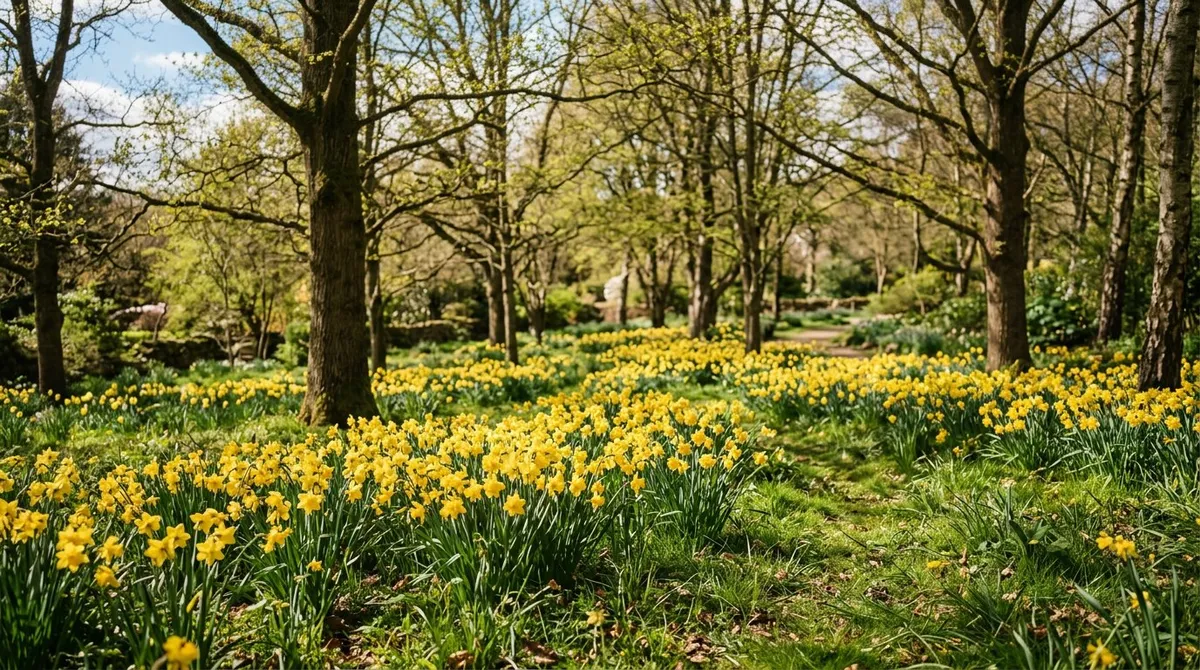
Daffodils are the defining flower of a British spring. From the first miniature ‘February Gold’ pushing through January frost to the last pheasant-eye narcissus nodding in May, they provide months of effortless colour. They thrive in every UK county, in every soil type, and in conditions from full sun to dappled woodland shade.
Growing daffodils is one of the simplest tasks in gardening. Plant the bulbs in autumn, and they do everything else themselves. They return year after year, multiply on their own, and require almost no maintenance. This guide covers planting, naturalising, division, and the best varieties for UK gardens. For precise timing advice, see our guide on when to plant daffodil bulbs.
How do I plant daffodil bulbs?
Plant daffodil bulbs from September to November. Earlier is better, bulbs planted in September develop stronger root systems than those planted in November and produce taller stems and larger flowers in the first spring.
Planting depth and spacing
The golden rule is to plant each bulb at 2-3 times its own height, with the pointed end facing up. For standard-sized daffodils, this means 10-15cm deep. Miniature varieties like ‘Tete-a-Tete’ plant at 7-10cm. Space bulbs 10-15cm apart in borders, or closer in containers.
In light, sandy soil, plant at the deeper end of the range. In heavy clay, plant slightly shallower and add a handful of horticultural grit beneath each bulb to aid drainage. See our guide to improving clay soil for more tips.
Planting in borders
Dig individual holes with a bulb planter or trowel, or excavate a wider area and place several bulbs at once. Drop a bulb into each hole with the pointed end up, backfill with soil, and firm gently. Water well after planting if the soil is dry.
For a natural look, scatter a handful of bulbs across the planting area and plant each one where it lands. This avoids the regimented rows that look artificial once the flowers open.
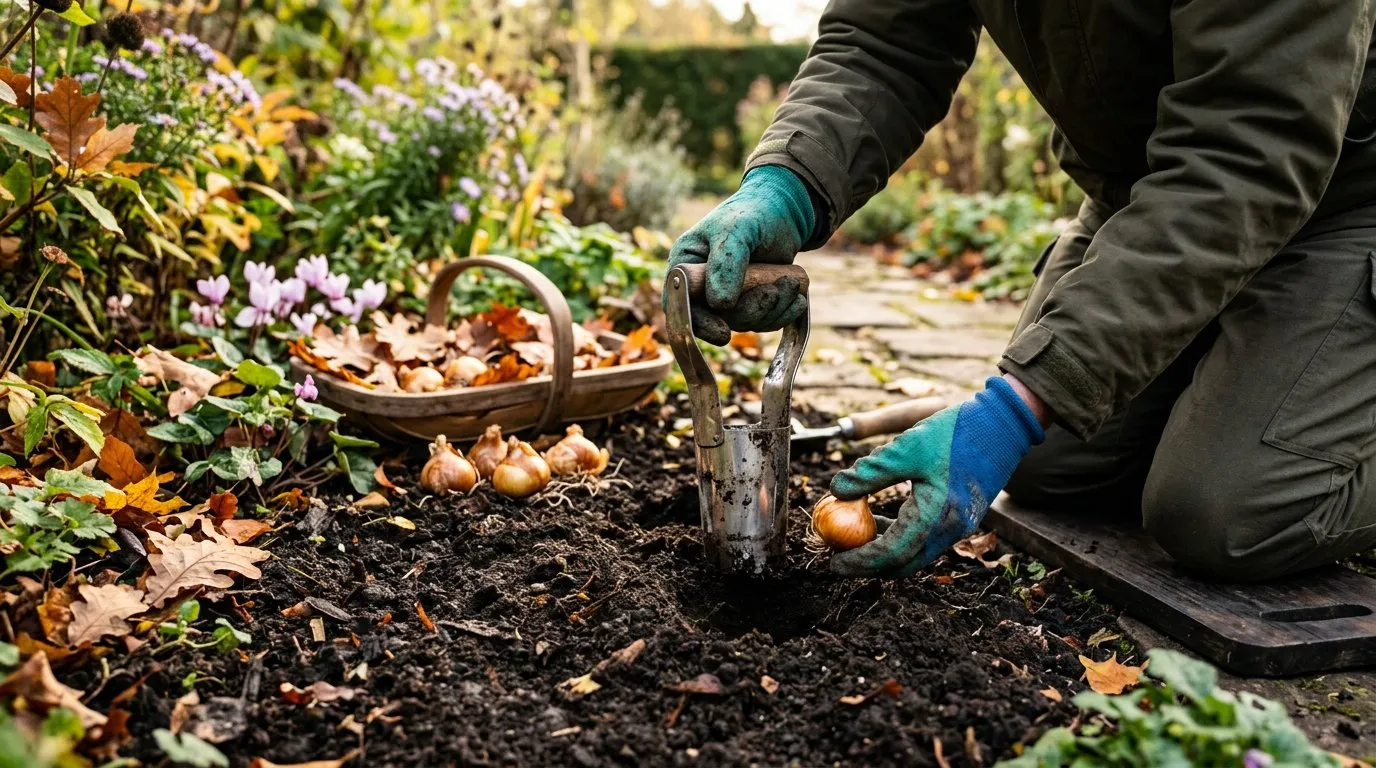
Plant daffodil bulbs pointed end up at 2-3 times their own depth, scatter randomly for a natural display
How do I naturalise daffodils in grass?
Naturalising daffodils in a lawn or under trees creates one of the most beautiful spring sights in any garden. The bulbs increase year after year, gradually colonising larger areas.
Choosing the right spot
Daffodils naturalise best in grass that you can leave unmown for 6 weeks after flowering finishes. This rules out a neatly manicured formal lawn but works perfectly in rougher grass under trees, on banks, in orchards, or in a dedicated area of longer grass. Consider pairing naturalised daffodils with a mini wildflower meadow for a wildlife-rich display.
How to plant in grass
Use a bulb planter (a tubular tool that cuts and lifts a plug of turf) to make individual holes. Plant each bulb at 10-15cm deep, replace the turf plug on top, and firm down. For large areas, lift a section of turf with a spade, fork over the soil beneath, scatter bulbs, and replace the turf.
Scatter the bulbs randomly before planting, do not arrange them in rows or patterns. Nature does not plant in grids. Aim for groups of 10-20 bulbs with natural gaps between groups.
Best varieties for naturalising
‘February Gold’, early cyclamineus hybrid, golden yellow, 30cm, vigorous and reliable. ‘Tete-a-Tete’, the most popular miniature daffodil in the UK, 15cm, multi-headed. ‘Pheasant’s Eye’ (N. poeticus recurvus), late-flowering, white petals with a small red-rimmed cup, deliciously scented, superb in grass. ‘W.P. Milner’, elegant pale cream nodding flowers, 25cm, beautiful under deciduous trees.
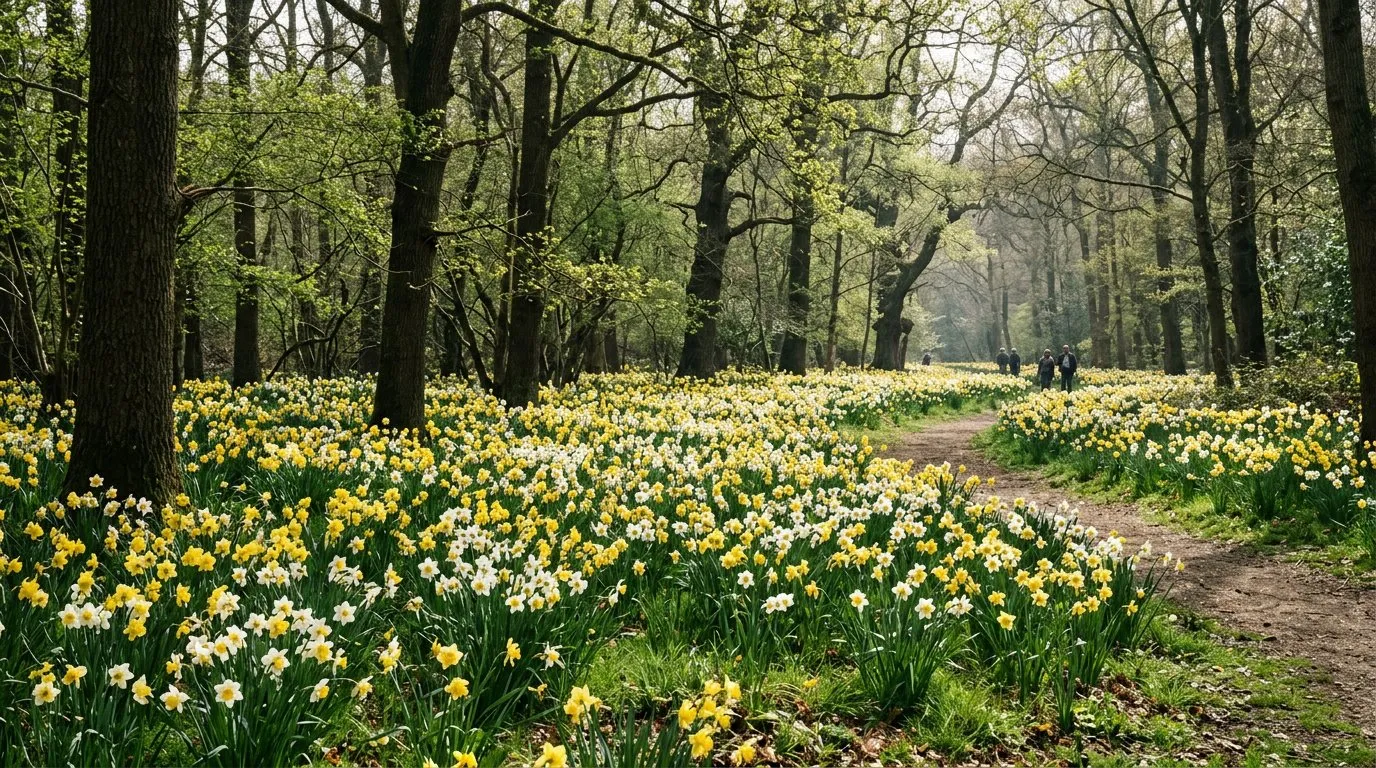
Naturalised daffodils under deciduous trees create a classic British spring scene that improves every year
What should I do after daffodils have flowered?
This is where many gardeners go wrong. What you do after flowering determines whether your daffodils bloom well next year.
Leave the foliage
After the flowers fade, the leaves continue photosynthesising for another 6 weeks, feeding energy back into the bulb for next year’s flower. Never cut, tie, or braid the foliage before it has turned completely yellow and collapsed naturally. Cutting early is the main reason daffodils stop flowering (go blind) in subsequent years.
Deadhead spent flowers
Snap off the faded flower head and the swollen seed pod behind it, leaving the stem intact. Seed production diverts energy away from the bulb. This small task makes a noticeable difference to flowering the following year.
Feeding
Apply a balanced liquid fertiliser or scatter blood, fish, and bone around the clumps immediately after flowering. This boosts bulb recovery and builds energy reserves for the following spring.
In lawns
Do not mow naturalised daffodil areas until at least 6 weeks after the last flowers fade. Set the mower blade high for the first cut. This usually means leaving the grass until late May or early June, depending on when your daffodils finish. See our lawn care calendar for guidance on managing grass around bulb areas.
When should I divide daffodils?
Divide congested clumps every 3-5 years, or whenever flowering starts to decline despite good aftercare. Congestion is the most common cause of daffodils going blind.
How to divide
Lift the entire clump with a fork in late June or July, once the foliage has died back completely. Shake off excess soil and gently separate the bulbs by hand. Discard any that are soft, damaged, or very small. Replant the largest bulbs immediately at the correct depth and spacing.
You can also store bulbs dry in a cool, dark place and replant in September. This is useful if you want to move them to a different part of the garden.
What are the best daffodils for UK gardens?
| Type | Variety | Height | Colour | Flowering time |
|---|---|---|---|---|
| Miniature | ’Tete-a-Tete’ | 15cm | Golden yellow | February-March |
| Miniature | ’February Gold’ | 30cm | Deep yellow | February-March |
| Miniature | ’Jetfire’ | 25cm | Yellow/orange trumpet | March |
| Standard | ’King Alfred’ (modern selections) | 40cm | Classic golden yellow | March-April |
| Standard | ’Ice Follies’ | 40cm | White with lemon cup | March-April |
| Standard | ’Carlton’ | 40cm | Soft yellow, fragrant | March-April |
| Multi-headed | ’Cheerfulness’ | 40cm | Double white, fragrant | April |
| Multi-headed | ’Geranium’ | 40cm | White/orange, tazetta | April |
| Late | ’Pheasant’s Eye’ | 40cm | White/red cup, scented | May |
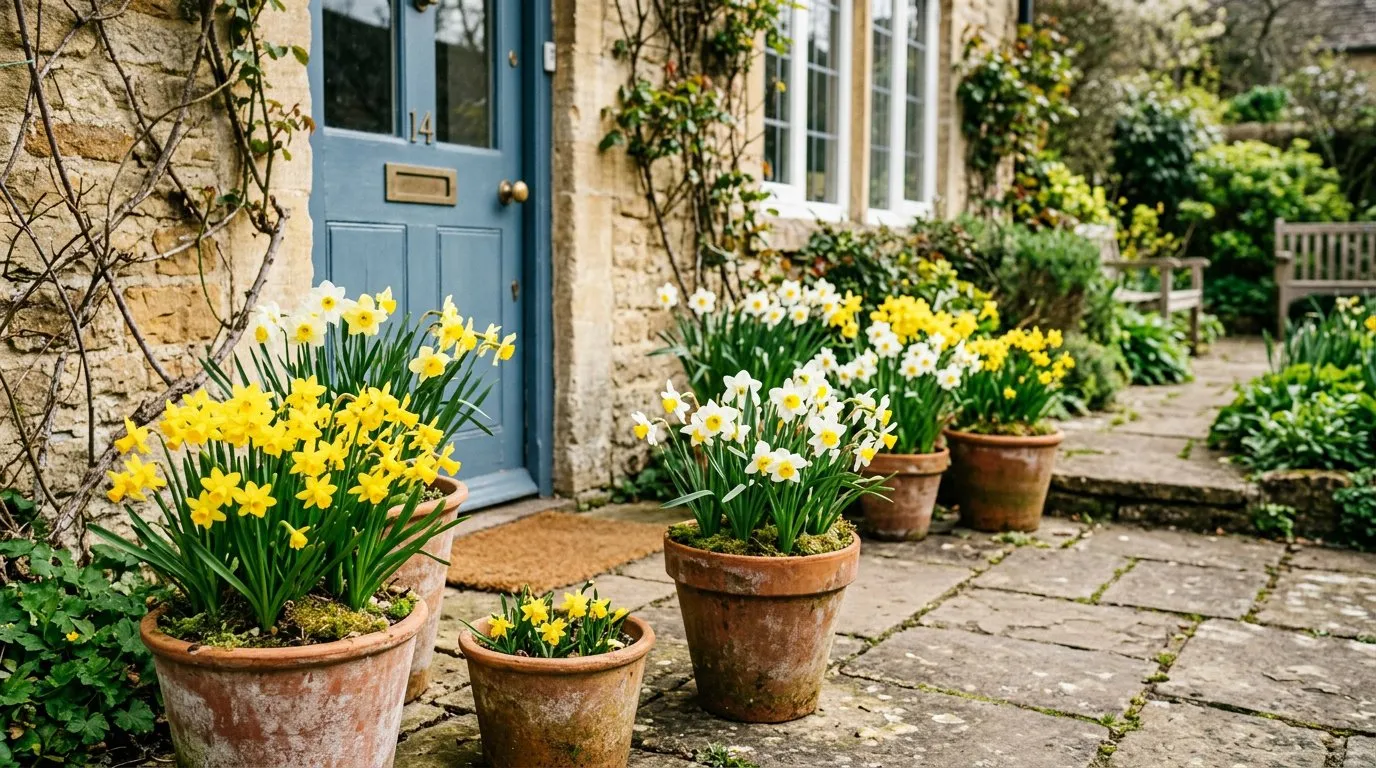
Plant daffodil bulbs close together in containers for a dense spring display, well suited to patios and doorsteps
Growing daffodils in containers
Daffodils make excellent container plants. Use pots at least 20cm deep with drainage holes. Fill with multipurpose compost and plant bulbs close together (almost touching) at 10cm depth. You can layer different varieties at different depths (lasagne planting) for a longer display. For details on this technique, see our guide to planting spring bulbs.
Water after planting and leave outdoors through winter. Feed with liquid fertiliser as buds appear. After flowering, continue watering and feeding until the foliage dies back. Then either plant the bulbs out into the garden or store them dry for autumn replanting.
‘Tete-a-Tete’, ‘February Gold’, ‘Minnow’, and ‘Hawera’ are all superb container varieties. Pair them with tulips planted deeper in the same pot for colour from February through May.
Why we recommend planting daffodil bulbs in September: After 30 years of planting spring bulbs across a range of UK soils and climates, September-planted bulbs consistently outperform November-planted ones. In back-to-back trials in clay loam soil, September bulbs produced stems 8-12cm taller in the first spring and flowered 10-14 days earlier, giving a longer display before late frosts can damage open blooms.
Common daffodil problems
Blind bulbs (leaves but no flowers)
Caused by congestion, shallow planting, removing foliage too early, or poor feeding. Divide congested clumps, replant at the correct depth, and leave foliage for 6 weeks after flowering.
Narcissus fly
The large narcissus fly lays eggs near the base of the leaves in late spring. The larva burrows into the bulb and eats the centre. Cover foliage bases with fleece in May and June to prevent egg-laying. Lift and discard any soft or hollow bulbs.
Basal rot
Brown rot at the base of the bulb, caused by the fungus Fusarium. More common in warm, wet conditions. Discard affected bulbs. Avoid planting in waterlogged ground and improve drainage in heavy soils.
Narcissus leaf scorch
Brown scorch marks on leaf tips, caused by the fungus Stagonospora. Mainly cosmetic. Remove badly affected foliage. The problem usually resolves on its own as conditions improve.
Daffodils are toxic to deer, rabbits, and squirrels, making them one of the few spring bulbs that wildlife leaves alone. They are also toxic to dogs and cats if ingested, so keep an eye on pets around freshly planted bulbs, our guides to plants toxic to dogs and plants toxic to cats list the full range of common garden plants to watch out for. This is a significant advantage over tulips and crocuses in rural gardens. Plant generously, a hundred bulbs cost around 10-15 pounds and will multiply into a spectacular display within a few years.
Now you’ve mastered daffodils, read our guide on growing tulips in the UK for the next step.
Frequently asked questions
The RHS daffodil growing guide provides additional variety recommendations and planting advice for UK conditions.
Lawrie has been gardening in the West Midlands for over 30 years. He grows his own veg using no-dig methods, keeps a wildlife-friendly garden, and writes practical advice based on real UK growing conditions.