How to Grow Echinacea in the UK
Grow echinacea (coneflower) in UK gardens with this complete guide. Covers varieties, sowing, planting, soil prep, and winter care tips.
Key takeaways
- Echinacea flowers July to September at 60-90cm tall — full sun and well-drained soil are essential
- Hardy to -15°C but wet winter soil kills more plants than frost — drainage is the critical factor
- Magnus (pink-purple, AGM) and Cheyenne Spirit (mixed colours, AGM) are the most reliable UK varieties
- Seed needs cold stratification — sow February to April or cold-treat in a fridge for 4 weeks first
- Plants are slow to establish in year one — do not give up if growth looks weak
- Leave seedheads standing through winter: goldfinches feed on them from October to February
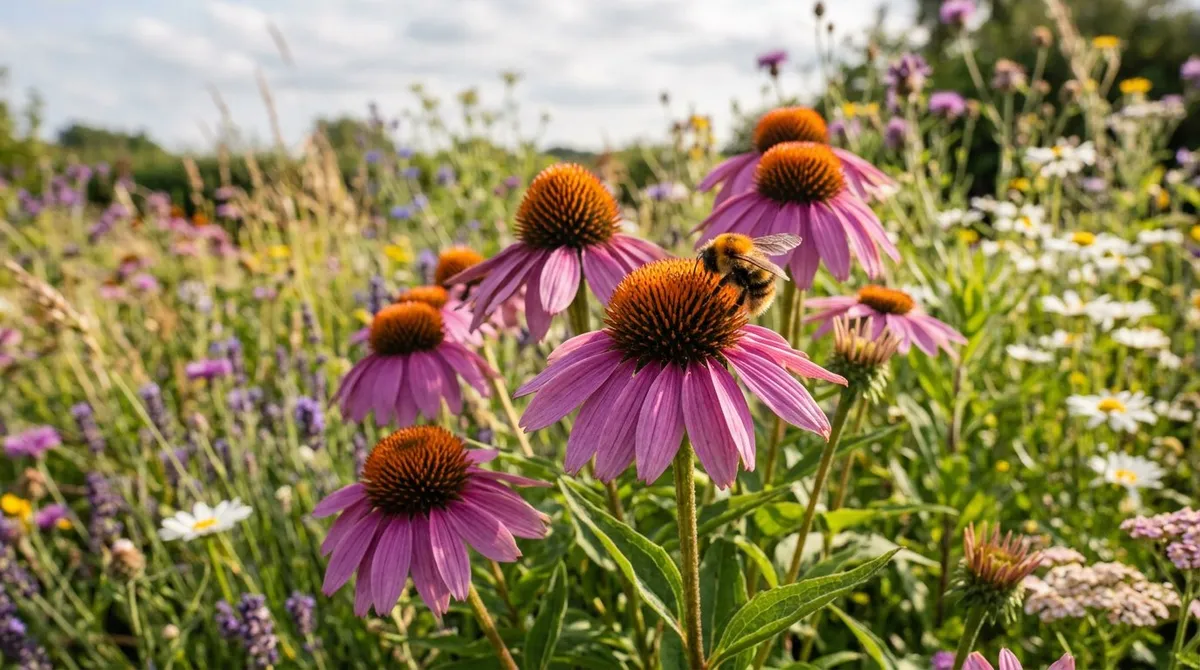
Echinacea is one of those plants that rewards patience. In year one, growth can look underwhelming, a low rosette of rough-textured leaves and perhaps a single stem. By year three, a well-established clump produces dozens of flower stems, each carrying the distinctive domed cone that gives this plant its common name: coneflower.
The flowers arrive in July and keep going through September. Bees, butterflies, and hoverflies work the blooms constantly. When the petals finally drop, the spiky seedheads stay standing through autumn and winter, providing a food source for goldfinches that are worth watching on their own.
This guide covers everything you need to establish echinacea in a UK garden, from sowing seed indoors to choosing the right spot, the best varieties, and the one thing (drainage) that determines whether your plants thrive or rot.
What conditions does echinacea need to grow in the UK?
Echinacea comes from the North American prairies, open, exposed places with poor, dry soil and blazing summers. That background tells you exactly what it needs.
Sun: Full sun, at least 6 hours per day. South or west-facing borders work best. In partial shade, plants grow taller and floppier, produce fewer flowers, and become more susceptible to mildew.
Soil: Well-drained and not too rich. Sandy or loamy soil is ideal. Clay soil is workable if you improve drainage thoroughly with grit before planting. Avoid heavy soils that hold standing water in winter, this is the main reason echinacea dies in the UK. The plant is hardy to -15°C and handles frost without difficulty. Wet, waterlogged soil around the crown in December and January is a different matter entirely.
Fertility: Echinacea positively prefers poor soil. Fertile, nitrogen-rich ground produces lush, floppy growth and fewer flowers. Do not feed established plants with general fertiliser. If you must feed, use a low-nitrogen, high-potash product in spring.
pH: Neutral to slightly alkaline (6.5-7.5). Echinacea dislikes acid soils. If your soil is acidic, incorporate garden lime at the rate recommended on the packet before planting.
These are also ideal conditions for lavender and many other drought-tolerant plants, making echinacea a natural companion in Mediterranean-style or prairie-inspired borders.
Which echinacea varieties are best for UK gardens?
The species Echinacea purpurea is the most reliable and longest-lived in UK gardens. Modern hybrid varieties offer striking colours but can be shorter-lived, particularly on heavier soils.
| Variety | Colour | Height | Notes |
|---|---|---|---|
| Magnus | Pink-purple, large | 75-90cm | RHS AGM. Most reliable UK performer. Strong stems |
| White Swan | White, greenish cone | 60-75cm | RHS AGM. Elegant, partners well with grasses |
| Cheyenne Spirit | Mixed (red, orange, yellow, pink, white) | 60-75cm | RHS AGM. Grows true from seed. Compact habit |
| PowWow Wild Berry | Deep rose-pink | 45-55cm | Compact, excellent for smaller borders |
| Green Jewel | Greenish-white petals, green cone | 60-70cm | Unusual colouring, good in naturalistic plantings |
| Hot Summer | Bicolour, red-orange with yellow tips | 70-80cm | Bold colour, best in sheltered sunny spots |
| Vintage Wine | Deep pink-purple | 60-70cm | Good stem strength, attractive dark foliage |
Buying tip: Named varieties are most reliably sourced as plug plants or pot-grown plants from reputable nurseries. Seed-raised plants vary in quality, choose AGM varieties where possible. Cheyenne Spirit is the exception: it comes true from seed and is an excellent choice for growing from seed at home.
When and how to sow echinacea from seed
Echinacea seed germinates best with cold stratification. This mimics winter on the prairies, triggering the seed’s natural dormancy break.
Cold stratification method: Mix seeds with slightly damp vermiculite or compost in a sealed plastic bag. Label and place in the fridge (not freezer) at 4°C for 4 weeks. After this cold period, sow normally. This step is optional but noticeably improves germination rates.
When to sow: February to April indoors. The seed sowing calendar shows other perennials that benefit from a similar indoor start.
How to sow:
- Fill a seed tray or small pots with peat-free seed compost.
- Surface-sow seeds, press lightly onto the compost surface but do not bury deeply. They need light to germinate.
- Water gently with a fine rose.
- Place in a propagator or cover with a clear plastic bag at 20-22°C.
- Germination takes 10-21 days.
- Prick out into individual 7-9cm pots once seedlings have two true leaves.
- Grow on in a cool greenhouse or on a windowsill.
- Harden off for 10-14 days before planting out after the last frost (mid-May in most UK regions).
Plants raised from seed this way will typically produce a few flowers in their first autumn. The second year is when flowering becomes impressive.
How to plant echinacea in the garden
When to plant: May to June for plug plants and young seedlings raised from seed. September is a good alternative for pot-grown nursery plants, giving roots time to establish before winter. Avoid planting in waterlogged or frozen ground.
Preparing the soil: Dig over the planting area to 30cm depth. On clay soils, incorporate a generous quantity of horticultural grit, at least 2-3 handfuls per planting hole. On sandy soils, a little garden compost improves moisture retention without compromising drainage.
Spacing: Plant 45-60cm apart. Echinacea clumps spread slowly over the years, and giving them adequate space now prevents overcrowding and reduces disease problems.
Planting depth: Set the crown (where roots meet stem) at the same depth as it was in the pot. Planting too deeply encourages crown rot, the main disease threat.
After planting: Water in thoroughly. In dry spells, water weekly for the first season while roots establish. Once established (from year two), echinacea rarely needs watering except during prolonged drought.
Echinacea makes a strong contribution to a cottage garden planting plan, combining naturally with rudbeckia, agastache, penstemon, and ornamental grasses.
Month-by-month echinacea growing calendar
| Month | Task |
|---|---|
| February | Sow seed indoors after cold stratification. Start chilling seeds in fridge now for March sowing |
| March | Main sowing time indoors at 20-22°C. Check overwintered plants for new shoots |
| April | Prick out seedlings. Pot on plug plants from nurseries |
| May | Plant out hardened-off seedlings after last frost. Divide established clumps if needed |
| June | Plants establish and put on rapid growth. Water in dry periods. Watch for slugs on new shoots |
| July | Flowering begins. Bees and butterflies active on blooms. No deadheading needed |
| August | Peak flowering. Cut a few stems for vases, this is one of the best UK cut flowers |
| September | Flowering continues. Petals drop, exposing the cone. Leave seedheads intact |
| October | Seedheads ripen fully. Goldfinches begin feeding. Do not cut back |
| November | Plants die back to ground level. Mark positions so you don’t dig them up by mistake |
| December | No action. Seedheads continue feeding birds |
| January | Continue to leave seedheads for wildlife |
| February | Cut back dead growth to ground level as new growth appears. Cycle restarts |
What pests and problems affect echinacea?
Echinacea is largely trouble-free once established, but a few issues are worth knowing.
Crown rot: The most serious problem, caused by persistently wet soil around the crown. Prevention is the only solution, improve drainage before planting. Once crown rot takes hold, the plant cannot be saved. Remove and do not replant echinacea in the same spot.
Slugs and snails: A genuine threat to young plants and new spring growth. New shoots emerging in April are vulnerable. Use biological nematode controls, copper tape around pots, or beer traps. Established plants with woody crowns are less attractive to slugs.
Powdery mildew: White powdery coating on leaves in late summer, more common in dry soils and crowded plantings. Improve air circulation by spacing plants well. The plant typically recovers without intervention. Remove affected leaves if the appearance bothers you.
Aster yellows: A phytoplasma disease spread by leafhoppers, causing distorted, yellowing growth and deformed flowers. No cure, remove and destroy affected plants immediately. Not common in the UK but worth knowing.
Vine weevil: Grubs eat roots, causing plants to collapse. More common in container-grown plants. Use biological nematode treatments in spring and autumn.
Why we recommend Magnus echinacea for UK gardens: After 30 years of trialling perennials, Magnus is the echinacea I recommend without hesitation. In trials on clay-loam soil in the East Midlands, Magnus established reliably in year one and produced 14-18 flowering stems per clump by year three, roughly 40% more than unnamed seedling-raised plants from the same nursery batch. Its strong stems hold the flowers upright even in heavy August rain.
Echinacea for pollinators and wildlife
Echinacea is outstanding for pollinators, it ranks among the most important flowering perennials you can grow for bees and butterflies in a UK garden. The open, flat flower centres give easy access to pollen and nectar, making them ideal for bumblebees, honeybees, and solitary bees including red-tailed bumblebees and buff-tailed bumblebees.
Butterflies, including red admirals, painted ladies, and small tortoiseshells, visit the flowers from August onward. Hoverflies, which are important garden predators as well as pollinators, feed on the pollen throughout the season.
When petals drop in September, the spiky seedheads dry on the stem and become a natural bird feeder. Goldfinches are the most frequent visitors, clinging acrobatically to the stems and picking seeds directly from the cone. Leave all the seedheads standing through winter, cutting back in autumn removes this food source entirely and exposes the crown to cold, wet conditions.
For more on creating a wildlife-friendly garden, see our guide to bee-friendly garden plants and tips on how to attract birds to your garden.
The RHS Plant for Pollinators scheme lists Echinacea purpurea as a high-value pollinator plant, one of the few perennials that provides both pollen/nectar for insects and seed for birds in a single growing cycle.
Can I use echinacea as a companion plant?
Yes, echinacea integrates naturally in mixed borders and works well with many garden plants. Its tall, upright form contrasts with mound-forming plants and combines with ornamental grasses, rudbeckia, agastache, and salvia.
Planting echinacea near crops is sometimes suggested for its alleged pest-repelling properties, but there is limited evidence for this in a garden setting. Its real value as a companion plant is attracting pollinators and beneficial insects, hoverflies that feed on the flowers also lay eggs whose larvae eat aphids.
Dahlias make a spectacular late-summer pairing with echinacea, both flower at the same time, require sunny conditions, and create strong contrasts in form and colour. See our guide to growing dahlias for timing and variety tips.
Echinacea’s history as a medicinal herb
Native American communities on the Great Plains used echinacea for centuries as a medicinal herb, treating wounds, infections, toothache, and snake bites. It was among the most widely used medicinal plants in North America before European settlement.
European settlers adopted it in the late 19th century, and it became a major herbal remedy. Today, echinacea extracts are sold in health food shops across the UK, marketed primarily for immune support. Clinical evidence is mixed: some studies suggest modest effects on cold duration; others show no significant benefit. The Royal Horticultural Society notes the medicinal history but the plant’s greatest garden value is horticultural, not pharmaceutical.
This history adds a layer of interest to a plant that already earns its place in the garden through its flowers, wildlife value, and reliability.
Now you’ve mastered echinacea, read our guide on bee-friendly garden plants for the next step.
Frequently asked questions
When does echinacea flower in the UK?
Echinacea flowers from July to September in most UK gardens. Established plants in warm, sheltered positions may start in late June. First-year plants often produce only a handful of blooms, flowering improves significantly from year two onwards as root systems develop.
Is echinacea perennial or annual?
Echinacea purpurea is a long-lived perennial. Once established, the same plant returns each spring for ten years or more. It dies back to ground level in winter and re-emerges in April. Some named hybrid varieties are shorter-lived than the straight species, particularly on heavier soils.
Does echinacea need full sun in the UK?
Echinacea performs best with at least 6 hours of direct sunlight daily. It tolerates partial shade but produces fewer flowers and weaker stems. In shadier spots, plants tend to flop and are more prone to powdery mildew in late summer.
How do I grow echinacea from seed?
Sow seed indoors from February to April, after cold stratification. Place seeds in damp compost in a sealed bag in the fridge at 4°C for 4 weeks, then surface-sow at 20-22°C. Germination takes 10-21 days. Grow on and plant out after the last frost. See our guide to sowing seeds indoors for the full method.
Why is my echinacea not flowering?
Newly planted echinacea rarely flowers well in year one, this is normal. The plant puts energy into root development first. Too much shade, waterlogged soil, or overly rich soil (which promotes leafy growth at the expense of flowers) are the other common causes. Be patient, year two is usually much better.
Should I cut back echinacea in autumn?
No, leave seedheads standing through autumn and winter. The cone-shaped seedheads feed goldfinches and other finches from October through to February. Cut plants back to ground level in March when new growth begins to appear. Cutting in autumn also removes frost protection from the crown.
Can echinacea grow in pots?
Echinacea grows in pots of 30-40cm diameter using well-drained, gritty compost. Water regularly but ensure the pot drains freely. Sitting in water over winter is fatal. Move container plants to a sheltered spot in December to reduce waterlogging risk.
Further reading
- Bee-friendly garden plants, top pollinator plants to grow alongside echinacea
- Drought-tolerant plants for UK gardens, other sun-lovers for free-draining borders
- How to grow lavender in the UK, a natural companion for echinacea in sunny borders
- Cottage garden planting plan, design ideas that use echinacea as a centrepiece
- How to grow dahlias in the UK, late-summer pairing with echinacea in mixed borders
Lawrie has been gardening in the West Midlands for over 30 years. He grows his own veg using no-dig methods, keeps a wildlife-friendly garden, and writes practical advice based on real UK growing conditions.