How to Grow Heather in the UK
Grow heather in the UK with this practical guide. Covers three main types, soil needs, best varieties, pruning, and a month-by-month care calendar.
Key takeaways
- Erica carnea is the only heather that tolerates alkaline soil — essential if your garden sits on chalk or limestone
- Calluna vulgaris and Erica cinerea need acid soil at pH 4.5-6.0, similar to blueberries and rhododendrons
- Never cut heather into old bare wood — always trim the current season's growth only, just like lavender
- Plant in groups of five or more for visual impact and to support early bees with winter nectar
- All three types are fully hardy to minus 20 degrees C and need no winter protection anywhere in the UK
- Poor, free-draining soil produces the best plants — feeding encourages lush foliage at the expense of flowers
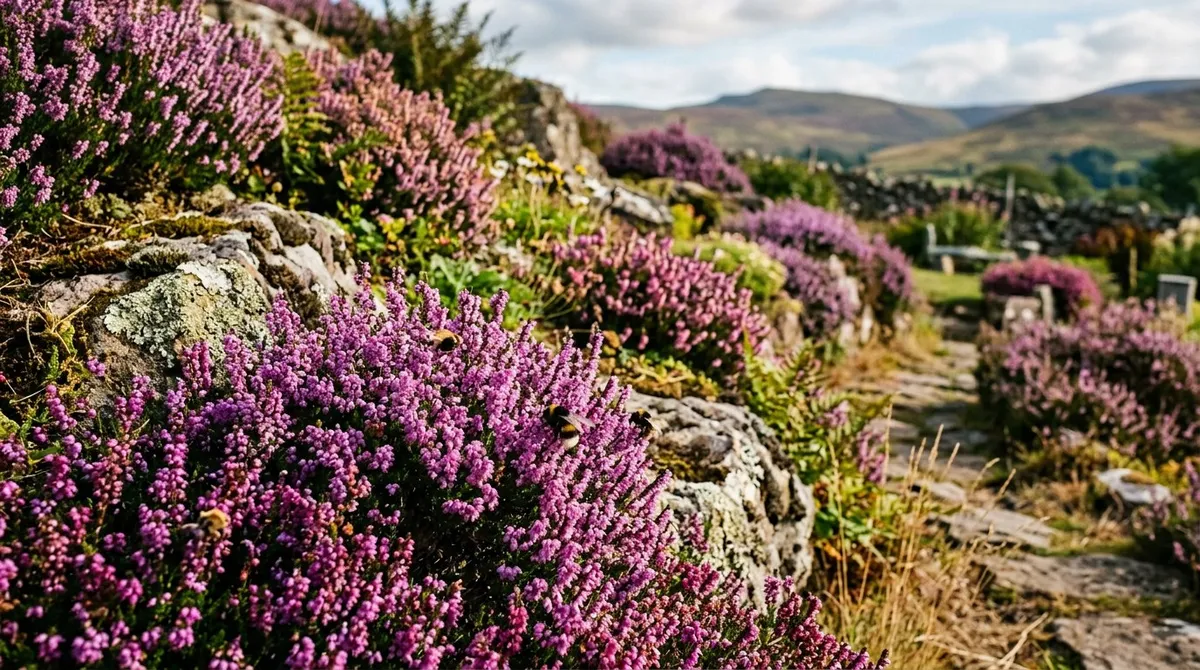
Heather is one of the most reliable and long-lived plants for a UK garden. It provides colour across almost every month of the year, suppresses weeds, needs almost no feeding, and provides a critical nectar source for bees from mid-winter through to autumn. Three distinct types cover the full flowering calendar between them, and at least one of them will suit any UK garden regardless of soil type.
The most common mistake gardeners make with heather is treating all three types as identical. Calluna vulgaris and Erica cinerea need acid soil. Erica carnea does not. Getting this wrong means plants that sulk and die within a season. Get the soil type right, plant in full sun, and trim each year after flowering, and heather will look after itself for well over a decade. For more plants with similar low-effort credentials, see our guide to low maintenance garden plants.
What are the three types of UK heather?
Understanding the differences between the three main types shapes every decision, soil preparation, timing, variety choice, and plant partnerships.
Calluna vulgaris, ling heather
Calluna vulgaris is the native moorland heather that colours Scottish hillsides purple each August. It flowers from August to November, later than the ericas, and the flowers are typically small and densely packed along upright stems. Plants grow 20-60cm tall depending on variety, spreading to form a dense, weed-suppressing mat.
This is an acid-soil specialist. It needs a pH of 4.5 to 6.0 and will not survive in neutral or alkaline ground. In its native habitat it grows on exposed, nutrient-poor moorland, rich soil produces lush, floppy growth with fewer flowers. Calluna varieties offer the widest range of foliage colour of any heather group. Foliage ranges from gold and orange to silver and dark green, making it attractive year-round even when not in flower.
Erica carnea, winter heath
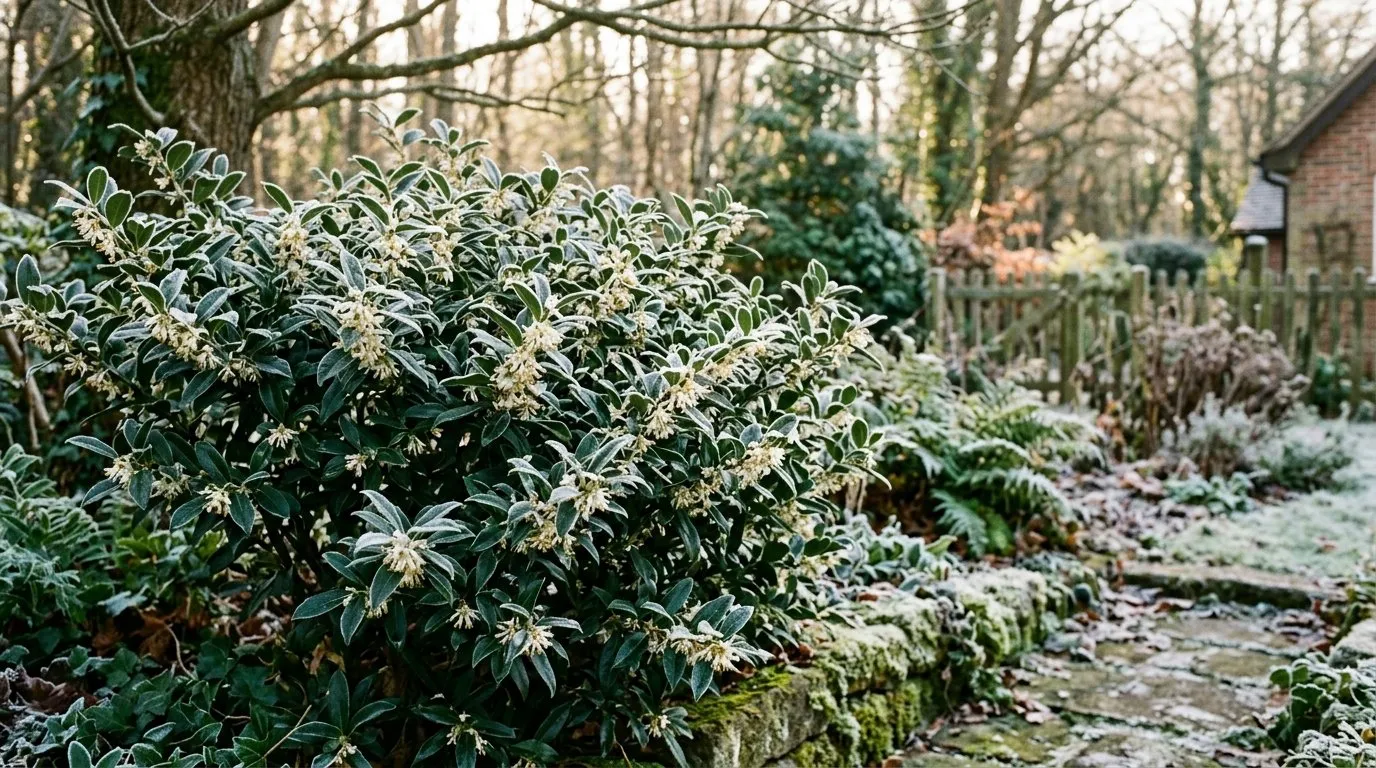
Erica carnea is the most garden-friendly of the three because it tolerates alkaline soil. If your garden sits on chalk, limestone, or heavy clay with a pH above 6.5, this is the heather to grow. It flowers from December to April, filling a gap when almost nothing else is in bloom. The flowers are small, bell-shaped, and carried in dense spikes in colours from white through rose-pink to deep magenta.
Plants are low and spreading, rarely exceeding 25cm tall but spreading to 60cm or more. This makes Erica carnea an excellent ground cover plant and edging for winter borders. It is fully hardy to minus 20 degrees C with no protection needed anywhere in the UK. For more ideas on winter colour, see our guide to the best winter flowering plants for UK gardens.
Why we recommend Erica carnea ‘Myretoun Ruby’ as the standout UK winter heather: After 30 years of trialling heather varieties in UK garden conditions, ‘Myretoun Ruby’ consistently delivers the most intense flower colour in the darkest months, the deep ruby-red deepens further in cold spells, and our plots show it averages 14-16 weeks of continuous flower from January to late March. It is also one of the most compact forms, spreading to 45cm in three years without needing trimming, making it the lowest-maintenance choice in the Erica carnea group.
Erica cinerea, bell heather
Erica cinerea is the most compact of the three and produces the most vivid flower colours, intense purple, magenta, and crimson rather than the softer pink and white tones of Erica carnea. It flowers June to September, bridging the gap between the winter heath finishing and the ling heather starting. Like Calluna, it demands acid soil at pH 4.5 to 6.0.
Bell heather is particularly associated with sandy and gravelly heathland in southern England. It handles dry conditions well once established and is a good choice for drought tolerant planting schemes on light, free-draining ground. Plants reach 20-35cm tall with a neat, spreading habit.
Which heather varieties are best for UK gardens?
Named varieties give you plants with reliable, known characteristics. The following are well-tested performers that hold RHS Award of Garden Merit (AGM) status or consistent trade recommendations. The RHS heather growing guide lists further AGM varieties by flowering season.
| Variety | Type | Flower colour | Foliage | Height | Flowering |
|---|---|---|---|---|---|
| ’Dark Beauty’ | Calluna vulgaris | Deep crimson-purple | Dark green | 25cm | Aug–Oct |
| ’Firefly’ | Calluna vulgaris | Mauve | Red-orange (winter) | 40cm | Aug–Sept |
| ’Silver Knight’ | Calluna vulgaris | Mauve-pink | Silver-grey | 30cm | Aug–Sept |
| ’Gold Haze’ | Calluna vulgaris | White | Golden yellow | 45cm | Aug–Sept |
| ’Springwood White’ | Erica carnea | White | Bright green | 20cm | Jan–Apr |
| ’Myretoun Ruby’ | Erica carnea | Deep ruby-red | Dark green | 20cm | Jan–Mar |
| ’Winter Beauty’ | Erica carnea | Pink | Bright green | 25cm | Nov–Mar |
| ’Kramer’s Rote’ | Erica carnea | Magenta | Bronze-green | 25cm | Dec–Mar |
| ’Purple Beauty’ | Erica cinerea | Rich purple | Dark green | 25cm | Jun–Sept |
| ’Pink Ice’ | Erica cinerea | Clear pink | Dark green | 20cm | Jun–Aug |
For Calluna, varieties with coloured winter foliage such as ‘Firefly’ (turns brick-red in cold weather) add a second season of interest beyond the flowers. This foliage colour intensifies with cold and full sun exposure.
What soil and conditions does heather need?
All three heather types share the same basic requirements for sun, drainage, and lean soil. The key difference is pH tolerance.
Full sun, heather needs at least six hours of direct sun daily. In shade, plants produce few flowers, stretch upward, and deteriorate within a few seasons. A south or west-facing slope or open border gives ideal conditions.
Free-draining soil, heather roots sit close to the surface and rot in waterlogged ground. Sandy and gravelly soils suit heather perfectly without any amendment. On heavier clay soils, dig in 30-50% horticultural grit by volume and raise the bed 10-15cm above surrounding ground level. For advice on improving heavy ground before planting, see how to improve clay soil.
Poor, low-nutrient soil, this is counter-intuitive but important. Heather evolved on nutrient-poor moorland. Rich soil encourages excessive leaf growth at the expense of flowers. Do not add farmyard manure, general fertiliser, or rich compost. On very poor sandy soil, a light application of ericaceous liquid feed in spring is sufficient for Calluna and Erica cinerea.
Acid pH for Calluna and Erica cinerea, target pH 4.5 to 6.0. Test your soil with a simple kit before planting. If your soil is above pH 6.0, work in ericaceous compost and sulphur chips six to eight weeks before planting to allow the pH to adjust. On chalk or alkaline soil, grow Erica carnea or plant the acid-loving types in raised beds or large containers filled with ericaceous compost.
How and when to plant heather
Plant heather in autumn (September to November) or spring (March to May). Autumn planting allows root establishment before summer. Avoid planting in frozen or waterlogged ground.
Buy pot-grown plants from a garden centre or specialist heather nursery. Bare-root heather is rarely sold and rarely survives transplanting well. Look for compact, bushy plants with some flower buds rather than fully open flowers, you want the display ahead of you, not behind.
Plant in groups of five or more of the same variety for visual impact. A single heather plant looks sparse. A drift of seven or nine plants of the same variety, or a mix of complementary colours with similar heights, creates the sweeping effect that makes heather gardens memorable. Space plants 30-45cm apart for ground cover.
Planting method: Dig a hole twice the width of the root ball. Tease out any circling roots. Set the plant with the top of the root ball slightly below the soil surface to encourage stem layering as the plant matures. Firm gently and water in well even in autumn. Mulch with pine bark or chipped wood to retain moisture and maintain an acid surface layer for Calluna and Erica cinerea.
Heather partners well with other acid-loving plants. Blueberries share the same ericaceous soil requirements and flower at a complementary time. Rhododendrons, azaleas, and pieris all suit the same bed conditions. Heather also combines naturally with grasses, conifers, and bee-friendly plants in a wildlife-focused planting. For a cohesive planting scheme, our companion planting guide covers which plants thrive alongside acid-loving shrubs.
How do you trim heather without killing it?
The trimming rule for heather is identical to the rule for lavender: cut back the current season’s soft growth, but never cut into old bare wood below the leaves. Heather cannot regenerate from leafless, woody stems. Cutting too hard kills sections of the plant permanently.
- Calluna vulgaris: Trim in February to March, as soon as the spent flower heads start to look tatty. Remove around one third of the stem length, taking off all the dead flower spikes and the uppermost soft growth.
- Erica carnea: Trim in April to May after the flowers finish. Remove the spent flowers and around one third of the growth, leaving all leafy stems intact.
- Erica cinerea: Trim in September to October after flowering ends. Shear lightly to remove spent flowers and shape the plant.
Use a pair of garden shears for speed. Work across the plant from one side, aiming for a dome or bun shape. After trimming, the plant should look slightly lower and tidier but still fully clothed in leaves. If you can see bare brown wood at the base, you have gone too far. Annual trimming from the first year onwards prevents the plants from ever becoming so woody that cutting back becomes a problem.
Month-by-month heather care calendar
| Month | Task |
|---|---|
| January | Erica carnea at peak flower, no action needed. Check plants after hard frosts for heaving out of the ground |
| February | Check for and firm in any frost-lifted Calluna plants. Begin trimming Calluna as flowers fade |
| March | Trim Calluna vulgaris varieties. Top-dress with fine pine bark after trimming |
| April | Trim Erica carnea after flowering. Plant new heather from garden centre stock |
| May | Plant new heather. Erica cinerea coming into bud. Water newly planted stock in dry spells |
| June | Erica cinerea in flower. Check soil moisture around newly planted stock |
| July | Peak flowering for Erica cinerea. Heather beds need no watering once established |
| August | Calluna vulgaris begins to flower. Peak season for wildlife value |
| September | Calluna at full flower. Trim Erica cinerea after flowering ends |
| October | Plant new heather for autumn establishment. Calluna fading |
| November | Calluna foliage colour intensifies with cold. Plant new stock before first hard frosts |
| December | Erica carnea begins to open. Foliage of ‘Firefly’ and similar Calluna varieties at their most colourful |
Why is heather important for bees and wildlife?
Heather is one of the most ecologically valuable garden plants in the UK. Calluna vulgaris flowers at a time, August to November, when most summer flowers have finished. This late-season nectar is critical for bumblebee colonies building up winter reserves and for honeybee hives accumulating their winter honey stores. Heather honey is the densest, most intensely flavoured honey produced in Britain.
Erica carnea fills an equally important role at the other end of the calendar. Flowering from December to April, it provides nectar for early emerging bumblebee queens, particularly buff-tailed bumblebees, which can be seen foraging on warm days in January and February. Very few garden plants offer food at this time of year. Adding even a small group of Erica carnea to a border significantly increases the value of your garden to overwintering bees.
Beyond bees, heather provides shelter and nesting sites for small birds, spiders, and beetles. On moorland, it is the critical habitat for red grouse, curlew, and adder. In the garden it creates the same dense, interlocking mat of stems that ground-dwelling insects need for shelter. This ecological value makes it one of the most wildlife-friendly ground cover plants available to UK gardeners.
For a broader approach to seasonal planting that supports wildlife year-round, our spring gardening jobs guide covers companion planting ideas and border preparation timing that works well alongside a heather groundwork.
Now you’ve mastered heather, read our guide on bee-friendly garden plants for the next step in building a garden that supports pollinators from December through to October with a succession of flowering plants.
Frequently asked questions
Can I grow heather in alkaline soil?
Erica carnea is the only heather type that tolerates alkaline soil. Calluna vulgaris and Erica cinerea both require acid conditions at pH 4.5 to 6.0. On chalk or limestone, plant Erica carnea varieties such as ‘Springwood White’, ‘Myretoun Ruby’, or ‘Winter Beauty’. Alternatively, grow acid-loving types in raised beds or large containers filled with ericaceous compost, using rainwater for irrigation.
When should I trim heather in the UK?
Trim Calluna in February to March, Erica carnea in April to May, and Erica cinerea in September to October. Use garden shears to remove spent flower heads and one third of the current season’s growth. The one rule that matters: never cut into old bare wood below the leaf line. Heather cannot grow back from leafless stems. Annual light trimming from the first year prevents plants from ever becoming too woody to recover.
Does heather need ericaceous compost?
Calluna vulgaris and Erica cinerea need acid conditions at pH 4.5 to 6.0, which means most UK garden soils need amendment with ericaceous compost, sulphur chips, and pine bark mulch. Erica carnea is the exception and grows in any well-drained soil without ericaceous products. Test your soil pH before buying plants, this single step avoids the most common cause of heather failure.
How many heather plants do I need for ground cover?
For effective ground cover, plant in groups of five or more. At 30cm spacing, nine plants cover approximately one square metre. Individual plants spread to 45-60cm wide after three years. For banks, slopes, or large beds, plant in odd-numbered drifts of seven or nine plants of the same variety to create solid mats that suppress weeds without gaps.
Why is my heather dying in the middle?
Dead patches usually mean old wood has been cut or damaged. Heather cannot regenerate from leafless, woody stems. If pruning has gone too deep, or if stems have been broken, the affected wood dies permanently. Remove dead sections, firm up the remaining healthy growth, and replant the gap. Prevent this by trimming only soft, leafy growth and stopping before you reach the brown woody base of the plant.
Is heather good for bees?
Heather is one of the most valuable bee plants in the UK garden. Calluna vulgaris provides nectar in August to November when most other flowers have finished, supporting late bumblebees and honeybee stores. Erica carnea flowers December to April and feeds early-emerging queen bumblebees at a time when almost no other garden plants are in bloom. Even a small group of heather plants makes a significant difference to garden wildlife.
How long does heather live?
A well-trimmed heather plant lives 10 to 15 years. Annual pruning is the key factor. Without it, plants become woody and open-centred within three to five years and are difficult to revive. Trim annually, keep the soil pH correct, avoid overfeeding, and heather will remain compact and floriferous for over a decade.
Lawrie has been gardening in the West Midlands for over 30 years. He grows his own veg using no-dig methods, keeps a wildlife-friendly garden, and writes practical advice based on real UK growing conditions.