How to Grow Hellebores in the UK
Grow hellebores in UK gardens — shade-tolerant, evergreen, flowering December to April. Covers varieties, planting, care, and leaf spot from UK growers.
Key takeaways
- Hellebores flower December to April — H. niger from December, H. × hybridus from February — filling a gap when almost nothing else blooms
- Plant in partial shade in moist, humus-rich, well-drained soil — they grow naturally on woodland edges where light is filtered
- Remove old foliage in January to expose flowers, reduce leaf spot spread, and let winter light reach developing buds
- Leave established plants alone — hellebores resent root disturbance and take 2-3 years to settle after moving
- Hellebore leaf spot (Coniothyrium hellebori) is the main problem — remove affected leaves promptly and improve air circulation
- All parts of the plant are toxic — wear gloves when handling and wash hands thoroughly after cutting or dividing
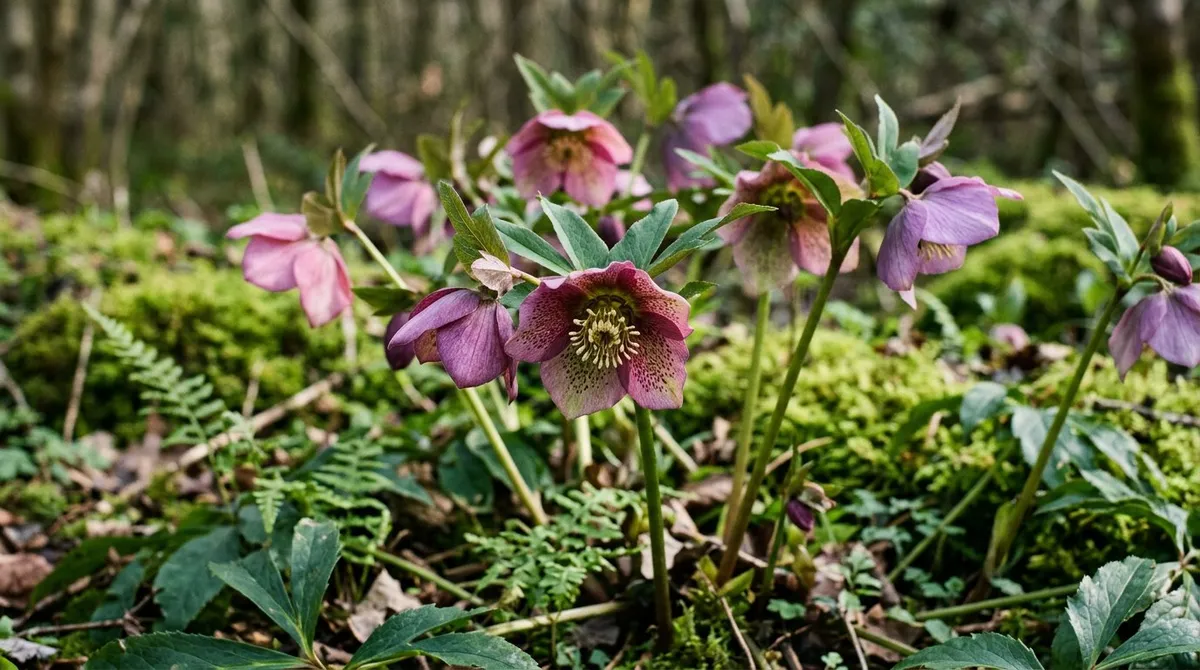
Hellebores are one of the most rewarding plants in the UK garden. They flower when almost nothing else does, from December through to April, and they do it in shade, where most flowering perennials refuse to perform.
A mature clump of Helleborus × hybridus in a shaded border is a genuinely striking sight in February: nodding blooms in colours ranging from pure white to near-black, pink-flushed cream to deep burgundy-red, often with contrasting speckles or picotee edges. They ask very little once established. Plant them in the right spot, leave them alone, and they will flower reliably for decades.
This guide covers everything you need to grow hellebores well in UK conditions, from choosing the right variety to solving the most common problems.
Which hellebore varieties are best for UK gardens?
Three species dominate UK garden planting, each with a slightly different character and season.
Helleborus niger, the Christmas rose is the earliest, flowering from December to February. The blooms are large, white, and open-faced. It prefers a sheltered spot in partial shade, ideally with alkaline or neutral soil. It is slightly less vigorous than the Lenten rose and benefits from protection from prolonged frost while in flower. Named selections like ‘HGC Josef Lemper’ and ‘HGC Ice N’ Roses White’ produce particularly large, long-lasting flowers.
Helleborus × hybridus, the Lenten rose is the most widely grown group and offers the greatest colour range. Flowers open from February through April in shades of white, cream, yellow, pink, mauve, deep plum, and near-black. Many are double-flowered. Plants establish quickly and self-seed freely in suitable conditions. The RHS Award of Garden Merit holders include dozens of named H. × hybridus selections.
Why we recommend Helleborus × hybridus as the best hellebore for UK shaded borders: After 30 years of growing hellebores under deciduous trees and in north-facing borders, H. × hybridus consistently outperforms all other species on longevity and flower quality. Established clumps in our shaded trials plots have been flowering continuously for 12-15 years without division, producing 25-40 flower stems per clump by year five. Named selections from specialist nurseries hold their colour reliably, a mature named clump of a deep burgundy form retains the same flower colour for over a decade.
Helleborus foetidus, the stinking hellebore is a British native, found on chalk and limestone soils in southern England. Despite its name, it only smells unpleasant if crushed. It is more architectural than its relatives, the deeply divided, dark green leaves form a structural clump, and the pale green, bell-shaped flowers hang in clusters from February to May. It tolerates drier, shadier conditions than other species, making it useful under dense shrubs where little else survives.
| Species | Flower colour | Season | Height | Best use |
|---|---|---|---|---|
| H. niger (Christmas rose) | White to pale pink | December–February | 30 cm | Sheltered border, container |
| H. × hybridus (Lenten rose) | White, pink, plum, near-black | February–April | 40-50 cm | Shaded border, woodland edge |
| H. foetidus (stinking hellebore) | Pale green | February–May | 50-80 cm | Dry shade, structural planting |
| H. argutifolius (Corsican hellebore) | Apple green | February–April | 60-90 cm | Dry sunny border, architectural |
For a garden that flowers through the darkest months, combine hellebores with other winter performers. Our guide to best winter flowering plants for UK gardens covers companion choices including witch hazel, winter jasmine, and Viburnum × bodnantense.
What conditions do hellebores need?
Hellebores grow naturally on woodland edges and in scrub, environments with dappled light, moisture in winter and spring, drier conditions in summer, and soil rich in leaf mould. Recreate those conditions and they thrive.
Light: Partial shade is ideal. The canopy of a deciduous tree or large shrub provides exactly what hellebores need: winter light (when they flower) and summer shade (protecting the evergreen leaves from scorching). Avoid deep permanent shade, plants flower poorly without winter light. Avoid full sun, summer leaves yellow and scorch.
Soil: Moist but well-drained, humus-rich, and preferably neutral to alkaline. Hellebores tolerate clay soil better than most perennials, provided it does not waterlog in winter. Improve heavy clay with grit and generous amounts of organic matter. Sandy or chalky soils benefit from incorporating leaf mould or homemade compost before planting to improve moisture retention.
pH: Neutral to slightly alkaline (pH 6.5-7.5) suits most species. H. niger prefers slightly alkaline conditions. H. foetidus is naturally found on chalk and limestone. Avoid very acid soils.
Drainage: Waterlogging kills hellebores. On heavy or poorly drained ground, plant on a slight slope or in a raised bed. The roots need consistent moisture in spring but should not sit in standing water through winter.
When and how to plant hellebores
Plant hellebores in autumn (September to November) or late spring (April to May). Autumn planting lets roots establish before flowering. Spring planting avoids cold-damaged transplants in mild winters.
Buy pot-grown plants rather than bare-root divisions if you can, hellebores transplant better with an intact root ball. Avoid plants with visible root disturbance or those that have been in the pot so long the roots are circling.
Step-by-step planting:
- Dig a hole twice the width of the root ball and the same depth.
- Mix a generous amount of well-rotted compost or leaf mould into the excavated soil.
- Place the plant so the crown (where stems meet roots) sits at soil level, not deeper.
- Backfill with the improved soil mix, firm gently, and water well.
- Mulch with a 5-7 cm layer of leaf mould or bark chips, keeping it away from the crown.
Space H. × hybridus plants 45-60 cm apart. They will fill the space within two to three years. H. niger is slightly smaller and can be planted at 30-45 cm spacings.
For shaded borders where hellebores will become the backbone planting, our best plants for shade in UK gardens article covers the wider plant palette to combine with them, ferns, astrantia, pulmonaria, and epimedium all complement hellebores well.
How to care for hellebores through the year
January, the most important task
The single most useful thing you can do for hellebores is remove their old foliage in January. Cut all the evergreen leaves off at the base with sharp secateurs. This does three things: it exposes the developing flower buds so you can actually see the display; it lets winter light reach the crowns; and it removes the primary reservoir of hellebore leaf spot spores before the new growing season begins.
It feels drastic. The plant looks bare for a few weeks. Then the flowers open, and the new foliage grows back through spring looking clean and fresh.
February to April, flowering
During the flowering period, water plants if the soil dries out during dry spells. Hellebores in containers need more regular attention, check moisture every few days. A top-dress of general-purpose fertiliser or a handful of blood, fish, and bone around the crown as flowers fade will support the next season’s growth.
May to October, summer rest
Once flowering ends and new growth is established, hellebores largely look after themselves. Water during prolonged dry spells, particularly plants in the first and second year after planting. Mulch the root zone in late spring to conserve moisture and suppress weeds.
This is also the time to remove any self-seeded seedlings you do not want, or carefully transplant them to new positions while they are small and before the roots are established enough to resent the move. For propagation by sowing seeds indoors, collect ripe seed (which drops in early summer) and sow immediately, hellebore seed loses viability quickly.
September to October, division
If you need to divide established clumps, do it in early autumn. Lift the whole plant, cut or pull the crowns apart so each section has 3-4 growing points, and replant immediately. Water well. Expect one full season of poor flowering while the plant re-establishes.
Hellebores genuinely do not like being moved. If a plant is in the right spot, leave it. Plants that have been growing undisturbed for five or ten years develop into impressive, free-flowering clumps that a moved plant takes years to match. Check our spring gardening jobs guide for timing alongside other key perennial maintenance tasks.
Month-by-month hellebore calendar
| Month | Task |
|---|---|
| January | Remove all old foliage. Clear fallen leaves from crowns. |
| February | Enjoy first flowers. Top-dress with general fertiliser. |
| March | Peak flowering for H. × hybridus. Collect seed if needed. |
| April | Late varieties still in flower. New foliage emerging. |
| May | Remove spent flower heads unless saving seed. Mulch root zone. |
| June | Seed pods ripen and split. Collect seed and sow immediately. |
| July | Keep watered in dry spells. Remove any leaf spot-affected leaves. |
| August | Continue watering if dry. Remove leaf spot. |
| September | Divide overcrowded clumps. Plant new acquisitions. |
| October | Plant out pot-grown plants before soil cools. Mulch. |
| November | Remove any diseased leaves before winter. |
| December | H. niger begins flowering. Protect flowers from heavy frost if desired. |
What problems affect hellebores?
Hellebore leaf spot
The most common problem is hellebore leaf spot (Coniothyrium hellebori), a fungal disease that causes dark brown blotches with lighter centres on leaves and stems. Severely infected leaves turn black and die back. The disease spreads in wet conditions and overwinters on infected material.
The main control is hygiene. Remove and bin (not compost) all infected leaves promptly. The January defoliation removes most overwintered spores before they can spread. Avoid overhead watering. Improve air circulation by dividing overcrowded clumps.
No fungicide eliminates the disease reliably. The RHS recommends treating it as a hygiene problem rather than a chemical one. RHS advice on hellebore diseases provides detailed guidance on identifying and managing the condition.
Slugs and aphids
Young emerging growth in spring can be damaged by slugs. Protect with organic pellets or a ring of grit around the crowns. Aphids occasionally colonise soft new growth, a strong jet of water dislodges most of them.
Vine weevil
Vine weevil grubs attack the roots of container-grown hellebores. If a potted plant wilts despite adequate watering, check the compost for C-shaped white grubs. Treat with nematodes (Steinernema kraussei) from August to November when soil temperature is above 5°C.
Poor flowering
If an established hellebore flowers poorly, the usual causes are: too much shade (move to a brighter spot); exhausted soil (top-dress with compost and fertiliser); or old foliage blocking light from the crowns (carry out the January defoliation). Newly planted or recently divided plants may take 2-3 years to flower freely.
Can hellebores grow in containers?
Yes, though they prefer open ground. Use a large container (at least 30 cm diameter) with drainage holes. Fill with a mix of loam-based compost (John Innes No. 3) and horticultural grit in a 2:1 ratio. Water regularly, containers dry out faster than borders. Re-pot every 2-3 years to refresh the compost and check for vine weevil.
Container hellebores work well on shaded patios and doorsteps where their winter flowers can be appreciated at close range. They also suit cottage garden planting plans where shaded corners need winter interest.
Are hellebores good for wildlife?
Hellebores are an important early nectar source for pollinators emerging on mild winter days. Bumblebee queens searching for food in February and March rely on winter-flowering plants. The nodding flowers provide some shelter from rain, which bees appreciate when temperatures are still cold. For a garden designed around pollinators, combine hellebores with other early-flowering plants, our guide to bee-friendly garden plants covers the best choices by season.
Now you’ve mastered hellebores, read our guide on the best winter flowering plants for UK gardens for the next step in filling your garden with colour from November through to March.
Frequently asked questions
When do hellebores flower in the UK?
Helleborus niger (Christmas rose) flowers from December to February. H. × hybridus (Lenten rose) flowers from February to April. H. foetidus flowers February to May. In a mild winter, hellebores can be in flower for up to five months continuously.
Where is the best place to plant hellebores?
Partial shade under deciduous trees or shrubs is ideal, the canopy provides summer shade while allowing winter light through when the leaves drop. Avoid deep, permanent shade. Avoid full sun in summer, which scorches the evergreen leaves.
Do hellebores spread on their own?
Yes, established hellebores self-seed freely. Seedlings appear around parent plants and can be transplanted when small. Hybrid forms do not come true from seed, so self-seeded plants may differ in colour from the parent. Named varieties must be propagated by division to preserve flower colour.
Why are my hellebore flowers facing down?
Hellebore flowers naturally nod downward, which protects the stamens from rain. This is normal. To appreciate the flower fully, gently tilt the stem or cut a few stems and float them face-up in a shallow bowl of water indoors.
How do I divide hellebores?
Divide in early autumn (September to October) when soil is still warm. Lift the clump carefully, split with a sharp spade into sections each with 3-4 growing crowns, replant immediately at the same depth, and water well. Expect plants to sulk for one full season before flowering again.
Are hellebores toxic to dogs and cats?
Yes. All parts of the hellebore plant are toxic to dogs, cats, and horses. Symptoms of ingestion include drooling, vomiting, and lethargy. Keep children and pets away from plants, especially when cutting or dividing. If ingestion is suspected, contact a vet immediately.
What is hellebore leaf spot and how do I treat it?
Hellebore leaf spot is a fungal disease (Coniothyrium hellebori) causing dark brown blotches with pale centres on leaves and stems. Remove all affected leaves at the base and dispose of in the bin, not the compost heap. Improve air circulation by thinning crowded clumps. No fungicide is fully effective; hygiene is the main control.
Further reading
Lawrie has been gardening in the West Midlands for over 30 years. He grows his own veg using no-dig methods, keeps a wildlife-friendly garden, and writes practical advice based on real UK growing conditions.