How to Grow Lupins in the UK
Step-by-step guide to growing lupins in UK gardens. Covers varieties, sowing, soil prep, slug control, and how to get a second flush of flowers.
Key takeaways
- Lupins need acid to neutral soil — pH 6.0–7.0. Alkaline soil causes yellowing and poor growth
- Nick or soak seeds overnight before sowing to improve germination rates significantly
- Slugs are the biggest threat — protect young plants until they reach 15cm tall
- Cut spent flower spikes immediately to trigger a second flush in August
- Deadhead religiously to stop self-seeding — seedlings revert to plain blue or purple
- Plants fix nitrogen in the soil, benefiting neighbouring plants when they die back
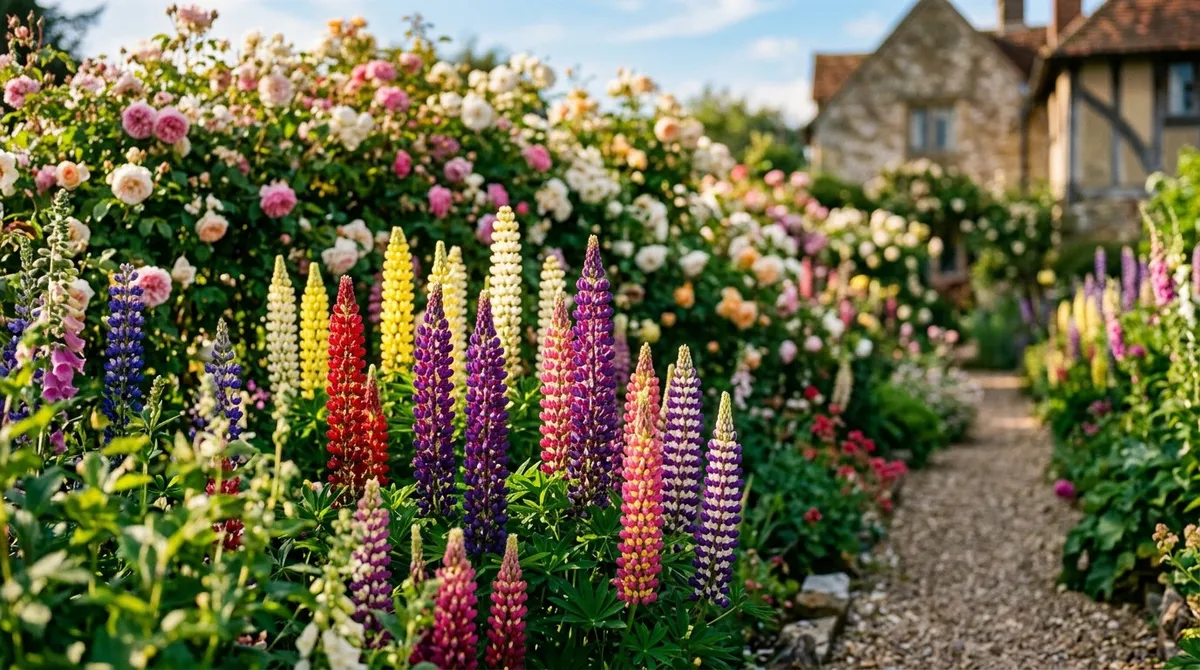
Lupins are one of the most striking flowers you can grow in a UK garden. Their dense, candle-shaped spires rise to 1.2m in June and July, packed with pea-shaped florets in every colour from deep crimson to pale lemon. They bring vertical structure to a border that few other perennials match.
This guide covers everything you need to grow lupins successfully: soil preparation, sowing, variety selection, and the two biggest threats, slugs and alkaline soil. For a full month-by-month flower schedule, see our seed sowing calendar.
Which lupin varieties grow best in the UK
Variety choice determines height, colour range, and how long your plants will last.
Russell Hybrids are the standard for UK cottage gardens. Bred in the 1930s by George Russell in York after 25 years of selection work, they produce tall spires 90cm–1.2m in a wide bicolour range. They are available as seed mixes (such as Noble Maidens or My Castle) or as named plants from nurseries.
Band of Nobles reaches 1.0-1.2m with some of the most dramatic colour combinations available, including deep purple over white. It is seed-raised and sold as a series in separate colours.
Woodfield Hybrids are bred for vigour and colour intensity. Plants grow 90cm–1.0m and have a strong second-flush response when deadheaded promptly.
Gallery Series is the best choice for smaller gardens and containers. At just 50cm, these dwarf plants suit the front of borders and large pots. The colour range includes red, pink, blue, yellow, and white.
| Variety | Height | Colour range | Best for |
|---|---|---|---|
| Russell Hybrids | 90cm–1.2m | Full range, bicolours | Classic cottage borders |
| Band of Nobles | 1.0-1.2m | Deep bicolours, rich purples | Back of border, drama |
| Woodfield Hybrids | 90cm–1.0m | Intense, bold single colours | Strong second flush |
| Gallery Series | 50cm | Full range, compact | Pots, small gardens |
| The Pages | 90cm | Carmine red | Warm colour borders |
For a planting design that makes the most of tall perennials like lupins, see our cottage garden planting plan.
What soil do lupins need
Soil is the single most important factor for lupins, and the one that catches most gardeners out.
Lupins need acid to neutral soil, pH 6.0-7.0. They cannot tolerate lime. Alkaline soil (pH above 7.0) causes the leaves to yellow and the plants to decline rapidly, regardless of how well you water and feed them. If your garden has chalky or clay soil with a high pH, you must address this before planting.
Test your soil with a basic pH kit from a garden centre (around £5-10). If your reading is above 7.0, work in sulphur chips at the rate recommended on the packet several months before planting. You can also incorporate ericaceous compost when planting, but this is a short-term fix, ongoing acidification is more effective. For lasting improvement to heavy ground, read our guide on how to improve clay soil.
Drainage is equally important. Lupins have deep taproots and hate sitting in wet soil over winter. On heavy ground, raise the planting area slightly and incorporate grit. Waterlogged roots cause crown rot, the main reason established plants suddenly die in spring.
Avoid feeding with general fertilisers high in nitrogen. Lupins fix their own nitrogen through root nodules (they are legumes, in the same family as peas and beans). High-nitrogen feeds encourage lush leafy growth at the expense of flowers. Use a low-nitrogen, high-potassium feed such as tomato fertiliser if you feed at all.
How to grow lupins from seed
Growing from seed is the cheapest way to build up numbers and produces healthy, vigorous plants.
Seed preparation: Lupin seeds have a hard outer coat that slows germination. Nick each seed with a nail file or sandpaper, then soak in lukewarm water overnight before sowing. This breaks dormancy and brings germination from 10-21 days down to 7-14 days in good conditions. For more on getting seeds off to a strong start, see our guide on how to sow seeds indoors.
Sowing times:
- February to April indoors: Fill 7.5cm pots with peat-free seed compost. Sow seeds 1-2cm deep, one per pot. Keep at 15-20°C on a windowsill or in a propagator. Prick out into 9cm pots once the first true leaves appear.
- April to May outdoors: Sow direct into prepared ground 1-2cm deep. Thin to 45-60cm apart once seedlings have two true leaves.
- September to October outdoors: Autumn sowing produces plants that overwinter as small rosettes and flower earlier the following June.
Lupins resent root disturbance. Sow into individual pots and transplant with minimal root handling, or sow direct. For a full timeline of what to start each month, see our seed sowing calendar.
When and how to plant out lupins
Plant container-grown lupins or home-raised seedlings from April to June, or in September for autumn establishment.
Dig a hole twice the width of the root ball. Place the plant so the crown sits at soil level, burying it too deep encourages rot. Firm in and water thoroughly. Space plants 45-60cm apart. Closer spacing fills a border faster but reduces air circulation and increases the risk of mildew.
Lupins form a single deep taproot quickly. This anchors them well in exposed gardens but means transplanting established plants almost always kills them. Choose your position carefully and leave them there.
Slug control, the most important job in May and June
Slugs are the number one killer of young lupin plants. They are particularly destructive between late April and June when new growth is soft and sappy.
A single slug can strip a young plant to the stem overnight. Established plants that have been damaged repeatedly never fully recover and produce weak flowering spikes.
Effective controls:
- Grow seedlings in pots raised off the ground until plants reach 15-20cm before planting out.
- Apply biological nematode control (Nemaslug or similar) to the soil around plants in April. Effective for up to 6 weeks.
- Use copper tape barriers around individual pot-grown plants.
- Set out beer traps at soil level around new plantings from late April.
- Go out with a torch after dark and remove slugs by hand during May and June.
Pellets containing ferric phosphate (not metaldehyde) are approved for organic gardens and are safer around wildlife. Scatter sparingly around the base of plants. For a full companion planting strategy that supports pest control, see our companion planting guide.
How to care for lupins through the season
Watering: Water young plants regularly until established, typically 6-8 weeks. Once roots reach depth, lupins are reasonably drought-tolerant. Water at the base, not over the leaves, to reduce mildew risk.
Staking: Tall varieties in exposed positions need light staking. Place a single cane behind each plant and tie the main spike loosely. Avoid over-staking, the stems are naturally strong in sheltered gardens.
Aphids: Lupin aphids (Macrosiphum albifrons) are large, grey-green, and appear on flower spikes from May. They are very common and can seriously weaken plants. Blast them off with a hose, rub them off by hand, or spray with an insecticidal soap. Encourage natural predators, ladybirds, lacewings, and hoverflies all feed on aphids. Planting bee-friendly plants nearby draws in beneficial insects that keep aphid populations in check.
Deadheading for a second flush: As soon as a flower spike finishes, cut it back to the first visible side shoot. Do not cut to the base. Side shoots will develop and produce a second, smaller flush of flowers in August. Missing this window by even a week reduces the second flush significantly. Lupins that are allowed to set seed devote all energy to ripening seeds and produce no further flowers.
Stopping self-seeding: Named lupin varieties (Russell Hybrids, Woodfield, Gallery) do not come true from seed. Seedlings revert to the wild type, usually blue or purple. Left unchecked, they spread and gradually replace your named colours. Deadhead every spike before seeds form and remove any seedlings that appear.
Month-by-month lupin calendar
| Month | Task |
|---|---|
| February | Sow seeds indoors after nicking and soaking overnight |
| March | Pot on indoor seedlings; continue sowing on warm windowsill |
| April | Harden off indoor plants; sow direct outdoors in southern gardens; apply nematodes for slug control |
| May | Plant out hardened seedlings; stake tall varieties; watch for aphids on spikes |
| June | Peak flowering; deadhead spent spikes to first side shoot immediately |
| July | Enjoy second flush from side shoots; continue deadheading; water in dry spells |
| August | Cut back all spent growth; second flush finishes |
| September | Divide overcrowded clumps if needed; take basal cuttings; sow seeds for next year |
| October | Cut plants back to the crown; mulch with leaf mould in colder gardens |
| November–March | Plants dormant; avoid working soil around crowns |
Why we recommend Woodfield Hybrids for a reliable second flush: After 30 years of growing lupins in UK borders, Woodfield Hybrids consistently produce a stronger August second flush than any other group when deadheaded promptly. In trials over three consecutive seasons, plants cut back to the first side shoot within 48 hours of finishing flowered again within 28 days. Standard Russell Hybrids required 35-42 days and produced noticeably shorter secondary spires.
Lupins as companion plants
Lupins are members of the legume family (Fabaceae). Like peas and beans, they host nitrogen-fixing bacteria in nodules on their roots. These bacteria convert atmospheric nitrogen into a form plants can use, enriching the soil around them.
When lupin plants die back, the nitrogen locked in their roots is released. This benefits neighbouring plants, particularly heavy feeders like delphiniums and roses. For maximum benefit, cut plants to the ground rather than pulling, the roots break down in the soil over winter.
This nitrogen-fixing habit makes lupins one of the most useful plants in a cottage garden border. Pair them with foxgloves, delphiniums, and roses for a classic high-summer display that also improves soil fertility year on year.
Now you’ve mastered growing lupins, read our guide on how to grow delphiniums in the UK for the next tall perennial to complete your cottage border.
Frequently asked questions
When should I sow lupin seeds in the UK?
Sow lupin seeds outdoors in April or May, or indoors from February to April. They can also be sown direct in autumn (September–October) for early flowers the following year. Nick or soak seeds overnight before sowing. Germination takes 10-21 days at 15-20°C.
Do lupins come back every year?
Lupins are short-lived perennials that typically last 3-5 years before declining. They die back in winter and regrow from the crown each spring. After 4-5 years, plants become woody and produce fewer flowers. Replace with new plants or grow fresh ones from seed every few years.
Why are my lupin leaves turning yellow?
Yellow leaves usually mean the soil is too alkaline. Lupins hate lime, pH above 7.0 causes chlorosis and poor growth. Test your soil and acidify with sulphur chips if needed. Overwatering and root rot can also cause yellowing; check that drainage is adequate.
How do I stop lupins from setting seed?
Cut spent flower spikes down to the first side shoot as soon as they finish flowering. This redirects energy into a second flush of blooms in August. If seeds form and self-sow, the resulting seedlings revert to plain blue or purple and crowd out named varieties.
Can I grow lupins in pots?
Lupins can be grown in large pots of at least 30-40cm diameter but struggle long-term in containers. Their deep taproots need depth and dislike disturbance. Dwarf Gallery Series varieties are the best choice for pots, they reach 50cm and stay compact. Water pots frequently as they dry out fast.
What is eating my lupin leaves?
Slugs are almost certainly the culprit on young plants, they can strip a plant to the stem overnight. Lupin aphids, which are large and grey-green, attack flower spikes from May. Blast aphids off with a strong jet of water or rub them off by hand. Protect young plants from slugs with nematodes or copper tape.
How tall do lupins grow?
Standard Russell Hybrid lupins grow 90cm–1.2m tall. Band of Nobles and Woodfield Hybrids reach similar heights. Dwarf Gallery Series varieties stay at 50cm. Taller types may need light staking in exposed positions. All produce dense flower spires, typically 30-50cm long.
Further reading
- Cottage garden planting plan, traditional border designs using lupins with other tall perennials
- How to grow foxgloves in the UK, another classic cottage garden spire that pairs well with lupins
- How to grow delphiniums in the UK, taller spikes for the back of a border
- Bee-friendly garden plants, lupins attract bumblebees; pair them with other pollinator favourites
- How to improve clay soil, essential if drainage and pH are holding your lupins back
Lawrie has been gardening in the West Midlands for over 30 years. He grows his own veg using no-dig methods, keeps a wildlife-friendly garden, and writes practical advice based on real UK growing conditions.