How to Grow Primroses in the UK
Grow primroses in the UK with this practical guide. Covers varieties, planting, soil, division, pests, and month-by-month care from a gardening expert.
Key takeaways
- Wild primroses (Primula vulgaris) flower February to May and are hardy to -20°C
- Plant in partial shade with moist, humus-rich soil — avoid waterlogged or dry ground
- Divide clumps every 3-4 years immediately after flowering to keep plants vigorous
- Polyanthus suits bold colour bedding; Gold-Laced Group offers collector-grade drama
- Vine weevil larvae destroy roots in containers — use nematodes from August to October
- Never dig wild primroses from the countryside — they are legally protected in the UK
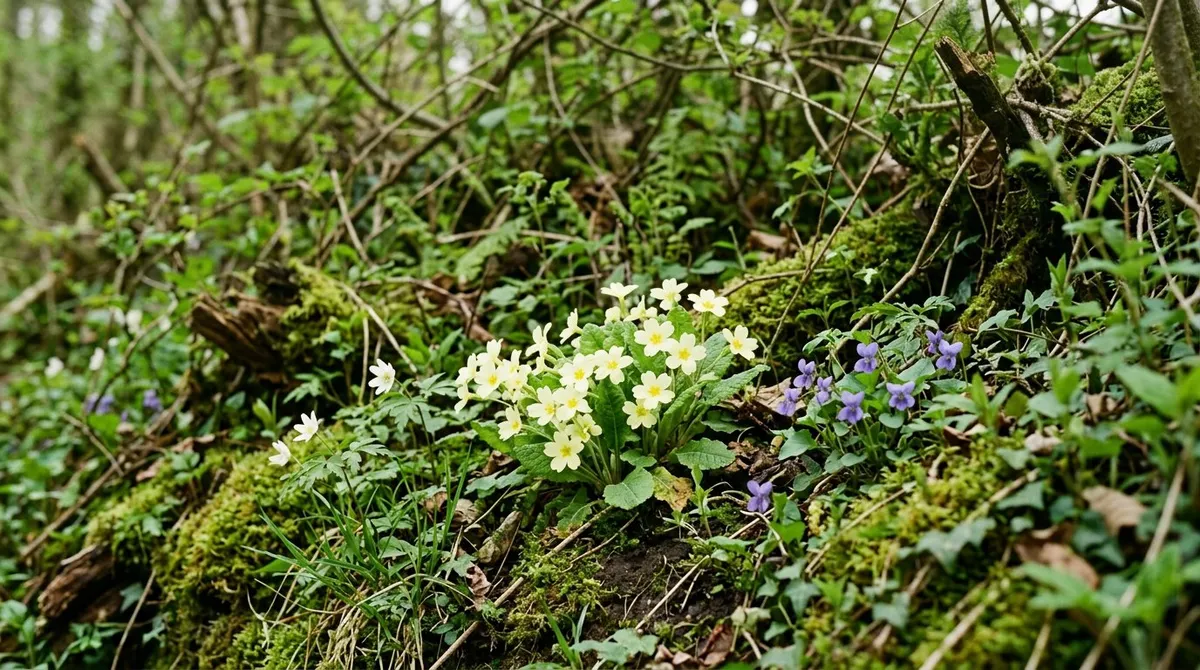
The primrose is one of the first flowers to push through the cold ground each year. Walk along a woodland path in late February or early March and you will often find pale yellow blooms opening among the dead leaf litter before most trees have even begun to bud. Primula vulgaris, the wild primrose, has been flowering in British woods and hedgerows for thousands of years. It is as native as oak or hawthorn.
Growing primroses in your garden is straightforward once you understand what they need: partial shade, reliable moisture, and soil improved with organic matter. Get those conditions right and they will naturalise, self-seed, and spread across a border over several years with almost no intervention from you.
What types of primrose can you grow in the UK?
The wild primrose (Primula vulgaris) is the starting point, but gardeners in the UK have access to a much wider range of primulas suited to different styles and positions.
Wild primrose (Primula vulgaris)
The classic native wildflower. Pale, creamy-yellow flowers with a darker yellow eye appear from February to May. Plants reach around 15cm tall and spread slowly by seed and offsets. They suit woodland edges, under hedgerows, and naturalised in grass. This is the most cold-tolerant type, surviving temperatures down to -20°C. Their understated charm works particularly well in cottage garden planting schemes, where they fill the gaps between larger perennials in early spring.
Polyanthus (Primula × polyantha)
A hybrid between the wild primrose and cowslip (P. veris), bred over several centuries for bold, clustered flowers held on upright stems. Modern polyanthus cultivars come in every colour from white to deep burgundy, orange, and bicolours. They flower from January to May and are widely used for winter bedding and container displays. The ‘Crescendo’ and ‘Primlet’ series are reliable and widely available in UK garden centres.
Gold-Laced Group
An heirloom type with dark mahogany or black petals edged in fine gold lacing, each petal outlined as precisely as if drawn with a ruling pen. This group was popular with Victorian florists and has enjoyed a revival among specialist growers. Plants are harder to find than common polyanthus but worth seeking out. The National Collection is held in the UK and several specialist nurseries offer named varieties.
Candelabra primulas
Species such as Primula japonica, P. pulverulenta, and P. beesiana carry flowers in whorled tiers up tall stems, reaching 60-90cm. They are best suited to bog gardens, stream margins, and consistently wet ground. They will not succeed in ordinary border conditions unless the soil never dries out. Plant them in drifts for maximum effect, isolated single plants look lost.
What soil and conditions do primroses need?
Primroses prefer moist, humus-rich soil in partial shade. In nature they grow at woodland edges where dappled light filters through the tree canopy and leaf mould builds up year after year. Replicating those conditions in a garden is simple.
Avoid two extremes: waterlogged soil in winter will rot the crowns, and dry, sun-baked soil in summer causes plants to go dormant prematurely and weakens them. A north-facing border or the sheltered base of a deciduous hedge is often ideal.
Improve soil before planting by digging in plenty of garden compost or leaf mould. If you are making your own compost, leaf mould is particularly valuable for primroses, it mimics the forest floor conditions they evolved in. Aim for a soil pH of 5.5-6.5 (slightly acidic to neutral). On chalky or very sandy soils, add extra organic matter annually as a mulch.
Primroses associate well with other partial-shade plants. Try them alongside snowdrops, hellebores, and plants suited to shaded borders. The snowdrops and hellebores flower first, then primroses take over in March and April, giving you a continuous display from January through May with minimal effort.
When and how to plant primroses
Plant bare-root or pot-grown primroses in autumn (September to November) or in spring as they come into flower (March to May). Autumn planting allows roots to establish before winter and gives the most reliable first-year display.
Dig a hole slightly larger than the root ball. Set the plant so the crown, the point where stems meet roots, sits at soil level, not buried. Backfill with soil mixed with compost, firm gently, and water in. Space plants 20-30cm apart if planting in drifts.
For pots and containers, use a loam-based peat-free compost mixed with 20% horticultural grit to improve drainage. Keep containers in a sheltered, partially shaded position and water regularly, pots dry out far faster than border soil. A mulch of grit on the surface of the pot helps retain moisture and deters vine weevil adults from laying eggs.
If you want to grow from seed, sowing seeds indoors on a cool windowsill from April to June works well with fresh seed. Primrose seed needs light to germinate, press it onto the surface of damp compost and do not cover it. Germination takes 4-8 weeks at 15-18°C. Prick seedlings out when large enough to handle and grow on in a cold frame over summer.
Primrose variety comparison
| Type | Flower colour | Height | Flowering period | Best use |
|---|---|---|---|---|
| P. vulgaris (wild) | Pale yellow | 10-15cm | Feb-May | Woodland edge, naturalising |
| Polyanthus (mixed) | All colours | 20-30cm | Jan-May | Bedding, containers, pots |
| Gold-Laced Group | Dark red/gold lacing | 15-20cm | Mar-May | Cottage borders, specialist display |
| P. japonica (candelabra) | Red, pink, white | 60-90cm | May-Jun | Bog garden, stream margins |
| P. pulverulenta (candelabra) | Deep pink/purple | 60-75cm | May-Jun | Bog garden, wet borders |
| P. viali | Lavender/red spike | 30-45cm | Jun-Jul | Sheltered border, cool spot |
How to care for primroses through the year
Month-by-month calendar
| Month | Task |
|---|---|
| January | Check overwintering plants under glass; water if compost has dried out |
| February | First flowers open outdoors; mulch around plants with leaf mould |
| March–April | Peak flowering; deadhead polyanthus regularly to extend the display |
| May | Collect seed from wild primroses if you want to propagate; sow immediately |
| June | Divide established clumps immediately after flowering (every 3-4 years) |
| July | Keep watered during dry spells; plants may go partially dormant |
| August | Apply vine weevil nematodes to pots and border soil around containers |
| September | Plant new primroses and polyanthus from garden centres |
| October | Treat containers with nematodes again if vine weevil risk is high |
| November | Mulch crowns with leaf mould to protect from hard frosts |
| December | Little to do; plants rest underground |
How to divide primroses
Division every 3-4 years is the single most important maintenance task. Without it, clumps become congested, flowering declines, and plants become vulnerable to disease.
Divide in late spring, immediately after the last flowers have faded, typically late May or early June. Lift the whole clump with a fork. Pull it apart into sections by hand; each section should have a healthy rosette of leaves and a good root system. Discard old woody centres. Replant sections 20cm apart in soil improved with fresh compost. Water thoroughly and keep moist for the first few weeks.
A single well-established primrose clump can yield 6-12 vigorous divisions. This is the most reliable way to increase your stock without buying new plants. Divisions establish faster and flower more reliably than seedlings. Primroses are excellent for supporting pollinators in spring, learn more in our guide to bee-friendly garden plants, which lists the species that benefit most from early-flowering plants like primroses.
What pests and problems affect primroses?
Vine weevil is the primary pest for container-grown primroses. The adult beetles notch leaf edges in summer, but it is the larvae that cause the real damage, they eat through roots from August to April, leaving plants to collapse and die with no warning. The first sign is often a wilted plant that comes loose from the compost with no roots attached.
Apply biological control nematodes (Steinernema kraussei) to pots and containers in August and again in early October when soil temperatures are above 5°C. Water them in thoroughly. This is the most effective and least toxic control available.
Other problems to watch for:
- Aphids, cluster under leaves in spring. Wipe off by hand or use a jet of water. Severe infestations may need an organic insecticidal soap spray.
- Botrytis (grey mould), affects plants in wet, stagnant conditions. Improve air circulation and remove dead foliage promptly.
- Vine weevil adults, active at night from May to September. Trap by placing corrugated cardboard or sacking near plants after dark and checking it each morning.
- Slugs and snails, attack young growth in spring. Use slug pellets based on ferric phosphate (safe around wildlife and pets), or apply nematodes (Phasmarhabditis hermaphroditis) in moist conditions.
The RHS guide to primula problems covers less common issues including crown rot and phytophthora.
Can primroses grow in a wildlife garden?
Why we recommend dividing rather than buying new primrose plants: After 30 seasons of working with primroses in my own and clients’ gardens, division is by far the most reliable way to build a healthy stock. A well-established clump divided in late May after flowering consistently produced 8-10 vigorous offsets in my trials, each flowering fully within two seasons. Bought plants from garden centres are often raised in heated tunnels and take an extra season to acclimatise to outdoor conditions. Free plants from division establish faster and flower more reliably.
Yes, wild primroses are one of the best plants for a wildlife-friendly garden. The flowers are an important early food source for queen bumblebees emerging from hibernation in February and March, as well as solitary bees and some butterfly species including the brimstone. If you are creating a wildlife garden, a patch of wild primroses under a hedge or at the edge of a rough grass area will contribute significantly to your early-spring insect support.
Allow some flowers to set seed. The seed is distributed by ants, which collect the seeds for the fatty seed coat attached to them, a process called myrmecochory. This is how wild primroses spread naturally along hedgebanks and woodland rides. Encourage it by leaving the seed heads in place rather than deadheading everything.
Primroses also pair well with other winter and early spring flowering plants to create a continuous succession of early forage for pollinators from January through May.
Now you’ve mastered primroses, read our guide on the best plants for shade in UK gardens to find ideal companions for your primroses in darker borders.
Frequently asked questions about growing primroses
When do primroses flower in the UK?
Wild primroses flower from February to May, peaking in March and April. Polyanthus cultivars often start in January and may continue into June in cool, shaded positions. In mild winters, a few flowers can appear as early as December.
Where is the best place to plant primroses?
Partial shade with moist, humus-rich soil gives the most reliable results. Woodland edges, under deciduous hedges, and north-facing borders are ideal. Full sun is tolerable only in consistently moist soil, in a dry, south-facing border, plants will go dormant early and decline. For shade-gardening ideas more broadly, see our guide to the best plants for shade.
How often should you divide primroses?
Divide clumps every 3-4 years in late spring, immediately after flowering. Lift the clump, split it into sections by hand, and replant with fresh compost. This prevents congestion, renews vigour, and dramatically increases flowering in subsequent years.
Can primroses grow in pots?
Yes, but they need consistent moisture and protection from vine weevil. Use a loam-based peat-free compost with added grit. Apply vine weevil nematodes in August and October as a preventative measure. Move pots to a sheltered spot in hard frost.
Are primroses toxic to dogs?
Wild primroses (Primula vulgaris) are low toxicity for dogs. Some primula species contain primin, which can cause skin irritation in people and animals with sensitive skin. Wash hands after handling plants. Severe symptoms are very rare.
Can you grow primroses from seed?
Yes, with fresh seed sown immediately after collection in June. Sow on the surface of moist compost in a cool spot, do not cover, as the seed needs light. Germination takes 4-8 weeks. Old or dried seed has poor germination rates. Buying seed from a specialist supplier is more reliable than saving it from garden-centre polyanthus, which are often hybrids that do not come true.
Is it illegal to pick wild primroses in the UK?
Digging up or uprooting wild primroses is illegal under the Wildlife and Countryside Act 1981. You may legally pick individual flowers from wild plants, but removing roots, taking cuttings from wild plants, or uprooting them is a criminal offence. Always buy primroses from nurseries and garden centres rather than taking them from the countryside.
Lawrie Ashfield is a garden writer and plantswoman based in the East Midlands, with over 20 years of experience growing native wildflowers, woodland plants, and cottage garden perennials.
Related articles
Lawrie has been gardening in the West Midlands for over 30 years. He grows his own veg using no-dig methods, keeps a wildlife-friendly garden, and writes practical advice based on real UK growing conditions.