How to Grow Snowdrops in the UK
Expert guide to growing snowdrops in the UK. Plant 'in the green' for best results, naturalise under trees, and find the best varieties for your garden.
Key takeaways
- Always plant snowdrops 'in the green' (while still in leaf, Feb-March) rather than dry bulbs — dry bulbs fail up to 70% of the time
- Choose a spot in partial shade under deciduous trees or at a woodland edge, in moist, humus-rich soil
- Divide congested clumps immediately after flowering (March), while still in leaf, to multiply your stock each year
- Hardy to -20°C — snowdrops need no winter protection and actually require cold weather to flower well
- All parts of the plant are toxic if eaten — wear gloves when handling and keep away from children and pets
- Named varieties like 'S. Arnott' and 'Atkinsii' are vigorous and worth seeking out from specialist galanthus nurseries
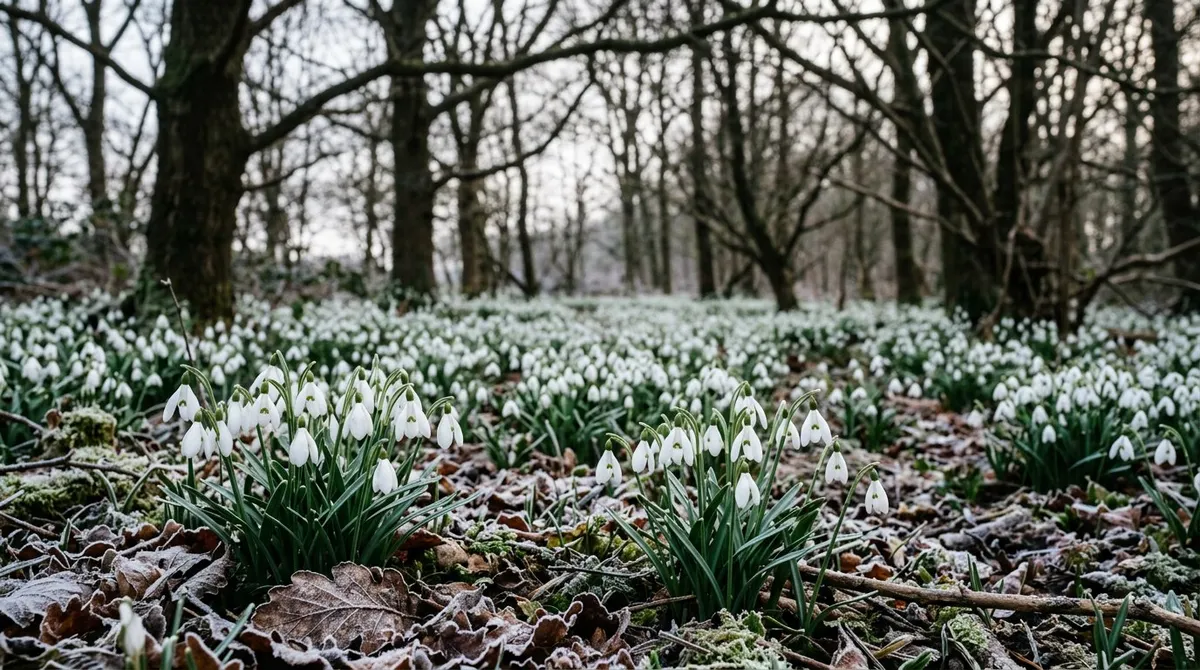
Snowdrops are among the first signs of life in a winter garden. A flush of white flowers pushing through frozen soil in January lifts the spirits in a way few other plants can match. They are modest in size, rarely more than 15cm tall, but what they lack in stature they make up for in persistence. A well-established colony under an oak tree or along a shaded bank multiplies steadily each year, needing nothing from the gardener except the occasional division.
The key to success with snowdrops is understanding one simple rule: buy and plant them in the green, not as dry bulbs. That single decision makes the difference between a colony that thrives and a handful of bulbs that quietly rot. This guide covers everything you need to establish snowdrops in your garden, from buying the right plants to choosing the best varieties. For a broader look at planting bulbs across the seasons, see our guide to when to plant spring bulbs in the UK.
Why should I plant snowdrops in the green?
Snowdrops planted in the green, while still in active leaf, establish at a significantly higher rate than dry autumn bulbs. The difference is dramatic. Dry snowdrop bulbs have a thin, papery tunic that offers little protection compared to the thick tunics of daffodils or tulips. Once lifted and dried, the roots die back and the bulb enters a stressed dormancy it frequently does not survive. Studies and practical experience from specialist nurseries consistently show failure rates of 50-70% for dry bulbs.
In the green plants are lifted immediately after flowering in February or March, roots intact, and transplanted directly. They may look slightly sorry for a week or two as they adjust, but the roots never fully dry out and the bulbs carry enough stored energy to re-establish quickly. Within a season they are spreading.
Buy in the green plants from specialist bulb nurseries, garden centres in late winter, or from friends who are dividing their own clumps. Many local plant fairs and snowdrop events sell divisions. For context on the range of winter plants worth growing alongside snowdrops, see our guide to the best winter flowering plants for UK gardens.
How to plant snowdrops in the green
Plant immediately, do not leave them sitting in a bag. Choose your spot, prepare the soil, and get them in the ground within a day or two of purchase.
- Dig a hole 8-10cm deep and wide enough for a small cluster of 3-5 bulbs.
- Add a handful of leaf mould or well-rotted compost to the base.
- Position the bulbs with roots pointing down and the green shoot upright.
- Backfill with a mix of soil and leaf mould. Firm gently.
- Water in and mark the spot, the leaves die back by June and the area looks bare until the following January.
Space individual clusters 10-15cm apart. For a natural look, stagger the groups in drifts rather than rows. A planting of 50 in-the-green clumps will cover an area of roughly one square metre.
Where do snowdrops grow best in a UK garden?
Snowdrops are native to woodland edges, riverbanks, and hedgerow bases across Central and Southern Europe, naturalised throughout Britain. They have evolved for a specific set of conditions: cool, moist soil, partial to full shade, and a rich supply of organic matter from leaf litter.
The ideal position
The best spots in a UK garden are under deciduous trees (oak, ash, beech, hazel), along shaded banks, at the foot of north-facing walls, and in woodland-style borders. The deciduous tree is ideal because the tree is leafless during the snowdrop’s growing season (January-April), allowing reasonable light, then its leaf canopy provides cool shade in summer when the bulbs are dormant. Fallen leaves add to the leaf mould layer that snowdrops prefer.
Avoid:
- Positions under dense evergreens, too dark, too dry, leaf litter often inhibits growth
- Hot, south-facing beds in full sun, snowdrops dry out and fail to multiply
- Poorly drained heavy clay without improvement, waterlogged bulbs rot over winter
- Grass that is cut before June, mowing removes leaves before they have fed the bulbs
Snowdrops grow happily alongside other shade-tolerant plants. They combine with hellebores, which flower at a similar time, winter aconites, and early primroses. For a full planting plan for shade, see our guide to the best plants for shade in UK gardens. Hellebores in particular make excellent companions, our guide to growing hellebores in the UK covers the varieties that pair best with snowdrops.
Soil preparation
Snowdrops prefer moist, humus-rich, slightly alkaline to neutral soil. Before planting, fork over the top 15cm and add a generous amount of leaf mould, a bucket per square metre is the right amount. Leaf mould improves moisture retention in summer without making the soil waterlogged. If you do not have leaf mould, well-rotted garden compost works almost as well. Our guide to how to make compost explains how to create a steady supply.
Avoid working heavy compost or manure too deeply into the soil, snowdrops are shallow-rooted and prefer a light, crumbly layer in the top 15cm rather than dense, waterlogged subsoil.
Which snowdrop varieties should I grow?
The world of snowdrops is surprisingly large. There are around 20 species and hundreds of named cultivars, ranging from the common native to rare doubles and giants that attract serious collectors. For most UK gardeners, a small number of reliable varieties covers every need.
| Variety | Height | Flowering | Character | Best For |
|---|---|---|---|---|
| G. nivalis (common snowdrop) | 10-15cm | Jan-March | Single white, simple and graceful | Naturalising in large drifts |
| G. elwesii (giant snowdrop) | 15-20cm | Jan-Feb | Larger flower, broad glaucous leaves | Bold statement, sunny woodland |
| ’Flore Pleno’ | 10-12cm | Feb-March | Double inner petals, long-lasting | Borders, pots, visual interest |
| ’S. Arnott’ (AGM) | 15-20cm | Feb-March | Large, honey-scented, vigorous | Best all-rounder, any garden |
| ’Atkinsii’ | 20-25cm | Jan-Feb | One of the earliest and tallest | Naturalising, early interest |
| ’Magnet’ | 15-18cm | Feb-March | Long pedicel, flower sways in breeze | Borders, cutting garden |
‘S. Arnott’ is the most widely recommended named variety by the Royal Horticultural Society, holding an AGM (Award of Garden Merit). It is larger and more strongly scented than the common snowdrop, vigorous enough to naturalise, and available from most specialist nurseries. If you grow only one named variety, make it this one.
‘Atkinsii’ is worth growing for its earliness, it flowers several weeks before the common snowdrop in January, providing interest right through the darkest month. It is tall, elegant, and spreads well.
Galanthophilia, the passionate collecting of rare snowdrop varieties, is one of British horticulture’s most dedicated hobbies. Single bulbs of choice varieties can sell for £20-100 or more at specialist fairs and nurseries. Colesbourne Park in Gloucestershire opens its gardens specifically for snowdrop viewing in February and is considered the finest collection in England.
How do I propagate and multiply snowdrops?
The most reliable way to increase your snowdrop stock is division, lifting and splitting established clumps while still in leaf after flowering. This is also the best way to prevent overcrowding, which reduces flowering as bulbs compete for resources.
Dividing clumps
Divide clumps every 3-4 years, or when you notice flowering starting to decline. The process is simple and best done in March while leaves are still visible (you will lose track of the plants once the foliage dies back in April).
Slide a fork under the clump from the side, easing it up gently to avoid spearing bulbs. Lift the entire clump and pull it apart by hand into smaller clusters, each containing 3-5 bulbs. Replant immediately at the same depth (8-10cm) and water in. Divided clumps may produce fewer flowers in the first year after division, but recover and flower more freely from the second year onward.
Growing from seed
Snowdrops set seed readily if conditions are right. The seeds are ant-dispersed, they carry an elaiosome, a fatty appendage that ants collect, inadvertently moving seeds short distances in the process. Seed-grown snowdrops take 3-5 years to reach flowering size, so division is always faster for building up numbers.
To grow from seed, collect ripe seed capsules before they open (when the capsule turns yellowish) and sow directly into pots of leaf mould and grit compost. Leave outdoors over winter, the cold is necessary for germination. Seedlings appear the following spring.
Why we recommend ‘S. Arnott’ for most UK gardens: After 30 years of growing and dividing snowdrops, ‘S. Arnott’ consistently outperforms the common species for garden impact without the fussiness of rarer named varieties. In direct comparison, clumps of ‘S. Arnott’ planted alongside Galanthus nivalis in partial shade produced flowers 10-14 days later into March, extending the season noticeably. The honey scent is strong enough to detect from a metre away on a still February day, which no other commonly available variety matches.
Month-by-month snowdrop calendar
| Month | What to do |
|---|---|
| January | Watch for first flowers, ‘Atkinsii’ often opens before the month ends |
| February | Buy and plant in-the-green snowdrops now, best month. Enjoy peak flowering |
| March | Final chance to plant in the green. Divide established clumps immediately after flowering |
| April | Foliage begins to yellow and die back. Do not cut, leaves are feeding the bulbs |
| May | Leaves fully died back. Mark positions if you plan to divide later |
| June-August | Bulbs dormant underground. Water deeply in prolonged drought, summer moisture matters |
| September-October | If you have dry bulbs, plant now at 8-10cm depth in moist, improved soil |
| November-December | No action needed. Bulbs are developing roots underground |
Snowdrops and wildlife
Snowdrops are one of very few winter flowers that provide pollen and nectar for bees. Bumblebees and solitary bees emerging on warm February days, sometimes when snow is still on the ground, visit snowdrop flowers eagerly. The plants are a vital early season food source before other flowers are open.
The flowers are accessible to bumblebees, which are strong enough to push between the petals to reach the pollen, but the outer tepals (petals) also provide wind shelter, making snowdrop flowers unusually accessible in cold weather. Growing snowdrops alongside winter aconites and hellebores extends the early nectar season significantly. For more on supporting bees in your garden, see our guide to bee-friendly garden plants.
Despite the benefits to pollinators, it is important to remember that all parts of the snowdrop plant are toxic to humans and animals if eaten. The alkaloid galantamine, now used medicinally to treat early Alzheimer’s disease, is present throughout the plant. Wear gloves when planting or dividing.
How do I naturalise snowdrops under trees?
Naturalising, allowing plants to spread across a wider area over time, is the most satisfying way to grow snowdrops. A carpet of thousands of snowdrops under mature trees in February is one of the finest sights in the British garden calendar.
The process takes patience. Starting with 50 in-the-green plants, you might have 200-300 in three years and a thousand or more within a decade. The work is minimal, an annual division of the most crowded clumps, plus clearing dead leaves if they smother new growth in autumn.
Choose varieties that naturalise vigorously. Galanthus nivalis is the most reliable for large-scale naturalising, it spreads by offset and seed and asks for almost nothing. ‘Atkinsii’ and ‘S. Arnott’ also naturalise well, though more slowly than the common snowdrop.
Snowdrops pair with spring bulbs in a naturalised setting. Mixing them with early daffodils extends the interest from January through to April. See our guide on how to grow daffodils in the UK for compatible varieties that flower as snowdrops fade. Hellebores, wood anemones, and bluebells continue the sequence into late spring, creating year-round interest in what would otherwise be bare ground.
For a wider approach to gardening for wildlife under trees, our guide on creating a wildlife garden covers layered planting strategies that suit snowdrops well.
Now you’ve mastered snowdrops, read our guide on how to grow hellebores in the UK for the perfect companion plant that flowers alongside them through winter.
Frequently asked questions
When is the best time to plant snowdrops?
Plant snowdrops in the green between February and early March, immediately after flowering. This means buying plants still in active leaf, not dried bulbs. In the green plants establish reliably and begin spreading within the first year. Dry bulbs can be planted in autumn (September-October) but fail far more often, up to 70% do not survive their first season.
Do snowdrops prefer sun or shade?
Snowdrops prefer partial to full shade, ideally under deciduous trees where leaf litter builds up naturally. They flower in winter and early spring before tree canopies fill in, so the site receives good light during their growing season. Avoid deep, permanent shade under evergreens and hot, dry positions in full summer sun.
How do I divide snowdrops?
Divide snowdrop clumps immediately after flowering in February or March, while the leaves are still green. Lift the clump with a fork, gently pull it apart into smaller clusters of 3-5 bulbs, and replant immediately at 8-10cm depth. Do not let the roots dry out between lifting and replanting. Division every 3-4 years prevents overcrowding and maintains vigorous flowering.
Why are my snowdrops not flowering?
Non-flowering snowdrops are usually caused by overcrowded clumps, dry bulbs planted in autumn that failed to establish properly, or a site that is too dry in summer. Lift and divide congested clumps while in the green. Add leaf mould to improve summer moisture retention. Avoid planting under large shallow-rooted trees that take all available water.
Are snowdrops poisonous?
Yes, all parts of the snowdrop plant are toxic if eaten, including the bulbs, leaves, and flowers. They contain galantamine and other alkaloids that cause nausea, vomiting, and abdominal pain. Wear gloves when handling snowdrops, particularly the bulbs, and keep children and pets away from planted areas. The toxicity does not affect bees foraging on the flowers.
What is galanthophilia?
Galanthophilia is the passionate collecting and study of snowdrop varieties (Galanthus species and cultivars). Dedicated galanthophiles seek out rare named varieties, some of which sell for tens or hundreds of pounds per single bulb. Snowdrop gardens and galanthus fairs (held February-March at gardens including Colesbourne Park in Gloucestershire) attract thousands of visitors each year.
Which snowdrop variety is best for beginners?
Galanthus nivalis, the common snowdrop, is the easiest and most reliable variety for beginners, vigorous, free-naturalising, and widely available in the green. ‘S. Arnott’ is the best named variety for most gardens: large flowers, a distinct honey scent, AGM-awarded, and stronger than the common snowdrop. Both establish readily and multiply without fuss.
Related articles
Lawrie has been gardening in the West Midlands for over 30 years. He grows his own veg using no-dig methods, keeps a wildlife-friendly garden, and writes practical advice based on real UK growing conditions.