Mini Meadow: Grow a Small Wildflower Area
How to create a mini wildflower meadow in a UK garden. Covers seed mixes, soil preparation, sowing, mowing regimes, and the best native species.
Key takeaways
- A mini meadow of just 4-6 square metres supports 30+ species of pollinating insects through summer
- Wildflowers need poor, low-nutrient soil — remove turf and topsoil or sow on an existing thin-grass area
- Yellow rattle is the essential species — it weakens grasses, giving wildflowers space to establish
- Cut once a year in late August, leave cuttings for a week to drop seeds, then remove them
- Autumn sowing (September-October) gives the best germination because seeds need cold to break dormancy
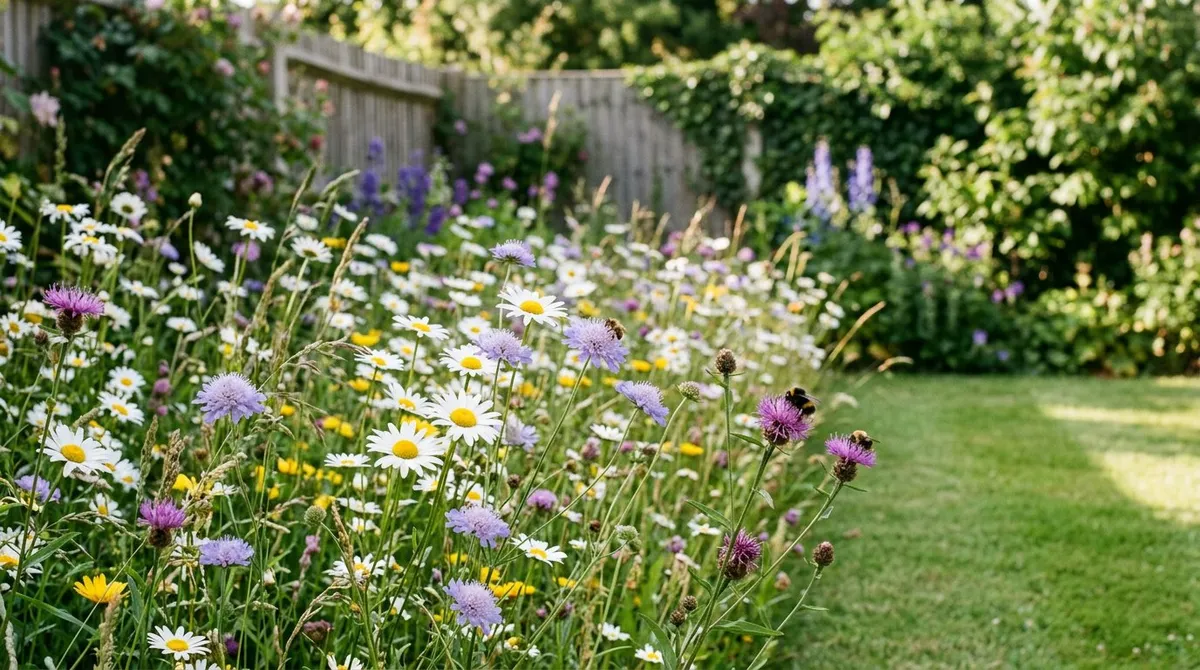
A wildflower meadow does not need to be a field. A patch of 4-6 square metres in the corner of a garden, a mini meadow, supports more wildlife than any other feature you can create. Native wildflowers feed pollinators from April to September, provide seeds for finches in autumn, and look beautiful without any effort beyond a single annual cut.
This guide covers creating a mini meadow in any UK garden, from a strip along a fence to a converted corner of lawn. For a larger-scale lawn conversion, see our guide on how to create a wildflower lawn.
Why mini meadows work
A 4-6 square metre mini meadow in a UK garden supports over 30 species of pollinating insects including bees, hoverflies, and butterflies. That same area as mown lawn supports almost none.
Native wildflowers have evolved alongside British insects over thousands of years. Each species provides nectar and pollen at specific times, creating a continuous food supply from spring through to autumn. This makes even a tiny meadow more valuable to wildlife than a large garden of exotic plants. Our guide to bee-friendly plants covers more ways to support pollinators.
A mini meadow needs no watering once established, no feeding, no weeding, and just one cut per year. It is genuinely the lowest-maintenance garden feature possible.
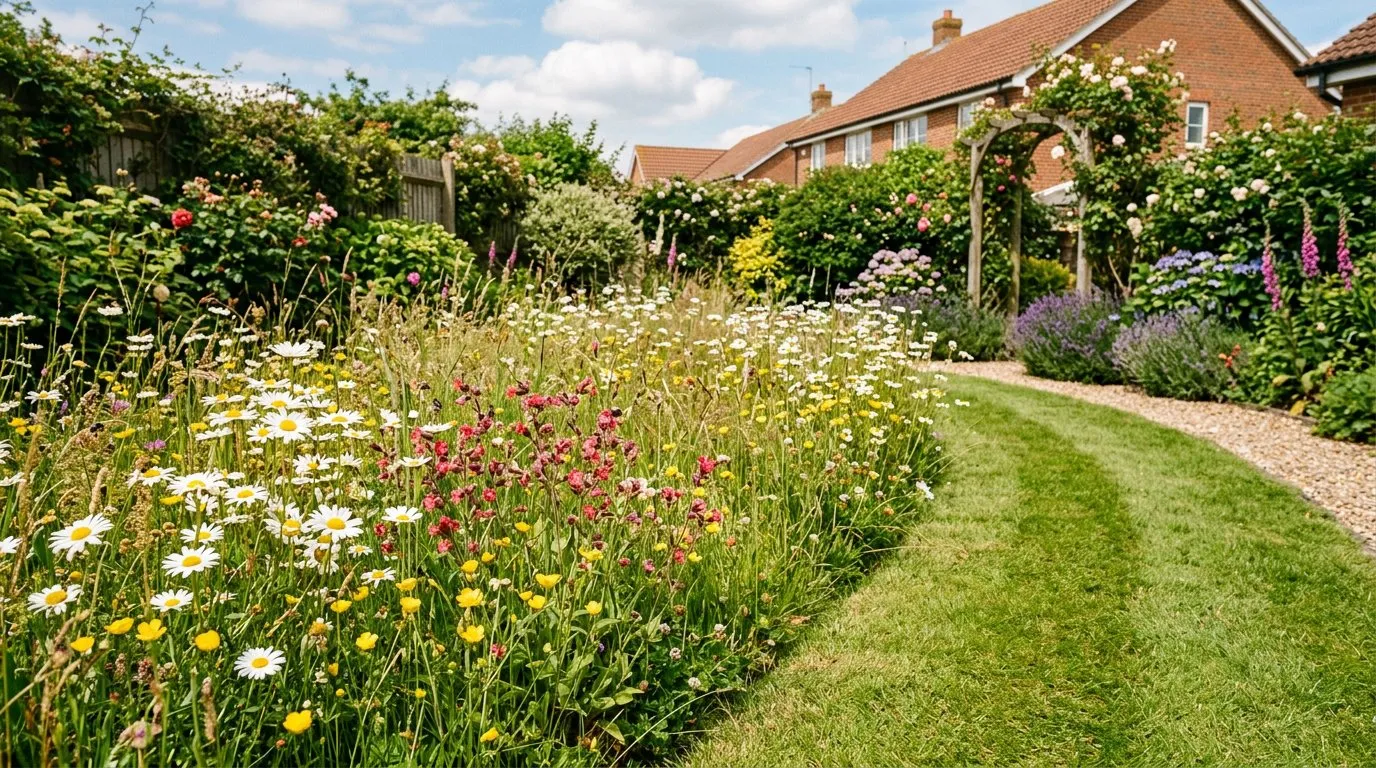 A mini meadow in a suburban garden. Just 4-6 square metres supports over 30 species of pollinating insects.
Choosing the right spot
Sun
Most UK wildflowers need at least 6 hours of direct sun daily. South or west-facing areas work best. Avoid deep shade under trees where few wildflowers survive.
Soil
Counterintuitively, wildflowers need poor, low-nutrient soil. Rich, fertile garden soil produces vigorous grasses that smother delicate wildflowers. This is the single most important factor in meadow success.
If your soil is fertile, you have three options:
- Remove the top 5-10cm of topsoil to expose the less fertile subsoil beneath
- Scalp the turf with a spade and sow directly into the exposed ground
- Stop mowing a section and introduce wildflower plug plants into existing grass, slower but less work
Drainage
Most native meadow wildflowers prefer well-drained soil. Permanently wet areas suit a different species mix, flag iris, meadowsweet, and ragged robin. Check drainage by observing your chosen area after heavy rain.
Essential species for a UK mini meadow
Yellow rattle, the key species
Yellow rattle (Rhinanthus minor) is a semi-parasitic plant that feeds on grass roots, weakening them and creating space for wildflowers to grow. Without yellow rattle, vigorous grasses eventually dominate. It is the single most important species in any meadow mix.
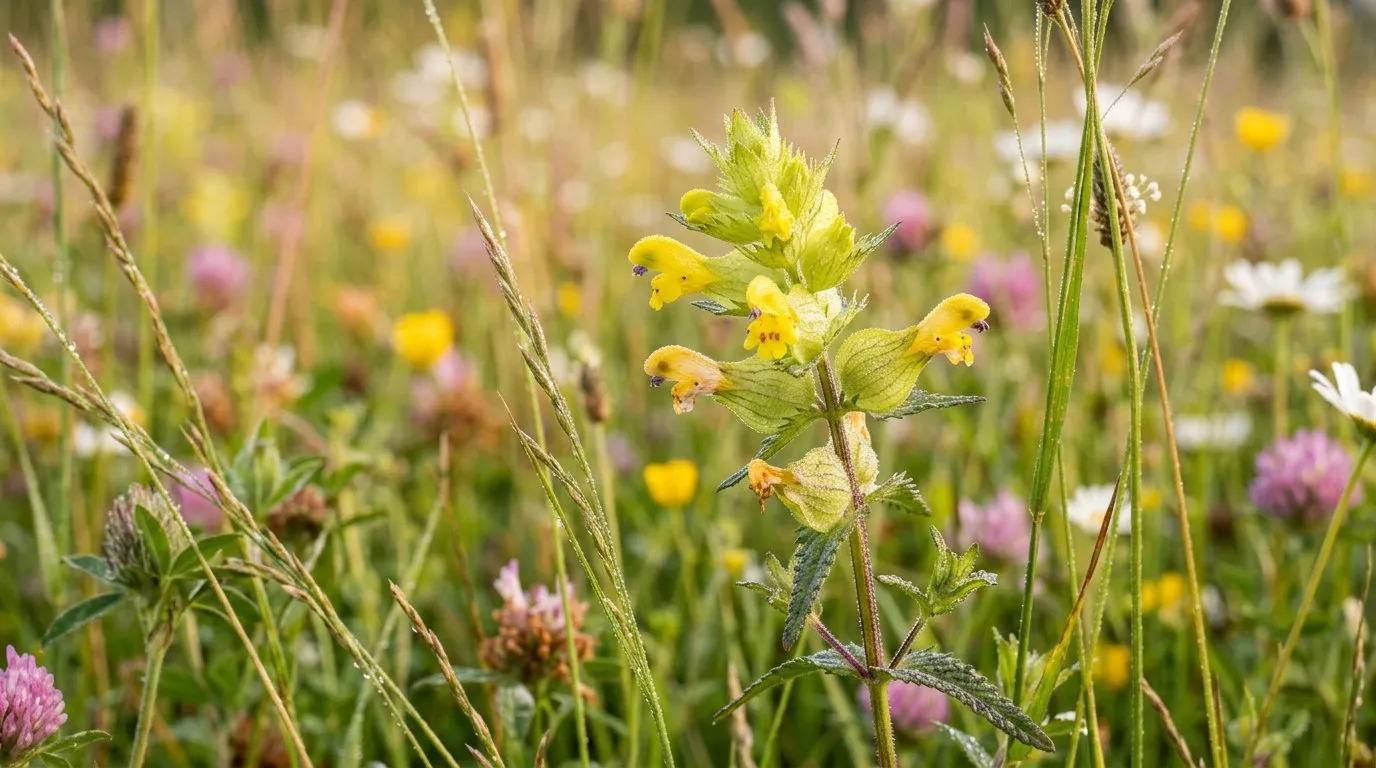 Yellow rattle, the essential meadow species. It weakens grasses, creating space for wildflowers to thrive.
Yellow rattle seed must be sown fresh in autumn (September-October). It needs a cold period over winter to germinate. Seed older than 12 months has very low viability, buy fresh each year.
Why we recommend yellow rattle as the essential first purchase for any new meadow: After 30 seasons of establishing wildflower areas in UK gardens, yellow rattle (Rhinanthus minor) consistently makes the difference between a meadow that thrives and one that gets swamped by vigorous grasses within two years. In a series of paired plots on fertile garden soil, areas sown with yellow rattle alongside a standard wildflower mix contained 35% more wildflower species by year three compared with plots without it. Grass vigour in the yellow rattle plots was reduced by over 50%, measured by dry biomass at the annual August cut.
Reliable native wildflowers
| Species | Height | Flowers | Notes |
|---|---|---|---|
| Ox-eye daisy | 40-60cm | Jun-Aug, white | The classic meadow flower |
| Field scabious | 40-80cm | Jul-Sep, lilac | Excellent for butterflies |
| Common knapweed | 40-80cm | Jul-Sep, purple | Long-lasting, great for bees |
| Red campion | 40-60cm | May-Jul, pink | Shade-tolerant |
| Cowslip | 15-25cm | Apr-May, yellow | Early spring colour |
| Wild carrot | 40-80cm | Jun-Aug, white | Lacy flower heads |
| Birds-foot trefoil | 10-30cm | Jun-Sep, yellow | Low-growing, nitrogen-fixing |
| Betony | 30-50cm | Jun-Sep, purple | Woodland edge species |
| Self-heal | 10-20cm | Jun-Sep, purple | Creeping ground cover |
Buy seed from a reputable UK-sourced supplier. Imported wildflower mixes often contain non-native species or varieties that may not suit local conditions. Garden Organic maintains a list of recommended seed suppliers.
How to create your mini meadow
Method 1: Sowing from scratch (best results)
- Remove existing vegetation. Strip turf and the top 5-10cm of topsoil, or kill existing grass with black plastic over 3-4 months
- Rake to a fine tilth. Remove stones, roots, and debris. Firm lightly by walking across the area
- Mix seed with sand. Combine seed with dry sand at a ratio of 1:4 by volume. This ensures even distribution
- Scatter seed evenly. Sow half walking north-south, the other half walking east-west. Aim for 4-5 grams of seed per square metre
- Firm seed in. Walk across the area again or lightly roll. Do not bury seeds, most need light to germinate
- Water if sowing in spring. Autumn sowings rely on natural rainfall
Method 2: Converting existing lawn (easier but slower)
- Stop mowing the chosen area from March
- Cut in late August and remove all cuttings
- Introduce plug plants of native wildflowers in autumn, plant through the grass at 5-8 plants per square metre
- Sow yellow rattle seed in September
- Continue the annual cut-and-remove cycle, the meadow improves year on year
Method 2 takes 2-3 years to show strong results but requires less preparation. Method 1 produces a flowering meadow in its first summer.
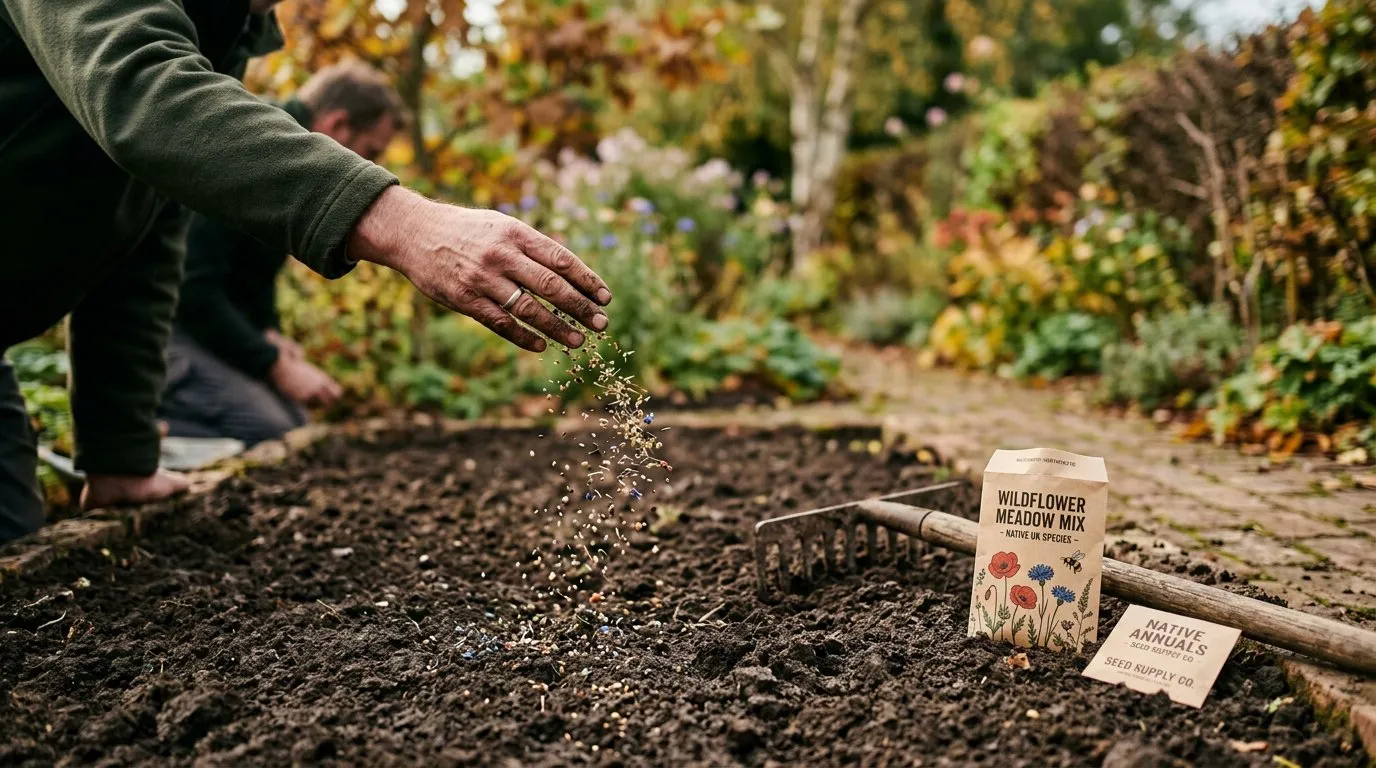 Scattering seed mixed with sand ensures even distribution. Sow half north-south, then the other half east-west.
Annual care calendar
| Month | Task |
|---|---|
| March-April | Spring sowing window (if not sown in autumn). Watch for seedlings. |
| May-June | Enjoy the display. No intervention needed. Do not cut, feed, or water. |
| July-August | Peak flowering. Photograph and identify species. Note what establishes well. |
| Late August | The annual cut. Cut everything to 5-8cm with shears or a strimmer. |
| September | Leave cuttings for 5-7 days to shed seeds. Rake and remove. Sow yellow rattle seed. |
| October-February | No maintenance. Seeds germinate in spring. |
The annual cut timing is critical. Too early (July) and flowers have not set seed. Too late (October) and autumn-germinating species miss their window. Late August is the sweet spot for most UK native meadow mixes.
Tip: Always remove cut material after the seed-shedding period. Leaving cuttings on the ground adds fertility, which encourages grasses at the expense of wildflowers. Low fertility is the foundation of meadow gardening.
What to expect year by year
Year 1: Annual wildflowers dominate, poppies, cornflowers, corn marigold. Perennial species establish roots below ground. The display is dramatic but changes significantly in year two.
Year 2: Perennials begin flowering, ox-eye daisies, knapweed, field scabious. Yellow rattle germinates and starts weakening grasses. The character shifts from annual to perennial.
Year 3 onward: The meadow reaches maturity. Perennial wildflowers dominate. Grasses are held in check by yellow rattle. New species self-seed and appear. Each year the meadow becomes richer and more diverse.
A well-managed mini meadow improves every year with no input beyond the annual cut. After three years, it is a self-sustaining ecosystem that feeds itself, waters itself, and gets more beautiful with time. A mini meadow is often the first step towards rewilding your whole garden. Visiting birds feed on the seed heads through autumn and winter.
Now you’ve mastered the mini meadow, read our guide on bee-friendly garden plants to discover how to extend pollinator support across your whole garden beyond the meadow patch.
Frequently asked questions
How big does a wildflower meadow need to be?
A mini meadow works in as little as 2-3 square metres, even a 1-metre strip along a fence supports pollinators and looks attractive. Larger areas of 10-20 square metres create more visual impact and sustain bigger insect populations, but any size is worthwhile for wildlife.
When should I sow wildflower seeds?
Autumn sowing in September or October gives the best germination because many UK native wildflower seeds need a cold period to break dormancy. Spring sowing from March to April works but expect lower germination rates for species like yellow rattle, cowslip, and primrose.
Why are my wildflowers not growing?
The most common cause is soil that is too fertile. Vigorous grasses outcompete wildflowers on rich ground. Remove the top 5-10cm of topsoil or introduce yellow rattle to weaken grass. Never add compost, fertiliser, or manure to a wildflower area.
What wildflowers grow best in the UK?
Ox-eye daisy, field scabious, common knapweed, red campion, cowslip, wild carrot, and birds-foot trefoil are among the most reliable UK native wildflowers. Buy seed from a UK-sourced supplier to ensure species suit local soil and climate conditions.
Do I need to mow a wildflower meadow?
Cut once per year in late August or early September after flowers have set seed. Leave cuttings on the ground for 5-7 days to shed seeds, then rake and remove all material. Removing cuttings keeps soil fertility low, which favours wildflowers over vigorous grasses.
Can I turn my lawn into a wildflower meadow?
Established lawns are typically too fertile for wildflowers to compete with grasses. Reduce fertility by removing the top layer of topsoil from a section, then sow wildflower seed into the poor subsoil. Alternatively, stop mowing a patch and introduce plug plants of native species over 2-3 years.
Lawrie has been gardening in the West Midlands for over 30 years. He grows his own veg using no-dig methods, keeps a wildlife-friendly garden, and writes practical advice based on real UK growing conditions.