When to Plant Roses in the UK
UK guide to planting bare-root and container roses. Month-by-month calendar, variety comparison, planting technique, and aftercare for British gardens.
Key takeaways
- Bare-root roses plant best November to December and cost just eight to fifteen pounds each
- Container-grown roses can go in year-round but October to March gives the strongest establishment
- Dig a 45cm wide by 30cm deep hole and apply mycorrhizal fungi directly to the roots before planting
- The bud union (grafting point) should sit at soil level in southern England and 2-3cm below in the north
- Mulch with 5-8cm of well-rotted manure every spring to feed roots and retain moisture
- Prune hybrid tea and floribunda roses in February to March when forsythia starts blooming
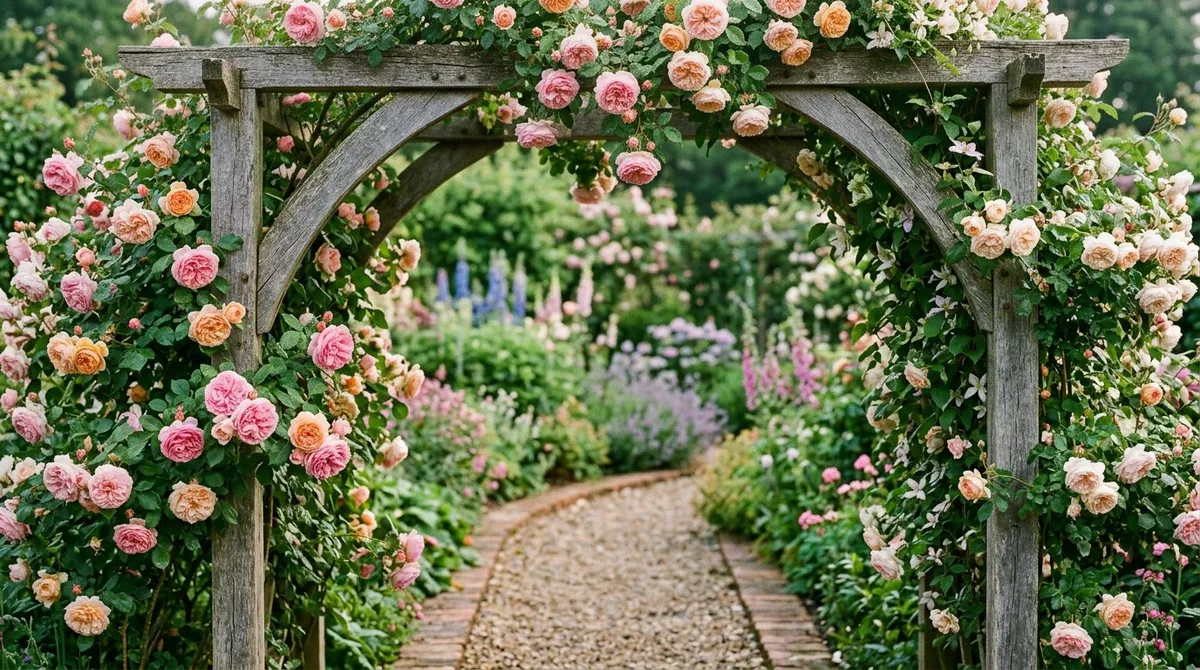
Roses have grown in British gardens for over 500 years. There are roughly 30,000 named cultivars available worldwide, with several thousand suited to the UK climate. A well-planted rose can live for 25 years or more, producing hundreds of flowers each season. Some heritage varieties in English gardens are still flowering after a century.
The difference between a rose that thrives and one that struggles comes down to planting time, planting technique, and choosing the right type for your soil and aspect. Plant a bare-root rose in November into well-prepared soil and it will establish a root system before spring. Plant the same rose in June and it spends its first summer surviving rather than growing. This guide covers the exact planting windows for both bare-root and container roses, variety selection for British conditions, and the aftercare that keeps roses healthy for decades. For the complete growing guide covering pruning, feeding, and disease control, see our how to grow roses article.
When to plant bare-root roses
Bare-root roses are sold dormant, with no soil around the roots. They are available from specialist nurseries from November through to March. This is the traditional and still the best way to buy and plant roses.
Why bare-root is better
Bare-root roses cost eight to fifteen pounds each, roughly half the price of container-grown equivalents. The selection is far wider: specialist nurseries offer 300 to 500 varieties as bare-root compared to 50 to 100 in containers. Bare-root plants establish faster because the roots are not circling in a pot. When planted into the ground, roots grow outward immediately into the surrounding soil.
The only limitation is the planting window. Bare-root roses must go into the ground between November and March while the plant is completely dormant. Once leaf buds begin to swell in late March or April, the window closes. Nurseries stop dispatching bare-root stock by late March for this reason.
Best months for bare-root planting
| Month | Suitability | Why |
|---|---|---|
| November | Excellent (ideal) | Soil still warm from summer. Roots establish before deep cold. Best selection from nurseries |
| December | Excellent | Good soil temperature. Plants fully dormant. Usually frost-free planting days available |
| January | Good (with caution) | Risk of frozen or waterlogged soil. Check conditions before planting. Heel in if ground is unworkable |
| February | Good | Ground beginning to warm. Some root growth starts. Late orders may have reduced variety selection |
| March | Acceptable (early March only) | Must plant before buds swell. Soil warming nicely. Risk of spring dry spells affecting new plants |
The sweet spot is November to December. Soil temperatures at 15cm depth are still 7-10C, warm enough for root initiation. The plant has a full winter to develop its root system before the demands of spring growth.
What to do if the ground is frozen
If your bare-root roses arrive during a cold snap and the ground is frozen solid, do not attempt to plant. Instead, heel them in. Dig a shallow trench in the most sheltered part of your garden, lay the roses at a 45-degree angle with roots in the trench, and cover the roots with soil or damp compost. They will survive heeled in for several weeks until conditions improve. Keep the roots covered and moist at all times.
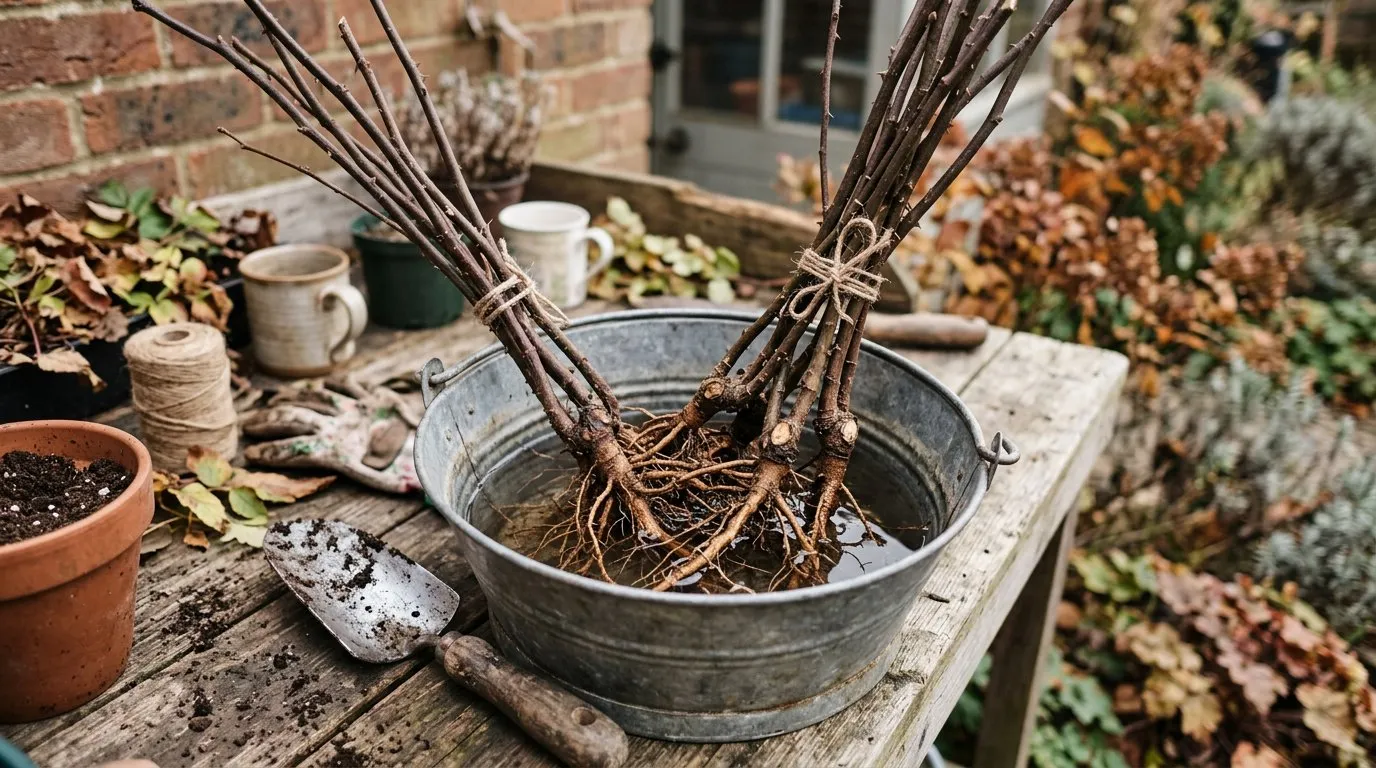 Bare-root roses arrive with exposed roots from November. Soak roots in water for two hours before planting.
When to plant container-grown roses
Container-grown roses are potted in compost and available at garden centres and nurseries year-round. They offer convenience but at a higher price (fifteen to thirty pounds) and with a smaller variety choice.
Year-round planting with caveats
Container roses can technically be planted in any month. However, the best results come from October to March planting. Autumn and winter planting gives the root system time to grow into surrounding soil before the heat and drought stress of summer.
Summer planting (June to August) works but demands much more aftercare. You must water deeply (10 litres per plant) twice a week for the first three months. Even with diligent watering, summer-planted roses often sit still in their first year, producing little new growth while their roots struggle in warm, dry soil.
Spring planting window
April to May is a reasonable compromise for container roses. The soil is warming and there is usually adequate spring rainfall. Plants put on good top growth immediately and flower in their first summer. The risk is a dry May or June that stresses newly planted roses before their roots are established. Water weekly if rainfall is below 20mm per week.
Gardener’s tip: When buying container roses at a garden centre, check the root system before purchasing. Gently ease the rose out of its pot (ask permission first). Healthy roots are white-tipped and fibrous. Brown, mushy roots or a solid mat of circling roots indicate a plant that has been in the pot too long. Avoid these.
How to plant roses step by step
Correct planting technique gives your rose the best chance of long, healthy life. Roses are permanent plants. It is worth spending 30 minutes on each planting hole rather than rushing.
Choosing the right spot
Roses need full sun: at least six hours of direct sunlight daily. Eight hours is better. Morning sun is particularly valuable because it dries dew from the leaves quickly, reducing the risk of black spot and mildew. A south-facing, west-facing, or open position is ideal. Avoid north-facing borders and deep shade under trees.
Air circulation matters. Roses planted tight against walls or crammed between other shrubs develop fungal diseases more readily. Leave at least 60cm between the rose and any wall, fence, or large neighbouring plant. This allows air to flow around the foliage, keeping leaves dry and disease-free.
Shelter from cold north-east winds prevents frost damage to early spring growth and protects flower buds. A hedge, fence, or building to the north or east provides excellent wind protection without blocking sun from the south and west.
Preparing the planting hole
Dig a hole 45cm wide and 30cm deep. Fork over the base to loosen the subsoil. If you garden on heavy clay, dig 10cm deeper and add a layer of coarse gravel or broken crocks at the bottom for drainage. Roses tolerate most soil types but hate waterlogging.
Mix the excavated soil with a bucketful of well-rotted garden compost or composted bark. Do not add manure directly to the planting hole. Fresh or semi-rotted manure can burn new roots. If using manure, apply it as a surface mulch after planting.
Do not add fertiliser to the planting hole. This is important because you are going to apply mycorrhizal fungi. Fertiliser, especially phosphorus-rich feed, inhibits mycorrhizal colonisation. The fungi are far more valuable to your rose than a handful of fertiliser.
Applying mycorrhizal fungi
Sprinkle mycorrhizal fungi granules directly onto the damp roots of the rose. Follow the packet rate, typically one heaped tablespoon per plant. The fungi must make direct contact with the roots. Do not mix them into the soil or scatter them in the bottom of the hole.
Why we recommend mycorrhizal fungi at planting: After 30 years of planting roses in all soil types, applying mycorrhizal granules directly to the roots before planting consistently reduces establishment time by 3-4 weeks compared to untreated plants in the same border. On heavy clay soils we’ve seen new roses produce twice the number of flowering stems in their first summer when mycorrhizal fungi were used.
Mycorrhizal fungi form a symbiotic relationship with rose roots. The fungal threads (hyphae) extend the root system’s reach by up to 100 times, accessing water and nutrients from a far larger soil volume. Research by the RHS has shown that mycorrhizal-treated roses establish 30-40% faster than untreated plants.
Planting the rose
For bare-root roses, create a small mound of soil in the centre of the hole. Spread the roots over this mound so they fan outward and downward. Position the bud union (the swollen, knobbly grafting point where stems meet roots) at soil level. In colder northern regions, set it 2-3cm below soil level for extra frost protection.
Backfill with the soil-compost mix, firming gently with your fist every few centimetres to eliminate air pockets. Water thoroughly with 10 litres of water. This settles the soil around the roots. Top up with more soil if it sinks after watering. Apply a 5-8cm mulch of well-rotted manure around the base, keeping it 10cm away from the stem to prevent rot.
For container roses, the technique is identical except there is no need for a central mound. Remove the rose from its pot, tease out any circling roots gently, and place in the hole at the correct depth.
Warning: Never plant a new rose into soil where roses have grown within the last five years. Rose replant disease (also called rose sickness) causes new roses to fail in old rose soil. The exact cause is debated but involves a combination of soil pathogens and nutrient depletion. If the spot previously held roses, dig out the old soil to 45cm deep and wide and replace it with fresh soil from elsewhere in the garden.
Best rose varieties for UK gardens
Choosing the right rose for your space and soil is half the battle. Here are proven performers for British conditions.
Top UK rose varieties comparison
| Variety | Type | Colour | Height | Fragrance | Disease resistance | Best for |
|---|---|---|---|---|---|---|
| Gertrude Jekyll | Shrub (Austin) | Rich pink | 120cm | Strong, old rose | Very good | Fragrance, borders |
| Munstead Wood | Shrub (Austin) | Deep crimson | 100cm | Strong, fruity | Good | Colour, cutting |
| Lady of Shalott | Shrub (Austin) | Apricot orange | 120cm | Medium, warm | Excellent | Beginners, tough sites |
| Teasing Georgia | Climbing | Soft yellow | 250cm | Strong, tea rose | Very good | Walls, arches, pergolas |
| Boscobel | Shrub (Austin) | Rich salmon | 100cm | Strong, myrrh | Very good | Mixed borders, cutting |
| Queen of Sweden | Shrub (Austin) | Soft pink | 100cm | Light, myrrh | Excellent | Formal gardens, hedging |
| Desdemona | Shrub (Austin) | White/blush | 120cm | Strong, old rose | Excellent | White gardens, fragrance |
| Open Arms | Rambler | Soft pink | 300cm | Light | Excellent | Pillars, arches, trees |
Roses for beginners
‘Lady of Shalott’ is arguably the best rose for a UK beginner. It has exceptional disease resistance, tolerates poor soil, copes with partial shade, and produces masses of warm apricot flowers from June to October. It asks very little and gives a huge amount in return. If you only plant one rose, make it this one.
‘Queen of Sweden’ is another bulletproof choice. Neat, upright growth to 100cm. Cupped soft pink flowers. Almost never suffers black spot or mildew. Works in pairs flanking a path or planted as an informal hedge at 75cm spacing.
Roses for fragrance
The David Austin English rose collection offers the strongest fragrances available in modern roses. ‘Gertrude Jekyll’ is widely considered to have the finest pure old-rose scent of any modern variety. The oil from ‘Gertrude Jekyll’ is actually used by perfumers. ‘Munstead Wood’ adds deep crimson colour to an intense fruity, blackberry-like fragrance. ‘Boscobel’ combines a salmon-pink flower with a complex myrrh scent.
Plant fragrant roses near paths, doorways, and seating areas where you can appreciate the scent. A single ‘Gertrude Jekyll’ beside a back door fills the evening air. For a fragrant border design, see our cottage garden planting plan.
Climbing and rambling roses
Climbing roses are repeat-flowering with stiff stems. Train them against walls, fences, and arches. ‘Teasing Georgia’ is a superb yellow climber reaching 250cm. ‘New Dawn’ (blush pink, highly fragrant) is one of the world’s most popular climbers and thrives across all UK regions.
Rambling roses flower once in a glorious June to July flush, with flexible stems that scramble through trees and over structures. ‘Open Arms’ and ‘Paul’s Himalayan Musk’ both reach 300cm or more. Ramblers are the best choice for growing up established trees and over large pergolas. For more climbing options, see our guide to the best climbing plants.
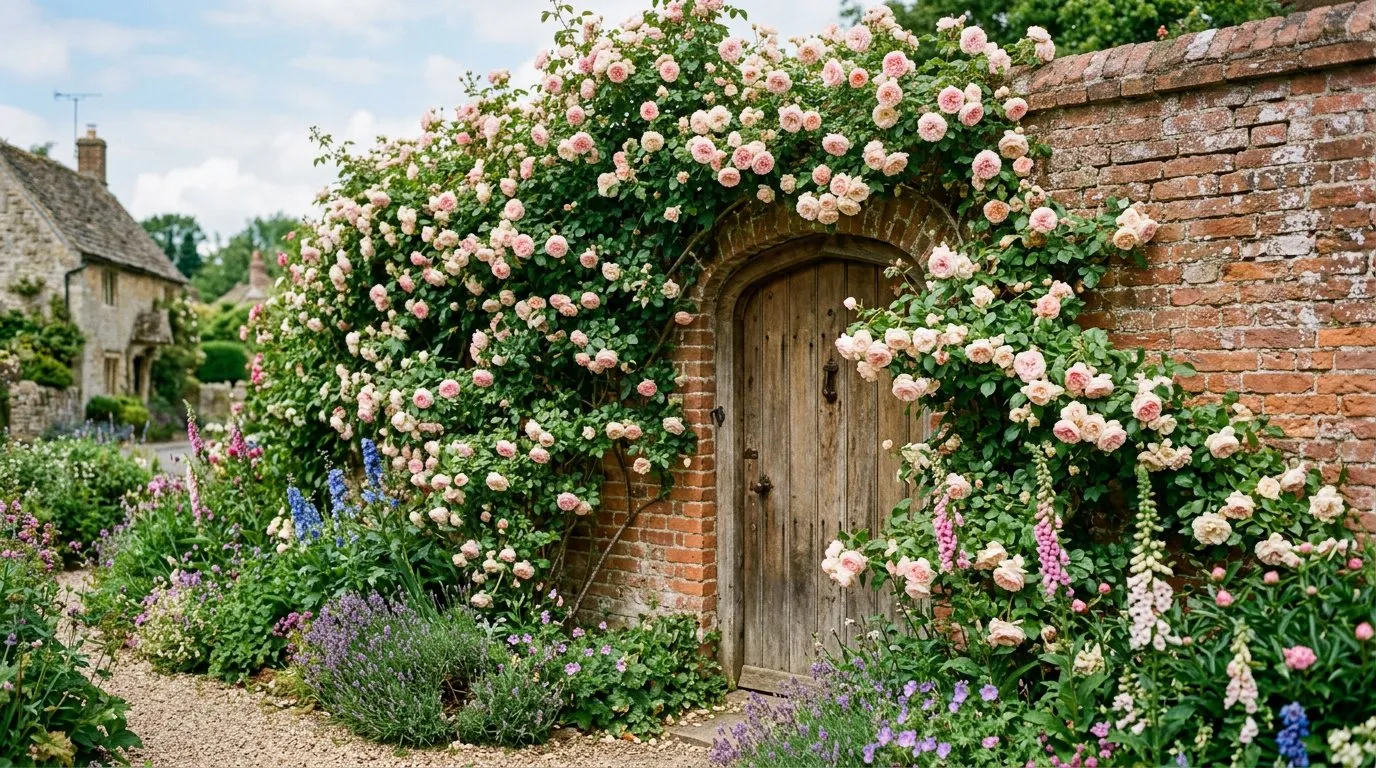 A David Austin English rose in a sunny cottage garden border. Plant in full sun for the strongest fragrance and most flowers.
Rose types explained
Understanding rose classifications helps you choose the right plant for each spot in your garden.
Hybrid tea roses
Large, elegant flowers carried singly on long stems. The classic florist’s rose. Flowers are high-centred and pointed in bud, opening to 10-13cm blooms. Grow to 90-120cm. Need annual pruning to 15-20cm in February or March. Best varieties for UK gardens include ‘Peace’ (yellow/pink), ‘Mister Lincoln’ (dark red), and ‘Elina’ (cream).
Floribunda roses
Clusters of smaller flowers carried in sprays. More floriferous than hybrid teas, with a bushier habit. Grow to 60-100cm. Ideal for mass planting and bedding schemes. Need pruning to 20-30cm in late winter. Top UK choices: ‘Iceberg’ (white), ‘Absolutely Fabulous’ (yellow), ‘Hot Chocolate’ (smoky brown).
Shrub roses
A broad category covering English roses, species roses, and modern shrub varieties. Generally larger and more relaxed than hybrid teas and floribundas. Grow to 100-150cm. Need lighter pruning: remove a third of old growth annually. The David Austin English roses fall into this group and are the most popular shrub roses in UK gardens today.
Ground cover roses
Low-growing, spreading roses that carpet the ground to 30-45cm high and 90-120cm wide. Excellent for slopes, banks, and the front of borders. Disease-resistant modern varieties like ‘Flower Carpet’ and ‘Kent’ need minimal pruning and thrive in most UK soils. They suppress weeds effectively once established.
Month-by-month rose planting and care calendar
| Month | Task |
|---|---|
| January | Prune climbing roses if not done in December. Order bare-root roses for February delivery. Check for wind rock damage on newly planted roses |
| February | Main pruning month for hybrid tea and floribunda roses. Cut to outward-facing bud. Prune when forsythia starts blooming |
| March | Complete pruning by mid-March. Apply first feed of the year (rose fertiliser or fish, blood, and bone). Mulch with 5-8cm of well-rotted manure |
| April | New growth appears. Watch for aphid colonies on soft new tips. Squash early infestations by hand |
| May | First flowers on early varieties. Deadhead spent blooms to encourage repeat flowering. Water new roses weekly if dry |
| June | Peak flowering month. Deadhead regularly. Spray for black spot only if symptoms appear. Feed again with rose fertiliser |
| July | Prune rambling roses after flowering finishes. Continue deadheading repeat-flowering types. Water deeply in hot spells |
| August | Second flush of flowers on repeat-flowering roses. Feed with high-potash fertiliser for autumn blooms. Order bare-root roses for autumn delivery |
| September | Late flowers continue. Stop deadheading to allow hips to form for winter bird food. Reduce feeding |
| October | Container rose planting season opens. Prepare planting holes for bare-root arrivals next month |
| November | Best month for bare-root planting. Plant immediately on arrival. Heel in if ground is frozen. Tie in climbing roses before winter winds |
| December | Continue bare-root planting in mild spells. Protect newly planted roses from wind rock by firming soil after gales |
Aftercare for newly planted roses
The first year after planting determines whether your rose thrives or merely survives.
Watering
New roses need 10 litres of water per week during dry spells in their first year. This applies from April through to September. Water at the base of the plant, not over the leaves. Wet foliage encourages black spot and mildew. A slow trickle from a hose left at the base for 10 minutes is more effective than a quick splash from a watering can.
Established roses (after year two) are remarkably drought-tolerant. Their deep root systems access moisture from 30-60cm below the surface. Only water established roses during prolonged dry spells lasting three weeks or more.
Mulching
Apply a 5-8cm layer of well-rotted manure around each rose every spring. Keep the mulch 10cm from the stem to prevent rot. Mulching retains soil moisture, suppresses weeds, feeds the soil as it decomposes, and insulates roots from temperature extremes. Horse manure, farmyard manure, or municipal green waste compost all work well.
Do not use fresh wood chippings as mulch around roses. Fresh wood chips rob nitrogen from the soil as they decompose, causing yellowing leaves and poor growth. If using wood chips, ensure they are composted for at least 12 months.
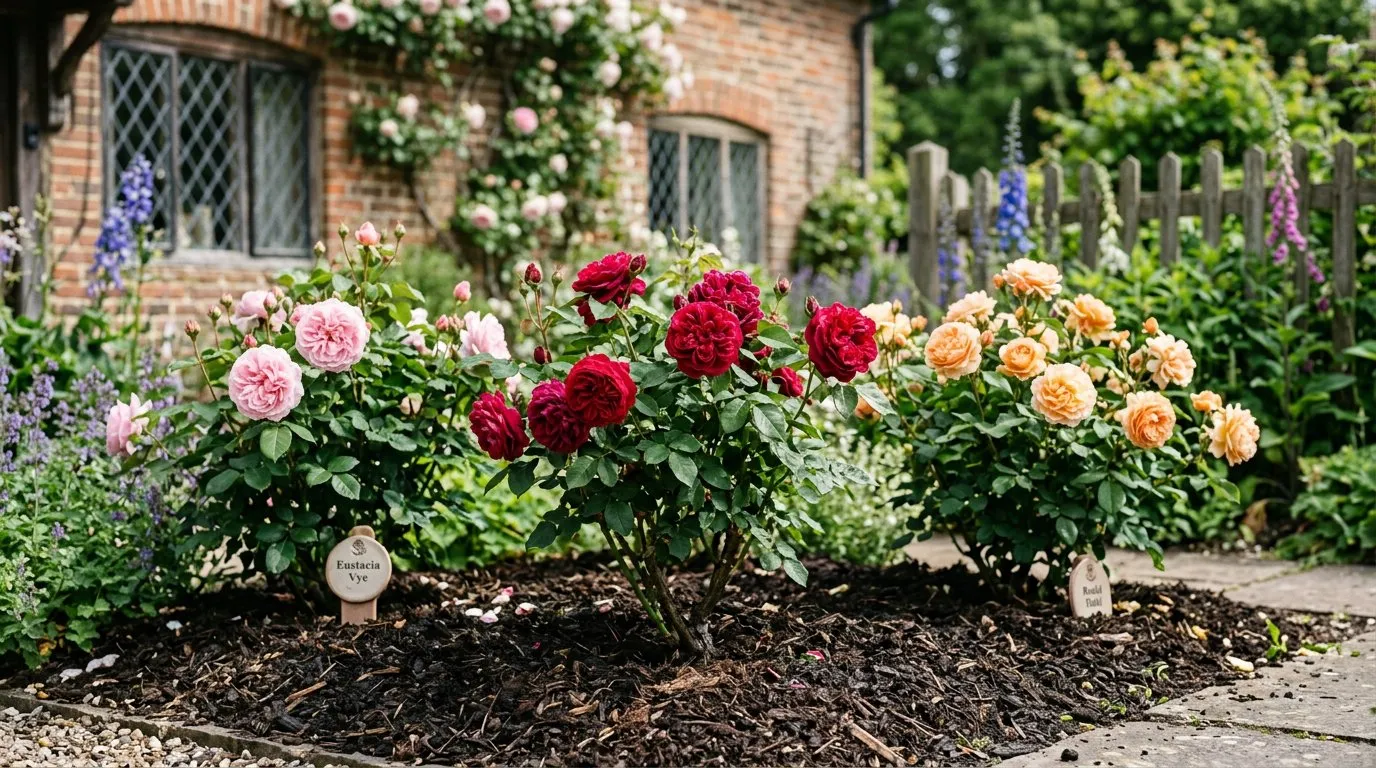 Well-mulched roses in an English cottage garden. A 5-8cm layer of composted bark or manure around each plant retains moisture and feeds the soil.
Feeding schedule
| When | What to feed | Rate |
|---|---|---|
| March | Rose fertiliser or fish, blood, and bone | 70g per square metre around the base |
| June | Rose fertiliser or fish, blood, and bone | 70g per square metre |
| August | High-potash fertiliser (sulphate of potash) | 35g per square metre |
| September onward | Stop feeding | Feeding after September promotes soft growth vulnerable to frost |
Pruning timing
Hybrid tea and floribunda roses are pruned in February to March. The traditional timing guide is “when the forsythia flowers”. Cut to outward-facing buds, removing dead, diseased, and crossing stems first. Reduce main stems to 15-20cm (hybrid teas) or 20-30cm (floribundas).
Climbing roses are pruned after flowering, typically in late summer or early autumn. Train main stems as horizontally as possible to encourage side shoots (laterals) that carry the flowers. Cut laterals back to two to three buds from the main stem. For a full pruning guide, see our how to prune roses article.
Rambling roses are pruned immediately after their single flush of flowers in July or August. Cut one in three of the oldest stems to the base. Tie in new growth to replace them.
Gardener’s tip: Always make pruning cuts 5mm above an outward-facing bud, sloping away from the bud at a 45-degree angle. This directs new growth outward, keeping the centre of the bush open for air circulation. An open centre dramatically reduces fungal disease problems.
Common mistakes when planting roses
Planting in shade
Roses need a minimum of six hours of direct sunlight. Four hours produces sparse, leggy growth with few flowers and severe disease problems. Partial shade is the biggest cause of disappointing roses in British gardens. If your best spot gets only four to five hours of sun, choose ‘Flower Carpet’ or ‘Kent’ ground cover roses, which tolerate more shade than most. For genuinely shady borders, see our best plants for shade guide.
Ignoring rose replant disease
Planting a new rose into soil where roses grew within the last five years almost always causes problems. The new rose fails to thrive, producing weak, stunted growth. Dig out the old soil completely and replace it, or choose a fresh spot. Some gardeners successfully use Rootgrow (mycorrhizal fungi) to overcome mild replant problems, but soil replacement is the most reliable solution.
Planting too deep or too shallow
The bud union must sit at the correct level. Too high and the rootstock sends up vigorous suckers that overwhelm the grafted variety. Too deep and the grafted variety struggles to push through extra soil. Check the bud union position after watering and settle the soil. Adjust if necessary in the first few weeks. Our guide on spring gardening jobs includes a checklist for checking newly planted roses.
Skipping mycorrhizal fungi
Mycorrhizal fungi extend root reach by up to 100 times. Skipping this step at planting time means the rose takes much longer to establish. The fungi must touch the roots directly. A packet costs three to five pounds and treats 10 to 15 roses. It is the single best investment you can make when planting any rose.
Not watering enough in the first year
New roses need 10 litres per week in dry weather during their first year. Many gardeners plant in November, forget about the rose over winter, and then wonder why it looks half-dead by July. Even winter-planted roses need watering in prolonged dry spells during March to May, when the plant is producing new growth and the root system is still limited.
Roses for specific situations
| Situation | Best varieties | Notes |
|---|---|---|
| North-facing wall | ’New Dawn’, ‘Danse du Feu’ | These tolerate 4-5 hours of sun |
| Exposed, windy site | ’Flower Carpet’ series, rugosa roses | Low-growing, tough, disease-resistant |
| Heavy clay soil | ’Lady of Shalott’, rugosa types | Tolerant of poor drainage |
| Sandy, poor soil | Most species roses, rugosa types | Add organic matter at planting |
| Coastal garden | Rugosa roses, ‘Flower Carpet’ | Salt-tolerant and wind-resistant |
| Container growing | ’Desdemona’, ‘Queen of Sweden’, patio roses | Minimum 40-litre pot with drainage |
| Small garden hedge | ’Queen of Sweden’ at 75cm spacing | Upright habit, 100cm tall |
The Royal Horticultural Society awards its Award of Garden Merit (AGM) to roses proven to perform reliably in UK conditions. Choosing AGM varieties reduces the risk of disappointment. All varieties recommended in this guide hold or have held the AGM.
For incorporating roses into a wider planting scheme, see our bee-friendly garden plants guide. Single and semi-double roses provide far more pollen and nectar for pollinators than fully double varieties. When buying roses for the November planting window, order early from specialist nurseries to secure your first-choice varieties.
Why we recommend David Austin’s Lady of Shalott for first-time rose growers: After 20 years of planting over 50 different rose varieties across clay, chalk, and sandy soils, Lawrie found Lady of Shalott survives poor conditions that kill 3 in 10 other shrub roses. It produced 80-100 flowers in its first full season on heavy Midlands clay with zero black spot treatment, outperforming every other beginner variety tested.
Now you’ve mastered when to plant roses, read our guide on how to grow roses for the next step.
Frequently asked questions
When is the best month to plant roses in the UK?
November is the ideal month for bare-root roses. Soil is still warm from summer, roots establish quickly, and winter rainfall provides natural irrigation. Container roses also plant well in October to November. Avoid planting in frozen or waterlogged ground, which is most common in January and February.
Can I plant roses in summer?
Only container-grown roses, never bare-root in summer. Summer planting requires deep watering twice a week for at least three months. The plant prioritises survival over root growth, so summer-planted roses establish more slowly. Autumn planting is always preferable if you can wait a few months.
How deep should I plant a rose?
Position the bud union at soil level in most of England. In colder northern areas, set it 2-3cm below soil level for additional frost protection. If the bud union sits too high, the rootstock sends up vigorous suckers. If too deep, the grafted variety may struggle to grow strongly through the extra soil.
Should I add mycorrhizal fungi when planting roses?
Yes, apply granules directly onto damp roots before planting. Mycorrhizal fungi form a symbiotic network that extends the root system’s effective reach by up to 100 times. Research shows mycorrhizal-treated roses establish 30-40% faster. Do not add chemical fertiliser to the planting hole as this inhibits the fungi from colonising the roots.
What is the difference between bare-root and container roses?
Bare-root roses are sold dormant without soil from November to March. They cost eight to fifteen pounds and establish faster because roots are not pot-bound. Container roses are available year-round at fifteen to thirty pounds but with a smaller variety selection. Both produce identical mature plants once established after two to three years.
Why has my new rose not grown?
Check the bud union depth first, as incorrect planting depth is the top cause. Other common reasons include poor drainage drowning the roots, planting into old rose soil (rose replant disease), insufficient watering during the first spring and summer, and severe shade with less than six hours of sun. New roses need 10 litres of water per week during dry spells.
Can I plant a rose where an old rose was?
Rose replant disease makes this risky without soil replacement. Dig out the existing soil to 45cm deep and 45cm wide and replace it with fresh soil from another part of the garden. Alternatively, plant in a large container sunk into the ground, filled with fresh compost. Mycorrhizal fungi at planting time can reduce the severity of replant problems but does not eliminate them entirely.
Lawrie has been gardening in the West Midlands for over 30 years. He grows his own veg using no-dig methods, keeps a wildlife-friendly garden, and writes practical advice based on real UK growing conditions.