Rust Disease in Plants: UK Treatment
Rust disease identification and treatment for UK gardens. Covers 8 host plants, fungal lifecycle, cultural controls, and proven fungicide options.
Key takeaways
- Rust fungi produce distinctive orange, brown, or yellow pustules on leaf undersides, unlike any other plant disease
- Spores need 4-8 hours of continuous leaf wetness at 10-20C to germinate and infect
- Removing infected leaves immediately reduces spore load by 50-60% and slows spread to healthy foliage
- Spacing plants 30-45cm apart for airflow is the single most effective cultural prevention
- Sulphur-based sprays reduce rust infection by 70-80% when applied before symptoms appear
- Leek rust has no approved chemical treatment, so resistant varieties and wide spacing are essential
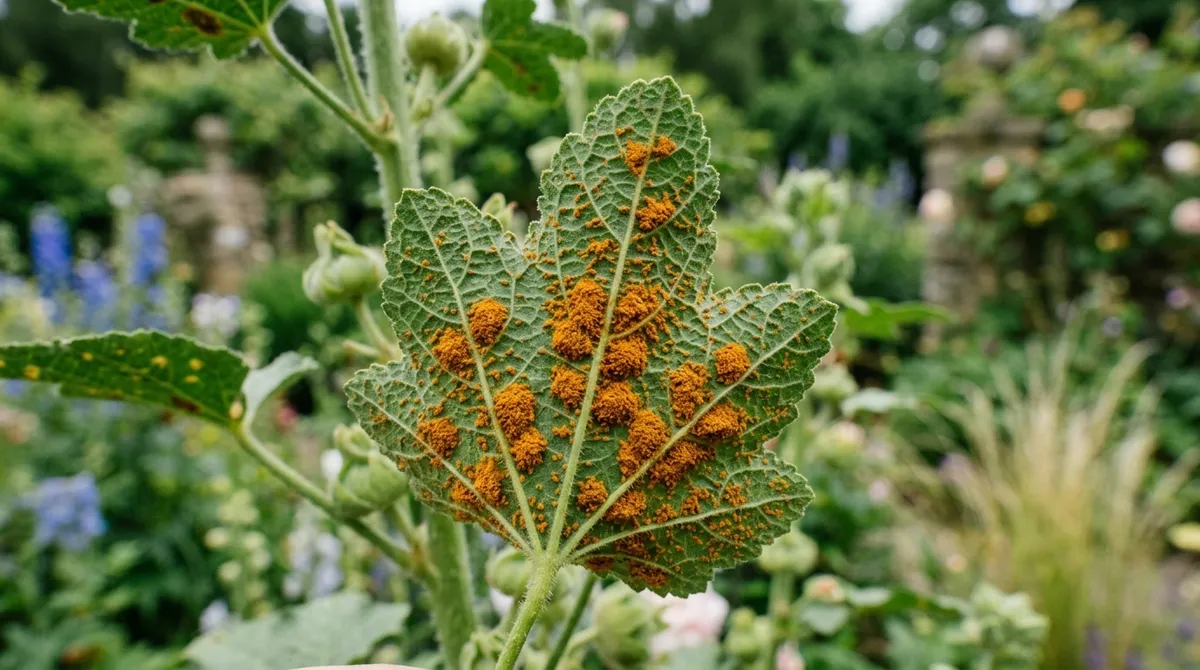
Rust disease is one of the most recognisable fungal infections in British gardens. Those distinctive orange and brown pustules on the undersides of rose leaves, hollyhock stems, and leek foliage are caused by fungi in the order Pucciniales. Over 5,000 rust species exist worldwide, and dozens of them target common UK garden plants.
Despite its alarming appearance, rust disease is manageable with the right combination of cultural controls, timely fungicide application, and variety selection. This guide covers identification, lifecycle, the eight most commonly affected UK plants, and every treatment option available to home gardeners.
How to identify rust disease on plants
Rust disease produces distinctive symptoms that are hard to confuse with other fungal infections. The hallmark sign is raised, powdery pustules on the undersides of leaves. These pustules burst through the leaf surface and release masses of microscopic spores.
Pustule colour varies by rust species and lifecycle stage. Most begin as bright orange or yellow in spring and early summer. As the season progresses, they darken to reddish-brown, then finally to black overwintering spores in autumn. The upper leaf surface above each pustule often shows a corresponding pale yellow spot.
Severely infected leaves curl, wither, and drop prematurely. Stems can develop elongated orange lesions. On edible crops like leeks and broad beans, rust reduces yield and makes foliage look unsightly, though the vegetables themselves remain safe to eat.
Identification tip: use a hand lens to examine pustules. Rust pustules are raised bumps that release powdery spores when touched. This distinguishes them from bacterial leaf spots, which are flat and do not produce spores.
Which UK plants does rust disease affect?
Rust fungi are host-specific, meaning each rust species typically attacks one plant or a small group of related plants. The rust on your roses cannot infect your leeks. Here are the eight most commonly affected plants in UK gardens, with the specific rust fungus responsible.
| Host plant | Rust species | Pustule colour | Peak season | Severity |
|---|---|---|---|---|
| Roses | Phragmidium mucronatum | Orange-yellow, darkening to brown | June-October | Moderate-high |
| Hollyhocks | Puccinia malvacearum | Orange-brown to dark brown | May-October | Very high |
| Leeks | Puccinia allii | Bright orange | June-November | High |
| Broad beans | Uromyces viciae-fabae | Dark brown-chocolate | June-August | Moderate |
| Pelargoniums | Puccinia pelargonii-zonalis | Brown concentric rings | April-October | High |
| Fuchsias | Pucciniastrum epilobii | Orange-yellow | June-September | Moderate |
| Snapdragons | Puccinia antirrhini | Dark brown-black | May-September | High |
| Hypericum | Melampsora hypericorum | Bright orange | May-August | Moderate |
Rose rust
Rose rust is the third major fungal disease of UK roses, alongside black spot and powdery mildew. Bright orange pustules appear on leaf undersides from June, often starting on lower leaves where humidity is highest. The upper leaf surface develops corresponding yellow patches. Heavily infected bushes lose leaves from the base upwards, weakening the plant for the following season.
Hybrid tea and floribunda roses are the most susceptible. Climbing roses trained against walls suffer badly because restricted airflow traps moisture around the foliage. Rugosa hybrids and many modern shrub roses show strong natural resistance.
Hollyhock rust
Hollyhock rust is the most severe rust disease in UK gardens. Puccinia malvacearum can defoliate entire plants by midsummer if left untreated. Small orange-brown pustules appear on lower leaves in May, often before the flower spike has formed. The disease works upward through the plant, and badly affected hollyhocks stand as bare stems topped with flowers by August.
This rust species completes its entire lifecycle on hollyhocks without needing an alternate host. It overwinters on old stems and debris at the base of the plant, making autumn clearance critical. Dwarf varieties suffer less than tall cultivars because their denser foliage stays closer to the ground where air movement is reduced.
-->Leek rust
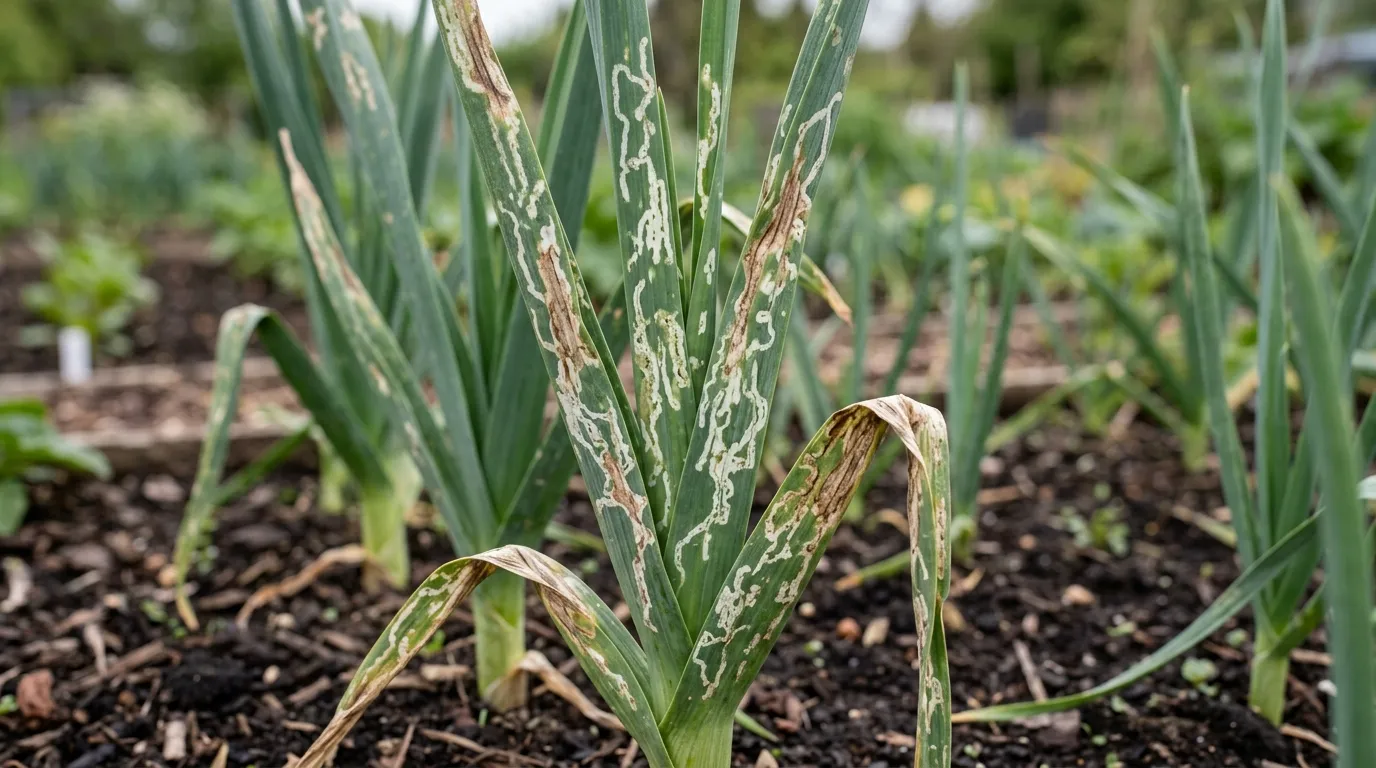
Leek rust (Puccinia allii) produces bright orange pustules on the outer leaves of leeks, garlic, and chives. It is most common from late summer into autumn, exactly when leeks are approaching harvest. The disease rarely kills the plant but makes the outer leaves unsightly and reduces the usable portion of each leek after peeling.
There are no approved chemical treatments for leek rust in UK home gardens. Control relies entirely on cultural methods: wide spacing (15cm between plants, 30cm between rows), avoiding overhead watering, and growing partially resistant varieties like ‘Bandit’ and ‘Porbella’. Early-sown leeks that mature before the peak rust season (September to November) avoid the worst damage.
Broad bean rust
Broad bean rust (Uromyces viciae-fabae) appears as chocolate-brown pustules on leaves and stems, typically from mid-June. Autumn-sown broad beans that crop in June usually escape infection because they are harvested before the rust peaks. Spring-sown crops that mature in July and August are more vulnerable.
Pinching out the growing tips as soon as the first pods set removes the soft, succulent growth that rust fungi favour. This traditional practice serves double duty: it discourages blackfly and reduces rust infection sites. Remove and destroy affected foliage once the crop is picked.
The rust disease lifecycle
Understanding how rust fungi survive and spread helps you time preventive treatments correctly. Most garden rust species follow a similar pattern, though the details vary by host.
Spring infection (April to May)
Overwintered spores on fallen debris and old stems become active as temperatures rise above 10C. Wind and rain splash carry spores onto new spring growth. These primary infections produce the first generation of orange urediniospores (summer spores) within 7-14 days of landing on a wet leaf. The cycle begins slowly because spore numbers are low and spring weather is often dry enough to limit germination.
Summer spread (June to August)
This is the peak damage period. Each pustule produces thousands of urediniospores that spread on wind currents, sometimes travelling several kilometres. In warm, humid conditions, a single infected leaf can generate enough spores to infect an entire garden within 2-3 weeks. New pustules appear every 10-14 days in a repeating cycle. Hot, dry spells slow the spread because spores need leaf wetness to germinate.
Autumn transition (September to October)
As temperatures drop and day length shortens, the fungus switches from producing summer spores to dark-coloured teliospores (overwintering spores). These thick-walled spores are visible as dark brown or black pustules that replace the earlier orange ones. Teliospores are designed to survive frost, drought, and decomposition over winter.
Winter survival (November to March)
Teliospores remain dormant on fallen leaves, old stems, and plant debris through winter. Some rust species also survive on living alternate hosts. Clearing infected debris in late autumn is the single most effective way to break the cycle and reduce spring reinfection.
-->What conditions favour rust disease?
Rust fungi thrive in specific environmental conditions. Knowing these triggers helps you predict outbreaks and apply preventive treatments at the right time.
Leaf wetness is the critical factor. Rust spores need 4-8 hours of continuous moisture on the leaf surface to germinate and penetrate the plant tissue. Morning dew, overhead irrigation, and prolonged rain all provide this moisture. Gardens where foliage stays wet overnight face the highest infection pressure.
Temperature for most UK rust species, the optimum germination range is 10-20C. This means late spring and early autumn produce ideal conditions, while midsummer heat above 25C actually slows spore germination. Roses and hollyhocks suffer worst in mild, damp summers rather than hot, dry ones.
Humidity above 80% at the leaf surface accelerates spore production and spread. Dense plantings, sheltered positions against walls, and gardens in valleys or near water all trap humid air. Poor air circulation is the most common contributing factor in gardens where rust becomes a recurring annual problem.
Nitrogen excess from heavy feeding pushes soft, lush growth that is more susceptible to fungal penetration. Plants fed with balanced fertilisers or those on a sensible feeding programme develop tougher leaf tissue that resists infection better.
Cultural controls for rust disease
Prevention through good gardening practice is the most effective and lasting approach to rust management. Chemical sprays treat the symptoms. Cultural controls address the causes.
Plant spacing and airflow
Spacing is the single most important cultural control. Plants crammed together trap humid air around the foliage, creating the prolonged leaf wetness that rust spores need to germinate. Roses should be planted at least 60-90cm apart. Hollyhocks need 45-60cm between plants. Leeks benefit from 15cm within the row and 30cm between rows.
Position susceptible plants in open areas where wind can circulate freely. Avoid planting roses and hollyhocks tight against walls or fences. If space is limited, choose smaller varieties that allow better airflow between plants.
Watering technique
Water at the base of plants using a seep hose, drip irrigation, or careful watering can work. Never use overhead sprinklers on rust-susceptible plants. Morning watering is preferable to evening watering because foliage dries faster during the day. Wet leaves overnight provide the 4-8 hours of moisture that rust spores need.
Autumn hygiene
Remove all fallen leaves and cut back old stems on susceptible plants in November. Hollyhock stems should be cut to ground level. Rose leaves raked from beneath the bushes. Leek debris cleared from allotment beds. This removes overwintering teliospores and reduces the spore load available to start spring infections by 50-70%.
Dispose of infected material in council green waste or burn it. Home compost heaps rarely reach the 60C needed to kill rust spores. Leaving infected debris on the soil surface guarantees reinfection the following spring.
Resistant varieties
Choosing varieties with proven disease resistance is the most reliable long-term solution. No spraying, no clearing, no special watering. The plant simply resists infection through its own genetic defences.
| Plant | Resistant varieties | Notes |
|---|---|---|
| Roses | ’Flower Carpet’, ‘Olivia Rose Austin’, ‘Boscobel’, rugosa hybrids | Check RHS ratings: 8-9 = strong resistance |
| Hollyhocks | Alcea rugosa (Russian hollyhock), ‘Halo’ series | A. rugosa is virtually rust-proof |
| Leeks | ’Bandit’, ‘Porbella’, ‘Oarsman’ | Tolerant rather than immune |
| Broad beans | ’The Sutton’, ‘Robin Hood’ (dwarf types) | Early cropping reduces exposure |
| Snapdragons | ’Chantilly’ series, ‘Twinny’ series | Rust resistance bred in |
For roses, the RHS Find a Plant database rates disease resistance on a 1-9 scale. Choose varieties rated 8 or above for virtually rust-free growing.
-->Organic treatments for rust disease
When cultural controls are not enough, organic fungicides provide an additional layer of protection without synthetic chemicals. These treatments work best as preventives, applied before or at the very first sign of infection.
Sulphur-based fungicides
Sulphur is the oldest and most proven organic fungicide for rust. Products containing wettable sulphur or lime sulphur coat leaf surfaces and prevent spore germination. Apply every 7-14 days from late April through to September.
Sulphur is most effective as a preventive. Once pustules have formed, it will not cure existing infections but will protect new growth from further spread. Do not apply sulphur when temperatures exceed 30C or in direct strong sunlight, as it can scorch foliage. Avoid using sulphur within 14 days of an oil-based spray.
Potassium bicarbonate
Potassium bicarbonate solutions (5g per litre of water with a small amount of vegetable oil as a surfactant) raise the leaf surface pH and inhibit spore germination. This treatment is approved for organic use in the UK and provides roughly 50-60% reduction in new infections.
Apply as a foliar spray every 7-10 days during the growing season. It washes off in rain, so reapply after heavy downpours. Potassium bicarbonate is less effective than sulphur against rust specifically, but it also helps control powdery mildew, making it a useful dual-purpose treatment.
Neem oil
Neem oil (cold-pressed, at 0.5-1% concentration) has moderate effectiveness against rust. It works primarily as a preventive by creating a film on the leaf surface that inhibits spore attachment. Apply every 7-10 days. Neem also provides some control of aphids and other sap-sucking insects that can stress plants and make them more susceptible to fungal attack.
Chemical fungicide treatments
When rust infection is severe or cultural controls and organic options are insufficient, chemical fungicides offer the strongest control. These products are available at UK garden centres and are approved for home garden use.
Triticonazole
Triticonazole (sold as Fungus Clear Ultra and similar products) is a systemic fungicide that moves within the plant to protect both treated and untreated tissue. It provides 10-14 days of protection per application and is effective against rust, black spot, and powdery mildew on ornamental plants.
Apply every 14 days from April to September on susceptible roses, hollyhocks, and other ornamentals. Triticonazole cannot be used on edible crops. Always follow the label directions for dilution rates and application frequency.
Tebuconazole
Tebuconazole (found in RoseClear Ultra and Fungus Fighter Plus) is another systemic option. It provides similar 14-day protection and controls the same range of fungal diseases. Some gardeners alternate between triticonazole and tebuconazole through the season to reduce the risk of resistance developing in the fungal population.
Myclobutanil
Myclobutanil was widely used for rust control but has been withdrawn from many UK products. Check current availability before purchasing. Where still available, it provides effective rust control at 14-day intervals.
Treatment comparison table
| Treatment | Type | Effectiveness against rust | Reapply interval | Safe on edibles? |
|---|---|---|---|---|
| Sulphur spray | Organic | 70-80% preventive | 7-14 days | Yes (check label) |
| Potassium bicarbonate | Organic | 50-60% preventive | 7-10 days | Yes |
| Neem oil | Organic | 40-50% preventive | 7-10 days | Yes (check label) |
| Triticonazole | Chemical systemic | 80-90% preventive | 14 days | No |
| Tebuconazole | Chemical systemic | 80-90% preventive | 14 days | Some crops (check label) |
| Cultural controls | Non-chemical | 50-70% (combined) | Ongoing | Yes |
Monthly rust disease management calendar
Timing your interventions correctly is the difference between effective prevention and reactive damage control. This calendar covers the key actions for managing rust across the growing year.
| Month | Risk level | Action |
|---|---|---|
| January-February | None | Order resistant varieties for spring planting. Plan spacing for new beds. |
| March | Low | Apply fresh mulch around roses. Cut back old hollyhock stems if not done in autumn. |
| April | Rising | Begin preventive sulphur sprays on susceptible plants as new growth emerges. |
| May | Moderate | Check hollyhocks and roses weekly for early pustules. Continue spraying every 14 days. |
| June | High | Peak infection period begins. Remove any infected leaves immediately. Spray every 7-14 days. |
| July | Very high | Monitor leeks and broad beans. Pinch out broad bean tips. Maintain spray programme. |
| August | Very high | Leek rust appears. Remove worst-affected outer leek leaves. Harvest broad beans promptly. |
| September | High | Rust pustules darken to brown/black as teliospores form. Continue removing infected material. |
| October | Declining | Clear fallen leaves from under roses and around hollyhocks. Final fungicide application. |
| November | Low | Complete autumn hygiene. Cut hollyhock stems to ground level. Rake all debris. |
| December | None | Review the season. Note which varieties performed well and which suffered repeated infection. |
How to treat rust on specific plants
Each host plant requires slightly different management because the rust species, plant growth habit, and available treatments vary.
Treating rust on roses
Start preventive spraying in April with sulphur or triticonazole before symptoms appear. Space bushes 60-90cm apart. Prune to an open-centred shape in February to maximise airflow through the canopy. Remove and destroy any leaves showing orange pustules immediately. In autumn, rake fallen leaves and apply a 7cm layer of bark mulch to suppress overwintering spores.
For persistent problems, consider replacing highly susceptible varieties. Many older hybrid teas are rust magnets. Modern English roses and ground cover types bred for disease resistance eliminate the need for regular spraying entirely.
Treating rust on hollyhocks
Cut all stems to ground level in November. Remove every fallen leaf within 30cm of the plant crown. Start sulphur spraying as soon as new leaves emerge in spring. Accept that hollyhock rust is almost impossible to eliminate completely in the UK climate. Grow plants in open positions with 45-60cm spacing. Replace plants every 2-3 years if rust pressure is severe.
The species Alcea rugosa (Russian hollyhock) shows near-total resistance to Puccinia malvacearum. It produces pale yellow flowers and can be used alongside traditional varieties as a rust-free alternative.
Treating rust on leeks and alliums
No chemical fungicides are approved for leek rust in UK gardens. Prevention is everything. Space leeks 15cm apart with 30cm between rows. Avoid overhead watering. Choose partially resistant varieties like ‘Bandit’. Sow early (February to March) so plants establish before the peak rust season in late summer. Remove and discard the worst-affected outer leaves throughout the season. The inner leaves usually remain clean and edible.
For allotment growers, practise crop rotation and avoid planting alliums in the same bed more than once every 3-4 years. Volunteer garlic and chives nearby can harbour Puccinia allii and act as a bridge between seasons.
Treating rust on broad beans
Autumn-sown broad beans that crop in June often avoid rust entirely. Spring-sown crops are more vulnerable. Pinch out growing tips once the lowest pods have set. This removes the soft growth favoured by rust and also helps control blackfly. Harvest pods promptly and remove plants as soon as cropping finishes.
There are no fungicides specifically approved for rust on broad beans. For growers following organic pest control principles, cultural management and early harvesting are the only options.
-->Rust vs other leaf diseases: how to tell the difference
Several common UK plant diseases produce leaf spots that could be confused with rust. Correct identification ensures you apply the right treatment.
| Symptom | Rust disease | Black spot | Powdery mildew | Downy mildew |
|---|---|---|---|---|
| Colour | Orange, yellow, brown pustules | Black/dark brown flat spots | White powdery coating | Yellow patches with grey-purple fuzz |
| Location | Mainly leaf undersides | Upper leaf surface | Upper leaf surface and stems | Upper surface (yellow), lower surface (grey fuzz) |
| Texture | Raised, powdery when touched | Flat, sometimes with fringed edges | Powdery, wipes off with a finger | Fuzzy, does not wipe off easily |
| Spore release | Orange dust when pustule is disturbed | No visible spore release | White powder rubs off onto fingers | Spores visible under magnification |
| Leaf wetness needed | Yes, 4-8 hours | Yes, 7+ hours | No (thrives in dry conditions) | Yes, prolonged wetness |
If you are unsure whether a leaf problem is rust, powdery mildew, or black spot, gently touch the suspected pustule. Rust releases a distinctive orange or brown powdery dust onto your finger. Neither black spot nor powdery mildew produces this effect.
For a broader overview of identifying fungal, bacterial, and viral diseases, see our garden plant diseases identification guide.
Frequently asked questions
Can rust disease kill plants?
Rust rarely kills established plants. It weakens them by destroying leaf tissue and reducing photosynthesis, which leads to poor growth, fewer flowers, and lower yields on edible crops. Severe, repeated infections over multiple years can kill young or already stressed plants. Hollyhocks and snapdragons are the most likely to suffer fatal damage in UK gardens.
Is rust disease contagious between different plants?
Most rust fungi are host-specific. The rust that infects roses (Phragmidium mucronatum) cannot spread to hollyhocks or leeks. Each host plant has its own rust species. However, some rusts like Puccinia allii affect multiple allium crops including leeks, garlic, and chives, so spacing these crops apart is important.
Does rust disease live in the soil?
Rust fungi do not live in the soil. They overwinter as dormant spores (teliospores) on infected plant debris, fallen leaves, and remaining stem tissue. Some species also survive on living alternate hosts. Clearing infected debris in autumn removes the primary source of spring reinfection.
When is the best time to spray for rust disease?
Spray preventively from late April or early May. Start before symptoms appear, when temperatures consistently reach 10C and spring rain creates regular leaf wetness. Apply sulphur-based fungicide or triticonazole every 10-14 days through to September. Reactive spraying after pustules appear is 40-50% less effective than preventive application.
Can I compost leaves with rust disease?
Only in a hot compost heap reaching 60C or above. Rust spores survive in cool compost piles and reinfect plants when the compost is spread. If your compost heap does not reach 60C consistently, dispose of rust-infected material in council green waste bins or burn it. Never leave infected leaves on the ground around susceptible plants.
Why do my hollyhocks get rust every year?
Overwintering spores on old stems cause annual reinfection. Puccinia malvacearum survives on debris at the plant base and produces fresh spores each spring. Cut hollyhock stems to ground level in late autumn, remove all fallen leaves, and apply fresh mulch in March. Grow them in open positions with good airflow rather than against walls or fences.
Are there any rust-resistant rose varieties?
Several rose varieties show strong rust resistance. Rosa rugosa hybrids, ground cover roses like ‘Flower Carpet’, and English roses like ‘Olivia Rose Austin’ and ‘Boscobel’ rarely develop rust. Check RHS disease resistance ratings before buying. Varieties rated 8-9 need no fungicide treatment in most UK gardens.
Lawrie has been gardening in the West Midlands for over 30 years. He grows his own veg using no-dig methods, keeps a wildlife-friendly garden, and writes practical advice based on real UK growing conditions.