Identify Common Garden Birds UK
Learn to identify the 20 most common UK garden birds by sight and sound. Covers size, plumage, calls, diet, and conservation status from RSPB data.
Key takeaways
- 20 bird species appear regularly in UK gardens based on RSPB Big Garden Birdwatch counts
- House sparrows, starlings, and blue tits are the three most recorded species per garden
- Seven of the top 20 garden birds are on the Red or Amber conservation lists, including house sparrow and starling
- Size, plumage colour, beak shape, and song are the four fastest ways to identify a bird
- Providing sunflower hearts, fat balls, and water attracts 15 or more species to any garden
- Goldfinch numbers have increased 130% since 1995 due to garden feeding
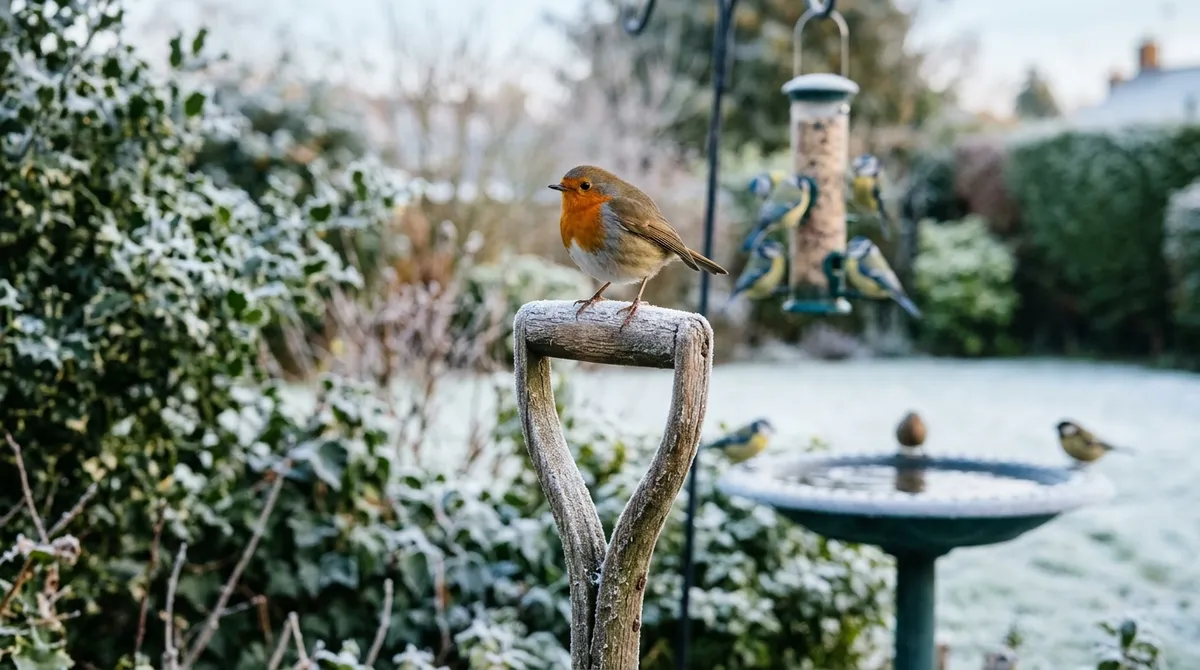
Identifying garden birds is one of the most rewarding things you can do from your kitchen window. The UK hosts around 630 recorded bird species, but you do not need to learn them all. Just 20 species make up the vast majority of garden visits according to the RSPB Big Garden Birdwatch, the world’s largest garden wildlife survey with over 700,000 participants each January.
This guide covers each of those 20 species in detail. You will learn their size, plumage, calls, diet, and conservation status. Whether you are new to birdwatching or have been filling feeders for years, knowing exactly what you are looking at makes the experience richer. For advice on setting up feeders and food types, see our guide to attracting birds to your garden.
How to identify garden birds: the four field marks
Before diving into individual species, learn the four features that separate one bird from another. Professional ornithologists use these same markers.
Size is the first thing to judge. Is the bird sparrow-sized (14cm), blackbird-sized (25cm), or woodpigeon-sized (41cm)? Comparing against these three benchmarks narrows your options immediately.
Plumage colour and pattern is the most obvious marker. Look at the head first. A blue cap means blue tit. A black cap with white cheeks means great tit. A red breast means robin. Head markings are the fastest route to identification.
Beak shape tells you what a bird eats. Thin, pointed beaks (robin, wren) mean insect eaters. Short, thick beaks (finches, sparrows) mean seed eaters. The beak shape matches the diet.
Song and calls identify birds you cannot see. A two-note “teacher-teacher” is a great tit. A rapid descending trill is a wren. A rich, varied melody from a rooftop is a blackbird. Learning five or six calls transforms your garden experience.
The 20 most common UK garden birds
These 20 species are ranked by average count per garden from RSPB Big Garden Birdwatch data. Each entry covers the key identification features, typical behaviour, what they eat, and their conservation status on the BTO Birds of Conservation Concern list.
1. Robin
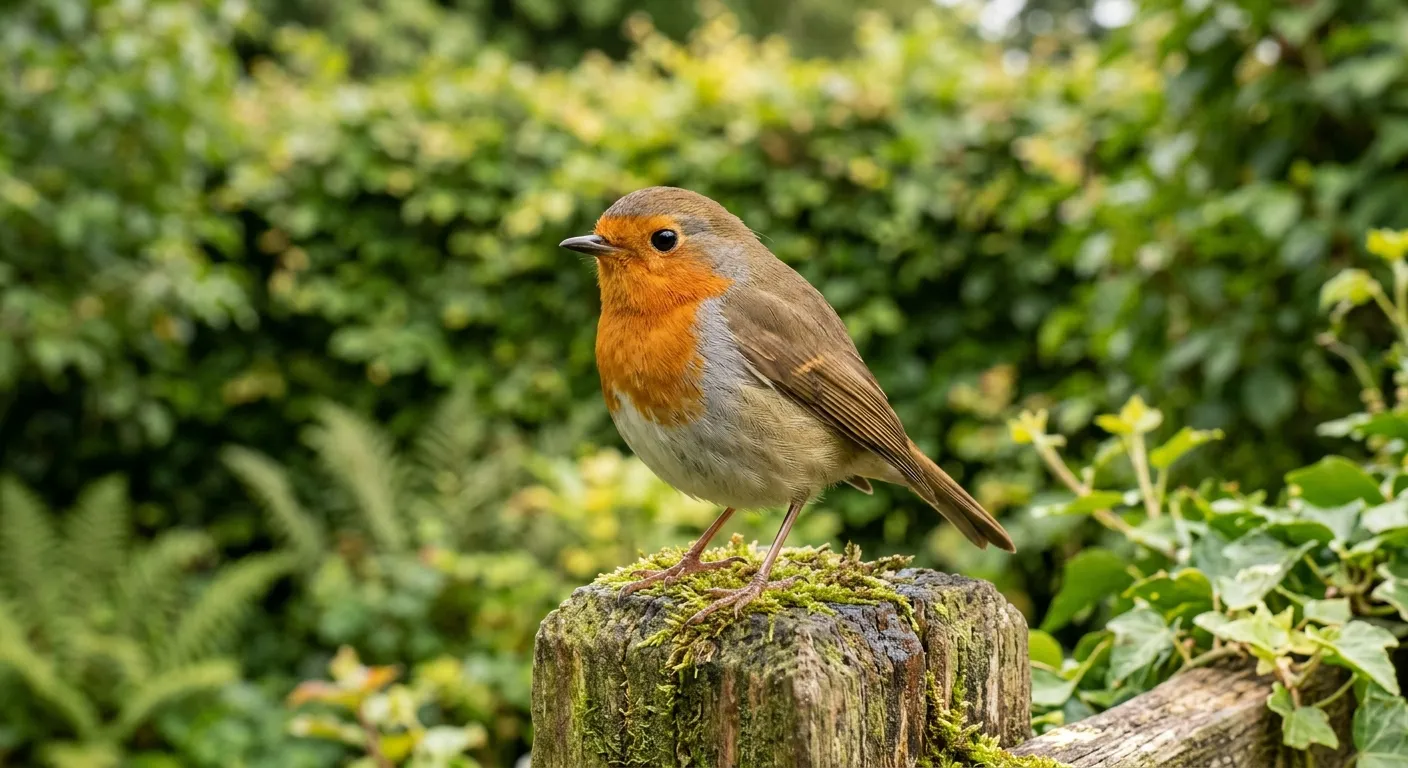 Robin (Erithacus rubecula) — look for the orange-red breast and face
Size: 14cm, 16-22g. Conservation status: Green.
The robin is the UK’s national bird and the most recognisable. Both sexes have the orange-red breast and face, brown upperparts, and a pale belly. Juveniles are speckled brown without any red. Robins hold territory year-round and sing in every month, including winter nights under street lights.
Call: A sweet, melancholy warbling song. The alarm call is a sharp “tic-tic-tic.”
Diet: Insects, worms, berries, and mealworms from ground feeders. They follow gardeners digging soil to snatch exposed invertebrates. Robins rarely use hanging feeders, preferring ground trays or low tables.
Attract them: Scatter mealworms near cover. Leave leaf litter undisturbed for foraging. Install an open-fronted nest box 1.5m up in ivy or a sheltered wall.
2. Blue tit
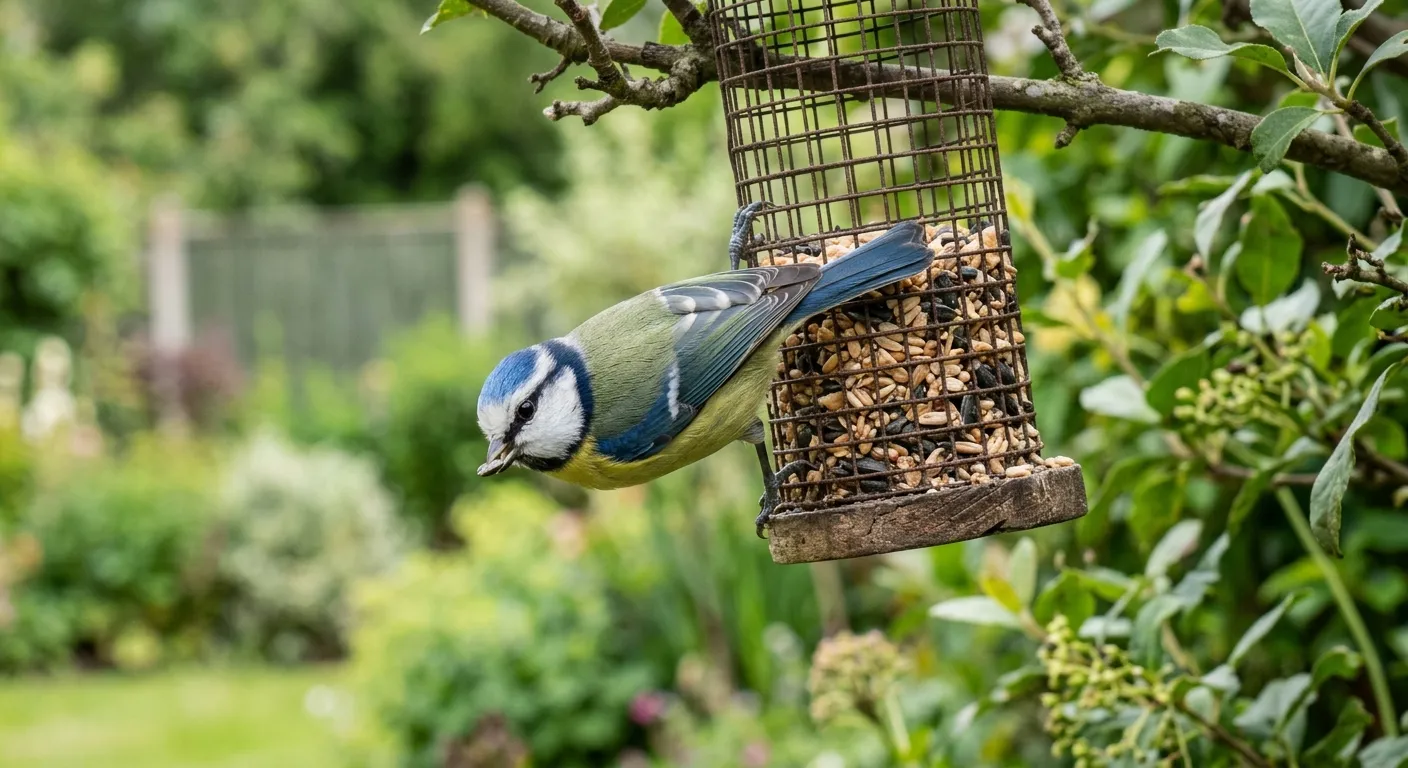 Blue tit (Cyanistes caeruleus) — bright blue cap, yellow belly, green back
Size: 12cm, 9-12g. Conservation status: Green.
A tiny, acrobatic bird with a bright blue cap, white face, yellow belly, and green back. Blue tits hang upside down from feeders and branches. They nest in small holes and will readily use nest boxes with a 25mm entrance hole. A breeding pair feeds their chicks up to 1,000 caterpillars a day.
Call: A high-pitched “tsee-tsee-tsee” trill followed by a descending note.
Diet: Insects, caterpillars, seeds, and sunflower hearts. Excellent at using tube feeders and fat ball cages.
Attract them: Hang sunflower hearts in a tube feeder. Put up a nest box with a 25mm hole by February. See our seasonal feeding guide for month-by-month food advice.
3. House sparrow
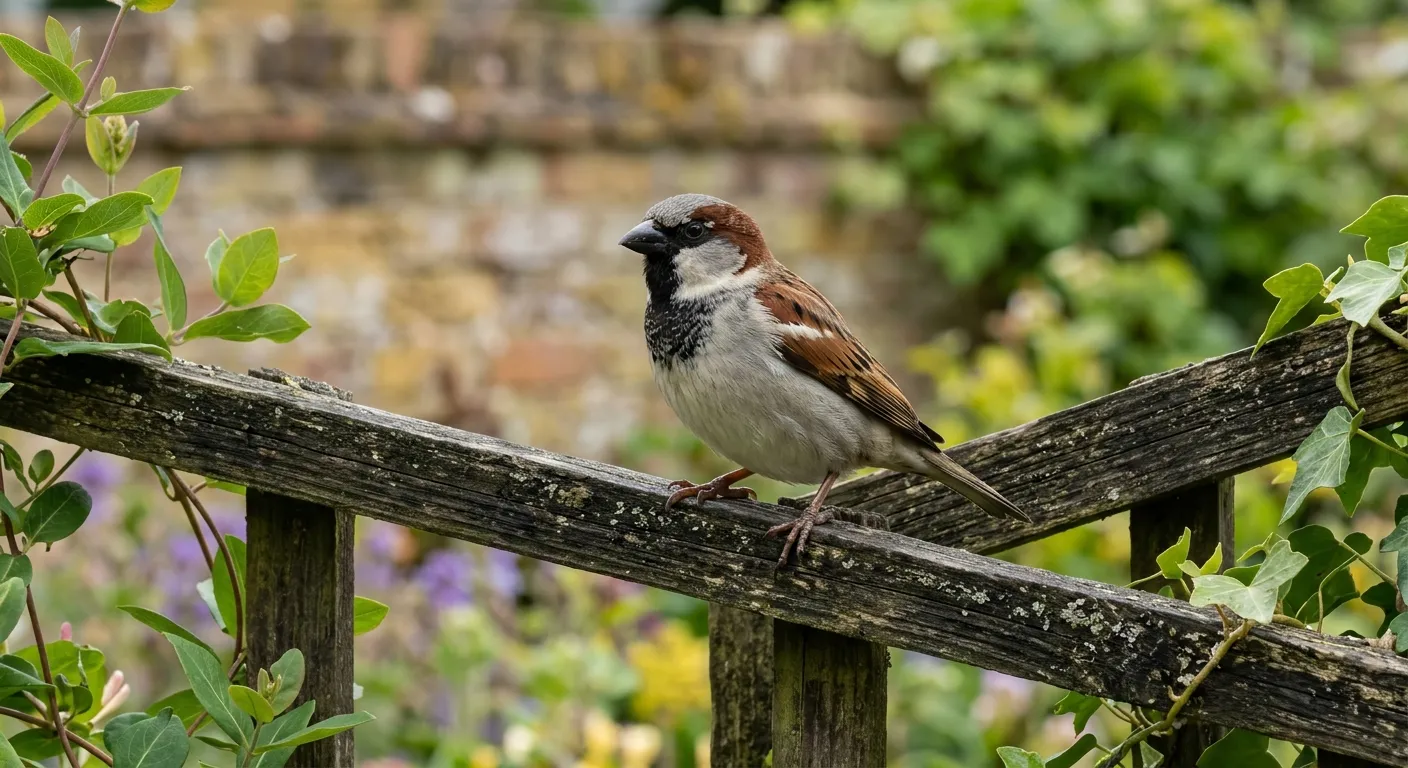 House sparrow (Passer domesticus) — grey crown, chestnut nape, black bib, thick beak
Size: 14-15cm, 24-38g. Conservation status: Red (71% decline since 1977).
Males have a grey crown, chestnut nape, black bib, and streaked brown back. Females are plain brown with a pale eyebrow stripe. House sparrows live in noisy colonies and rarely stray far from buildings. Their cheeping chorus is one of the most familiar sounds in British towns.
Call: Persistent chirping “cheep-cheep-cheep.” No real song, just variations of chirps.
Diet: Seeds, grain, bread, insects (especially for feeding chicks). They visit ground feeders and tables readily.
Attract them: Install terrace-style nest boxes under eaves. Leave seed-bearing plants standing through autumn. Grow dense hedging for roosting. Sparrows need communal nesting sites, so a single nest box is less effective than three or four grouped together.
4. Blackbird
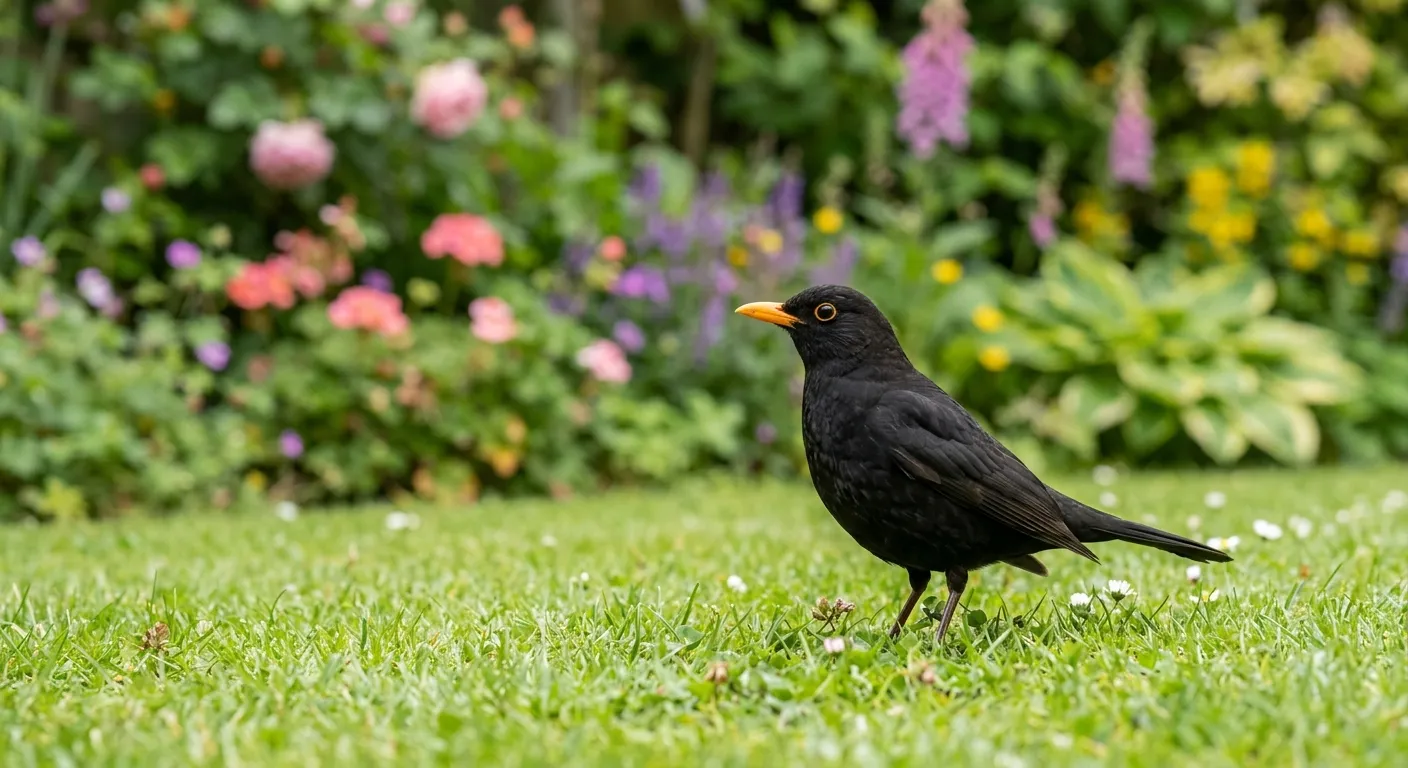 Blackbird (Turdus merula) — males jet black with bright orange-yellow bill
Size: 24-27cm, 80-120g. Conservation status: Green.
Males are unmistakable: jet black plumage with a bright orange-yellow bill and eye ring. Females and juveniles are dark brown with a mottled breast. Blackbirds feed on the ground, hopping and then pausing to listen for worms. Their evening song from rooftops and aerials is one of the finest sounds in the British garden.
Call: A rich, fluting song with improvised phrases. The alarm call is a loud, panicked “chink-chink-chink” and a scolding rattle when a cat appears.
Diet: Earthworms, insects, berries (especially in autumn and winter), windfall apples, and raisins from ground feeders.
Attract them: Keep some lawn areas short for worm hunting. Plant berry-bearing shrubs like cotoneaster and pyracantha. Leave windfall fruit on the ground in autumn. Our wildlife garden guide covers planting for birds in detail.
5. Woodpigeon
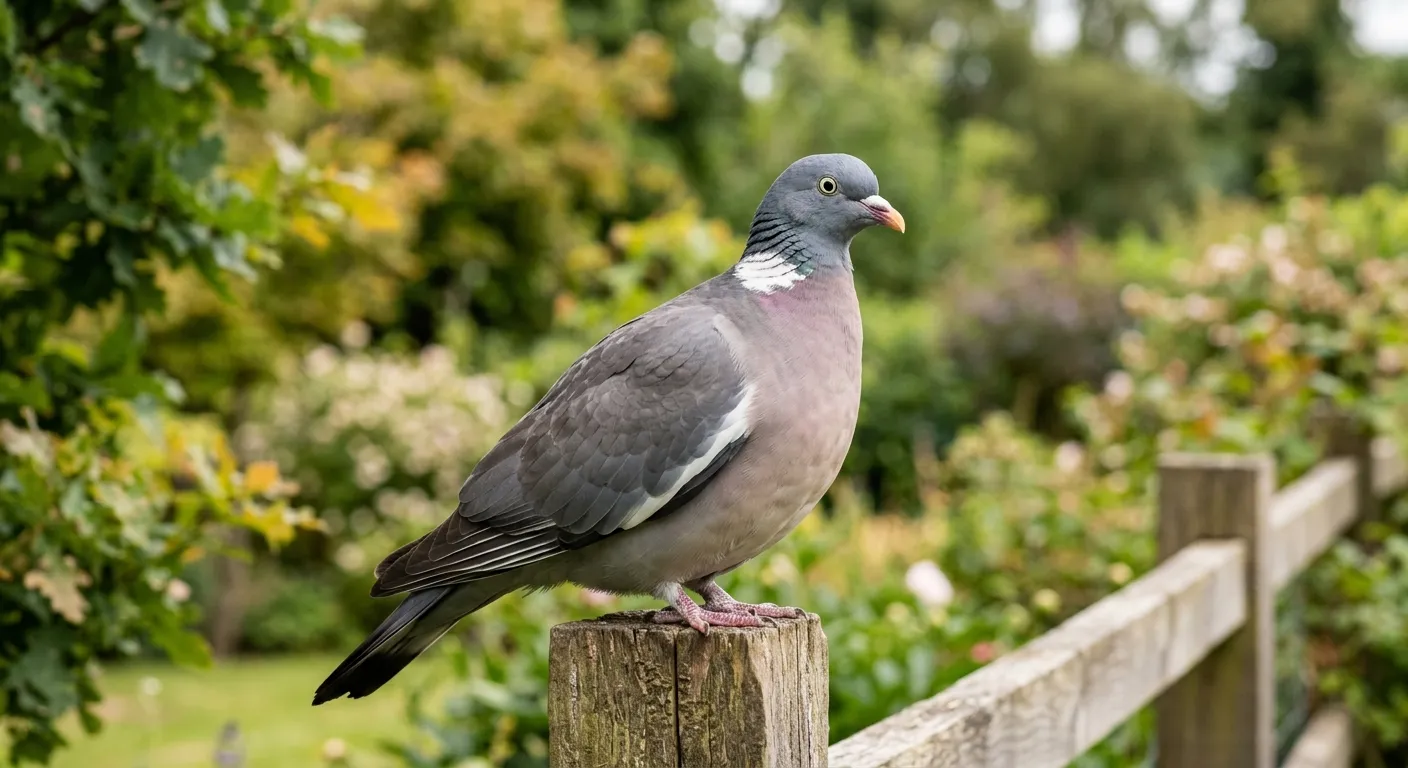 Woodpigeon (Columba palumbus) — large grey bird with white neck patch and pink breast
Size: 41cm, 450-550g. Conservation status: Green.
The largest common garden bird. Grey plumage with a pink-tinged breast, white neck patch (absent in juveniles), and a distinctive white wing bar visible in flight. Woodpigeons waddle across lawns and have a clumsy, clattering take-off.
Call: A cooing “hoo-HROO-hoo, hoo-hoo.” Five notes, with the emphasis on the second.
Diet: Seeds, grain, berries, brassica crops, and bread. They dominate ground feeders and bird tables.
Attract them: Scatter mixed seed on the ground or a low table. Woodpigeons visit most gardens without encouragement. If they bully smaller birds off feeders, use caged feeders that exclude larger species.
6. Starling
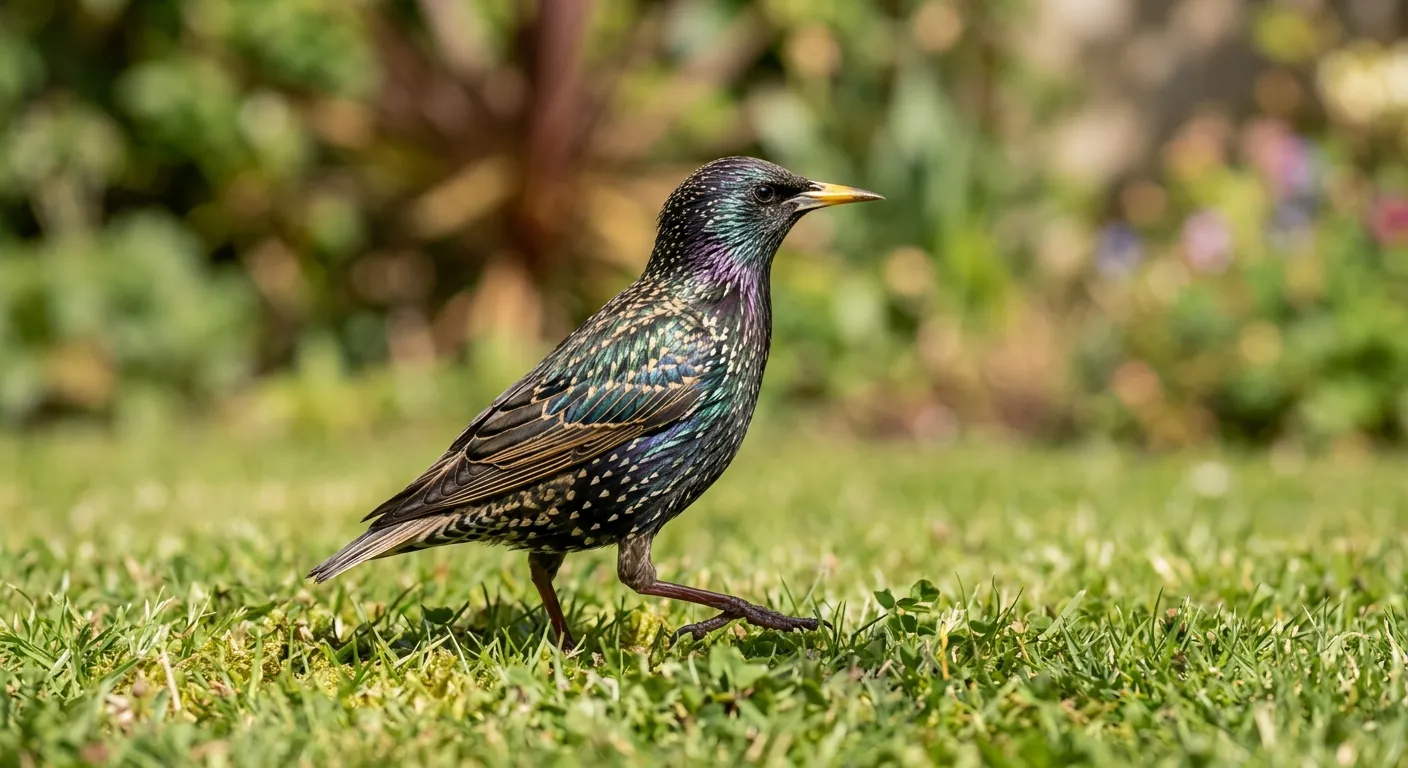 Starling (Sturnus vulgaris) — iridescent green-purple plumage with pale spots, yellow bill
Size: 21cm, 75-90g. Conservation status: Red (66% decline since the 1970s).
From a distance, starlings look black. Up close, their plumage is iridescent green and purple with pale spots, especially in winter. Their bill is yellow in summer, dark in winter. Starlings walk rather than hop and have a distinctive upright posture. Winter murmurations of thousands of birds at dusk are one of nature’s greatest spectacles.
Call: A chattering, whistling song that mimics other birds, car alarms, and telephones. The flight call is a harsh “tcheer.”
Diet: Insects (probing lawns for leatherjackets), fruit, fat balls, and scraps. They visit feeders in noisy, squabbling groups.
Attract them: Put out fat balls and suet. Keep lawn areas unmown for probing. Install nest boxes with a 45mm entrance hole. Starlings nest in roof spaces and wall cavities.
7. Great tit
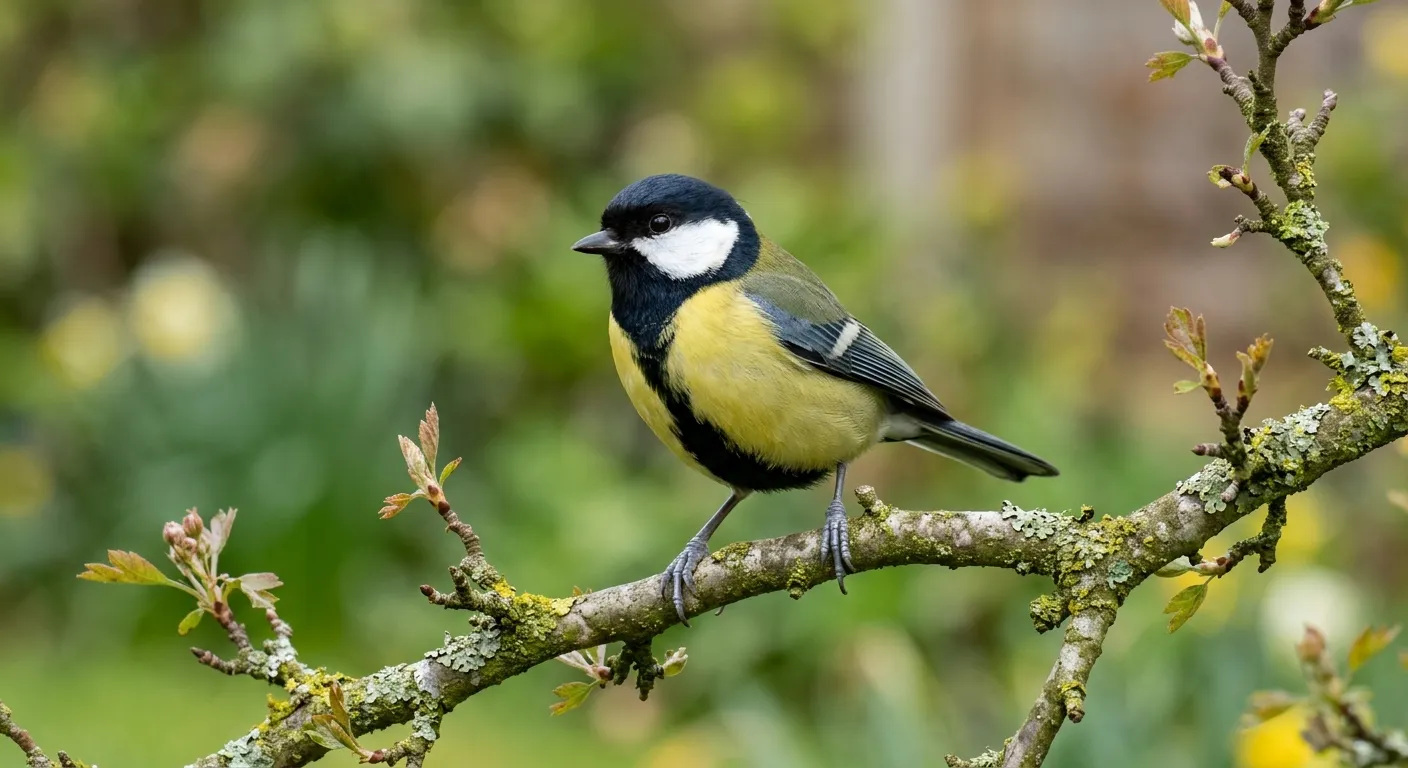 Great tit (Parus major) — black cap, white cheeks, yellow belly with bold black stripe
Size: 14cm, 16-21g. Conservation status: Green.
The largest UK tit. Black head, white cheeks, yellow belly with a thick black central stripe (wider in males), and a green back. Great tits are bold, often the first species to investigate a new feeder.
Call: A loud, two-note “teacher-teacher-teacher.” The most recognisable call in any UK garden.
Diet: Insects, seeds, sunflower hearts, and peanuts. They can crack seeds that blue tits cannot.
Attract them: Sunflower hearts and peanuts in tube feeders. Nest boxes with a 28mm entrance hole (slightly larger than blue tit boxes). Great tits also eat caterpillars from fruit trees.
8. Goldfinch
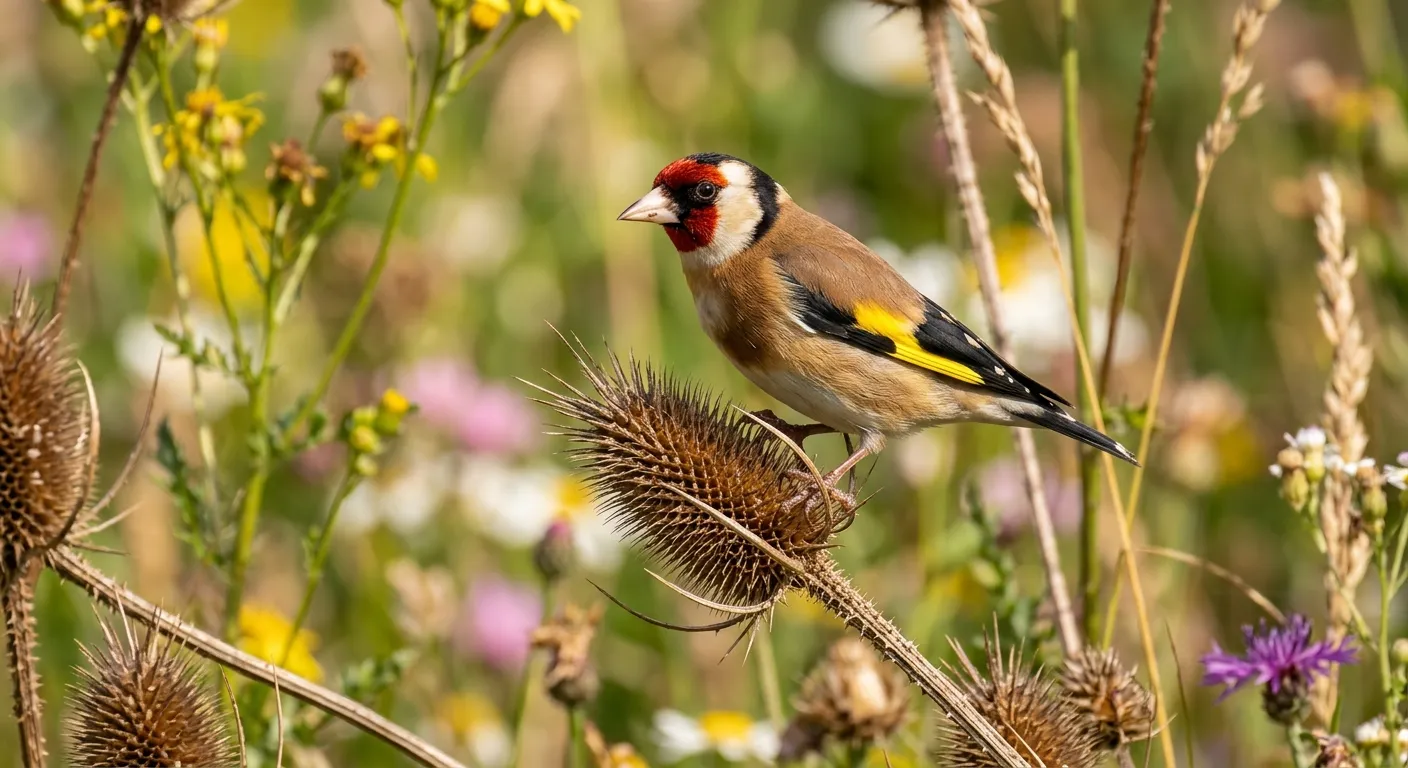 Goldfinch (Carduelis carduelis) — red face, white cheeks, black crown, gold wing bars
Size: 12cm, 14-19g. Conservation status: Green (population up 130% since 1995).
A striking bird with a red face, white cheeks, black crown, and broad gold wing bars visible in flight. The body is pale brown with a pale beak. Goldfinches travel in flocks called “charms” and have a bouncing, undulating flight pattern.
Call: A tinkling, liquid “tickle-it” call, often given in flight. The song is a rapid, twittering warble.
Diet: Small seeds, especially nyjer, dandelion, teasel, and thistle. They have evolved long, fine beaks for extracting seeds from seed heads.
Attract them: A nyjer seed feeder is the single best way to attract goldfinches. Leave dead seed heads standing through winter. Teasels, cornflowers, and sunflowers provide natural food. See our guide on bee-friendly garden plants for flowers that also produce bird-friendly seeds.
9. Long-tailed tit
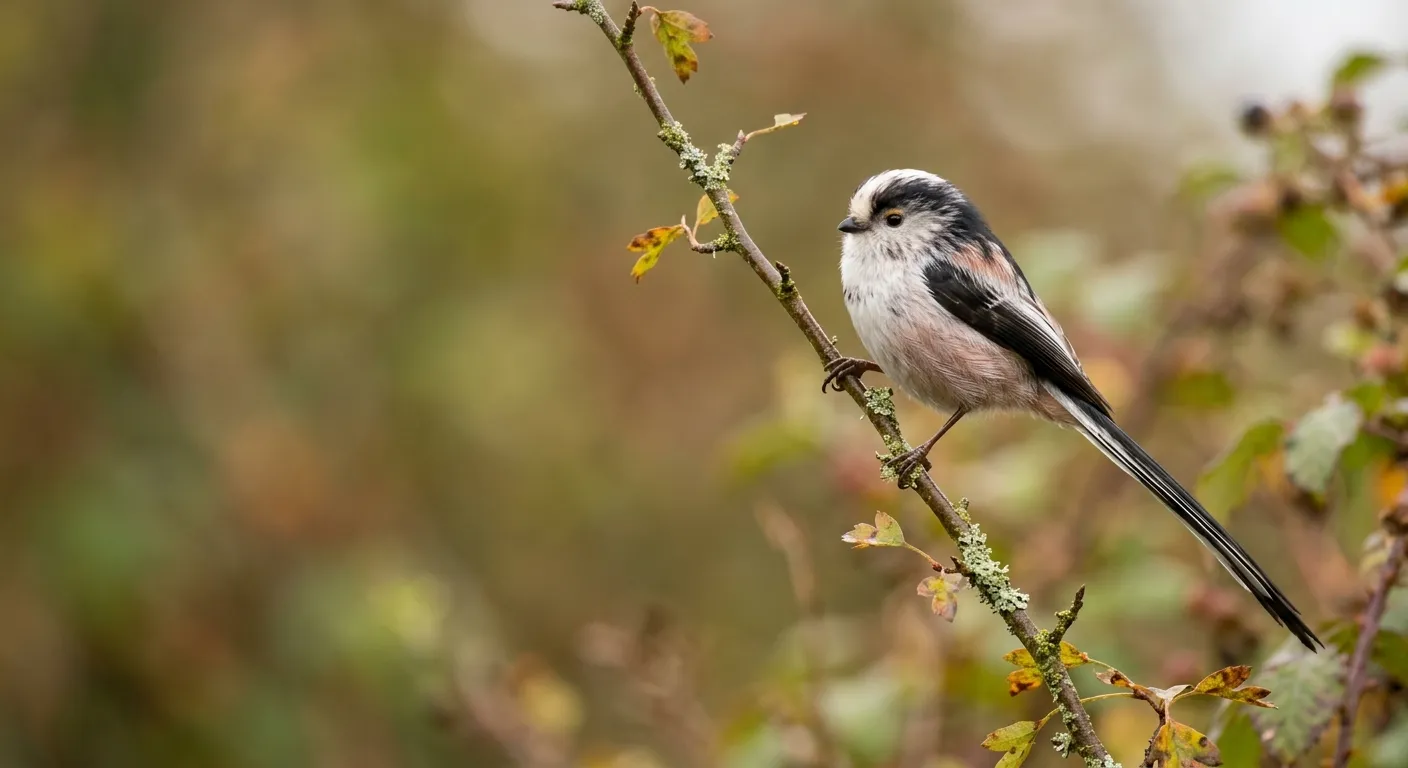 Long-tailed tit (Aegithalos caudatus) — tiny round body with extraordinarily long tail
Size: 14cm (over half is tail), 7-10g. Conservation status: Green.
A tiny, round-bodied bird with an extraordinarily long tail. Pink, black, and white plumage. Long-tailed tits travel in family flocks of 8-15 birds, moving through hedgerows and gardens in noisy groups. They build elaborate domed nests from moss, lichen, and spider silk.
Call: A thin, high “tsee-tsee-tsee” contact call. The flock keeps in touch with constant calling.
Diet: Insects, spiders, and occasionally fat balls. They visit feeders less reliably than blue tits but appear in winter flocks.
Attract them: Fat ball feeders and suet blocks. Dense hedging provides the thorny cover they need for nesting and roosting. A mixed native hedge is ideal.
10. Magpie
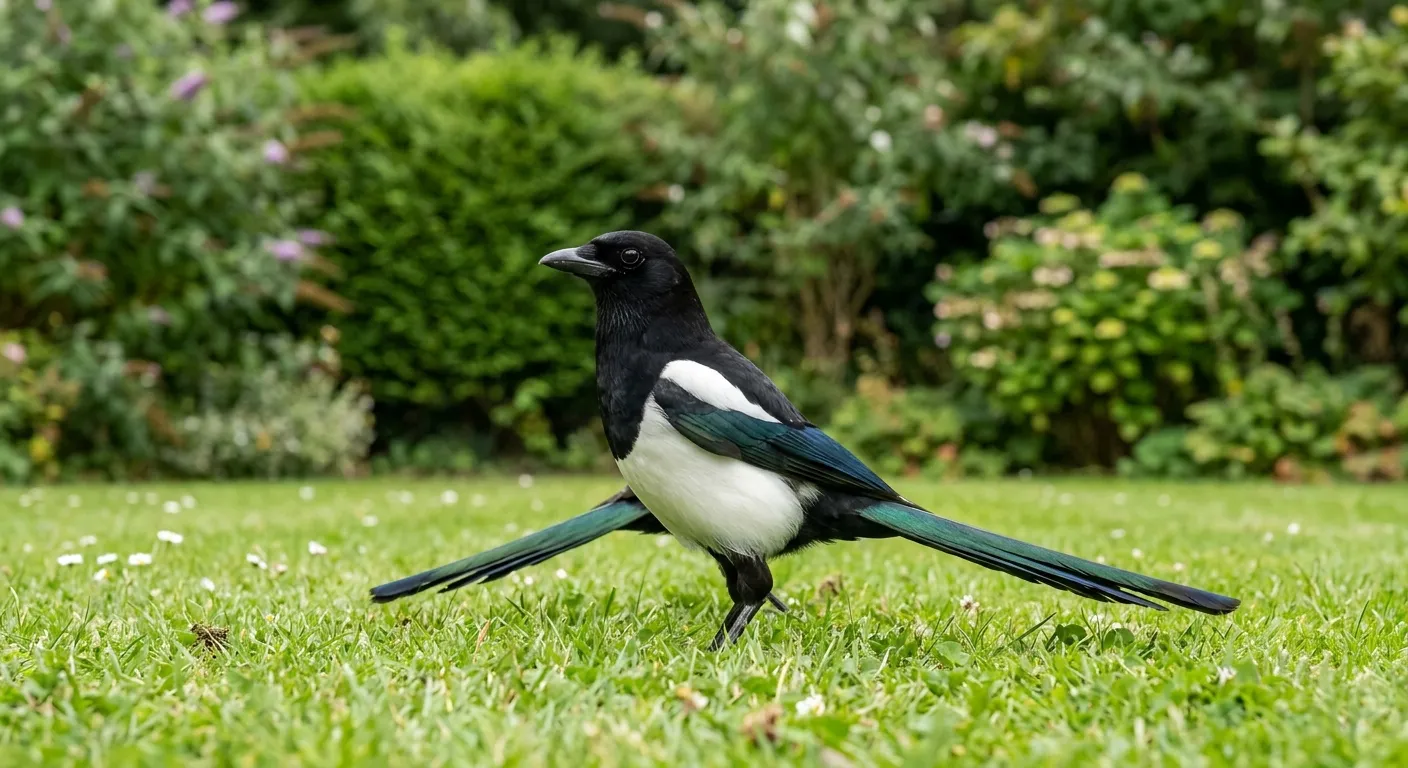 Magpie (Pica pica) — bold black and white with long iridescent green-blue tail
Size: 44-46cm (including tail), 200-250g. Conservation status: Green.
Black and white with a long, iridescent green-blue tail. Magpies are intelligent corvids with problem-solving ability tested in scientific studies. They walk with a distinctive swagger and cache food for later retrieval. Despite their reputation, research shows magpies have no significant impact on songbird populations.
Call: A harsh, rattling “chak-chak-chak-chak.”
Diet: Omnivorous. Insects, grain, scraps, carrion, and occasionally eggs or nestlings. They will eat from ground feeders and bird tables.
Attract them: Magpies appear in most gardens without encouragement. Scatter scraps on the ground. If you want to discourage them from feeders, use caged feeders that exclude large birds.
11. Chaffinch
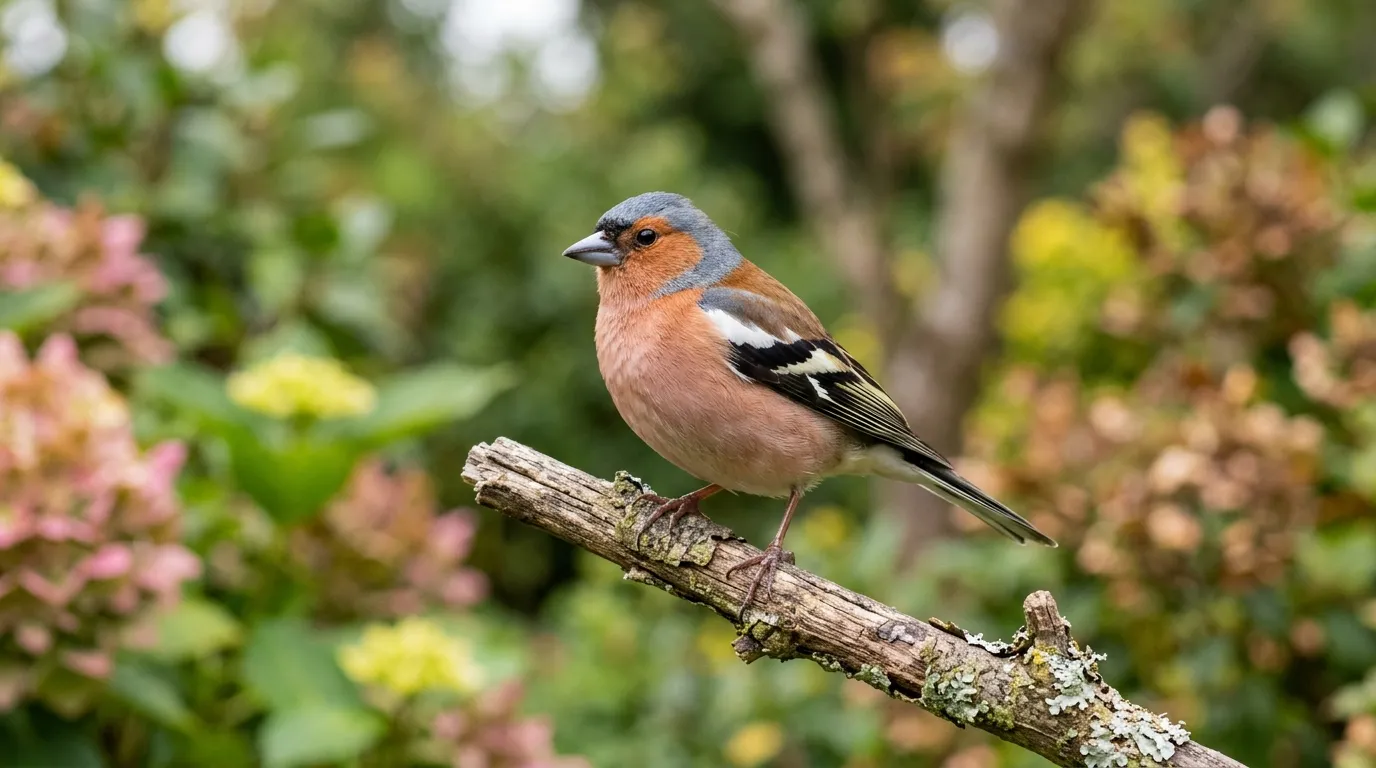 Chaffinch (Fringilla coelebs) — blue-grey crown, pink-orange breast, white wing bars
Size: 14.5cm, 18-29g. Conservation status: Green.
Males are colourful: blue-grey crown, pink-orange breast and face, chestnut back, and white wing bars. Females are olive-brown with the same white wing bars. Chaffinches are primarily ground feeders, picking up seeds fallen from above. They form mixed flocks with other finches in winter.
Call: A cheerful, descending song ending in a flourish: “chip-chip-chip-tell-tell-tell-cherry-erry-erry-tissi-CHEWee-oh.” The flight call is a sharp “pink-pink.”
Diet: Seeds, insects (in summer), and beech mast. They forage beneath feeders rather than on them.
Attract them: Scatter mixed seed on the ground or a low tray beneath hanging feeders. Plant native trees. Chaffinches nest in hedgerows and the forks of trees.
12. Wren
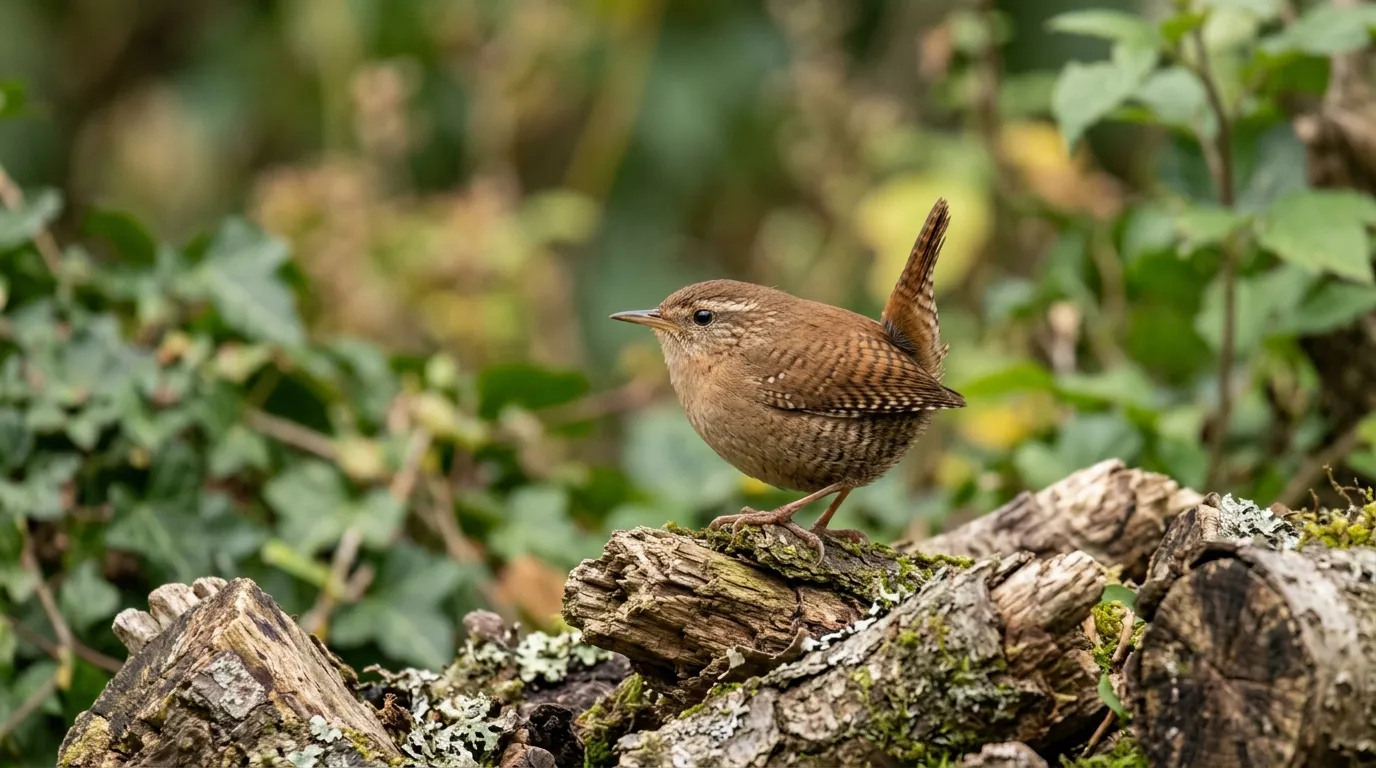 Wren (Troglodytes troglodytes) — tiny brown bird with tail cocked upright
Size: 9-10cm, 7-12g. Conservation status: Amber.
One of the UK’s smallest birds. Warm brown plumage with darker barring on the wings and tail. The tail is almost always cocked upright. Wrens creep mouse-like through undergrowth, hedge bottoms, and log piles. Despite their size, their song is astonishingly loud.
Call: An explosive, rapid trill that carries across the garden. The alarm note is a sharp “tic.”
Diet: Insects and spiders found in crevices, bark, and leaf litter. Wrens rarely visit feeders but benefit from the insects in a wildlife-friendly garden.
Attract them: Leave log piles and brushwood undisturbed. Grow ivy on walls and fences. Keep dense ground cover in borders. Our guide to building a bug hotel creates the insect prey that wrens depend on. In severe winters, wrens huddle together in nest boxes for warmth.
13. Dunnock
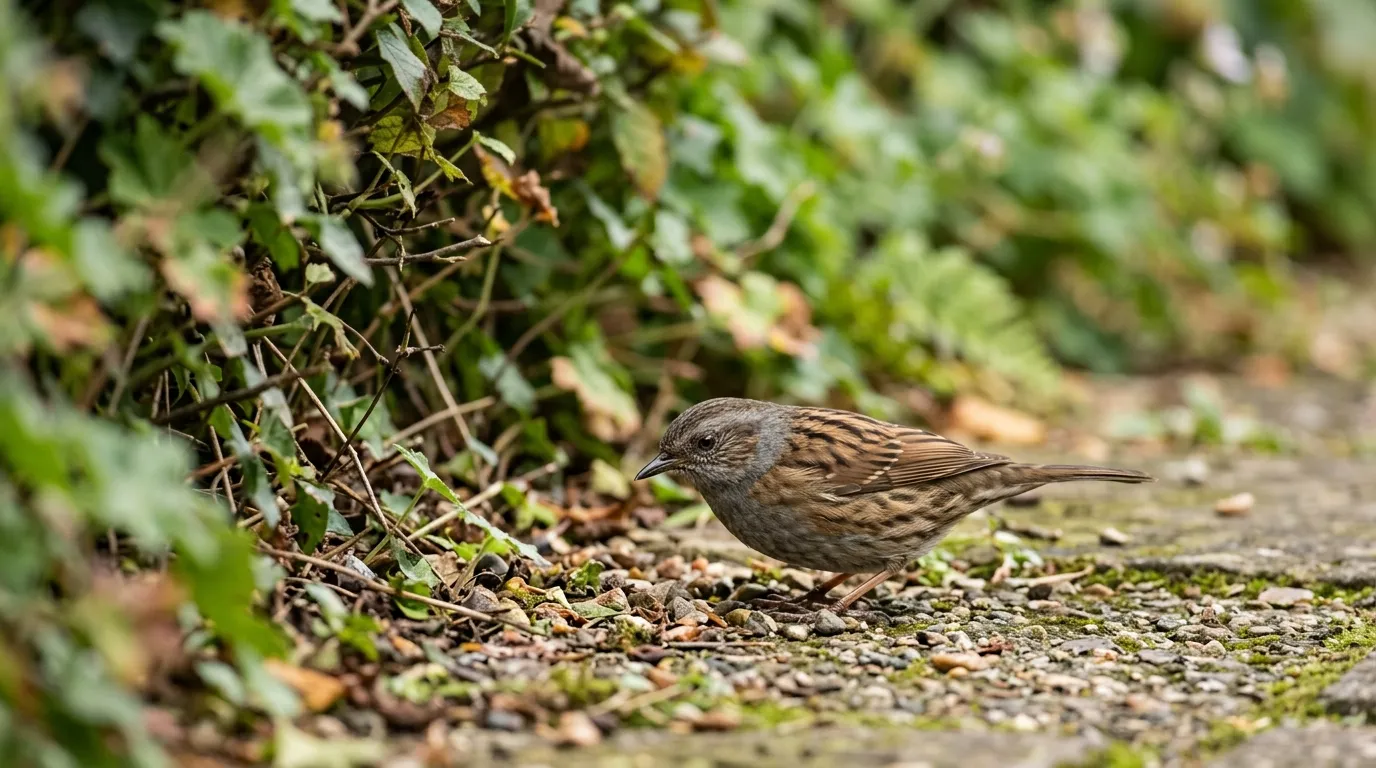 Dunnock (Prunella modularis) — thin pointed beak, grey head, streaked brown back
Size: 14cm, 19-24g. Conservation status: Amber.
A grey-brown bird often overlooked as a “boring sparrow.” Look closer: the dunnock has a thin, insect-eating beak (sparrows have thick seed beaks), a grey head and breast, and streaked brown upperparts. Dunnocks shuffle along the ground beneath hedges, flicking their wings. They have a complex mating system involving two males and one female.
Call: A thin, warbling song delivered from a low perch. Less tuneful than a robin, more musical than a wren.
Diet: Insects, worms, and small seeds. Feeds on the ground, often under feeders or beneath hedges.
Attract them: Scatter fine seed and mealworms under hedges and shrubs. Dense, low planting provides the ground-level cover dunnocks prefer. They nest in thick hedging, especially thorny species.
14. Coal tit
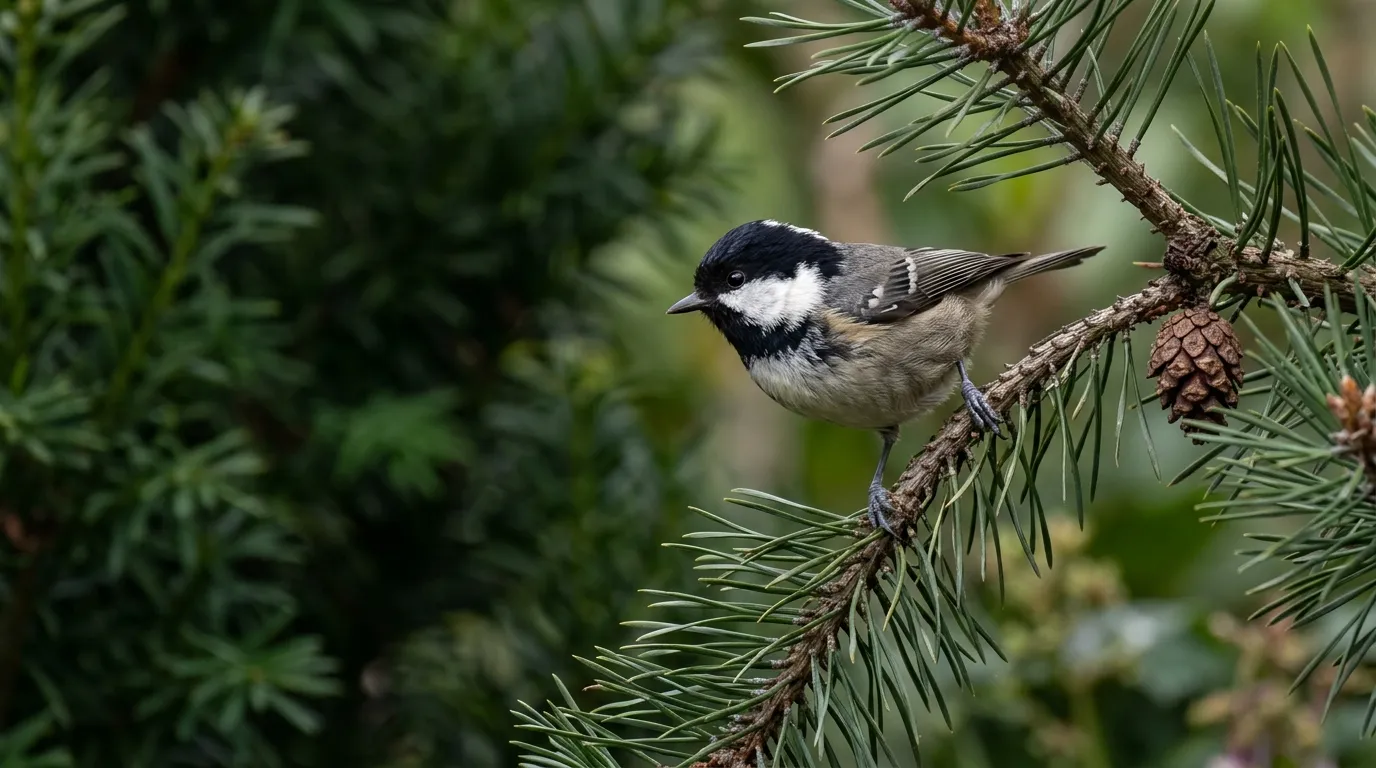 Coal tit (Periparus ater) — black cap, white cheeks, distinctive white nape patch
Size: 11.5cm, 8-10g. Conservation status: Green.
Similar to a great tit but smaller, with a black cap, white cheeks, and a distinctive white nape patch (the key identification feature). Grey-buff underparts without the yellow of blue and great tits. Coal tits are quick visitors: they grab a seed from the feeder and immediately fly away to cache it.
Call: A high, piping “pitchu-pitchu-pitchu,” faster and higher than a great tit.
Diet: Insects, seeds, and sunflower hearts. They cache food in bark crevices and lichen for later retrieval.
Attract them: Sunflower hearts in tube feeders. Coal tits prefer feeding near cover, so position a feeder near a hedge or tree. They nest in holes close to the ground, sometimes in walls and banks.
15. Collared dove
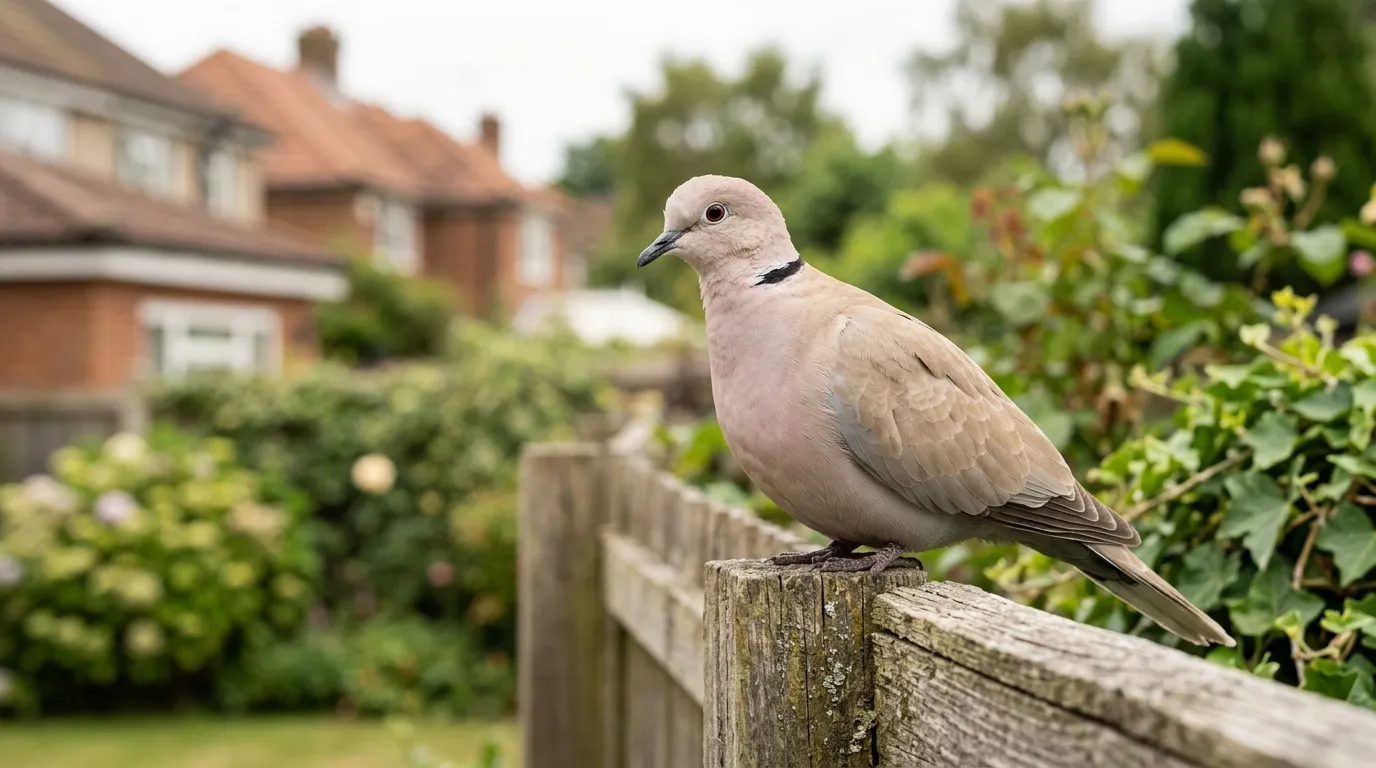 Collared dove (Streptopelia decaocto) — pale sandy-brown, thin black half-collar on nape
Size: 32cm, 150-220g. Conservation status: Green.
Pale, sandy-brown plumage with a thin black half-collar on the back of the neck. Pink-tinged breast. Red eyes with a pale eye ring. Collared doves arrived in the UK in the 1950s and spread rapidly. They are now in every county. They perch on aerials and wires, giving their repetitive three-note call.
Call: A monotonous “hoo-HOO-hoo” repeated endlessly. Easily confused with woodpigeon, but the collared dove’s call is three notes (woodpigeon is five).
Diet: Seeds, grain, and bread. They visit ground feeders and bird tables.
Attract them: Scatter grain and seed on the ground or a flat bird table. Collared doves prefer open areas with nearby perching posts. They nest in dense conifers and evergreen shrubs.
16. Jackdaw
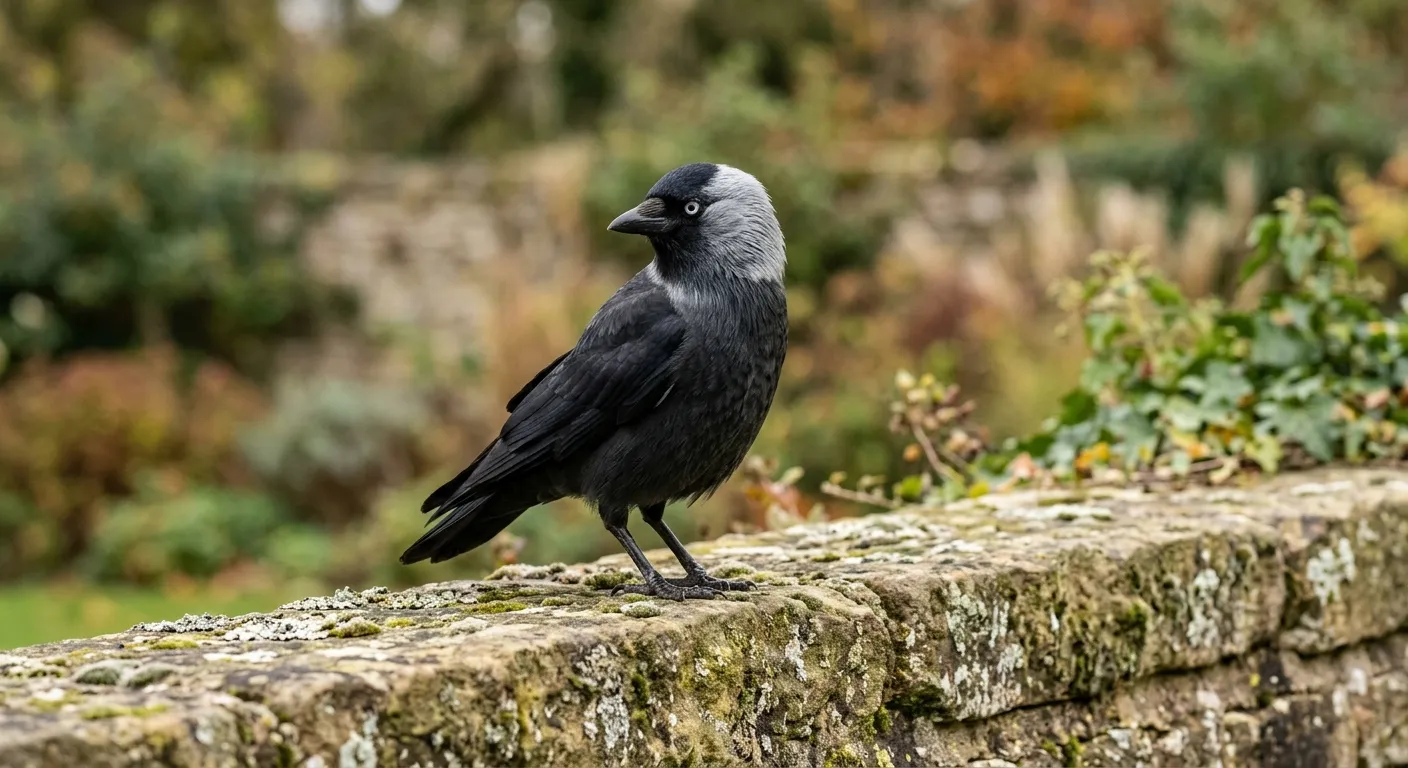 Jackdaw (Coloeus monedula) — small crow with silver-grey nape and pale piercing eye
Size: 33-34cm, 220-270g. Conservation status: Green.
A small, compact crow with a silver-grey nape and pale, piercing eye. The rest of the plumage is black. Jackdaws are intelligent, social birds that pair for life. They nest in chimney pots, church towers, and tree holes.
Call: A sharp, metallic “tchack.” Groups call together in a chattering chorus.
Diet: Insects, grain, scraps, and carrion. They visit bird tables and ground feeders.
Attract them: Jackdaws visit gardens near their nesting colonies. Scatter food on the ground or a sturdy bird table. Install a jackdaw nest box (150mm entrance hole) if you have mature trees.
17. Song thrush
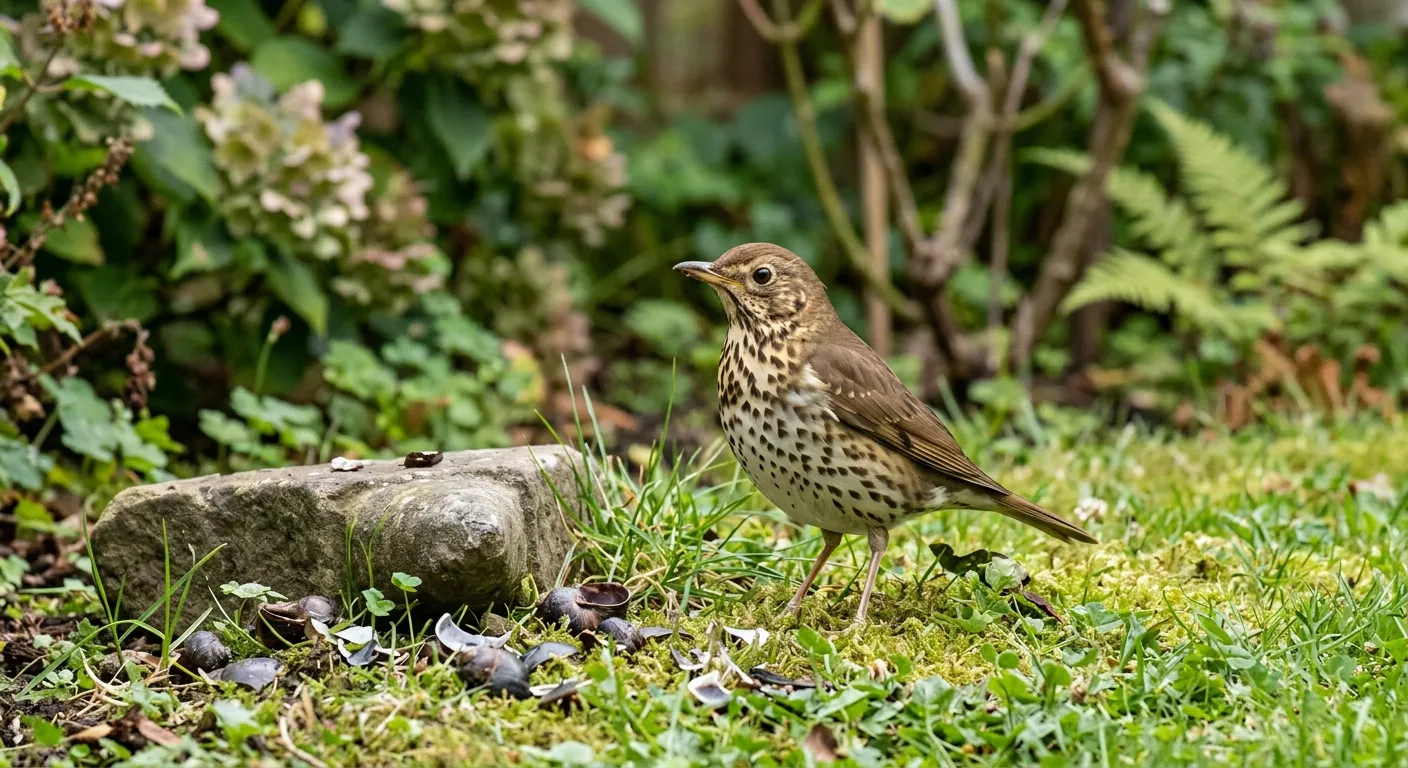 Song thrush (Turdus philomelos) — cream breast with neat arrow-shaped dark spots
Size: 21-23cm, 65-100g. Conservation status: Red (50% decline since the 1970s).
Brown upperparts with a cream breast covered in dark, arrow-shaped spots (more defined than the mistle thrush’s rounder spots). Song thrushes are famous for smashing snails on “anvil stones.” Finding a stone surrounded by broken snail shells is a sure sign of a resident song thrush.
Call: A loud, musical song with each phrase repeated 2-4 times. “Did he do it, did he do it, YES he DID, YES he DID” is a useful memory aid.
Diet: Snails, slugs, earthworms, berries, and fruit. A genuine gardener’s friend for slug control.
Attract them: Avoid slug pellets (metaldehyde-based pellets poison thrushes that eat contaminated slugs). Keep damp areas where snails thrive. Plant berry-bearing shrubs. Leave leaf litter for foraging. Dense hedging provides nesting cover. See our guide to composting for wildlife for creating the damp habitats thrushes need.
18. Nuthatch
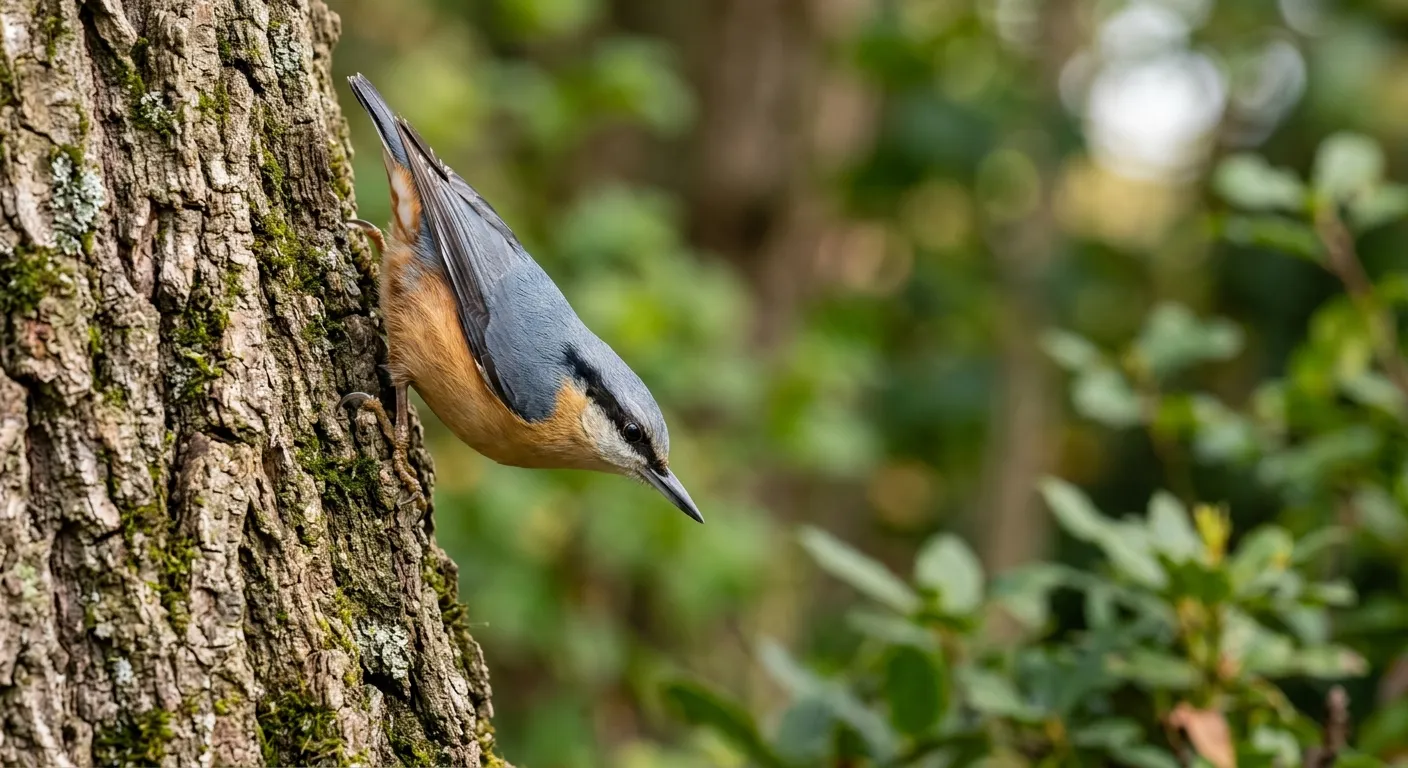 Nuthatch (Sitta europaea) — blue-grey back, orange underparts, bold black eye stripe
Size: 14cm, 20-25g. Conservation status: Green.
Blue-grey back, orange-buff underparts, and a bold black eye stripe. The only UK bird that walks headfirst down tree trunks. Nuthatches have a dagger-like beak for wedging seeds into bark crevices and hammering them open. They plaster mud around nest box holes to reduce the entrance size.
Call: A loud, ringing “tuit-tuit-tuit” and a trilling song.
Diet: Insects, hazelnuts, acorns, and sunflower hearts. They take seeds from feeders and cache them in bark.
Attract them: Sunflower hearts and peanuts in tube feeders near mature trees. Nuthatches need woodland or mature garden trees. They are expanding northward and are now common in England and Wales, reaching southern Scotland.
19. Jay
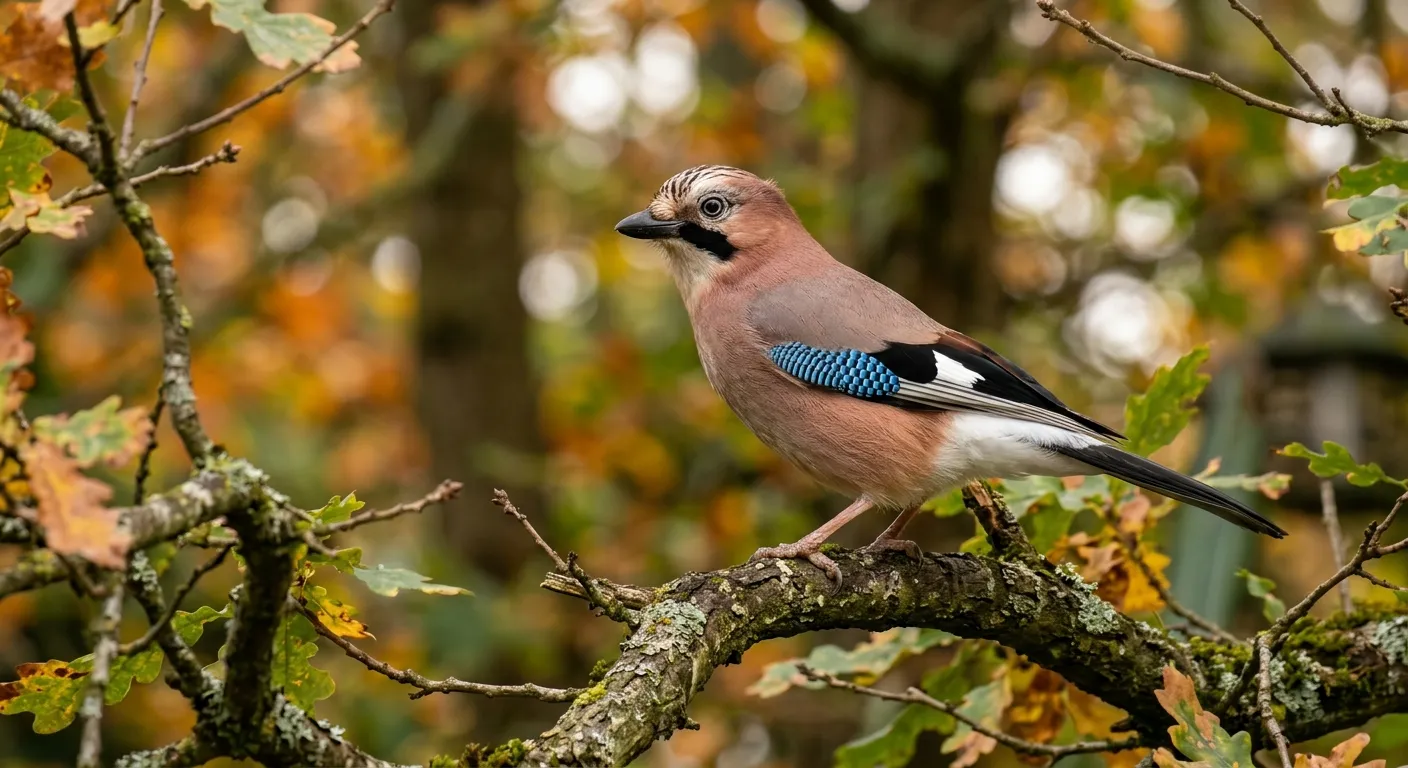 Jay (Garrulus glandarius) — pink-brown body, black moustache, blue-and-black wing patch
Size: 34cm, 140-190g. Conservation status: Green.
A colourful but shy corvid. Pink-brown body, black moustache stripe, white rump (visible in flight), and a stunning blue-and-black barred wing patch. Jays are the oak tree’s gardener: they bury up to 5,000 acorns each autumn and forget many of them, planting the next generation of oaks.
Call: A harsh, screeching “skaak” that alerts every bird in the area. Jays also mimic other species, including buzzards and tawny owls.
Diet: Acorns, insects, seeds, eggs, and nestlings. They visit ground feeders for peanuts and sunflower hearts.
Attract them: Scatter peanuts on the ground. If you have oak trees, jays will appear in autumn to collect acorns. They are wary birds and prefer gardens with mature tree cover.
20. Green woodpecker
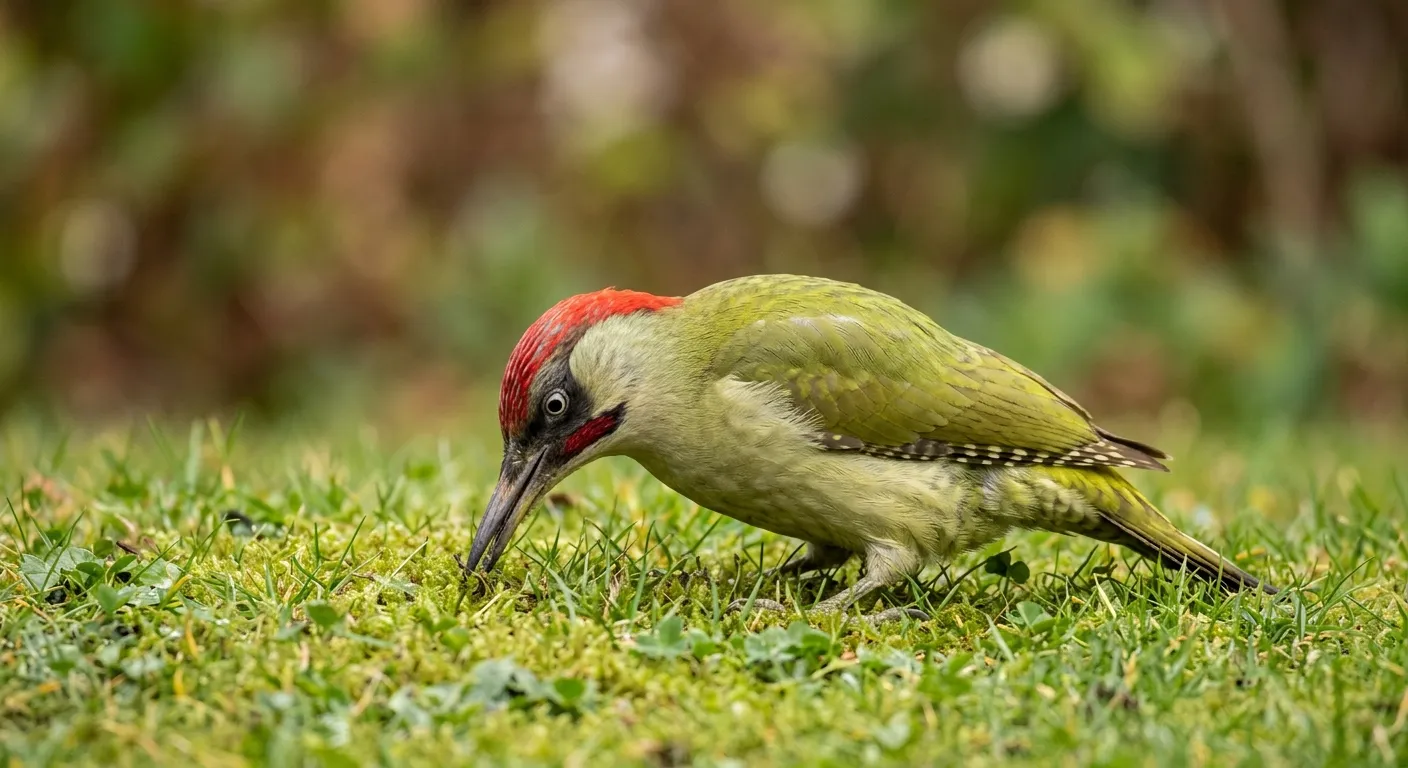 Green woodpecker (Picus viridis) — green plumage, red crown, black face
Size: 31-33cm, 180-220g. Conservation status: Green.
The largest and most colourful of the three UK woodpecker species that visit gardens. Green upperparts, pale yellow-green underparts, red crown, and a black face with a red centre in males. Green woodpeckers spend more time on the ground than other woodpeckers, digging ants from lawns with a tongue that extends 10cm beyond the beak.
Call: A loud, laughing “yaffle” that echoes across gardens and fields. They drum rarely compared with great spotted woodpeckers.
Diet: Ants (their primary food), beetles, and other ground insects. They rarely visit bird feeders.
Attract them: Keep short-mown lawns where ants nest. Avoid ant-killing chemicals. Green woodpeckers need open grassland adjacent to mature trees for nesting. Our guide on creating a wildlife garden covers lawn management for wildlife.
Comparison table: all 20 garden birds at a glance
This table summarises size, diet type, feeder use, and conservation status for quick reference.
| Species | Size (cm) | Weight (g) | Diet type | Uses feeders? | Conservation |
|---|---|---|---|---|---|
| Robin | 14 | 16-22 | Insects, berries | Ground tray | Green |
| Blue tit | 12 | 9-12 | Insects, seeds | Tube, fat ball | Green |
| House sparrow | 14-15 | 24-38 | Seeds, insects | Ground, table | Red |
| Blackbird | 24-27 | 80-120 | Worms, berries | Ground | Green |
| Woodpigeon | 41 | 450-550 | Seeds, grain | Ground, table | Green |
| Starling | 21 | 75-90 | Insects, fat | Fat ball, ground | Red |
| Great tit | 14 | 16-21 | Insects, seeds | Tube, fat ball | Green |
| Goldfinch | 12 | 14-19 | Small seeds | Nyjer feeder | Green |
| Long-tailed tit | 14 | 7-10 | Insects | Fat ball | Green |
| Magpie | 44-46 | 200-250 | Omnivore | Ground, table | Green |
| Chaffinch | 14.5 | 18-29 | Seeds, insects | Ground | Green |
| Wren | 9-10 | 7-12 | Insects | Rarely | Amber |
| Dunnock | 14 | 19-24 | Insects, seeds | Ground | Amber |
| Coal tit | 11.5 | 8-10 | Insects, seeds | Tube | Green |
| Collared dove | 32 | 150-220 | Seeds, grain | Ground, table | Green |
| Jackdaw | 33-34 | 220-270 | Omnivore | Ground, table | Green |
| Song thrush | 21-23 | 65-100 | Snails, worms | Rarely | Red |
| Nuthatch | 14 | 20-25 | Nuts, insects | Tube | Green |
| Jay | 34 | 140-190 | Acorns, insects | Ground | Green |
| Green woodpecker | 31-33 | 180-220 | Ants | Rarely | Green |
Which garden birds are in decline?
Three of the top 20 garden birds sit on the Red conservation list, meaning they need urgent action.
House sparrow numbers dropped 71% between 1977 and 2020. Modern building methods remove nesting cavities under eaves and roof tiles. Intensive gardening and paving over front gardens reduces insect prey for chicks. You can help by fitting terrace nest boxes and growing insect-friendly plants.
Starling populations fell 66% in the same period. Loss of permanent grassland reduces their main food source: leatherjackets and other soil invertebrates. Garden lawns help if you avoid pesticides and leave areas uncut.
Song thrush numbers halved since the 1970s. Metaldehyde slug pellets poison thrushes that eat contaminated slugs. Hedgerow removal destroys nesting habitat. Choosing ferric phosphate slug pellets (wildlife-safe) and maintaining dense hedging makes your garden a thrush refuge.
Two more species are on the Amber list: wren and dunnock. Both depend on thick ground cover and leaf litter. Tidying every corner of the garden removes their habitat. Leaving log piles and brushwood heaps is the simplest way to support them. Our guide to hedgehog-friendly gardens covers the same habitat features that benefit ground-feeding birds.
How to set up your garden for bird identification
You do not need binoculars or expensive gear to identify garden birds. A kitchen window, a feeding station 3m away, and a basic bird identification chart cover most situations.
Feeding station placement
Position your feeding station 2-3m from a window where you sit regularly. This gives clear views without binoculars. Place it 2m from a hedge or shrub so birds have escape cover from sparrowhawks and cats. Use multiple feeder types at different heights to attract ground feeders and hanging feeders simultaneously. Our main guide on attracting birds to your garden covers feeder setup in detail.
Best food for the widest range
| Food type | Species attracted | Feeder type |
|---|---|---|
| Sunflower hearts | Tits, finches, sparrows, nuthatches | Tube feeder |
| Fat balls | Tits, starlings, woodpeckers, long-tailed tits | Wire cage |
| Mealworms | Robins, wrens, dunnocks, blackbirds | Ground tray |
| Nyjer seed | Goldfinches, siskins | Specialist feeder |
| Mixed seed | Chaffinches, dunnocks, sparrows | Ground or table |
Water and shelter
A bird bath attracts species that skip feeders entirely. Song thrushes, blackbirds, and wrens all bathe regularly. Place the bath in an open area with clear sight lines. Dense hedging of hawthorn, blackthorn, or mixed native species provides nesting, roosting, and shelter. See our wildlife pond guide for adding water features that benefit both birds and amphibians.
Recording what you see
Keep a simple list by the window: date, species, number, and behaviour. Within a week, you will know your garden’s regular visitors. After a month, you will spot seasonal changes. After a year, you can contribute your data to the BTO Garden BirdWatch, the UK’s longest-running garden wildlife survey. Recording your sightings builds a personal dataset that helps national conservation.
Seasonal changes in garden bird visitors
Your garden bird list changes through the year. Understanding these shifts helps you identify unfamiliar visitors and adjust your feeding.
Winter (December to February): Feeder traffic peaks. Resident species are joined by Scandinavian visitors: fieldfares and redwings strip berry bushes, siskins appear on nyjer feeders, and brambling flocks join chaffinches on the ground. Long-tailed tits form larger roaming flocks. Robins sing from street-lit perches on cold nights. Our winter wildlife garden guide covers how to prepare for the coldest months.
Spring (March to May): Breeding begins. Male blackbirds and song thrushes sing from high perches to establish territories. Blue tits and great tits investigate nest boxes. House sparrows carry nesting material to roof cavities. Migrant species arrive: swallows, house martins, and spotted flycatchers.
Summer (June to August): Fledglings appear on feeders, looking scruffy and confused. Juvenile robins are speckled brown without a red breast. Juvenile goldfinches lack the red face. Adult birds moult, replacing worn feathers, and become quieter and harder to spot. Switch from fat-based foods to mealworms and seeds.
Autumn (September to November): Berry-eating peaks. Blackbirds and song thrushes feast on cotoneaster, pyracantha, and rowan berries. Jays cache acorns. Summer migrants depart. Winter visitors start arriving. Feeder traffic increases as natural food becomes scarcer. Check our seasonal bird feeding guide for month-by-month food advice.
Common identification mistakes
Even experienced birdwatchers confuse certain species. Here are the most frequent mix-ups.
Dunnock vs. house sparrow: Both are small and brown. The dunnock has a thin, pointed insect-eating beak and a grey head. The house sparrow has a thick, conical seed-cracking beak and (in males) a grey crown with chestnut sides.
Collared dove vs. woodpigeon call: The collared dove gives three notes (“hoo-HOO-hoo”). The woodpigeon gives five notes (“hoo-HROO-hoo, hoo-hoo”). Counting the notes is the quickest way to tell them apart without seeing the bird.
Blue tit vs. great tit: Blue tits are noticeably smaller, with a blue cap. Great tits have a black cap, white cheeks, and a bold black belly stripe. The great tit’s “teacher-teacher” call is louder and lower-pitched.
Song thrush vs. mistle thrush: Song thrushes are smaller (21-23cm vs. 27cm), with neater, arrow-shaped breast spots. Mistle thrushes are larger, paler, and stand more upright. The song thrush repeats each phrase 2-4 times. The mistle thrush sings in wilder, less structured phrases, often in rain and wind.
Starling vs. blackbird (at a distance): Both look dark at a distance. Starlings are smaller, walk with a purposeful waddle, and have shorter tails. Blackbirds hop rather than walk, and males have a bright orange bill visible even from 20m away.
Teaching children to identify garden birds
Bird identification is one of the best nature activities for children. The RSPB Big Schools’ Birdwatch gives primary schools a structured framework, but your garden is the simplest classroom.
Start with the five easiest species: robin (red breast), magpie (black and white), woodpigeon (large and grey), blue tit (blue cap), and blackbird (orange beak). These five are distinctive enough that a four-year-old can learn them in a week.
Make a simple chart with drawings or printed photos. Stick it by the kitchen window. Award a tick for each new species spotted. Most children reach 10 species within a month. Combine identification with feeding by letting children fill feeders and scatter mealworms. Our guide to creating a wildlife garden includes more child-friendly wildlife projects.
Citizen science: how your records help conservation
Every bird you identify and record contributes to conservation. Two major surveys use garden data.
RSPB Big Garden Birdwatch runs for one weekend in late January. You spend one hour counting the maximum number of each species in your garden at any one time. Over 700,000 people participate. The data tracks population trends across decades.
BTO Garden BirdWatch runs year-round. Participants record weekly which species visit their garden. This long-running dataset reveals seasonal patterns and regional differences. Joining costs a small annual fee and includes a quarterly magazine.
Both surveys have detected real conservation problems. The house sparrow decline was first flagged by garden birdwatch data, years before formal surveys confirmed it. Your kitchen-window observations have scientific value. Recording what you see in your garden contributes directly to understanding which species need help.
Frequently asked questions
What is the most common garden bird in the UK?
The house sparrow is the most common. RSPB Big Garden Birdwatch data records an average of 3.5 house sparrows per garden, making them the most frequently counted species. Despite this, they are Red-listed due to a 71% population decline since the 1970s. They live in noisy colonies and prefer nesting in holes in buildings.
How do I tell a blue tit from a great tit?
Blue tits have a blue cap and are smaller. Great tits have a black cap, white cheeks, and a thick black stripe running down their yellow belly. Blue tits weigh around 11g while great tits weigh 18g. Great tits sing a loud “teacher-teacher” call. Blue tits make a high-pitched trill.
Why are house sparrows declining in the UK?
House sparrows lost 71% of their population since 1977. The main causes are fewer nesting sites in modern buildings, reduced insect prey for chicks, loss of weedy urban areas, and predation by cats and sparrowhawks. You can help by installing terrace nest boxes and leaving seed-bearing plants standing in autumn.
What bird has a red breast in UK gardens?
The robin has the red breast. Both male and female robins have the orange-red breast and face. Juvenile robins lack the red breast entirely and are speckled brown. Robins sing year-round, including through winter nights under street lights, making them one of the easiest birds to identify by sound.
How do I attract more bird species to my garden?
Offer varied food types at different heights. Sunflower hearts in tube feeders attract tits and finches. Mealworms on the ground bring robins and dunnocks. Fat balls suit starlings and woodpeckers. A nyjer feeder draws goldfinches. Add a bird bath and dense hedging for shelter. Most gardens reach 10 or more species within a month.
What garden bird has a gold wing bar?
The goldfinch has a bright gold wing bar. It also has a red face with white cheeks and a pale beak. Goldfinches travel in flocks called charms. Their numbers have risen 130% in UK gardens since 1995, largely due to the popularity of nyjer seed feeders. They also eat dandelion and thistle seeds.
When is the best time to watch garden birds?
Early morning offers the best garden birdwatching. Birds feed most actively in the first two hours after dawn. Winter mornings see the highest feeder traffic because birds must replenish energy burned overnight. The RSPB Big Garden Birdwatch in late January is the largest annual survey, counting birds for one hour.
Lawrie has been gardening in the West Midlands for over 30 years. He grows his own veg using no-dig methods, keeps a wildlife-friendly garden, and writes practical advice based on real UK growing conditions.