Grow Fruit in Pots and Containers
How to grow fruit in pots and containers in the UK. Covers best varieties, pot sizes, compost types, feeding, winter care, and a monthly calendar.
Key takeaways
- Strawberries, blueberries, figs, and dwarf apples are the top four fruits for UK containers
- Use pots at least 30cm wide for soft fruit and 45-50cm for tree fruit
- John Innes No.3 compost gives trees the weight and stability they need in exposed spots
- Feed with liquid tomato fertiliser weekly from flowering until harvest for maximum fruit size
- Wrap containers in bubble wrap or fleece over winter to stop roots freezing solid
- Repot tree fruit every 2-3 years, root prune by a third, and refresh the compost
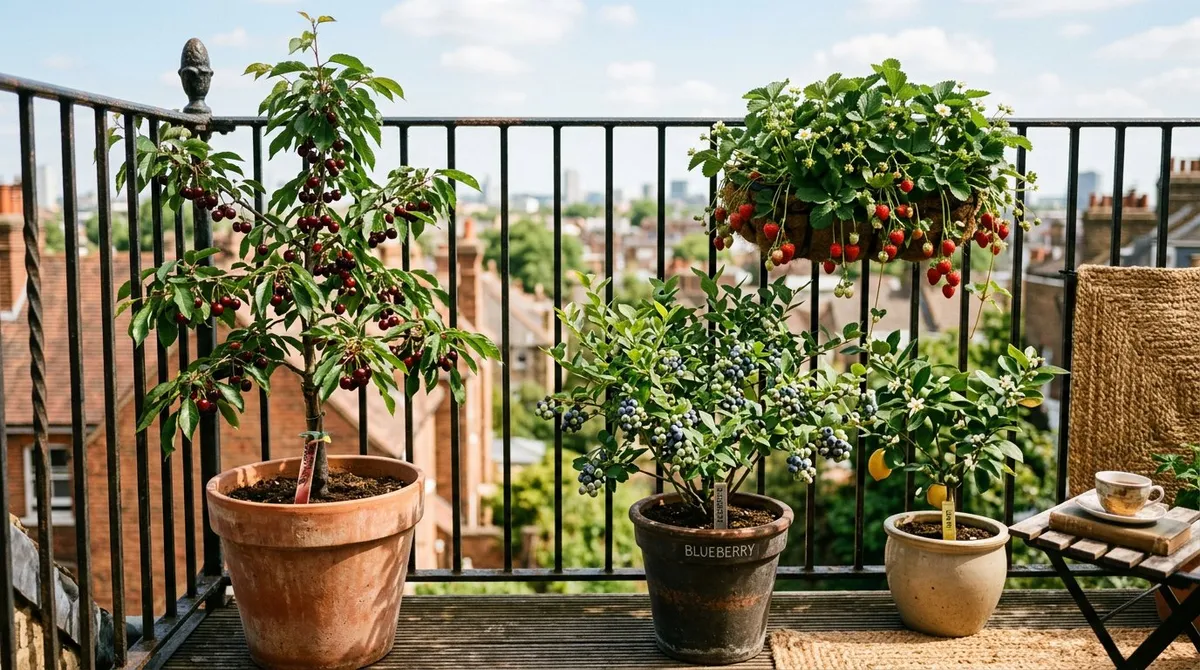
Growing fruit in pots and containers works in any UK outdoor space. A sunny patio, courtyard, balcony, or even a wide doorstep produces genuine harvests of strawberries, blueberries, figs, apples, and more. Container fruit growing suits renters, small gardens, and anyone who wants fresh fruit without committing to a permanent orchard.
The real advantage is control. You choose the compost, adjust the watering, and move tender plants under cover when frost threatens. This guide covers the best fruits for UK containers, pot sizes, compost choices, feeding schedules, and a month-by-month calendar to keep everything on track. For vegetable container advice, see our guide to container vegetable gardening.
Which fruits grow best in pots?
Almost any fruit grows in a container if you pick the right variety and rootstock. Some fruits perform so well in pots that they actually crop better than in open ground. Figs are a perfect example. Restricting their roots in a container forces them to fruit instead of producing endless leafy growth.
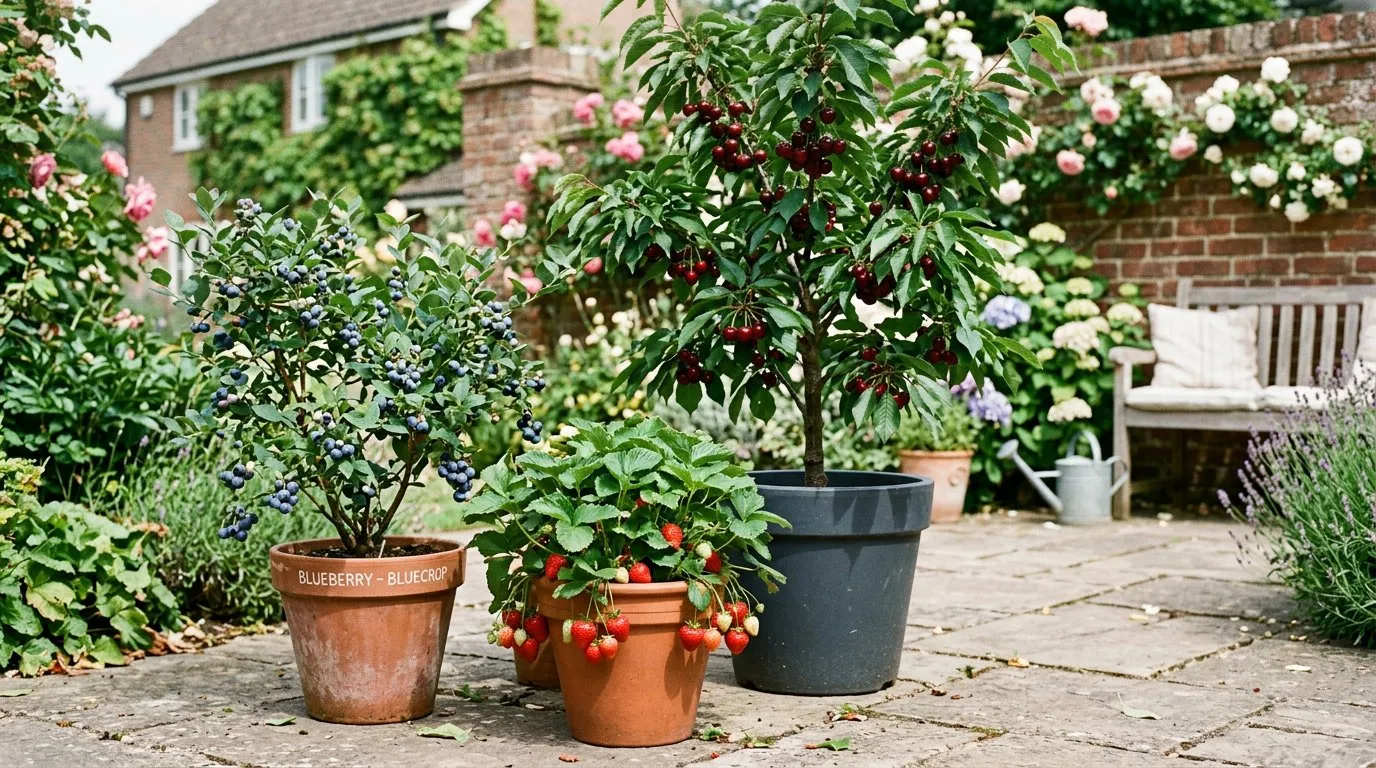 A patio collection of container fruit. Almost any fruit grows well in the right pot.
The best container fruits share a few traits: compact growth, manageable root systems, and reliable cropping in the UK climate. The table below ranks the top options by ease and productivity.
Soft fruit for containers
Strawberries are the easiest starting point. They crop within months of planting, produce 400-600g per plant, and fit into any container from a hanging basket to a window box. Everbearing varieties like Flamenco produce fruit from July through to October.
Blueberries thrive in containers because pots let you fill them with the ericaceous compost these acid-loving shrubs demand. Most UK garden soil is too alkaline. A mature bush in a 40-50 litre pot yields 2-5kg per year.
Redcurrants and gooseberries grow well as cordons in 30cm pots. Cordon training keeps the plant flat against a wall or fence, saving floor space. Both fruits tolerate partial shade, which makes them useful for north-facing walls.
Raspberries suit large containers if you choose autumn-fruiting varieties like Autumn Bliss or Polka. These fruit on current-season canes, so you cut everything to the ground in February. No complicated pruning. Summer-fruiting types need support structures that get unwieldy in pots.
Tree fruit for containers
Figs are outstanding container trees. Brown Turkey is the most reliable UK variety, producing two flushes of fruit in warm summers. Root restriction in a pot increases fruiting. A 45cm pot is the minimum. Place against a south-facing wall for best results.
Why we recommend Brown Turkey fig in a 45cm terracotta pot against a south-facing wall: After 30 seasons of growing figs in containers, Brown Turkey in terracotta consistently produces the heaviest crops. The pot’s breathability prevents root rot in wet summers. Against a south-facing wall, the reflected heat ripens both the embryonic second-crop fruitlets and the overwintered first-crop buds, plants in this position have yielded over 40 ripe figs per season in good years.
Dwarf apple trees on M27 rootstock grow to just 1.5-2 metres tall. They need a pollination partner, so plant two different varieties or choose a self-fertile type like Braeburn. A 50cm pot with John Innes No.3 supports a productive tree for years.
Dwarf cherries on Gisela 5 rootstock stay compact at 2-2.5 metres. Stella is self-fertile and produces heavy crops of dark sweet cherries. Net against birds from the moment fruit starts colouring, or they will strip the tree bare overnight.
Dwarf plums on Pixy rootstock grow to 2-3 metres. Victoria is the classic UK choice. Plums are partially self-fertile but crop better with a partner. They flower early, so protect blossom from late frosts with fleece draped over the tree on cold nights.
Citrus trees (lemons, limes, kumquats) grow outdoors on UK patios from May to September but must come indoors before temperatures drop below 5 degrees Celsius. A cool conservatory or bright porch works well overwinter. They need specialist citrus feed and rainwater.
Fruit comparison table
This table compares the top container fruits by pot size, expected yield, and difficulty level. Use it to plan your container fruit collection.
| Fruit | Minimum pot size | Expected yield | Difficulty | Sun needed | Best variety for pots |
|---|---|---|---|---|---|
| Strawberries | 25cm | 400-600g per plant | Easy | Full sun | Flamenco (everbearing) |
| Blueberries | 40cm | 2-5kg per bush | Easy | Full sun | Bluecrop |
| Raspberries (autumn) | 40cm | 1-2kg per pot | Moderate | Full sun | Autumn Bliss |
| Redcurrants | 30cm | 1-3kg per bush | Easy | Sun or part shade | Jonkheer van Tets |
| Gooseberries | 30cm | 2-4kg per bush | Easy | Sun or part shade | Invicta |
| Figs | 45cm | 2-4kg per tree | Easy | Full sun, sheltered | Brown Turkey |
| Dwarf apples (M27) | 50cm | 10-20kg per tree | Moderate | Full sun | Braeburn |
| Dwarf cherries (Gisela 5) | 50cm | 5-10kg per tree | Moderate | Full sun | Stella |
| Dwarf plums (Pixy) | 50cm | 10-15kg per tree | Moderate | Full sun | Victoria |
| Citrus (lemon) | 40cm | 10-20 fruits per tree | Advanced | Full sun + winter indoors | Meyer |
Choosing the right pot
The pot matters as much as the plant. Too small and roots dry out within hours on a hot day. Too heavy and you cannot move it. The wrong material cracks in frost or overheats in sun.
Pot size guide
Soft fruit (strawberries, blueberries, currants, gooseberries) needs pots at least 30cm wide and deep. Bigger is always better. A 40-50 litre pot for blueberries means less frequent watering and more room for root growth.
Tree fruit (apples, cherries, plums, figs) needs pots at least 45-50cm wide. Start young trees in 40cm pots and move up to 50-60cm after two years. The final pot should be the largest you can manage. Weight adds stability in wind.
Pot materials
| Material | Best for | Pros | Cons |
|---|---|---|---|
| Terracotta | Tree fruit | Heavy (stable), breathable, attractive | Frost risk, dries fast, expensive |
| Plastic | Soft fruit | Lightweight, cheap, retains moisture | Heats up, less stable in wind |
| Glazed ceramic | Figs, citrus | Attractive, moisture retentive | Heavy, frost risk if unglazed inside |
| Fabric grow bags | Raspberries, strawberries | Air prunes roots, excellent drainage | Dries fast, not attractive, short life |
| Self-watering | Blueberries, strawberries | Built-in reservoir, less daily watering | More expensive, heavier |
Drainage
Every pot needs drainage holes. No exceptions. Place a layer of broken crocks, stones, or polystyrene pieces over the holes to stop compost washing through. Raise pots on pot feet or bricks to allow water to drain freely and air to circulate beneath. Standing water around roots in winter kills more container fruit than cold weather does.
Balcony weight: A 50cm pot of damp John Innes No.3 with a tree weighs 30-40kg. Check your balcony’s load limit before placing heavy containers. For lighter setups, use plastic pots with multipurpose compost and add weight with stones in the base.
Compost and planting
The right compost depends on what you are growing. This is not an area for shortcuts. Using the wrong mix causes slow growth, poor fruiting, or plant death.
Compost types for container fruit
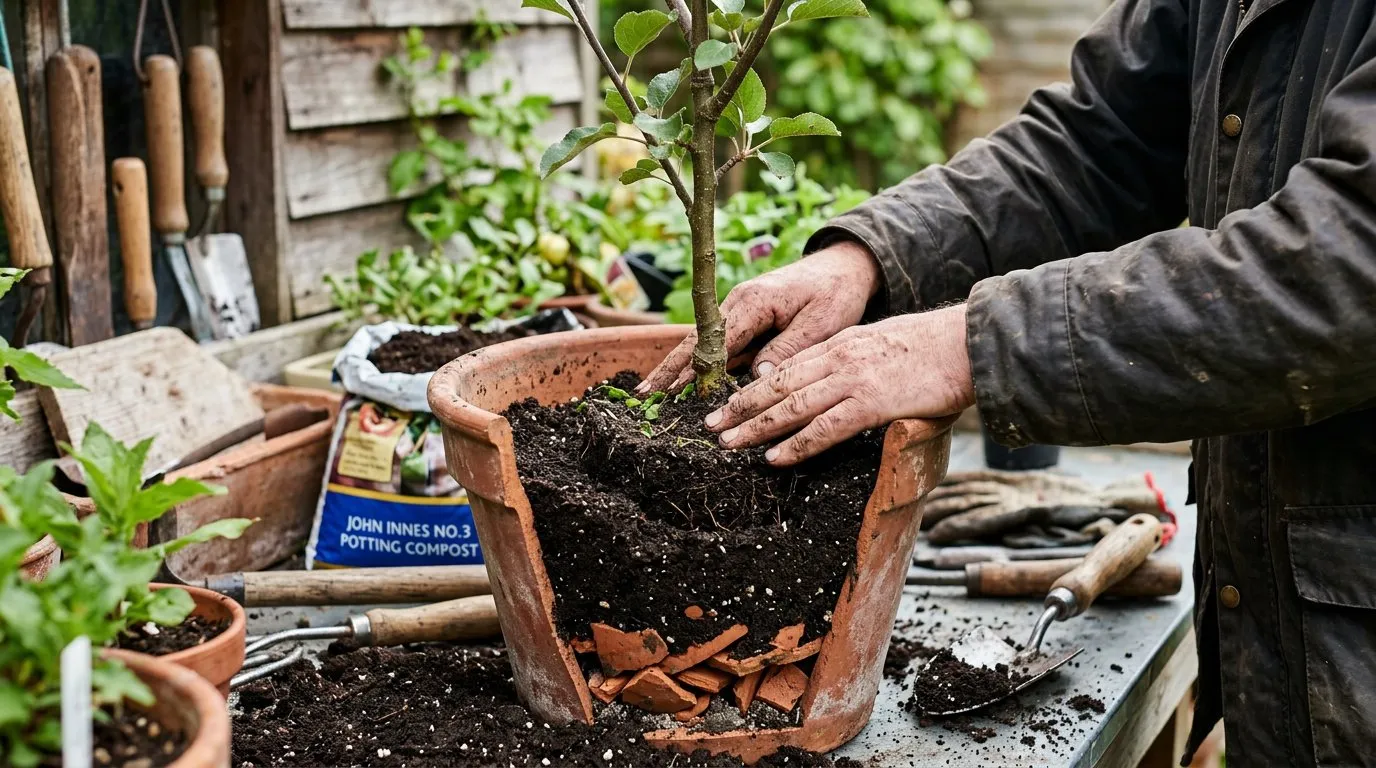 Planting a dwarf fruit tree. Crocks in the base ensure good drainage.
John Innes No.3 is the best choice for tree fruit. The loam content adds weight to stabilise pots in wind. It holds nutrients longer than peat-free multipurpose and does not shrink away from pot edges when it dries. Mix in 20% perlite for extra drainage.
Ericaceous compost is essential for blueberries. These acid-loving plants need a pH of 4.0 to 5.5. Standard compost sits at pH 6.0 to 7.0, which blocks iron absorption and turns leaves yellow within weeks. Water blueberries with rainwater, not tap water. Tap water in hard water areas gradually raises the pH.
Peat-free multipurpose compost works for strawberries, raspberries, currants, and gooseberries. Add slow-release fertiliser granules at planting time. Mix in perlite or grit for drainage.
Planting steps
- Place crocks or stones over drainage holes
- Fill the pot two-thirds with the correct compost
- Position the plant at the same depth it sat in its original pot
- Fill around the roots, firming gently
- Water thoroughly until it drains from the base
- Mulch the surface with bark chips to retain moisture
For bare-root fruit trees, spread the roots out over a mound of compost in the centre of the pot. Do not coil roots around the pot base. Plant between November and March while trees are dormant.
Watering and feeding
Container fruit dries out faster than ground-planted fruit. Roots cannot search deeper for moisture. In summer, this means daily watering for most fruit and twice daily for strawberries in small pots during hot spells.
Watering schedule
Spring (March to May): Water every 2-3 days as growth starts. Increase as temperatures rise and leaf area expands. Keep compost moist but not waterlogged.
Summer (June to August): Water daily. Check in the morning and again in late afternoon during heatwaves. Push a finger 3cm into the compost. If dry, water thoroughly until it runs from drainage holes. Never let pots sit in saucers of standing water.
Autumn (September to November): Reduce gradually as growth slows. Water only when the top 3cm of compost is dry. Excess water in autumn promotes root rot.
Winter (December to February): Water occasionally during dry spells. Dormant trees still need some moisture. Waterlogged compost combined with freezing temperatures kills roots fast.
Self-watering pots reduce the daily routine significantly. They have a reservoir beneath the compost that wicks moisture upward. Top up the reservoir rather than watering the surface. These are particularly useful for blueberries and strawberries, which hate drying out.
Feeding schedule
Container fruit is entirely dependent on you for nutrition. The compost’s built-in nutrients last 4-6 weeks at most.
- March: Apply slow-release granules to the compost surface. A single application feeds steadily for 3-4 months.
- Flowering to harvest: Feed weekly with liquid tomato fertiliser (high in potash). Potash drives flower and fruit production.
- Blueberries: Use specialist ericaceous plant food to avoid raising the pH.
- Citrus: Use dedicated citrus feed year-round, switching to a winter formula when indoors.
Stop liquid feeding after harvest finishes. Late feeding encourages soft new growth that frost damages.
Month-by-month container fruit calendar
This calendar covers the key tasks for potted fruit throughout the year. Timings suit most of England. Northern gardens and Scotland may run 2-3 weeks later in spring.
| Month | Key tasks |
|---|---|
| January | Order bare-root trees and soft fruit plants. Check stored pots for frost damage. Water dormant trees during dry spells. |
| February | Prune apple and cherry trees while dormant. Cut autumn raspberry canes to the ground. Top-dress tree pots with fresh compost. |
| March | Plant bare-root trees and soft fruit. Apply slow-release granules. Start regular watering as buds break. Repot any root-bound plants. |
| April | Protect blossom on plums and cherries with fleece on cold nights. Start liquid feeding once flowers open. Plant strawberry runners. |
| May | Move citrus outdoors after last frost. Increase watering frequency. Thin developing apple fruitlets to one per cluster. |
| June | Begin daily watering. Harvest strawberries. Net cherries against birds. Peg down strawberry runners for new plants. |
| July | Harvest blueberries, cherries, gooseberries, currants. Continue weekly liquid feed. Water twice daily in heatwaves. |
| August | Harvest figs (first flush), plums, autumn raspberries. Summer-prune trained fruit trees. Take softwood cuttings of gooseberries. |
| September | Harvest late apples and autumn raspberries. Reduce watering. Stop liquid feeding. Order new bare-root stock for autumn planting. |
| October | Plant new bare-root trees and soft fruit bushes. Clear fallen fruit to prevent disease. Bring citrus back indoors. |
| November | Wrap pots in bubble wrap or fleece. Move tender plants to sheltered spots. Plant garlic in any spare pots. |
| December | Check winter wrapping is secure. Water during dry spells. Plan next year’s container fruit collection. |
Winter protection for container fruit
Roots in pots freeze faster than roots in the ground. The earth insulates ground-planted trees. A pot offers just a few centimetres of compost between the roots and freezing air. Temperatures below minus 5 degrees Celsius damage roots in unprotected containers.
Insulation methods
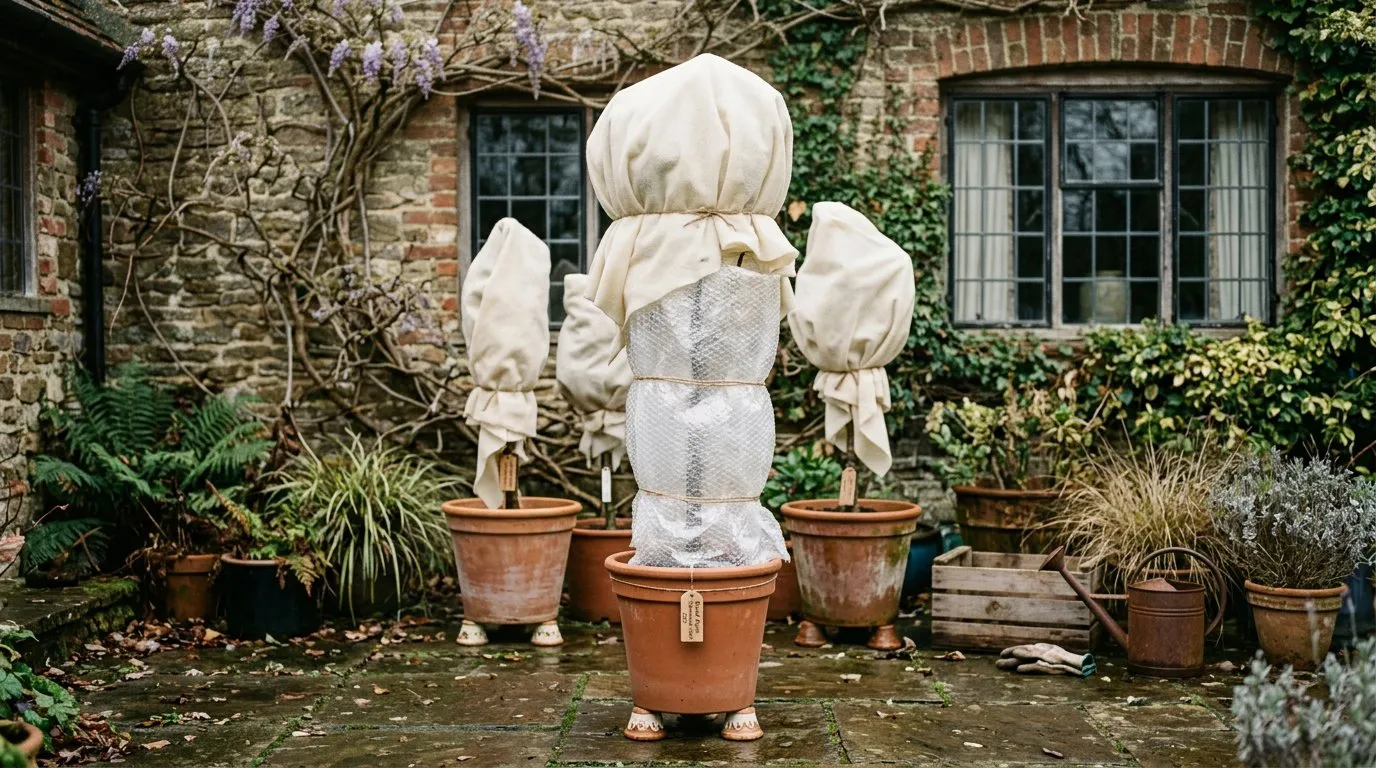 Winter protection for container fruit. Insulate pots to prevent root freeze.
Bubble wrap is the cheapest and most effective option. Wrap it around the outside of the pot, leaving the top open for rain. Secure with string or tape. This adds several degrees of insulation on the coldest nights.
Horticultural fleece wrapped around both pot and lower branches protects against wind chill and light frosts. Double-layer for harsh areas. Remove during mild spells to prevent overheating and fungal problems.
Grouping pots together against a south-facing wall makes a sheltered microclimate. The thermal mass of the wall radiates heat overnight. Pots on the outside protect those in the centre. This simple step reduces frost damage across the whole collection.
Moving under cover
The mobility of container fruit is one of its biggest advantages. Move citrus indoors to a cool conservatory or bright porch before temperatures drop below 5 degrees Celsius. Move figs to a sheltered spot against a wall. Tender or young plants benefit from an unheated greenhouse or cold frame.
Avoid heated rooms for overwintering fruit trees. They need a cold dormancy period to fruit properly the following year. A cool, bright spot between 2 and 10 degrees Celsius is ideal for most temperate fruit.
Repotting and root pruning
Container fruit needs repotting every 2-3 years. Without it, roots become pot-bound, compost loses its structure, and nutrients run out. The signs are obvious: water running straight through without being absorbed, roots circling the pot base, and declining fruit production.
How to repot
- Wait until winter dormancy (November to February) for tree fruit
- Tip the tree out of its pot and shake off loose compost
- Trim the outer third of the root ball with clean secateurs
- Remove any circling or dead roots
- Repot into the same container with fresh compost (or size up if the tree needs more room)
- Water thoroughly and mulch the surface
Root pruning sounds drastic but it stimulates fresh fibrous root growth. These young roots absorb water and nutrients more efficiently than old woody roots. The RHS recommends root pruning as standard practice for long-term container trees.
For soft fruit like blueberries and currants, repot into a slightly larger container each time. Once the pot reaches 50-60cm, switch to root pruning and compost replacement in the same pot.
Common mistakes with container fruit
Avoid these pitfalls and your potted fruit will crop reliably for years.
Pots too small
This is the most common mistake. A dwarf apple in a 30cm pot dries out by midday in summer and has nowhere to anchor its roots. Start with the minimum sizes in the comparison table and size up as the plant grows. Bigger pots are always better for fruit.
Wrong compost for blueberries
Standard multipurpose compost kills blueberries within a season. They need ericaceous compost at pH 4.0 to 5.5. If the leaves turn yellow between the veins, the pH is too high. Test with a simple pH kit and switch to ericaceous immediately. Water with rainwater, not alkaline tap water.
Forgetting to feed
Container compost contains limited nutrients that deplete within weeks under heavy cropping. Fruit trees and bushes in pots cannot send roots out to find more. Without weekly liquid feeding during fruiting, you get small, sparse, tasteless fruit. Treat feeding as non-negotiable from flowering through to harvest.
No winter protection
One hard frost kills the roots of a tree that survived five mild winters in the same pot. Wrapping pots takes ten minutes in November and saves years of growing. Bubble wrap, fleece, or moving pots to a sheltered wall all work. Do this every year without exception.
Skipping drainage
Pots without drainage holes, or pots standing in saucers of water, cause root rot. This happens slowly and invisibly until the plant collapses. Every pot needs holes. Every pot needs raising on feet or bricks. Remove saucers in autumn and winter entirely.
Where to grow container fruit
Container fruit suits any outdoor space that gets sufficient sunlight. Most fruit needs at least 6 hours of direct sun daily. A few exceptions (currants, gooseberries) tolerate partial shade.
Patios and courtyards
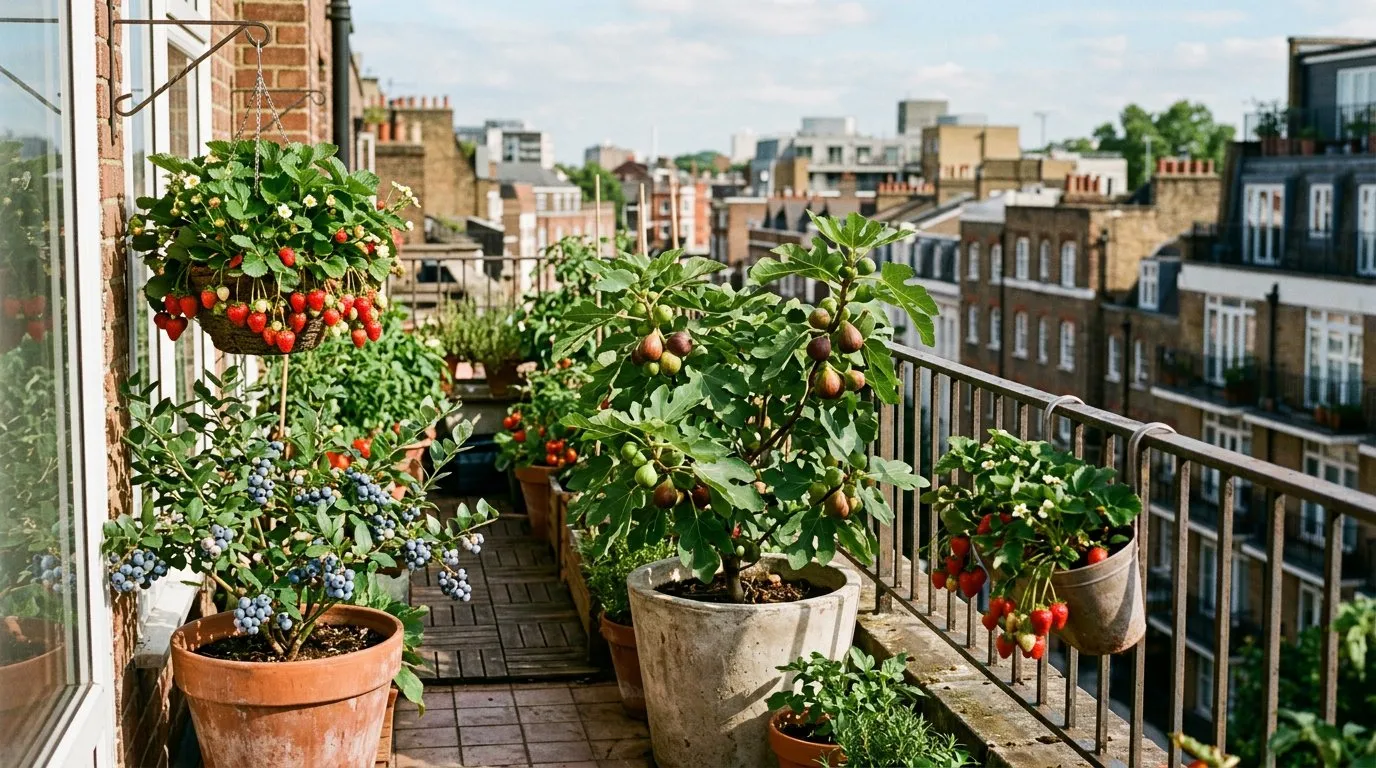 Container fruit on a balcony. Ideal for renters and those without garden soil.
The classic setting. South or west-facing patios get the most sun and warmth. Place tree fruit at the back against walls (which radiate stored heat) and soft fruit in front. Group pots for visual impact and to create a sheltered microclimate. Hard surfaces reflect heat upward, which ripens fruit faster.
Balconies
Check weight limits before placing large pots. Use lightweight plastic containers with multipurpose compost for a lighter setup. Strawberries in hanging planters and blueberries in self-watering pots work well without excessive weight. Shelter from wind is critical at height. A trellis or windbreak screen helps enormously.
Rental gardens
Container fruit is portable. When you move, the fruit collection comes with you. This makes pots the only practical option for renters who want to grow fruit without altering the property. Choose lightweight pots for easier transport. For more ideas on making the most of small outdoor areas, see our small garden design guide.
North-facing spaces
Options are limited but not zero. Gooseberries, redcurrants, and Morello cherries (a cooking cherry) tolerate north-facing walls. They fruit less heavily than in full sun but still produce worthwhile crops. Avoid all other tree fruit and strawberries in shade.
Getting started with container fruit
If you are new to growing fruit in pots, start with strawberries and one blueberry bush. Both are forgiving, productive, and crop in their first year. Add a fig tree or dwarf apple once you have the watering routine established.
A south-facing patio with 4-6 containers of mixed fruit produces genuine harvests from June through October. The investment is modest. A bag of compost, a few pots, and some bare-root plants cost under thirty pounds and crop for years. The Garden Organic guide to container fruit has further advice on organic growing methods.
For those with garden beds available, our guides to dwarf fruit trees and growing strawberries cover open-ground planting in detail. Browse all our growing guides for more fruit and vegetable advice throughout the year.
Now you’ve mastered growing fruit in pots, read our guide on container vegetable gardening for the next step.
Lawrie has been gardening in the West Midlands for over 30 years. He grows his own veg using no-dig methods, keeps a wildlife-friendly garden, and writes practical advice based on real UK growing conditions.