What to Plant in May in the UK
What to sow and plant in May across UK gardens. Vegetables, flowers, herbs, and fruit for greenhouse and outdoor beds, with regional timing.
Key takeaways
- Plant out tender crops after the last frost: typically 15-25 May in the south
- Direct sow runner beans, French beans, and sweetcorn outdoors from late May
- Continue successional sowings of lettuce, radish, and beetroot every 2-3 weeks
- Earth up all potato varieties as shoots reach 15-20cm tall
- Plant summer bedding, dahlias, and hanging baskets after the last frost
- Harden off all indoor-raised plants over 10-14 days before planting out
May is the month everything comes together in UK gardens. The weeks of indoor sowing, careful watering, and patient waiting finally pay off as tender crops move outdoors for the first time. More plants go into the ground in May than in any other month.
The critical date is the last frost, which typically falls between 15-25 May in southern England and late May to early June in the north. Until that date passes, every tender plant stays under cover. After it passes, the garden fills up fast. This guide covers everything you can sow, plant, and grow in May. It follows on from our April planting guide and connects to what to plant in June.
Planting out tender crops
The biggest May job is moving indoor-raised plants outdoors. Everything sown in March and April on windowsills and in greenhouses is now ready to go.
Hardening off
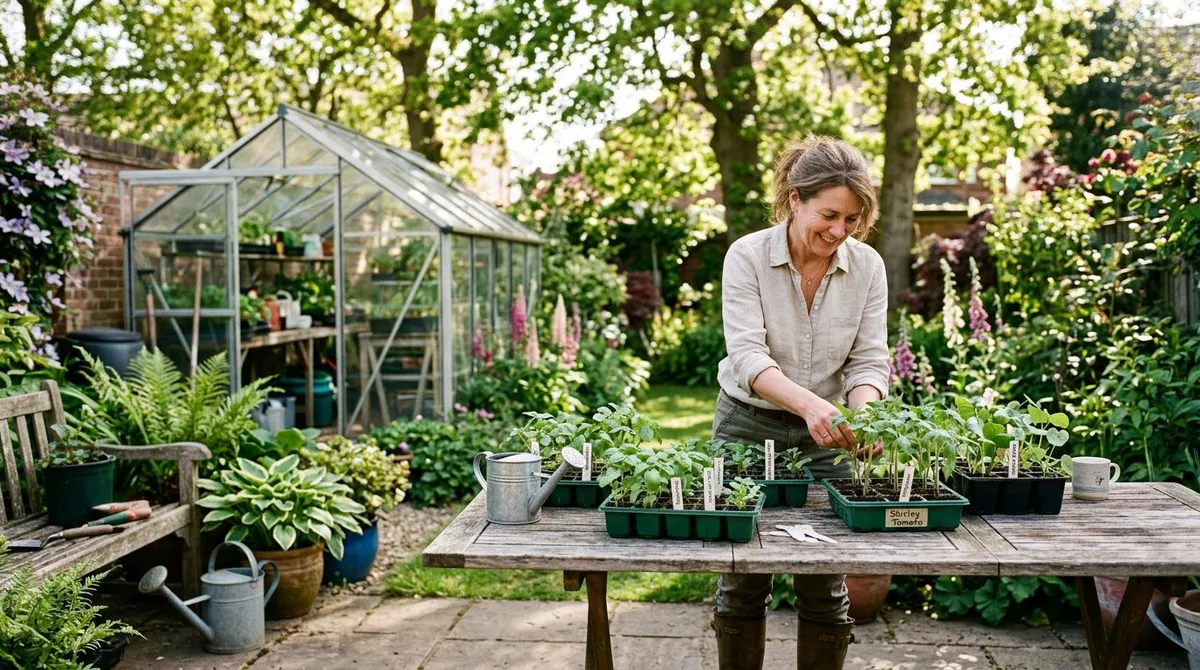
Before planting out, every indoor-raised plant needs hardening off. This is the 10-14 day process of gradually acclimatising plants to outdoor conditions. Move them outside for a few hours on the first day, increasing the time daily. Bring them back inside each night for the first week. By day 10, leave them out overnight if no frost is forecast.
Skipping hardening off causes transplant shock. Leaves scorch, growth stalls for weeks, and yields suffer. The temperature difference between a 20C windowsill and a 5C May night is severe. Our guide on how to sow seeds indoors covers the full hardening off process.
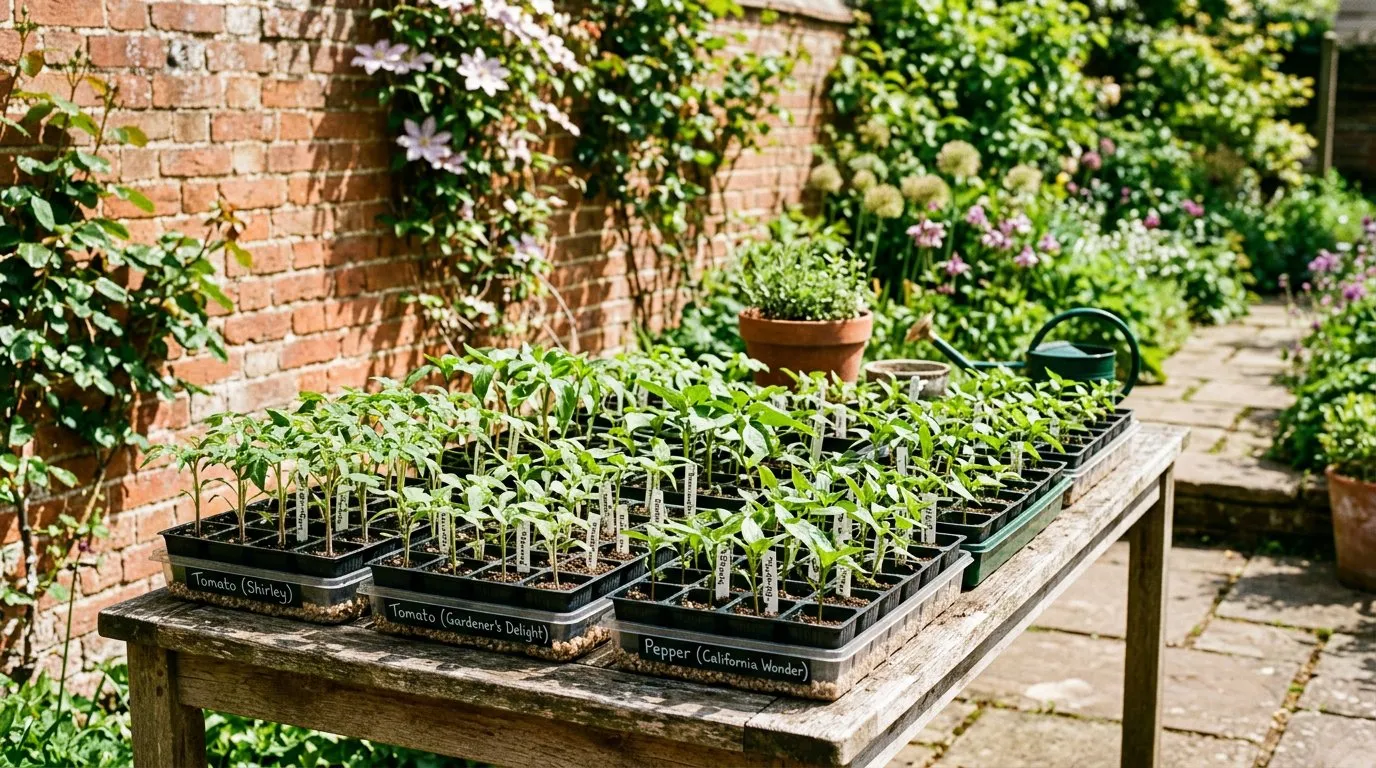 Hardening off tender seedlings in May. Gradually increase outdoor exposure over 10-14 days before planting out.
Tomatoes
Plant tomatoes outdoors from the last week of May in southern England. Greenhouse tomatoes can go in from late April. Space plants 45cm apart in rich soil. Drive a sturdy cane beside each plant at planting time. Tomatoes are heavy feeders. Add a generous handful of blood, fish, and bone meal to each planting hole. For detailed timing by region, see our guide on when to plant tomatoes.
Why we recommend Gardener’s Delight cherry tomato for first-time outdoor growers: After 30 years of growing tomatoes in UK conditions, Gardener’s Delight consistently outperforms beefsteak and plum varieties for outdoor reliability. It ripens 3-4 weeks earlier than large-fruited types, tolerates cool nights better than most outdoor varieties, and produces trusses of 8-12 sweet fruits from late July until the first frosts. On a good year in southern England, a single well-fed plant yields 3-4kg of fruit.
Courgettes and squash
Courgettes are among the most productive garden crops. A single plant yields 15-20 fruits over summer. Plant 90cm apart in soil enriched with compost. Water at the base, not over the leaves, to prevent powdery mildew.
Squash and pumpkins need even more space: 1.5m between plants. Train the vines outward from the planting point. These are hungry, thirsty plants that produce spectacular results when well fed.
Peppers, chillies, and aubergines
These heat-loving crops do best in a greenhouse or against a south-facing wall. Plant out from late May in the warmest, most sheltered spot you have. In northern England and Scotland, greenhouse growing is more reliable for peppers and aubergines.
Cucumbers
Outdoor ridge cucumbers go out in late May. Greenhouse varieties can go in from mid-May in a heated greenhouse. Both types need rich, moisture-retentive soil. Water regularly and feed with a high-potash liquid feed once fruits start forming.
Gardener’s tip: Place a slate or tile under each developing courgette, squash, and cucumber fruit. This keeps them off damp soil, reducing rot and slug damage. It also makes harvesting easier.
Outdoor vegetable sowings
May is the last chance for many first sowings and the month for direct sowing frost-tender crops.
Runner beans and French beans
From late May, sow runner beans and French beans directly outdoors. Runner beans climb 2-3m and need sturdy supports. Set up a wigwam or double row of 2.4m canes before sowing. Sow two seeds per cane position, 5cm deep. Remove the weaker seedling after germination.
French beans are shorter and can be bush or climbing types. Bush varieties like Tendergreen need no support. Sow 5cm deep, 15cm apart in rows 45cm apart.
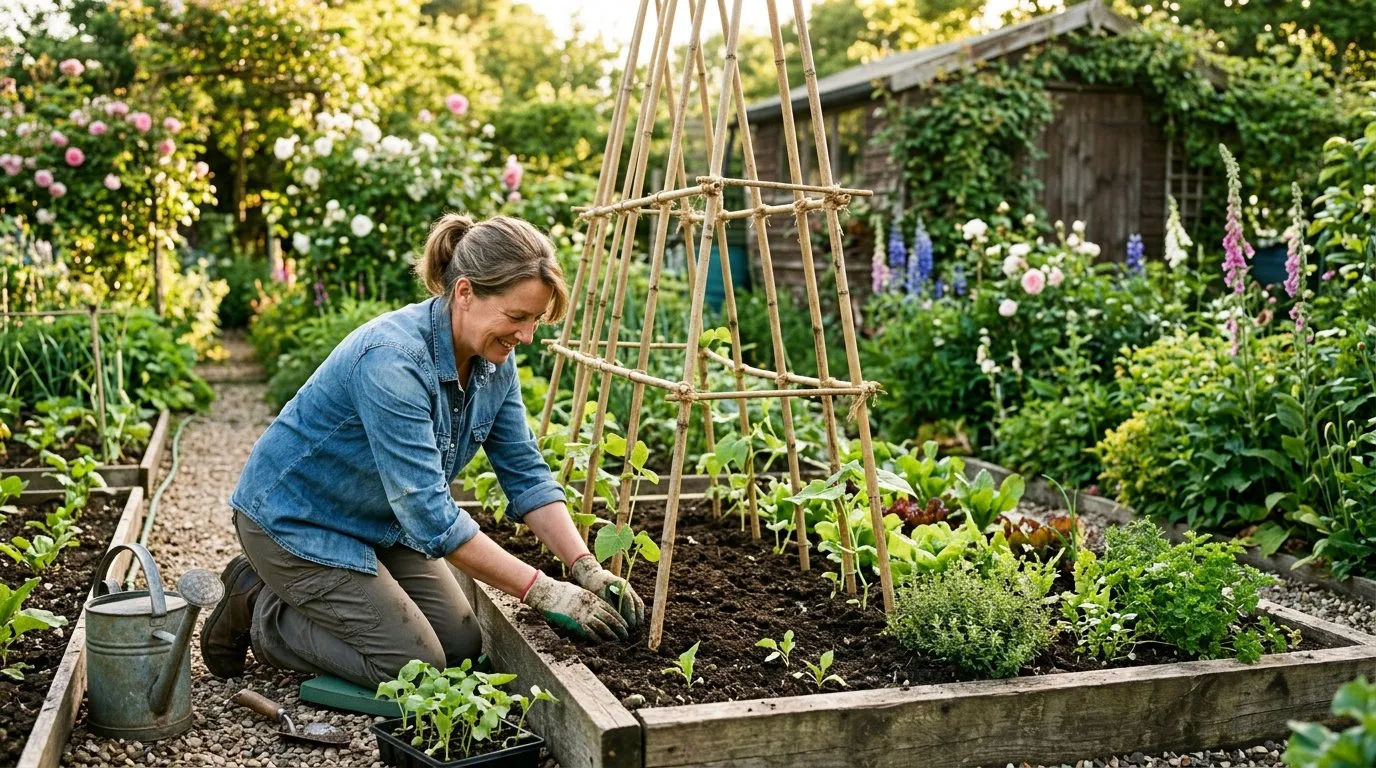 Planting runner beans against a cane wigwam in late May. Each plant winds clockwise around its support.
Sweetcorn
Sow sweetcorn directly outdoors from late May in the south. Plant in blocks of at least 12 plants, not single rows. Sweetcorn is wind-pollinated and blocks ensure better cob fill. Sow two seeds per station, 4cm deep, 35cm apart. Remove the weaker seedling.
Successional sowings
Continue sowing these crops every 2-3 weeks for continuous harvests:
| Crop | Sow depth | Spacing | Weeks to harvest |
|---|---|---|---|
| Lettuce | 1cm | 25cm | 4-8 weeks |
| Radish | 1cm | 3cm | 4-6 weeks |
| Beetroot | 3cm | 10cm | 8-12 weeks |
| Spring onions | 1cm | 1cm | 8-10 weeks |
| Carrots | 1cm | 5cm | 10-16 weeks |
| Spinach | 2cm | 15cm | 6-8 weeks |
Late sowings
May is the last month to sow peas for a reasonable crop. Late-sown peas flower in the heat of July and August, which reduces yields. Choose quick-maturing varieties like Kelvedon Wonder.
Sow turnips and swede in May for autumn and winter harvests. Both are brassicas and prefer cooler growing conditions, so they bulk up well through autumn.
Warning: Watch for flea beetle on newly sown turnips and radish. These tiny black beetles leave small round holes in the leaves. Cover seedlings with fleece immediately after sowing to prevent damage. Established plants tolerate some flea beetle damage without yield loss.
Potatoes
Earthing up
All potato varieties need earthing up in May. When shoots reach 15-20cm tall, draw soil around the stems until only the top few centimetres show. This prevents developing tubers from turning green in sunlight. Green potatoes contain solanine, which is toxic.
Earth up again when the foliage grows through. By the end of May, you should have neat ridges along each row. For the full process, see our potato growing guide.
Watering
Potatoes need consistent moisture, particularly when they start to flower. Flowering signals tuber development. Water deeply once or twice a week rather than little and often. A thorough soaking encourages roots to grow downward, making the plants more drought-resistant.
Flowers to sow and plant in May
May turns gardens with colour as bedding goes out and borders fill up.
Summer bedding
After the last frost, plant out summer bedding: petunias, begonias, geraniums (pelargoniums), lobelia, impatiens, and marigolds. These plants have been raised in greenhouse conditions and cannot tolerate frost. Wait until you are confident the last frost has passed.
Direct sow outdoors
- Sunflowers - sow directly where they will grow, 2cm deep. Giant varieties like Russian Giant reach 3m+. Dwarf types like Sunspot stay at 60cm. For detailed timing, see our sunflower planting guide.
- Nasturtiums - push large seeds 2cm into the soil. They thrive in poor soil and attract aphids away from your vegetables.
- Marigolds (French and African) - sow 1cm deep or plant out nursery-grown plants.
- Night-scented stock - scatter seed for evening fragrance near seating areas.
Dahlias
Plant dahlia tubers in May. They need a sunny, sheltered spot in rich soil. Plant 10-15cm deep with the growing points facing upward. Space 45-60cm apart depending on variety. Stake tall varieties at planting time to avoid damaging tubers later. Protect young shoots from slugs with copper tape or pellets.
Hanging baskets
Prepare hanging baskets in mid-May for planting out after the last frost. Use a mix of trailing plants (lobelia, petunia, bacopa) and upright plants (geraniums, fuchsia) for the best display. Water baskets daily in warm weather. By July, a well-planted basket needs watering twice a day.
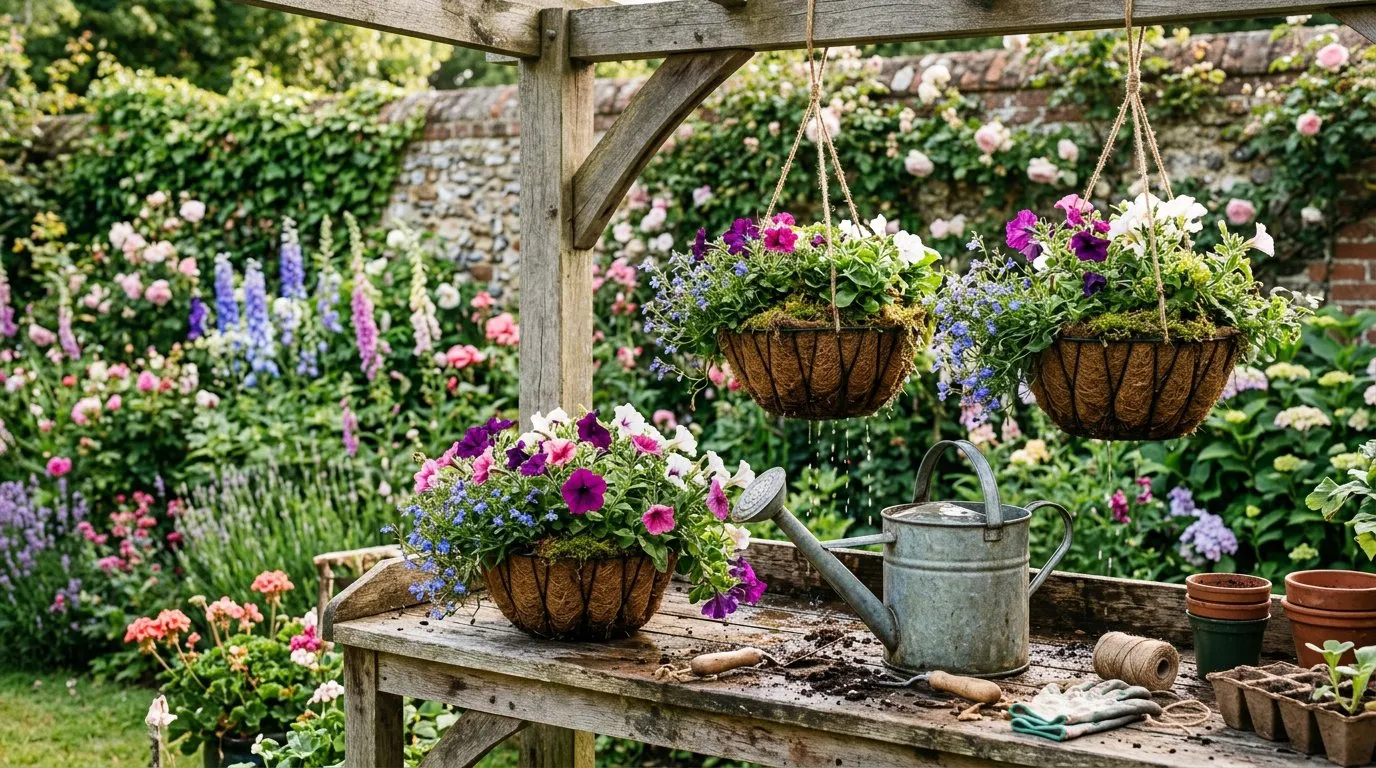 Planting hanging baskets in May. Wait until the last frost has passed before hanging them outdoors permanently.
Perennials
May is an excellent month for planting hardy perennials bought from garden centres. The soil is warm, rain is usually reliable, and plants establish quickly. Consider shade-tolerant options for north-facing borders. Our guide to the best plants for shade covers reliable choices.
Herbs
Plant out
Move all herb seedlings raised indoors to their final positions from mid-May. Basil needs the warmest spot in the garden or a greenhouse. Parsley, coriander, and dill go into any well-drained bed.
Direct sow
Sow basil directly outdoors from late May in sheltered, sunny positions. French tarragon, lemon balm, and mint are best planted as bought plants rather than grown from seed.
Harvesting
Begin harvesting established herbs like chives, mint, and oregano regularly from May. Regular cutting encourages bushy, productive growth. Never strip more than one-third of a plant’s foliage in a single harvest.
Fruit
Strawberries
Strawberry plants set in March or April begin flowering in May. Place straw or fibre mats around the plants to keep developing fruit clean and dry. Net the plants against birds, which take ripe fruit within hours of it colouring. For full growing advice, see our strawberry guide.
Fruit trees
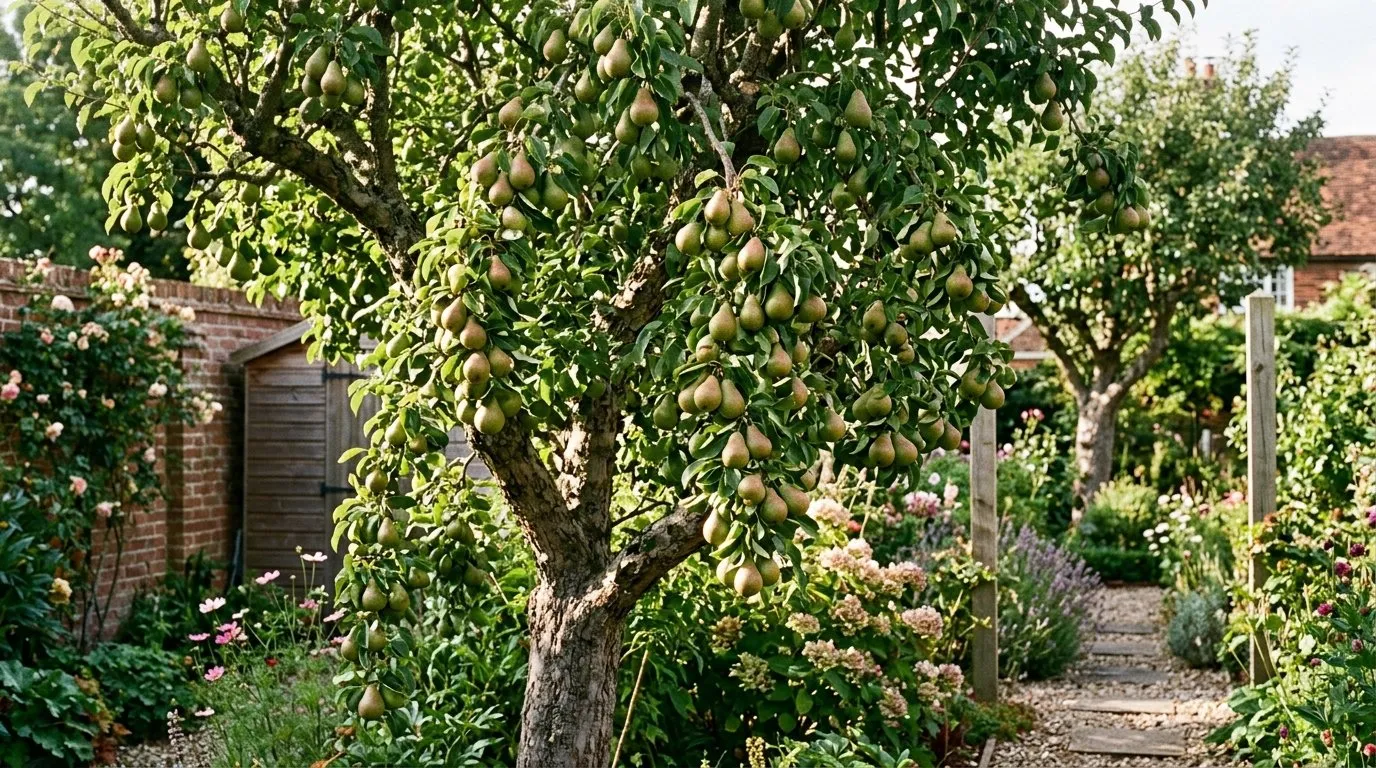
Thin developing apple and pear fruitlets in late May. The June drop (a natural shedding of excess fruit) helps, but manual thinning improves fruit size and quality. Remove the smallest fruitlets, leaving the largest at 10-15cm spacing along the branch.
Soft fruit
Feed all soft fruit (currants, gooseberries, raspberries) with a high-potash fertiliser in May. Mulch around the base with compost to retain moisture through summer. Check for and remove any gooseberry sawfly caterpillars, which strip bushes bare in days.
May planting calendar
| Week | Indoors | Outdoors | Plant out |
|---|---|---|---|
| Week 1 (1-7 May) | Final squash sowings | Peas, salads, beetroot | Maincrop potatoes (north) |
| Week 2 (8-14 May) | Late cucumbers | Carrots, turnips, swede | Gladioli, perennials |
| Week 3 (15-21 May) | - | Runner beans (south), sweetcorn | Tomatoes (south), summer bedding |
| Week 4 (22-31 May) | - | French beans, runner beans | Courgettes, peppers, dahlias |
Common mistakes with May planting
Planting out too early
A warm first week of May tempts gardeners to put tender plants out. But frost can still occur until mid-May in southern England and late May in the north. One night of -1C wipes out an entire season’s work on tomatoes, courgettes, and beans. Check your local forecast every night during the first three weeks of May.
Not hardening off properly
Moving plants directly from a 20C windowsill to the garden is the second biggest May mistake. The temperature shock stalls growth for 2-3 weeks and weakens the plant for the rest of the season. Invest the 10-14 days in proper hardening off. The difference in final yield is dramatic.
Forgetting to water transplants
Newly planted seedlings need daily watering for the first week, then every 2-3 days for the following fortnight. Their root systems are small and cannot reach deep moisture yet. A missed watering day in warm May weather can kill a newly planted courgette overnight.
Overcrowding beds
The temptation is to plant everything close together because the plants look small. They will not stay small. A courgette expands to fill 1m of space. A squash takes 2m. Runner beans shade everything beneath them. Follow the spacing recommendations on the seed packet.
Neglecting weeds
May weeds grow as fast as your crops. Hoeing takes 15 minutes per bed per week. Leaving it two weeks creates an impenetrable carpet of chickweed and fat hen that competes for water and nutrients. Little and often beats one epic weeding session.
Now you’ve mastered May planting, read our guide on what to plant in June for the next step as successional sowing takes over and winter brassica sowing begins.
Frequently asked questions
When can I plant out tomatoes in May UK?
Plant tomatoes outdoors from late May after the last frost. In southern England, the safe date is usually 15-25 May. In the north, wait until late May or early June. Harden off plants for 10-14 days first by gradually increasing their outdoor exposure. Greenhouse tomatoes can go in from late April.
What vegetables can I direct sow in May?
Direct sow runner beans, French beans, and sweetcorn outdoors from late May once frost risk passes. Continue sowing carrots, beetroot, radish, lettuce, spring onions, and spinach. Sow turnips and swede for autumn harvests. Peas can still go in for a late crop though yields drop in hot summer weather.
Is May too late to plant potatoes?
May is fine for second earlies and maincrops. First earlies planted in May still produce a crop but yield less than March-planted ones. Maincrops planted in early May have enough time to mature by September. Avoid planting maincrops after mid-May because they need 18-20 weeks in the ground. See our potato timing guide for regional dates.
When should I plant bedding plants outside?
Plant summer bedding after the last frost, which falls in the last two weeks of May across most of England. Do not be tempted by warm days in early May. Night frosts can still occur until mid to late May. If frost is forecast, cover planted bedding with fleece overnight.
Can I still sow seeds in May?
Yes, May is still prime sowing time for many crops. Runner beans, French beans, and sweetcorn actually perform better from May sowings because the soil is warmer and germination is faster. Salad crops sown in May produce summer harvests in 4-8 weeks. It is not too late to start.
What flowers should I plant in May?
Plant out half-hardy annuals like cosmos, zinnias, and dahlias after the last frost. Direct sow sunflowers, nasturtiums, and marigolds outdoors from mid-May. Plant summer bedding and fill hanging baskets from the third week of May. Continue planting hardy perennials and grasses throughout the month.
Lawrie has been gardening in the West Midlands for over 30 years. He grows his own veg using no-dig methods, keeps a wildlife-friendly garden, and writes practical advice based on real UK growing conditions.