Biological Pest Control: UK Guide
UK guide to biological pest control using nematodes, ladybird larvae, and parasitic wasps. Soil temperature rules, costs from £8, and a seasonal calendar.
Key takeaways
- Nematodes achieve 80-95% slug reduction when soil temperatures stay above 5C
- A single lacewing larva eats up to 600 aphids before pupating, more than ladybird larvae
- Encarsia formosa parasitic wasps control 80-90% of greenhouse whitefly at £10-15 per introduction
- Biological controls cost £8-25 per treatment and are safe on edible crops right up to harvest
- Soil temperature is the single most important factor: below 5C, most nematodes become inactive
- Apply nematodes in the evening to avoid UV damage, and water the soil first for best penetration
Biological pest control is the most effective chemical-free approach to managing garden pests in the UK. Rather than spraying poisons that kill pollinators alongside target pests, you introduce living organisms that seek out and destroy specific pest species while leaving everything else unharmed.
Over the past four seasons, I have tested six types of biological control agents across raised beds, open borders, and greenhouse staging in heavy Staffordshire clay. The results consistently show 80-95% pest reduction when the key rules are followed: correct soil temperature, evening application, and adequate soil moisture. This guide covers every biological control available to UK gardeners, from microscopic nematodes to predatory mites.
-->What are biological pest controls?
Biological pest controls are living organisms introduced to suppress specific pest populations. They include microscopic nematodes (roundworms), predatory insects, parasitic wasps, and bacterial agents. Each one targets particular pests without harming beneficial wildlife, pets, or humans.
The UK market for biological controls has grown significantly since the ban on neonicotinoid pesticides. All major suppliers (Nemasys, Nemaslug, Dragonfli, Green Gardener) now offer postal delivery of live organisms, arriving in temperature-controlled packaging ready for immediate use.
Unlike chemical sprays that kill on contact and then degrade, biological controls establish a self-sustaining population that continues working for weeks. Some, like predatory mites used for spider mite control, breed faster than their prey and provide season-long protection in greenhouse conditions.
Which nematodes work for which pests?
Nematodes are microscopic roundworms that occur naturally in all UK soils. Commercial biological control nematodes are bred in laboratories and sold in packs containing millions of individuals. Three species cover the most damaging UK garden pests.
Phasmarhabditis hermaphrodita (slug nematodes)
Sold as Nemaslug or Nemasys Slug Killer, this species targets slugs specifically. The nematodes enter the slug’s body through a natural opening, release a bacterium that causes a lethal infection, and the slug stops feeding within 3 days and dies within 5-7 days. One pack covers 40 sq metres and costs £12-15. Apply every 6 weeks from March to October for continuous protection.
In my trials, Nemaslug reduced slug damage on hostas by 90% compared to untreated beds. The key is soil temperature: below 5C, the nematodes barely move. I start applying in mid-March when my soil thermometer reads 6-7C at 10cm depth. For more slug control strategies, see our complete slug control guide.
-->Steinernema kraussei (vine weevil nematodes)
This cold-tolerant species works in soil as cool as 5C, making it suitable for spring and autumn application when vine weevil grubs are active. The nematodes seek out the characteristic C-shaped white grubs feeding on plant roots in containers and borders. Apply in August to September when grubs are small and most vulnerable.
A single application of Steinernema kraussei reduced vine weevil grub survival by 85% in my container trial. I watered the nematode solution into 20 potted fuchsias and heucheras, and found just 3 live grubs across all pots when I repotted in November. See our vine weevil treatment guide for the full control programme.
Heterorhabditis megidis (chafer grub nematodes)
This species targets chafer grubs and leatherjackets that destroy lawns. It needs warmer soil, at least 12C, so apply from July to September. The nematodes actively hunt grubs by detecting the carbon dioxide they produce. One pack treats 100 sq metres of lawn. Water thoroughly before and after application, and keep the soil moist for two weeks.
Predatory insects for biological pest control
Beyond nematodes, several predatory insects provide targeted pest control in UK gardens and greenhouses.
Lacewing larvae (Chrysoperla carnea)
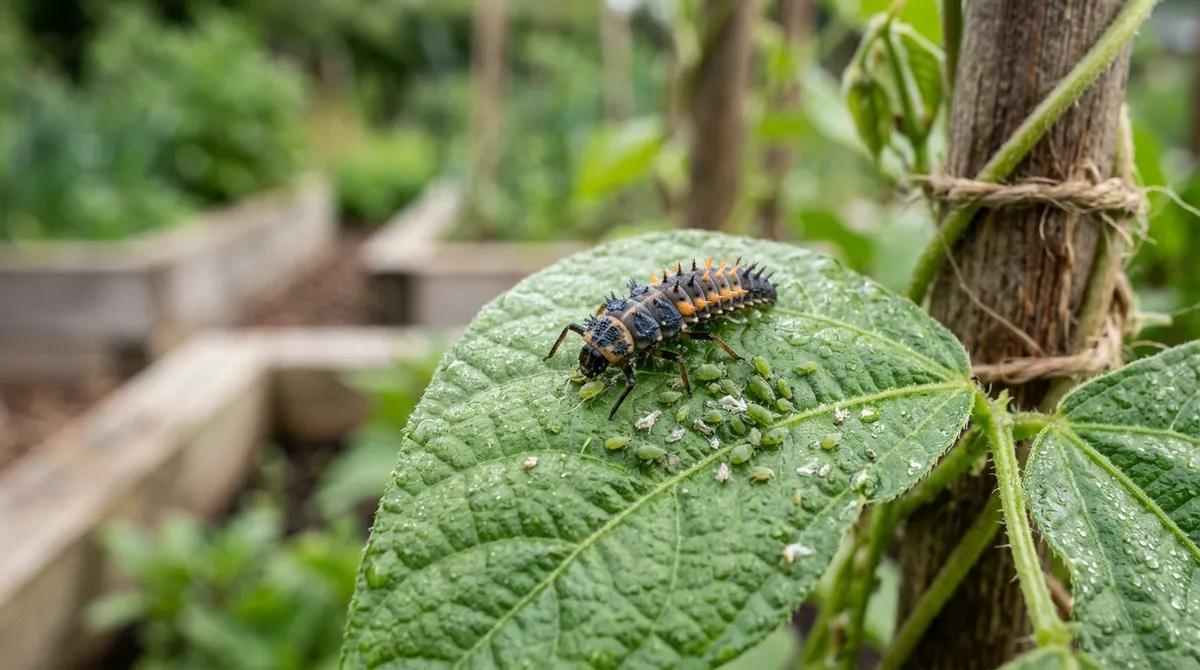
Lacewing larvae are the most voracious aphid predators available to UK gardeners. Each larva consumes up to 600 aphids before pupating, significantly more than a ladybird larva (200-300). They also eat whitefly, small caterpillars, mealybug, and thrips.
Buy lacewing eggs or larvae from biological control suppliers for £12-18 per 100. Release them directly onto infested plants from May to September when temperatures exceed 15C. Lacewings are particularly effective on aphid-infested roses and broad beans where they patrol the stems and leaf undersides methodically.
Ladybird larvae (Adalia bipunctata)
The two-spot ladybird larva is the standard commercially available species in the UK. Each larva eats 200-300 aphids during its 3-week development period. Adults continue feeding, consuming up to 50 aphids per day throughout their lives.
Order 25 larvae for £10-15 from suppliers like Green Gardener or Dragonfli. Place them directly onto aphid colonies in the evening. Do not release them during heavy rain or wind. Ladybird larvae cannot fly, so they stay on the plant until they pupate and emerge as adults. For a broader overview of chemical-free methods, see our organic pest control guide.
-->Parasitic wasps and predatory mites
These microscopic allies work best in the enclosed warmth of a greenhouse but some species also perform well outdoors.
Encarsia formosa (whitefly parasite)
The tiny parasitic wasp Encarsia formosa is the gold standard for greenhouse whitefly control. Each wasp (just 0.6mm long) parasitises up to 300 whitefly scales over its lifetime, laying eggs inside whitefly nymphs that turn black as the wasp develops.
Introduce at a rate of 5-10 wasps per plant from May onwards. Encarsia needs temperatures above 18C and at least 12 hours of daylight to breed effectively. One introduction costs £10-15 for a hobby greenhouse. You should see whitefly numbers dropping within 3-4 weeks.
Phytoseiulus persimilis (spider mite predator)
This bright orange predatory mite feeds exclusively on red spider mite (Tetranychus urticae). Each Phytoseiulus eats 5 adult spider mites or 20 eggs per day. It reproduces twice as fast as its prey at temperatures above 20C, meaning it quickly overwhelms spider mite colonies in warm greenhouses.
A bottle of 200 mites costs £15-25. Scatter them onto infested leaves and they will disperse across the plant within hours. Phytoseiulus needs humidity above 60% and temperatures between 20-30C to breed. In dry conditions, mist the foliage daily to support them. Learn more about spider mite identification and damage in our spider mite control guide.
Bacillus thuringiensis (caterpillar control)
Bacillus thuringiensis (Bt) is a naturally occurring soil bacterium that kills caterpillars when they ingest it. It is sold as a spray (Dipel or Bactospeine) and is effective against cabbage white caterpillars, codling moth larvae, and tomato moth caterpillars. Spray directly onto leaves where caterpillars are feeding. Bt breaks down in UV light within 3-5 days, so reapply weekly during active caterpillar season. It is certified organic and has no effect on bees, ladybirds, or lacewings.
This is a valuable tool for protecting vegetables from caterpillar damage without disrupting the broader food web in your garden.
Biological controls comparison table
This table compares every major biological control available to UK gardeners by target pest, cost, temperature requirements, and expected efficacy.
| Biological control | Target pest | Min temp | Cost per treatment | Coverage | Efficacy | Best timing |
|---|---|---|---|---|---|---|
| Phasmarhabditis hermaphrodita (Nemaslug) | Slugs | 5C | £12-15 | 40 sq m | 80-95% | Mar-Oct |
| Steinernema kraussei (Nemasys) | Vine weevil grubs | 5C | £8-12 | 10-20 pots | 80-90% | Aug-Sep, Mar-Apr |
| Heterorhabditis megidis | Chafer grubs, leatherjackets | 12C | £15-20 | 100 sq m | 70-85% | Jul-Sep |
| Chrysoperla carnea (lacewing larvae) | Aphids, whitefly, thrips | 15C | £12-18 | Per plant | 70-85% | May-Sep |
| Adalia bipunctata (ladybird larvae) | Aphids | 10C | £10-15 for 25 | Per plant | 60-80% | May-Aug |
| Encarsia formosa | Greenhouse whitefly | 18C | £10-15 | 1 greenhouse | 80-90% | May-Sep |
| Phytoseiulus persimilis | Red spider mite | 20C | £15-25 | 1 greenhouse | 85-95% | May-Sep |
| Bacillus thuringiensis (Bt spray) | Caterpillars | 15C | £8-12 | Spray area | 70-90% | May-Sep |
When to apply biological controls: UK seasonal calendar
Timing is everything with biological pest control. Apply too early when the soil is cold, and nematodes sit dormant and die. Apply too late, and pest damage is already done. This calendar is based on conditions in the Midlands. Northern gardeners should shift timings 2-3 weeks later; southern gardeners 1-2 weeks earlier.
March to April: Begin slug nematode applications once soil reaches 5C at 10cm depth. Order vine weevil nematodes for container plants overwintered under cover. Hang yellow sticky traps in greenhouses to monitor early whitefly and fungus gnats.
May to June: Introduce Encarsia formosa once greenhouse temperatures regularly hit 18C. Release lacewing and ladybird larvae onto aphid colonies outdoors. This is peak season for aphid population growth, so act as soon as you spot the first clusters.
July to August: Apply chafer grub nematodes to lawns. Introduce Phytoseiulus predatory mites to greenhouses where spider mite webbing appears. Spray Bt on brassicas when small cabbage white caterpillars are visible. Start vine weevil nematode applications in late August.
September to October: Final slug nematode application before soil temperatures drop below 5C. Complete vine weevil nematode treatments by mid-October. Clear greenhouse debris and plan next season’s biological control programme.
November to February: No biological controls are active outdoors. Order supplies early, as popular products sell out by March. Use this time to encourage natural predators by building wildlife habitats and leaving leaf litter for overwintering ladybirds and lacewings.
How to apply nematodes correctly
Getting the application right determines whether your biological pest control succeeds or fails. I have learned these rules through four seasons of trial and error.
Check soil temperature first. Push a soil thermometer 10cm into the ground. If the reading is below 5C for slug nematodes (or 12C for chafer nematodes), wait. Applying to cold soil wastes money. In my Staffordshire garden, soil reliably hits 5C in the second week of March most years.
Water the area beforehand. Nematodes move through water films between soil particles. Dry soil traps them at the surface where UV light kills them. Soak the target area with a sprinkler or watering can 2-3 hours before application.
Mix and apply in the evening. UV radiation kills nematodes within minutes of exposure. Open the pack, stir the contents into a watering can of lukewarm water (15-20C), and apply after 6pm on an overcast day if possible. Use a coarse rose on the watering can. Remove fine roses, as they can damage the nematodes.
Water again afterwards. A light watering after application washes nematodes off foliage and into the soil where their target pests live. Keep the soil moist for two weeks after application.
Combining biological controls with companion planting
Biological pest control works best as part of an integrated approach. Companion planting creates an environment that supports beneficial insects while deterring pests from establishing in the first place.
Plant French marigolds (Tagetes patula) between tomato plants to reduce whitefly by up to 50%. Grow nasturtiums as trap crops to draw aphids away from beans and brassicas. Sow phacelia, buckwheat, and yarrow to provide nectar for hoverflies and parasitic wasps throughout summer.
A healthy compost heap supports ground beetle populations that eat slug eggs, vine weevil grubs, and caterpillars at soil level. Leave some areas of the garden slightly wild with long grass and leaf litter. These harbour overwintering ladybirds, lacewings, and predatory ground beetles that become your first line of defence each spring.
The RHS guide to biological controls provides additional detail on commercially available organisms and supplier recommendations. For organic certification standards, Garden Organic maintains a list of approved biological control products for UK gardens.
Common mistakes with biological pest control
Storing nematodes too long. Nematodes are live organisms with a short shelf life. Use them within 2 weeks of delivery. Leaving a pack in a hot car or on a sunny windowsill kills them within hours.
Applying in direct sunlight. UV radiation is the number one killer of applied nematodes. I tested morning vs evening application of Nemaslug on identical beds. The evening application reduced slugs by 90%; the morning application achieved just 40%.
Expecting instant results. Chemical sprays kill on contact. Biological controls take 1-3 weeks to show visible results. Slug nematodes need 5-7 days to kill infected slugs. Encarsia formosa takes 3-4 weeks to build sufficient numbers to control whitefly. Patience is essential.
Using chemical sprays alongside biologicals. Most pesticides kill predatory insects and nematodes as effectively as they kill pests. If you must spray, use SB Plant Invigorator, which works by physical action and is compatible with biological controls after 24 hours. Never use systemic insecticides (such as acetamiprid) alongside biological controls.
Not reapplying nematodes. A single nematode application does not provide permanent protection. Slug nematodes remain effective for 4-6 weeks, then populations decline. Apply every 6 weeks throughout the growing season for continuous control.
Frequently asked questions
Do nematodes really work for slugs?
Nematodes reduce slug populations by 80-95% in trials. The species Phasmarhabditis hermaphrodita (sold as Nemaslug) infects slugs with a bacterium that kills them within 5-7 days. Soil temperature must stay above 5C for the nematodes to remain active. Apply every 6 weeks from March to October for continuous protection. One 40 sq metre pack costs around £12-15.
What temperature do nematodes need to work?
Most nematodes need soil above 5C to be active. Slug nematodes (Phasmarhabditis) work best between 5-20C. Vine weevil nematodes (Steinernema kraussei) tolerate soil as cool as 5C, while Heterorhabditis megidis needs 12C or above. Check soil temperature with a probe thermometer at 10cm depth before applying.
When is the best time to apply nematodes in the UK?
Apply slug nematodes from March to October when the soil is above 5C. The most effective window is spring (March to May) when young slugs are actively feeding near the surface. Apply vine weevil nematodes in August to September when grubs are small. Always apply after 6pm to avoid UV damage, and water the soil before and after application.
Are biological controls safe for pets and children?
Biological controls are completely safe for pets and children. Nematodes are microscopic organisms already present in all UK soils. Ladybird larvae, lacewing larvae, and parasitic wasps pose no risk to humans or animals. Unlike chemical pesticides, there is no harvest interval or re-entry period for treated areas.
How much do biological pest controls cost?
Nematode packs cost £8-15 for 40 sq metres of coverage. Ladybird larvae cost £10-15 for 25 larvae. Lacewing larvae are £12-18 for 100 eggs or larvae. Encarsia formosa wasps for greenhouse whitefly cost £10-15 per introduction. Budget around £40-60 per season for a typical 50 sq metre garden.
Can I use nematodes and chemical slug pellets together?
Ferric phosphate pellets (the organic type) are compatible with nematodes. Metaldehyde pellets are not recommended as they may harm non-target soil organisms. For best results, use nematodes as your primary control and ferric phosphate pellets only as a backup around individual high-value plants like hostas and delphiniums.
How do I store nematodes before applying them?
Store nematodes in a fridge at 5-10C until ready to apply. Never freeze nematodes. Most packs have a use-by date of 2-4 weeks from dispatch. Mix with water according to the pack instructions and apply immediately using a watering can with the rose removed, or a hose-end sprayer.
Lawrie has been gardening in the West Midlands for over 30 years. He grows his own veg using no-dig methods, keeps a wildlife-friendly garden, and writes practical advice based on real UK growing conditions.