Key takeaways
- Top-dress in late August to early October when the lawn is still growing
- Mix should be 70% sandy loam, 20% sieved compost, 10% horticultural grit
- Apply 2-3kg per square metre - around 200kg of dressing for a 100sqm lawn
- Always scarify and aerate first - top-dressing on a thatchy lawn just makes it worse
- Work the dressing into the sward with a lute or drag mat - never leave clumps on grass
- Top-dressing pairs with overseeding - both done together produce the best recovery
- Expect 4-6 weeks of slightly tired-looking lawn before the new growth thickens
A top-dressed lawn is what separates a back-garden lawn from a sports-club lawn. The process is straightforward, the materials are cheap, and the results last for years. Most UK gardeners never do it. Most UK gardeners also have lawns with hollows, thatch, and the same density of grass they had when they moved in.
What top-dressing actually does
Top-dressing is the application of a thin layer of soil mix - typically 3-6mm - across the surface of an established lawn. The mix works down into the sward over the following weeks, then becomes part of the lawn’s growing medium.
Five things happen as the dressing settles:
1. Hollows fill in. Most lawns have minor unevenness from settled drains, vehicle ruts, mole damage, or worm activity. Top-dressing levels these out gradually. After 2-3 annual applications, a bumpy lawn becomes flat.
2. New tillering is encouraged. Grass plants respond to a fresh layer of soil at the base of the stem by producing new shoots (tillers). A well-dressed lawn becomes thicker over the following season.
3. Surface drainage improves. Sandy loam mix opens up the surface 1-2cm, helping water move down through the sward instead of pooling on top. Particularly useful on heavy-clay lawns where surface puddling is a recurring problem.
4. Thatch breaks down. The dressing introduces fresh aerobic bacteria and provides surface contact between thatch and active soil microbiology. Thatch decomposes faster.
5. Overseeded grass establishes. When applied with overseeding (the most effective use), the dressing covers seed at the perfect depth and protects it from birds, wind, and surface drying.
What top-dressing does not do: top-dressing alone will not fix compaction (you need to aerate first), bare patches (you need to overseed), or moss (you need to scarify and treat the soil chemistry first). It is the finishing layer of a proper lawn renovation, not a shortcut.
When to top-dress a UK lawn
The window matters more than most amateurs realise.
Best: late August to early October. Soil is warm, grass is growing actively, autumn rain settles the dressing without effort. If you overseed at the same time, germination is reliable. Most professional turf renovation happens in this window.
Acceptable: mid-April to mid-May. Spring window. Cooler soil means slower recovery, but workable. Overseeding still possible but watering may be needed.
Avoid: June to early August. Heat stress on the grass plus dry conditions equals slow recovery and possible scorching of new growth.
Avoid: November to March. Grass is dormant. Dressing sits on the surface and freezes/thaws without integrating. Worm activity may help slowly, but you will not see results until spring.
Avoid: any time the lawn is waterlogged or frozen. Walking on saturated lawn causes compaction. Frozen ground will not absorb the dressing.
The September window is sometimes called “the renovation month” by professional groundsmen. If you do nothing else to your lawn this year, scarify-aerate-overseed-topdress in mid-September and watch what happens by April.
For the broader seasonal picture, our lawn care calendar UK shows how top-dressing fits with the rest of the annual programme.
The right mix for a UK lawn
Top-dressing mix is not topsoil from the garden centre. It is a specific blend designed to flow into the sward without smothering the grass.
Standard mix (most UK lawns):
- 70% sandy loam (a sandy topsoil with low clay content)
- 20% sieved compost (well-rotted, no chunks)
- 10% horticultural grit or sharp sand
For heavy-clay lawns:
- 80% sandy loam
- 10% sieved compost
- 10% horticultural grit
- (Sand component dominates to improve drainage)
For sandy/dry lawns:
- 60% loam (mid-clay, holds moisture better)
- 30% sieved compost
- 10% horticultural grit
- (Compost component dominates to retain moisture)
For shaded lawns:
- 60% loam
- 30% leaf mould
- 10% horticultural grit
- (Leaf mould tolerates the lower light conditions and supports shade-adapted grasses)
The mix needs to be dry and friable. Wet mix clumps, doesn’t flow into the sward, and creates patches. If you mix it yourself, do it on a dry day and store under cover for 24 hours before use.
Sieve everything. The mix must be fine enough to fall between grass blades. Use a 6mm sieve at most. Coarser material sits on the surface and looks terrible.
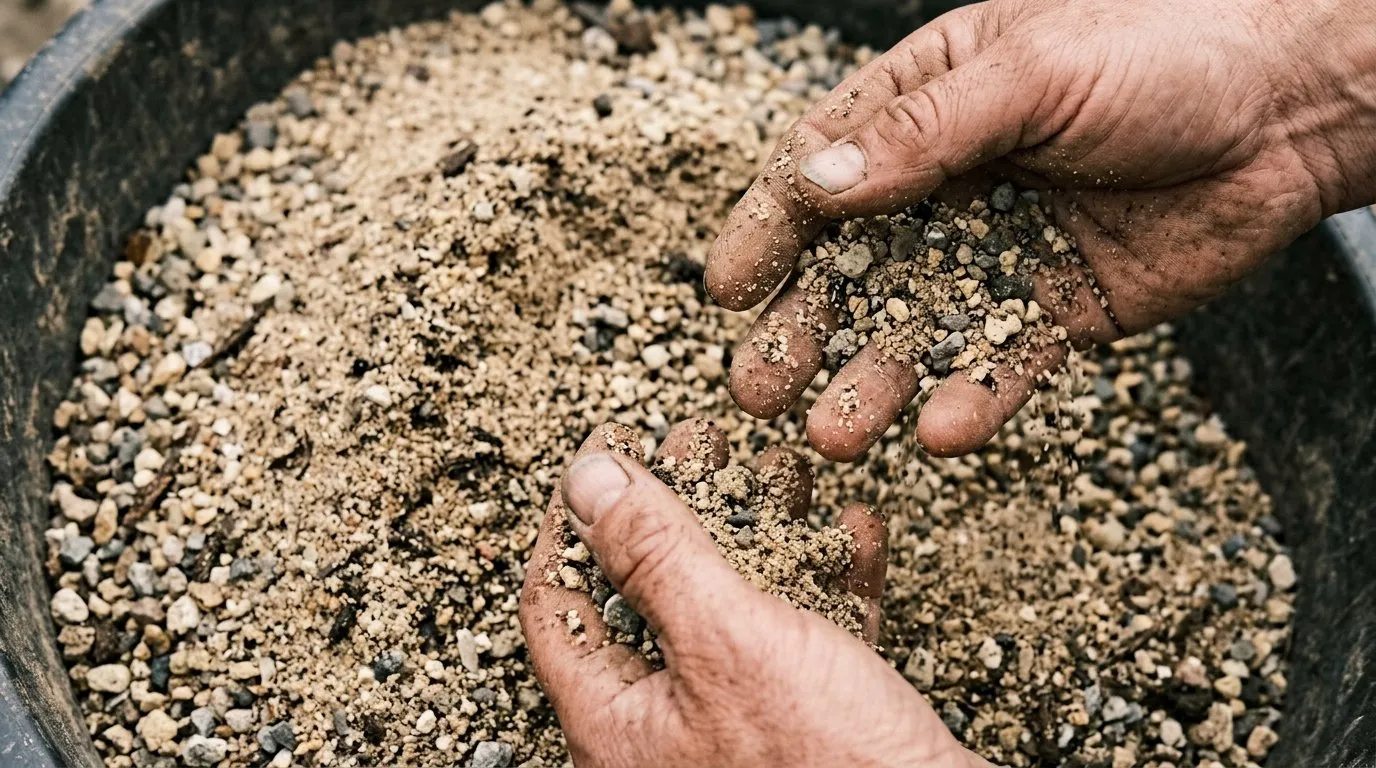 A correctly-blended top-dressing mix is dry, friable, and falls through your fingers like coarse breadcrumbs. Sieve everything to 6mm or finer. Wet, sticky, or chunky mix will not work into the sward and creates uneven patches.
Where to source the mix
Three options, depending on lawn size and how much work you want to do.
1. Bagged from a turf supplier (small lawns, easiest). 25kg bags of pre-blended top-dressing from companies like Rolawn, Bourne Amenity, or Banks Amenity. Around £8-12 per bag. A 100 sqm lawn needs 8-12 bags. Total cost £70-150. Convenient but expensive per unit.
2. Bulk-bag from a builder’s merchant (medium lawns). A 1-tonne bulk bag of sandy loam costs £80-120 delivered. Add 200kg of horticultural grit (£25) and 200kg of sieved compost from your own heap or a council compost site (£15-25). Total around £130-170 for 1.4 tonnes. Enough for a 500-700 sqm lawn.
3. Bulk loose from a turf supplier (large lawns). A 5-tonne load of pre-blended turf-quality top-dressing costs £200-350 delivered. Cheapest per kg but needs space to store and a way to handle it. Best for lawns over 500sqm or for sites with multiple lawns.
A common DIY mix uses 60% by volume of cheap builder’s sand, 30% peat-free compost from the garden centre, and 10% grit. This is workable but the builder’s sand is sometimes too fine (silty) for serious lawn work. Sandy loam from a turf supplier is the better foundation.
How to apply top-dressing
Here is the step-by-step. Total time for a 100 sqm lawn: 3-4 hours including preparation.
Step 1: Mow the lawn short. 25mm cutting height. Shorter than usual but not scalped. Removes excess top growth that would interfere with dressing falling into the sward.
Step 2: Scarify thoroughly. Use a powered scarifier or a spring-tine rake. Pull out moss, dead grass, and surface thatch. Bag the debris. Scarifying with hand tools is slow on anything over 30 sqm; hire a powered scarifier for £25-30 a day.
Step 3: Aerate. Hollow-tine aerator (preferred) or solid-tine fork. Holes should be 75-100mm deep and 100-150mm apart. The hollow tines pull plugs of soil out, which the dressing then fills. Solid-tine fork still works but the soil compresses around the holes rather than coming out.
Step 4: Sweep up tine cores. If you used a hollow-tine aerator, sweep or rake the soil cores off the lawn before dressing. They will rot down on a compost heap.
Step 5: Mix and load the dressing. Have your barrow loaded and ready. Bring extra to the lawn rather than walking back for it.
Step 6: Apply by shovel from a wheelbarrow. Stand at the edge, shovel small portions across the lawn in a sweeping motion. Aim for a thin, even spread. Apply roughly 2kg per square metre - you should still see grass blades through the dressing.
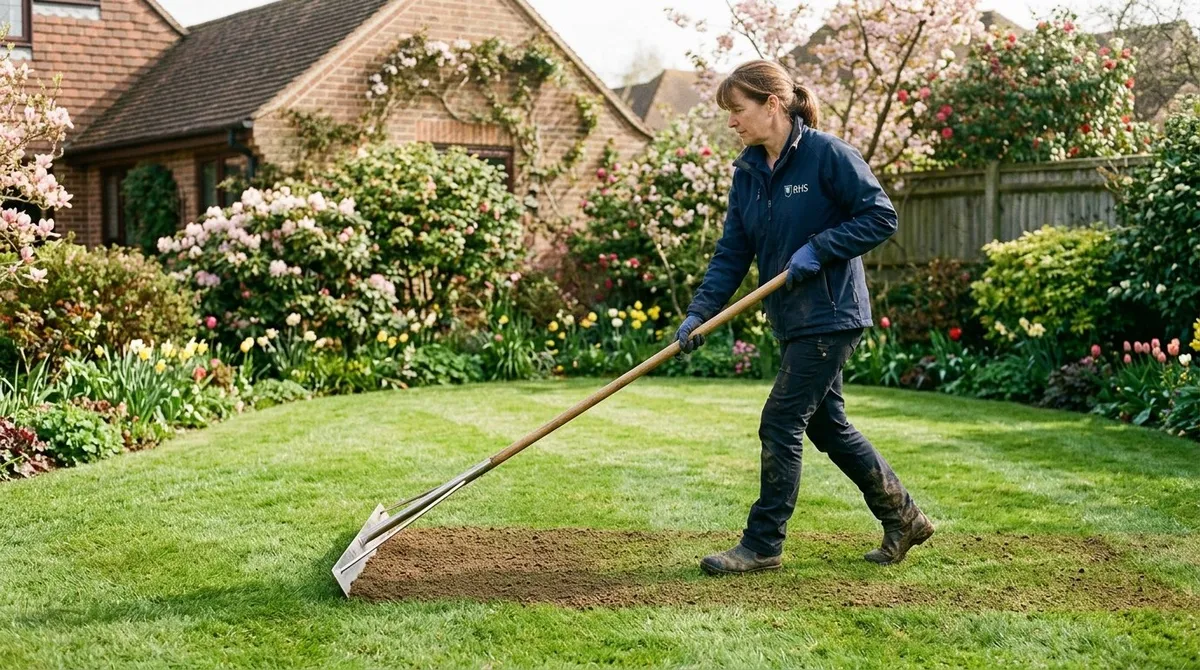
Step 7: Work the dressing in with a lute or drag mat. This is the critical step. A lute is a wide stainless steel rake-like tool that drags the dressing across the lawn surface, working it down between blades. A drag mat (chain-link mat or steel ribbon) does the same job for larger areas. Move in two perpendicular directions to ensure even coverage.
Step 8: Brush off any excess. A stiff yard broom moves any remaining dressing off the leaf surface. The grass should be 70% visible after this step. If the dressing is still smothering blades, you applied too much.
Step 9: Water gently if the ground is dry. Helps the dressing settle into the sward. Skip if rain is forecast within 48 hours.
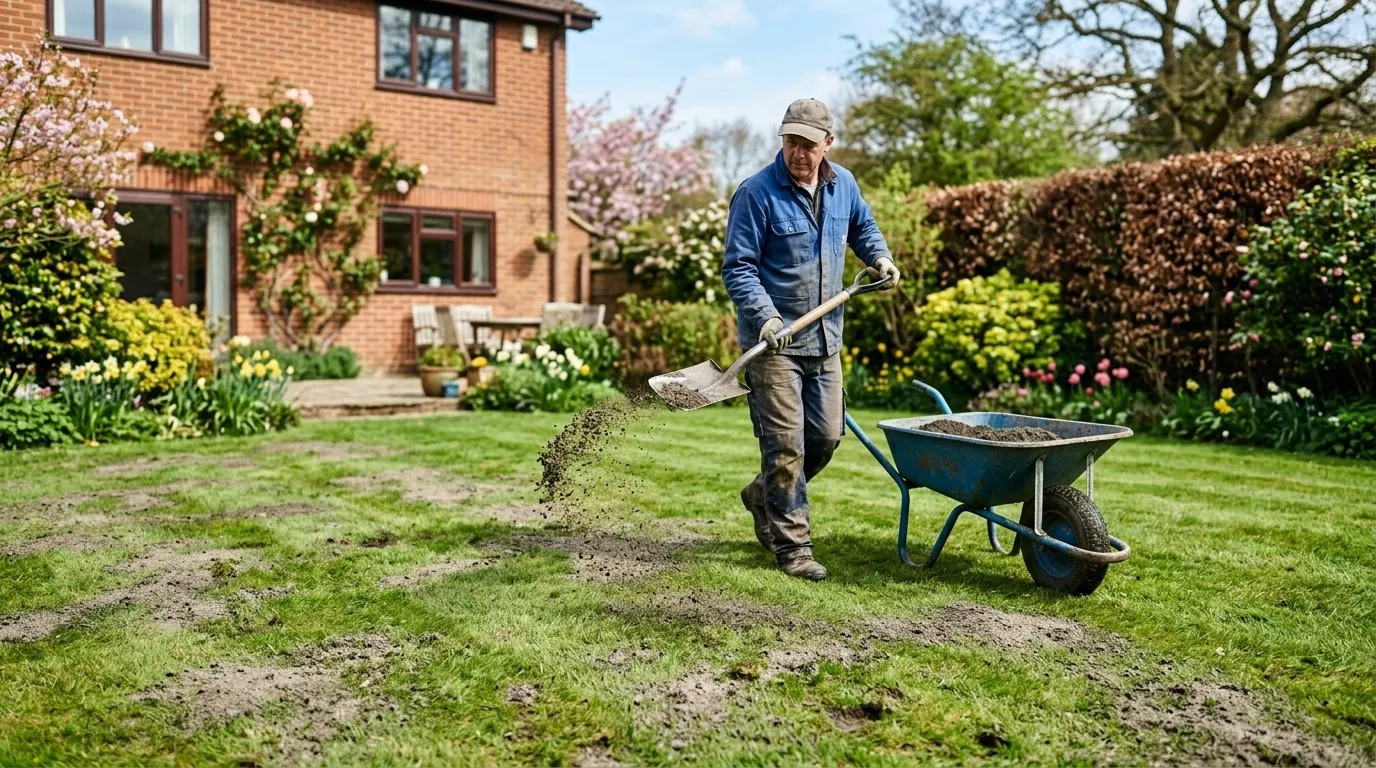 Apply by shovel from a barrow. Sweep small portions across the lawn rather than dropping piles. Aim for 2-3kg per square metre - thin enough that you can still see grass blades through the dressing. Heavy application smothers the lawn and slows recovery.
The lute or drag mat: the make-or-break tool
This is the tool that turns top-dressing from “looks like soil thrown on a lawn” into a professional-grade application.
A lawn lute is a stainless steel rake-shaped tool, 90-120cm wide, with a flat steel blade at the working edge. The blade is run flat across the lawn, dragging the dressing across the surface and working it between grass blades. Cost £80-150 for a quality lute. Available from turf suppliers and some specialist garden tool shops.
A drag mat is a chain-link or steel-ribbon mat dragged across the lawn behind a person or a small ride-on mower. Cheaper than a lute (£40-80) and faster on large lawns. Less precise on small lawns or close to edges.
A stiff yard brush is the budget option. Works for very small lawns but hard work on anything over 30 sqm.
Without one of these tools, top-dressing turns into clumps on the surface that look terrible for weeks and never integrate properly. Hire from tool shops if you do not want to buy.
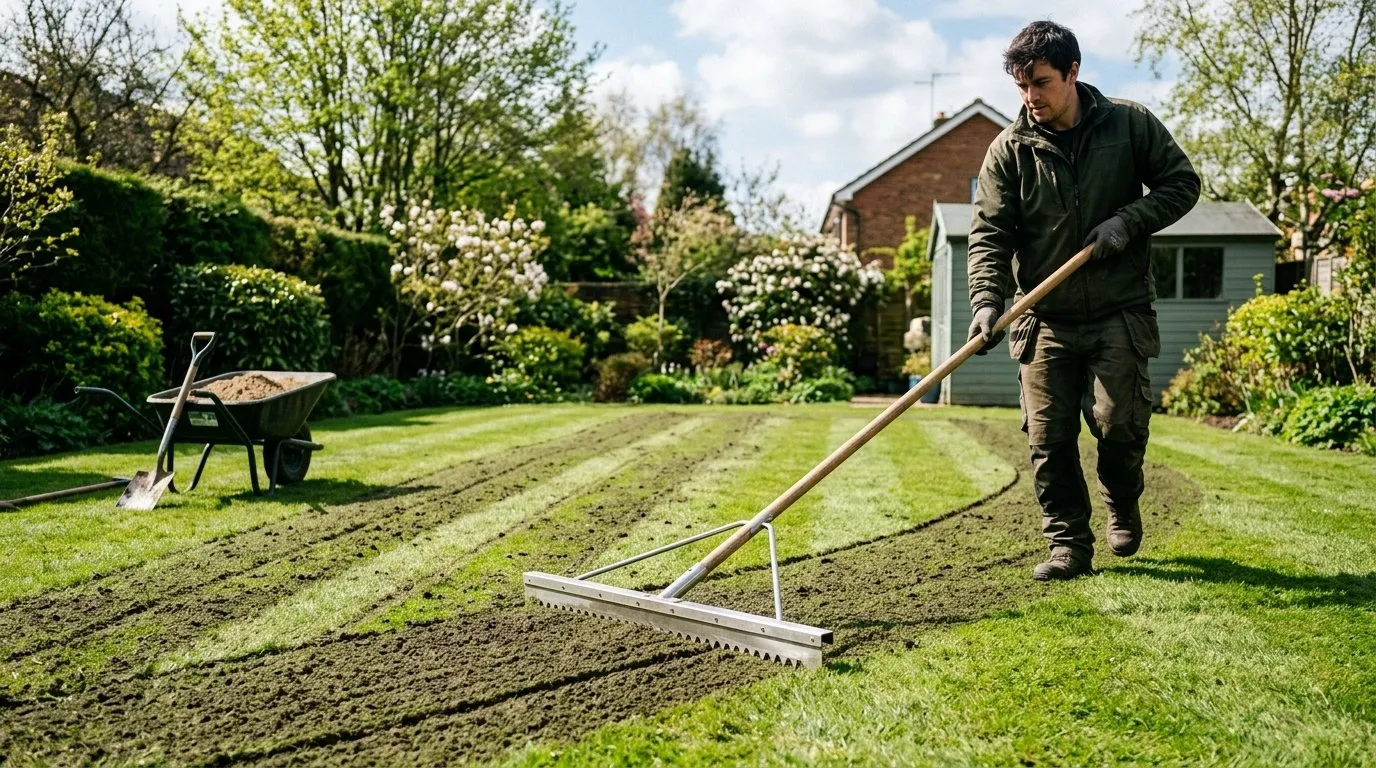 A landscaping lute drags dressing across the lawn surface, working it between grass blades into the soil. Move in two perpendicular directions for even coverage. The lute is the difference between a clean professional finish and clumps of soil sitting on top of the grass.
Combining top-dressing with overseeding
The single most effective lawn-improvement technique is to scarify, aerate, overseed, and top-dress in the same session. Each step amplifies the others.
The combined sequence:
- Mow short (25mm)
- Scarify thoroughly
- Aerate (hollow-tine ideal)
- Sweep up cores and debris
- Sow seed at recommended rate (15-25g per sqm)
- Top-dress with 2-3kg per sqm
- Lute or drag-mat to integrate
- Water gently
The dressing covers the seed at exactly the right depth (3-5mm), protects it from birds, holds moisture during germination, and provides a fresh substrate for the new roots. Germination in 7-14 days at autumn soil temperatures. Full establishment by spring.
This combined treatment can transform a thin, patchy lawn into a thick sward in a single season. Pair with autumn fertilising and the recovery is even faster. Our how to fix a patchy lawn guide covers the seeding side in more detail.
What to expect after dressing
The lawn looks worse before it looks better. Plan for this.
Days 1-7: Lawn looks dusty and slightly grey. Dressing visible if you look closely. Walking on it leaves no marks.
Days 7-14: Dressing has integrated into the sward. Grass returns to mostly green. New seed (if overseeded) starts to germinate.
Weeks 2-4: New growth becomes visible. Existing grass produces new tillers. Dressing has settled.
Weeks 4-6: Lawn looks normal but with slightly fewer hollows. New seed is established.
Months 2-6: Sward thickens visibly. The treatment continues working through autumn and into spring.
Year 2: This is when the benefit becomes obvious. Spring growth is denser, hollows are filled, surface drainage is improved.
Year 3+: Annual top-dressing in autumn maintains the improvement. The lawn becomes self-sustaining at a much higher quality level.
Most amateur top-dressing fails because the gardener applies too much and panics during the days 1-14 phase when the lawn looks tired. Patience is the most important tool.
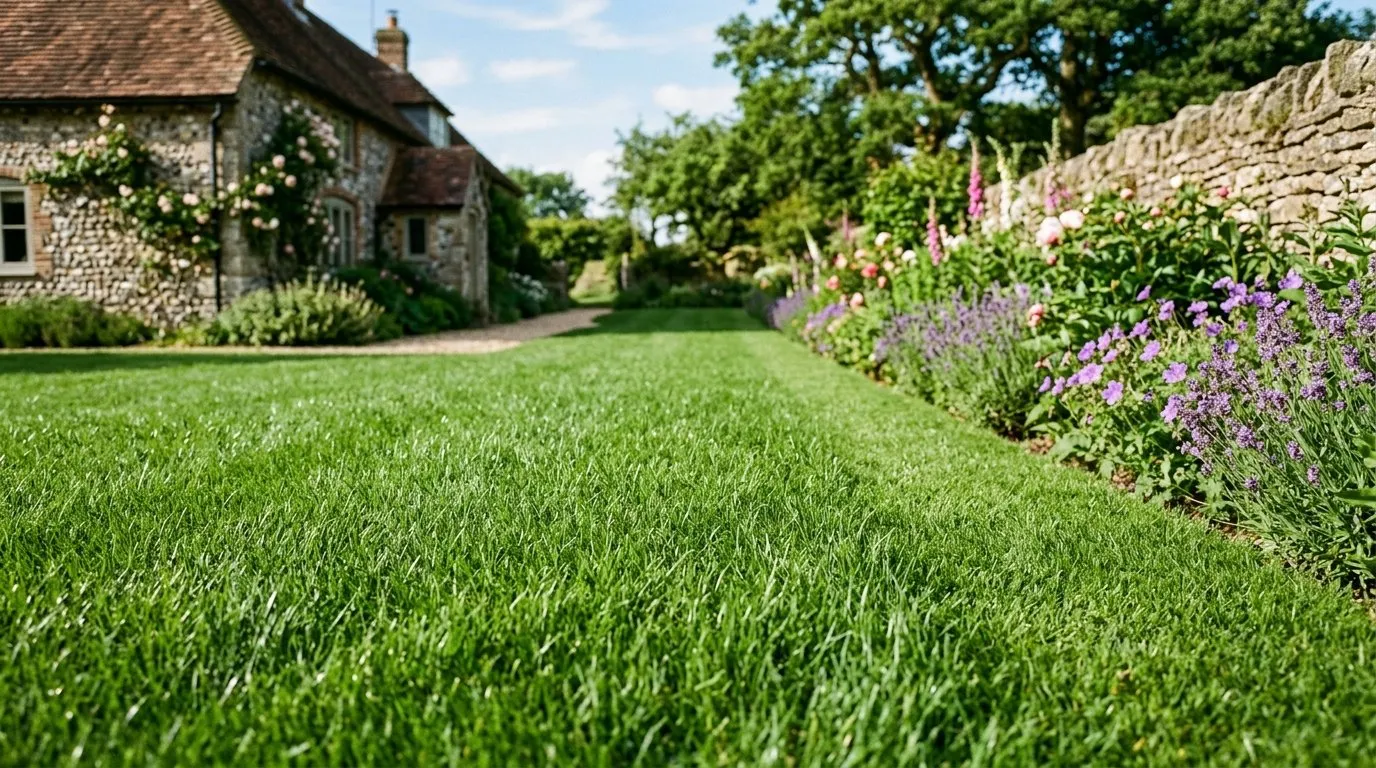 Six weeks after top-dressing and overseeding. The sward is thicker, hollows have filled in, and the surface is even. The combined treatment in autumn produces results that show through the following spring and summer growing seasons.
Annual programme: where top-dressing fits
Top-dressing is part of an annual lawn care programme, not a one-off intervention. Here is the calendar most UK lawns benefit from.
| Month | Job |
|---|---|
| March | First mow at high cut, light scarify if mossy |
| April | Spring fertiliser, weed and feed if needed |
| May | Regular mowing begins, raise cut height |
| June | Apply summer fertiliser if needed |
| July | Maintain mowing height (50mm in dry weather) |
| August | Identify hollows, plan autumn renovation |
| September | Scarify, aerate, overseed, top-dress |
| October | Light final mow, autumn feed |
| November | Rake fallen leaves, no mowing |
| December-February | No work needed unless storm damage |
September is the keystone month. Everything else maintains.
For the full annual schedule, see our lawn care calendar UK. For the related autumn-renovation jobs, our scarify and aerate guide covers steps 2 and 3 of the September sequence in detail.
Tools you actually need
Equipment list for a 100 sqm domestic lawn:
- Lawn mower (£200-1,500 - assumed to already own one)
- Spring-tine rake or powered scarifier (£15 hand rake, £25-30 a day to hire scarifier)
- Hollow-tine aerator or garden fork (£20-40 manual hollow-tiner; powered models £100+ a day to hire)
- Wheelbarrow (£50-100 - assumed)
- Shovel and rake (assumed)
- Lawn lute or drag mat (£40-150 to buy, £15-20 a day to hire)
- Stiff yard brush (£15-25)
- Top-dressing mix (£70-150 for 200-300kg of bagged, less for bulk)
- Grass seed (£8-15 for a 1kg bag - covers 50-65 sqm at recommended rate)
Total for first-time DIY top-dressing on a 100 sqm lawn: £150-300 in materials and hire if you have basic tools. Annual repeat cost: £80-150 for materials only. Cheaper than a single visit from a professional lawn-care company.
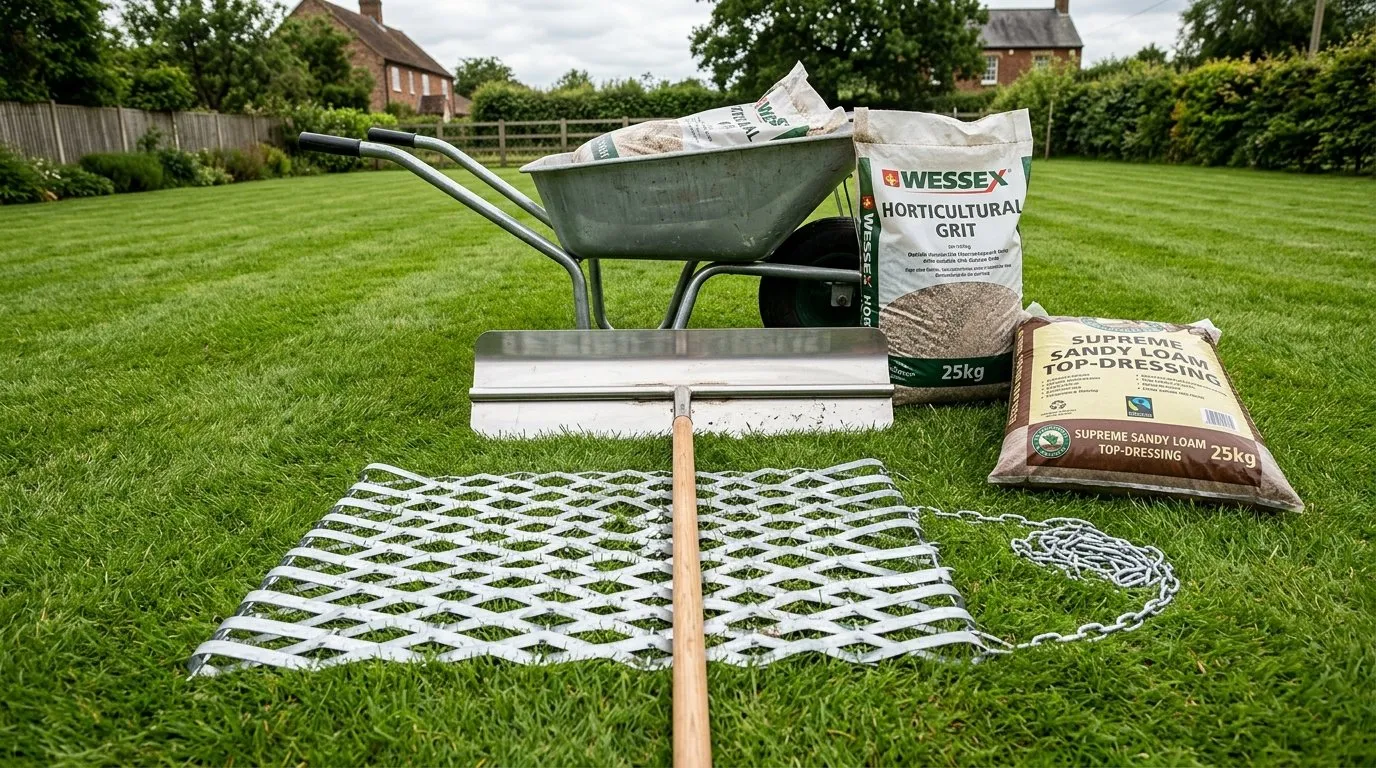 The basic kit for top-dressing a domestic UK lawn. From the top: stainless steel landscaping lute, drag mat (steel ribbon), galvanised wheelbarrow, bag of horticultural grit, and a bag of sandy loam mix. Hire what you do not need to own.
What goes wrong (and how to fix it)
Mistake 1: Too much dressing. Symptom: visible clumps and brown patches after 2 weeks. Fix: rake off excess gently, water in, wait. Lesson for next time: 2kg per sqm, not 5.
Mistake 2: Wrong time of year. Symptom: dressing sits unintegrated for months. Fix: re-treat in the next correct window. Lesson: stick to August-October or April-May.
Mistake 3: Skipping scarification. Symptom: dressing sits on top of thatch, lawn does not improve. Fix: re-treat with proper scarification first. Lesson: skip steps and the result fails.
Mistake 4: Walking on damp dressing. Symptom: footprints visible for weeks. Fix: water in gently and wait. Lesson: time the application for dry conditions.
Mistake 5: Wet mix. Symptom: clumps in sward, never integrates. Fix: rake off, dry the surface, wait for next session. Lesson: always use dry friable mix.
For ongoing lawn problems, our lawn diseases identification and treatment UK guide covers what to do when something is wrong beyond simple thinning.
Quick checklist
Before you start:
- Soil is dry and workable, not waterlogged ✓
- Mix is dry, friable, sieved to 6mm ✓
- Lute or drag mat available ✓
- 2-3kg of mix per sqm calculated ✓
- Mowing height set to 25mm ✓
- Scarifier and aerator available or hired ✓
- Forecast dry for 24 hours, ideally rain in 48-72 hours ✓
- Time scheduled for full treatment in one session ✓
Done in mid-September with the right materials, top-dressing transforms an average UK lawn into a clearly better one. Done badly or at the wrong time, it does nothing or makes things worse. Get it right once and the annual repeat takes half the time.
Related articles
Our team produces practical UK gardening guidance from source research, contributor records and established horticultural practice. Editorial standards are overseen by Matt W.