Key takeaways
- Use 15cm compost in year one on clay, not the 5cm Charles Dowding recommends for loam
- Annual compost top-ups help protect clay from capping and compaction
- Add 50mm horticultural grit to the planting hole for first-year crops to bridge poor drainage
- Cardboard layer underneath is non-negotiable on clay, suppresses couch grass and feeds worms
- Wait 6 weeks after the autumn mulch goes down before sowing, lets clay settle and warm
- Sissinghurst's no-dig clay market garden cropped commercially from year two, proving the method scales
You will find compost depths for each year, the planting-hole grit trick that saves first-season root crops, and the autumn timetable that lets clay settle before spring sowing. For the underlying method, pair this with our no-dig gardening guide and our background piece on improving clay soil.
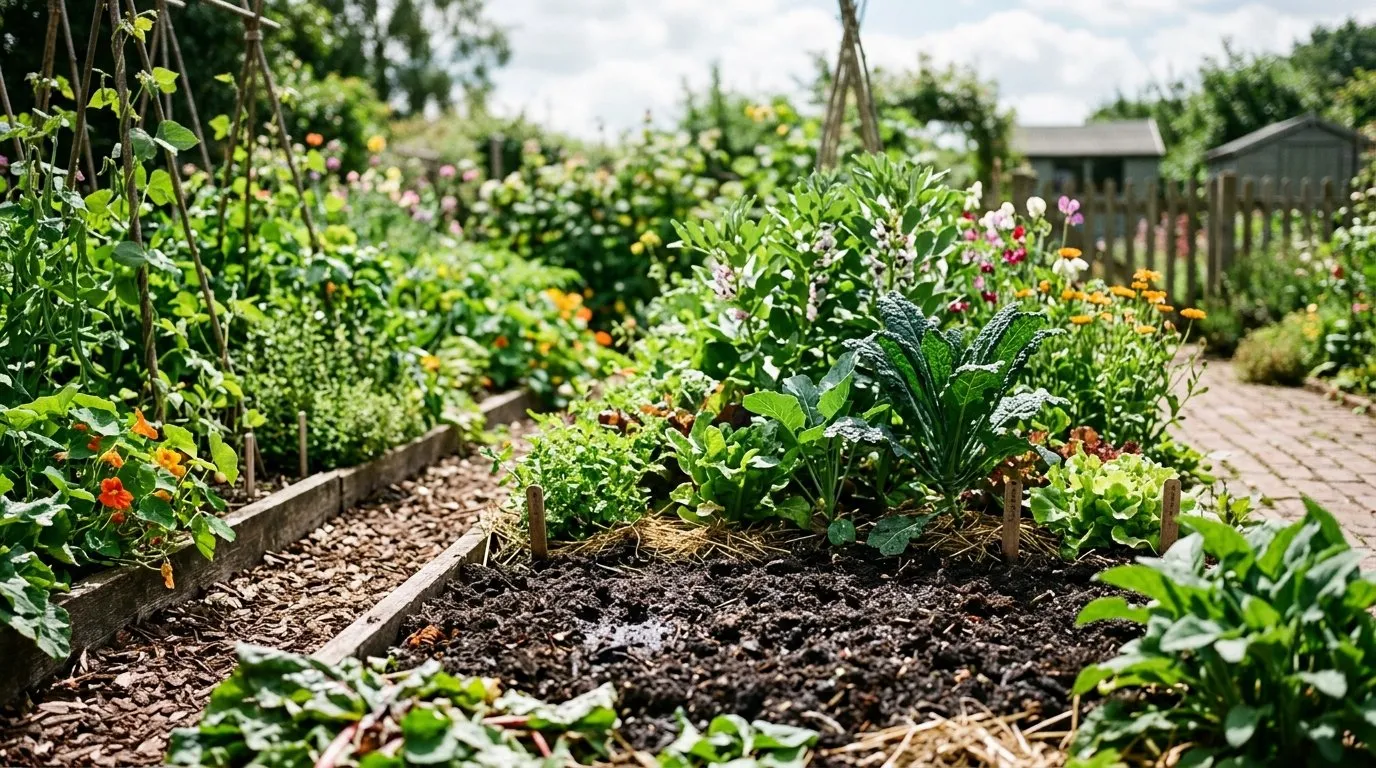 A mulched no-dig bed on heavy clay, with compost protecting the surface and supporting soil life
Why standard no-dig advice fails on clay
Charles Dowding’s 5cm starter mulch was developed on free-draining loam at Homeacres, Somerset. On heavy clay it leaves roots sitting in cold, waterlogged ground for the first two seasons. Clay has roughly 40% pore space, but most of those pores are too small to drain. Water clings to clay particles and excludes air. Roots cannot push through compacted clay below a thin compost layer.
The fix is deeper compost at the start. A 15cm layer gives roots a full season’s growing medium while soil structure rebuilds underneath. By year three, worm tunnels and rotting cardboard have opened the clay subsoil, and the standard 5cm annual top-up takes over.
The second clay-specific fix is the cardboard underlay. On loam, cardboard is optional. On clay, it is the single most important component. Worms feed on the wet cardboard from below, pulling fibres down into the clay and tunnelling as they go. Without cardboard, the compost layer sits like a sponge on top of compacted ground and roots stay shallow.
The third clay fix is grit in the planting hole for first-year root crops. Carrots, parsnips, and beetroot fork or stunt when they hit the clay-mulch interface. A 50mm grit collar around each transplant or seed gives the root a clear run for the first 20-30cm. Grit becomes unnecessary from year three.
How heavy is your clay? A 5-minute test
Squeeze a damp handful of soil. If it forms a sausage that holds shape under its own weight and smears when rubbed, you have heavy clay. Soils that crumble before sausage stage are loamy clay and need only the standard no-dig method with one extra centimetre of compost.
Heavy clay typically holds 35-50% clay particles by weight. The remainder is silt and sand. The Soil Association classifies anything over 35% clay as “heavy” for cropping purposes. Most gardens in the Midlands, Yorkshire’s coalfield belt, the South Midlands clay vale, and large parts of London sit in this range.
A second indicator is how the soil dries. Heavy clay forms hard, cracked plates when dry and turns to slick mud within hours of rain. The cracks can reach 30cm deep in summer. This shrink-swell behaviour breaks plant roots and is one reason no-dig outperforms tillage on these soils. The mulch layer prevents the surface drying and cracking.
A third test is drainage time. Dig a 30cm hole, fill with water, let it drain. Refill and time the second drain. Heavy clay takes more than 4 hours to empty the second time. Free-draining loam empties in under 30 minutes. Anything over 2 hours benefits from the deeper-mulch starting plan in this guide.
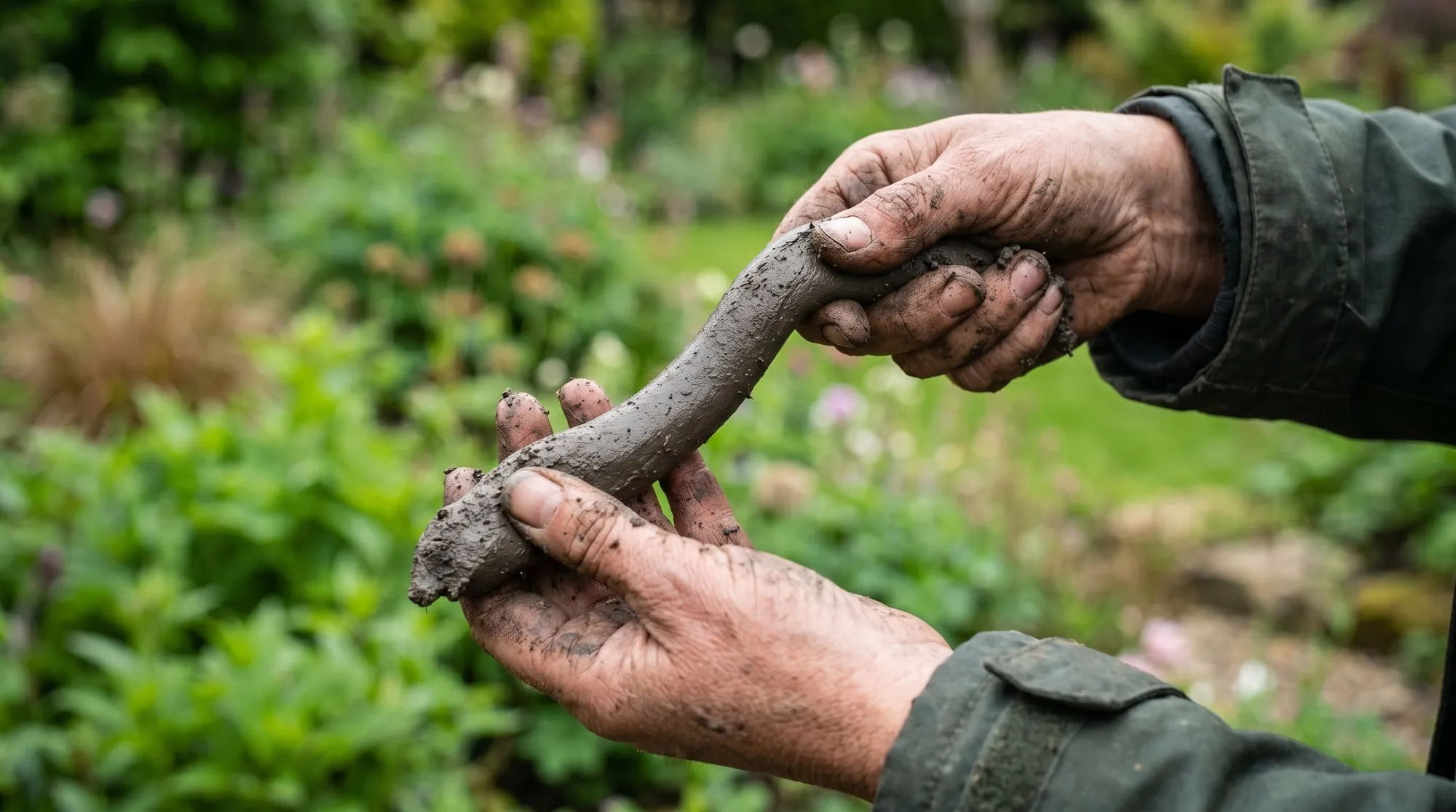 The ribbon test, the simplest way to confirm heavy clay before committing to deeper no-dig mulching
Year-by-year compost depths for clay
Compost depth can follow a sliding scale on heavy clay, dropping as the bed settles and structure improves. Treat the schedule below as a planning guide. Adjust each top-up after checking surface coverage, compaction and the condition of the previous mulch.
| Stage | Suggested mulch depth | What to check |
|---|---|---|
| Initial setup | Up to 15cm | Cardboard coverage, standing water and surface compaction |
| First top-up | Up to 10cm | Bare patches and how far the first layer has settled |
| Later top-ups | Around 5-7cm | Surface coverage, weed pressure and compost condition |
The year-one figure is the most important. Garden centres often sell “no-dig starter packs” with 5cm of recommended compost. On heavy clay this leaves roots stranded above unworked subsoil. Three times that depth in the first autumn is what makes the method work.
As the bed settles, annual top-ups can become shallower. Check the soil beneath the mulch before adding more and avoid claiming a fixed improvement timetable. Drainage, clay type, rainfall and compost quality all affect the result.
Step-by-step setup for clay no-dig
The autumn before your first growing season is the critical window. A bed laid in October has six months for cardboard to rot, worms to populate, and clay to settle before spring sowing. Spring starts work but lose half a season of structure rebuild.
Step 1: Mark the bed and cut existing growth. Cut grass or weeds to ground level with shears. Do not strip the turf. Roots and dead growth feed soil life.
Step 2: Lay cardboard in two overlapping layers. Use plain corrugated cardboard, no glossy print, no plastic tape. Wet thoroughly with a hose. Two layers stops couch grass and bindweed for a full season; one layer is not enough on perennial-weed sites.
Step 3: Spread 15cm of compost across the cardboard. Use a 50:50 mix of well-rotted manure and green-waste compost. The Soil Association’s PAS 100 specification gives a clear quality benchmark for bagged green-waste compost. Local council green-waste meets this standard in most UK regions.
Step 4: Top with 50mm autumn leaves or straw. This protects the compost from heavy winter rain and stops it crusting. By March, the leaves have rotted into the surface and the bed is ready for planting.
Step 5: Wait six weeks before sowing. Late-March sowing into an October-laid bed gives the deepest worm tunnelling and the best first-year structure. Do not be tempted to sow in early March even if the weather is mild.
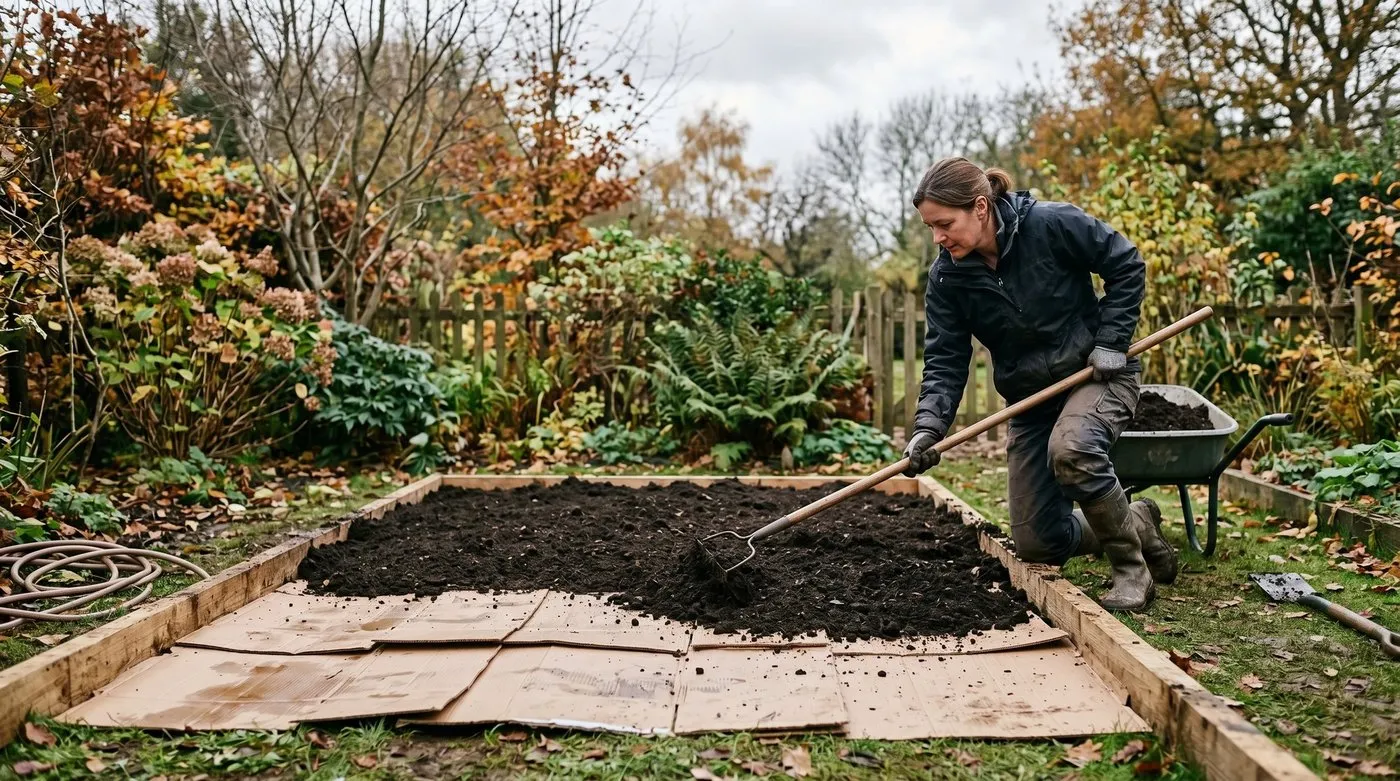 Cardboard underlay during bed construction, the single most important element for no-dig success on heavy clay
What to plant in year one on clay no-dig
First-year crops need to suit a layered medium with workable compost on top and rebuilding clay underneath. Shallow-rooted brassicas, leafy salads, and bush beans crop reliably. Deep root vegetables need extra preparation.
Brassicas are practical first-season crops. Cabbage, kale, broccoli and Brussels sprouts establish well in a deep surface layer, provided the bed drains and stays evenly moist.
Salad leaves thrive in the surface compost. Lettuce, rocket, mustard, and corn salad do not need depth. Plant at standard spacings and harvest as cut-and-come-again.
Bush beans and peas crop well in year one with a single grit collar in the planting hole. Avoid runner beans in year one, the deep root needs more open ground than a fresh clay no-dig bed offers.
Root vegetables need the grit trick. Drill a 50mm-wide hole 25cm deep at each carrot or parsnip planting station. Fill with horticultural grit. Sow into the grit. The taproot follows the grit channel through the compost-clay interface and develops without forking.
Gardener’s tip: Keep deep-rooted perennials like asparagus and globe artichoke out of the clay no-dig bed for the first two years. They struggle to establish in the layered medium and are better moved in once the clay has been worked by worms below.
How long until clay no-dig matches dug yields?
There is no universal year when no-dig clay matches a dug bed. Results depend on drainage, compaction, compost quality, crop choice and weather. Use soil condition and crop health to judge progress rather than a fixed yield promise.
Sissinghurst’s 1-acre clay no-dig market garden confirmed this trajectory at commercial scale. The garden cropped commercially from year two and reached full output by year four. Charles Dowding’s own clay-soil video case studies report similar timelines, with year-three yield parity as the reliable benchmark.
The key takeaway is patience. Heavy clay changes gradually. Keep the surface covered, avoid walking on the bed and review drainage before changing the method.
Common mistakes on heavy clay no-dig
Most clay no-dig problems come from a few repeated mistakes. Avoiding them gives the bed a better chance to settle without compaction or waterlogging.
Mistake 1: Skipping the cardboard. This is the single biggest cause of failure. Without cardboard, the compost sits as a sponge on compacted clay and worms never tunnel down. The bed feels right for two seasons then plateaus. Always lay two overlapping layers, well wetted.
Mistake 2: Using only 5cm of compost in year one. Loam-quantity mulching on clay leaves roots in the cold, anaerobic clay-mulch interface. First-year crops fail and gardeners lose faith. Triple the depth for the first autumn.
Mistake 3: Walking on the bed. Compaction from foot traffic crushes the freshly laid worm channels in years two and three. Use scaffold board paths between raised beds at least 30cm wide and never step on the cropping ground.
Mistake 4: Expecting a spring start to behave like an autumn start. A March-laid bed has had less time for cardboard to soften and compost to settle. Delay direct sowing until the surface is stable and workable.
Warning: Never apply fresh, unrotted manure as a no-dig mulch on clay. The high ammonia content burns plant roots and the unrotted material attracts rodents. Rotted-down manure should pass the “smell test” and look like dark, crumbly soil rather than recognisable straw and dung.
Drainage gains by year five
The cardboard layer accelerates the process. Worms migrate to the wet cardboard underside within weeks of bed construction, then tunnel both upwards into the compost and downwards into the clay below.
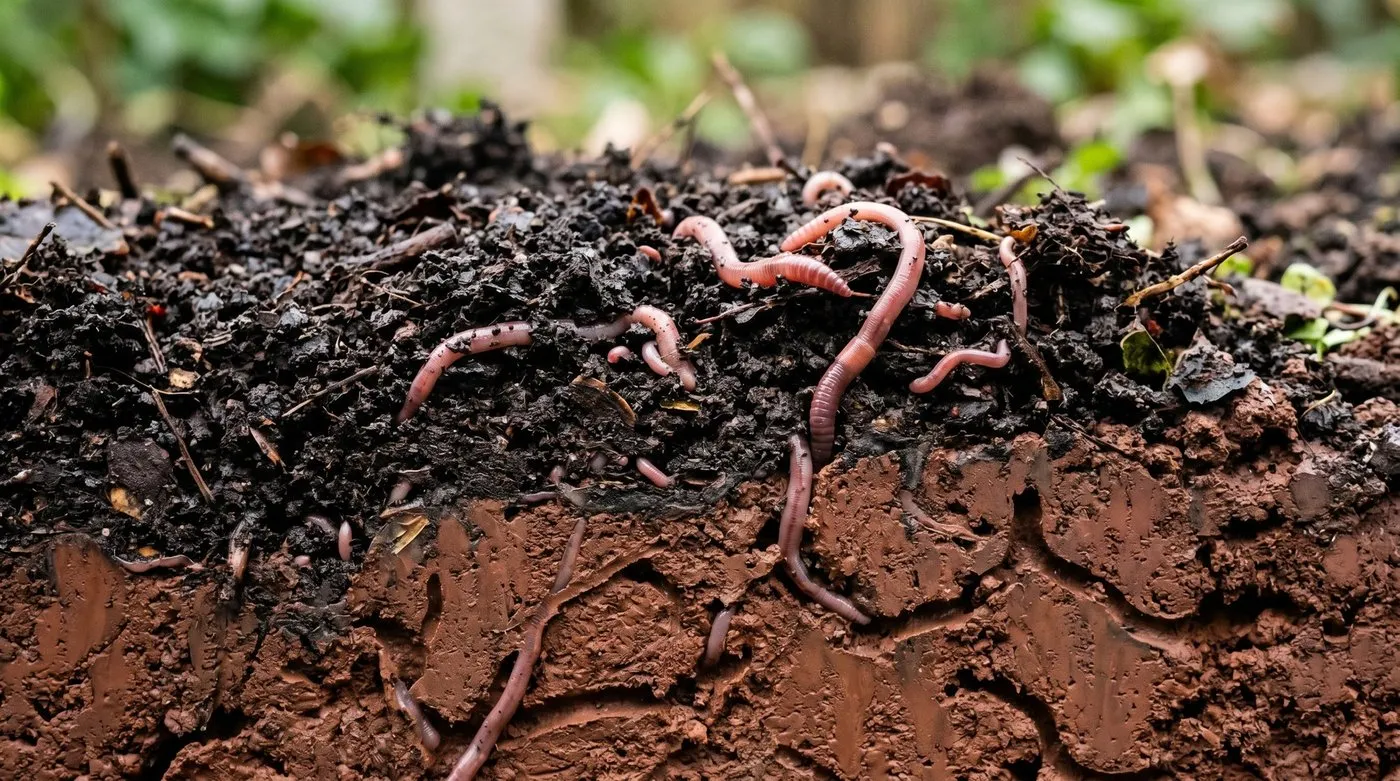 Worm channels and rotting cardboard at the compost-clay interface beneath a no-dig bed
Month-by-month calendar for clay no-dig
| Month | Task |
|---|---|
| September | Mark new beds, source 1 cubic metre compost per 4 m² of bed |
| October | Lay cardboard, spread 15cm starter compost, top with 50mm leaves |
| November | First worm migration begins, mulch settles by 20-30% |
| December | Bed is dormant, no action needed, do not walk on |
| January | Apply additional autumn leaves if cardboard is still visible |
| February | Worm count survey, check structure with hand-fork only at edges |
| March | Six-week wait period, no sowing yet |
| April | First sowings, brassica transplants, salad leaves, peas |
| May | Squash and bean transplants, grit collars for root crops |
| June | Heavy mulching of pathways with bark or wood chip |
| July | Peak harvest window for early crops, water heavily during dry spells |
| August | Begin sourcing autumn compost top-up |
Frequently asked questions
Does no-dig work on heavy clay soil?
Yes, no-dig can work on heavy clay with a generous surface mulch. Lay plain cardboard underneath, keep feet off the bed and add compost as the surface settles. Deal with persistent standing water separately.
How thick should compost be for no-dig on clay?
Apply 15cm compost in year one on heavy clay. Drop to 10cm in year two, 7cm in year three, and 5cm annually from year four. The deeper starting layer compensates for clay’s poor drainage and gives roots a workable medium while soil structure builds underneath. Light, free-draining loam needs only 5cm from the start.
Will no-dig improve clay soil drainage?
Mulching can improve clay structure gradually, but it cannot guarantee a drainage percentage. Organic matter supports soil life and reduces surface capping. Persistent waterlogging may still need site-specific drainage work.
What compost works best for no-dig on clay?
Well-rotted horse manure mixed 50:50 with green-waste compost gives the best results on heavy clay. The manure adds bulk and nitrogen, the green-waste compost balances the carbon ratio. Avoid pure mushroom compost in year one as it dries the clay surface. Local council green-waste compost works well for top-ups from year three onwards.
How long until no-dig clay matches dug beds?
There is no fixed year when no-dig clay matches a dug bed. Compare plant health and soil condition over time. Drainage, compaction, crop choice, compost and weather all affect yields.
Now you have the year-by-year plan for no-dig on heavy clay, read our companion guide on the best plants for clay soil for ornamentals that thrive without amendment.
Our team produces practical UK gardening guidance from source research, contributor records and established horticultural practice. Editorial standards are overseen by Matt W.