How to Create a Wildflower Lawn
Turn your lawn into a wildflower meadow with native UK species. Soil preparation, seed mixes, sowing rates, yellow rattle, and mowing.
Key takeaways
- Wildflowers need poor soil, so never fertilise and remove grass clippings after every cut
- Yellow rattle reduces grass vigour by up to 60%, giving wildflowers room to establish
- Sow seed at 2-4g per square metre in either March-April or September-October
- Cut the meadow once per year in late August or September, then remove all cuttings
- A 20-square-metre wildflower patch supports over 100 insect species
- Cornfield annuals like poppies and cornflowers give instant colour in year one
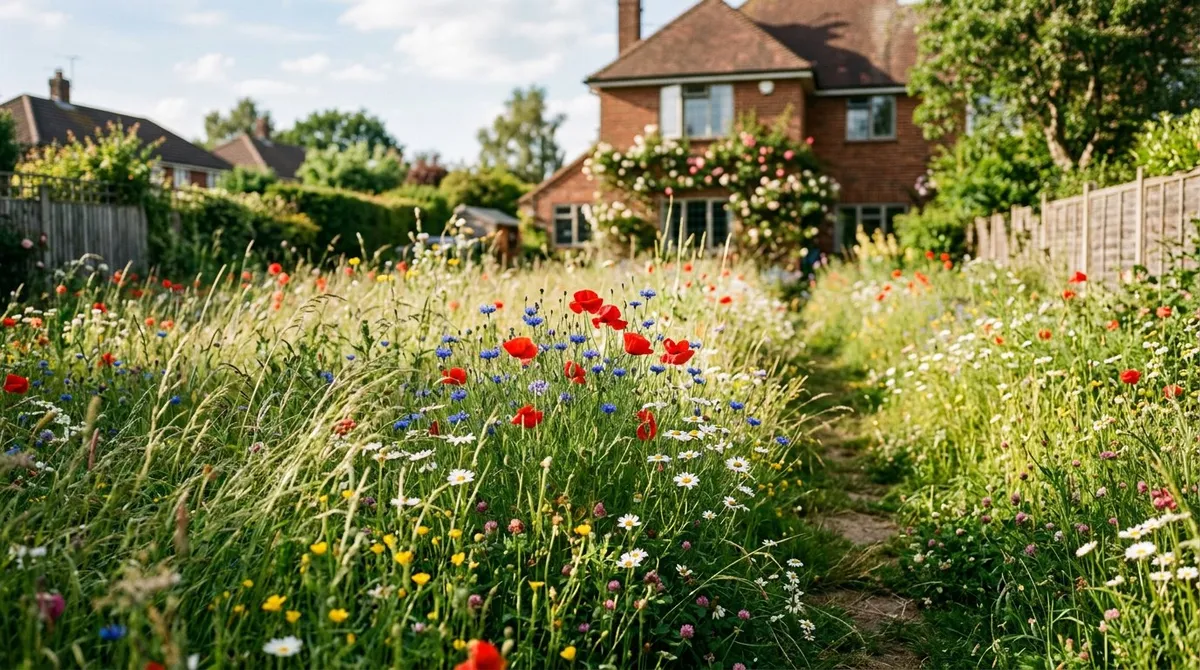
Wildflower meadows once covered much of lowland Britain. Plantlife estimates that 97% of wildflower meadows have been lost since the 1930s. What was once a common sight across farmland and village greens is now rare enough to be a conservation priority. The good news is that anyone with a patch of lawn can bring some of that habitat back.
Creating a wildflower lawn is not the same as letting your grass grow long. It requires deliberate soil management, the right seed, and a specific mowing regime. The results take patience, but a well-established meadow patch needs far less work than a conventional lawn. It also supports vastly more wildlife. For other ways to boost biodiversity in your garden, see our guide to bee-friendly plants and tips for attracting birds.
Why do wildflowers need poor soil?
Native wildflowers evolved on thin, nutrient-poor ground. This is the single most important fact to understand. Rich, fertile garden soil produces thick, vigorous grass that smothers slower-growing meadow flowers. On poor soil, grass grows weakly, creating gaps where wildflowers can germinate and compete.
Most UK lawns sit on topsoil that has been fed and improved for years. That fertility is the main reason wildflower seeds fail in gardens. The grass overwhelms them. Before sowing a single seed, you need to reduce soil fertility. This feels counterintuitive to gardeners who spend years building up their soil with compost, but meadow creation is the opposite process.
Signs your soil is too rich include dark, crumbly topsoil, thick grass growth, and the presence of nettles, docks, or clover. If dandelions, buttercups, and self-heal already grow in your lawn, your soil may already be lean enough for wildflowers.
How to prepare the ground for a wildflower lawn
Site preparation determines whether your meadow succeeds or fails. There are two approaches depending on whether you are starting from scratch or converting an existing lawn.
Starting on bare ground
Strip the existing turf to a depth of 50mm using a turf cutter or sharp spade. This removes the nutrient-rich top layer along with existing grass roots and weed seeds. If the exposed soil still looks dark and rich, remove another 25mm. You want pale, poor-looking subsoil.
Rake the surface to a fine tilth, removing stones larger than 20mm. Firm the soil by treading it in overlapping passes, then rake again lightly. The surface should be level and crumbly, not compacted into a hard pan.
Converting an existing lawn
Full turf removal is the most reliable method, but you can convert a lawn in place with patience. The process takes 2-3 years. Stop all fertilising immediately. Mow regularly through the first summer and always remove the clippings. Every time you take clippings away, you remove nutrients from the soil.
In autumn, scarify the lawn hard with a spring-tine rake or powered scarifier. You want to create bare patches of soil where wildflower seeds can make contact with earth. Scratch the surface aggressively. The lawn will look rough, but that is the point. Sow yellow rattle seed into these scratched areas in September or October.
What is yellow rattle and why does it matter?
Yellow rattle (Rhinanthus minor) is the single most important species for meadow creation. It is a semi-parasitic annual that attaches to grass roots and draws water and nutrients from them. Research from the RHS shows it reduces grass vigour by up to 60%.
This weakening of the grass is what creates space for other wildflowers. Without yellow rattle, grass dominates. With it, the balance shifts in favour of slower-growing meadow flowers.
Yellow rattle has specific requirements. The seed must be fresh, as it loses viability within 12 months of harvest. Always buy seed from the current year’s harvest. Sow in autumn, from September to November, because the seed needs a prolonged cold period (stratification) to break dormancy. Spring-sown yellow rattle rarely germinates.
Scatter seed at 1g per square metre onto bare or scarified soil. Press it in with a roller or by treading. Do not cover with soil. It germinates in March and April and flowers in May and June. The rattling seed pods that give it its name are ripe by July. For sowing windows for wildflowers and other garden flowers, see our flower planting calendar.
Which wildflower seed mix should I choose?
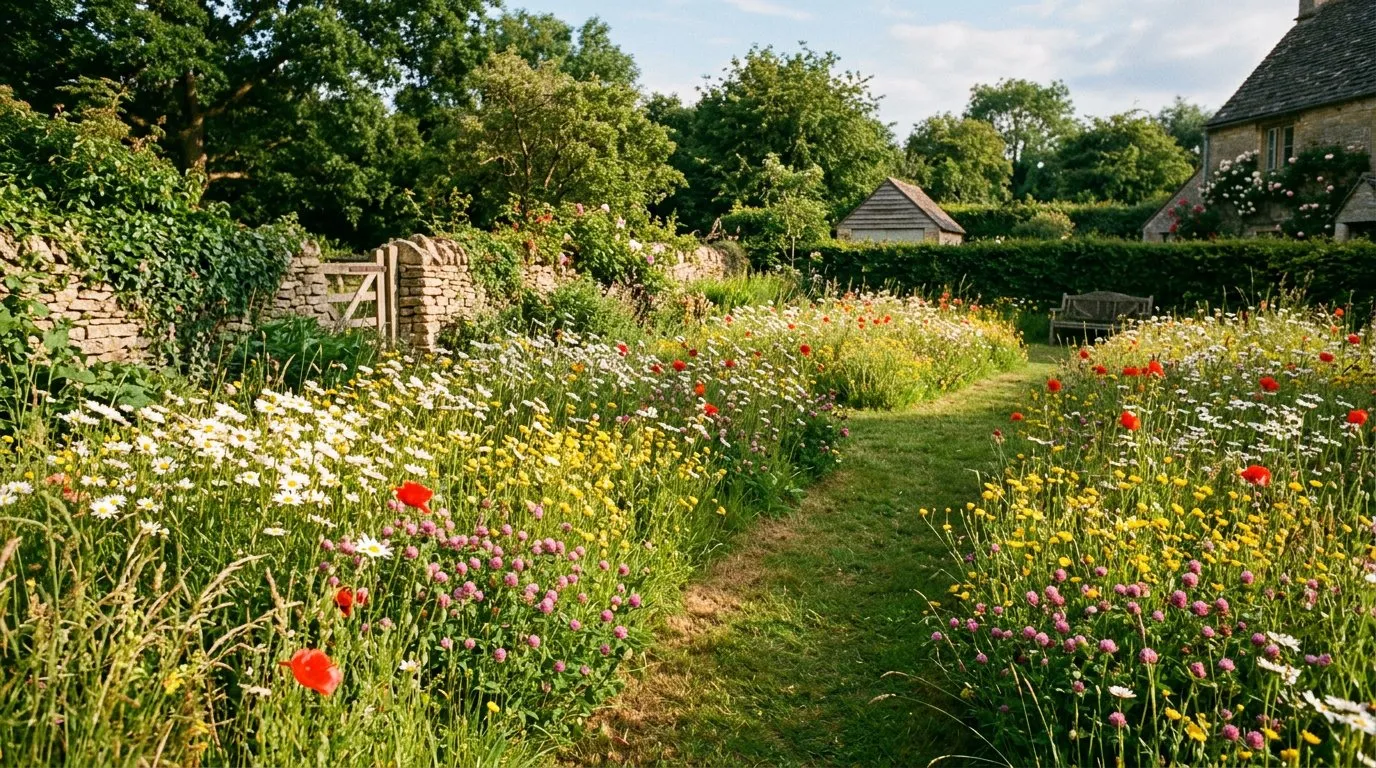
A wildflower lawn in full summer bloom with ox-eye daisies, buttercups, red clover, and poppies — this is what year three looks like.
The right seed mix depends on your soil type, light levels, and whether you want perennial meadow flowers or quick annual colour. Here is a comparison of the three main types.
| Feature | Perennial meadow mix | Cornfield annual mix | Shade meadow mix |
|---|---|---|---|
| Lifespan | Permanent, self-sustaining | One season, resow annually | Permanent, self-sustaining |
| Key species | Oxeye daisy, knapweed, field scabious, cowslip, red campion | Poppy, cornflower, corn marigold, corncockle | Red campion, foxglove, wood anemone, primrose |
| Soil requirement | Low fertility, well-drained | Any fertility, tolerates rich soil | Humus-rich, moist |
| Light | Full sun to light shade | Full sun | Partial to full shade |
| First flowers | Year 2-3 | 8-12 weeks from sowing | Year 2-3 |
| Sowing rate | 2-4g per sqm | 3-5g per sqm | 2-3g per sqm |
| Best sowing time | March-April or Sept-Oct | March-May | Sept-Oct |
| Annual mowing | One cut in late August/Sept | Clear site after flowering | One cut in March |
| Establishment | Slow, 2-3 years to peak | Instant, flowers same summer | Slow, 2-3 years to peak |
| Best for | Sunny lawns and open areas | Quick impact, new gardens | Under trees, north-facing |
Perennial meadow mix: the long-term choice
This is the classic wildflower meadow. A mix of native grasses and perennial wildflowers that establishes over 2-3 years and then sustains itself indefinitely with annual cutting. Key species include:
- Oxeye daisy (Leucanthemum vulgare) — the classic white meadow daisy, flowers June to August
- Common knapweed (Centaurea nigra) — purple thistle-like flowers, outstanding for bees and butterflies
- Field scabious (Knautia arvensis) — lilac pincushion flowers, attracts long-tongued bumblebees
- Cowslip (Primula veris) — nodding yellow flowers in April and May, a true meadow indicator
- Red campion (Silene dioica) — pink flowers from May to November, tolerates light shade
- Meadow buttercup (Ranunculus acris) — the tall, branching buttercup of hay meadows
- Bird’s-foot trefoil (Lotus corniculatus) — yellow pea flowers, the food plant of common blue butterflies
Cornfield annuals: instant colour
If you want flowers in the first summer, sow cornfield annuals. These are fast-growing plants that complete their lifecycle in one season. They evolved in arable fields and tolerate richer soil than perennial meadow flowers.
- Common poppy (Papaver rhoeas) — scarlet flowers from June, germination triggered by soil disturbance
- Cornflower (Centaurea cyanus) — vivid blue, now rare in the wild but easy in gardens
- Corn marigold (Glebionis segetina) — bright yellow daisies, once a serious crop weed
- Corncockle (Agrostemma githago) — elegant purple-pink flowers, almost extinct in the wild
Sow cornfield annuals in spring at 3-5g per square metre. They flower within 8-12 weeks. After flowering, leave the seed heads to drop, then clear the site. Rake the soil in spring to trigger fresh germination from dropped seed.
How to sow wildflower seeds
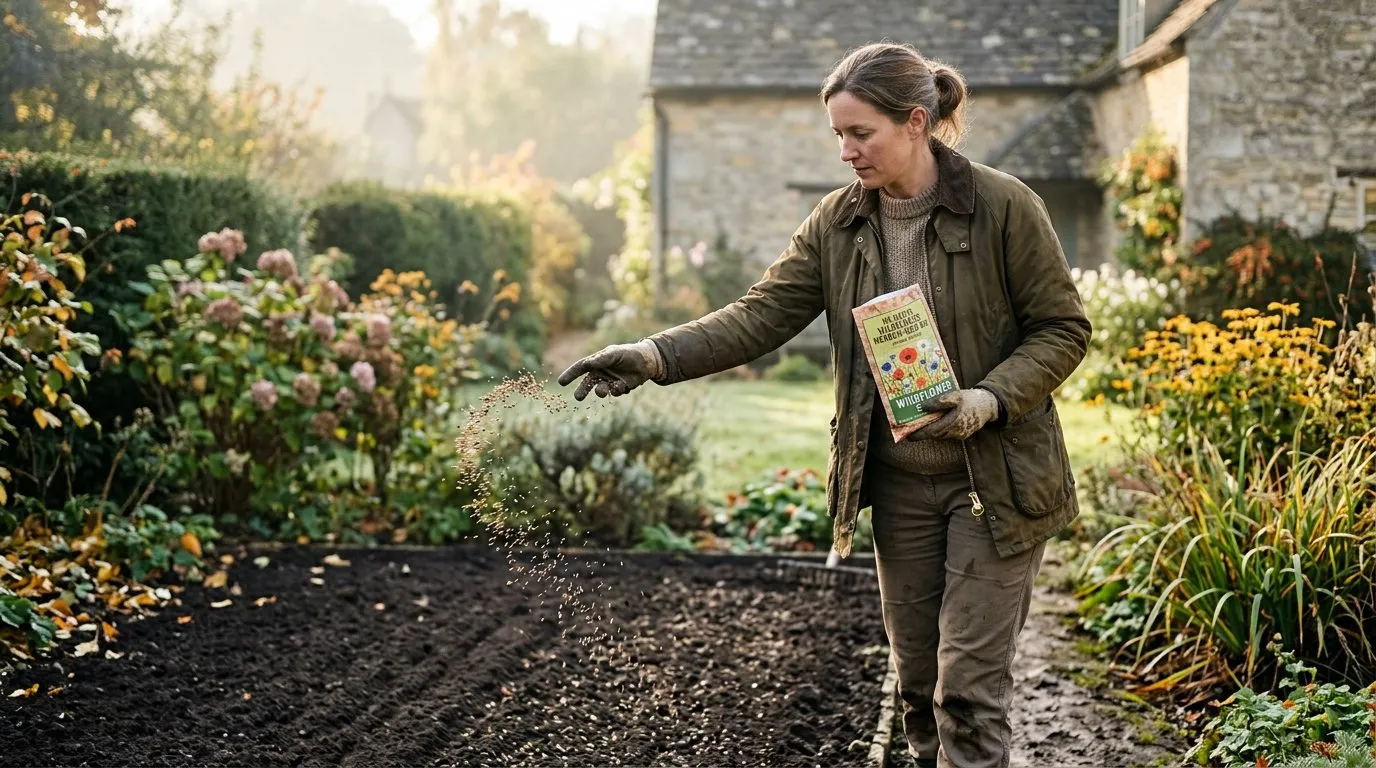
Hand-broadcasting wildflower seed onto prepared bare soil in autumn — mix seed with silver sand for even distribution.
Sowing technique matters more than most people think. Wildflower seed is tiny and needs good soil contact to germinate.
Spring sowing (March to April)
Wait until soil temperatures reach at least 7C consistently. Most native seed germinates best between 10C and 15C. Mix the seed with dry silver sand at a ratio of 1 part seed to 4 parts sand. The sand helps you see where you have sown and gives even distribution.
Sow at 2-4g of seed per square metre for perennial mixes. This feels like very little seed, but wildflower mixes are designed to be sparse. Over-sowing creates too much competition between seedlings.
Broadcast half the seed walking north to south across the area, then the other half walking east to west. This cross-pattern gives even coverage. Press the seed into the soil surface with a roller, a board, or by treading. Do not rake the seed in or cover it with soil. Most wildflower seeds need light to germinate.
Autumn sowing (September to October)
Autumn sowing suits perennial meadow mixes and is essential for yellow rattle. The cold winter period breaks seed dormancy naturally. Prepare and sow in the same way as spring sowing. Germination happens the following March and April.
Month-by-month wildflower meadow calendar
Managing a wildflower meadow follows a simple annual cycle. Here is what to do each month.
| Month | Task |
|---|---|
| January | No action. Ground too cold and wet. Plan seed orders for spring sowing. |
| February | Order fresh yellow rattle seed if needed. Check for waterlogging on heavy soils. |
| March | Spring sowing window opens. Sow perennial and annual mixes when soil reaches 7C. Yellow rattle germinates. |
| April | Continue spring sowing. Cowslips flower. Mow new meadow areas to 75mm if grass is outcompeting seedlings. |
| May | Yellow rattle and buttercups flower. No mowing from May onwards. Enjoy the first flush. |
| June | Oxeye daisies, campion, and knapweed begin flowering. Peak season starts. |
| July | Full meadow display. Yellow rattle sets seed and dies back. Knapweed peaks. |
| August | Late flowers including scabious and knapweed continue. Prepare for the annual cut from late August. |
| September | The annual cut. Mow to 50-75mm. Leave cuttings for 3-5 days, then rake off. Sow yellow rattle and autumn mixes. |
| October | Continue autumn sowing. Scarify existing lawn areas. Collect and scatter seed from established patches. |
| November | Final chance for yellow rattle sowing. Rake off fallen leaves that smother meadow plants. |
| December | No action. Meadow plants are dormant. Good time to plan expansions for next year. |
How to convert an existing lawn into a wildflower meadow
Converting a lawn is the most common approach and works well if you are patient. The full conversion takes 2-3 years.
Year one: reduce fertility
Stop all feeding, weedkiller use, and moss treatment immediately. Continue mowing through the growing season but always collect and remove the clippings. This is the key action. Every bag of clippings removes nitrogen, phosphorus, and potassium from the soil.
In August or September, scarify the lawn aggressively. Create bare patches across 40-50% of the surface. Sow yellow rattle at 1g per square metre into these scratched areas. Press the seed in firmly. This is one of the best spring gardening tasks to plan for the following year.
Year two: introduce wildflowers
By the second spring, yellow rattle should be germinating. The grass will be thinner. Scarify again in early March and sow a perennial meadow mix at 2-3g per square metre into the bare patches.
From May onwards, stop mowing. Let everything grow. You should see yellow rattle flowering in May and June, plus the first wildflowers from your spring sowing. Cut once in late August or September and rake off all cuttings.
Year three and beyond
The meadow becomes increasingly diverse each year. Self-sown wildflowers fill remaining gaps. Grass becomes weaker as yellow rattle continues its work. By year three, you should see a genuine mix of native flowers.
Maintain the single annual cut in late August or September. Always remove the cuttings.
Creating a small meadow patch
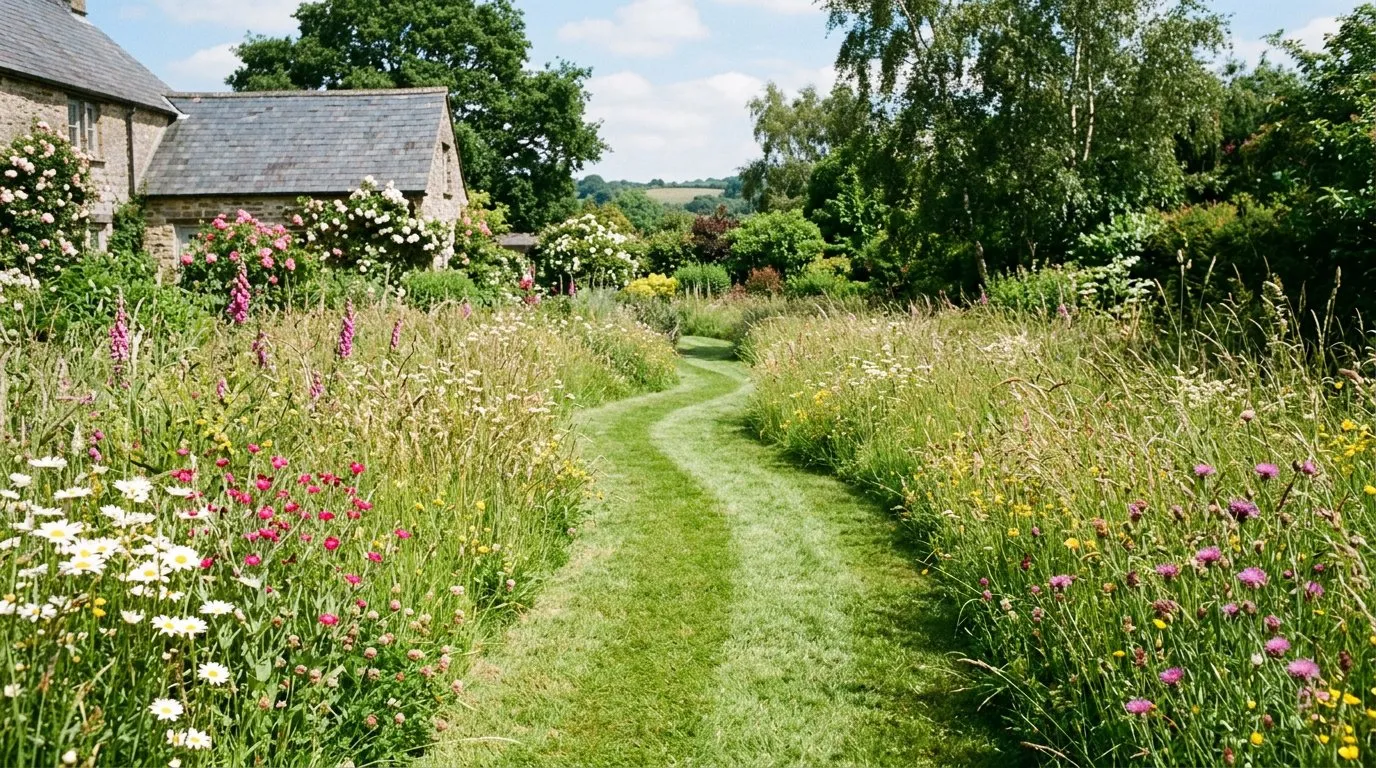
A mown path cutting through an unmown wildflower area — the contrast between formal and wild looks intentional and inviting.
You do not need a large lawn to create a wildflower area. Even a small patch delivers real biodiversity value.
The unmown strip
The simplest method. Stop mowing a strip along a fence, wall, or path edge. The width can be as little as 1 metre. Existing lawn flowers like daisies, clover, self-heal, and dandelions will flower once freed from the mower. Over time, scatter wildflower seed into the strip.
The meadow island
Mark out a circle or oval in the lawn using sand or string. Prepare and sow it as a meadow patch. Mow the surrounding lawn as normal. The contrast between short grass and tall meadow looks intentional and attractive. This approach works particularly well in cottage garden designs where a naturalistic feel suits the style.
Container meadows
Fill large pots or troughs with a mix of 80% sharp sand and 20% peat-free compost. This creates the low-fertility growing medium wildflowers need. Sow cornfield annuals for first-year colour or a perennial meadow mix for a longer-term display. Place in full sun on a patio or balcony.
Common mistakes when creating a wildflower meadow
Most wildflower meadow failures come from the same handful of errors. Avoid these and your chances of success increase dramatically.
Sowing on fertile soil
This is the number one reason wildflower meadows fail. If the soil is rich and dark, grass will dominate no matter how much wildflower seed you scatter. Strip the topsoil or spend 1-2 years reducing fertility by mowing and removing clippings before sowing.
Not removing the cuttings
After the annual cut, cuttings must be raked off and removed. Leaving them to rot returns nutrients to the soil, which favours grass over wildflowers. Leave cuttings in place for 3-5 days so seeds can drop, then rake thoroughly.
Mowing at the wrong time
Mowing before late August cuts down flowers before they set seed. The meadow cannot regenerate. Never mow between May and late August. Equally, leaving the meadow uncut allows coarse grasses and scrub to take over.
Using old yellow rattle seed
Yellow rattle seed must be fresh, harvested within the last 12 months. Old seed has very low germination rates. Always check the harvest date on the packet. If there is no date, do not buy it.
Sowing too thickly
Over-sowing creates overcrowded seedlings that compete with each other. Stick to the recommended 2-4g per square metre for perennial mixes. Use the sand-mixing method to ensure even distribution.
Expecting instant results
A perennial wildflower meadow takes 2-3 years to reach full display. Year one may look like a weedy patch. Cornfield annuals give same-year colour if you need a quicker reward, but the long-term meadow needs patience.
Choosing non-native seed
Some cheap seed mixes contain non-native wildflower species that do not support UK pollinators. Always buy seed labelled as native British provenance. Species like oxeye daisy, knapweed, and field scabious are what UK insects have evolved alongside.
Native UK wildflower species guide
Here are the most reliable native wildflowers for UK meadow gardens, with their soil and light requirements.
Full sun species
Oxeye daisy is the anchor plant of any sunny meadow. White daisy flowers from June to August on 60cm stems. It self-seeds freely and establishes quickly. Tolerates most soil types except waterlogged ground.
Common knapweed produces purple thistle-like flowers from July to September. It is one of the most valuable plants for pollinators in the UK. Butterflies, bees, and hoverflies all visit it constantly. Grows to 60-90cm.
Field scabious has lilac pincushion flowers on wiry 60cm stems. It is the favourite flower of long-tongued bumblebees. Prefers well-drained soil and full sun. Flowers July to September.
Cowslip is an early flowerer, producing nodding yellow bells in April and May. It was once common in hay meadows but declined with agricultural intensification. Easy to establish from seed in short grass.
Light shade species
Red campion flowers from May to November with pink blooms. It handles light shade well and is common in hedgerows and woodland edges. An excellent choice for meadow patches under trees.
Greater knapweed (Centaurea scabiosa) is larger than common knapweed with showier purple flowers. Grows on chalky and limestone soils. Flowers July to September, attracting painted lady and small tortoiseshell butterflies.
Grass species for meadow mixes
A wildflower meadow is not just flowers. Fine-leaved grasses form the matrix that flowers grow through. Include these in your seed mix or buy a pre-mixed meadow blend:
- Common bent (Agrostis capillaris) — fine, non-aggressive grass
- Crested dog’s-tail (Cynosurus cristatus) — a classic meadow grass
- Sweet vernal grass (Anthoxanthum odoratum) — gives hay meadows their distinctive scent
- Quaking grass (Briza media) — ornamental seed heads that tremble in the breeze
Avoid coarse grasses like perennial ryegrass, which dominates too aggressively for wildflowers.
The annual mowing regime explained
The mowing regime is what separates a wildflower meadow from an abandoned lawn. Get this right and the meadow improves every year.
When to cut
Cut once per year between late August and mid-September. By this time, most wildflowers have set seed. Cutting earlier removes seed before it drops. Cutting later allows coarse grasses and nettles to build dominance.
How to cut
Set the mower or strimmer to a height of 50-75mm. A standard rotary mower works for small patches. For larger areas, a petrol strimmer or scythe is more practical. A traditional scythe cuts cleanly and is surprisingly quick once you learn the technique.
What to do with the cuttings
Leave the cut material on the ground for 3-5 days. This allows seeds to fall from the dried flower heads onto the soil. After 3-5 days, rake up every bit of the cut material and remove it from the meadow. Add it to your compost heap or take it to the green waste bin.
Removing cuttings is non-negotiable. Left to rot, they add fertility to the soil, which boosts grass growth and harms wildflowers. This annual removal is what keeps the soil poor and the wildflowers thriving.
Optional spring mow
Some meadow managers give a second cut in March, taking the growth down to 50mm before the spring flush begins. This controls coarse grasses and creates gaps for wildflower seedlings. It is optional but helpful, especially in the first few years of establishment.
Why we recommend yellow rattle as your first wildflower purchase: After 30 years of establishing meadows on domestic lawns, yellow rattle is the single intervention that makes or breaks a conversion. On plots where it was sown in autumn before any other wildflowers, grass density fell by around 55% within two growing seasons. On plots where it was skipped, perennial wildflower seed sown into existing lawn failed to establish in every case. Buy it fresh each year, seed older than 12 months gives erratic germination, often under 20%.
Now you’ve mastered wildflower lawn creation, read our guide on bee-friendly garden plants to choose companion plantings that extend the pollinator season beyond your meadow’s flowering window.
Frequently asked questions
When is the best time to sow wildflower seeds?
March to April or September to October are the best windows. Autumn sowing gives seeds a cold period (stratification) that improves germination for many native species. Spring sowing works well for cornfield annuals like poppies and cornflowers that need warmth to germinate. Soil temperature should be at least 7C for spring sowing.
Why do wildflowers fail on fertile soil?
Rich soil favours vigorous grasses that outcompete wildflowers. Native meadow species evolved on thin, nutrient-poor ground. If your soil is fertile, strip the topsoil or grow cornfield annuals instead, which tolerate richer conditions. Removing grass clippings for 1-2 years before sowing also reduces soil fertility gradually.
How often should I mow a wildflower meadow?
Once a year in late August or September. Cut to a height of 50-75mm. Leave the cuttings for 3-5 days so seeds can drop, then rake them off completely. Removing cuttings is critical. It prevents nutrients from returning to the soil and keeps conditions right for wildflowers.
What is yellow rattle and why is it important?
Yellow rattle is a semi-parasitic annual that weakens grass. It attaches to grass roots and draws nutrients from them, reducing grass growth by up to 60%. This creates gaps for other wildflowers to colonise. It must be sown fresh in autumn, as the seed needs winter cold to germinate.
Can I create a wildflower meadow on a small lawn?
Yes, even a 2-square-metre patch works. Small meadow patches, strips along fences, and unmown lawn edges all support pollinators. Start with one sunny patch and expand each year. Container meadows on patios also attract bees and butterflies in surprising numbers.
How long does a wildflower meadow take to establish?
Allow 2-3 years for a full perennial meadow display. Year one produces mainly grasses and a few fast-establishing flowers. Year two sees more diversity. By year three, the meadow should show a rich mix of species. Cornfield annuals give instant colour while perennials build up.
Do wildflower meadows attract bees and butterflies?
Yes, native wildflower meadows are outstanding for pollinators. A single square metre of established meadow can support 10-15 pollinator species. Knapweed, field scabious, and oxeye daisy are particularly valuable. Meadows also support hoverflies, beetles, and ground-nesting solitary bees. For more on pollinator planting, see our guide to bee-friendly garden plants.
Further reading
- Bee-friendly garden plants — choose companion plants that extend the flowering season for pollinators
- Attract birds to your garden — meadow seed heads provide winter food for finches and buntings
- How to make compost — use meadow cuttings as green material in your compost heap
- Cottage garden planting plan — combine meadow patches with traditional cottage borders
- Spring gardening jobs UK — the full spring task list including meadow sowing
Lawrie has been gardening in the West Midlands for over 30 years. He grows his own veg using no-dig methods, keeps a wildlife-friendly garden, and writes practical advice based on real UK growing conditions.