How to Grow Anemones in the UK
Grow anemones in the UK with confidence. Three types, when to plant, how to care for them, and which varieties give the best results in British gardens.
Key takeaways
- Soak Anemone coronaria and Anemone blanda corms in water for 4 hours before planting — dry corms take far longer to establish
- Plant Anemone blanda corms 5 cm deep in autumn for March-April flowers; they naturalise readily under trees and in lawn edges
- Anemone coronaria (De Caen and St Brigid types) can be planted in autumn for spring flowers or in spring for summer blooms — treat them like ranunculus
- Japanese anemones flower August to October and tolerate partial shade — plant in spring or autumn and allow 2-3 years to establish before dividing
- Honorine Jobert (white, AGM) and September Charm (single pink) are the most reliable Japanese anemone varieties for UK gardens
- De Caen anemones make excellent cut flowers — harvest stems when the bud begins to show colour and they last 7-10 days in a vase
Anemones are one of those garden plants where the name covers three quite different plants. Get them confused and you will plant the wrong thing at the wrong time in the wrong place. This guide separates them clearly and explains exactly how to grow each one successfully in the UK.
The three types are Anemone blanda (a dwarf spring corm), Anemone coronaria (the bold-coloured cut-flower type), and Japanese anemones (tall late-summer perennials). Each has its own planting time, preferred conditions, and character in the garden.
What are the different types of anemone for UK gardens?
| Type | Height | Flowering | Hardy to | Position | Grown from |
|---|---|---|---|---|---|
| Anemone blanda | 15 cm | March–April | -15°C | Sun or part shade | Corms |
| Anemone coronaria (De Caen / St Brigid) | 30 cm | Spring or summer | -5°C | Full sun | Corms |
| Japanese anemone (A. × hybrida) | 60-120 cm | August–October | -15°C | Sun or partial shade | Pot-grown plants |
Understanding which type you have tells you everything about when and where to plant it. Anemone blanda naturalises under trees and in lawn edges. Anemone coronaria is a cutting garden classic. Japanese anemones fill the August gap in the border when most perennials have finished.
These three all belong to the same genus but behave very differently. If you have grown tulips or daffodils, you will find Anemone blanda familiar, it follows the same autumn-planting, spring-flowering rhythm. Anemone coronaria is closer to ranunculus in its requirements, and the two make natural companions in a cut flower bed.
How to grow Anemone blanda from corms
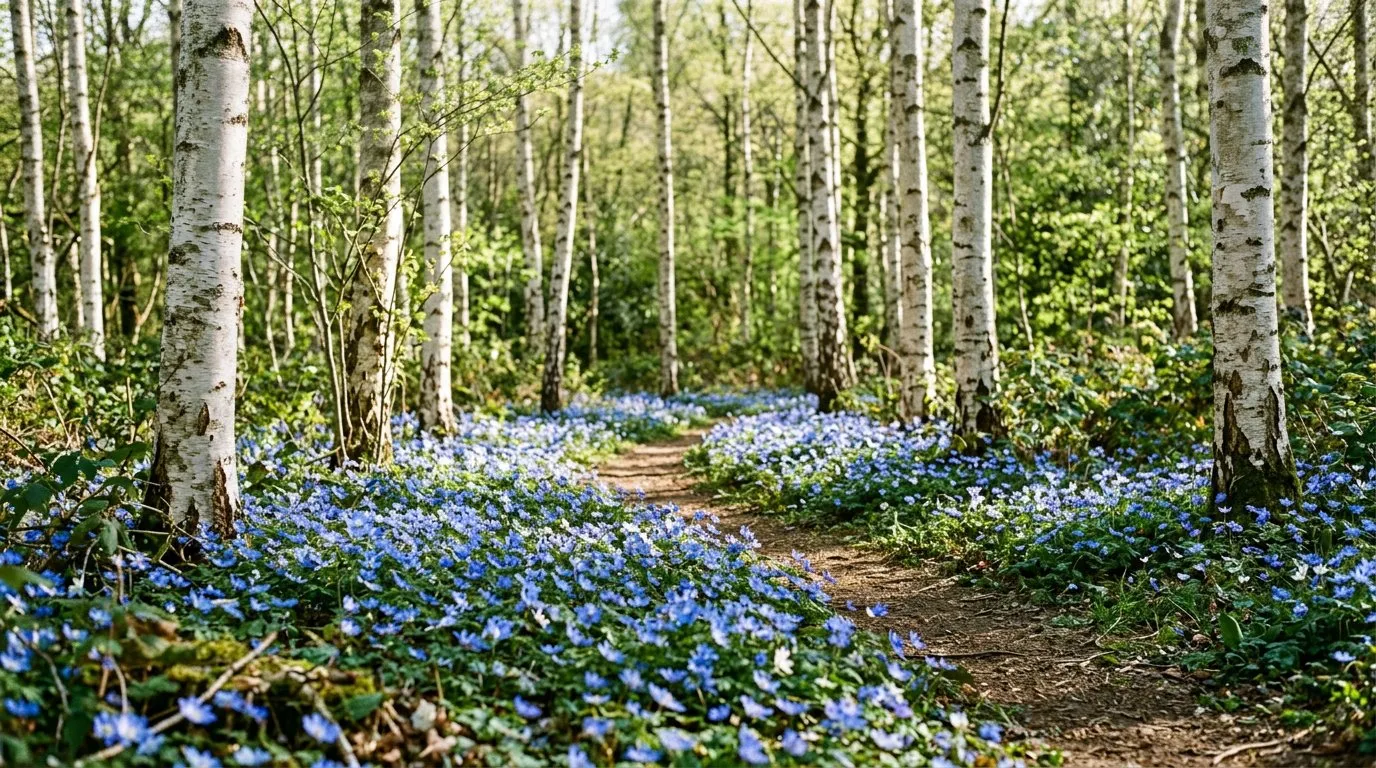
Anemone blanda is the smallest of the three. It grows 15 cm tall and flowers in March and April in shades of blue, white, and pink. Left undisturbed, it naturalises freely under deciduous trees, in grass, and along shaded borders, returning reliably every year.
When to plant Anemone blanda
Plant corms in September and October. They need a cold period to flower well, so autumn planting in the UK is ideal. Plant in drifts of 20-30 corms for a natural effect rather than individual plants.
Soil and position
Anemone blanda does best in well-drained soil in sun or partial shade. It is particularly effective under deciduous trees, where it flowers before the leaf canopy closes in late spring. Avoid waterlogged soil, corms rot in wet winter conditions.
How deep to plant
Plant corms 5 cm deep and about 8-10 cm apart. The corms are irregularly shaped and knobbly, place the flattest side down. If you cannot tell which side is which, plant them on their sides. Most will orientate themselves.
Soaking corms before planting
Soak corms in plain water for 4 hours before planting. The corms are often sold dry and desiccated. Soaking rehydrates them and significantly speeds establishment. Do not soak for longer than 4-6 hours or they may begin to rot.
After flowering
Allow the foliage to die back naturally after flowering, this is how the corm builds up its energy reserves for next year. Anemone blanda is hardy to -15°C and does not need lifting in UK winters. Once established, divide congested clumps every 4-5 years in autumn.
The RHS Plant Selector lists several named varieties with AGM (Award of Garden Merit) status, which indicates reliable UK performance.
How to grow Anemone coronaria (De Caen and St Brigid types)

Anemone coronaria is the anemone most people picture when they hear the name: bold poppy-like flowers in red, blue, purple, white, and bicolour, on straight 30 cm stems. The De Caen group bears single flowers; the St Brigid group has semi-double flowers with frilled petals.
These are the classic cut flower anemone, widely grown for floristry and home cutting gardens. Unlike Anemone blanda, they are only moderately hardy and prefer a sheltered, sunny position.
Planting times for Anemone coronaria
You can plant Anemone coronaria corms at two times of year in the UK:
- Autumn planting (October-November): Flowers appear from March to May. In colder parts of the UK, cover with a cloche or fleece from December to February.
- Spring planting (March-April): Flowers appear from June to August. This avoids the frost risk entirely and is the lower-maintenance option.
Growing a batch in autumn and another in spring extends the cutting season from March through August. Starting corms off indoors in February is a useful technique, our guide on how to sow seeds indoors covers the same principles of indoor propagation that apply to starting corms early.
Soil and position
Anemone coronaria needs full sun and very well-drained soil. Heavy clay soil causes corms to rot before they establish. If your soil holds moisture, grow in raised beds or add grit to improve drainage. They perform well in containers too, using a free-draining compost.
Planting and soaking
Soak corms in water for 4 hours before planting. Coronaria corms are small, rough, and slightly concave on the top, plant with the concave side up at a depth of 5 cm. Space 10-15 cm apart.
Harvesting for cutting
Harvest De Caen anemone stems when the bud just begins to show colour, before it opens fully. Cut stems to 30-40 cm and place in deep water immediately. They continue opening indoors and last 7-10 days in a vase. This makes them excellent value in the cutting garden, a small patch of 30-40 corms provides weeks of cut flowers.
Winter care
Anemone coronaria tolerates to around -5°C. In most of the UK south of Yorkshire, well-drained soil offers sufficient protection. In colder regions, lift corms after flowering, allow them to dry for a week, and store in a paper bag in a frost-free place until replanting.
Why we recommend Honorine Jobert as the first Japanese anemone for shaded UK borders: After 30 years of growing perennials in conditions ranging from full sun to deep north-facing shade, Honorine Jobert is the most reliable late-season performer I have found for difficult spots. It establishes in its second year and then flowers without fail from August to October regardless of the summer weather. In a 5m shaded border I planted in 2018, it now covers 2.5m and produces over 200 flowers per season without any feeding or division.
How to grow Japanese anemones
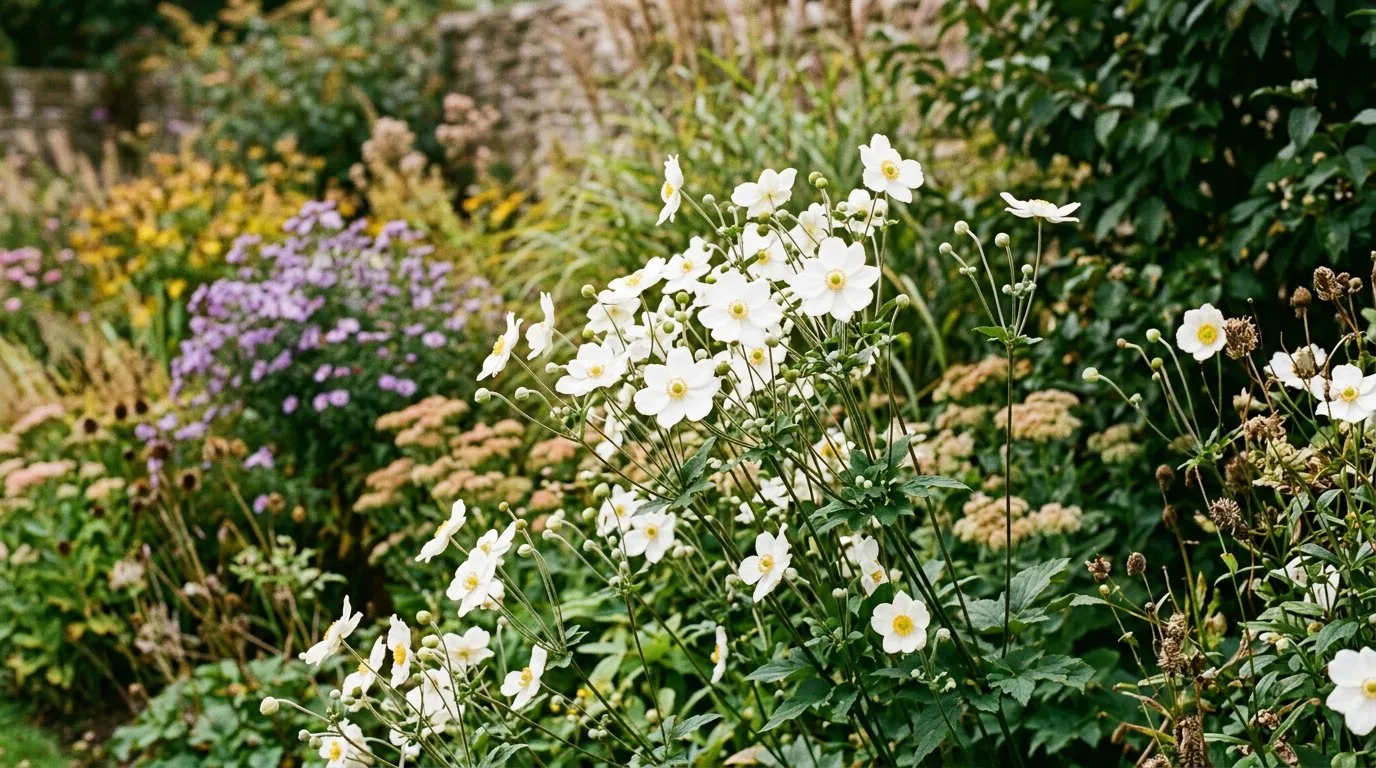
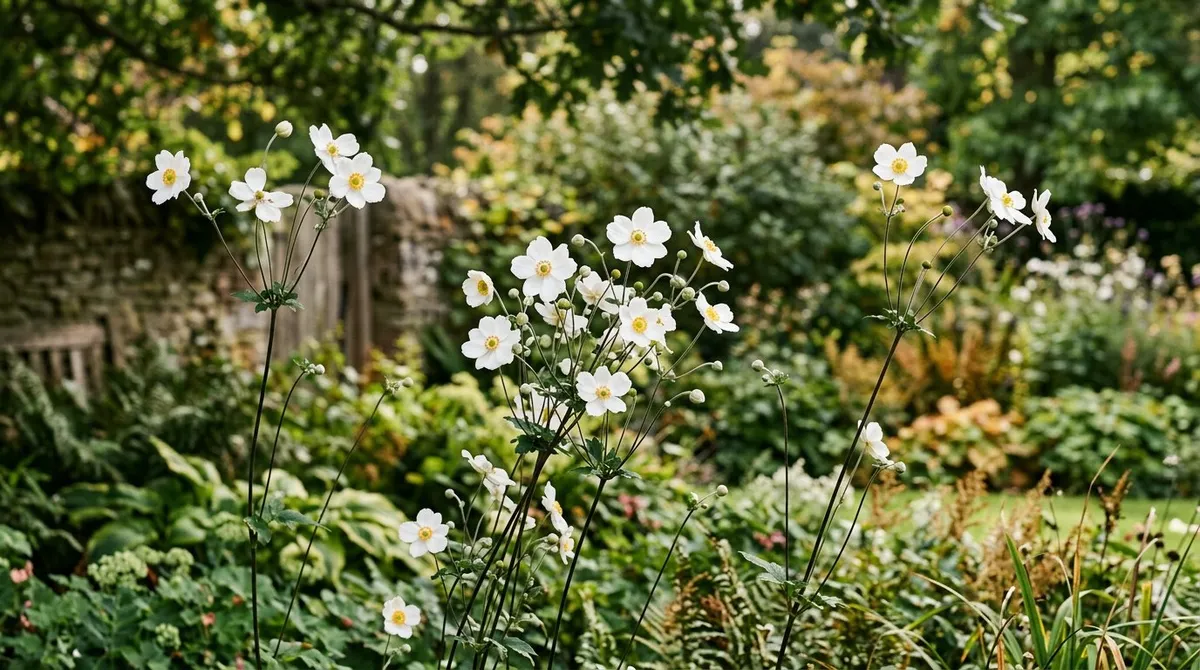
Japanese anemones (Anemone × hybrida and related species) are a completely different plant from the corm-grown types. They are hardy perennials reaching 60-120 cm, with elegant saucer-shaped flowers in white and shades of pink from August through October.
They fill a valuable gap in the border, few perennials flower reliably this late in the season. Japanese anemones are also one of the best perennials for partial shade, performing where sun-lovers like heleniums and rudbeckias struggle.
Best Japanese anemone varieties for UK gardens
| Variety | Colour | Height | Flowers | Notes |
|---|---|---|---|---|
| Honorine Jobert | White, yellow centre | 90-120 cm | Aug-Oct | AGM, single, classic white |
| September Charm | Single pink | 60-90 cm | Aug-Oct | Compact, long season |
| Pamina | Double deep pink | 75 cm | Aug-Sep | Semi-double, compact |
| Hadspen Abundance | Deep pink | 90 cm | Aug-Oct | Rich colour, AGM |
| Wild Swan | White, blue-reverse | 40-60 cm | Jun-Oct | Unusual, very long season |
Honorine Jobert is the most widely planted variety in UK gardens and holds an RHS Award of Garden Merit. Its pure white single flowers with yellow stamens are effective in shady spots where pale colours show up well. September Charm is the best choice for a smaller border, more restrained than Honorine Jobert.
See the RHS guide to Japanese anemones for a full list of AGM-rated varieties.
When and how to plant Japanese anemones
Buy pot-grown plants rather than bare-root divisions. Plant in spring (April-May) or autumn (September-October). Japanese anemones establish slowly, expect little in the first year, moderate growth in the second, and full flowering from year three onwards. This patience is worth it. Once established, they are long-lived, reliable, and largely self-sufficient.
Plant in any reasonable garden soil in sun or partial shade. Dig a hole twice the width of the root ball, improve the soil with compost, and plant at the same depth as it was in the pot. Water well after planting and during dry spells in the first growing season.
These work well in a cottage garden planting plan, where their late-season flowers bridge the gap between summer perennials and autumn colour. They also pair naturally with shade-tolerant plants in a north-facing or east-facing border.
Managing spread
Japanese anemones spread via underground runners and can colonise a considerable area over time. They are not invasive but can become persistent, removing established plants is harder than it looks, as any root fragment left behind will regrow.
Plant them where spread is welcome: between shrubs in a woodland garden, in a wilder border, or beneath deciduous hedging. Avoid planting them directly next to slow-growing perennials that they might swamp. In a formal border, divide every 3-4 years in autumn after flowering to keep them in check.
Month-by-month anemone calendar
| Month | What to do |
|---|---|
| January | Order corms. Check stored coronaria corms for rot |
| February | Prepare beds. Soak and plant coronaria indoors under cover if desired |
| March | Anemone blanda flowers. Plant coronaria corms outdoors in mild areas |
| April | Plant coronaria corms for summer flowers. Anemone blanda continues flowering |
| May | Allow blanda foliage to die back naturally. Coronaria establishing |
| June | Coronaria flowers (spring-planted batch). Begin harvesting cut flowers |
| July | Continue cutting coronaria. Mulch Japanese anemone plants in dry spells |
| August | Japanese anemones begin flowering. Plant autumn coronaria corms |
| September | Japanese anemones peak. Plant Anemone blanda corms |
| October | Continue blanda planting. Lift coronaria corms in colder areas |
| November | Plant blanda corms. Mulch Japanese anemone crowns in colder regions |
| December | Rest. Review the year and plan next season’s combinations |
Where to plant anemones in the garden
Anemones suit several different garden situations depending on type.
Under deciduous trees: Anemone blanda is ideal here. It flowers in early spring before the leaf canopy closes out the light, then disappears underground for summer. It naturalises quickly and requires no annual replanting. This is also a good spot for spring bulbs generally, snowdrops, crocuses, and Anemone blanda create a flowing groundcover in a shaded area.
Cutting garden or potager: Anemone coronaria (De Caen and St Brigid) belongs in a productive cutting bed. Plant them in rows with other spring-cutting crops for a succession of material from March to August. A bed of 60 corms takes up very little space and produces several weeks of flowers. Growing them alongside dahlias and cosmos makes a natural flow of companion planting that benefits the whole cutting garden.
Late-season border: Japanese anemones are most effective as structural perennials at the back or mid-border. Their tall stems and delicate flowers contrast well with the seedheads of ornamental grasses and the late flowers of bee-friendly plants such as sedums and agastache. Pollinators, particularly hoverflies and late-season bees, use Japanese anemone flowers heavily in September and October when other nectar sources are declining.
Shaded borders: Japanese anemones and Anemone blanda are both useful for brightening shaded borders. They are particularly effective under a north-facing wall or fence, where summer-flowering perennials would not perform.
Common anemone problems
Corms fail to sprout: Usually caused by planting without soaking first, or planting in waterlogged soil. Soak corms for 4 hours before planting and ensure the growing area drains freely.
Japanese anemones fail to flower in the first year: This is normal. They establish slowly and prioritise root growth before flowering. Expect flowers reliably from year two or three.
Powdery mildew on Japanese anemones: Common in dry summers. Water the root zone regularly during drought. Good air circulation helps. Remove affected leaves and bin them, do not compost.
Slugs on emerging anemone shoots: Young coronaria and blanda shoots are vulnerable in March and April. Apply nematode biological controls in February or use copper tape around container-grown plants. Japanese anemone shoots are less affected once established.
Now you’ve mastered anemones, read our guide on how to grow tulips in the UK for the next step in building a spring and early summer bulb display that carries colour from February to July.
Frequently asked questions about growing anemones
When should I plant anemone corms in the UK?
Plant Anemone blanda corms in autumn, September to November, for March and April flowers. Plant Anemone coronaria corms in autumn for spring flowers or in March for summer blooms. Japanese anemones are best planted in spring or autumn as pot-grown perennials, not as corms.
Do anemones need to be soaked before planting?
Yes, soak Anemone blanda and Anemone coronaria corms in plain water for 4 hours before planting. Dry corms look desiccated and may fail to sprout without this step. Soaking rehydrates them and triggers the growing process significantly faster than planting dry.
Are anemones hardy in the UK?
Anemone blanda is fully hardy to -15°C and suits all UK regions. Japanese anemones are also fully hardy to around -15°C and naturalise well across the UK. Anemone coronaria is less hardy, tolerating around -5°C, so mulch corms in colder areas or lift them after flowering in severe winters.
Can anemones grow in shade?
Japanese anemones are the best choice for shade. They perform well in partial shade and even dappled full shade under deciduous trees, where few other late-season perennials flower reliably. Anemone blanda also tolerates dappled shade. Anemone coronaria prefers full sun for the boldest flowers.
Are Japanese anemones invasive?
Japanese anemones spread steadily via underground runners once established, and can become persistent in a border. They are not classed as invasive in the UK but can be difficult to remove once the root system is established. Plant them where spread is welcome, between shrubs or in a wilder border, rather than in a formal bed.
How do I grow De Caen anemones as cut flowers?
Plant De Caen corms in autumn or early spring in a sunny spot with free-draining soil. Harvest stems when the bud just begins to show colour, before it fully opens. Cut to 30-40 cm and place in deep water immediately. Stems last 7-10 days in a vase and continue opening indoors.
Why are my anemone corms not sprouting?
The most common reason is planting dry corms without soaking first. Soak in plain water for 4 hours before planting. The second common cause is corms planted upside down, Anemone blanda corms are irregular but plant with the flattest side down. Coronaria corms have a rough, slightly concave top, plant that side up.
Related articles
Lawrie has been gardening in the West Midlands for over 30 years. He grows his own veg using no-dig methods, keeps a wildlife-friendly garden, and writes practical advice based on real UK growing conditions.