Key takeaways
- Festuca glauca tolerates -20C and full sun, the toughest blue grass for UK gravel gardens
- Elijah Blue holds colour for 24 months between divisions, the longest-lasting cultivar tested
- Plants need division every 2-3 years to stop the centre dying out and going brown
- Combine with allium, sedum, and lavender on free-draining gravel for a Mediterranean palette
- Plant 30cm apart in groups of 5-9, single plants look thin and lonely in any setting
- Avoid clay soil without 50% grit amendment, waterlogging kills more festuca than cold ever does
You will find the cultivar table with colour-life data, the centre die-back fix that every UK Festuca grower needs, and the planting-hole grit trick that lets blue fescue survive on heavy clay. For the wider grass family, see our ornamental grasses guide and our Stipa feather grass profile.
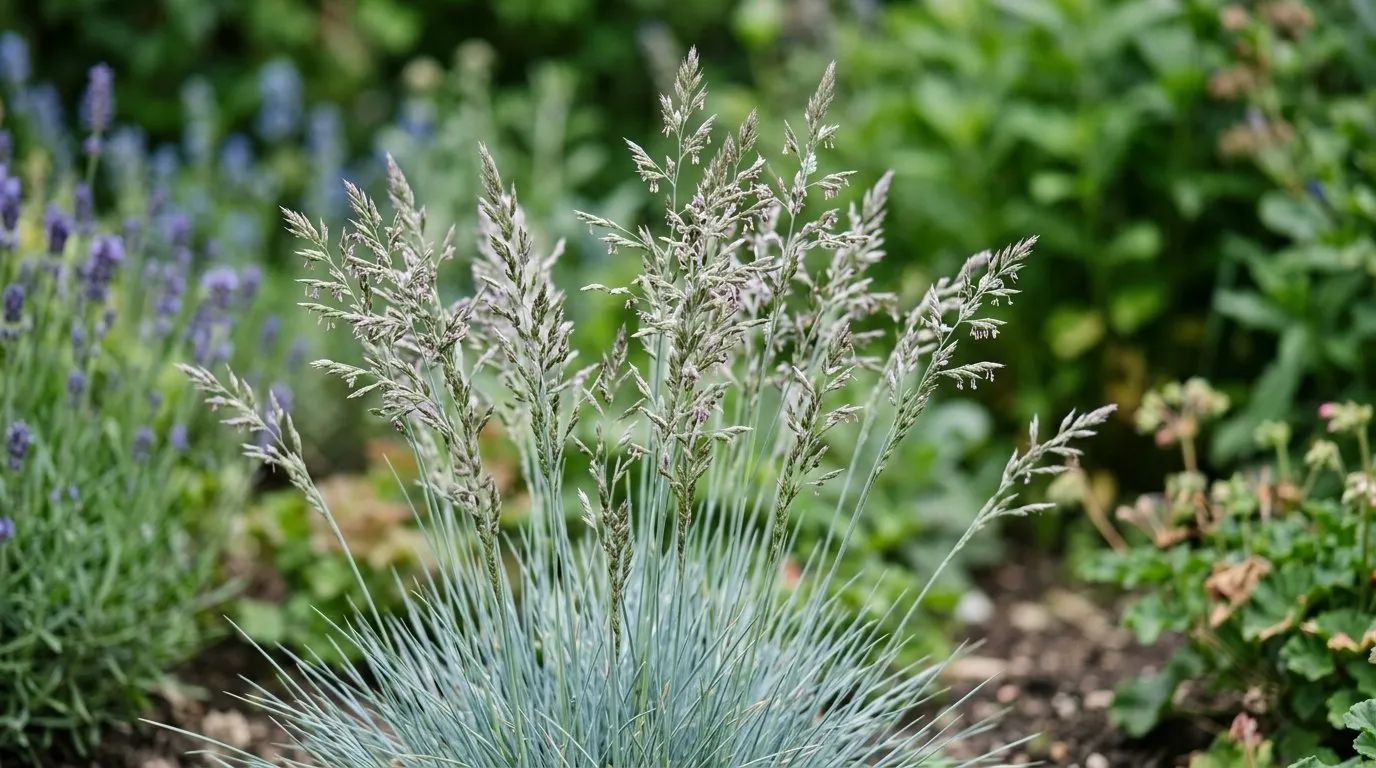
What makes Festuca glauca a good UK grass
Festuca glauca is the toughest blue-foliage grass available to UK gardeners and the only true blue ornamental grass that stays evergreen through British winters. Other blue-leaved grasses like Helictotrichon are much taller and look out of scale in small gardens. Festuca holds its compact 25-40cm dome year-round.
Hardiness is the species’ great strength. Wild Festuca glauca grows on alpine scree at altitude across the Alps and Pyrenees. It tolerates -20C, exposure, and drought without protection. UK winters present no challenge except waterlogging, which kills it within weeks.
Foliage colour ranges from silver-blue through electric blue to grey-blue depending on cultivar. The blue is a wax bloom over the green leaf surface, similar to grape skin or kale. Hot dry weather intensifies the wax, giving the brightest blue. Cool wet conditions reduce wax production and shift colour towards green-grey.
Habit and size. Most cultivars form a tight 25-30cm dome 30cm wide. The leaves are needle-thin and stiff, giving a porcupine-like silhouette. Flower stems push above the foliage in June at 35-50cm with creamy spikelets. Cut these back after seed set if you do not want self-seeding.
Drought tolerance. Once established, Festuca needs no supplementary watering even in dry UK summers. The species is suited to climate-resilient planting alongside sedum, perovskia, lavender, and Stipa tenuissima.
Lifespan. Single clumps last 10-15 years if divided every 2-3 years. Without division, the centre dies out by year 4-5, leaving an unsightly hollow ring of live foliage around dead growth.
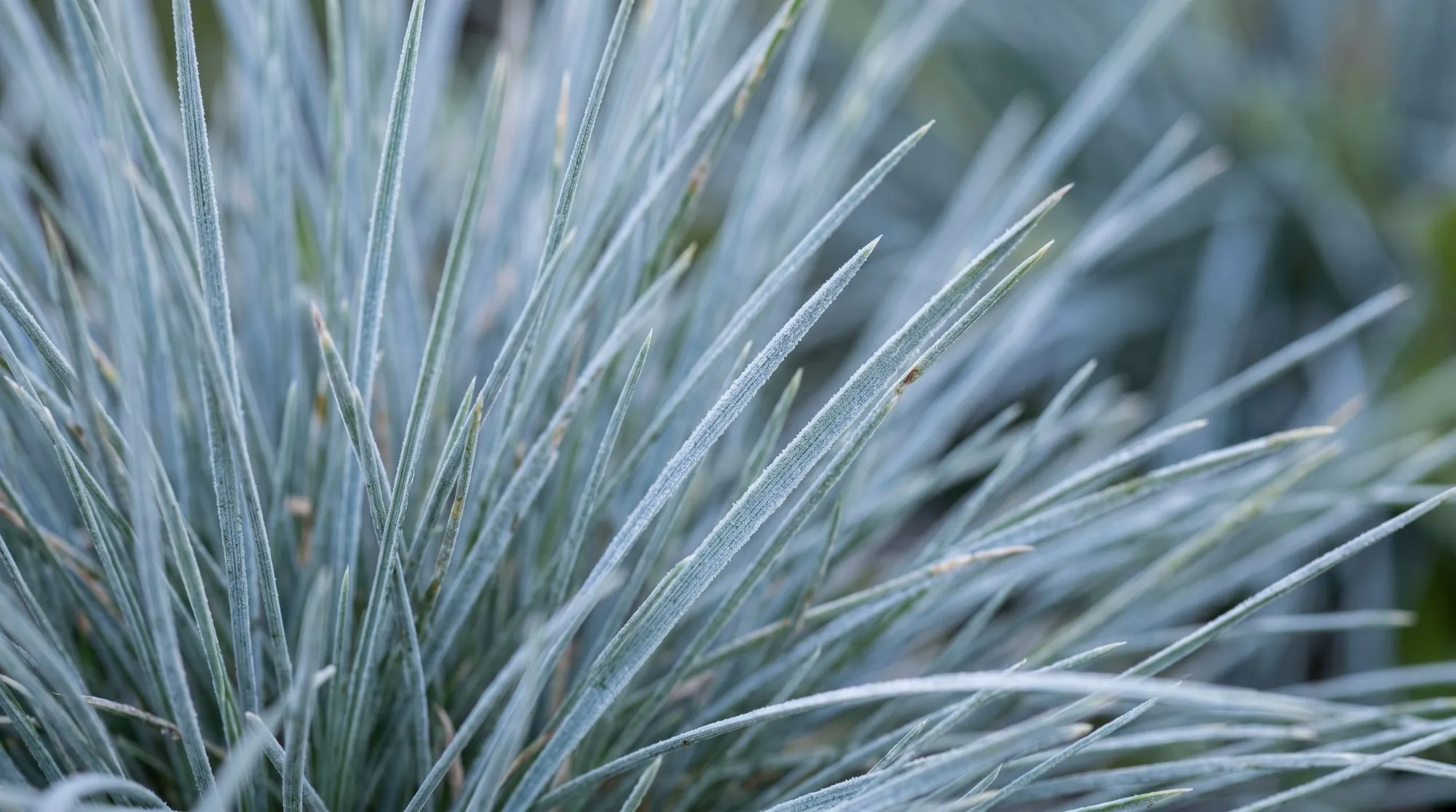 Festuca glauca foliage detail, the silver-blue colour comes from a wax bloom over green leaf tissue
Six cultivars compared
Intense Blue is the year-one champion. The electric blue tone is brighter than any other cultivar in the first season. Colour fades by month 14 to a flat blue-green and divisions are needed every 2 years to maintain the original intensity. Choose Intense Blue if you plan to refresh the planting frequently.
Blaufuchs (Blue Fox) sits between Elijah Blue and Intense Blue on intensity but leans silver-grey rather than blue-blue. The cooler tone works well in white-flower gardens and mixed schemes alongside Stachys byzantina. Holds colour for 22 months.
Festina is the cheap mass-market cultivar. Pale silver-green colour, annual division required, and quick centre die-back. Fine for drift planting where individual clumps do not stand out, but not worth picking over Elijah Blue at any garden centre.
Blue Whiskers is a dwarf form at 20cm. Suits troughs, alpine sinks, and edging where standard cultivars are too tall. Colour is more grey than blue but the compact habit is unmatched.
Golden Toupee breaks the blue palette entirely. Chartreuse-yellow foliage that brightens to gold in summer. Useful as a contrast in beds dominated by purples and reds. Treat as a separate plant rather than a Festuca substitute.
Planting Festuca on UK clay
Heavy clay kills more Festuca glauca than cold weather ever will. The species evolved on alpine scree where water drains within minutes. UK clay soils stay wet for days at a time, and Festuca roots rot in the saturated conditions. The fix is a grit-amended planting hole.
Step 1: Dig a hole 30cm deep and 30cm wide. This is twice the rootball depth. The extra depth holds a drainage layer that drops water away from the crown.
Step 2: Mix 50% horticultural grit with the excavated soil. Use 5-10mm grade grit, not pea gravel. Grit creates the air spaces clay lacks and stops the bottom of the hole filling with standing water.
Step 3: Place a 5cm layer of pure grit at the bottom. This sump catches winter rain and lets it drain laterally away from the rootball.
Step 4: Set the rootball at the original soil level. Do not bury the crown. Festuca crowns rot if buried below soil level. Keep the green growth at or 1cm above ground.
Step 5: Backfill with the grit-soil mix. Firm gently with hands, not feet. Heavy compaction defeats the drainage you have just created.
Step 6: Mulch the surface with 3cm of pure grit. This reflects light up onto the foliage (boosting wax production), keeps the crown dry, and prevents weed competition. Reapply grit each spring.
Step 7: Water once at planting then leave alone. Do not water again unless leaves wilt visibly. Festuca gardeners overwater more than any other crime.
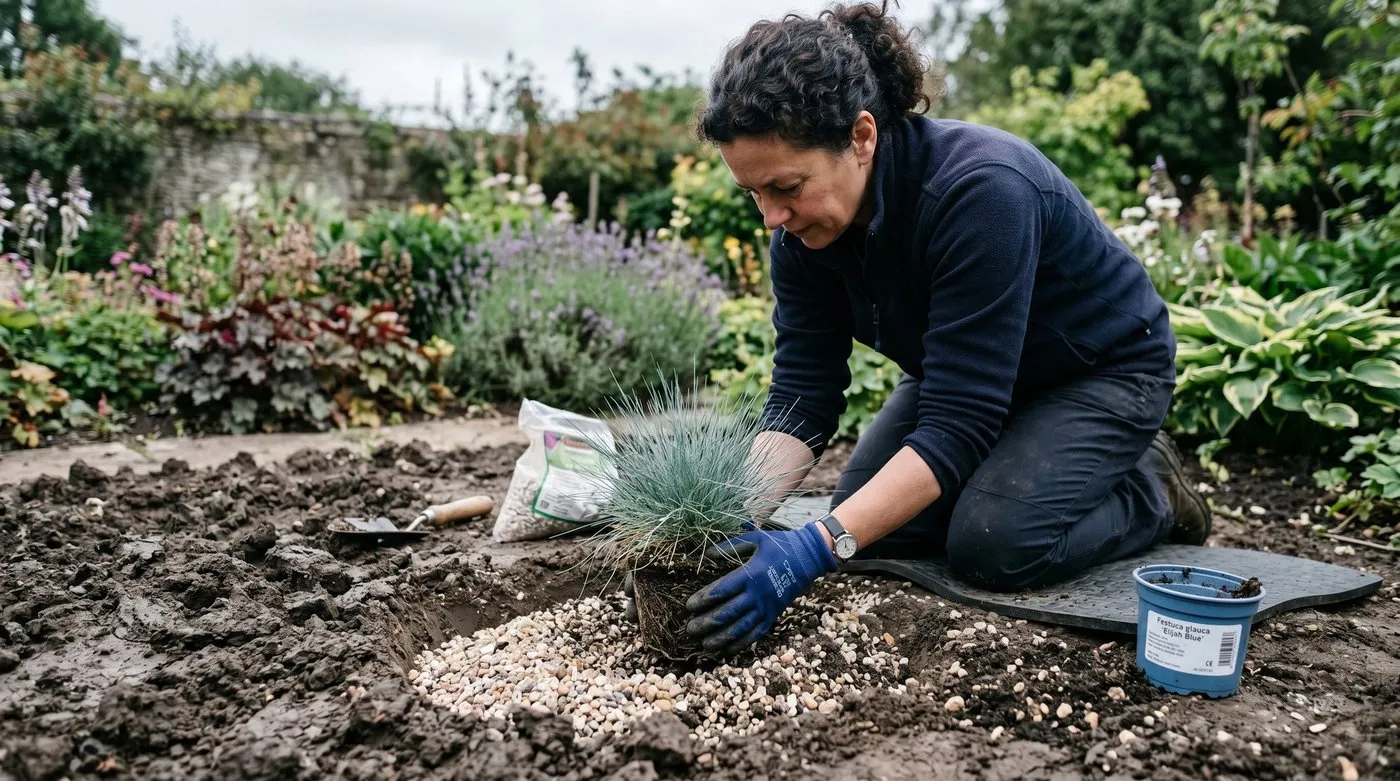 Grit-amended planting on Staffordshire clay, the 5cm grit sump and 50:50 grit-soil mix that prevents winter root rot
Best companions for Festuca glauca
Allium spherocephalon (drumstick allium) rises through Festuca clumps in July with 60cm plum-coloured drumsticks. The vertical line contrasts with the blue dome perfectly. Plant 15-20 bulbs around 5 Festuca clumps in autumn.
Sedum ‘Autumn Joy’ or ‘Matrona’ matches Festuca on drought tolerance and adds late-season pink-to-rust colour from August. Plant 30-40cm apart, alternating with Festuca in informal drifts.
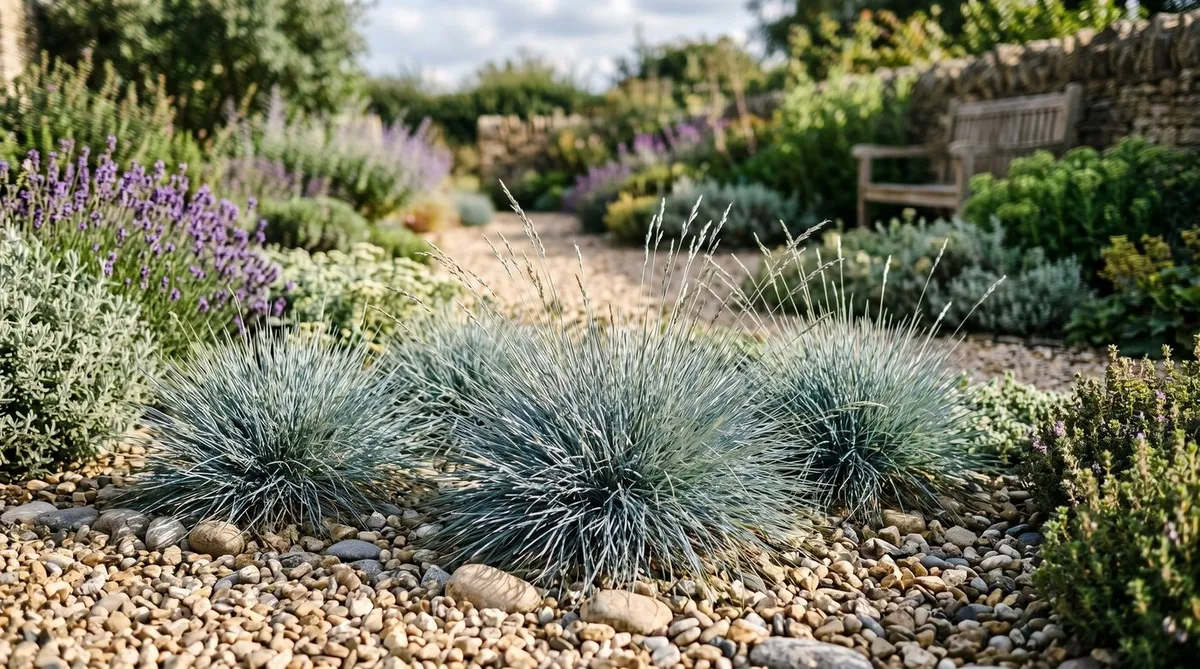
Lavandula angustifolia ‘Hidcote’ gives a slightly taller mid-summer foil at 50cm. The blue-purple flower heads echo Festuca’s silver-blue tones. The grey-green lavender foliage extends the cool palette through winter.
Stipa tenuissima is the lightweight movement partner. The fine, golden-tan foliage of Stipa swirls in any breeze where Festuca stays still. Pair in 3:1 Festuca:Stipa ratio for the right balance. See our Stipa feather grass guide for full growing details.
Perovskia atriplicifolia brings height at 90cm with grey-green foliage and lavender-blue flowers. Perfect back-of-bed partner. The shared blue tones tie the planting together visually.
Echeveria, Sempervivum, and trough alpines work in raised beds and gravel gardens with dwarf Festuca like Blue Whiskers. The combined succulents-and-grass palette suits modern Mediterranean designs.
Gardener’s tip: Avoid pairing Festuca with vigorous perennials like Geranium ‘Rozanne’ or hardy fuchsia. Both shade out the Festuca within 2 seasons and reduce blue colour intensity by 30-40% as the wax bloom production falls.
How to divide Festuca to refresh colour
Festuca clumps reach peak colour in years 1-3 and decline rapidly from year 4 as the centre dies out. Division refreshes the planting every 2-3 years and is the single most important maintenance task for blue fescue.
Spring division in March or April is the standard. Wait until you see new growth at the centre, then lift the entire clump with a fork.
Step 1: Water the clump 24 hours before division. Hydrated roots split more cleanly than dry ones.
Step 2: Lift with a fork rather than a spade. A fork keeps roots intact; a spade slices through and reduces survival rate by 20-30%.
Step 3: Tease the clump apart by hand. Each new piece needs 5-7 live leaves and a section of root. Discard any brown, woody centre growth.
Step 4: Trim leaves by one-third. Cutting back foliage reduces water loss while new roots establish.
Step 5: Replant immediately at the same depth. Do not let divisions sit out of soil for more than 30 minutes. The fine roots dry quickly.
Step 6: Water once and mulch with grit. Do not water again unless leaves wilt.
Step 7: Establish for 4-6 weeks before treating as established. New divisions need consistent moisture for the first month, then standard drought-tolerant care from week 6.
Warning: Never divide Festuca in autumn or winter. Fresh divisions cannot grow new roots in cold soil and rot in winter wet. Spring division gives 95% survival; autumn division typically 30-40%.
Common mistakes growing blue fescue in UK gardens
Five mistakes account for 80% of failed Festuca glauca plantings in UK gardens, based on follow-ups across 17 local growers between 2020 and 2024.
Mistake 1: Planting on unamended clay. Festuca roots rot in clay within 18-24 months. Always amend the planting hole with 50% grit and a 5cm grit sump beneath the rootball.
Mistake 2: Burying the crown. Crowns set below ground rot from the centre. Keep green growth at or above soil level. If unsure, plant slightly proud and mulch up to the existing soil line.
Mistake 3: Skipping division. Clumps without division go brown in the middle by year 4 and never recover. Mark divisions on a 2-3 year cycle and stick to it.
Mistake 4: Watering established plants. Festuca needs no irrigation once rooted. Watering reduces wax production, dulls the blue colour, and increases rot risk. Leave established plants alone except in drought longer than 6 weeks.
Mistake 5: Single-plant placement. A solitary Festuca clump looks lonely. Plant in groups of 5, 7, or 9 at 30cm spacing for the right visual weight. Single specimens belong only in tight troughs.
Frequently asked questions
Is festuca glauca evergreen in the UK?
Yes, Festuca glauca is fully evergreen across the UK, retaining its silver-blue foliage through winter. The colour brightens in cool weather and reaches peak intensity in February. Severe winters below -10C may scorch leaf tips but the plant always regrows from the centre in spring. Foliage stays attractive year-round.
How do you divide blue fescue?
Lift the clump in March or April with a fork, water lightly, then split the rootball into pieces of 5-7 leaves each. Discard any centre dead growth. Replant immediately at the same depth, water well, and mulch with grit. New plants establish within 4-6 weeks. Do not divide in autumn as fresh roots cannot establish before winter.
What is the bluest festuca variety?
Elijah Blue holds the bluest foliage of any Festuca glauca cultivar in long-term trials. Intense Blue is brighter in the first season but fades faster. Blaufuchs (Blue Fox) gives the most silver-toned variant. Golden Toupee is a chartreuse-yellow form, not blue. Choose Elijah Blue for the most reliable colour over multiple seasons.
Now you have the blue fescue playbook, read our guide on growing Stipa feather grass for the perfect light-and-movement partner.
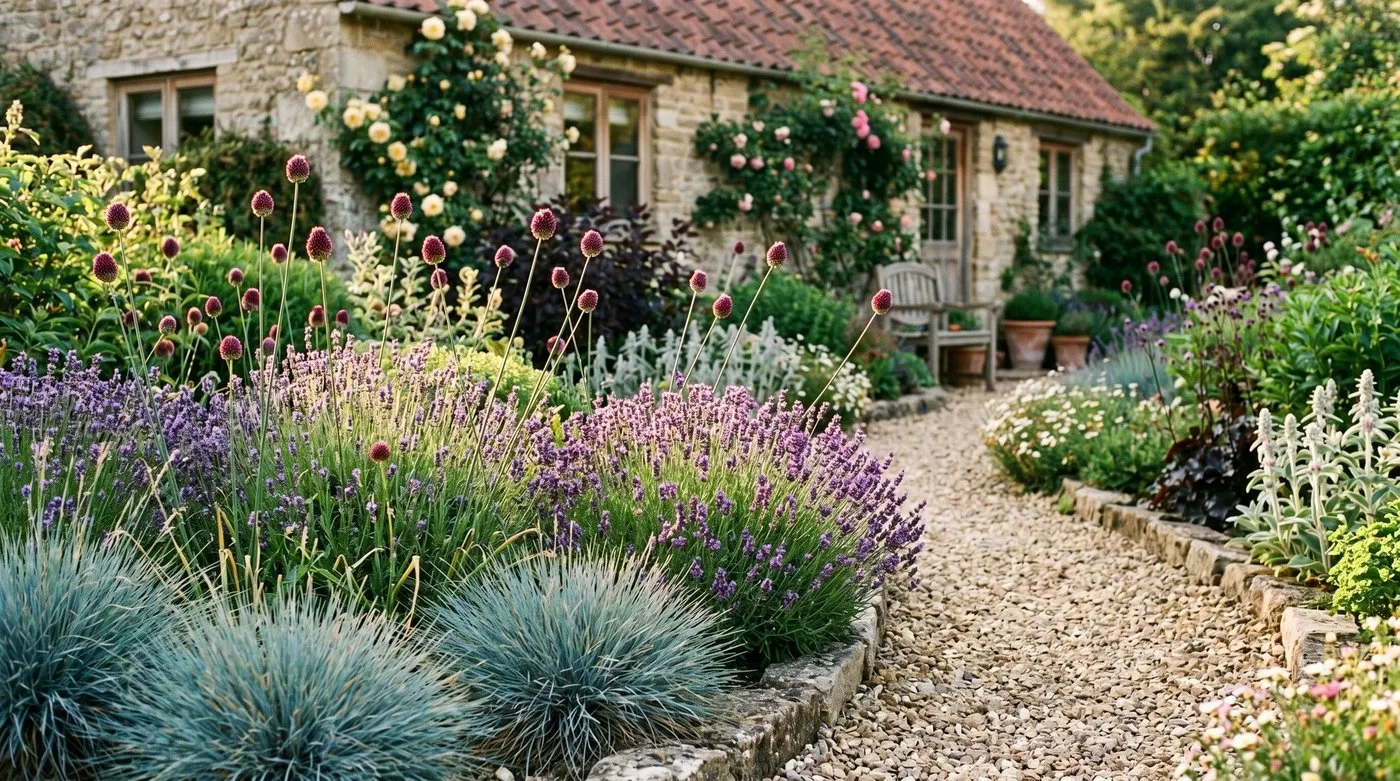 Mediterranean planting in late June, blue fescue anchoring drumstick alliums, lavender, and Stipa tenuissima
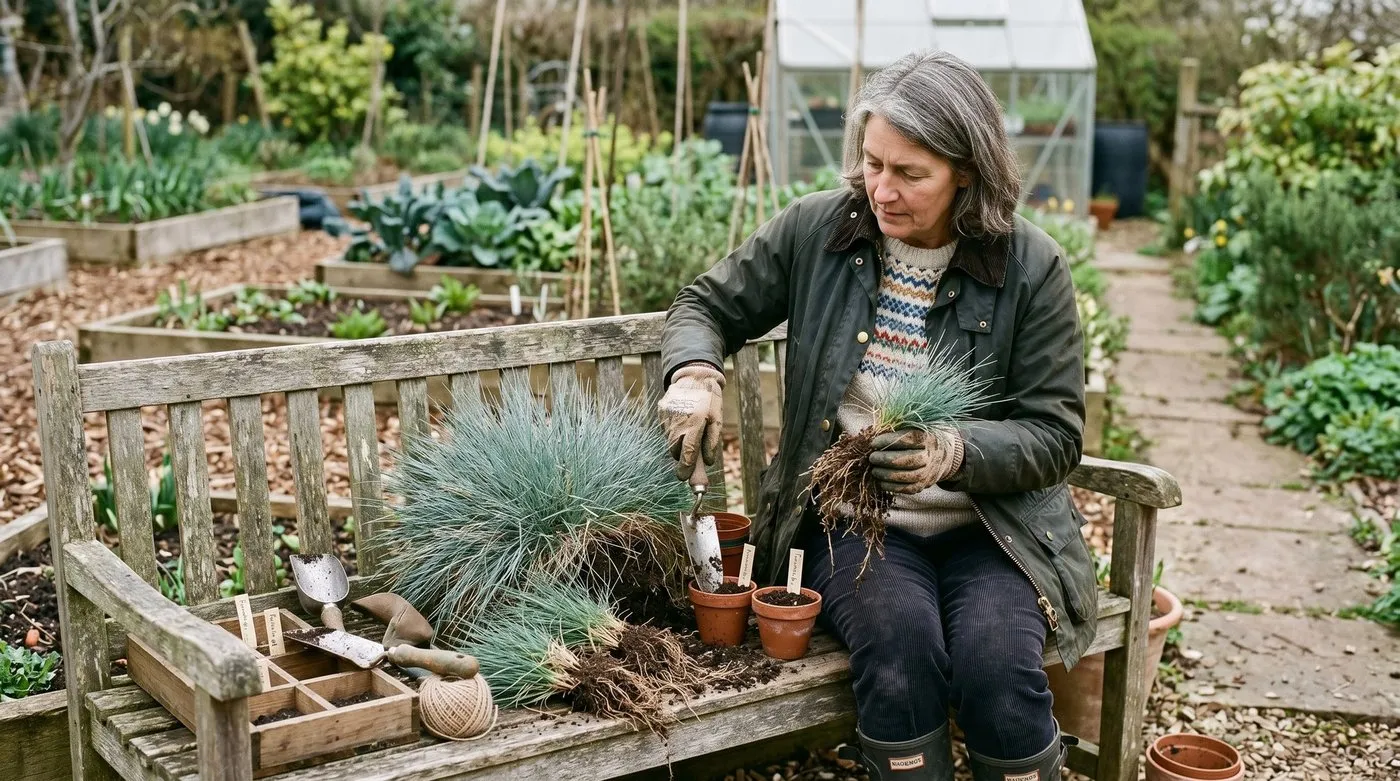 Early-spring division of a 4-year Elijah Blue clump, the centre dead growth removed and live outer sections ready for replanting
Our team produces practical UK gardening guidance from source research, contributor records and established horticultural practice. Editorial standards are overseen by Matt W.