How to Grow Peonies: UK Planting Guide
A complete guide to growing peonies in UK gardens. Covers bare-root planting depth, herbaceous and tree types, soil prep, and seasonal care.
Key takeaways
- Plant bare-root peonies from October to March with eyes no more than 2.5cm below the soil surface
- Planting too deep is the single most common reason peonies fail to flower
- Herbaceous peonies live for 50 years or more and improve with age once established
- Tree peonies keep a permanent woody framework and produce the largest flowers up to 25cm across
- Peonies need full sun or light shade and resent being moved once settled
- Support herbaceous types with grow-through hoops placed in early spring before stems reach 30cm
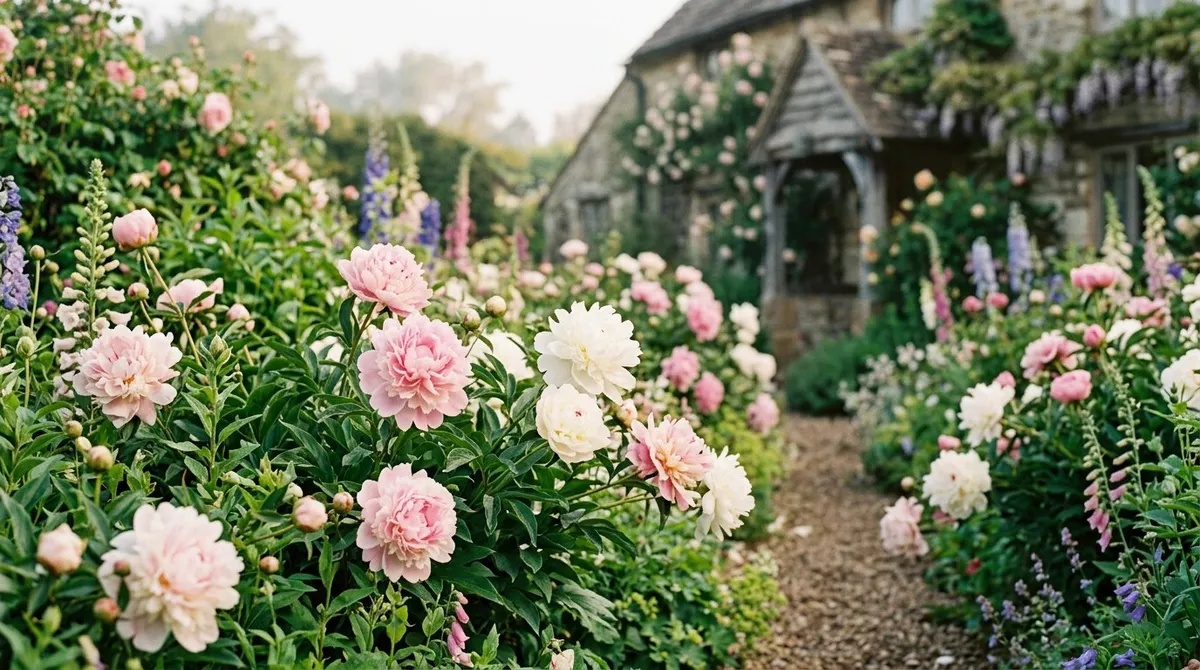
Peonies are among the most spectacular perennials in any British garden. They produce enormous, fragrant flowers in late spring and early summer, ranging from pure white through every shade of pink to deep crimson. A well-placed peony in full bloom stops you in your tracks. Better still, these are plants that improve with age and outlive the gardener who plants them.
The key to growing peonies is getting the planting right from the start. Depth matters enormously. Too deep and your peony will produce plenty of leaves but no flowers, sometimes for years. Too shallow and frost heaves the roots out of the ground. This guide covers planting, care, and the different types available to UK gardeners. Peonies make superb partners in a cottage garden planting plan alongside roses, foxgloves, and hardy geraniums.
What types of peony can I grow in the UK?
Three main types of peony grow well in British gardens. Each has distinct habits, flowering times, and uses.
Herbaceous peonies (Paeonia lactiflora)
Herbaceous peonies are the most widely grown type in UK gardens. They die back completely to ground level each winter and send up fresh shoots in spring. Plants reach 70-100cm tall and produce flowers from late May to June. The flowers can be single, semi-double, or fully double. Established clumps produce 20-30 stems and dozens of flowers. Varieties include ‘Sarah Bernhardt’ (double pink), ‘Bowl of Beauty’ (Japanese-type, pink and cream), ‘Duchesse de Nemours’ (fragrant double white), and ‘Karl Rosenfield’ (deep crimson double).
Tree peonies (Paeonia suffruticosa)
Tree peonies keep a permanent woody framework that grows taller each year, reaching 1.5-2 metres over time. The flowers are enormous, often 20-25cm across, and appear in April to May, several weeks before herbaceous types. They are slower to establish but eventually form magnificent shrubs. ‘Shima Nishiki’ (red and white striped), ‘Hana Kisoi’ (semi-double pink), and ‘Joseph Rock’ (white with dark blotches) are outstanding varieties for UK conditions.
Intersectional peonies (Itoh hybrids)
Itoh peonies are crosses between herbaceous and tree peonies. They combine the large flowers and colour range of tree peonies with the herbaceous habit of dying back in winter. Plants grow to 70-90cm and are exceptionally sturdy, rarely needing staking. ‘Bartzella’ (double yellow), ‘Cora Louise’ (white with purple flares), and ‘Julia Rose’ (apricot fading to pink) are popular choices. They flower from late May to June and produce more blooms per plant than either parent type.
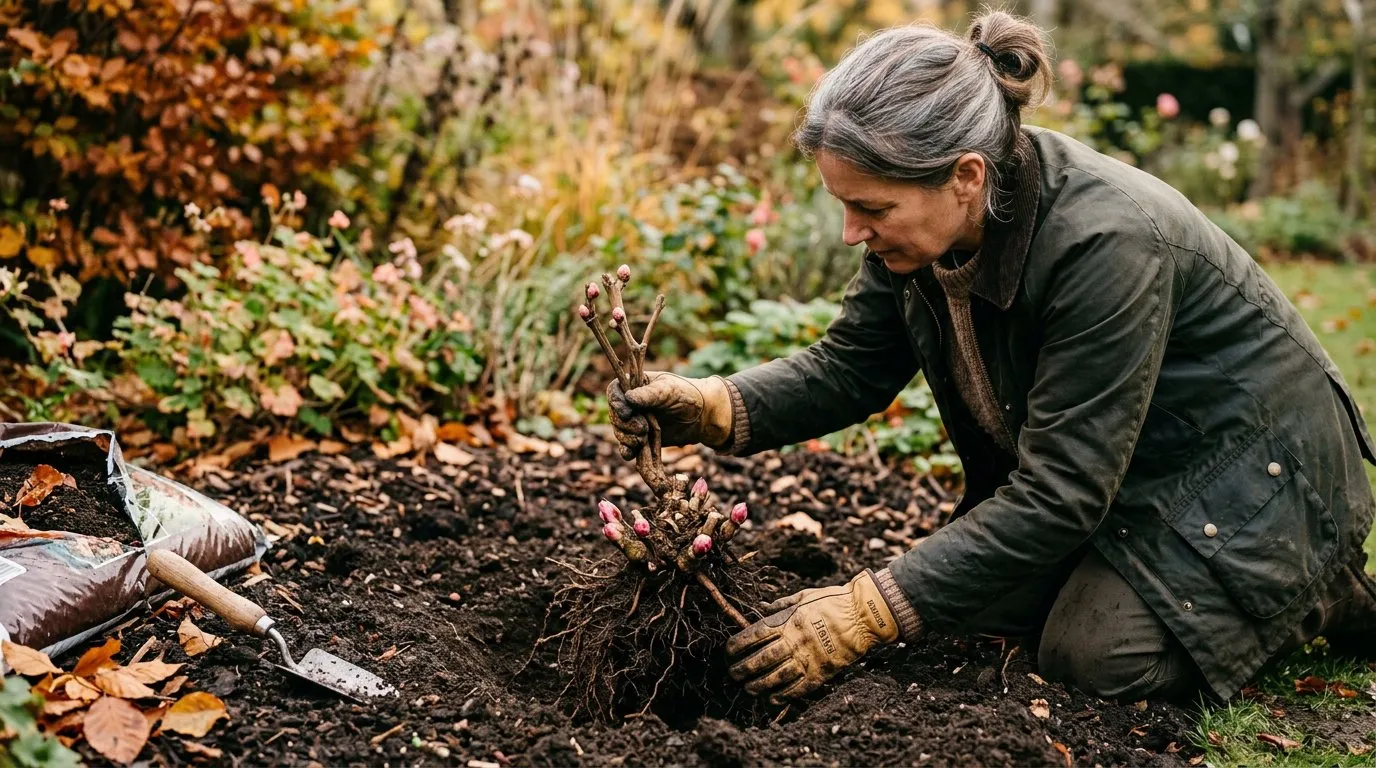
Plant bare-root peonies with the eyes no more than 2.5cm below the soil surface, any deeper and they will not flower
How do I plant peonies correctly?
Planting depth is critical. The eyes (pink or red buds) on a bare-root herbaceous peony must sit no more than 2.5cm below the soil surface. This is the single most important rule for peony success and the most common mistake gardeners make.
Preparing the planting hole
Dig a hole 45cm wide and 30cm deep. Mix the excavated soil with a bucketful of well-rotted garden compost or composted bark. If your soil is heavy clay, add 30% horticultural grit to improve drainage. Peonies dislike waterlogged soil, which causes root rot. For clay soil tips, see our guide on how to improve clay soil.
Planting bare-root peonies
Place the bare-root crown in the hole and position it so the eyes sit 2.5cm below the finished soil level. Spread the roots outward and backfill with the improved soil mix, firming gently. Water well to settle the soil around the roots. Apply a 5cm layer of garden mulch around the plant, keeping it clear of the crown.
Planting pot-grown peonies
Plant pot-grown peonies at the same depth they were growing in the container. The top of the rootball should sit level with the surrounding soil surface. Do not bury it deeper. Water thoroughly after planting.
Where should I plant peonies?
Peonies need full sun or light dappled shade for at least 5-6 hours daily. Morning sun with afternoon shade is ideal, as it protects flowers from bleaching in hot spells. Avoid deep shade, where plants produce foliage but few or no flowers. Our guide to plants for shade covers better options for darker spots.
Space herbaceous peonies 90cm apart and tree peonies 1.2 metres apart. Good air circulation reduces the risk of botrytis. Avoid planting near large trees whose roots compete for moisture and nutrients.
Choose the position carefully. Peonies resent being moved once established and can sulk for several years after transplanting. Plant them where you want them to stay for the next 50 years.
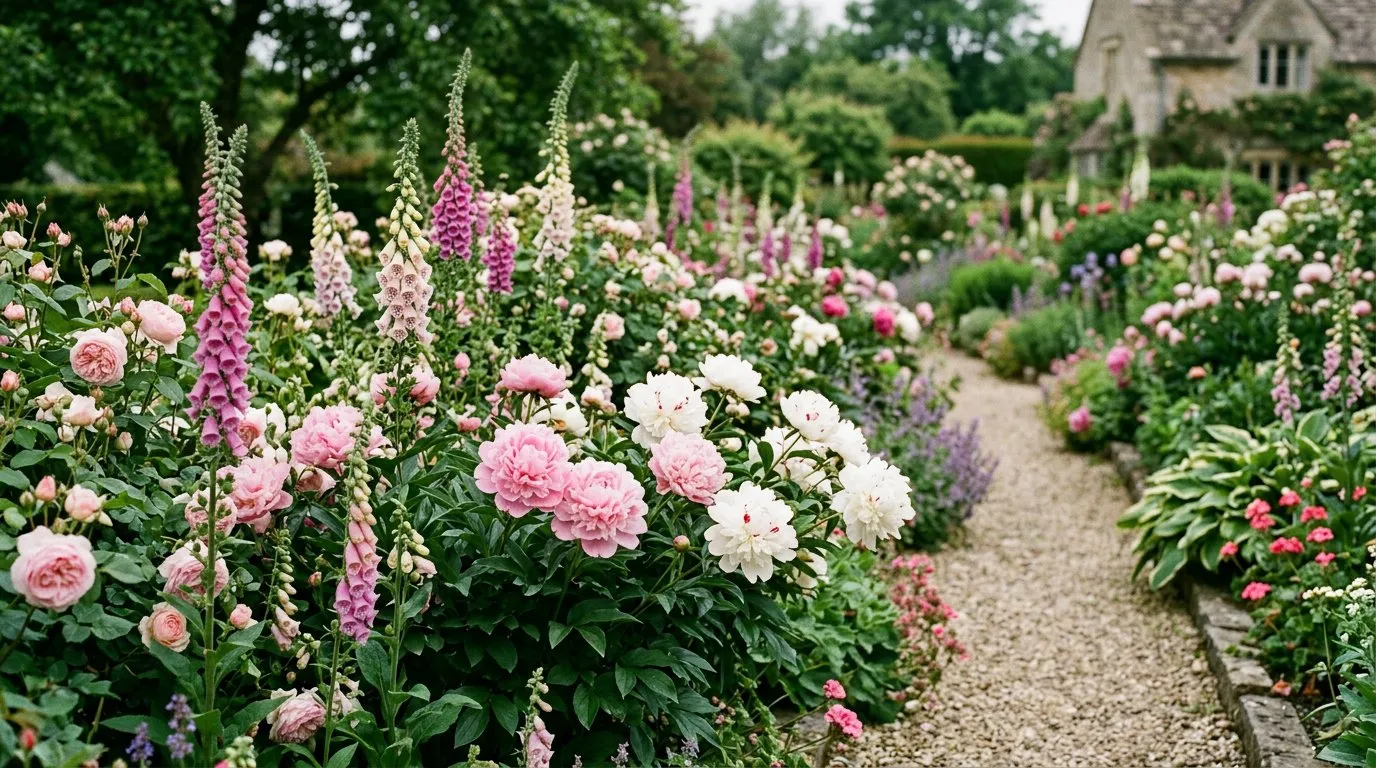
Peonies pair with roses, foxgloves, and alliums in a mixed herbaceous border
How do I care for peonies through the year?
Spring (March to May)
Place grow-through support hoops over herbaceous peonies in March, before the stems reach 30cm. Trying to support flopping stems after they have grown tall damages the plant. Feed with a balanced granular fertiliser such as blood, fish, and bone, scattered around the base. Water during dry spells, especially in the first two years after planting.
Summer (June to August)
Deadhead spent flowers by cutting back to a strong leaf. Enjoy the dark green foliage, which provides structure in the border after flowering finishes. Continue watering in prolonged dry weather. Mulch around the base to retain moisture and keep roots cool.
Autumn (September to November)
Cut herbaceous peony stems to ground level once the foliage has turned brown and died back naturally in October or November. Leaving dead foliage over winter encourages fungal diseases. Autumn is the best time to divide overcrowded clumps and plant new bare-root peonies. Apply a fresh 5cm mulch of garden compost, keeping it away from the crown.
Winter (December to February)
Peonies need a period of winter cold (vernalisation) to trigger flowering. At least 6 weeks below 5 degrees C is required. This happens naturally across the entire UK, which is why peonies are such reliable garden plants in Britain. Leave tree peonies unpruned unless removing dead or damaged wood.
What are the best peonies for cutting?
Peony flowers make outstanding cut flowers, lasting 7-10 days in a vase. Cut stems when the buds feel like a soft marshmallow and are just beginning to open. Early morning cutting extends vase life.
Best for cutting: ‘Sarah Bernhardt’ (double pink, classic florist peony), ‘Duchesse de Nemours’ (double white, intensely fragrant), ‘Karl Rosenfield’ (deep crimson double), ‘Coral Charm’ (semi-double coral, fading to peach), and ‘Festiva Maxima’ (double white with crimson flecks).
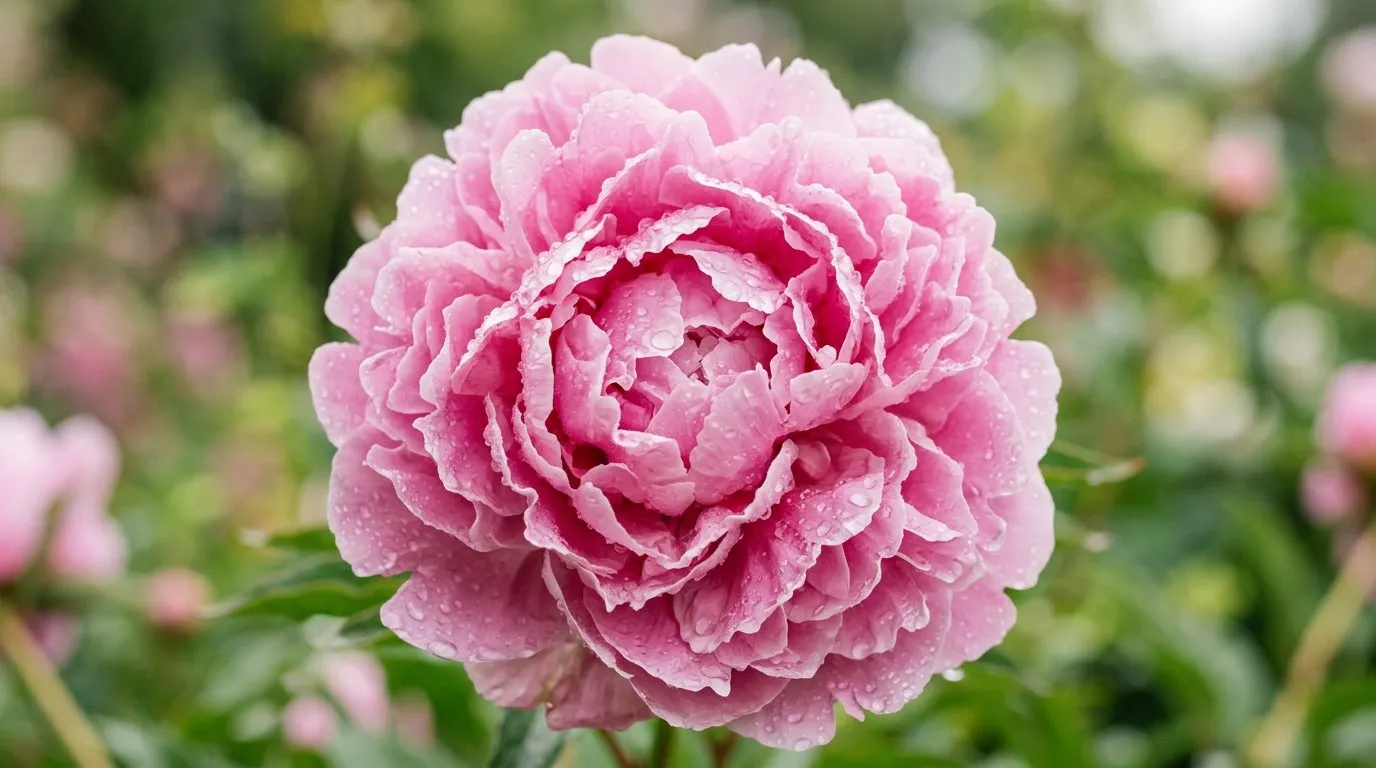
‘Sarah Bernhardt’ is the most popular cut-flower peony, with fully double pink blooms that last a week in a vase
Common peony problems in the UK
Peony wilt (Botrytis paeoniae)
The most serious peony disease. Stems wilt and collapse, turning brown at the base. Grey mould appears in wet weather. Cut affected stems to ground level immediately and bin them. Do not compost. Improve spacing and air circulation to prevent recurrence.
Ants on peony buds
Ants crawling over peony buds are feeding on the sweet nectar the buds produce. They do no harm to the plant whatsoever. There is no need to remove them. If cutting flowers for a vase, tap the stem gently to dislodge ants before bringing them indoors.
Leaf blotch
Purplish-red spots on leaves in summer are usually peony leaf blotch (Cladosporium paeoniae). It is mainly cosmetic and does not affect flowering. Remove affected foliage in autumn and dispose of it to reduce spores the following year.
Growing peonies with companion plants
Why we recommend ‘Sarah Bernhardt’ for UK cut-flower growers: After 30 seasons of growing herbaceous peonies for both the border and the vase, ‘Sarah Bernhardt’ consistently delivers more than any other variety. In one established clump I have tended for over a decade, it produced 27 cut-quality stems in a single June flush, every one lasting 8-9 days in the vase. No other double pink comes close for stem count combined with fragrance, and it is still readily available from most UK nurseries at under £10 per bare-root crown.
Peonies combine superbly with other traditional border plants. Plant them alongside roses, foxgloves (Digitalis purpurea), hardy geraniums, and tall alliums. The emerging peony foliage hides the dying leaves of earlier spring bulbs. Late-flowering perennials such as Japanese anemones, asters, and sedums extend the border season long after peony flowers have finished.
Underplant peonies with low ground-cover plants like alchemilla, ajuga, or hardy geraniums that fill the space around the base without competing for light.
Now you’ve mastered peonies, read our guide on growing roses in the UK for another long-lived flowering shrub that pairs with peonies in the border.
Frequently asked questions
The RHS peony growing guide has further information on varieties and care for UK conditions.
Lawrie has been gardening in the West Midlands for over 30 years. He grows his own veg using no-dig methods, keeps a wildlife-friendly garden, and writes practical advice based on real UK growing conditions.