Asparagus Beetle: Identification and Control
Asparagus beetle identification and organic control for UK growers. Covers both species, lifecycle, damage signs, hand picking, and biological methods.
Key takeaways
- Two species attack UK asparagus: the common asparagus beetle and the spotted asparagus beetle
- Adults are 6-8mm long, active from April to September, and lay eggs directly on asparagus spears and fern
- Larvae strip asparagus fern bare, reducing crown energy reserves and weakening future harvests by up to 30%
- Hand picking adults and larvae twice weekly from May onwards is the single most effective control
- Cutting and burning all asparagus fern in autumn removes overwintering sites and reduces spring beetle numbers by 60-80%
- Netting with 1.5mm mesh from late April excludes adult beetles entirely from asparagus beds
The asparagus beetle is the most damaging pest of asparagus crops in the UK. Both adult beetles and larvae strip the ferny foliage that asparagus plants need to build energy for the following year’s harvest. Left unchecked, a heavy infestation reduces spear production by up to 30% within two seasons.
Two species occur in British gardens and allotments. The common asparagus beetle (Crioceris asparagi) is found throughout the UK. The spotted asparagus beetle (C. duodecimpunctata) is largely restricted to southern England. Both are manageable with consistent hand picking, good crop hygiene, and physical barriers. No chemical treatment is normally needed.
How do I identify asparagus beetle?
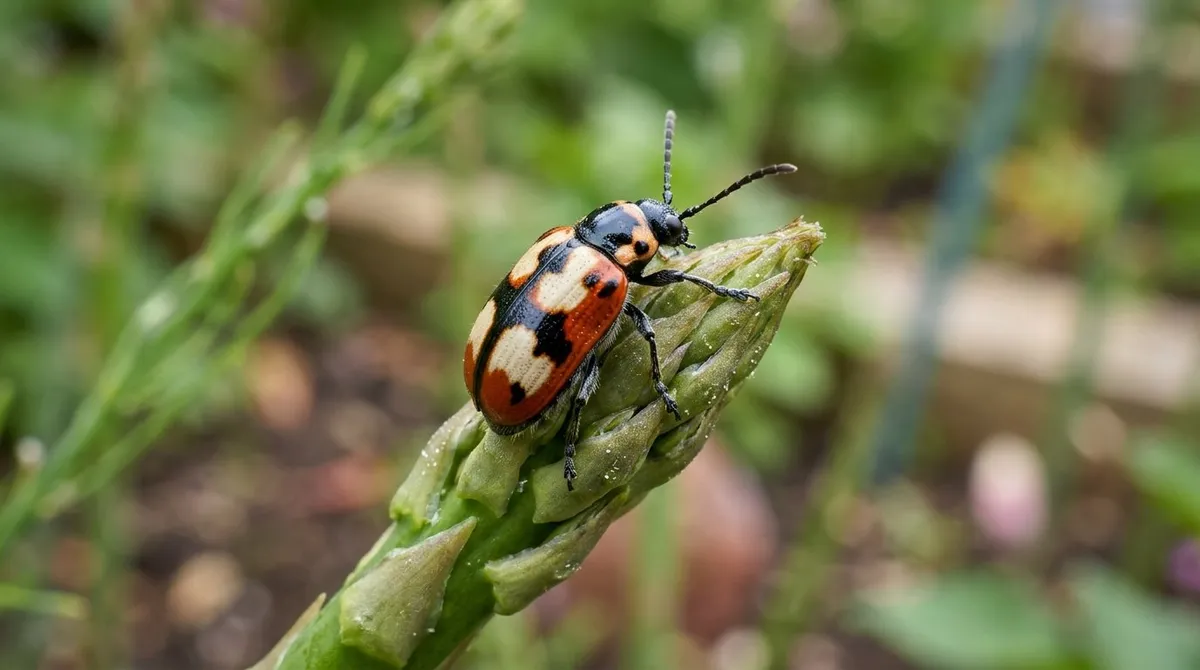
The common asparagus beetle (Crioceris asparagi) is 6-8mm long with distinctive cream and orange-red wing cases marked by a black cross pattern. The head and thorax are glossy blue-black. The legs are dark. This colour pattern is unique among UK beetles and makes identification straightforward.
The spotted asparagus beetle (C. duodecimpunctata) is similar in size at 5-7mm but entirely different in appearance. Its wing cases are plain orange-red with 12 small black spots arranged in rows. The head is orange rather than black.
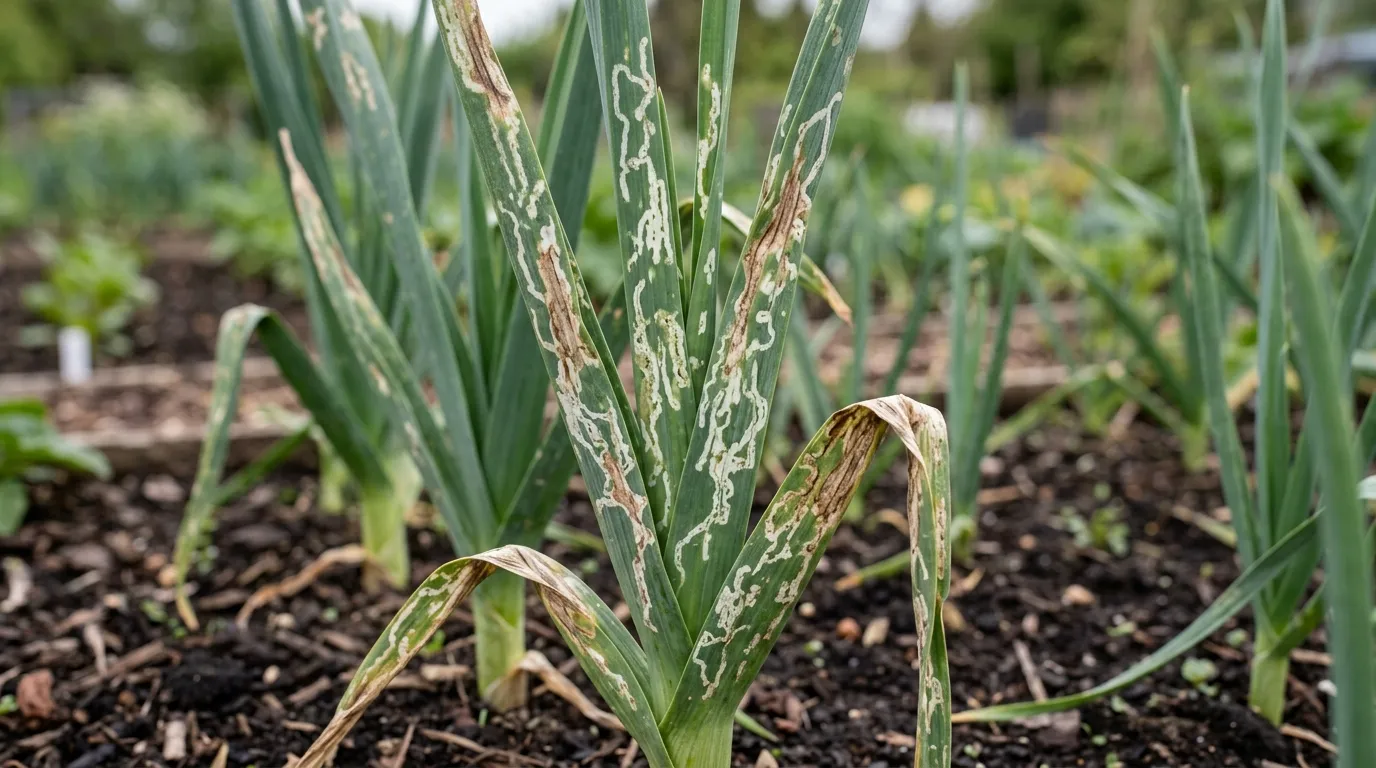
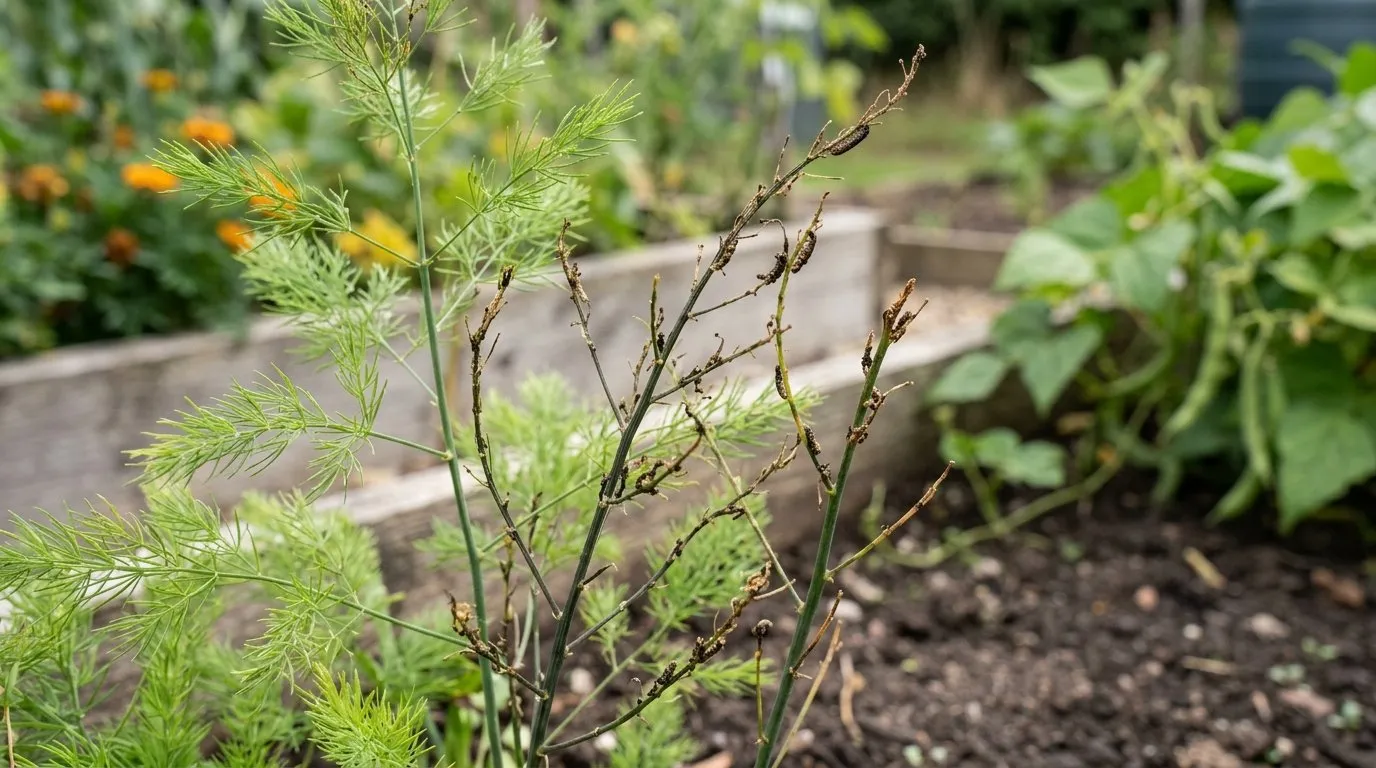 Asparagus fern showing typical defoliation damage from beetle larvae feeding through summer.
Both species sit openly on asparagus fern in warm weather. They fly readily when disturbed but often drop to the ground first, tucking legs against the body. On soil, they are surprisingly difficult to spot.
Comparison: common vs spotted asparagus beetle
| Feature | Common asparagus beetle | Spotted asparagus beetle |
|---|---|---|
| Scientific name | Crioceris asparagi | Crioceris duodecimpunctata |
| Adult size | 6-8mm | 5-7mm |
| Wing case colour | Cream with orange-red margins | Plain orange-red |
| Wing case markings | Black cross pattern | 12 small black spots |
| Head colour | Blue-black | Orange-red |
| Egg colour | Dark brown to black, laid in rows | Yellow-green, laid singly |
| Larva colour | Grey-olive with dark head | Orange-yellow with dark head |
| Larva feeding | On fern foliage (external) | Inside asparagus berries |
| Damage type | Defoliates fern, scars spears | Feeds inside berries, minor foliage damage |
| UK distribution | Throughout UK | Mainly southern England |
The common asparagus beetle causes far more crop damage. Its larvae feed externally on fern fronds, stripping them bare. The spotted species is less destructive because its larvae develop inside asparagus berries rather than defoliating the plant. Most UK growers will encounter the common species.
Eggs
Female common asparagus beetles lay eggs in neat rows along asparagus spears and fern stems. Each egg is 1-2mm long, cylindrical, dark brown to black, and attached end-on to the plant. A single female lays 200-400 eggs per season in batches of 3-8.
Spotted asparagus beetle eggs are different. They are yellow-green, laid singly rather than in rows, and attached to the sides of fern fronds. They are harder to spot against the foliage.
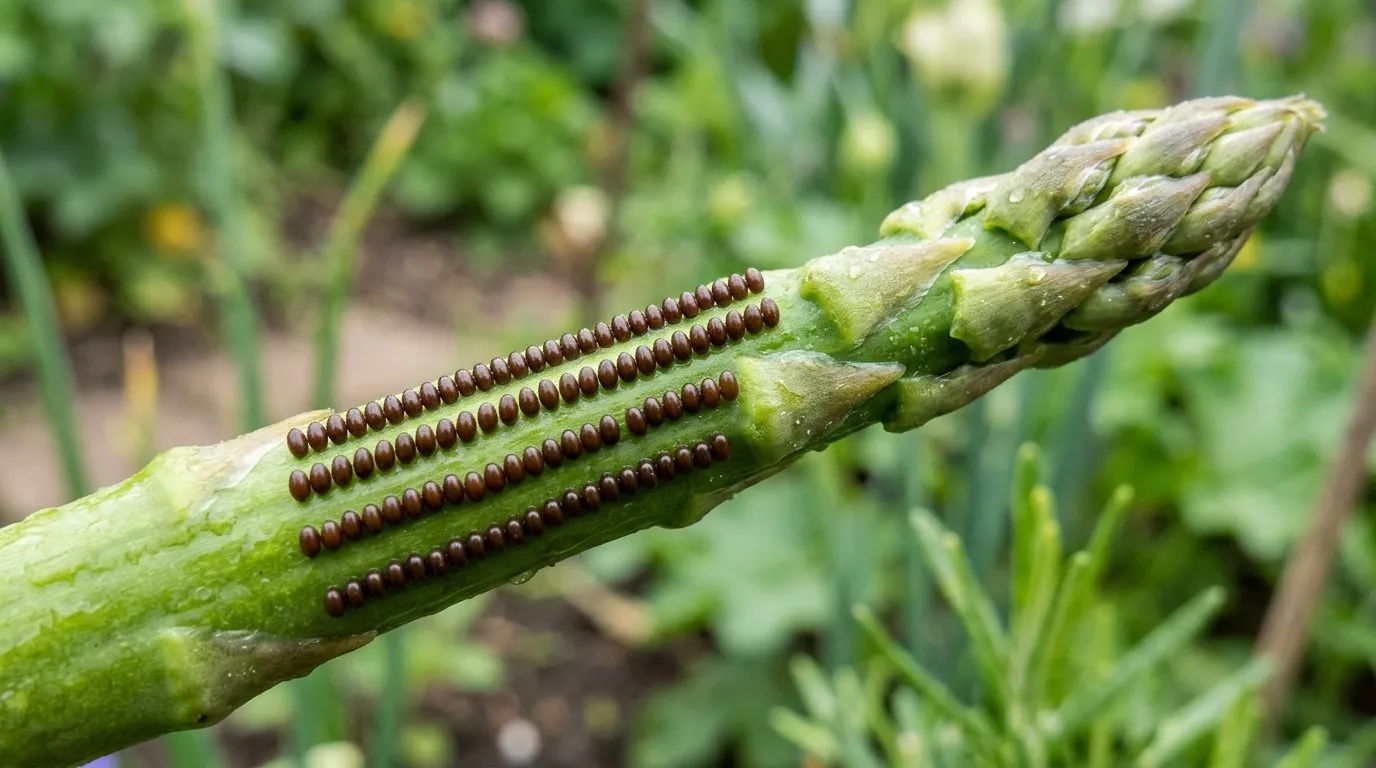 Common asparagus beetle eggs arranged in characteristic dark rows on a spear. Each female lays 200-400 per season.
Larvae
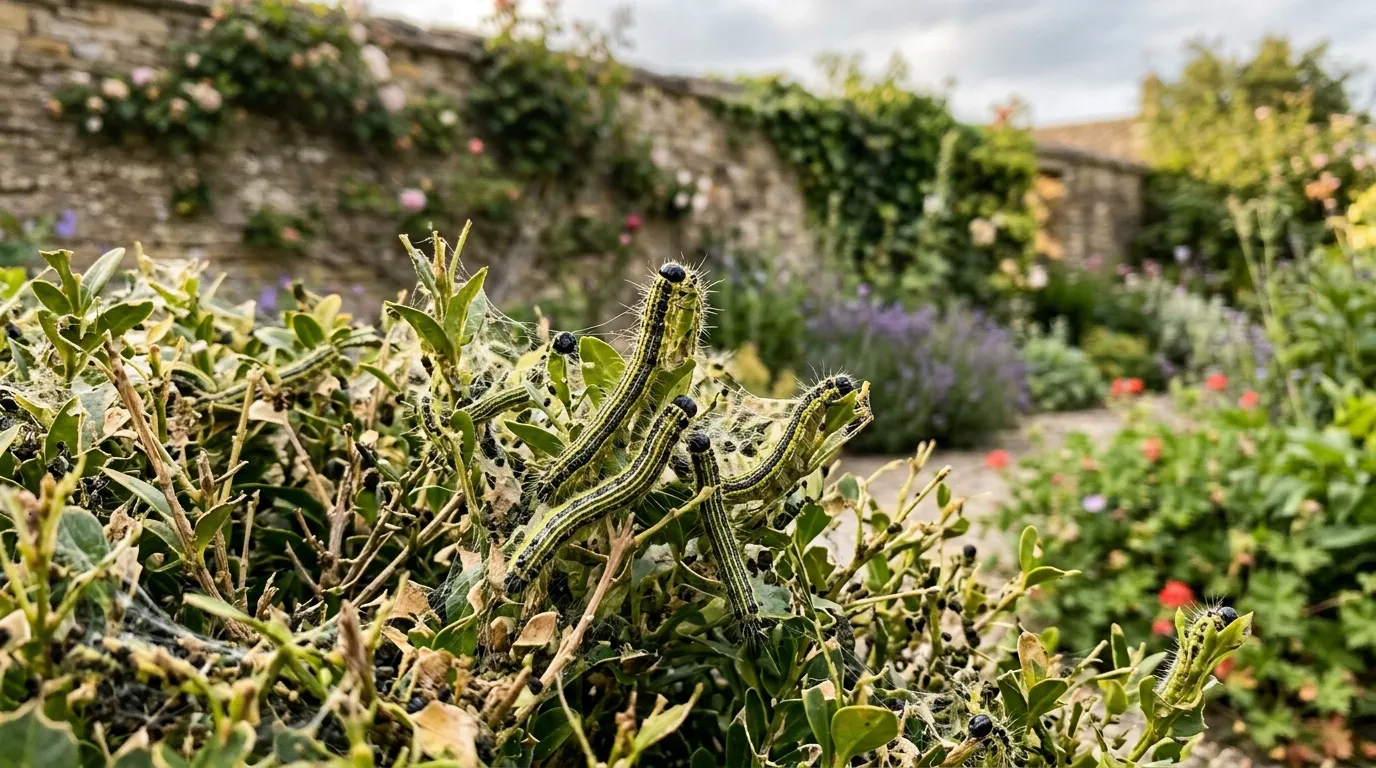
Common asparagus beetle larvae are 8-10mm long, plump, grey-olive grubs with a dark head and three pairs of short legs behind the head. They feed openly on fern fronds, working their way along each needle-like leaf.
Heavy larval feeding turns green fern into brown, skeletal stems. The larvae produce dark frass (excrement) as they feed. A heavily infested plant looks scorched and bare by mid-summer.
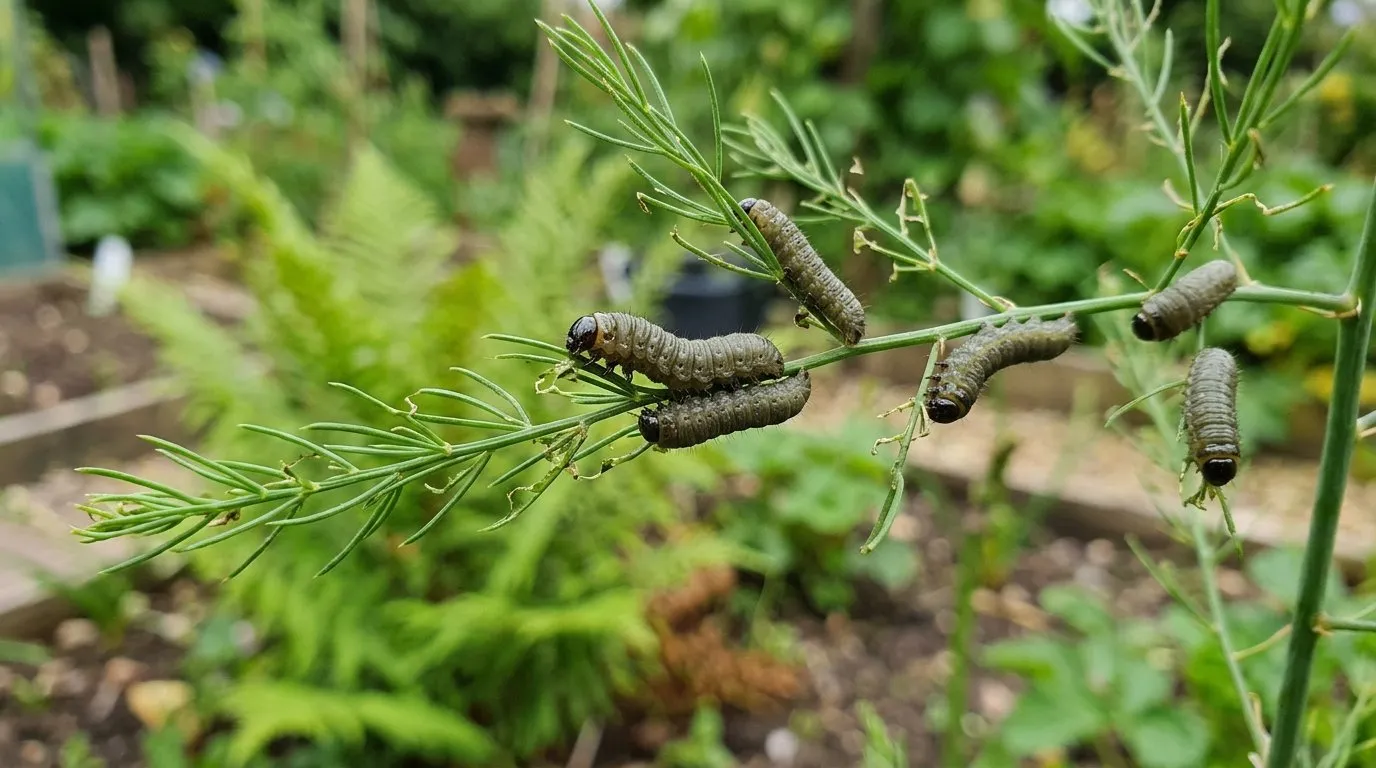 Grey-olive larvae feeding on asparagus fern. Each larva feeds for 10-14 days before dropping to the soil to pupate.
Spotted asparagus beetle larvae are rarely seen. They are orange-yellow and feed inside the red berries of female asparagus plants. They cause no visible foliage damage.
What damage does asparagus beetle cause?
Asparagus beetle larvae strip the fern foliage that plants need to photosynthesise and store energy in the crown. This is the core problem. Asparagus is a perennial crop. The spears you harvest in spring are powered entirely by energy the crown stored during the previous summer’s fern growth.
Heavy defoliation in summer directly reduces the following year’s spear harvest. In trials at Stockbridge Technology Centre, repeated defoliation reduced spear yield by 25-30% the following season. Over 3-4 years of uncontrolled damage, crowns weaken progressively.
Damage to spears
Adult beetles also feed on emerging spears in April and May. They chew shallow grooves and scars into the spear surface. Damaged spears develop brown scarring and may curve as tissue dries unevenly. Heavily scarred spears are unmarketable for commercial growers and unappetising in the kitchen.
Egg rows on spears are another problem. The dark, protruding eggs are difficult to wash off and make spears unappealing to eat. If you spot eggs on spears during harvest, pick the affected spear and dispose of the eggs rather than leaving them to hatch.
Damage to fern
This is where the real crop loss happens. Larvae hatch from eggs laid on fern from late May onwards. They feed for 10-14 days, consuming large quantities of the fine, needle-like foliage. A single larva defoliates 5-10cm of fern. With dozens of larvae per plant, entire stems can be stripped bare by July.
Defoliated plants attempt to regrow fern, but this secondary growth is weaker and shorter. The crown receives less stored energy going into winter dormancy. The result is fewer, thinner spears the following spring. For advice on growing strong asparagus crowns, see our guide on how to grow asparagus in the UK.
Secondary effects
Weakened plants are more susceptible to fungal diseases. Fusarium crown rot and violet root rot both attack stressed asparagus crowns. Repeated beetle damage plus waterlogged soil is a common combination that leads to crown death on heavy clay. On my own heavy clay in Staffordshire, I lost two crowns in 2023 after a particularly heavy beetle year followed by a wet autumn.
What is the asparagus beetle lifecycle?
Adult beetles emerge from the soil in April when temperatures reach 12-15C. Understanding the full lifecycle helps you target control at the most vulnerable stages.
Month-by-month lifecycle
| Month | Stage | Activity | Control opportunity |
|---|---|---|---|
| April | Adults emerge | Leave soil, fly to asparagus, feed on spears | Hand pick adults on warm days |
| May | Mating and egg-laying | Females lay 200-400 eggs on spears and fern | Pick adults, crush egg rows on spears |
| June | Larvae feeding | First generation larvae strip fern | Pick larvae off fern twice weekly |
| July | Larvae pupate | Mature larvae drop to soil, pupate 2-5cm deep | Lightly hoe soil around plants |
| August | Second generation adults | New adults emerge, feed on fern, lay more eggs | Hand pick second flush of adults |
| September | Late larvae | Second generation larvae feeding on fern | Remove larvae before they pupate |
| October-March | Overwintering | Adults dormant in soil and plant debris | Cut fern, clear debris, hoe soil |
In southern England, two full generations per year are common. Further north and in Scotland, a single generation is more typical. Warmer springs and longer summers are extending the two-generation range northward.
Pupation
Mature larvae drop from the fern to the ground and burrow 2-5cm into the soil. They pupate in a small earthen cell. The pupal stage lasts 7-14 days depending on soil temperature. Adults emerge, feed briefly, and either lay another round of eggs (in warm areas) or prepare to overwinter.
Overwintering
Adults overwinter in the soil near asparagus beds and inside hollow asparagus stems left standing. They also shelter under leaves, mulch, and debris around the bed edges. This is why autumn crop hygiene is so effective. Removing their shelter sites exposes them to winter cold, wet, and predators.
How do I control asparagus beetle organically?
Hand picking adults and larvae twice weekly from May to September is the single most effective organic control. Combined with autumn crop hygiene, it keeps most allotment and garden asparagus beds below damaging levels without any sprays or chemicals.
Control methods compared
| Method | Effectiveness | Timing | Effort | Best for |
|---|---|---|---|---|
| Hand picking | 70-90% reduction | May-September, twice weekly | 10-15 mins per session | All growers, small-medium beds |
| Autumn crop hygiene | 60-80% reduction next spring | November | 30 mins per bed | All growers, essential baseline |
| Netting (1.5mm mesh) | 95-100% exclusion | Late April-September | Setup: 1-2 hours | High-value beds, severe infestations |
| Biological control | Variable (20-40%) | Summer months | Low once established | Supplement to other methods |
| Pyrethrum spray | 60-70% knockdown | June-August, after harvest | 15 mins per application | Last resort, heavy infestations |
Hand picking
This is the backbone of asparagus beetle control. The beetles are conspicuous, slow to take off in cool weather, and sit openly on fern fronds.
Walk along the asparagus bed twice weekly from May onwards. Pick adults off by hand or shake them into a container of soapy water. Check both sides of fern fronds for larvae. On cool mornings before 10am, beetles are sluggish and easy to catch. In warm afternoon sun, they fly more readily when disturbed.
From my own trials, hand picking twice weekly from May to August kept larval damage below 10% on a 20-crown bed. Each session takes 10-15 minutes. The key is consistency. Two sessions per week prevents the population from building. One session per week allows enough egg-laying between visits to sustain the population.
Autumn crop hygiene
This is the single highest-impact action you can take. In November, after the asparagus fern has yellowed and died back, cut every stem to ground level. Collect all the cut material and burn it or dispose of it in council green waste (not your home compost heap, which may not get hot enough to kill overwintering beetles).
Clear all leaf litter and debris from around the bed edges. Lightly hoe the soil surface to a depth of 3-5cm to disturb pupae in the topsoil.
In my Staffordshire trial, the bed I cleared thoroughly in November 2023 had 60-80% fewer adult beetles the following April compared to the previous year when I left the fern standing. The debris provides shelter, and hollow stems are favourite overwintering sites. Removing them forces beetles to overwinter in open soil where exposure, waterlogging, and predation reduce survival.
For broader pest management strategies, our organic pest control guide covers the principles that apply to all vegetable crops.
Netting
Covering asparagus beds with fine mesh netting (1.5mm or smaller) from late April prevents adult beetles from reaching the plants entirely. This is the most effective physical barrier but requires infrastructure.
Use hoops or a frame to keep netting off the fern. Asparagus fern grows 1.2-1.5m tall, so the structure needs height. Enviromesh or similar horticultural fleece works well. Ensure the edges are buried or weighted to prevent beetles crawling underneath.
The drawback is cost and effort. A 3m x 6m bed needs a significant structure. Netting also shades the fern slightly, reducing photosynthesis by 5-10%. For most home growers, hand picking is more practical. Netting makes sense for allotment holders who cannot visit twice weekly or for beds with persistent severe infestations.
Biological controls
Several natural enemies attack asparagus beetle in UK gardens, though none provide complete control alone.
Parasitic wasps in the genus Tetrastichus parasitise asparagus beetle larvae. They lay eggs inside the grubs, killing them before pupation. These tiny wasps (1-2mm) occur naturally in UK gardens but in variable numbers. Encouraging general parasitoid populations by growing flowering plants alongside the asparagus bed increases their presence. Fennel, dill, and yarrow are particularly attractive to parasitic wasps.
Ground beetles (Carabidae) are voracious nocturnal predators that eat asparagus beetle eggs and young larvae at soil level. Maintaining permanent ground cover or mulch paths adjacent to asparagus beds provides daytime shelter for ground beetles. For more on encouraging these allies, see our guide to ground beetles in the garden.
Ladybirds eat asparagus beetle eggs and small larvae. A healthy ladybird population provides ongoing low-level predation throughout the season.
Birds take adult beetles opportunistically. Starlings and blackbirds are the most frequent predators. Providing perching points near the asparagus bed encourages bird predation. A single bird feeder within 10m of the bed noticeably increases visits.
The most effective approach combines hand picking with habitat management that supports natural enemies. Consider building a bug hotel near your asparagus bed to shelter beneficial insects year-round.
For a detailed look at using nematodes and other biological agents in the vegetable garden, see our guide to biological pest control with nematodes.
Does asparagus beetle affect the spear harvest?
Adult beetles scar emerging spears, but the main harvest loss comes from fern defoliation reducing the following year’s crop. These are two separate problems that affect the crop in different ways.
Direct spear damage
Adults emerging in April coincide with the asparagus harvest season. They chew shallow grooves and lay dark egg rows on spears as they emerge. Scarred spears with embedded eggs are edible once washed and trimmed, but they look unappetising. For kitchen gardens, the cosmetic damage is more annoying than harmful.
Harvesting spears promptly and frequently during the cutting season (mid-April to mid-June) actually helps control beetle numbers. Every spear you cut removes the eggs laid on it. This is one crop where regular harvesting doubles as pest control.
Indirect yield loss
The bigger problem is cumulative. Fern stripped by larvae in summer stores less energy in the crown. The following spring produces fewer, thinner spears. After 3-4 years of heavy defoliation, spear counts can drop by 25-30% and individual spears become pencil-thin rather than finger-thick.
This is why protecting the fern after harvest ends in late June matters more than protecting the spears themselves. Once you stop cutting, every emerging stem must be allowed to grow unchecked into full fern. This fern feeds the crown through summer and autumn. If beetles defoliate it, the crown starves.
Field Report: Staffordshire asparagus bed, 2022-2025
Over four seasons on my 20-crown bed (heavy Staffordshire clay, raised bed 30cm above grade), I recorded the following:
| Year | Autumn hygiene | Hand picking | Spring beetle count (per 10 mins) | Spear yield (kg) | Fern defoliation |
|---|---|---|---|---|---|
| 2022 | None (first year tracking) | Once weekly | 12 adults | 3.8 | 40-50% |
| 2023 | Fern left standing | Once weekly | 35 adults | 2.9 | 60-70% |
| 2024 | Full cut and clear | Twice weekly | 8 adults | 3.6 | Under 10% |
| 2025 | Full cut and clear | Twice weekly | 5 adults | 4.1 | Under 5% |
The data tells a clear story. Leaving fern standing in winter (2022-2023) allowed beetle numbers to triple. Introducing full autumn hygiene plus twice-weekly hand picking (2024-2025) crashed the population. Spear yield recovered from 2.9kg to 4.1kg across two managed seasons.
The combination of autumn hygiene and consistent hand picking is more effective than either method alone. I now consider autumn clearing non-negotiable for any asparagus bed.
How do I prevent asparagus beetle?
Prevention starts with autumn crop hygiene, continues with early-season vigilance, and benefits from companion planting that supports natural enemies. No single method prevents asparagus beetle entirely, but the combination keeps damage below the threshold where it affects your harvest.
Autumn and winter tasks
- Cut all fern to ground level in November once it has yellowed completely. Do not leave standing stems over winter.
- Burn or bin all cut material. Never compost asparagus fern from infested beds.
- Clear leaf litter and debris from the bed surface and surrounding paths.
- Lightly hoe the soil surface to 3-5cm depth to disturb overwintering pupae.
- Apply a thin mulch of well-rotted compost (2-3cm) in February. This feeds the crowns but does not provide beetle shelter like thick straw mulch.
Spring tasks
- Inspect emerging spears from mid-April. Pick off any adult beetles you find.
- Harvest spears promptly during the cutting season. Each cut spear removes any eggs laid on it.
- Stop harvesting by mid-June to allow fern growth. Begin twice-weekly beetle checks immediately.
Companion planting
Planting tomatoes alongside asparagus is a traditional companion planting recommendation. The theory is that tomato leaf chemicals repel asparagus beetle, while asparagus root exudates deter tomato root nematodes. Evidence is mixed, but many growers report lower beetle numbers when tomatoes are grown within 1m of the asparagus bed.
More useful is planting umbellifers (fennel, dill, coriander, yarrow) nearby. Their flat flower heads attract parasitic wasps, hoverflies, and other beneficial insects that prey on asparagus beetle at various life stages.
Resistant varieties
No asparagus variety is resistant to asparagus beetle. However, vigorous all-male hybrids such as ‘Gijnlim’, ‘Backlim’, and ‘Mondeo’ produce dense fern quickly and tolerate moderate defoliation better than weaker-growing varieties. All-male varieties also avoid producing berries, which eliminates habitat for spotted asparagus beetle larvae.
Our guide to vegetable pests and diseases covers the broader range of problems affecting UK vegetable gardens and how integrated management reduces overall pest pressure.
Safety and toxicology
Asparagus beetles are not toxic to handle. They do not bite or sting. The adults produce a mildly acrid smell when crushed but this is not harmful. No special precautions are needed when hand picking. Children can safely help with beetle collection as a garden learning activity.
Asparagus spears with beetle scars or egg rows are safe to eat after washing. Cut away any visibly damaged tissue. The beetles do not transmit any plant diseases that affect human health.
The Royal Horticultural Society lists asparagus beetle as a common UK garden pest and confirms that hand picking and crop hygiene are the recommended non-chemical controls. Their pest profiles provide additional photographic identification references for both species.
Now you know how to identify and manage asparagus beetle, see our guide to lily beetle identification and control for the other major beetle pest affecting UK gardens.
Frequently asked questions
How do I tell the difference between the two asparagus beetle species?
The common asparagus beetle has cream wing cases with orange-red margins and a black cross pattern. The spotted asparagus beetle is plain orange with 12 small black spots. Common asparagus beetles are found across the UK. Spotted asparagus beetles are mainly restricted to southern England. Both species are 6-8mm long and have similar lifecycles.
When should I start checking for asparagus beetle?
Begin inspecting asparagus beds in mid-April when adults emerge. Check spears and fern twice weekly from May to September. Early-morning inspections are most productive because beetles are sluggish in cool temperatures. Focus on the upper surfaces of fern fronds where adults bask and feed.
Will asparagus beetle kill my asparagus plants?
Asparagus beetle rarely kills established crowns outright. However, repeated heavy defoliation reduces crown energy by up to 30% per season. Over 3-4 years of uncontrolled beetle damage, crowns weaken, spear production declines, and plants become vulnerable to secondary infections like fusarium and violet root rot.
Can I use nematodes against asparagus beetle?
No commercially available nematode product targets asparagus beetle specifically. Steinernema feltiae and S. carpocapsae are sometimes suggested but show less than 10% effectiveness in trials. Hand picking, crop hygiene, and netting remain far more effective. Biological control research is ongoing but no commercial product exists yet for this pest.
Should I spray asparagus beetle with insecticide?
Chemical sprays are rarely needed for asparagus beetle. Hand picking and crop hygiene control most infestations. If you choose to spray, use pyrethrum-based contact sprays as a last resort. Never spray asparagus spears you intend to eat. Only treat fern growth after the harvest period ends in late June.
Does asparagus beetle affect other vegetables?
Asparagus beetles feed exclusively on asparagus species. They do not attack any other vegetable crop. The larvae feed on asparagus fern and the adults feed on both spears and fern. Ornamental asparagus species (Asparagus setaceus, A. densiflorus) can also be hosts.
How do asparagus beetles overwinter?
Adult beetles pupate in the soil 2-5cm deep near asparagus beds. They also shelter in hollow asparagus stems and debris left standing over winter. Cutting fern to ground level in November and clearing all plant debris removes these shelter sites. This is why autumn crop hygiene is the most effective long-term control strategy.
Lawrie has been gardening in the West Midlands for over 30 years. He grows his own veg using no-dig methods, keeps a wildlife-friendly garden, and writes practical advice based on real UK growing conditions.