Key takeaways
- Mamestra brassicae is a moth, not a butterfly. Its caterpillars are smooth and greenish-brown, unlike the hairy yellow-and-black cabbage white caterpillars
- Adults are 18-22mm long with a 35-50mm wingspan and fly at night between May and September across two UK generations
- Larvae grow to 35-40mm and burrow into the heart of cabbages, contaminating the crop with frass and rendering heads inedible
- Netting at 1.35mm mesh from late April excludes 92-95% of egg-laying females in field trials
- Bacillus thuringiensis (BT kurstaki) sprayed every 7-10 days from June kills 85-95% of caterpillars under 15mm
- Cutting and clearing all brassica debris in November cuts overwintering pupae numbers by 60-70% the next spring
The cabbage moth is the most damaging brassica pest in UK gardens, and it is widely confused with the cabbage white butterfly. They are different insects with different lifecycles and different damage patterns. Getting the identification right is the first step to controlling the problem properly.
This guide covers the cabbage moth (Mamestra brassicae) only. For the day-flying white butterflies and their hairy yellow caterpillars, see our companion guide to cabbage white butterfly control. Both pests attack the same crops, but the controls differ.
How do I identify the cabbage moth?
The adult cabbage moth (Mamestra brassicae) is a stocky nocturnal moth, 18-22mm long with a 35-50mm wingspan and mottled grey-brown forewings. A pale kidney-shaped mark sits on each forewing, with a small W-shaped white line near the trailing edge. The hindwings are plain grey-brown. By day the adults rest with wings folded flat against fences, walls, and dense foliage.
The caterpillars are the stage UK growers see most. Mature larvae reach 35-40mm long. They are smooth (not hairy), pale green when young, and darken to greenish-brown or olive-grey by the final instar. A faint pale stripe runs along each side. The head capsule is slightly darker than the body. Three pairs of true legs sit behind the head, with five pairs of fleshy prolegs along the abdomen.
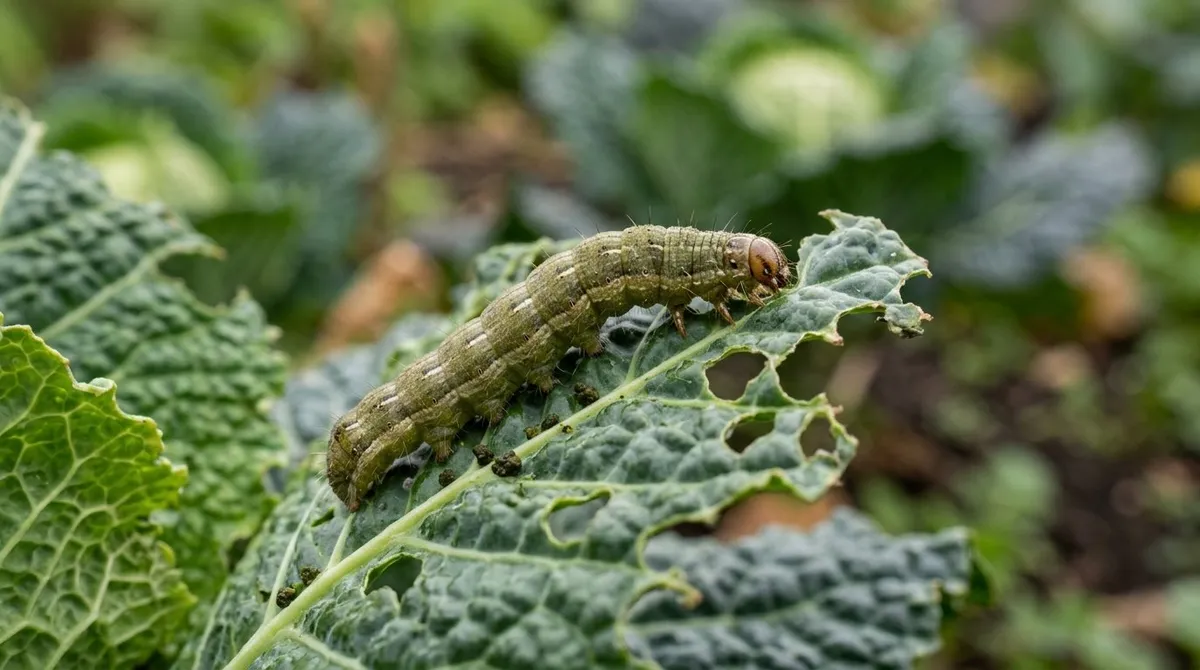
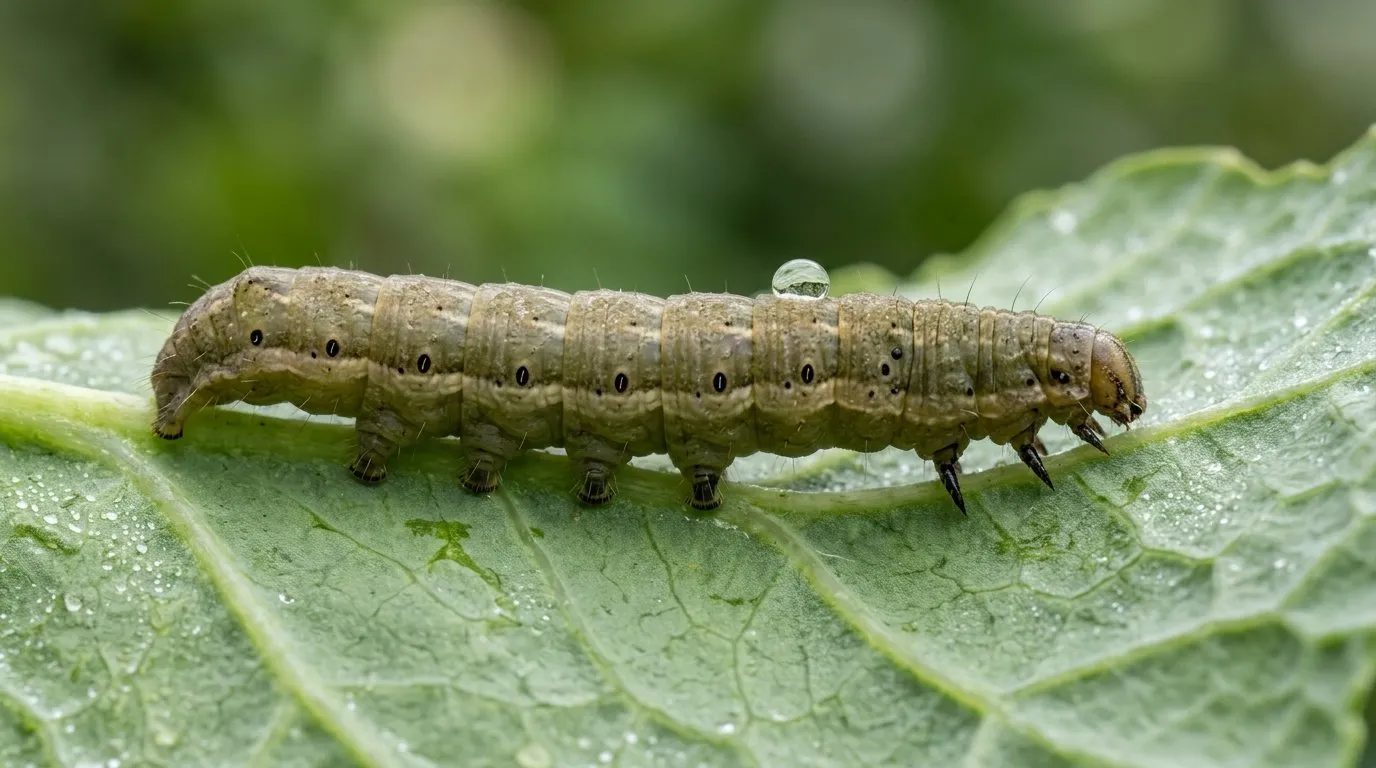 A mature larva reaches 35-40mm. The body is smooth (not hairy) and greenish-brown with a faint pale stripe along each side.
Cabbage moth vs cabbage white caterpillar
This is the single most useful diagnostic comparison for UK brassica growers. The two pests look similar from a distance and are routinely mislabelled in garden centres and online.
| Feature | Cabbage moth (Mamestra brassicae) | Cabbage white butterflies (Pieris spp.) |
|---|---|---|
| Adult type | Nocturnal grey-brown moth | Day-flying white butterfly |
| Adult size | 18-22mm body, 35-50mm wingspan | 25-30mm body, 50-65mm wingspan |
| Caterpillar surface | Smooth, no hairs | Hairy/velvety |
| Caterpillar colour | Pale green to greenish-brown | Yellow-green with black bars and yellow stripes (large white) or pale green (small white) |
| Caterpillar size at maturity | 35-40mm | 35-45mm (large white), 25mm (small white) |
| Eggs | Pale yellow, laid in batches of 20-100 on undersides | Yellow, laid singly (small white) or batches of 50-200 (large white) |
| Feeding behaviour | Burrows into the heart of the plant | Stays on outer leaves |
| Active hours | Larvae feed at night, hide by day | Larvae feed in daylight |
| Generations per year (UK) | 2 (south), 1 (north) | 2-3 (south), 2 (north) |
The behavioural difference matters more than the colour difference. Cabbage moth larvae burrow into the heart. Cabbage white larvae graze the outer leaves. If your cabbage looks fine on the outside but the heart is full of dark droppings, that is cabbage moth damage, not cabbage white.
Eggs
Female cabbage moths lay batches of 20-100 pale yellow eggs on the undersides of brassica leaves. Each egg is 0.6-0.8mm across, slightly flattened, and ribbed under a hand lens. A single female lays 200-700 eggs over her two-week adult life. Eggs hatch in 5-10 days at 16-22C and in 12-16 days at cooler 12-15C temperatures.
Larvae and pupae
Newly hatched larvae are 2-3mm long, almost transparent, and graze the leaf surface in groups. They moult through six instars over 25-35 days, reaching 35-40mm at maturity. Mature larvae drop to the soil and pupate 5-10cm below the surface in an earthen cell. The reddish-brown pupa is 18-20mm long and either emerges as a second-generation adult after 14-21 days or overwinters in place until the following May.
What damage does cabbage moth cause?
Cabbage moth larvae bore into the heart of cabbages, broccoli, and cauliflowers, contaminating the crop with frass. This is what separates the cabbage moth from every other brassica caterpillar. The damage starts on the outer leaves but quickly moves to the most valuable part of the plant.
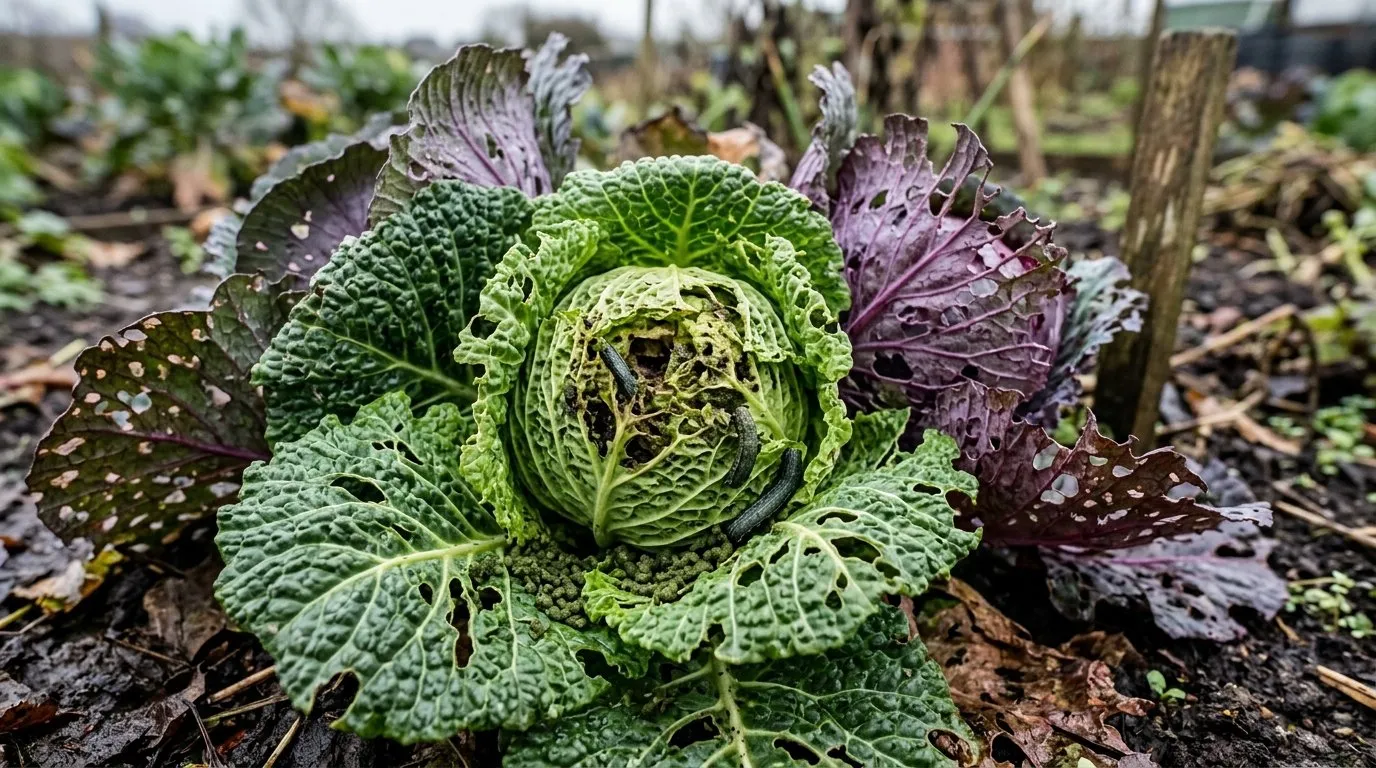 Ragged holes and dark frass packed inside the cabbage heart are the clearest signs of cabbage moth larvae.
Damage to outer leaves
Young larvae (1st-3rd instar, 2-12mm) graze the underside of leaves, leaving translucent windows where the upper cuticle remains. As they grow, they chew right through the leaf, producing irregular ragged holes 5-25mm across. Heavy feeding skeletonises whole leaves and sometimes whole plants in summer cabbage and Brussels sprouts.
Damage to hearts
This is where cabbage moth costs UK growers money. From the 4th instar onwards (about 15mm long) larvae move into the developing heart of the plant. They tunnel between the inner leaves, feeding in the dark, and pack dark green-brown frass behind them. A single 35mm caterpillar can ruin a 2kg cabbage by burrowing through the heart and contaminating the wrapped leaves with droppings. Even after washing, the frass-stained tissue is unappetising and the affected heads usually go to the compost heap.
Broccoli and cauliflower curds suffer the same way. Larvae crawl into the developing curd and feed inside the florets. The damage is often invisible until the head is cut and washed, by which point the curd is unsellable and unappetising.
Brassica species at risk
Cabbage moth feeds on the full range of Brassica oleracea crops grown in UK gardens. The list runs to all the standard kitchen-garden brassicas:
- Cabbage (savoy, red, white, summer, autumn, winter)
- Broccoli (calabrese, sprouting)
- Cauliflower
- Brussels sprouts
- Kale (curly, cavolo nero, redbor)
- Kohlrabi
- Pak choi and other oriental brassicas
- Swedes and turnips (foliage only, rarely the root)
- Wallflowers and stocks (ornamental brassicas)
Larvae also occasionally feed on beetroot, lettuce, and tomato when brassica supply runs out, but these are secondary hosts. For a wider view of the brassica family’s pest pressure see our vegetable pests and diseases UK guide. The mealy cabbage aphid is another common brassica pest, clustering under the leaves and curling the new growth.
What is the cabbage moth lifecycle?
Adults emerge from soil-borne pupae from early May once soil temperatures reach 12-14C. Understanding the full lifecycle is essential because every control method targets a specific stage. Get the timing wrong and you waste effort.
Lifecycle stages and timing
| Stage | Length | Temperature range | What is happening |
|---|---|---|---|
| Egg | 5-10 days | 16-22C optimal | Laid in batches of 20-100 on leaf undersides |
| Larva (instars 1-3) | 8-12 days | 15-22C | Surface grazing on leaves, 2-12mm long |
| Larva (instars 4-6) | 14-18 days | 15-22C | Boring into hearts, 15-40mm long |
| Pupa (summer) | 14-21 days | 14-20C soil | In soil 5-10cm deep, second adults emerge |
| Pupa (overwintering) | 180-210 days | -5 to 10C soil | September-April, frost reduces survival |
| Adult | 12-18 days | Active 13C+ at night | Mating, egg-laying, no further plant damage |
The full egg-to-adult cycle takes 35-55 days at UK summer temperatures. Two generations are normal across England and Wales: a first flight from mid-May to late June, and a second flight from mid-July to early September. Northern Scotland typically sees one full generation only, with the second flight failing to complete before frost.
The critical mistake most growers make
The single most common mistake is spraying or hand-picking when the larvae are already inside the heart. By the 4th instar, larvae are 15mm long and protected by wrapped inner leaves. BT spray cannot reach them. Hand picking destroys the head before you find the caterpillar.
Treatments must hit the egg stage or the first three instars (larvae under 15mm). That window is roughly 14-20 days from egg-laying. Pheromone traps tell you when adults are flying. Two weeks later, the eggs are hatching. That is when BT, hand picking, and barrier checks have to start, not when you first see frass in the heart.
Overwintering
Pupae overwinter in the top 5-10cm of soil, mostly in or near where the previous year’s brassicas grew. Hard frost (under -5C for a week or more) kills 30-50% of exposed pupae. Birds (especially robins, blackbirds, and starlings) and ground beetles take a further 10-20% over winter. Disturbing the soil with a fork in November exposes pupae to all of those losses. The combination of forking and clearing all brassica debris is the single biggest population reducer available to UK growers.
External authority: the Butterfly Conservation moth species page for Mamestra brassicae and the UK Moths reference both confirm two generations across most of England and a single generation in northern Scotland.
How do I control cabbage moth in the UK?
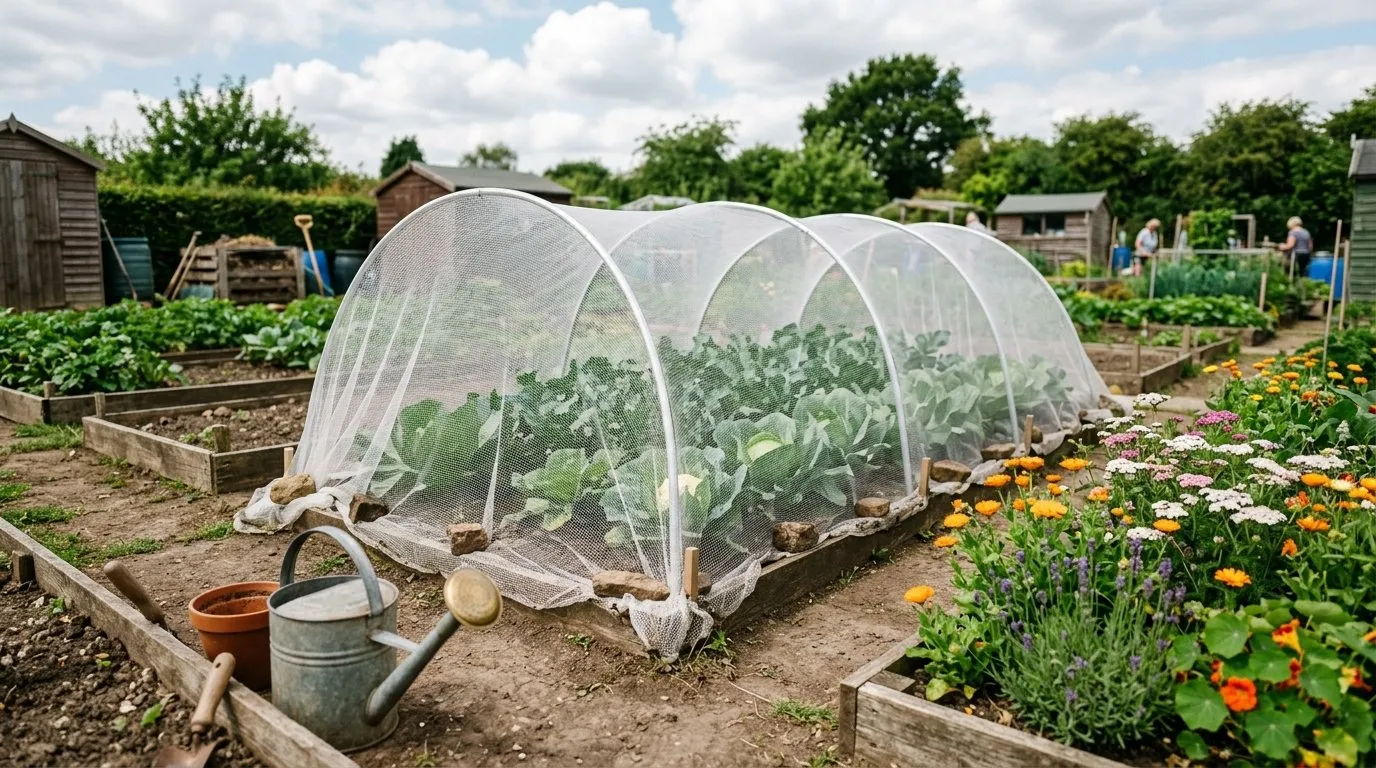 Fine insect mesh at 1.35mm or smaller stops adult cabbage moths from reaching the plants. Bury or weight the edges and keep the mesh off the leaves.
Treatment hierarchy
| Method | Effectiveness | Role | Best timing | Effort |
|---|---|---|---|---|
| 1.35mm insect netting | 92-95% damage reduction | Primary, gold standard | Install late April, leave until October | 2 hours setup |
| BT kurstaki spray | 85-95% kill on larvae under 15mm | Primary backup | Every 7-10 days, June to early September | 15 mins per spray |
| Hand picking eggs and larvae | 60-75% reduction | Maintenance | Twice weekly, June to August | 10-15 mins per session |
| Trichogramma egg parasitoids | 40-60% egg kill (mail-order release) | Supplementary | June and August release | Low after release |
| Encouraging birds and ground beetles | 20-40% reduction | Supplementary backstop | Year-round habitat | Permanent setup |
| Pheromone traps | Under 15% direct control | Monitoring only | May to September | 5 mins per check |
| Autumn debris clearance plus light forking | 60-70% next-spring reduction | Permanent prevention | November | 30 mins per bed |
| Pyrethrum spray | 50-70% knockdown on exposed larvae | Last resort | June to August, post-harvest | 15 mins per spray |
Insect netting (gold standard)
Use a 1.35mm or finer insect mesh. Standard butterfly netting at 7mm is too coarse and lets moths squeeze through. Enviromesh and Veggiemesh both come in 1.35mm and 0.8mm grades. The 1.35mm grade also excludes cabbage white butterflies, cabbage root fly, and flea beetle, so it covers most brassica pests in one go.
Build a frame from aluminium hoops or bamboo canes 30-40cm above the canopy. Drape the netting over and weight or bury the edges. Keep the mesh off the leaves. Cabbage moths can lay eggs through netting where it touches a leaf. Inspect the cage edges weekly to make sure soil settling has not created gaps.
Bacillus thuringiensis (BT kurstaki)
BT kurstaki is a naturally occurring bacterium that produces toxins lethal to lepidopteran larvae. It is sold in the UK as Dipel DF (1g sachets) and as ready-to-use Lepinox Plus. Spray every 7-10 days from early June through August. Cover both leaf surfaces and direct the nozzle into the developing heart of cabbages and the developing curd of broccoli and cauliflower.
BT degrades in UV within 48 hours, so reapply after heavy rain or several days of strong sun. Larvae must eat treated leaf to be killed. They stop feeding within hours and die in 2-5 days. BT only works on caterpillars under 15mm. Larger larvae inside the heart are not exposed and are not affected.
Hand picking
On a small bed of 6-12 plants, hand picking is realistic. Inspect the underside of each leaf twice weekly from late May. Squash egg batches between thumb and finger. Pick caterpillars off into a jar of soapy water. Larvae feed at night, so a torch inspection after dusk catches more than a daytime check.
Hand picking on its own works for small beds but breaks down quickly above 12 plants. The eggs are easy to miss and a single missed batch produces 20-100 caterpillars two weeks later.
Pheromone traps and Trichogramma wasps
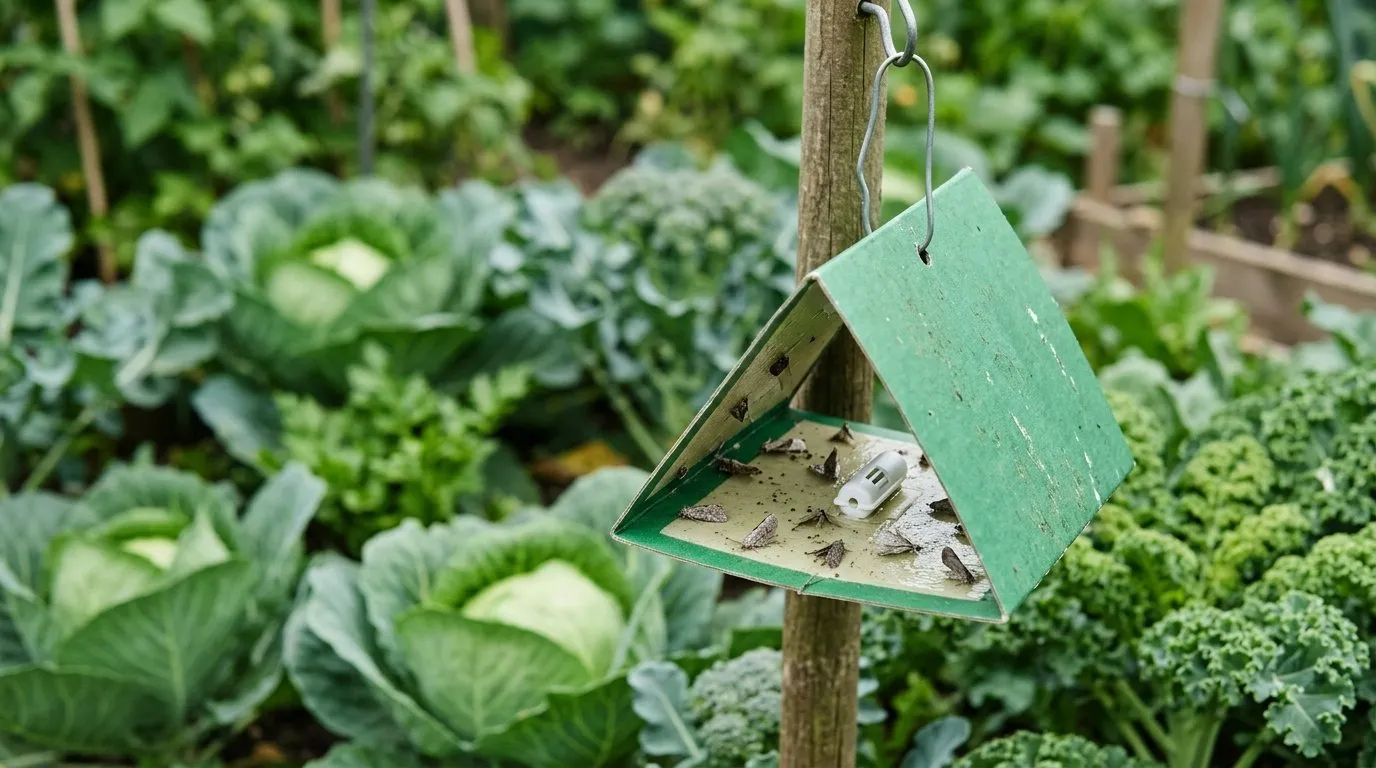 Pheromone traps catch male moths and indicate when egg-laying females are active. Two weeks after first catch, eggs are hatching and BT sprays should start.
Pheromone traps (Agralan, Andermatt, and Oecos all sell M. brassicae-specific lures) catch male moths and signal that adults are flying. They are a monitoring tool. Treat the first catch as your trigger to start netting checks and prepare BT spraying. Direct catch reduction is under 15%.
Trichogramma brassicae are tiny parasitoid wasps (0.4mm) that lay their eggs inside cabbage moth eggs, killing them before they hatch. Mail-order cards from UK biological suppliers (Defenders, Dragonfli) release 5,000-50,000 wasps per garden over June and August. Trial data from European brassica fields shows 40-60% egg parasitism. UK garden conditions are more variable, but the wasps add a useful layer when timed against pheromone-trap catches.
Encouraging predators
Birds, ground beetles, and parasitic wasps reduce cabbage moth numbers without any direct intervention. Blue tits and starlings hunt resting adult moths. Ground beetles (Carabidae) eat eggs and small larvae at soil level. Trichogramma and Cotesia rubecula parasitise eggs and small larvae.
Permanent ground cover, log piles, and a strip of flowering umbellifers (yarrow, fennel, dill) along the bed edge support all three groups. Building a bug hotel within 5m of the brassica bed gives ground beetles a winter shelter and a daytime hide. Predator support typically takes a population down by 20-40% on its own, useful as a backstop but not enough alone.
The single damaged head in Plot C came from a pupa already in the soil before netting was installed. Forking and pupae removal in November is therefore as important as the spring netting.
Month-by-month cabbage moth management calendar
| Month | Action |
|---|---|
| January | Order Enviromesh (1.35mm), Dipel DF, and pheromone traps. Plan brassica bed rotation. |
| February | Build or repair brassica cage frames. Light fork the brassica bed surface to expose any remaining pupae to frost. |
| March | Sow brassica seedlings under cover. Site-check the bed for last year’s debris and clear any missed plant material. |
| April | Plant out hardened seedlings from mid-month. Install 1.35mm netting before 30 April, before the first adult flight begins. |
| May | Hang pheromone traps from 1 May. Inspect leaves twice weekly. First adults emerge mid-May; first eggs follow within a week. |
| June | Begin BT kurstaki sprays every 7-10 days. Hand pick any visible egg batches. First Trichogramma release (5,000 per 10m of bed). |
| July | Continue BT every 7-10 days. Inspect cabbage hearts after dusk for early heart-boring larvae. Reapply BT after rain. |
| August | Second adult flight peaks. BT sprays continue. Second Trichogramma release. Lift earliest summer cabbages. |
| September | Continue BT until first week. Lift autumn cabbages. Open the cage to allow pollinators access to any flowering brassicas. |
| October | Remove netting. Lift and use remaining heads. Remove all damaged outer leaves to a hot compost or council green waste. |
| November | Cut every brassica stump to ground level. Pull stems and roots. Light fork the soil to 5cm to expose overwintering pupae. |
| December | Plan next year’s rotation. Move brassicas to a new bed where possible. Order replacement netting if damaged. |
For full season planning across the brassica family, our guides to growing broccoli and growing kale cover the planting and harvest timings that need protecting.
Common cabbage moth mistakes
Mistake 1: Using butterfly netting at 7mm mesh
This is the single most expensive mistake on UK allotments. Butterfly netting at 5-7mm mesh stops large white and small white butterflies. It does not stop cabbage moths, which fold their wings flat and squeeze through. Use 1.35mm or finer insect mesh. It costs more (around £4-7 per square metre versus £2-3 for butterfly netting) but it actually works.
Mistake 2: Spraying BT after larvae enter the heart
By the time you see frass in the cabbage heart, the larvae are 15-25mm long and protected from BT contact. The window for BT is the first three larval instars (under 15mm), which means spraying must start within 14 days of the first pheromone-trap catch in May or June. Waiting until you see damage is too late.
Mistake 3: Composting infested brassica stumps in a cold home compost heap
Pupae survive cold compost heaps. A home heap that does not exceed 40C (most do not) leaves overwintering pupae intact and re-introduces them to the garden when the compost is spread. Hot compost (over 55C for two weeks) kills pupae. So does burning or council green-waste collection, where industrial composting reaches 60-70C.
Mistake 4: Relying on cabbage white netting and assuming it covers cabbage moth
Cabbage moth and cabbage white are different species with different control needs. Standard cabbage-white protection often fails against cabbage moth because the mesh is too coarse and the timing is wrong. If you are growing brassicas, plan for both pests separately and check our cabbage white butterfly control guide alongside this one.
Mistake 5: Skipping November debris clearance
Leaving brassica stumps and old leaves in place over winter is the single biggest cause of high spring populations. Pupae shelter in stumps and 5-10cm of soil. Cutting, clearing, and lightly forking the bed in November cuts spring numbers by 60-70%. Skip it and the netting works harder all year.
Warning: Never spray BT or pyrethrum on plants in flower or close to flowering brassicas left for seed. Both can affect non-target lepidoptera and bees feeding on brassica flowers. Time sprays to leafy growth only and avoid spraying within two weeks of the plant flowering.
Why is the cabbage moth so hard to control?
The combination of nocturnal egg-laying, heart-boring larvae, and soil-pupating overwintering makes the cabbage moth the single most resilient brassica pest in UK gardens. Each life stage hides somewhere a treatment cannot easily reach. The root cause of repeated damage in most gardens is not poor spraying. It is incomplete coverage across the lifecycle.
Outer-leaf controls (BT spray, hand picking) miss the larvae once they enter the heart. Heart-targeting controls fail because the larvae are protected. Soil-stage controls (forking, frost exposure) only work in winter. Adult-stage controls (pheromone traps, light traps) reduce but do not eliminate egg-laying females. Only the combination of all four (lifecycle stages + complete physical exclusion via netting) keeps damage below the 10% threshold.
This is why netting from late April is the pivot of the whole plan. It removes the egg-laying step entirely. BT, hand picking, and predator support deal with the small share of larvae that emerge from soil-borne pupae already in the bed. Autumn forking and debris removal cut next year’s pupae by 60-70%. None of these steps work alone. Together they hold the population to manageable levels.
For a wider look at managing the brassica family’s pest and disease pressure, common brassica diseases and the brassica club root identification and treatment guide cover the disease side that often follows pest stress.
Frequently asked questions
Is the cabbage moth the same as the cabbage white butterfly?
No, they are different species. Cabbage moths (Mamestra brassicae) are nocturnal grey-brown moths. Cabbage whites (Pieris brassicae and P. rapae) are day-flying white butterflies. Their caterpillars are also different. Cabbage moth larvae are smooth and greenish-brown. Cabbage white larvae are hairy, yellow-green with black markings, and feed in groups.
When should I start checking my brassicas for cabbage moth?
Begin checking from mid-May when adult moths emerge. Inspect leaves twice weekly until late September. Look on the undersides for batches of pale yellow eggs. Check cabbage hearts for frass after dusk. Larvae feed mainly at night and hide deep inside the head during the day.
What does cabbage moth damage look like?
Look for ragged holes in outer leaves and dark frass inside the heart. Young larvae graze the leaf surface. Mature larvae bore into the heart of cabbages, broccoli, and cauliflowers. The frass (droppings) packed inside contaminates the crop and is the clearest sign of an infestation.
Does Bacillus thuringiensis (BT) work on cabbage moth?
Yes, BT kurstaki kills 85-95% of caterpillars under 15mm. Spray every 7-10 days from early June through August. Coverage matters. Spray both leaf surfaces and into the developing heart. BT degrades in UV within 48 hours, so reapply after heavy rain or strong sun.
What netting mesh size keeps cabbage moths out?
Use a 1.35mm mesh or finer. Standard butterfly netting at 7mm lets moths through. Enviromesh, Veggiemesh, or similar fine insect netting at 1.35mm or 0.8mm excludes both adult moths and flea beetle. Bury or weight the edges and keep the mesh from touching leaves.
Will birds and other predators control cabbage moth?
Birds, ground beetles, and parasitic wasps reduce numbers but rarely control infestations alone. Blue tits and starlings take adult moths and exposed larvae. Trichogramma wasps parasitise eggs. These allies typically cut populations by 20-40%, which is useful as a backstop alongside netting and BT.
How does cabbage moth survive UK winters?
Pupae overwinter in soil 5-10cm deep beneath brassica beds. They emerge as adults from May onwards. Cutting all brassica debris and lightly forking the topsoil to 5cm in November exposes pupae to frost and birds. This single autumn task reduces spring numbers by 60-70%.
Do pheromone traps stop cabbage moth damage?
No, pheromone traps are a monitoring tool, not a control. They catch male moths and tell you when egg-laying females are active. Use them to time netting installation and BT sprays. Traps alone reduce damage by less than 15% because females still fly in from elsewhere.
Now you know how to identify and control the cabbage moth, read our companion guide to cabbage white butterfly control for the daytime side of the brassica caterpillar problem.
Our team produces practical UK gardening guidance from source research, contributor records and established horticultural practice. Editorial standards are overseen by Matt W.