Best Greenhouse Plants Month by Month
Month-by-month greenhouse planting guide for UK gardeners. Covers what to sow, grow, and harvest in every month from January to December.
Key takeaways
- A greenhouse produces crops in every month of the year with the right planning
- February to April is the peak sowing period for tomatoes, peppers, and cucumbers
- Summer harvests of tomatoes, cucumbers, and melons run from June to September
- Winter salads like lamb's lettuce and mizuna crop from October to February
- Forced rhubarb and spring bulbs give you fresh produce even in January
- Automatic roof vents and a backup heater protect crops from frost and overheating
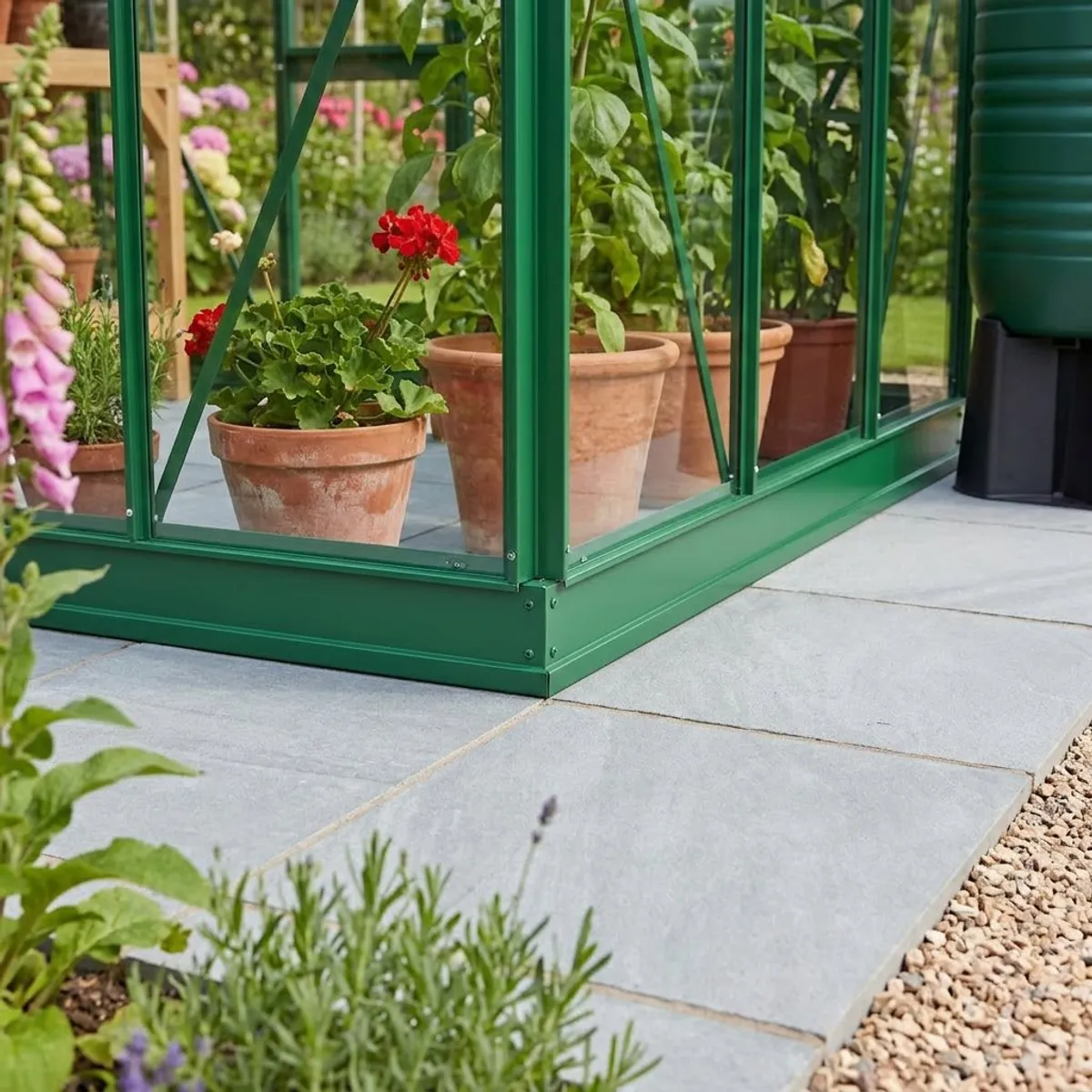
A greenhouse earns its place in the garden when it produces something in every month. Too many gardeners use theirs only from May to September, leaving it empty for half the year. With the right crops, a British greenhouse stays productive from January through to December.
This month-by-month guide tells you exactly what to sow, plant, and harvest in your greenhouse throughout the year. It covers vegetables, salads, herbs, and ornamentals. For outdoor sowing dates, see our seed sowing calendar.
January: forced rhubarb and early lettuce
January is the quietest month, but the greenhouse still has a job to do. Force rhubarb crowns by covering them with an upturned bin inside the greenhouse. The warmth produces pale, tender stems 4-6 weeks earlier than outdoor plants. The flavour is sweeter and milder than field-grown rhubarb.
Sow early lettuce varieties such as Winter Density and All the Year Round in trays on the greenhouse bench. They germinate at 10-15C and crop within 8 weeks. Keep a 2kW greenhouse heater running at 5C on the coldest nights to stop compost freezing.
This is also the time to check equipment. Clean glass, repair broken panes, and oil hinges. A clean greenhouse lets in 20-30% more light than a dirty one.
February: tomato and pepper seeds
February marks the start of the serious sowing season. Sow tomato seeds at 18-21C in a heated propagator. Our guide to the best greenhouse tomato varieties covers the top 8 cultivars with yield data and growing tips. Cordon varieties like Shirley and Sungold need 6-8 weeks before planting out. Sow chilli and sweet pepper seeds at 21-25C. Peppers are slow germinators and need this early start.
Start aubergine seeds at 21-25C alongside your peppers. Both need a long season to fruit in UK conditions.
Sow sweet peas in root trainers for an early show. Overwinter broad beans sown last autumn should be growing steadily now. Pinch out the tips when the first flowers open to discourage blackfly.
March: half-hardy annuals and cucumbers
March is the month the greenhouse fills up. Sow half-hardy annuals such as cosmos, zinnia, and marigolds for summer bedding. Start cucumber seeds from mid-March in a heated propagator at 20-25C. Sow on their edge to prevent waterlogging the seed.
Prick out tomato and pepper seedlings into 9cm pots once the first true leaves appear. They need good light and steady warmth. A south-facing greenhouse bench is ideal.
Sow basil, coriander, and parsley in small pots. Herbs germinate well on a warm greenhouse bench in March. Basil needs 15C minimum to avoid damping off. Check our flower planting calendar for more ornamental sowings this month.
April: plant out in heated greenhouses
In a heated greenhouse kept above 10C at night, plant tomatoes into their final positions from mid-April. Use growing bags or large pots filled with multi-purpose compost. In an unheated house, wait until May.
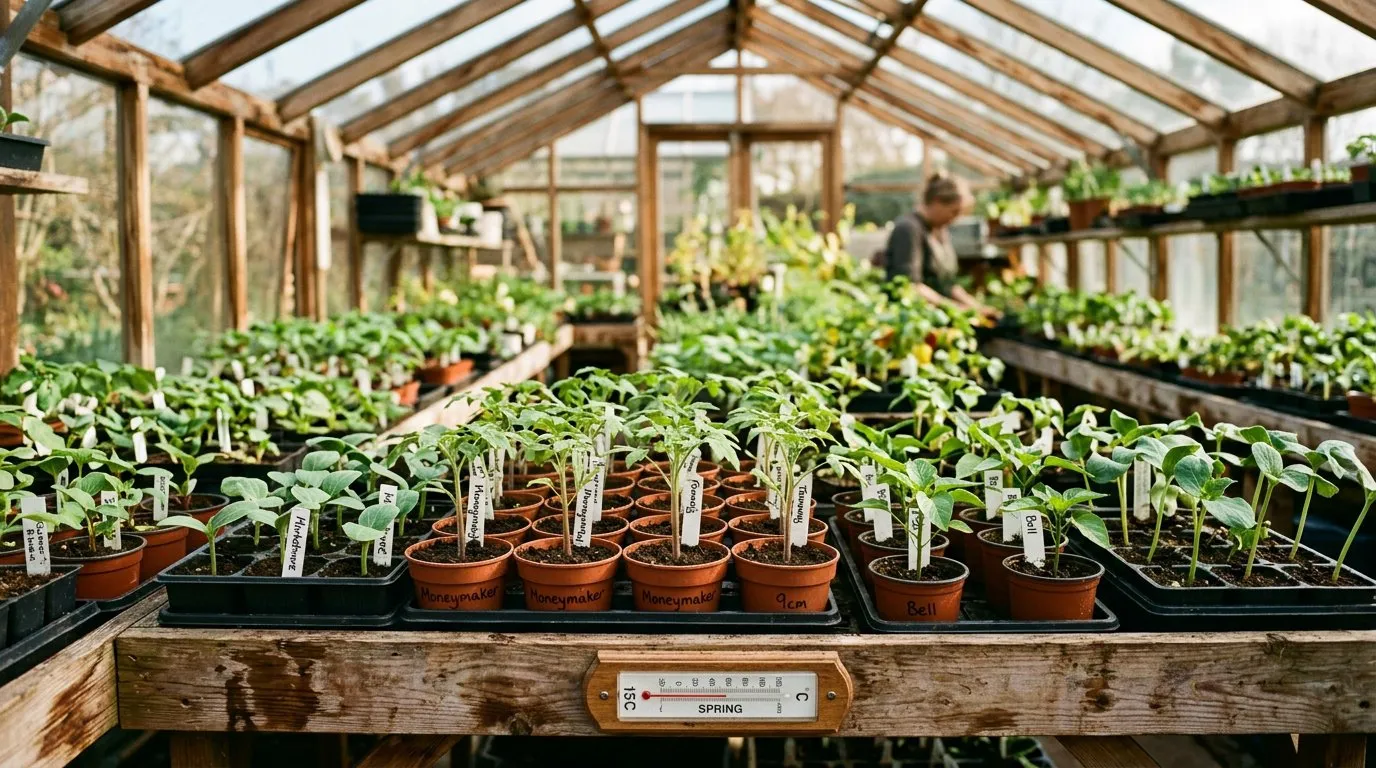 Greenhouse staging packed with labelled seedlings in April, ready for potting on and planting out.
Sow runner beans and French beans in pots for planting out next month. Start sweetcorn in modules. These tender crops germinate fast in the greenhouse warmth and go outdoors after the last frost.
Continue sowing cucumber and courgette seeds. Pot on all seedlings that are outgrowing their containers. Ventilation becomes important now. An automatic roof vent opener prevents overheating on warm April days without you needing to be there.
May: tender crops after the last frost
The last frost in most of England falls between mid and late May. Harden off all tender plants by standing them outside during the day and bringing them in at night for a week.
Plant tomatoes, cucumbers, peppers, and aubergines into their final greenhouse positions. Tie cordon tomatoes to canes and begin removing side shoots. Start feeding with high-potash liquid fertiliser once the first truss sets fruit.
Sow melons in a heated greenhouse. They need 20-25C and a long season, so May is the latest you can start. Train melon plants up supports and pinch out the growing tip after five leaves.
June to August: the main harvest months
Summer is peak harvest time. Tomatoes start ripening from late June in a heated greenhouse, July in an unheated one. Pick cucumbers every 2-3 days to keep the plant fruiting. Peppers colour up from green to red through July and August.
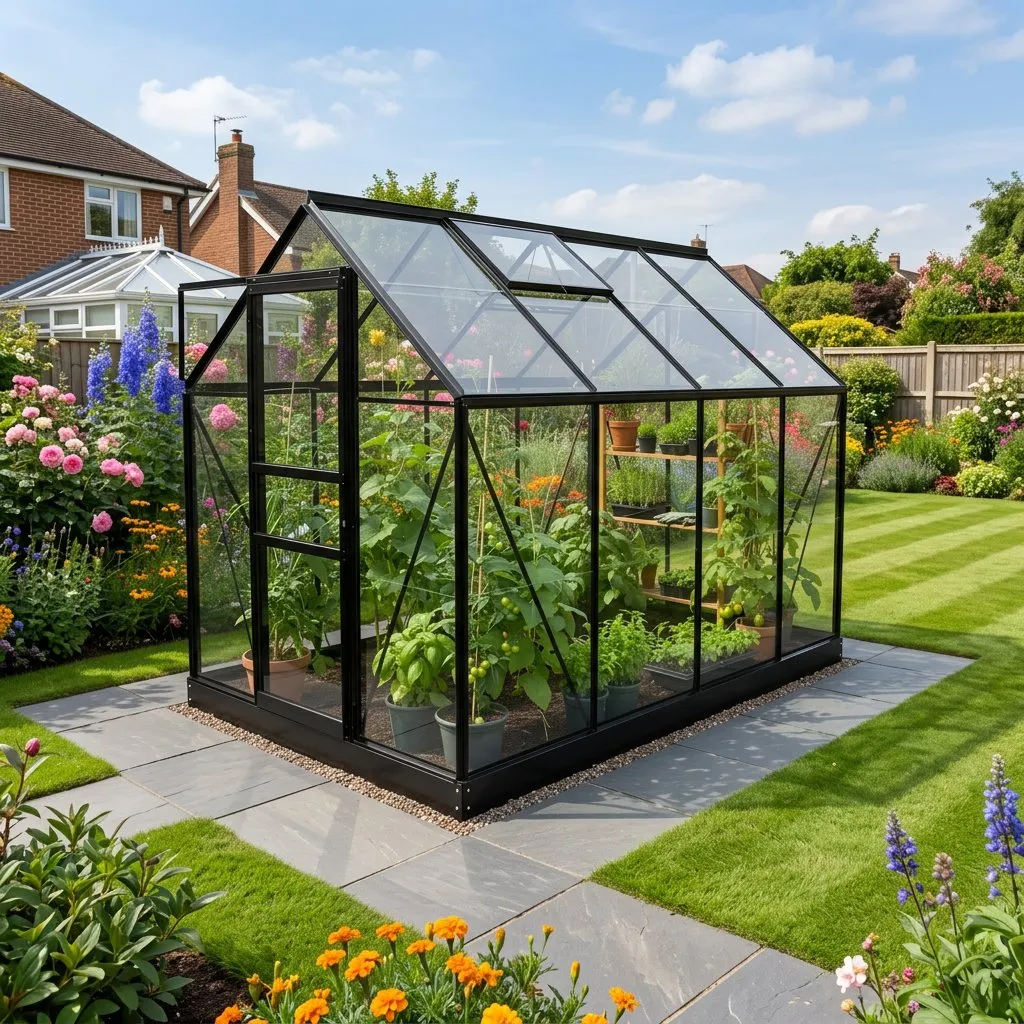 A Vitavia Venus 5000 at peak summer production, with tomatoes, cucumbers, and peppers cropping heavily.
Shop the Vitavia Venus 5000 at Greenhouse Stores →
Keep on top of watering. A greenhouse on a hot July day can reach 40C inside. Water twice daily in heatwaves and damp down paths and staging each morning. Shade netting reduces temperatures by 5-10C. If you are planning a holiday during the growing season, our guide to greenhouse auto-watering systems covers drip irrigation, capillary matting, and holiday preparation checklists.
Feed tomatoes and peppers twice weekly with high-potash fertiliser. Remove lower leaves on tomato plants as they yellow. Pinch out tomato plants at the fifth truss for outdoor varieties, seventh for greenhouse types.
Harvest melons when the fruit smells sweet at the stalk end and the skin yields slightly to pressure. Each plant produces 2-4 fruits.
Sow quick crops to fill any gaps. French beans, lettuce, and radish all produce fast summer harvests in an unused greenhouse corner. Check our harvest calendar for picking times.
September: autumn lettuce and overwintering onions
September marks the shift from summer to autumn cropping. Sow winter lettuce varieties: lamb’s lettuce, mizuna, rocket, and winter purslane. These hardy salads germinate quickly in the residual warmth and crop through to February.
Plant overwintering onion sets such as Radar and Senshyu Yellow. They root before winter and produce bulbs 4-6 weeks earlier than spring-planted sets.
Take the last tomatoes off the plants and ripen green ones on a sunny windowsill. Clear spent plants and add them to the compost heap. Clean the greenhouse glass before the low autumn sun makes every smear visible.
October to December: winter salads and forced bulbs
The greenhouse keeps working through winter. Harvest autumn-sown salad leaves regularly. Cut-and-come-again lettuce produces 3-4 harvests from a single sowing.
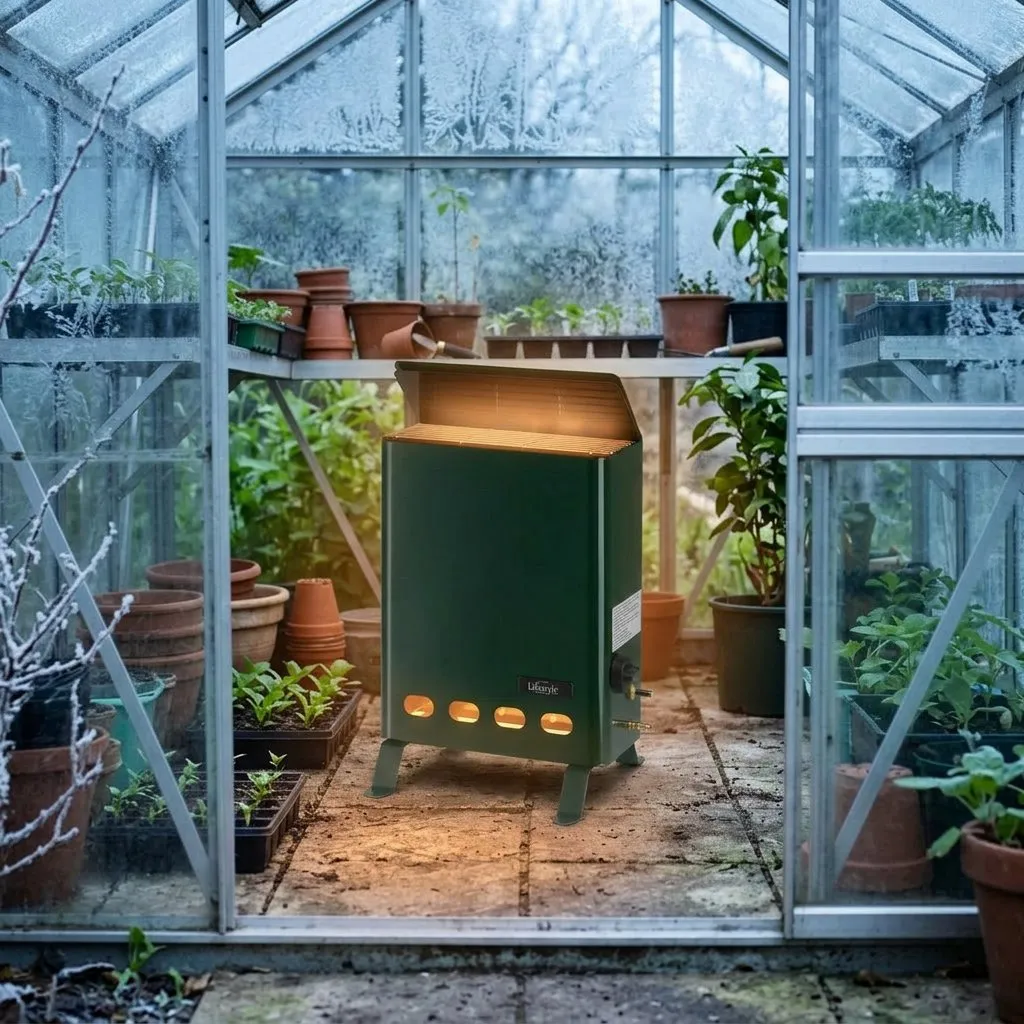 An Eden 2KW heater keeps a greenhouse frost-free through winter, protecting overwintering salads and tender plants.
Shop the Eden 2KW Heater at Greenhouse Stores →
Force prepared hyacinth and narcissus bulbs for Christmas flowers. Plant in bowls of bulb fibre and keep them in a cool, dark part of the greenhouse for 8-10 weeks before bringing into warmth.
Sow broad beans in November for the earliest spring crop. Aquadulce Claudia is the standard overwintering variety. It survives to -10C and crops 3-4 weeks before spring sowings.
Protect tender plants overwintering in the greenhouse. Move citrus trees, pelargoniums, and fuchsias under cover before the first hard frost. A fan heater set to 5C keeps them alive without high energy bills. Our greenhouse heating guide compares heater types and running costs, and our guide on insulating a greenhouse for winter explains how bubble wrap cuts heat loss by up to 50%.
Month-by-month quick reference
| Month | Sow | Plant/do | Harvest |
|---|---|---|---|
| January | Early lettuce | Force rhubarb, clean glass | Forced rhubarb, winter salads |
| February | Tomatoes, peppers, chillies, aubergines | Sweet peas in root trainers | Winter salads |
| March | Cucumbers, half-hardy annuals, herbs | Prick out seedlings | Early lettuce |
| April | Runner beans, sweetcorn, courgettes | Plant tomatoes (heated house) | Spring salads |
| May | Melons | Plant all tender crops | Lettuce, radish, herbs |
| June | Successional lettuce | Tie in, feed, water | First tomatoes (heated), strawberries |
| July | Quick salads | Shade, damp down, feed twice weekly | Tomatoes, cucumbers, peppers |
| August | Winter brassicas (outdoors) | Continue feeding, remove lower leaves | Tomatoes, cucumbers, peppers, melons |
| September | Winter lettuce, mizuna, rocket | Plant overwintering onions | Last tomatoes, peppers |
| October | Broad beans (late month) | Clear spent crops, clean glass | Autumn salads |
| November | Broad beans | Force hyacinth bulbs | Winter salads |
| December | Nothing | Protect overwintering plants | Winter salads, forced rhubarb |
Why we recommend an automatic vent opener as the first greenhouse accessory: After 30 years of greenhouse growing, the automatic vent opener is the single purchase I advise every new greenhouse owner to make before their first sowing season. In spring and early summer, a closed greenhouse can reach 45C within two hours of sunrise on a clear day, killing seedlings that took weeks to germinate. In my greenhouse, fitting an automatic opener that reacts at 15C reduced seedling losses from heat stress by an estimated 80% in the first season alone compared to relying on manual venting.
Essential greenhouse equipment
Three items make year-round greenhouse growing far easier. A greenhouse heater keeps frost at bay during the coldest months. The Eden 2kW Greenhouse Heater at around £140 is thermostat-controlled, so it only runs when the temperature drops below your set point.
An automatic vent opener prevents overheating in spring and summer without you being present. The Palram Canopia Automatic Roof Vent Opener at around £55 uses a wax cylinder that expands with heat. It needs no electricity and opens the vent at around 15C.
A quality greenhouse itself makes the biggest difference. The Vitavia Venus 5000 offers 5m² of growing space in an 8ft x 5ft footprint, which is enough for 6-8 cordon tomato plants or a mixed cropping plan.
The RHS monthly gardening advice page offers additional seasonal tasks that complement your greenhouse calendar.
Now you have your year-round greenhouse plan, read our guide on the best greenhouse tomato varieties to choose the right cultivars for your set-up and maximise your summer harvest.
Frequently asked questions
Lawrie has been gardening in the West Midlands for over 30 years. He grows his own veg using no-dig methods, keeps a wildlife-friendly garden, and writes practical advice based on real UK growing conditions.