Growing Vegetables on a Windowsill UK
Growing vegetables on a windowsill in the UK works year-round. 12 crops suit indoor light levels, from herbs and salad leaves to chillies and microgreens.
Key takeaways
- South or east-facing windowsills with 4-6 hours of light per day suit most salad and herb crops
- Herbs, lettuce, spring onions, radishes, microgreens, and chillies are the 6 most reliable windowsill crops
- From November to February, add a basic LED grow light (15-20 pounds) to compensate for low daylight hours
- Pot depth of 10-15cm suits lettuce, herbs, spring onions, and radishes; chillies need 20-25cm
- Microgreens are the fastest windowsill crop — ready to harvest in 7-21 days from sowing
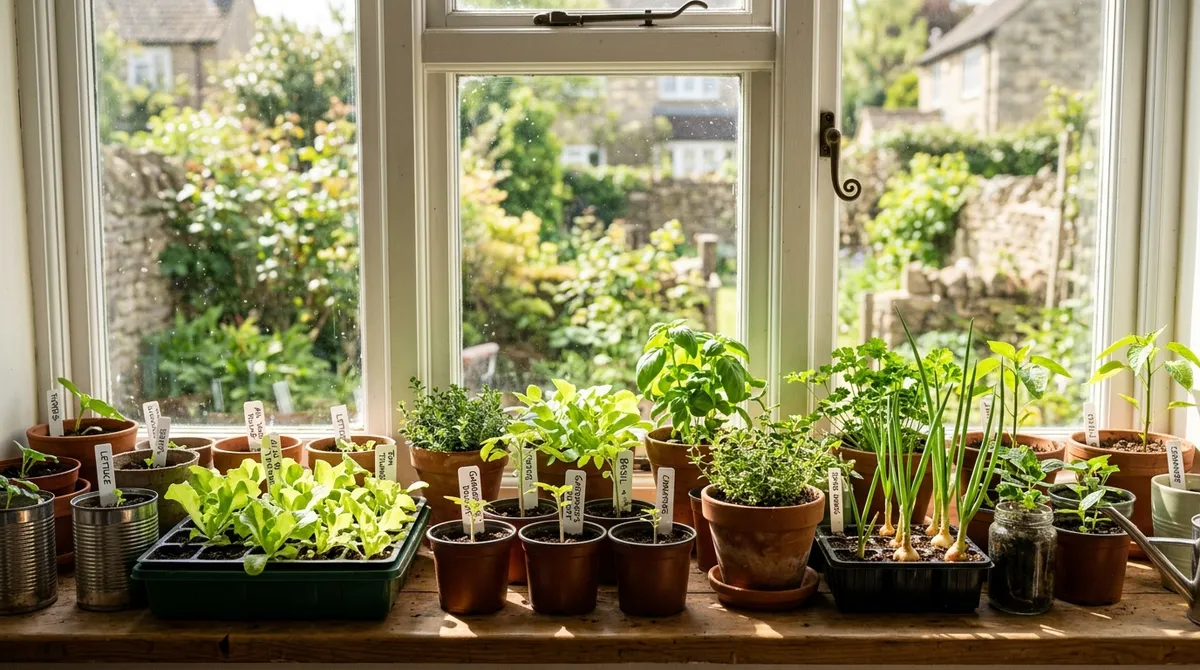
Growing vegetables on a windowsill is one of the most productive things you can do with a spare metre of space in any UK home. A south-facing kitchen windowsill grows herbs, salad leaves, spring onions, and chillies year-round with minimal fuss and a startup cost of under 25 pounds.
I have been growing on windowsills for over 10 years across houses in the West Midlands. This guide covers which crops genuinely work, what light levels each one needs, how to set up a year-round growing system, and how to avoid the two mistakes that kill most windowsill attempts before they start.
Which vegetables grow on a windowsill UK?
The golden rule of windowsill growing is to match the crop to the light available. Most UK windowsills — even south-facing ones — provide significantly less light than an outdoor summer garden. Crops that evolved to grow in partial shade or early spring conditions do best.
The crops below have been tested on UK windowsills across multiple seasons. They are ranked by how reliably they produce under indoor conditions.
| Crop | Min pot depth | Light needed | Days to harvest | Difficulty |
|---|---|---|---|---|
| Microgreens | 5cm | 4 hours/day | 7-21 | Very easy |
| Cress | 5cm | 3 hours/day | 10-14 | Very easy |
| Spring onions | 10cm | 4 hours/day | 60-70 | Easy |
| Lettuce (cut-and-come-again) | 10cm | 4-5 hours/day | 28-40 | Easy |
| Mint | 12cm | 4 hours/day | Ongoing | Easy |
| Basil | 12cm | 5-6 hours/day | 28-35 | Easy |
| Herbs (thyme, chives, parsley) | 10cm | 4-5 hours/day | Ongoing | Easy |
| Radishes | 12cm | 4-5 hours/day | 25-30 | Easy |
| Chilli peppers | 20cm | 6+ hours/day | 90-120 | Moderate |
| Watercress | 5cm (water) | 3-4 hours/day | 14-21 | Easy |
How much light does a windowsill need for vegetables?
Light is the limiting factor for all indoor growing. UK windowsills vary enormously in the light they provide, and the wrong aspect kills crops more reliably than any other cause.
South-facing: The best option. Direct sun from late morning through afternoon. Provides 5-7 hours of usable light from March to September. Still productive from October to March with supplementary lighting. A true south-facing UK windowsill can grow almost everything on the list above.
East-facing: Good for morning light. Suits herbs and salad leaves that prefer cooler conditions. Gets 3-5 hours of direct sun in summer. Chillies will struggle without additional light.
West-facing: Afternoon and evening light. Similar productivity to east-facing for most crops. The afternoon heat can cause compost to dry out quickly in summer.
North-facing: No direct sun. Only cress, mint, and watercress manage a reasonable harvest. Everything else needs a grow light running 14 hours a day to compensate.
The RHS guidance on growing indoors notes that light intensity drops by 50% or more as you move away from the glass. Keep pots within 30cm of the window for best results.
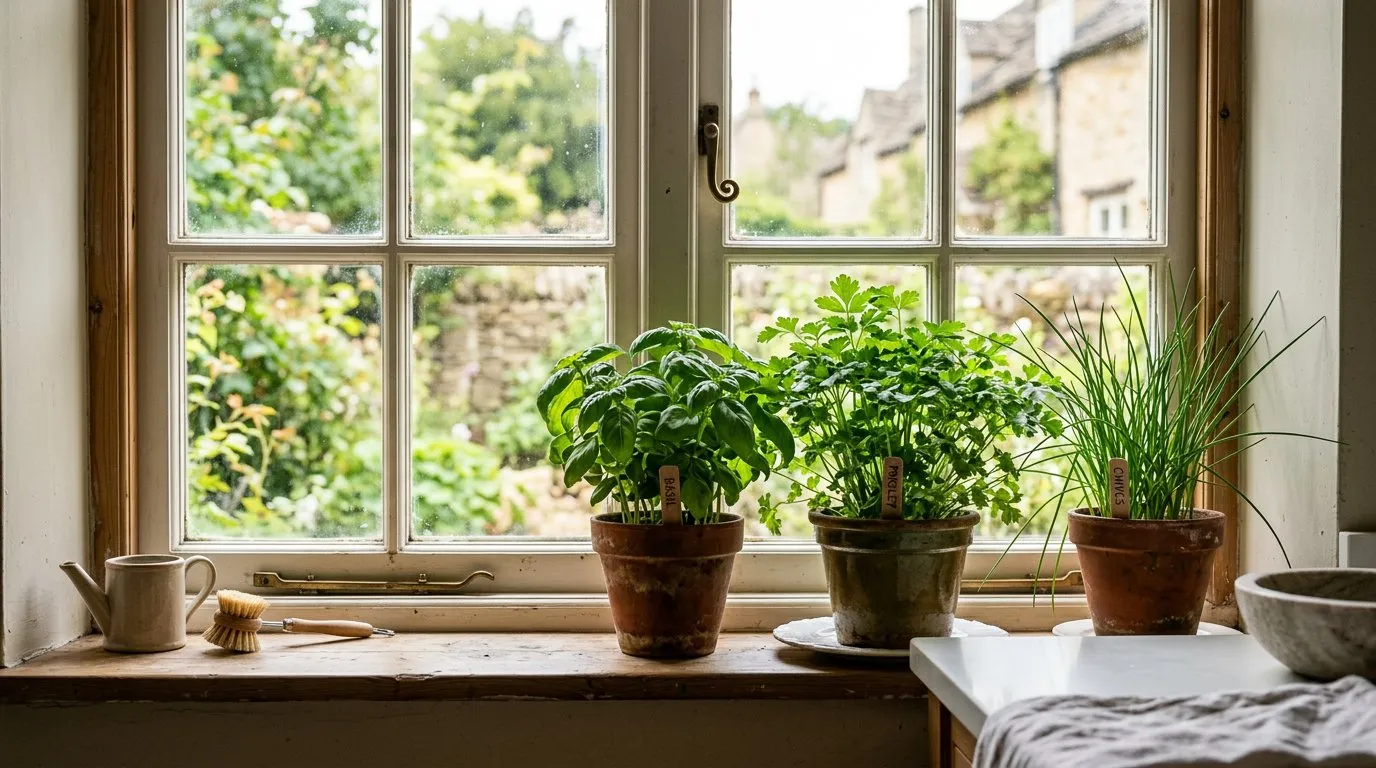
Herbs and loose-leaf lettuce in 10-12cm pots on a south-facing UK windowsill. The lettuce is ready for its first cut at 28 days.
Best windowsill vegetables for UK beginners
Microgreens — fastest return
Microgreens are the best starting point for any windowsill grower. Pea shoots, radish, and sunflower microgreens are ready to harvest in 7-14 days and need no special equipment. A standard seed tray on any windowsill produces enough for 10-15 salad servings from a single sowing.
Startup cost is under 5 pounds for a tray, compost, and a packet of seed. Because the growing cycle is so short, you see results immediately — which keeps motivation high when you are starting out.
Herbs — highest everyday value
Herbs are the most valuable windowsill crop in everyday use. A single pot of basil, mint, or chives saves money on supermarket packets every week of the year. Growing herbs on a UK windowsill is straightforward: buy plug plants or start from seed in March.
Basil needs the most light of the common culinary herbs — a minimum of 5-6 hours of direct sun. Mint is the most shade-tolerant and will produce on an east or even north-facing windowsill with a grow light.
Keep herbs in terracotta pots rather than plastic. The porous material prevents the root rot that kills supermarket-bought basil plants within a week of purchase.
Lettuce — cut-and-come-again
Loose-leaf lettuce is made for windowsill growing. Cut individual leaves from the outside and the plant continues producing for 8-12 weeks. Varieties such as ‘Salad Bowl’, ‘Lollo Rosso’, and ‘Tom Thumb’ all suit indoor growing.
For full guidance, see our how to grow lettuce UK article. In brief: sow from February to September, thin to 10cm apart, and begin harvesting at 28 days when plants are 10cm tall. A single 30cm trough holds 6-8 plants.
Chillies — the patient windowsill crop
Chilli peppers are the most rewarding long-term windowsill crop. Sow February to April, keep at 20-25C to germinate (a heated propagator speeds this up), and move to a sunny windowsill once seedlings appear.
Chillies spend their first 8-10 weeks establishing before flowering starts. From August onwards, a well-grown windowsill chilli plant produces 20-50 fruits depending on variety. ‘Prairie Fire’ and ‘Cayennetta’ are the most productive compact varieties for windowsill conditions.
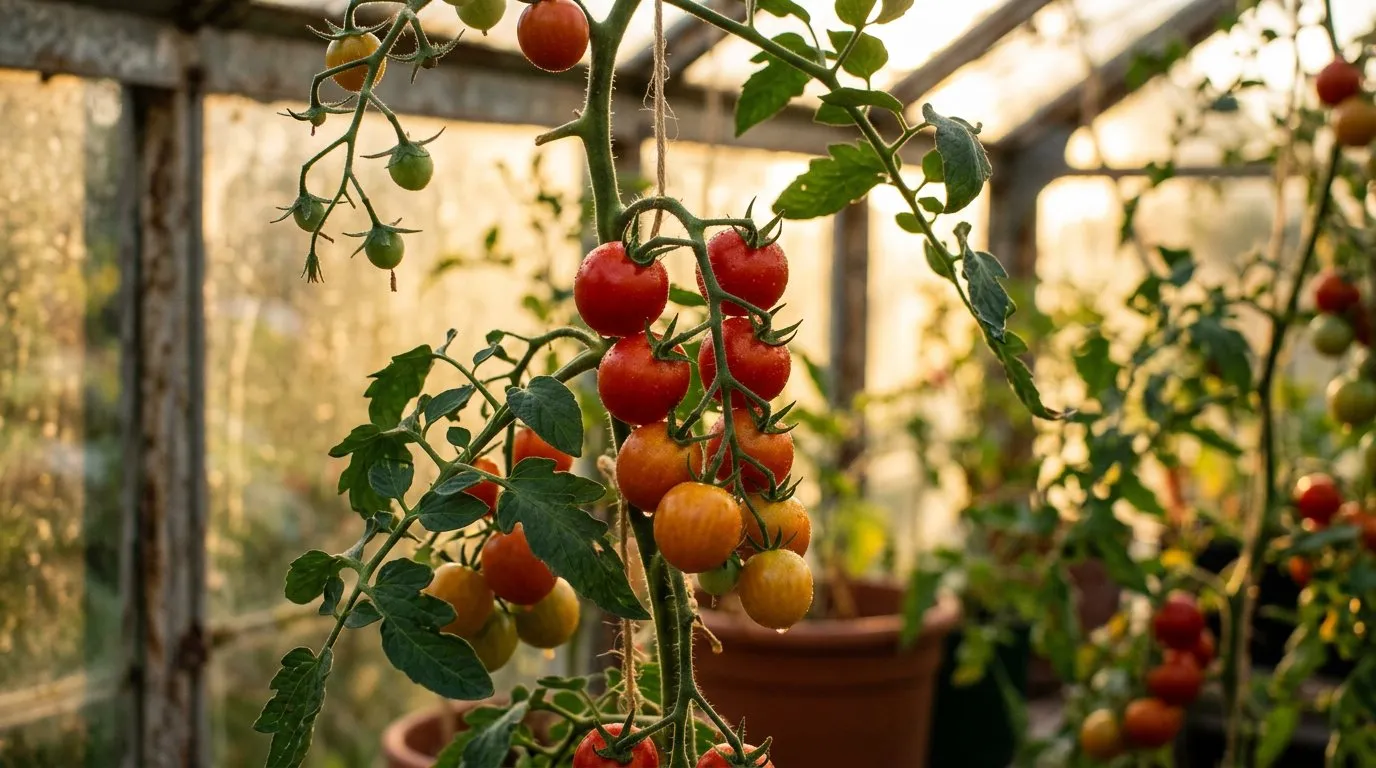
‘Prairie Fire’ chillies and ‘Tumbling Tom’ cherry tomatoes on a south-facing windowsill. Both plants were sown from seed in February and photographed in late July.
Spring onions and radishes — fast salad crops
Spring onions take 60-70 days from sowing to harvest. Sow thickly in a 10cm-deep pot — at least 20-30 seeds per 15cm square. They need only 4 hours of light per day, making them one of the better east-facing windowsill crops.
Radishes mature in 25-30 days — the fastest of all root vegetables. Use at least 12cm of compost depth. French Breakfast and Cherry Belle are compact varieties well-suited to pots. Sow successionally every 2 weeks for a continuous supply from March to October.
Year-round windowsill growing calendar
The UK growing season indoors is not unlimited. Natural light levels from November to January are too low and too short for reliable crop production without supplementary lighting.
| Month | Natural light | What to grow | Grow light needed? |
|---|---|---|---|
| January | Very low (2-3 hrs usable) | Microgreens, cress only | Yes |
| February | Low, improving | Chilli seeds, herbs, microgreens | Recommended |
| March | Good (4-5 hrs) | All crops — start chillies, lettuce, herbs | No |
| April | Good (5-6 hrs) | Full range: lettuce, herbs, spring onions, chillies | No |
| May–August | Excellent (6-8 hrs) | All crops, peak productivity | No |
| September | Good (5-6 hrs) | Autumn lettuce, herbs, chilli harvest | No |
| October | Declining | Herbs, salad leaves | Recommended |
| November–December | Very low | Microgreens, cress, grow-light crops | Yes |
From November to February, a 20-watt LED grow light on a 14-hour timer costs approximately 2-3 pounds per month to run and extends productive growing across the whole winter. Clip-on LED desk lamps with daylight-balanced bulbs (6500K) work as an affordable alternative to purpose-made grow lights.
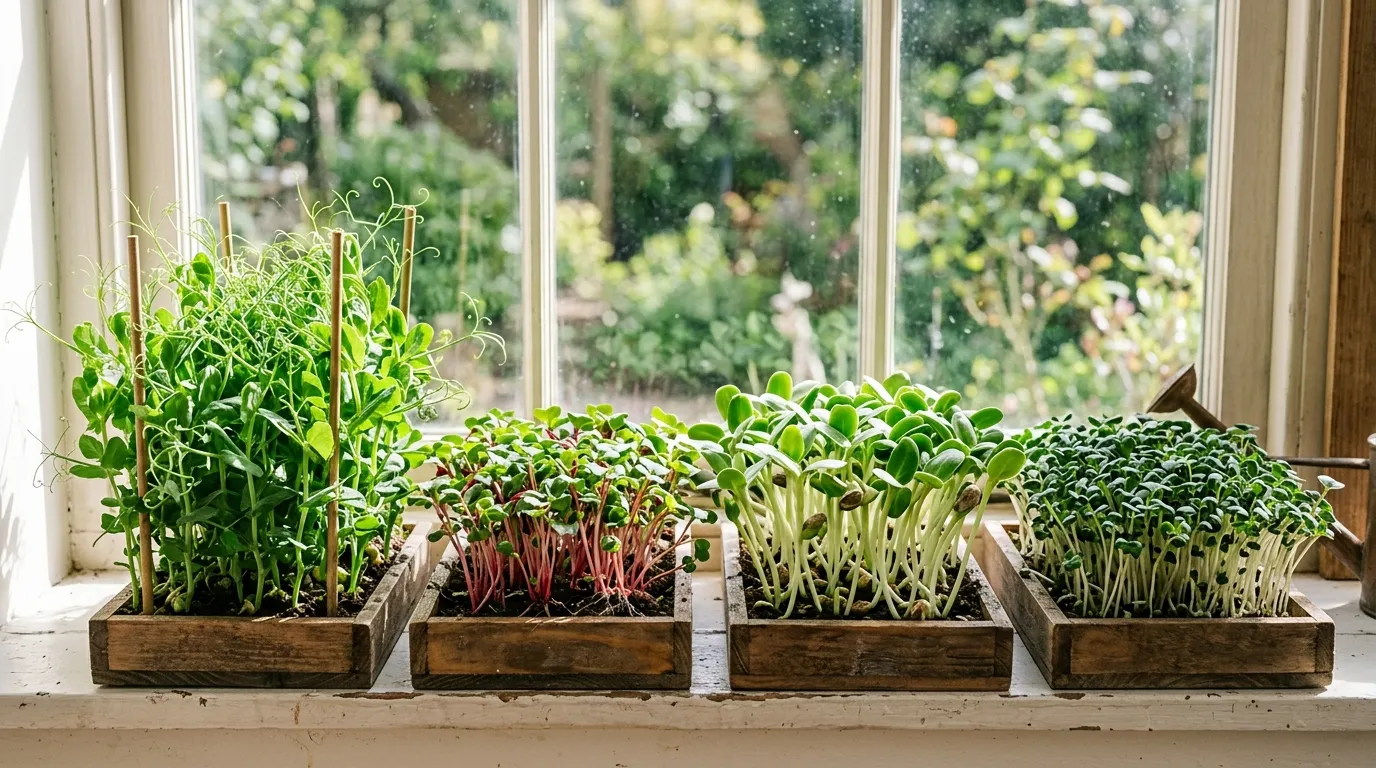
Pea shoots, radish microgreens, and lentil sprouts on a UK kitchen windowsill. In winter, a 20W LED grow panel on a 14-hour timer supplements natural light.
Containers for windowsill vegetables
Container choice affects how often you water and how well plants grow. Most standard windowsills are 15-25cm wide, which limits pot diameter to around 18cm maximum.
Material: Plastic retains moisture better than terracotta. For windowsills where watering is inconvenient, plastic pots reduce the frequency significantly. Terracotta is better for herbs like thyme and rosemary that need sharp drainage.
Drainage: Every container needs drainage holes. Without them, roots suffocate in waterlogged compost within days. Stand pots in saucers but empty the saucer 30 minutes after watering.
Self-watering pots: Worth the investment for busy windowsills. A reservoir at the base wicks water up to the roots and keeps compost consistently moist. Ideal for lettuce and herbs.
Window boxes: A 60cm window box holds 4-6 lettuce plants, a row of spring onions, or a mixed herb collection. They sit on external windowsill ledges with fixing brackets, maximising growing space without cluttering the inside sill.
For more detail on containers across different growing situations, see our container vegetable gardening UK guide.
Growing vegetables without a greenhouse: windowsill vs cold frame vs greenhouse
For many UK gardeners, a windowsill is the only growing space available. Here is how it compares to other indoor growing options:
| Method | Setup cost | Year-round? | Best crops | Space needed |
|---|---|---|---|---|
| Windowsill (natural light) | Under 10 pounds | Mar–Oct only | Herbs, salad, spring onions | None |
| Windowsill + LED light | 25-35 pounds | Year-round | Same plus chillies, microgreens | None |
| Cold frame | 30-80 pounds | Mar–Nov | Hardy salads, overwintering | Outdoor space |
| Unheated greenhouse | 200-600 pounds | Apr–Oct | Tomatoes, cucumbers, peppers | Outdoor space |
| Heated greenhouse | 400-1,200 pounds | Year-round | All crops | Outdoor space |
A windowsill with a grow light is the only option that requires zero outdoor space and produces useful crops throughout the year. For those with outdoor space, a combination of windowsill growing in winter and greenhouse or cold frame growing in summer maximises year-round production.
Lawrie’s Top Tip
From 10 years of windowsill growing across multiple UK homes: the single most impactful change is a 14-hour LED timer from November to February. Before I added one, my windowsill was effectively dormant for four months. After adding a 20-watt LED panel on a mechanical timer, I grew herbs and salad leaves continuously throughout winter. The timer cost 6 pounds; the grow light cost 18 pounds. Total investment: 24 pounds for year-round growing. That paid for itself in three weeks of saved supermarket herb and salad purchases.
The Sunday Gardener windowsill growing guide recommends a similar approach — supplementary lighting from October through to March to bridge the winter light gap.
Related reading
- How to grow microgreens UK — the fastest windowsill crop, ready in 7-21 days
- How to grow chilli peppers UK — the most rewarding long-term windowsill project
- Container vegetable gardening UK — expanding beyond the windowsill to patios and balconies
- How to grow herbs UK — complete guide to all common culinary herbs
- How to grow cress and watercress UK — the easiest windowsill crop of all
Lawrie has been gardening in the West Midlands for over 30 years. He grows his own veg using no-dig methods, keeps a wildlife-friendly garden, and writes practical advice based on real UK growing conditions.