How to Grow Cress and Watercress UK
Grow cress and watercress at home in the UK. Garden cress on kitchen paper in 5-7 days, watercress in containers, land cress as a soil-grown alternative.
Key takeaways
- Garden cress grows on damp kitchen paper and is ready to harvest in 5-7 days — the fastest food crop you can grow indoors
- Watercress needs constant fresh water; grow in a shallow container stood in a tray topped up daily, never stagnant
- Never forage wild watercress from streams near livestock — liver fluke contamination is a serious health risk
- Land cress is an easier soil-grown alternative to watercress with a nearly identical peppery flavour
- Succession sow garden cress every 5-7 days for a continuous windowsill supply all year round
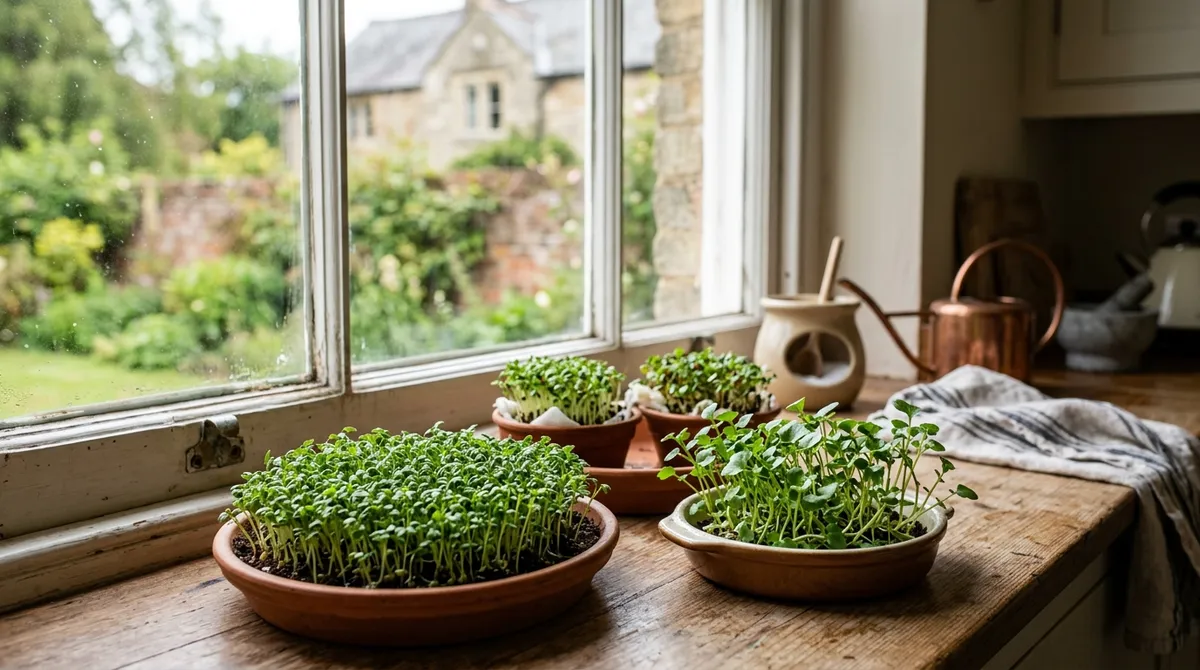
Cress is the fastest food you can grow. Scatter seeds on damp kitchen paper today and you will be harvesting in five to seven days — no garden, no pots, no experience required. It is also the crop that introduces more children to growing than any other plant in the UK.
The name covers two distinct plants. Garden cress (Lepidium sativum) is what grows on kitchen paper in egg cups and plastic trays — a brassica relative with a sharp, peppery flavour used in egg and cress sandwiches and salad garnishes. Watercress (Nasturtium officinale) is the peppery aquatic plant sold in supermarket bags, naturally found in fast-flowing chalk streams, and now proven to be the most nutrient-dense vegetable per calorie of any commonly grown UK crop.
Both are year-round crops. Garden cress grows indoors in every month of the year. Watercress crops from spring through autumn in containers outdoors, or year-round in a frost-free spot. Understanding the differences — and the third option, land cress — means you can choose the best approach for your space and appetite.
Cress vs watercress: which should you grow?
The two plants share a name and a flavour profile but require completely different growing methods. A comparison helps before committing to a method.
| Feature | Garden Cress | Watercress | Land Cress |
|---|---|---|---|
| Latin name | Lepidium sativum | Nasturtium officinale | Barbarea verna |
| Plant family | Brassicaceae | Brassicaceae | Brassicaceae |
| Days to harvest | 5-7 days | 28-42 days | 56-70 days |
| Growing medium | Kitchen paper / compost | Water or wet compost | Garden soil |
| Water needs | Moist surface only | Running or daily-changed water | Regular watering |
| Light | Bright windowsill | Partial shade | Partial shade |
| Best season | Year-round indoors | Spring to autumn | Spring and autumn |
| Flavour | Peppery, mild | Peppery, robust | Peppery, similar to watercress |
| Forage risk | None | Liver fluke near livestock | None |
| Best use | Egg sandwiches, garnish | Salads, soups, stir-fries | All watercress uses |
If you want the fastest possible results — or want to grow with children — garden cress is unbeatable. If you want the nutritional heavyweight with a more complex flavour for cooking, watercress or land cress is worth the extra effort.
How to grow garden cress on a windowsill
Garden cress is the easiest food crop grown in the UK. You need seeds, a shallow container, kitchen paper or compost, and a warm windowsill.
The kitchen paper method
This is how most UK schools teach cress growing, and it works every time.
- Cut kitchen paper to fit a shallow dish, plate, or seed tray
- Dampen thoroughly — the paper should be wet but not waterlogged
- Scatter cress seeds evenly across the surface (seeds can almost touch)
- Place on a warm windowsill at 18-20C — above a radiator is ideal
- Mist lightly with water each day to keep the paper damp
- Harvest with clean scissors at 5-8cm tall, after 5-7 days
The seeds do not need covering. Light helps germination. Cress on kitchen paper produces a single harvest. The roots are tangled into the paper and cannot be recut. Compost gives a slightly better crop and allows cutting twice if you leave the base intact.
The compost method
Fill a seed tray or small pot to 3cm depth with multipurpose compost. Water lightly. Scatter cress seeds across the surface and press gently. Do not cover with compost. Place on a warm windowsill. Keep the compost moist. Harvest at 5-8cm tall using scissors, leaving the base 1cm above the compost surface. A second cut is often possible 5-7 days later, though the regrowth is slightly less vigorous.
Succession sowing for continuous cress
Sow a new tray every 5-7 days. This takes 30 seconds and produces a continuous harvest. Three small trays running on a staggered schedule means one is always ready to cut. Garden cress is genuinely one of the most space-efficient crops you can produce: a single A4-sized tray of cress seeds costs under 50 pence and produces enough for several sandwiches.
Garden cress seeds scattered on damp kitchen paper. Within 24 hours, germination begins. By day 5-7, the seedlings are ready to cut — making it the perfect growing project for children.
For other fast-growing windowsill crops with similar appeal for children, our guide to growing microgreens in the UK covers pea shoots, radish, and sunflower microgreens with a 7-21 day seed-to-harvest time.
How to grow watercress in containers
Watercress grows in running chalk streams in the wild, which sounds intimidating for a kitchen garden. In practice, you can grow it in a container at home — it just requires one daily habit that most gardeners forget.
What watercress actually needs
Watercress needs three things: water, shade, and coolness. It tolerates cold but struggles in summer heat above 22C. It grows in full shade more comfortably than almost any edible crop. The critical factor is water movement or freshness. Stagnant water promotes root disease and kills the plant within days in warm weather.
You do not need a stream. You need a container stood in a tray of water that you top up and change regularly.
Step-by-step container method
What you need:
- A pot or container at least 20cm deep and 30cm wide
- A large saucer or outer tray that holds water
- Multipurpose compost or aquatic compost
- Watercress plants or seed (plants establish faster)
Method:
- Fill the container with compost, leaving 3cm at the top
- Plant watercress transplants 15cm apart, or sow seed thinly and thin to 15cm
- Water well until the compost is saturated
- Stand the container in a tray of water so the base sits in 2-3cm of water
- Top up the tray with fresh tap water every day
- In temperatures above 15C, change the water completely every 1-2 days — not just top it up
- Position in partial to full shade — a north-facing wall, under a tree, or in a shaded corner works well
Harvesting watercress
Begin harvesting when plants reach 15-20cm tall, usually 4-6 weeks from planting. Cut the top 10cm of stems. The plant regrows from the base and produces multiple harvests. Regular cutting encourages bushy, compact growth and delays flowering. Once watercress flowers (white clusters, similar to rocket), the flavour becomes more bitter. Cut hard to delay flowering or remove and resow when this happens.
Watercress grown in good conditions produces harvests from April through October outdoors. In a sheltered, frost-free spot — a cold greenhouse or porch — it continues through mild winters.
Water safety for container watercress
Use tap water for container watercress, not water from water butts, ponds, or streams. Tap water is treated and safe. Fresh from the tap is ideal. The chlorine in tap water dissipates in a few hours and does not harm the plant.
The liver fluke warning: Never eat watercress gathered from streams, rivers, or ditches near farmland where cattle or sheep graze. The liver fluke parasite (Fasciola hepatica) completes part of its life cycle on aquatic plants including watercress. Raw wild watercress can carry viable cysts that cause serious liver damage in humans. The NHS recommends cooking any wild-foraged watercress thoroughly. Growing your own in clean containers eliminates this risk entirely.
Watercress in a 30cm container stood in a shallow tray of water. The tray is topped up daily with fresh tap water. This shaded corner of a West Midlands garden produced harvests from April to October.
If you enjoy growing salad crops in containers, our container vegetable gardening guide covers the full range of crops suited to pot growing on patios and balconies.
Land cress: the easier alternative
Land cress (Barbarea verna) is the practical solution for most UK gardeners who want watercress flavour without the water management.
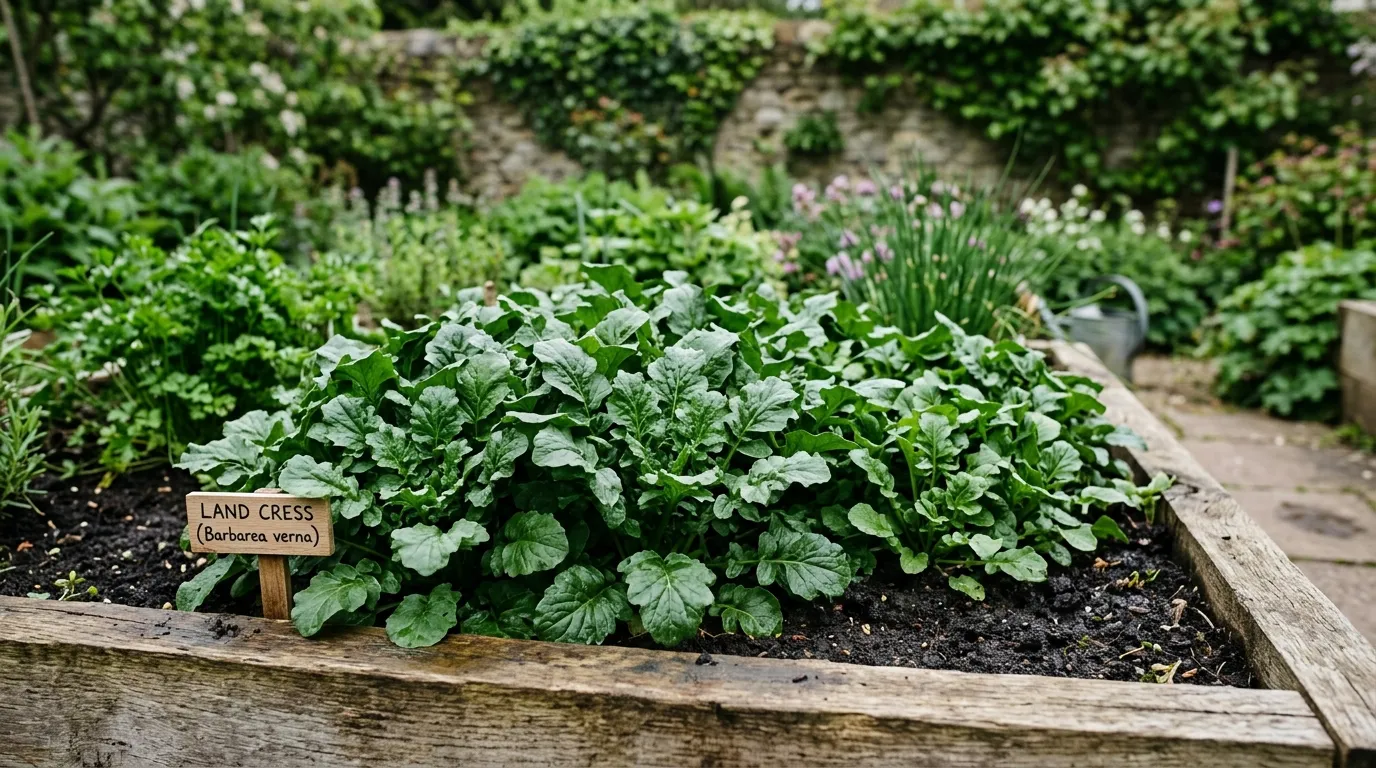
Land cress (Barbarea verna) grows in ordinary soil with no standing water needed. Similar peppery flavour to watercress.
Also known as American cress, upland cress, or Belle Isle cress, land cress grows in ordinary garden soil like any other salad leaf. It has an almost identical peppery, slightly bitter flavour to watercress. Nutritionally it is very close. The only real difference is the growing method.
How to grow land cress
Sow direct into the ground or into containers of multipurpose compost from March through September. Thin to 15cm between plants. Land cress prefers partial shade — it runs to seed quickly in full sun and heat, just like watercress.
Key advantages over watercress:
- No water management required — treat it like a leafy salad crop
- More cold-hardy than watercress, cropping through light frost
- Sow in August or September for winter harvests under cloches or fleece
- No liver fluke risk (no wild foraging temptation)
Harvest by cutting outer leaves as needed, leaving the growing centre intact. Plants crop for 8-12 weeks before running to seed. Succession sow every 4 weeks from March to July for a continuous supply.
Land cress also works exceptionally well as a cut-and-come-again crop in containers. A 30cm pot filled with compost and sown densely produces enough leaves for regular salad use and can be kept on a shaded patio from spring to autumn.
Land cress growing in a shaded raised bed in the West Midlands. Sown in late August, these plants cropped through November and survived light frosts with no protection. The flavour is almost identical to watercress.
Our guide to growing lettuce in the UK covers companion crops that work well alongside land cress in a mixed salad bed or container setup.
The nutrition case for watercress
Watercress earns its reputation. According to analysis by the Royal Horticultural Society and independently published nutritional databases, watercress contains more vitamin C per 100g than an orange, more calcium than whole milk (gram for gram), and significant quantities of vitamins A, K, and iron.
The most cited statistic is nutrient density relative to calorie content. Watercress consistently scores at or near the top of nutrient-density indices for commonly available vegetables. A 100g serving contains roughly 11 calories and delivers around 72mg of vitamin C (nearly the full UK daily reference intake), 55mcg of folate, and 106mcg of vitamin K.
Garden cress is similarly impressive. It contains high levels of vitamins A, C, and K, plus iron and folate. For a plant that takes 5 days to produce a harvest from kitchen paper, the nutritional return is extraordinary.
Land cress shares the nutrient profile closely, as all three belong to the Brassicaceae family.
Sowing calendar
| Month | Garden Cress | Watercress (container) | Land Cress |
|---|---|---|---|
| January | Indoors year-round | Under cover only | Under cover only |
| February | Indoors year-round | Under cover only | Sow under cover |
| March | Indoors year-round | Start containers | Sow outside |
| April | Indoors year-round | Outdoors | Outdoors |
| May | Indoors year-round | Outdoors | Outdoors |
| June | Indoors year-round | Outdoors (keep shaded) | Outdoors (shade essential) |
| July | Indoors year-round | Outdoors (keep shaded) | Partial shade |
| August | Indoors year-round | Outdoors | Sow for autumn/winter |
| September | Indoors year-round | Outdoors (wind down) | Outdoors |
| October | Indoors year-round | Bring under cover | Under cloches |
| November | Indoors year-round | Under cover only | Under fleece |
| December | Indoors year-round | Under cover only | Under fleece |
Garden cress is genuinely year-round indoors as long as the windowsill temperature stays above 10C. Below 10C, germination slows significantly and harvest can stretch to 10-14 days.
Growing cress with children
Garden cress is the single best crop for introducing children to growing. Results appear within 24 hours, the full harvest comes in under a week, and the crop is something a child actually wants to eat — especially in an egg and cress sandwich or on a pizza.
The egg shell method is the most engaging version for young children. Rinse an empty egg shell, fill it with damp cotton wool or compost, scatter a pinch of seeds, and draw a face on the shell. The cress becomes the hair. By day 5-7, the cress sprouts as a wild green mane. It is a reliable win that produces genuine excitement.
Older children can run a simple science experiment comparing garden cress on kitchen paper, compost, and cotton wool to see which produces the fastest growth. Our guide to vegetable gardening projects for children covers this and other fast-growing crops that engage children throughout the growing season.
For children ready to move beyond windowsill growing, growing sunflowers with children is the natural next step — a bigger plant, longer project, and more dramatic result.
Troubleshooting
Cress is leggy and pale: Too little light. Move to a brighter windowsill. Cress grown in poor light is edible but flavourless.
Cress is not germinating: Temperature too low (below 10C) or seeds too old. Warm the tray and use fresh seed from a fresh packet.
Cress is bitter: Harvested too late or dried out. Cut at 5-8cm tall before the first true leaves fully expand. Keep the growing medium consistently moist.
Watercress leaves are yellowing: Usually a sign of stagnant water or insufficient nutrients. Change the water immediately and stand the pot in fresh water. Add a dilute liquid fertiliser (half-strength tomato feed) once the plant is established.
Watercress is flowering: Plants are maturing or stressed by heat. Cut hard to delay flowering and move to a cooler, shadier spot. Hot, sunny conditions bring watercress into flower quickly and make the flavour more bitter.
Land cress is bolting: Sown in warm weather with too much sun. Move to shade and water more frequently. Autumn-sown land cress rarely bolts before winter.
From harvest to kitchen
Garden cress: Harvest with scissors and use immediately. The classic use is egg and cress sandwiches — hard-boiled eggs mashed with mayonnaise and mustard, piled on buttered bread with a generous handful of freshly cut cress. It also works as a garnish on soup, scattered over smoked salmon, or mixed into salads alongside spring onions and lettuce.
Watercress: Eat raw in salads and sandwiches or wilt briefly in hot dishes. Classic watercress soup — sweated leeks and potatoes blended with watercress and a good stock — is one of the best uses for a large harvest. Watercress also works wilted into pasta or stir-fried briefly with garlic and sesame oil.
Land cress: Use exactly as you would watercress. The texture is similar, the flavour almost identical. It works well in winter salad combinations alongside corn salad, spinach, and mustard leaves harvested through the colder months.
For the complete picture on growing salad crops through every season of the year, see our guide to starting a vegetable garden in the UK.
Frequently asked questions
How do you grow cress on kitchen paper?
Dampen kitchen paper and scatter seeds across the surface. Place in a warm spot at 18-20C. Keep the paper moist and harvest with scissors in 5-7 days at 5-8cm tall. Succession sow a new tray every 5-7 days for a continuous supply.
Can you grow watercress in a pot without a stream?
Yes — stand the pot in a tray of water changed daily. Fill a 30cm pot with compost, plant or sow watercress, and stand in a shallow tray of fresh tap water. Top up the tray every day. Change completely every 1-2 days in warm weather. Position in partial to full shade.
What is the difference between cress and watercress?
Garden cress is a fast-growing brassica, watercress is an aquatic plant. Both have a peppery flavour but require different growing conditions. Garden cress grows on kitchen paper in 5-7 days. Watercress needs water, shade, and 4-6 weeks to establish. Land cress bridges the gap, growing in ordinary soil with watercress flavour.
Is wild watercress safe to eat?
Never eat raw wild watercress from streams near livestock. Liver fluke (Fasciola hepatica) attaches to watercress plants in streams used by cattle and sheep. Raw consumption can cause serious liver damage. Cook wild-foraged watercress thoroughly. Grow your own in containers with clean tap water to eliminate the risk entirely.
What is land cress and is it easier to grow?
Land cress grows in ordinary soil and needs no water management. Barbarea verna has an almost identical flavour to watercress and grows like any other salad leaf. Sow from March to September, harvest in 8-10 weeks, and crop through winter under fleece. It is the most practical watercress substitute for most UK gardens.
How do you stop cress from going bitter?
Harvest at 5-8cm tall before the first true leaves expand. Leaving cress beyond this point makes it stringy and bitter. Keep the growing medium consistently moist. Drought stress accelerates bitterness. Use fresh seeds — old seed produces weaker, more bitter growth.
Can children grow cress at home?
Cress is the best growing project for children under 10. Results appear within 24 hours and harvest comes in under a week. Use egg shells filled with damp cotton wool and draw a face on the shell. The cress grows as hair. See our guide to gardening projects for children for step-by-step instructions.
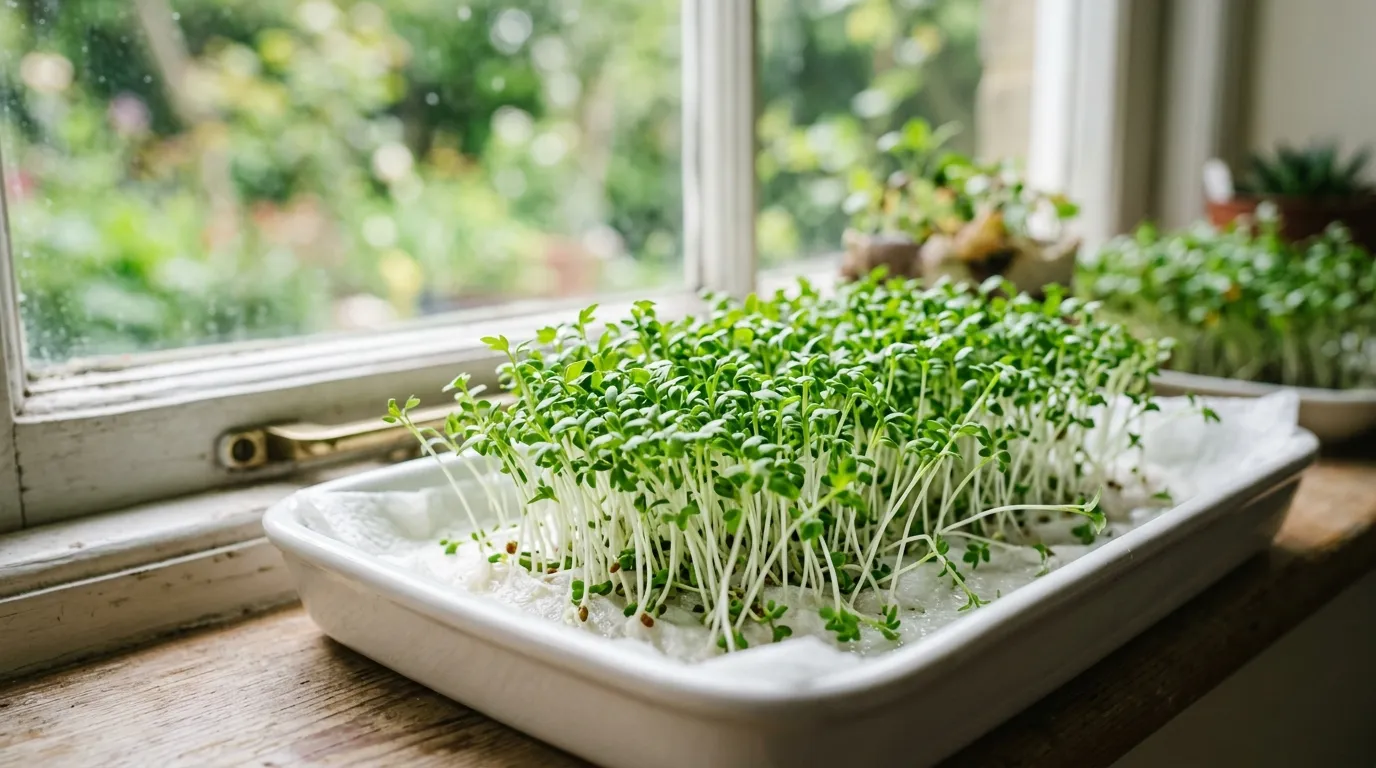
Garden cress on a windowsill. Seed to sandwich in 5-7 days, making it the fastest crop a child can grow.
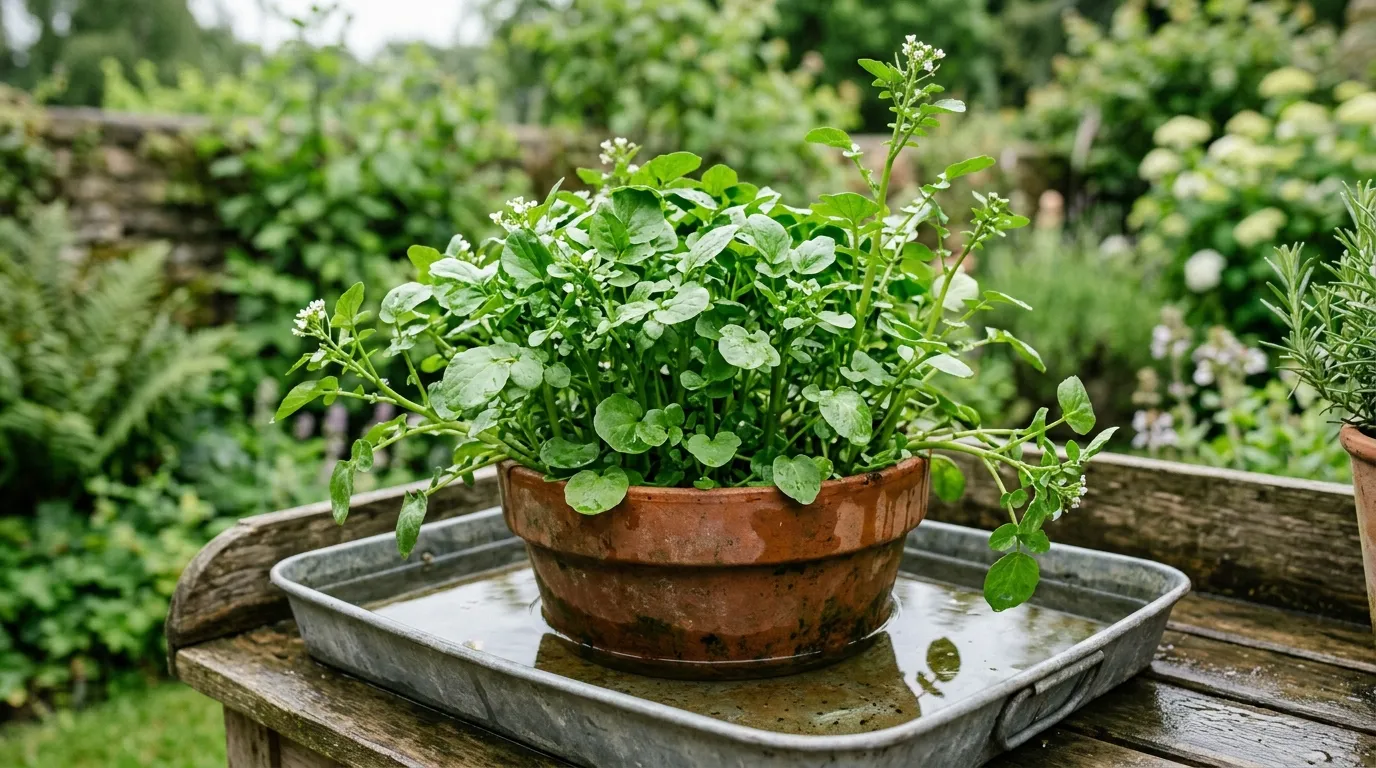
Watercress grows in a pot stood in a shallow tray of water. Change the water every 2-3 days to keep it fresh.
Related reading
Lawrie has been gardening in the West Midlands for over 30 years. He grows his own veg using no-dig methods, keeps a wildlife-friendly garden, and writes practical advice based on real UK growing conditions.