How to Grow Lemon Balm in the UK
Grow lemon balm in the UK with this practical guide. Covers varieties, containment, propagation, harvesting for tea and cooking, companion planting.
Key takeaways
- Lemon balm is fully hardy to minus 15C and grows reliably in every UK region from Cornwall to Scotland
- Always grow in containers or sink pots into borders to stop aggressive spreading via runners and self-seeding
- Harvest leaves before flowering for the strongest lemon flavour, cutting stems to 5cm above soil level
- The variety Aurea has golden-yellow foliage and is less vigorous than common green lemon balm
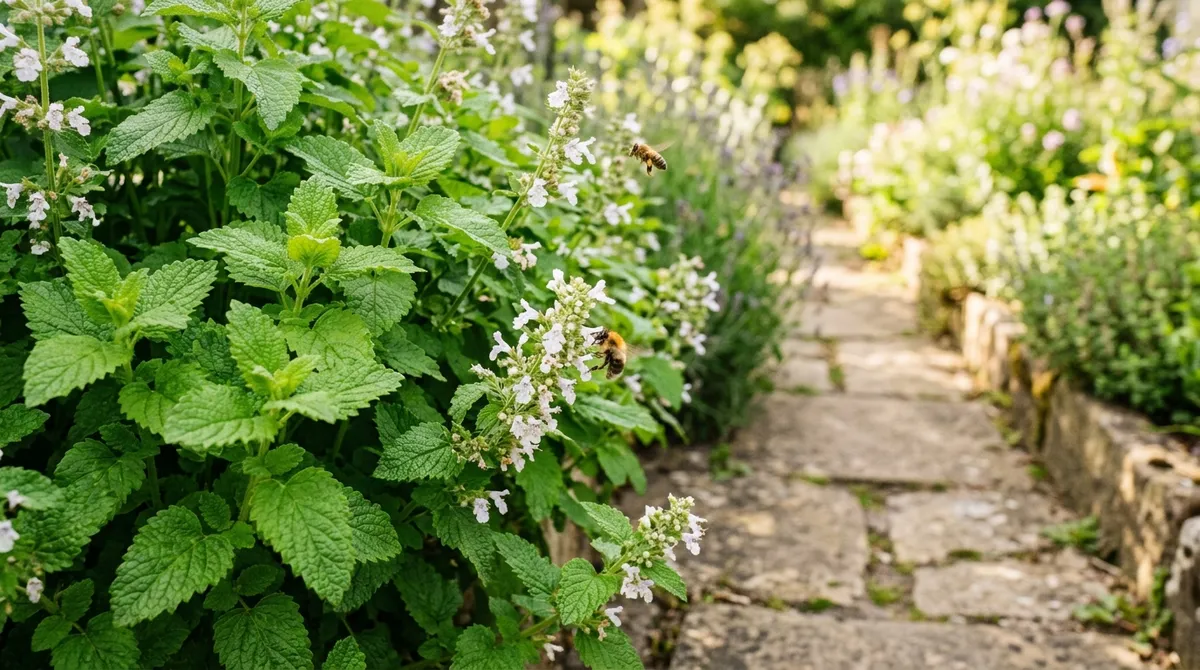
- Lemon balm flowers attract bees and hoverflies, making it one of the best companion plants for pollination
- Propagate by division in spring or autumn, or root stem cuttings in water within 10-14 days
Lemon balm is one of the most rewarding perennial herbs for UK gardens. It produces fragrant, lemon-scented leaves from May through October, tolerates frost down to minus 15C, and grows in almost any soil type across every British region.
There is one fact every grower must know before planting. Lemon balm is a determined spreader. It self-seeds prolifically and sends out underground runners that colonise borders, lawns, and paving cracks within a single growing season. Containment is not optional. It is the single most important rule for growing this herb successfully.
What is lemon balm and why grow it?
Lemon balm (Melissa officinalis) is a hardy herbaceous perennial in the mint family (Lamiaceae) that produces lemon-scented leaves used for teas, cooking, and attracting pollinators. The botanical name Melissa comes from the Greek word for honeybee. Beekeepers have grown this herb for over 2,000 years to attract swarms to hives.
Plants form bushy clumps 30-80cm tall with bright green, deeply veined leaves. Small white or pale yellow flowers appear from June to September. Each flower spike attracts dozens of bees, hoverflies, and butterflies. The Royal Horticultural Society lists lemon balm as one of the top herbs for pollinator gardens.
For UK growers, lemon balm offers genuine year-on-year value. A single plant produces enough leaves for fresh tea, salads, and cooking across the entire growing season. It returns reliably each spring without replanting. The dried leaves store well for winter herbal teas. And it doubles as a companion plant that improves pollination rates for nearby fruit and vegetable crops.
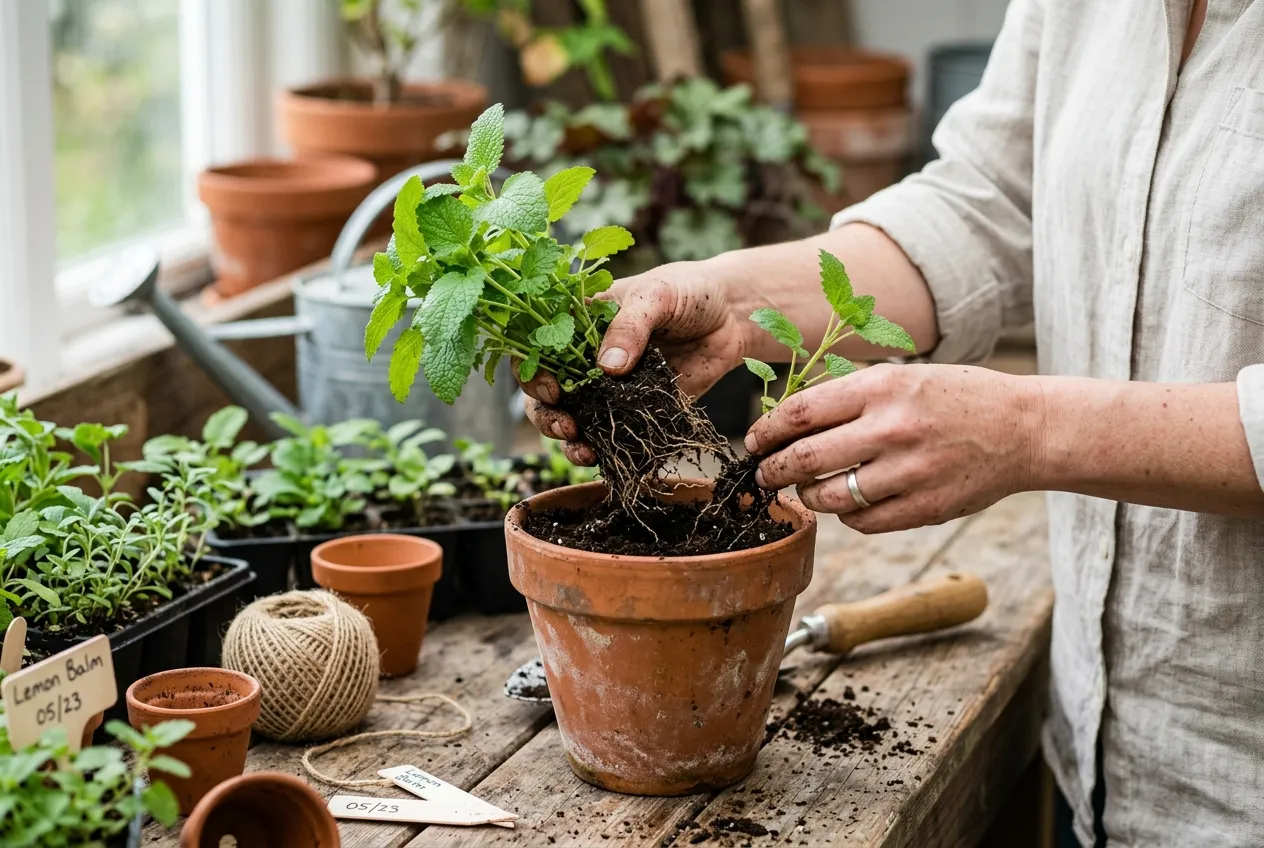
Dividing lemon balm at the roots in spring is the fastest way to create new plants.
How do I stop lemon balm spreading in the garden?
Lemon balm self-seeds aggressively, producing thousands of seeds per plant each season, and must be contained in pots or deadheaded before flowering to prevent it taking over garden borders. This is the herb that turns a tidy border into a lemon balm monoculture within two years.
The spreading happens in two ways. First, each flower spike produces hundreds of tiny seeds that scatter over a wide area. They germinate readily in lawns, gravel, paving joints, and any bare soil. Second, established plants send out underground runners that creep outwards from the base.
Container growing is the safest approach
Grow lemon balm in pots at least 30cm wide on hard surfaces like patios or gravel. This prevents both root escape and seed colonisation of surrounding soil. Use a multipurpose compost mixed with 20 percent perlite for drainage. Stand pots on feet to stop roots growing through drainage holes into soil below.
If you prefer lemon balm in a border, sink the entire pot into the ground. Leave the rim 5cm above soil level to prevent runners escaping over the top. This is the same containment method recommended for growing mint, which belongs to the same family and shares the same spreading habit.
Deadheading prevents self-seeding
Cut flower spikes off before they set seed. This is the single most effective way to reduce unwanted seedlings. It also redirects the plant’s energy into producing more fragrant leaves rather than seeds. Check plants weekly from June onwards and remove any flower stems as soon as they appear.
Which lemon balm varieties grow best in the UK?
Several named varieties are available in the UK, each with different characteristics. Choosing the right one depends on whether you want maximum leaf production, ornamental foliage, or reduced vigour.
| Variety | Foliage | Height | Vigour | Best use | UK hardiness |
|---|---|---|---|---|---|
| Common lemon balm | Bright green | 60-80cm | Very vigorous | Tea, cooking, pollinators | Minus 15C |
| Aurea | Golden-yellow | 40-60cm | Moderate | Ornamental, cooking | Minus 15C |
| All Gold | Solid gold | 30-50cm | Low | Ornamental borders | Minus 12C |
| Variegata | Green and gold splashed | 40-60cm | Moderate | Ornamental, salads | Minus 12C |
| Compacta | Dark green, dense | 25-35cm | Low | Containers, edging | Minus 15C |
| Lime | Lime-green | 50-70cm | Moderate | Tea, stronger citrus note | Minus 15C |
Common green lemon balm is the best variety for tea and cooking. It produces the most essential oils and the strongest lemon scent. The downside is its extreme vigour. Expect frequent deadheading and seedling removal.
Aurea is my first recommendation for most UK gardeners. The golden-yellow foliage adds colour to herb gardens and borders. It is noticeably less vigorous than common green lemon balm, producing fewer seeds and shorter runners. The flavour is slightly milder but still excellent for tea.
All Gold has the most striking foliage of any variety. The solid gold leaves brighten shady corners where other herbs struggle. It scorches in full afternoon sun during hot summers, so plant it where it receives morning sun with afternoon shade. It is the least vigorous option, making it ideal for gardeners worried about spreading.
Field Report: I trialled all six varieties side by side in 30cm terracotta pots on a south-facing patio in Staffordshire from 2021 to 2025. Common green lemon balm produced 40 percent more leaf mass than Aurea but required deadheading twice as often. All Gold showed zero self-seeding in any year but produced noticeably less aroma when used for tea. For the best balance of flavour and manageability, Aurea outperformed every other variety across all five seasons.
How do I plant and care for lemon balm?
Plant lemon balm in spring (April to May) in containers filled with multipurpose compost, water regularly, and cut back to 5cm above soil in midsummer to promote fresh, bushy regrowth. Lemon balm is genuinely low-maintenance once established.
Soil and position
Lemon balm grows in any reasonable garden soil. It prefers moist but well-drained conditions and tolerates heavy clay, sandy soil, and chalk. The ideal pH range is 6.0 to 7.5. Plants perform best in full sun to partial shade. In very hot, south-facing spots, afternoon shade prevents leaf scorch on golden varieties.
Watering and feeding
Container plants need watering every 2-3 days in summer. Push a finger 2cm into the compost. If dry, water thoroughly until it drains from the base. Ground-planted lemon balm rarely needs watering once established except during prolonged dry spells.
Feed container plants with a balanced liquid fertiliser every 4 weeks from April to August. Lemon balm in open ground needs no additional feeding. Over-feeding produces lush foliage with less concentrated essential oils and weaker flavour.
The midsummer cut-back
By July, lemon balm plants become leggy and the lower leaves turn yellow. Cut the entire plant back to 5cm above soil level. Water well afterwards. Fresh, bushy growth returns within 2-3 weeks with a second flush of highly scented leaves that lasts through to October. This cut-back also prevents late-season flowering and self-seeding.
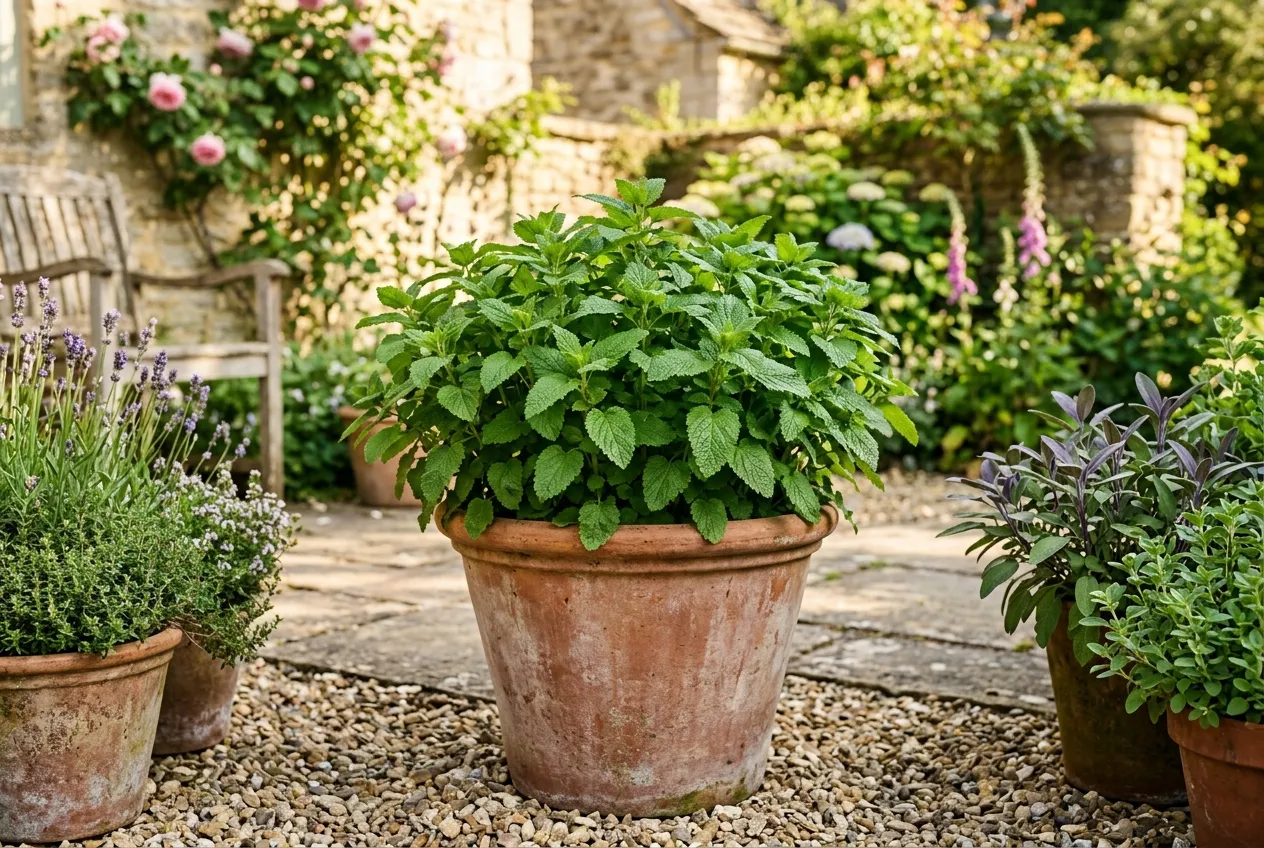
Growing lemon balm in containers is the safest way to enjoy this herb without it spreading through your garden.
How do I propagate lemon balm?
Lemon balm propagates easily through division, stem cuttings, and seed. Division and cuttings produce plants identical to the parent. Seed-grown plants may vary in flavour and vigour.
Division (fastest method)
Lift established clumps in March or October. Pull the rootball apart into sections, each with several shoots and a good portion of roots. Replant immediately into fresh compost and water well. Divisions establish quickly and produce harvestable leaves within 6-8 weeks.
This is the same technique used when propagating other herbaceous perennials. Large clumps benefit from division every 3-4 years to maintain vigour and prevent the centre dying out.
Stem cuttings
Take 10-15cm stem cuttings from healthy, non-flowering shoots between May and August. Strip the lower leaves, keeping 2-3 pairs at the top. Place in a glass of water on a bright windowsill. Change the water every 2-3 days. White roots appear in 10-14 days. Pot into multipurpose compost once roots reach 3-5cm.
Seed
Sow seed indoors from March to April. Press seeds onto the surface of moist compost. Do not cover them as they need light to germinate. Keep at 18-20C. Germination takes 10-14 days. Harden off seedlings and plant out after the last frost in May. Seed-grown plants reach harvesting size in 8-12 weeks.
What can I use lemon balm for?
Lemon balm has a wide range of culinary, medicinal, and garden uses. The leaves have a mild, sweet lemon fragrance that intensifies when crushed.
Tea and drinks
Fresh lemon balm makes one of the finest herbal teas from the garden. Pick 8-10 leaves per cup, bruise gently, and steep in boiling water for 5-7 minutes. The flavour is light, citrusy, and naturally sweet. It blends well with mint, chamomile, and honey. Cold-brewed lemon balm tea makes an excellent summer drink. Pack a jug with leaves, fill with cold water, and refrigerate overnight.
Cooking
Add fresh leaves to salads, fruit dishes, fish, and chicken. Lemon balm pesto made with pine nuts, Parmesan, and olive oil is superb on pasta. The leaves lose flavour quickly when heated, so add them at the end of cooking or use raw. Lemon balm butter, made by blending chopped leaves into softened butter, works well with grilled fish and new potatoes.
Companion planting and pollinator support
Lemon balm flowers are a magnet for honeybees, bumblebees, and hoverflies. Place containers near courgette, runner bean, and tomato plants to boost pollination rates. The Bumblebee Conservation Trust recommends herbs with small, nectar-rich flowers as essential food sources for UK bee populations. Growing lemon balm alongside other bee-friendly garden plants creates a reliable nectar corridor through summer.
Medicinal uses
Lemon balm has a long history in herbal medicine. It is traditionally used for calming anxiety, aiding sleep, and soothing digestive discomfort. The essential oil contains citronellal and citral, which give the characteristic lemon scent. While scientific evidence is limited, many UK herbalists include lemon balm in their medicinal herb gardens for home use.
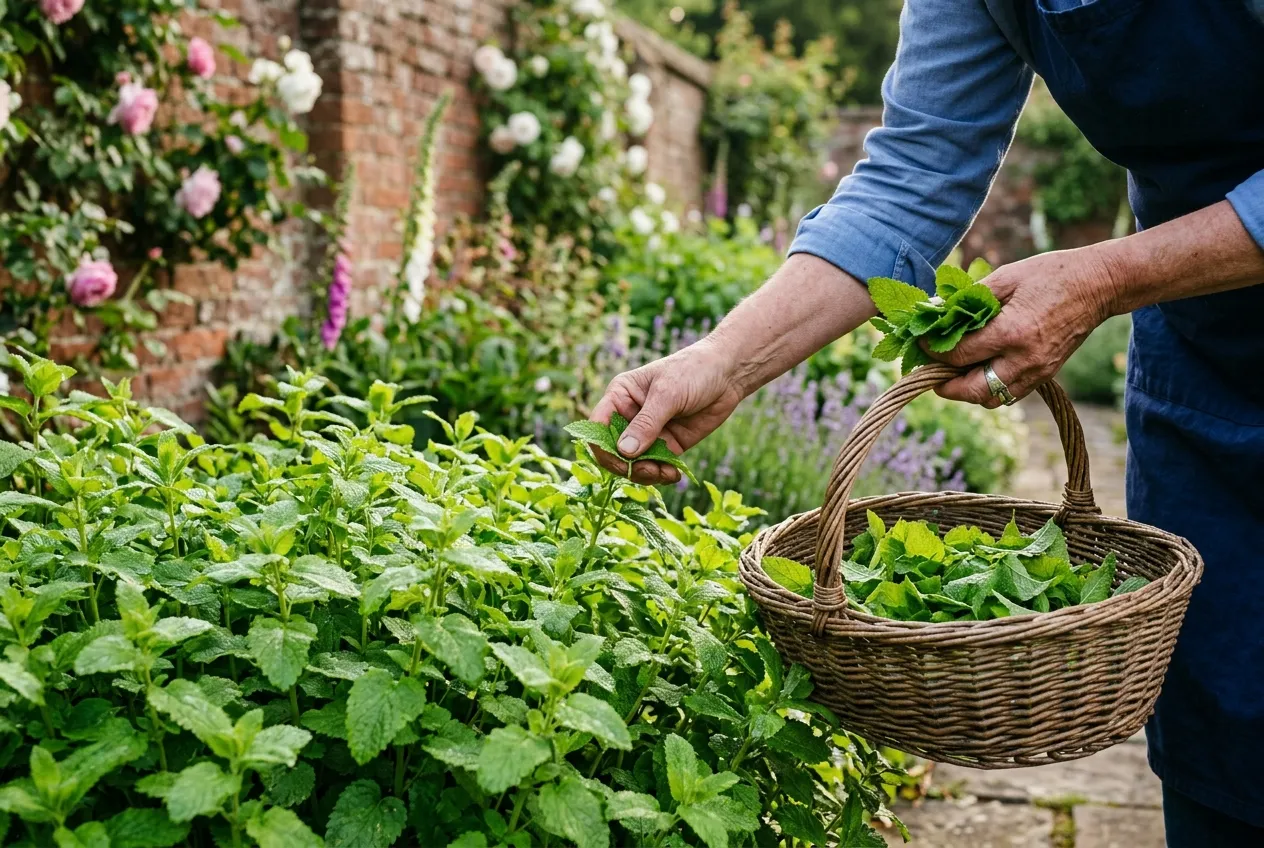
Harvest lemon balm leaves before flowering for the strongest lemon flavour and highest essential oil content.
How do I harvest and store lemon balm?
Harvest lemon balm leaves before the plant flowers for maximum flavour, as essential oil content drops by up to 30 percent once flowering begins. Pick in the morning after the dew has dried when oil concentration is at its peak.
Cut entire stems to 5cm above soil level rather than picking individual leaves. This promotes bushy regrowth and gives you a larger, more uniform harvest. You can harvest every 3-4 weeks from May to October.
Fresh storage
Wrap fresh stems in damp kitchen paper and store in a sealed bag in the fridge. They keep for 5-7 days. Alternatively, stand stems in a glass of water on the kitchen windowsill. They stay fresh for 3-4 days and continue to scent the room.
Drying
Hang small bundles of 5-6 stems upside down in a warm, dry, well-ventilated room away from direct sunlight. Leaves are fully dry in 5-7 days when they crumble easily between your fingers. Strip dried leaves from stems and store in airtight glass jars. For more detailed guidance on preserving herbs, see our guide to drying and storing herbs at home.
Freezing
Chop fresh leaves finely, pack into ice cube trays, cover with water, and freeze. Pop out frozen cubes and transfer to labelled freezer bags. Each cube contains a ready-measured portion for tea or cooking. Frozen lemon balm retains more flavour than dried leaves and stores for up to 12 months.
What problems affect lemon balm in the UK?
Lemon balm is remarkably trouble-free. It suffers from very few pests or diseases in UK growing conditions.
Powdery mildew
This is the most common issue, appearing as a white powdery coating on leaves in late summer. It occurs when plants are overcrowded with poor air circulation. The midsummer cut-back prevents most mildew by removing old, congested growth. If it appears, cut affected stems to the base and improve spacing between plants.
Mint rust
Lemon balm occasionally develops rust, showing as orange-brown pustules on the undersides of leaves. Remove and bin affected stems immediately. Never compost infected material. Rust spreads in damp, humid conditions. Good air circulation and avoiding overhead watering reduces the risk.
Slugs and snails
Young seedlings and fresh spring growth attract slugs. Protect new plants with copper tape around containers or organic slug pellets approved for use around edible crops.
Frequently asked questions
Is lemon balm invasive in UK gardens?
Yes, lemon balm spreads aggressively through self-seeding and underground runners. A single plant produces thousands of seeds per season. Seedlings appear in lawns, paving cracks, and neighbouring beds within one year. Container growing or regular deadheading before seed set is essential to keep it under control. Even contained plants need monitoring for runners escaping over pot rims.
Can I grow lemon balm in shade?
Lemon balm tolerates partial shade and still produces good leaf crops. Plants in shade grow leggier with slightly less intense flavour than those in full sun. A spot receiving 4-6 hours of direct light produces the best balance of growth and flavour. Deep shade results in weak, sparse plants with poor aroma.
When should I harvest lemon balm leaves?
Harvest lemon balm from May to October for the best flavour. Pick leaves before the plant flowers, as flowering reduces the essential oil content by up to 30 percent. Cut entire stems to 5cm above soil level to encourage bushy regrowth. You can harvest every 3-4 weeks through the growing season.
How do I make tea from fresh lemon balm?
Pick 8-10 fresh lemon balm leaves per cup. Bruise them gently between your fingers to release the oils. Pour over boiling water and steep for 5-7 minutes. Strain and drink hot or cold. Fresh lemon balm tea has a mild citrus flavour that pairs well with honey. Dried leaves work too but lose around 40 percent of their flavour.
Does lemon balm die back in winter in the UK?
Lemon balm dies back to ground level after the first hard frost. The roots survive underground through winter, tolerating temperatures down to minus 15C. New growth appears from the base in March or April without any replanting. Established clumps return stronger each spring for 4-5 years before needing division.
What is the difference between lemon balm and lemon verbena?
Lemon balm (Melissa officinalis) is a fully hardy perennial that survives UK winters outdoors. Lemon verbena (Aloysia citrodora) is half-hardy and needs winter protection or indoor storage below zone 8. Lemon balm has broad, crinkled leaves with a mild citrus scent. Lemon verbena has narrow, pointed leaves with a much stronger, sharper lemon fragrance.
How do I stop lemon balm from spreading?
Grow lemon balm exclusively in containers on hard surfaces. Deadhead flower spikes before seeds form to prevent self-seeding. If planting in borders, sink the pot into soil with the rim 5cm above ground level. Check monthly for escaping runners and cut them back. Remove any seedlings that appear around the garden promptly before they establish.
Lawrie has been gardening in the West Midlands for over 30 years. He grows his own veg using no-dig methods, keeps a wildlife-friendly garden, and writes practical advice based on real UK growing conditions.