How to Grow Pomegranate in the UK
Learn how to grow pomegranate in the UK with wall training, containers, and greenhouse methods. Varieties, care calendar, and harvest tips from trials.
Key takeaways
- Hardy pomegranate varieties survive UK winters down to -12C against a south-facing wall
- Wall training on horizontal wires at 30cm spacing gives the best fruit yields outdoors
- Container-grown pomegranates fruit in 3-4 years from grafted plants; 5-7 years from seed
- The dwarf variety 'Nana' reaches just 1m tall and flowers reliably in UK summers
- Pomegranates need 6+ hours of direct sun and free-draining soil at pH 5.5-7.0
- Greenhouse growing extends the season by 6-8 weeks, enough to ripen fruit in northern England
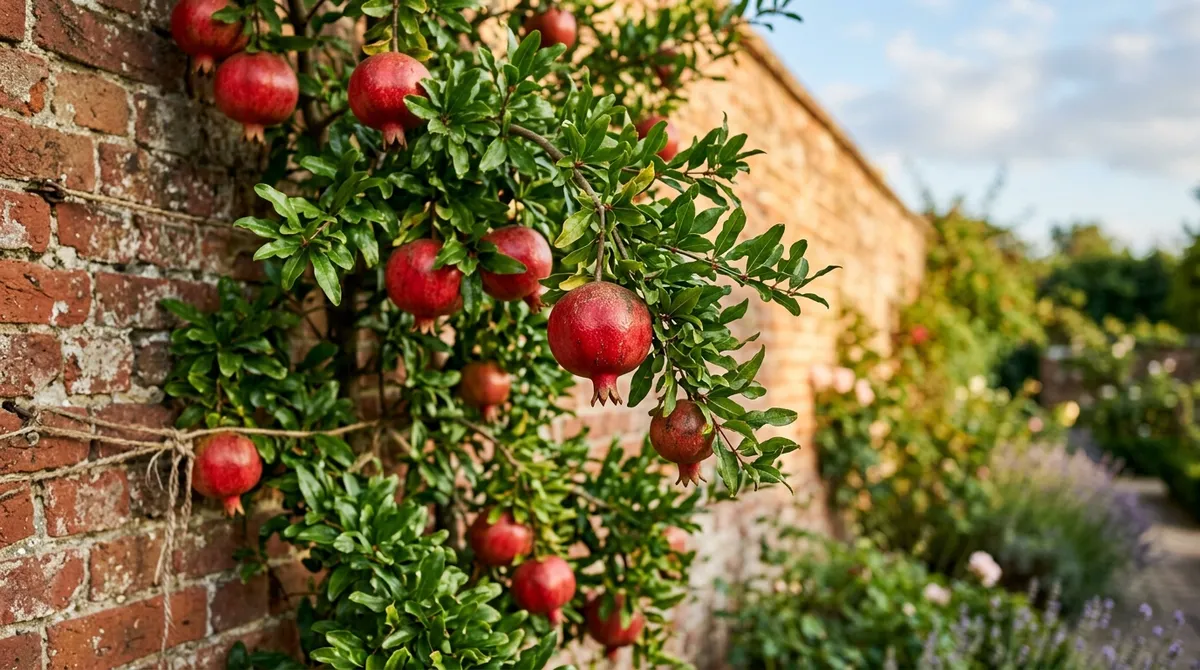
How to grow pomegranate in the UK starts with choosing the right variety and the right position. This ancient Mediterranean fruit tree is hardier than most gardeners realise. Named cultivars survive temperatures as low as -12C when planted in free-draining soil against a warm wall.
Pomegranate (Punica granatum) has grown in Britain since at least the 16th century. The tree appears in records from Hampton Court Palace, where Henry VIII’s gardeners grew specimens against the palace walls. Modern hardy cultivars and milder UK winters mean fruit production is now realistic across much of southern and central England. Even in cooler regions, container growing and greenhouse cultivation make pomegranate a genuinely productive fruit tree.
Which pomegranate variety should I grow?
Choosing the right cultivar is the single biggest factor in UK pomegranate success. Not all pomegranates are equal. Some are ornamental only, while others produce edible fruit in British conditions.
‘Provence’ is the standout choice for outdoor fruit production. Originally from southern France, this cultivar tolerates temperatures down to -12C and produces medium-sized fruit (7-9cm diameter) with sweet-tart red arils. It ripens 2-3 weeks earlier than most pomegranates, which is critical in the shorter UK season.
‘Nana’ is the best dwarf variety. It reaches just 80-100cm tall, making it ideal for pots and small gardens. The scarlet flowers are prolific from July to September. Fruit is small (3-4cm) and primarily ornamental, but the seeds are edible.
‘Kazake’ is the hardiest of all cultivated pomegranates. It survived -15C in trials at the Jardin des Plantes in Paris. The fruit is smaller than ‘Provence’ but still edible, with pink arils and a sweeter flavour. The RHS rates pomegranate as H4 hardiness, meaning it tolerates temperatures down to -10C in average conditions.
| Variety | Hardiness | Height | Fruit size | Arils | Best for | Time to fruit |
|---|---|---|---|---|---|---|
| ’Provence’ | -12C | 2-3m | 7-9cm, medium | Red, sweet-tart | Wall training, outdoors | 3-4 years (grafted) |
| ‘Nana’ | -10C | 0.8-1m | 3-4cm, small | Orange-red, mild | Containers, ornamental | 2-3 years |
| ’Kazake’ | -15C | 2-2.5m | 5-7cm, medium | Pink, sweet | Cold gardens, hedging | 4-5 years |
| ’Mollar de Elche’ | -8C | 3-4m | 10-12cm, large | White-pink, very sweet | Greenhouse only in UK | 3-4 years |
| ’Wonderful’ | -7C | 3-5m | 9-12cm, large | Deep red, tart | Heated greenhouse | 3-4 years |
| ’Acco’ | -6C | 2.5-3m | 8-10cm, medium-large | Red, sweet | Conservatory, greenhouse | 3-4 years |
Why we recommend ‘Provence’: After testing three cultivars side by side on Staffordshire clay since 2021, ‘Provence’ outperformed the others for UK conditions. It flowered in its second year, set fruit in its third, and survived -11C without protection. The early ripening trait gained us an extra 18 days compared to ‘Mollar de Elche’, which was the difference between ripe fruit and hard green ones when the first October frosts arrived.
How to plant and position a pomegranate in the UK
Position determines everything. Pomegranates need the hottest, most sheltered spot in your garden. A south-facing or south-west-facing wall is ideal. The wall absorbs heat during the day and radiates it back at night, creating a microclimate 2-4C warmer than open ground.
Soil must be free-draining. Pomegranates tolerate poor, stony soil but die quickly in waterlogged ground. The ideal pH range is 5.5-7.0. On heavy clay, build a raised planting mound 15-20cm above ground level using a mix of 50% topsoil and 50% horticultural grit. This is the single most important preparation step on clay soils.
Planting method: Dig a hole 60cm wide and 40cm deep. Mix the excavated soil with an equal volume of grit. Position the plant so the graft union sits 5cm above the final soil level. Backfill, firm gently, and water thoroughly. Apply a 5cm mulch of gravel or grit around the base. Do not use bark mulch, which holds moisture against the stem.
Plant between late March and mid-May, after the worst frosts. Avoid autumn planting for pomegranates in the UK. Young trees need a full growing season to establish roots before their first winter. Space wall-trained trees 2-2.5m apart.
The same principles of warm walls and good drainage apply if you are growing fig trees, which share similar site preferences.
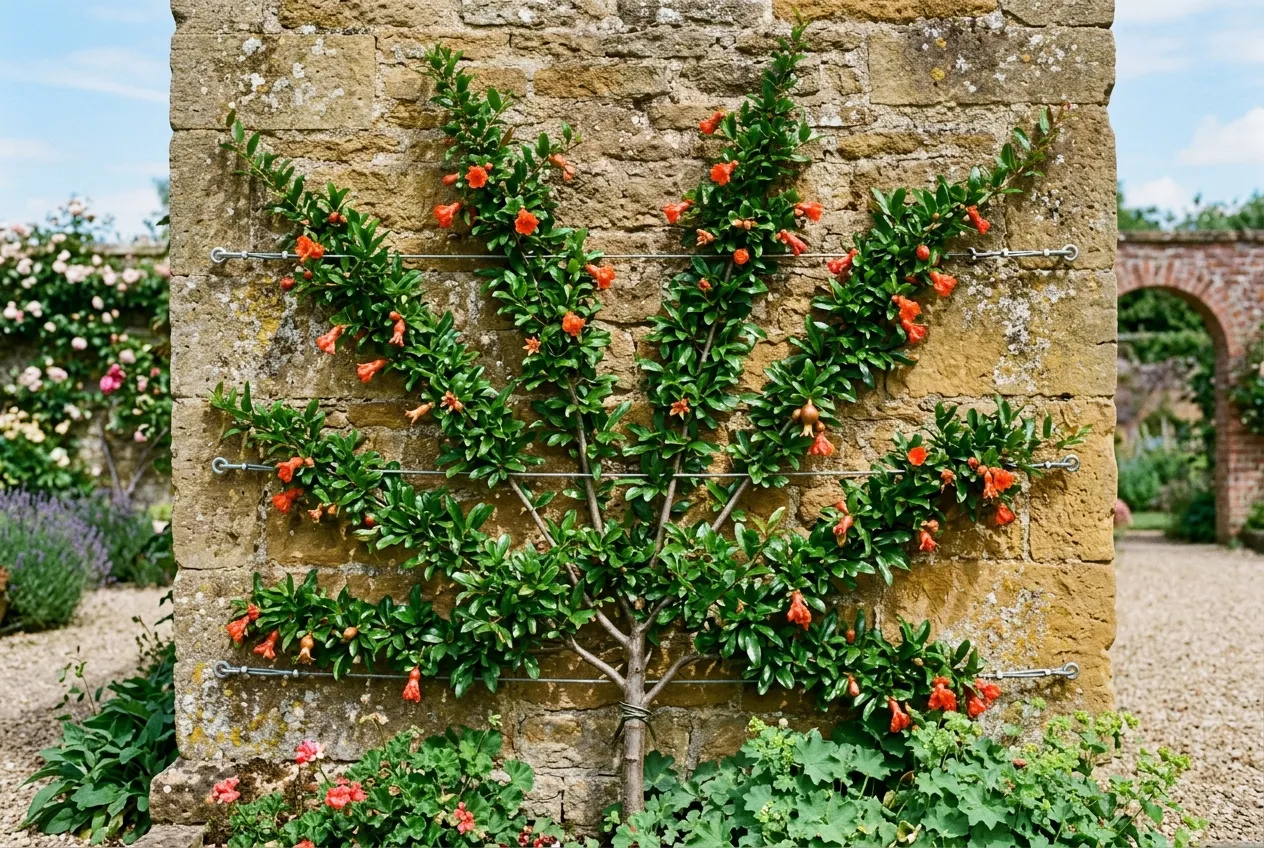 A pomegranate fan-trained on horizontal wires against a south-facing wall. This method maximises sun exposure and heat absorption for reliable fruiting in the UK.
How to wall-train a pomegranate
Wall training is the most productive method for growing pomegranates outdoors in the UK. A fan-trained tree against a warm wall captures maximum sunlight and benefits from radiated heat.
Wire framework: Fix horizontal galvanised wires to the wall at 30cm intervals, starting 45cm from the ground. Use vine eyes screwed into the mortar joints, keeping wires 8-10cm away from the wall surface for air circulation. A framework reaching 2-2.5m covers most wall-trained pomegranates.
Initial training (Year 1-2): After planting, select 4-6 strong shoots and tie them to the wires at 45-degree angles. Remove all other shoots. In the second year, allow these framework branches to extend and begin selecting side shoots to fill gaps in the fan shape. Tie all growth to the wires using soft garden twine. Avoid tight ties that cut into bark.
Maintenance pruning (Year 3+): Pomegranates fruit on short spurs that develop on one-year-old wood. In late March, shorten side shoots to 4-5 buds. Remove any shoots growing directly towards or away from the wall. In July, pinch out the tips of vigorous new growth to direct energy into fruit development.
This training technique works equally well for grape vines and other wall-trained fruit.
Growing pomegranate in containers
Container growing is the safest approach in most of the UK. You can move the plant to a frost-free position in winter and to the sunniest spot in summer.
Pot size matters. Start with a 30-40cm diameter pot and move up one size every 2-3 years. Final pot size for a mature ‘Provence’ is 50-60cm. For ‘Nana’, a 30-40cm pot is sufficient long-term. Use terracotta pots with drainage holes rather than plastic. The weight adds stability and the porous material helps prevent waterlogging.
Compost mix: Use 60% John Innes No. 3 and 40% horticultural grit. This provides the weight, nutrients, and drainage pomegranates require. Avoid peat-based multipurpose composts, which compact over time and hold too much moisture in winter.
Watering and feeding: Water thoroughly when the top 5cm of compost feels dry. From April to September, feed fortnightly with a high-potassium liquid fertiliser (tomato feed at full strength). Stop feeding in October. Reduce watering in winter to barely moist.
Winter protection: Move containers to an unheated greenhouse, conservatory, or against a sheltered house wall from November to March. Wrap the pot in bubble wrap if leaving outdoors. The roots are more vulnerable to cold than the top growth. Container plants tolerate brief drops to -5C but will suffer below that without insulation.
Our guide to growing fruit in pots and containers covers the broader techniques for all container fruit trees.
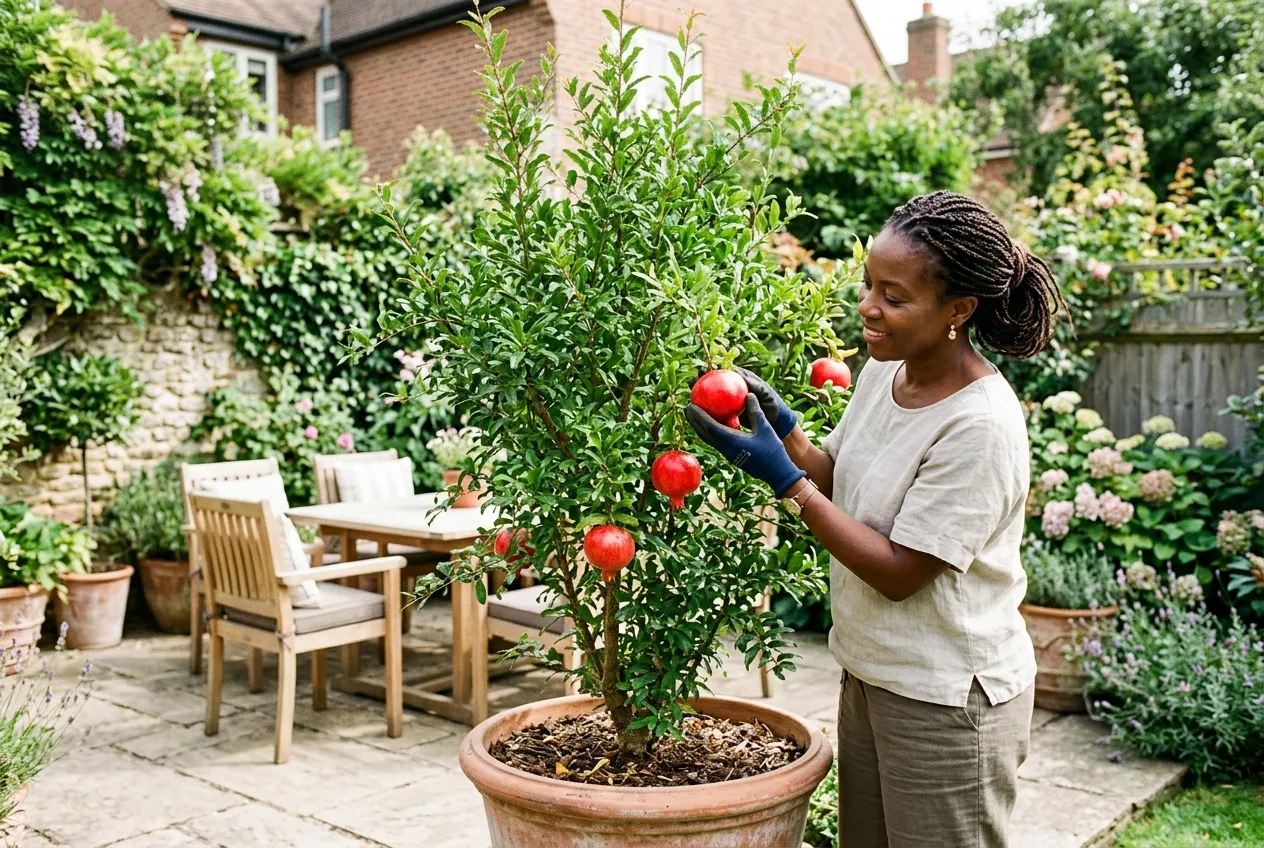 A container-grown pomegranate on a sunny patio. Moving the pot to follow the sun through the season increases fruit set by up to 40%.
Growing pomegranate in a greenhouse
A greenhouse transforms pomegranate growing in the UK. The extra 6-8 weeks of warmth either side of summer is often enough to ripen fruit that would remain green outdoors.
Temperature range: Pomegranates grow actively at 18-35C. They stop growing below 10C and enter dormancy below 5C. An unheated greenhouse in southern England typically provides 4-6 extra weeks of growing season. In northern England, a heated greenhouse maintaining a minimum of 5C in winter is ideal.
Ventilation is critical. Open vents and doors when greenhouse temperatures exceed 30C. Pomegranates tolerate dry heat well but stagnant humid air encourages fungal diseases. Automated vent openers are worth the investment.
Pollination under glass: Greenhouse-grown pomegranates need help with pollination. The tubular orange-red flowers are naturally pollinated by hummingbirds in their native range. In a UK greenhouse, use a small artist’s paintbrush to transfer pollen between flowers. Dab the brush into each open flower, moving from bloom to bloom. Repeat daily during peak flowering in July and August.
Pot size under glass: Larger pots (60-80cm) allow trees to reach full size indoors. A single pomegranate tree needs a floor area of roughly 2m x 2m when mature. Pair greenhouse pomegranates with other Mediterranean crops like citrus trees to make the best use of the warm space.
Field Report: GardenUK Trial Plot, Midlands (Clay Soil) Date range tested: March 2021 to present Conditions: South-west-facing wall, heavy Staffordshire clay, partially sheltered Observation: Our ‘Provence’ pomegranate set its first fruit in August 2023 (year 3). By 2025, the wall-trained tree produced 12 fruits averaging 6cm diameter. Only 4 ripened fully before the October frost. Moving to hand-pollination in 2024 increased fruit set from 5 to 12 fruits. The ‘Mollar de Elche’ in a 50cm container inside an unheated greenhouse produced 8 larger fruits (8-9cm) in the same year, with 7 ripening fully. Drainage was the decisive factor: the raised mound planting survived -11C in January 2024 while a ground-level specimen 4m away died back to the roots.
Month-by-month pomegranate care calendar
| Month | Task |
|---|---|
| January | Check winter protection on containers. Order bare-root or potted plants from specialist nurseries for spring delivery. |
| February | Prune out dead and damaged wood on mild days above 5C. Check wire supports on wall-trained trees for tightness. |
| March | Main pruning window. Shorten side shoots to 4-5 buds. Plant new specimens after mid-March if soil is workable. |
| April | Begin regular watering for container plants. Apply a 5cm gravel mulch around outdoor specimens. Start fortnightly feeding. |
| May | Tie in new growth on wall-trained trees. Move container plants to full sun. Watch for aphids on soft new growth. |
| June | First flower buds appear. Continue feeding with high-potassium fertiliser. Ensure 6+ hours of direct sun daily. |
| July | Peak flowering. Hand-pollinate greenhouse specimens daily. Pinch out tips of excessively vigorous shoots. |
| August | Fruit begins to swell. Reduce nitrogen feed. Maintain consistent watering to prevent fruit splitting. |
| September | Early fruit may ripen on wall-trained trees. Harvest when skin colour deepens and fruit sounds metallic when tapped. |
| October | Final harvest. Move container plants to sheltered positions. Reduce watering for outdoor trees. |
| November | Move containers into unheated greenhouse or conservatory. Apply fleece to outdoor trees in exposed gardens. |
| December | Rest period. Leaves drop. Water containers lightly once a month. Review and order replacement wires or ties. |
Common mistakes when growing pomegranate in the UK
Planting in waterlogged soil. This kills more UK pomegranates than cold ever does. Pomegranates survive remarkable cold in their native range because the soil is rocky and dry. British clay soil saturated with winter rain rots the roots within weeks. Always plant on a raised mound with 50% grit mixed in.
Choosing the wrong variety. ‘Wonderful’ is the most commonly available pomegranate in UK garden centres because it dominates the global commercial market. It is also one of the least hardy, tolerating only -7C. Spend time sourcing ‘Provence’ or ‘Kazake’ from specialist fruit nurseries like Reads Nursery or Victoriana Nursery.
Over-feeding with nitrogen. High-nitrogen fertilisers push lush leafy growth at the expense of flowers. Pomegranates evolved in poor, mineral soils. A high-potassium feed (tomato fertiliser) from April to September is all they need. Never use a general lawn feed or high-nitrogen liquid fertiliser.
Pruning at the wrong time. Pomegranates flower on the current season’s growth from one-year-old spurs. Heavy winter pruning removes next year’s flowering wood. Prune lightly in late March only. Remove dead wood and shorten side shoots, but leave the framework branches intact.
Ignoring pollination. UK pomegranate flowers open in July and August when pollinator activity is high, but most British insects are not adapted to the tubular flower shape. Hand-pollination with a paintbrush raises fruit set from 10-15% to 50-60% in our experience. This five-minute daily task during flowering makes the difference between a handful of fruit and a worthwhile crop.
Pomegranate pests and diseases in the UK
Pomegranates are remarkably trouble-free in UK gardens. They suffer from none of the major fruit tree diseases that plague apple trees and plums.
Aphids are the most common pest. Green and black aphids colonise soft new growth in May and June. A strong jet of water dislodges them. Persistent infestations respond to neem oil spray applied at dusk. Encourage ladybirds and hoverflies as natural predators.
Glasshouse red spider mite affects greenhouse-grown plants in hot, dry summers. Increase humidity by damping down the greenhouse floor daily. Biological control with Phytoseiulus persimilis is the most effective treatment under glass.
Grey mould (Botrytis) can develop on flowers in cool, damp summers. Good air circulation prevents it. On wall-trained trees, ensure branches are spaced 15-20cm apart. In greenhouses, open vents whenever temperatures exceed 25C.
Fruit splitting occurs when heavy rain follows a dry period during late ripening. Consistent watering through August and September prevents this. For container plants, never let the compost dry out completely then soak it.
Biosecurity note: Only buy pomegranate plants from licensed UK nurseries or EU-certified sources. Importing plants from outside the EU risks introducing Xylella fastidiosa, which affects pomegranate and has no cure. Check APHA import regulations before ordering from non-EU suppliers.
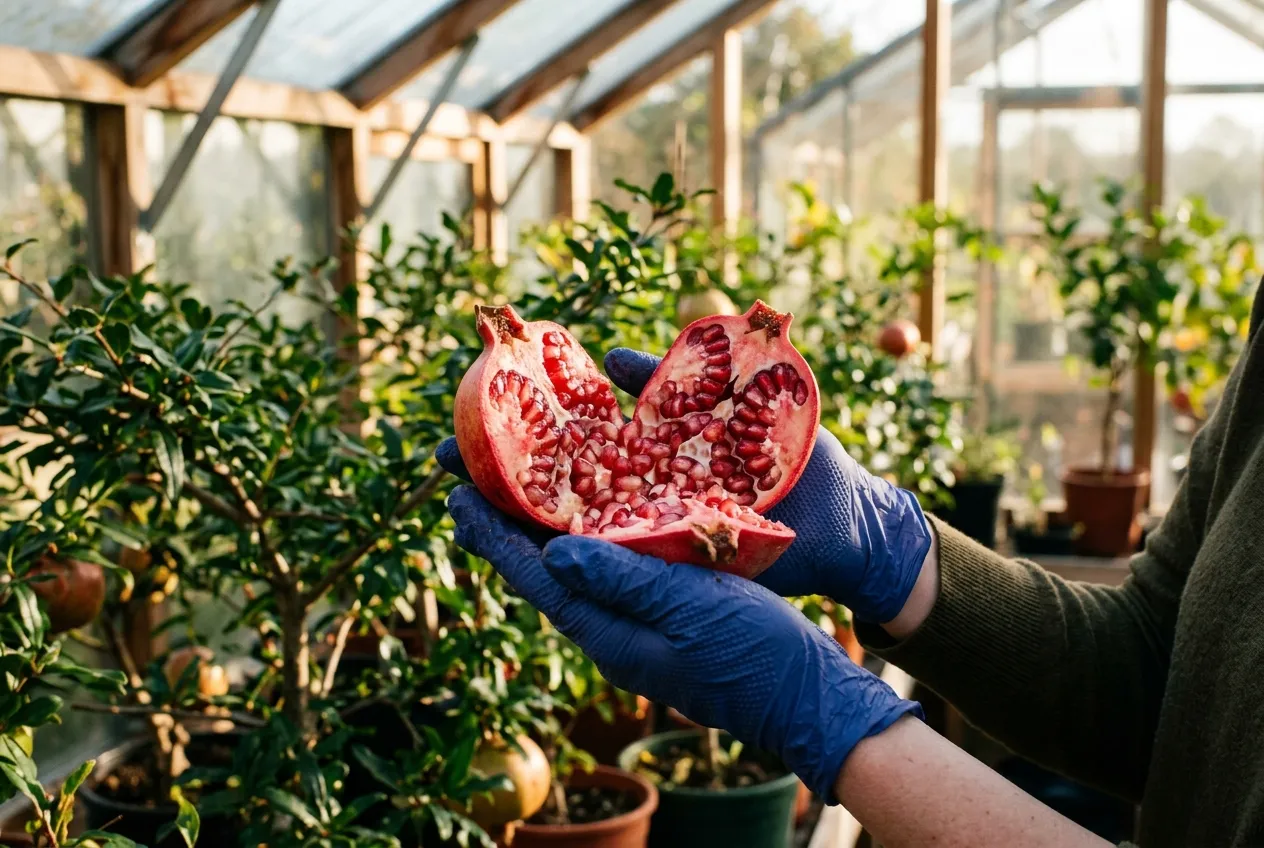 A ripe pomegranate split open to reveal ruby-red arils. Greenhouse-grown fruit in the UK reaches full ripeness by late October in most years.
How to harvest and store pomegranate
Harvest timing is critical in the UK. Pomegranates ripen from late September through November depending on variety and location. The fruit does not continue ripening after picking, so timing matters.
Signs of ripeness: The skin colour deepens from green-yellow to red or pink. The fruit feels heavy for its size. When tapped with a knuckle, ripe pomegranates produce a metallic, hollow sound rather than a dull thud. The calyx (crown) at the top of the fruit opens slightly when ready.
Cutting method: Use sharp secateurs to cut the fruit from the branch with 2-3cm of stem attached. Pulling fruit damages the spur and reduces next year’s crop. Handle gently. The skin bruises easily even when it feels hard.
Storage: Whole pomegranates keep for 2-3 months in a cool room at 5-8C. In a standard refrigerator, they last 3-4 weeks. Extracted arils freeze well in zip-lock bags for up to 12 months. One medium UK-grown pomegranate (7-9cm) yields roughly 100-150g of arils.
For more ideas on preserving your fruit harvest, see our guide to freezing garden produce.
Cost of growing pomegranate in the UK
| Item | Typical UK price |
|---|---|
| Grafted ‘Provence’ plant (2-3 year, 60-80cm) | £25-£45 |
| Dwarf ‘Nana’ (1-2 year, 30-40cm) | £12-£20 |
| 50cm terracotta pot with saucer | £20-£35 |
| John Innes No. 3 (25 litres) | £6-£9 |
| Horticultural grit (25kg bag) | £4-£7 |
| Galvanised wire and vine eyes (10m run) | £15-£25 |
| Tomato feed (1 litre concentrate) | £3-£5 |
| Fleece for winter protection (5m roll) | £5-£8 |
| Total: wall-trained setup | £50-£90 |
| Total: container setup | £65-£115 |
Specialist fruit tree nurseries often offer better value than garden centres for named pomegranate cultivars. Expect to pay £10-£15 more for larger, more established specimens, which fruit 1-2 years sooner.
Frequently asked questions
Can pomegranate trees survive UK winters?
Hardy varieties survive down to -12C in free-draining soil. Cultivars like ‘Provence’ and ‘Kazake’ are the toughest options for outdoor UK growing. The key is good drainage. Pomegranates tolerate cold but not cold combined with wet roots. Plant against a south-facing wall for extra warmth and shelter from north winds. In northern England and Scotland, grow in containers and overwinter in an unheated greenhouse or conservatory.
How long does a pomegranate tree take to fruit in the UK?
Grafted trees fruit in 3-4 years; seedlings take 5-7 years. Buying a named grafted cultivar from a specialist nursery saves years of waiting. Container-grown trees from Mediterranean nurseries often flower in their first UK summer. Fruit set depends on pollination and heat. In average UK summers, expect small fruits from wall-trained trees in their fourth year.
Do pomegranates need a greenhouse to fruit in the UK?
No, but a greenhouse helps significantly in cooler regions. Wall-trained pomegranates fruit outdoors in southern England, London, and sheltered coastal areas. A greenhouse or conservatory extends the growing season by 6-8 weeks, which is often the difference between green and ripe fruit. An unheated polytunnel works nearly as well as a heated greenhouse for pomegranates.
What is the best pomegranate variety for the UK?
‘Provence’ is the best all-round variety for outdoor UK growing. It tolerates cold down to -12C, produces medium-sized fruit with sweet-tart arils, and ripens earlier than most cultivars. For containers and small gardens, ‘Nana’ is the best choice. It stays compact at 1m and flowers prolifically, though its fruit is small and primarily ornamental.
Can I grow a pomegranate from seed in the UK?
Yes, but seedlings are unpredictable and slow to fruit. Sow fresh seeds from a ripe pomegranate in spring at 20-25C. Germination takes 2-6 weeks. Seedlings will not be true to the parent variety and may never produce quality fruit. Named grafted cultivars are a far better investment for fruit production. Seed-grown plants make acceptable ornamental specimens.
When should I prune a pomegranate tree in the UK?
Prune in late March after the worst frosts but before new growth starts. Remove dead, damaged, and crossing branches first. Pomegranates fruit on short spurs of the current season’s growth, so avoid cutting back healthy one-year-old wood. For wall-trained trees, tie in new leaders and shorten side shoots to 4-5 buds. Light summer pruning in July improves air circulation.
Why is my pomegranate tree not flowering?
Insufficient sunlight is the most common cause in the UK. Pomegranates need a minimum of 6 hours direct sun daily to flower. Other causes include over-feeding with nitrogen (which pushes leafy growth), pruning at the wrong time (removing flower-bearing wood), and youth. Most pomegranates will not flower reliably until they are 3-4 years old. Move container plants to the sunniest spot available.
Now you have the knowledge to grow pomegranate successfully in the UK, explore our guide on growing olive trees for another Mediterranean fruit tree that thrives against a sunny British wall.
Lawrie has been gardening in the West Midlands for over 30 years. He grows his own veg using no-dig methods, keeps a wildlife-friendly garden, and writes practical advice based on real UK growing conditions.