Blue Fescue
Festuca glauca
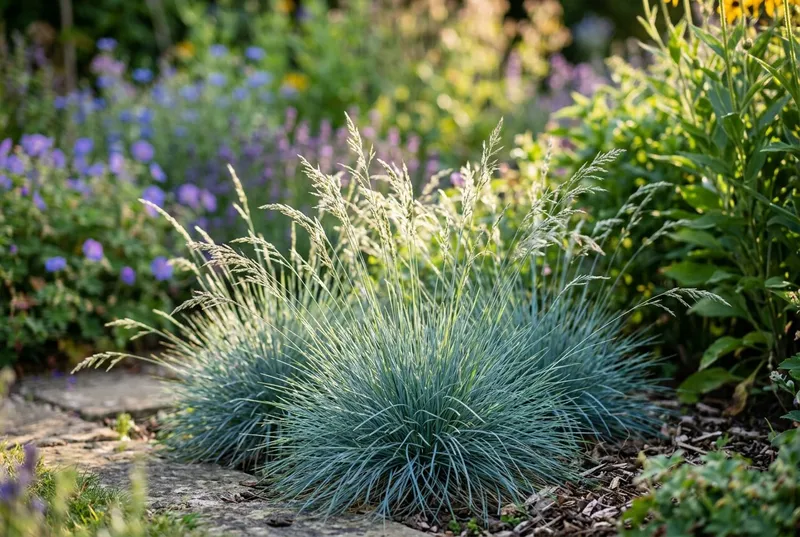
A compact, evergreen ornamental grass forming neat, dense cushions of steely blue-grey foliage. Blue fescue rarely exceeds 30 cm in height, making it ideal for edging paths, rockeries, containers, and the front of borders. It produces slender flower spikes in early summer that age to buff. The intense blue colouring is strongest in full sun on poor, dry soil. Cultivar 'Elijah Blue' is the most widely available and vivid blue form in UK garden centres.
How to grow blue fescue
Plant in full sun for the most intense blue colouring. Shade dulls the foliage to grey-green. Blue fescue demands sharp drainage and thrives in poor, stony, or sandy soil. Add plenty of grit to clay before planting. Space 25-30 cm apart for ground cover or edging. Water sparingly once established; overwatering encourages rot and greener, floppier growth. Avoid high-nitrogen feeds, which turn the foliage green. A light dressing of potash in spring enhances the blue colour. Replace individual plants every three to four years as older clumps tend to die out in the centre and lose their neat shape. Grows well in containers using John Innes No. 2 with added grit for drainage.
Pruning
Comb out dead foliage in early spring by running your fingers through the tussock or using a hand rake. Remove flower stems after they fade to keep the plant tidy. Hard cutting back rarely improves the shape; replacement is preferable for tired-looking clumps.
Propagation
- Division in spring
- Seed
Common problems
- Centre die-back in older clumps
- Reduced blue colour in shade or rich soil
- Root rot in waterlogged conditions
- Rust in wet summers
Good companions
Related guides
Ornamental Grasses for UK Gardens
Guide to the best ornamental grasses for UK gardens. Covers tall, medium, and low varieties with planting, dividing, and cutting back advice.
Drought-Tolerant Plants for UK Gardens
Best drought-tolerant plants for UK gardens. Covers perennials, shrubs, grasses, ground cover, and Mediterranean species that thrive without watering.
Small Garden Design Ideas for UK Gardens
Small garden design ideas for UK plots. Layout principles, planting for structure, vertical growing, and how to make a compact space feel bigger.
Container Vegetable Gardening UK
How to grow vegetables in pots and containers in the UK. Covers best crops, pot sizes, compost, watering, feeding, and balcony and patio growing.