Prep
10 minutes
Cook
0 minutes
Total
10 minutes
Serves
250ml (dresses 500g pasta)
Key takeaways
- 100g herb + 30g nuts + 30g cheese + garlic + 80ml olive oil = 250ml pesto in 10 minutes
- Basil pesto is the Italian classic; parsley, rocket, and wild garlic give UK variations
- Pine nuts are traditional but expensive; toasted hazelnuts or walnuts substitute well
- Use Parmigiano Reggiano or Pecorino Romano for proper flavour; cheaper hard cheese loses the depth
- Freezes for 3 months in ice cube trays; pop frozen cubes into a bag for portion-cooking
- Always cover stored pesto with a thin layer of olive oil to prevent oxidation and browning
From the Garden
Grow these for the recipe: Basil, Parsley, Rocket, Wild garlic (April-May), Garlic.
Ingredients
Basil pesto (classic)
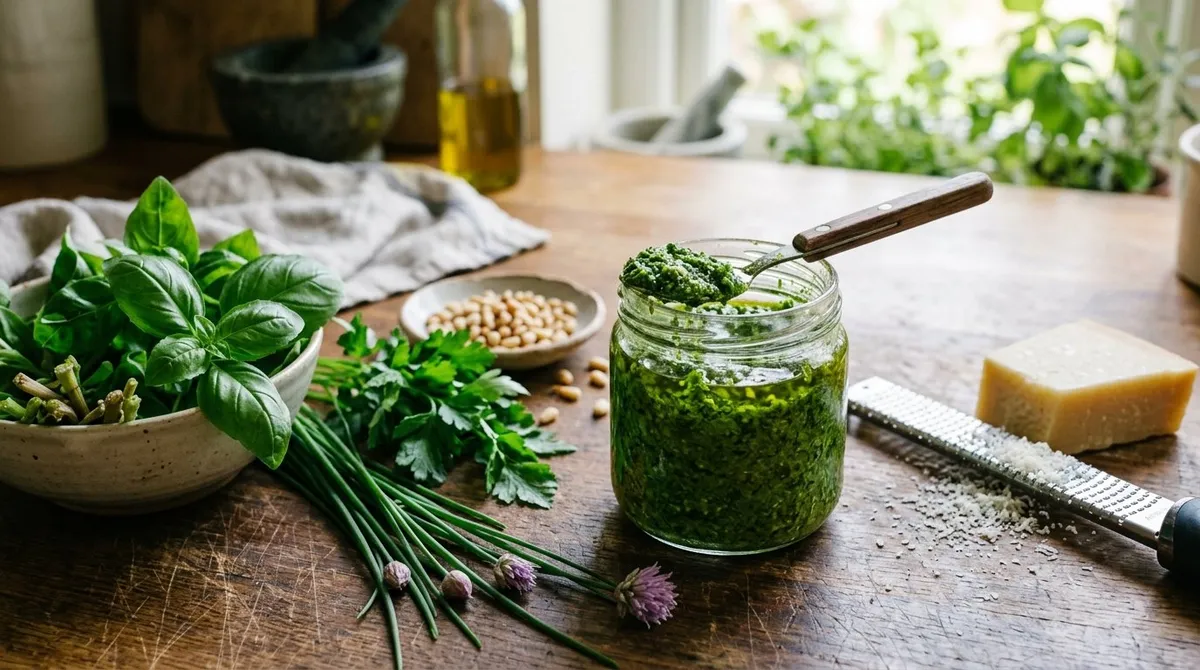
- • 100g fresh basil leaves (about 4 large supermarket bunches or 2 large garden plants worth)
- • 30g pine nuts, lightly toasted
- • 30g Parmigiano Reggiano, finely grated
- • 1 garlic clove, peeled
- • 80-100ml extra virgin olive oil
- • Pinch of fine sea salt
Parsley pesto
- • 100g fresh flat-leaf parsley leaves (no stems)
- • 30g toasted walnuts or hazelnuts
- • 30g Pecorino Romano or strong Cheddar, finely grated
- • 1 garlic clove, peeled
- • 80ml extra virgin olive oil
- • Zest of 1/2 lemon, plus juice
- • Pinch of fine sea salt
Rocket pesto
- • 100g fresh rocket leaves
- • 30g toasted walnuts
- • 30g Parmigiano Reggiano
- • 1 garlic clove, peeled
- • 80ml extra virgin olive oil
- • Squeeze of lemon juice
- • Pinch of fine sea salt
Wild garlic pesto (April-May only)
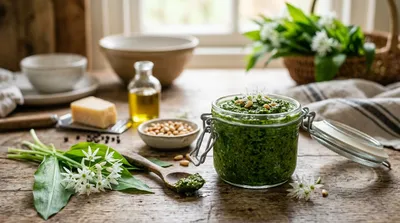
- • 100g fresh wild garlic leaves (Allium ursinum)
- • 30g toasted walnuts or pine nuts
- • 30g Parmigiano Reggiano
- • (NO extra garlic; the wild garlic provides the flavour)
- • 80ml extra virgin olive oil
- • Pinch of fine sea salt
Equipment
- Food processor or pestle and mortar
- Sharp knife
- Sterilised glass jar with lid (250ml)
- Small pan for toasting nuts
Method
- 1
Toast the nuts. Place in a dry frying pan over medium heat. Stir for 3-5 minutes until lightly golden and fragrant. Tip onto a plate to cool. Toasted nuts give 2-3 times the flavour of raw nuts.
- 2
Wash and dry the herbs. Spin in a salad spinner or pat with kitchen paper. Wet herbs make watery pesto.
- 3
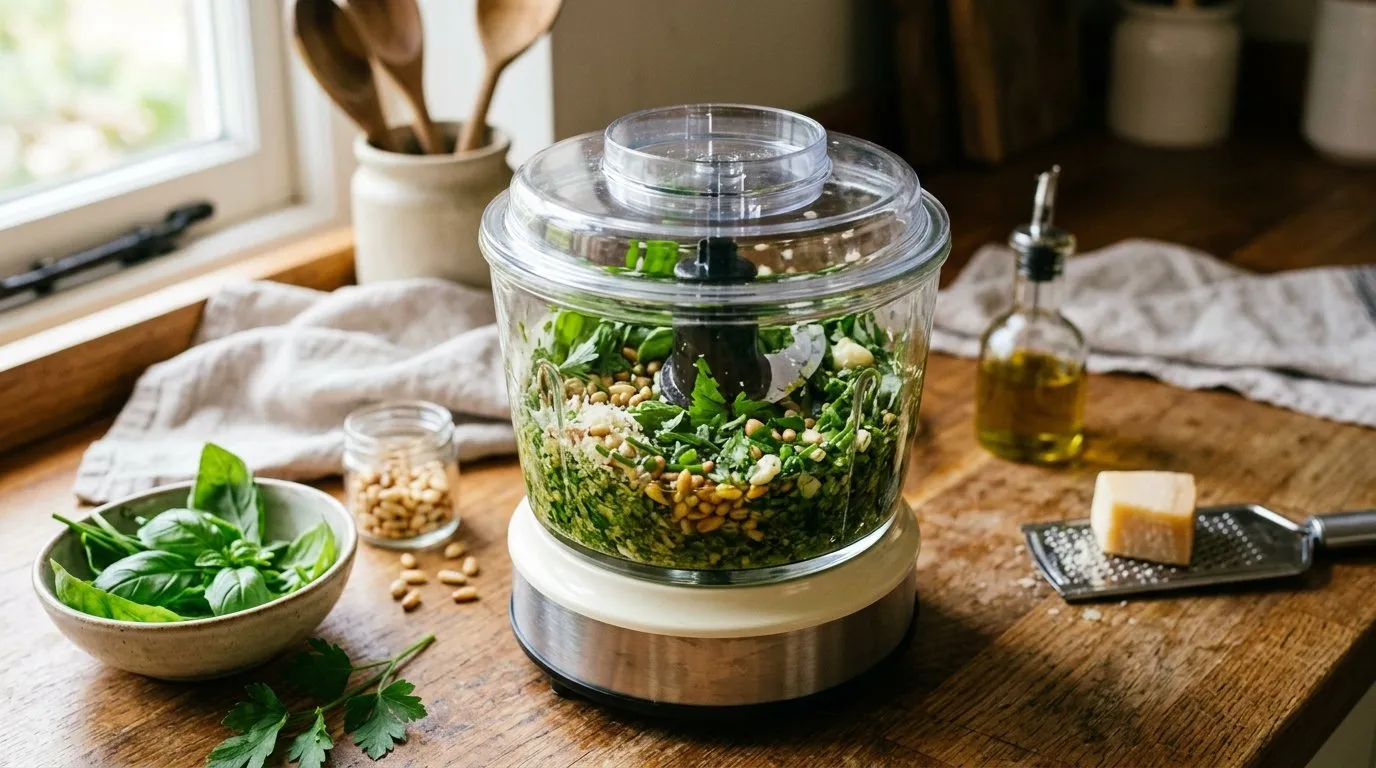
Combine the cooled nuts, herbs, grated cheese, peeled garlic clove, and salt in the food processor.
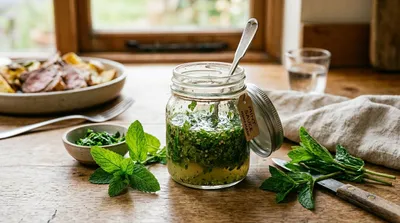
- 4
Pulse in short 2-3 second bursts. Continuous blending heats the herbs and turns them grey-brown. Stop when the herbs are roughly chopped but some texture remains.
- 5
With the processor running on low pulse, drizzle in the olive oil through the feed tube. Add 80ml first; check texture. If too thick, add up to 20ml more.
- 6
Scrape down the sides with a spatula. Pulse twice more to combine. The pesto should be a thick, vibrant green paste with visible herb pieces, not a uniform smooth puree.
- 7
Taste. Add salt, lemon juice (for parsley/rocket versions), or extra olive oil to balance. The pesto should taste fresh, bright, and slightly salty.
- 8
Transfer to a sterilised jar. Press down with the back of a spoon to eliminate air pockets. Cover the surface with a thin (5mm) layer of olive oil to prevent oxidation.
- 9
Refrigerate. Top up the oil layer each time you take pesto out.
Storage
Refrigerate in an airtight jar with the surface covered by a thin layer of olive oil. Keeps 7-10 days. Freeze in ice cube trays for portion control; once frozen, transfer cubes to a freezer bag and store up to 3 months. One cube (about 30ml) defrosts in 5 minutes at room temperature, perfect for one portion of pasta.
Garden herb pesto is the summer staple every UK home cook should know how to make. Ten minutes start to finish, four variations using whatever herb is at peak in your garden, and a freezer system that turns one Saturday afternoon’s blending into pasta dinners through to autumn. This recipe covers four UK variations: Italian classic basil, mild and grassy parsley, peppery rocket, and the seasonal star wild garlic.
You will find the herb-by-herb recipes, the substitutions for expensive pine nuts, and the freezing system that captures peak-season herbs for off-season cooking. Pair with home-grown basil, parsley, or rocket for true crop-to-jar continuity.
Why these four versions
Basil pesto is the Italian original from Genoa. Sweet, aromatic, perfectly suited to long pasta and capresce. Best in mid-summer when basil is at peak.
Parsley pesto is the British adaptation. Milder, more versatile. Works year-round because parsley crops continuously in UK conditions. Better with new potatoes and grilled fish than basil pesto is.
Rocket pesto uses the peppery heat of mature rocket leaves. Excellent with grilled meat or stirred into mashed potato. Made from rocket past its salad prime; turns “bolted” rocket into a useful product.
Wild garlic pesto is the spring star. The 4-6 week wild garlic season (April-May in most UK woods) gives the strongest, most distinctive pesto of the year. Make multiple batches and freeze for year-round use.
Step-by-step technique notes
The same method applies to all four versions. The differences are herb and (for parsley) the lemon zest addition.
Pulse, don’t blend. Continuous food-processor blending heats the herbs and turns them grey-brown. Always pulse in 2-3 second bursts.
Toast the nuts. Untoasted nuts give bland pesto. 3-5 minutes in a dry pan over medium heat is enough. Watch carefully; nuts go from golden to burnt in 30 seconds.
Use good olive oil. The oil is 30-40% of the finished pesto by weight. Cheap olive oil tastes thin; good oil makes the pesto.
Don’t oversalt at first. The cheese is salty; taste before adding much salt.
Cover with oil for storage. A 5mm layer of olive oil on top of stored pesto prevents oxidation. Without it, pesto browns within 48 hours.
Best uses for each version
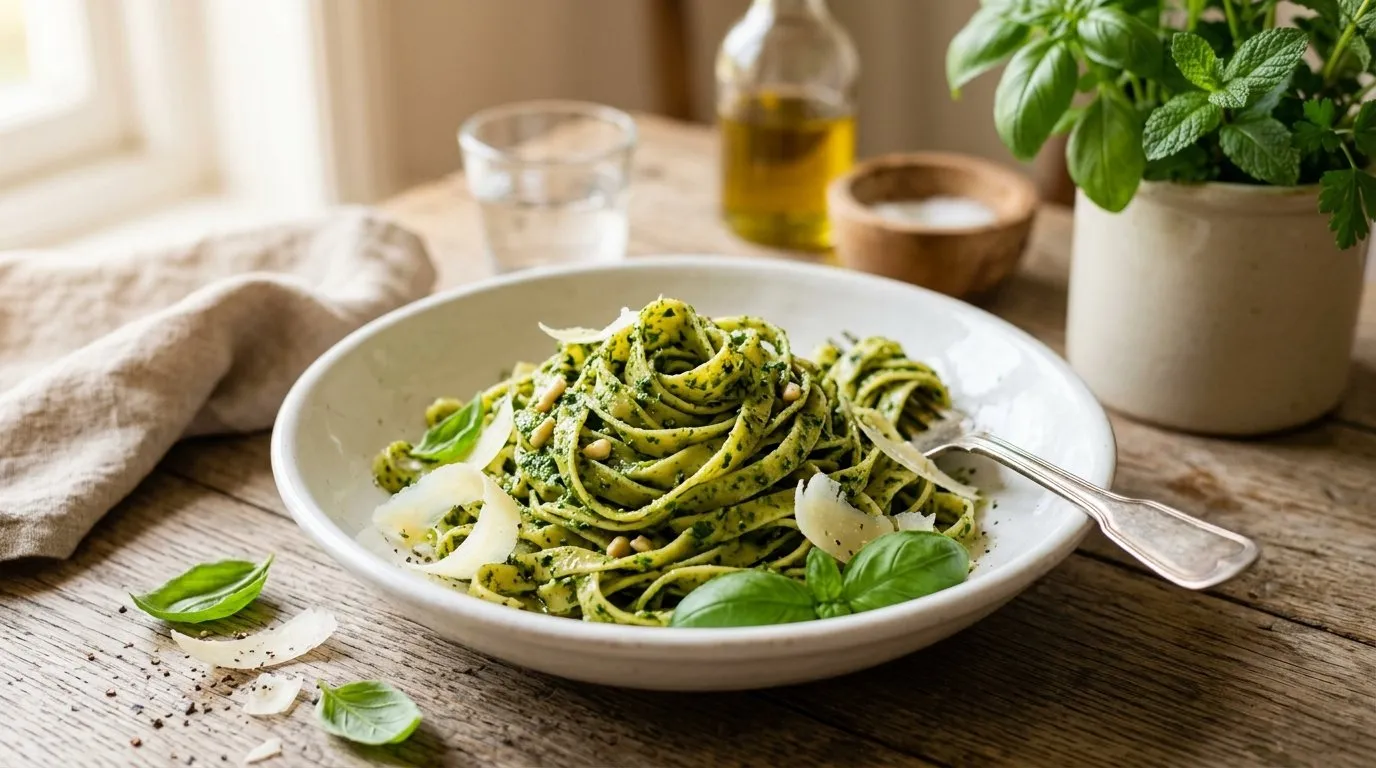
Basil pesto. Long pasta (spaghetti, linguine, fusilli), bruschetta, capresce, pizza topping, swirled into vegetable soup at serving.
Parsley pesto. New potatoes, grilled fish (especially mackerel), roast lamb, mashed potato, jacket potato.
Rocket pesto. Steak, grilled chicken, hard-boiled egg sandwiches, stirred into risotto.
Wild garlic pesto. New potatoes, scrambled eggs, lamb, fresh pasta, on toast with goat’s cheese.
Common mistakes
Continuous blending. Heats the herbs grey. Always pulse.
Skipping the nut toast. Untoasted nuts give bland pesto. Always toast.
Using cheap pre-grated cheese. Pre-grated cheese has anti-caking agents that ruin pesto texture. Always grate fresh.
Wet herbs. Make watery pesto. Always dry thoroughly first.
Skipping the oil top layer. Stored pesto browns. Always seal with oil.
Using bolted basil. Bolted basil tastes bitter. Pick before flowering for the best pesto.
Frequently asked questions
What is the best herb for pesto?
Basil is the Italian classic and most aromatic. Parsley gives a milder, more versatile pesto. Rocket adds peppery heat. Wild garlic (April-May) gives the strongest, most distinctive flavour. All four work; pick whichever herb you have most of from the garden. Mixing herbs (60% basil + 40% parsley) is a good way to stretch a small basil crop.
Can I make pesto without pine nuts?
Yes, pine nuts are expensive (£20-25 per kg) and easily substituted. Toasted walnuts (£8-10/kg) work well, especially for parsley and rocket pesto. Toasted hazelnuts give a richer flavour. Toasted almonds work but the flavour is milder. Cashews (untoasted) make a creamier vegan-friendly version. The texture matters more than the specific nut.
How long does homemade pesto keep?
Refrigerated in an airtight jar covered with a thin layer of olive oil, homemade pesto keeps 7-10 days. Frozen in ice cube trays it lasts 3 months without flavour loss. The olive oil layer is critical; pesto exposed to air browns within 24-48 hours. Top up the oil layer each time you take a spoonful out.
Can I freeze pesto?
Yes, pesto freezes excellently. The best method is ice cube trays. Spoon pesto into the cube slots, freeze solid (about 4 hours), then transfer the frozen cubes into a freezer bag. Each cube is roughly 30ml, the right amount for one portion of pasta. Cubes keep 3 months and defrost in 5 minutes at room temperature.
What can I use pesto for besides pasta?
Eight uses beyond pasta: spread on toast or sourdough as bruschetta, swirl into soup at serving, mix into mashed potato, use as a dip for crudités, dress new potatoes, marinade for grilled chicken or fish, swirl into yoghurt for a savoury dip, or stir into scrambled eggs. Pesto is one of the most flexible kitchen sauces.
Our team produces practical UK gardening guidance from source research, contributor records and established horticultural practice. Editorial standards are overseen by Matt W.