Prep
20 minutes plus 24 hours steeping
Cook
10 minutes
Total
24 hours 30 minutes
Serves
1.5 litres concentrate (45 servings diluted)
Key takeaways
- 25 elderflower heads + 1kg sugar + 1 litre water + 4 lemons = 1.5 litres concentrated cordial
- Pick on dry sunny mornings in early-to-mid June for peak flavour
- Elderflowers must be Sambucus nigra (common elder); never use other species
- Cold-steep for 24 hours; hot infusion destroys the delicate aromatic compounds
- Citric acid (50g) preserves the cordial; lemon juice alone is not enough
- Freezes for 6 months in 500ml plastic bottles, leaving headspace for expansion
From the Garden
Grow these for the recipe: Elderflowers (Sambucus nigra, foraged or from garden tree), Lemons (mostly shop-bought in UK; rare garden ones in cold frame).
Ingredients
Main ingredients
- • 25 large fresh elderflower heads (Sambucus nigra only)
- • 1kg granulated sugar
- • 1 litre boiling water
- • 4 unwaxed lemons (zest and juice)
- • 50g citric acid (food-grade, from home-brew shops or chemists)
Equipment
- Large heatproof bowl (5 litre)
- Sterilised glass or plastic bottles (1.5 litre total capacity)
- Muslin cloth
- Sieve
- Wooden spoon
- Funnel
Method
- 1
Pick the elderflowers on a dry sunny morning before 11am. Choose heads that are creamy white, fully open, and smell strongly of muscat grape. Avoid any that are browning or smell of cat urine (a sign of staleness).
- 2
Shake the elderflower heads gently to dislodge any insects. Do not wash; water removes the aromatic oils on the pollen. Pick out larger insects with kitchen tweezers.
- 3
Combine the sugar and boiling water in a large heatproof bowl. Stir until completely dissolved to make a clear syrup. Let cool for 10 minutes until lukewarm (around 50C).
- 4
Add the lemon zest, lemon juice, and citric acid to the syrup. Stir well.
- 5
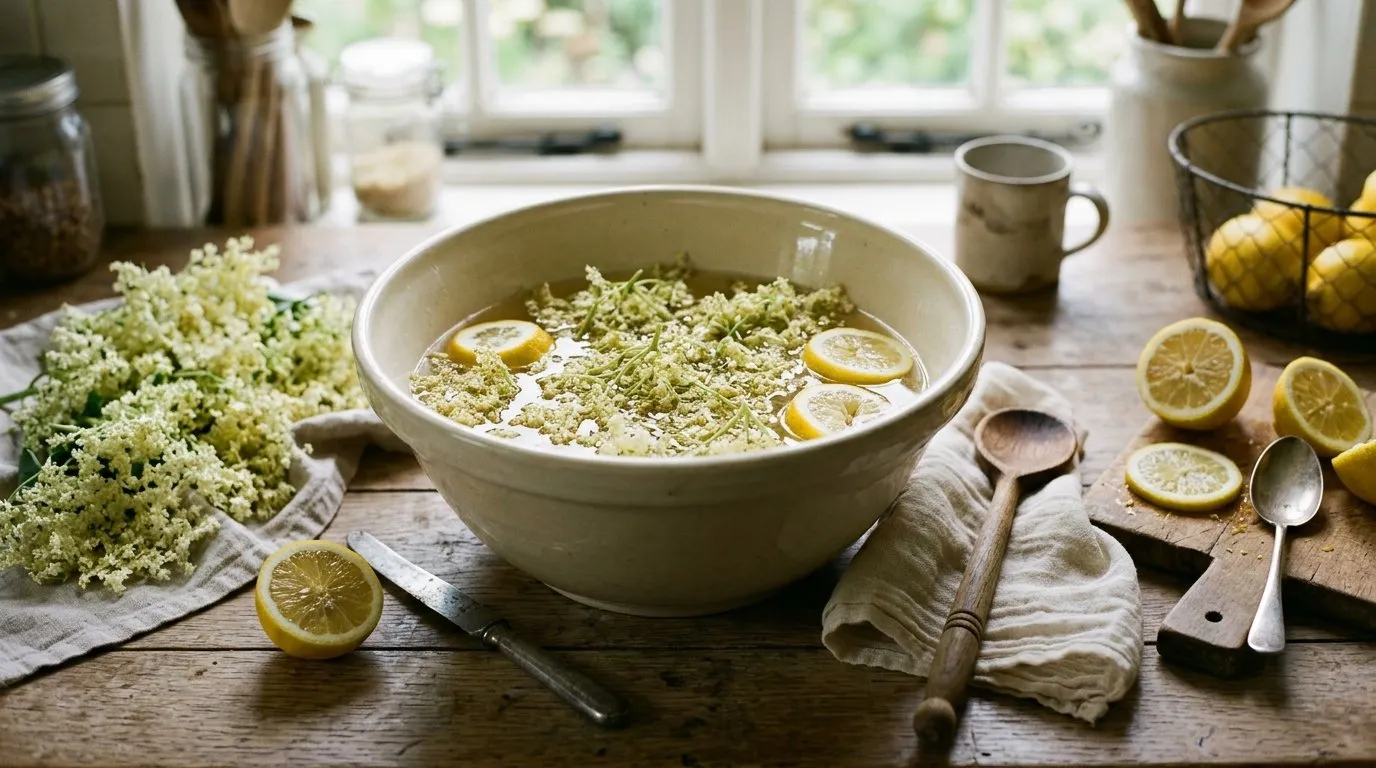
Add the elderflower heads, pushing them down so they're submerged in the syrup. Cover the bowl with a clean tea towel.
- 6
Steep at room temperature for 24 hours (no more, no less). The flavour develops slowly; under-steeping gives weak cordial, over-steeping makes it bitter and grassy.
- 7
Strain through a muslin-lined sieve into a clean bowl. Squeeze the elderflowers gently in the muslin to extract the last of the flavour. Compost the spent flowers.
- 8
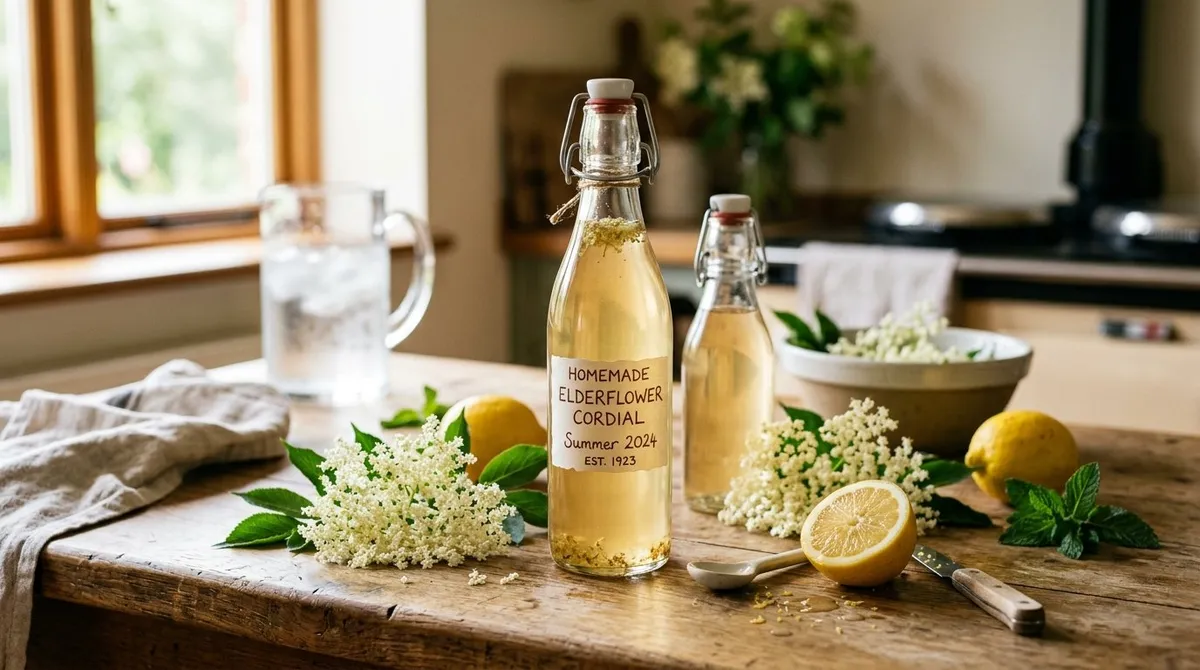
Pour the cordial into sterilised bottles using a funnel. Leave 2cm headspace at the top of each bottle. Seal and label with the date.
Storage
Refrigerate for up to 4 weeks. Freezes for 6 months in plastic bottles (leave 2cm headspace for expansion). Once opened, refrigerated and use within 2 weeks. Dilute 1 part cordial to 6-8 parts cold water, sparkling water, or prosecco.
You will find the picking rules that get the best flavour, the cold-steep method that protects the delicate aromatics, and the citric acid step that’s the difference between cordial and a fermenting mess. Foraging from hedgerows is widespread in the UK; the Woodland Trust foraging guide covers the legal and ethical rules.
Why this works
The aromatic compounds in elderflower (mostly cis-rose oxide and linalool oxide) are heat-sensitive and water-soluble. Hot infusion destroys them, leaving cordial that tastes vaguely floral but lacks the distinctive muscat-grape note. Cold steeping in lukewarm sugar syrup (50C maximum) preserves the volatile oils.
The 24-hour steep is non-negotiable. Less than 18 hours gives weak cordial. More than 30 hours gives bitter, grassy cordial as tannins leach from the stems. Set a timer and bottle on schedule.
The citric acid does two jobs: lowers pH for preservation, and amplifies the floral notes by reducing the perception of sweetness. Skip it and the cordial ferments within a week.
Picking and identifying common elder
Common elder (Sambucus nigra) grows wild across the UK in hedgerows, woodland edges, scrub, and waste ground. It also makes a good garden tree or shrub, reaching 4-6m mature height. Identification:
- Leaves: Pinnate, 5-7 leaflets, opposite arrangement, mid-green
- Flowers: Cream-white, flat-topped, 10-25cm wide flower clusters, 5 petals each, strongly muscat-scented
- Bark: Grey-brown, deeply furrowed in mature trees
- Smell: The flowers smell of muscat grape when fresh; older flowers smell of cat urine
Avoid red elder (Sambucus racemosa, conical flower clusters not flat) and American elder (Sambucus canadensis, larger and toxic raw). Dwarf elder (Sambucus ebulus) is a herbaceous plant 1-2m tall and toxic.
How to dilute and serve
The cordial is concentrated; dilute before drinking.
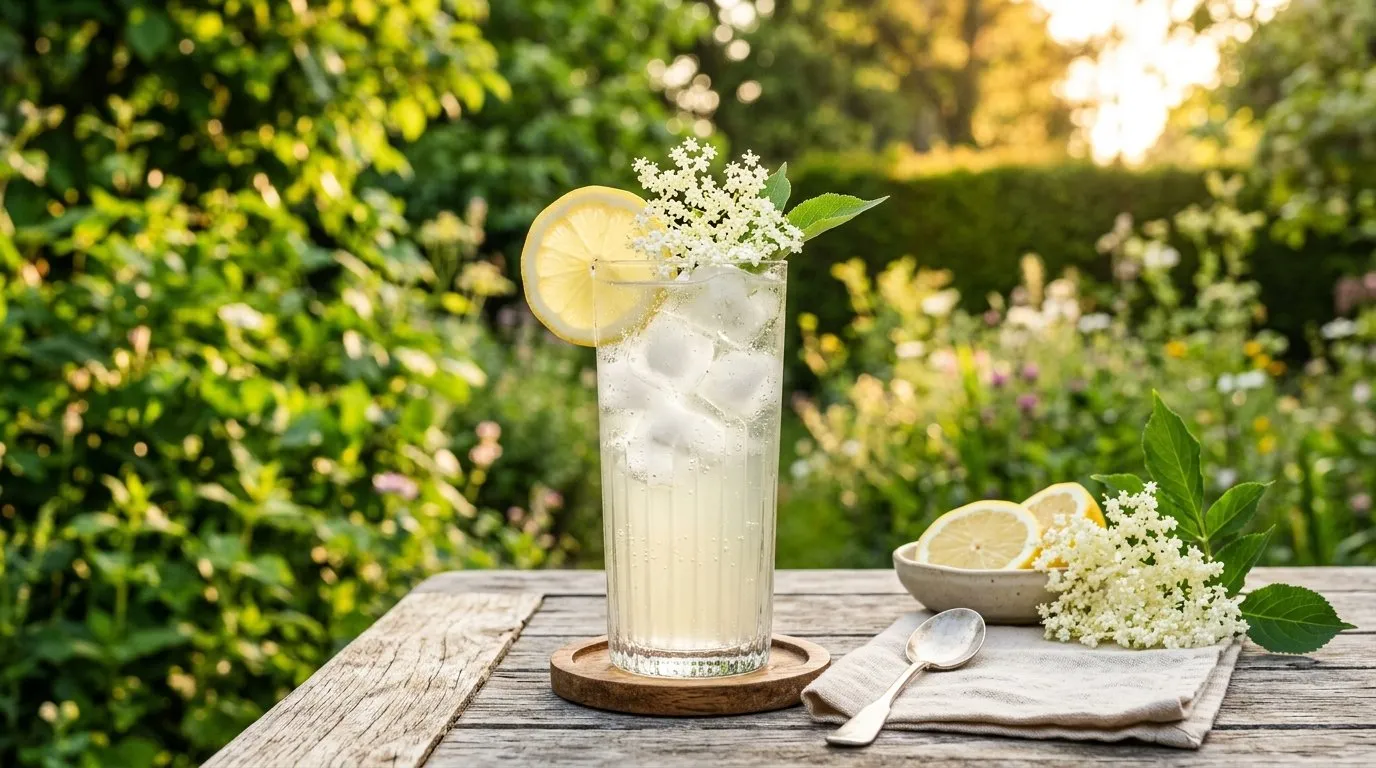
- Standard. 1 part cordial to 6-8 parts still or sparkling water. Refreshing summer drink.
- Spritz. 30ml cordial in a glass topped with chilled sparkling wine or prosecco. Garnish with mint and a lemon slice.
- Hugo cocktail. 50ml cordial, 100ml prosecco, 50ml soda water, mint, lime. Italian-Alpine summer drink.
- Gin and elderflower. 50ml gin, 25ml cordial, top with tonic. UK summer classic.
- Ice lollies. Mix cordial with double its volume of water and freeze in lolly moulds.
- Drizzle for desserts. Undiluted, drizzled over fresh strawberries, raspberries, or pavlova.
- Vinaigrette. Mix 1 tablespoon cordial with 2 tablespoons olive oil and 1 tablespoon lemon juice for a summer salad dressing.
Variations
Elderflower champagne. Use 50% less sugar and add fresh yeast for a lightly fizzy fermented drink. Bottle carefully; over-fermented bottles can explode.
Elderflower vinegar. Steep elderflower heads in white wine vinegar for 2 weeks. Salad dressings and pickles.
Elderflower honey. Steep elderflower heads in warm runny honey overnight. Strain and bottle. Excellent on toast or stirred into hot water.
Elderflower jelly. Make as cordial, then add pectin and reduce. Serves with cheese or roast lamb.
Common mistakes
Picking after rain. Washes off the aromatic oils. Wait for a dry day.
Picking after midday. Heat dissipates the oils. Always before 11am.
Hot-water steep. Destroys the flavour. Sugar syrup must cool to 50C before adding flowers.
Skipping citric acid. Cordial ferments within a week. Always include it.
Over-steeping. More than 30 hours gives bitter, grassy cordial. 24 hours exactly.
Washing the flowers. Removes the flavour. Shake instead.
Frequently asked questions
When is the best time to pick elderflowers in the UK?
Pick elderflowers in early-to-mid June across most of the UK, slightly later in Scotland and the north. The window is short, usually 2-3 weeks. Pick on dry sunny mornings before 11am when the aromatic oils peak. Choose creamy-white fully-open heads. Avoid wet, browning, or strong-smelling flowers; these are past peak.
Can I use other species of elder besides Sambucus nigra?
No, only Sambucus nigra (common European elder) is suitable. American elder (Sambucus canadensis), red elder (Sambucus racemosa), and other species can be toxic when raw and don't have the right aromatic profile. Identify common elder by the pinnate leaves with 5-7 leaflets, creamy-white flat-topped flower clusters, and the distinctive muscat-grape scent.
What is citric acid and why does cordial need it?
Citric acid is a natural acid found in citrus fruit, sold as a white powder for preserving and home brewing. It lowers the pH of cordial below the level where bacteria and yeasts can grow, preventing fermentation and spoilage. Lemon juice alone is not strong enough; without citric acid, cordial ferments within 5-7 days. Most UK chemists and home-brew shops stock it for £2-3 per 100g.
Why didn't I wash the elderflowers?
Washing removes the pollen and aromatic oils from the petals, dramatically weakening the cordial flavour. Shake the heads to dislodge insects instead. Most insects fall off naturally during the 24-hour steep and are filtered out by the muslin. The sterile syrup and citric acid kill any bacteria from unwashed flowers, so there is no health risk.
Can I make elderflower cordial without sugar?
No, sugar is essential as a preservative; without it the cordial ferments within days. Lower-sugar versions (using 750g instead of 1kg) work but have shorter shelf life (2 weeks refrigerated). Sugar substitutes (stevia, erythritol) don't preserve. For diabetic-friendly versions, freeze the unsweetened elderflower infusion in ice cube trays and use within 3 months.
Our team produces practical UK gardening guidance from source research, contributor records and established horticultural practice. Editorial standards are overseen by Matt W.