Prep
20 minutes
Cook
45 minutes
Total
1 hour 15 minutes
Serves
6 x 250ml jars
Key takeaways
- 1kg ripe Victoria plums + 1kg sugar + 1 lemon = 6 x 250ml jars in 90 minutes
- Plums contain natural pectin; no commercial pectin needed for a firm set
- Setting point is 105C exactly; a sugar thermometer pays for itself in one batch
- Use ripe-but-firm plums; over-ripe fruit gives runny jam, under-ripe is sour
- Stones can stay in during cooking; remove before potting using a slotted spoon
- Keeps 12 months unopened in a cool dark place, 6 weeks once opened
From the Garden
Grow these for the recipe: Victoria plums (or Czar, Marjorie's Seedling, Cambridge Gage), Lemon (mostly shop-bought in UK).
Ingredients
Main ingredients
- • 1kg ripe Victoria plums (or Czar, Marjorie's Seedling)
- • 1kg granulated sugar
- • Juice of 1 lemon
- • 150ml water
Equipment
- Large heavy-based pan or maslin pan (5 litre minimum)
- Sugar thermometer
- 6 x 250ml glass jam jars with lids
- Wooden spoon
- Slotted spoon
- Cold saucer (for wrinkle test)
Method
- 1
Wash the plums. Cut each plum in half along the natural seam. Remove obvious damaged or mouldy parts. Leave most of the stones in; they release extra pectin during cooking and float to the top for easy removal.
- 2
Sterilise the jars. Wash in hot soapy water, rinse, then place in a 110C/90C fan oven for 15 minutes. Boil the lids in water for 10 minutes. Keep jars warm until filling.
- 3
Place a small saucer in the freezer (for the wrinkle test later).
- 4
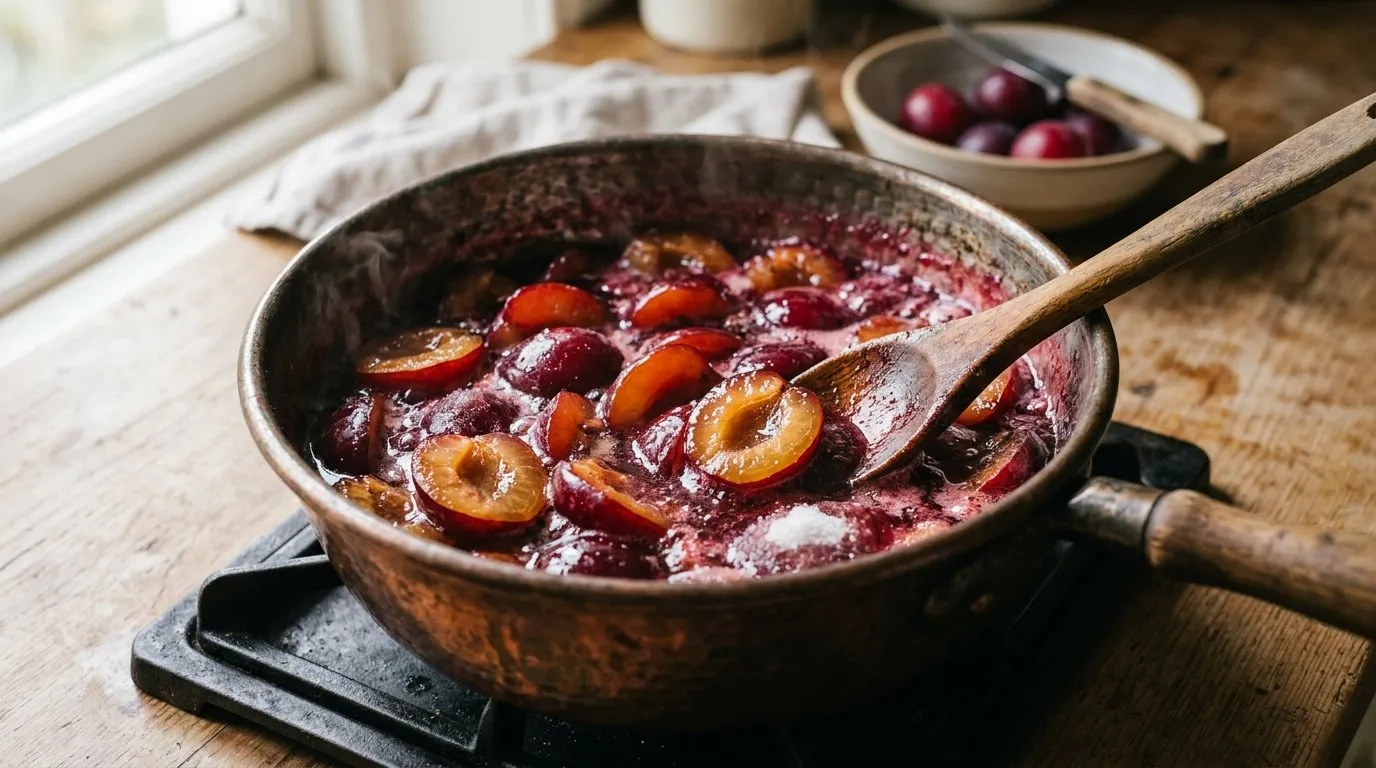
Combine the halved plums and water in the pan. Bring to a simmer over medium heat. Cook for 15-20 minutes, stirring occasionally, until the plums are completely soft and the skins have broken down. The mixture should be pulpy.
- 5
Lift out as many stones as possible with a slotted spoon. They float as they cook. Don't worry about getting all of them yet.
- 6
Add the sugar and lemon juice. Stir well to dissolve the sugar completely; this is critical. Once the sugar has dissolved, increase heat to high and bring to a rolling boil.
- 7
Boil hard for 15-25 minutes. Stir frequently to prevent sticking. The jam darkens and thickens. Watch the temperature with a sugar thermometer; setting point is 105C exactly.
- 8
Test for set when the temperature reaches 104C. Take the cold saucer from the freezer, drop a teaspoon of jam onto it, return to freezer for 2 minutes, then push with a finger. If the jam wrinkles, it has reached setting point. If not, boil for 2-3 more minutes and retest.
- 9
Once set, take the pan off the heat. Skim any foam from the surface. Lift out any remaining stones with a slotted spoon.
- 10
Let the jam cool for 5 minutes; this stops the fruit floating to the top during the set.
- 11
Pot the jam into the warm sterilised jars while still hot. Fill to 1cm below the rim. Wipe the rims clean. Seal immediately with the boiled lids.
- 12
Label with the date. The jam continues to firm up over 24 hours as it cools. Test by tilting a jar; the jam should slow-flow rather than run.
Storage
Unopened jars keep for 12 months in a cool dark place. Once opened, refrigerate and use within 6 weeks. The jam may go slightly darker over time but the flavour stays excellent for at least 18 months. Discard if you see any mould; bin the whole jar, not just the affected layer.
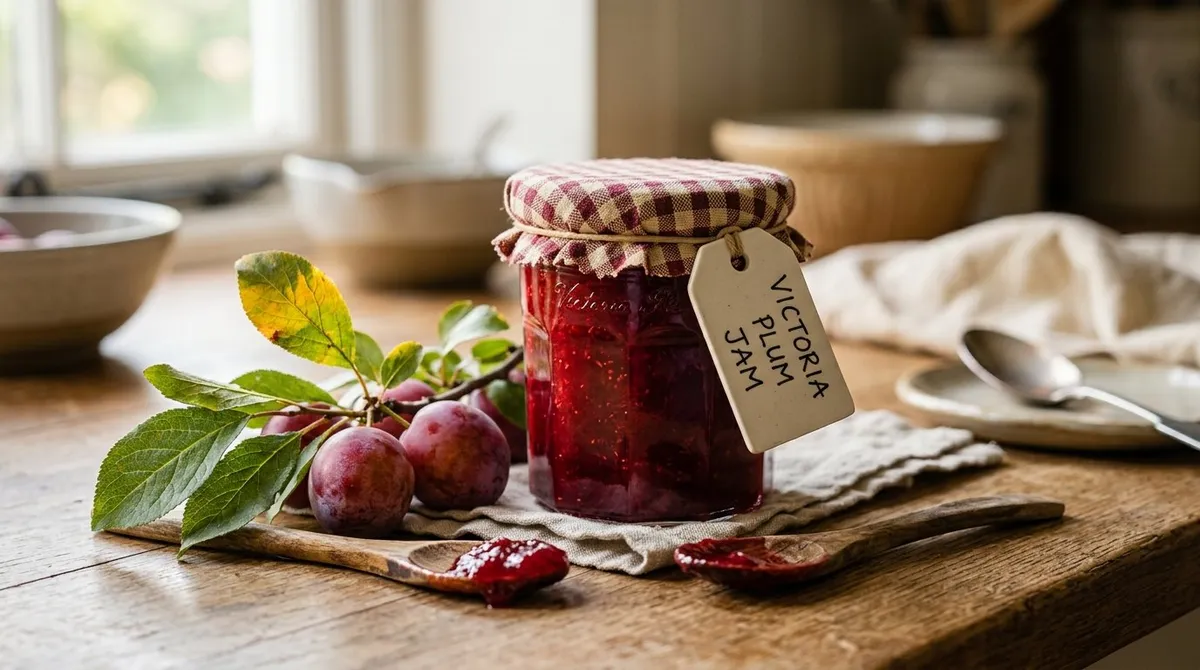
You will find the temperature-led setting method, the stones-in trick that gives a firmer set, and the lemon-juice tweak that activates the plums’ natural pectin. Pair with the best UK plum tree varieties for the right cultivar to plant for jam-making.
Why this works
Plums are unique among UK summer fruits for their high natural pectin content. The pectin lives mostly in the skin and the stones (specifically the kernel inside the stone). Cooking the halved fruit with stones in during the initial simmer extracts maximum pectin, giving a firmer set than stoned-first methods.
The 1:1 sugar-to-fruit ratio is the UK jam standard. It hits the right balance of sweetness, preservation, and set. Lower sugar (700g per 1kg fruit) makes a softer jam that needs refrigeration. Higher sugar (1.2kg per 1kg) makes overly sweet, harder jam.
Lemon juice does two jobs: lowers the pH to activate the pectin, and adds a subtle citrus brightness that lifts the deep plum flavour.
Variations
Plum and almond jam. Add 50g flaked almonds in the last 5 minutes. Toasty, slightly nutty version, excellent on hot toast.
Plum and ginger. Add 30g chopped crystallised ginger or 1 tablespoon ground ginger. Warming, autumn-friendly.
Spiced plum jam. Add 1 cinnamon stick and 4 cloves during the simmer. Remove before potting. Christmas-cake friendly.
Plum and orange. Replace lemon juice with juice and zest of 1 orange. Brighter, citrusy version.
Mirabelle jam. Use Mirabelle de Nancy plums for a yellow-orange jam with concentrated honey-apricot flavour.
Best uses for plum jam
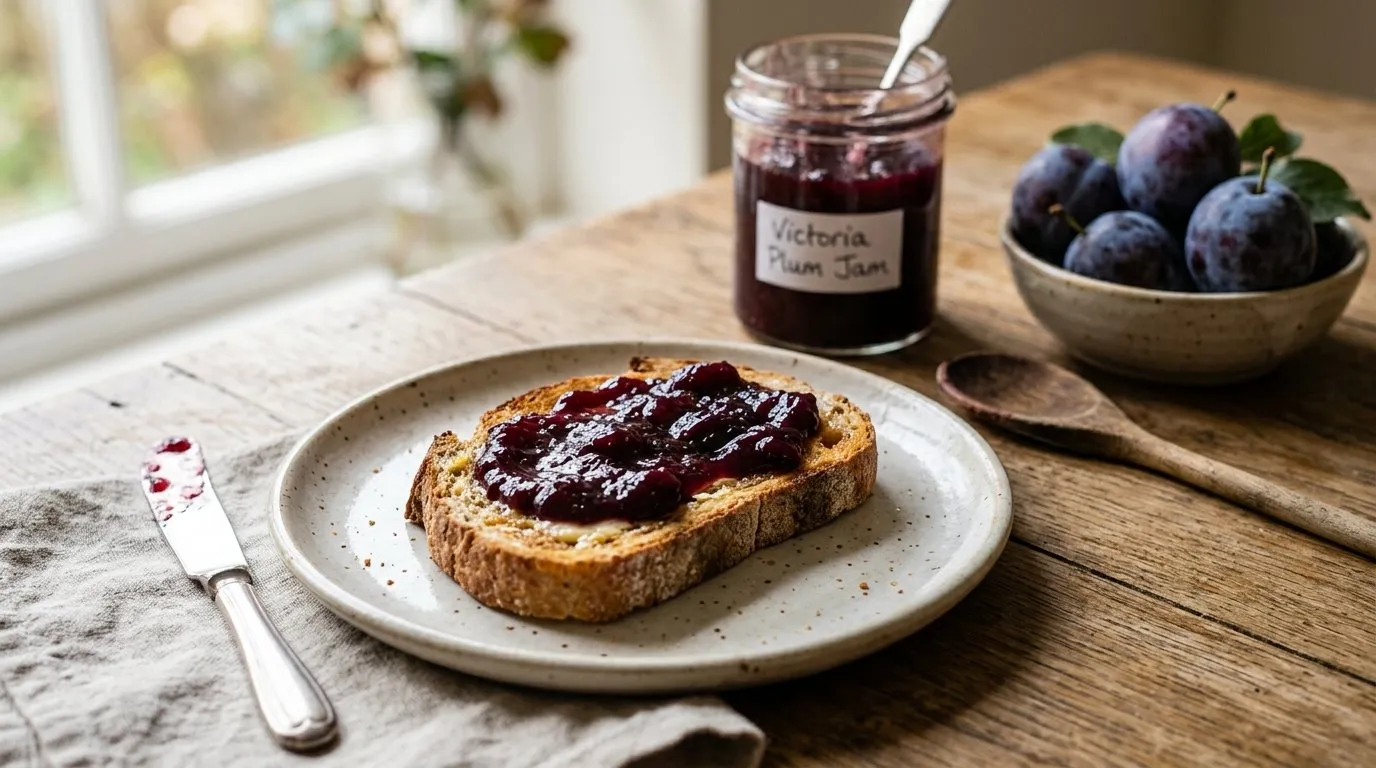
- Hot buttered toast. The classic UK weekend breakfast.
- Scones. Replace strawberry jam in a cream tea.
- Sponge cake filling. Especially Victoria sponge.
- Rice pudding swirl. Stir a tablespoon into hot rice pudding.
- Yoghurt topping. Greek yoghurt with plum jam swirled in.
- Cheese pairings. Strong blue cheese (Stilton, Roquefort) with plum jam on a cracker.
- Glaze. Brush warmed plum jam over a roast duck or pork joint in the last 15 minutes.
Common mistakes
Skipping the thermometer. Setting point is 105C exactly. Without a thermometer you guess; the wrinkle test is approximate. Buy the £15 thermometer.
Adding sugar before plums break down. Sugar locks the fruit cells. Always simmer plums to pulp first, then add sugar.
Boiling too long. Past 107C the jam goes hard and chewy. Stop at 105C and pot quickly.
Using over-ripe plums. Lost pectin gives runny jam. Use ripe-but-firm fruit.
Filling cold jars. Thermal shock cracks them. Always pre-warm.
Skipping the 5-minute rest before potting. Hot jam tipped straight into jars makes the fruit float to the top. The 5-minute rest lets the pectin start to set so fruit distributes evenly.
Frequently asked questions
What plum varieties make the best jam?
Victoria is the UK classic for plum jam, with the right balance of sweetness and acidity plus high natural pectin. Czar and Marjorie's Seedling are excellent alternatives. Cambridge Gage gives a more delicate, gourmet jam. Avoid eating-only varieties (Opal) which lack the cooking acidity. The cooking plums set firmer than dessert types.
Do I need pectin to make plum jam?
No, plums contain enough natural pectin for a firm set without added commercial pectin. The skin and stones are particularly rich in pectin. Adding lemon juice (juice of 1 lemon per 1kg fruit) provides extra acid which activates the natural pectin. Plums make some of the easiest jam to set, alongside redcurrants and gooseberries.
Why didn't my plum jam set?
Three causes: under-cooking (didn't reach 105C), too-ripe plums (lost pectin), or skipping lemon juice. Return to the pan, bring back to a rolling boil, and cook to 105C confirmed by thermometer. The jam should pass the wrinkle test on a cold saucer. If still runny after 30 minutes more boiling, the plums were over-ripe; salvage as a coulis for desserts instead.
How do I remove plum stones from jam?
Cook the plums halved with stones in. As the fruit breaks down during the simmer, stones rise to the surface. Lift them out with a slotted spoon. Most will surface during the initial 15-20 minute simmer. Any remaining stones lift out at the foam-skimming stage at the end. The cooking liquor extracts extra pectin from the stones, so leaving them in during the simmer makes a firmer-setting jam.
Can I freeze plum jam?
Yes, plum jam freezes well for up to 2 years in plastic containers (leaving 2cm headspace for expansion). Defrost in the fridge before using. The frozen jam is slightly softer in texture but tastes identical. Most UK home jam-makers refrigerate or pantry-store rather than freeze, but freezing is useful for surplus.
Our team produces practical UK gardening guidance from source research, contributor records and established horticultural practice. Editorial standards are overseen by Matt W.