Prep
30 minutes
Cook
1 hour 30 minutes
Total
2 hours plus 4 weeks maturing
Serves
6 x 250ml jars
Key takeaways
- 1.5kg apples + 250g onion + 200g sultanas + 400ml cider vinegar = 6 x 250ml jars
- Mix cooking apples (Bramley) and eaters (Cox, Discovery) for balanced texture
- Use windfall apples; trim damaged parts but most bruised flesh works fine
- Cook to spoon-trail consistency, around 90 minutes total simmer
- Mature 4 weeks minimum; 8 weeks for best flavour development
- Keeps 12 months unopened in a cool dark place, 8 weeks once opened
From the Garden
Grow these for the recipe: Cooking apples (Bramley), Eating apples (Cox, Discovery, Egremont Russet), Onion, Garlic.
Ingredients
Main ingredients
- • 1kg Bramley cooking apples, peeled, cored, and diced
- • 500g eating apples (Cox, Discovery, Egremont Russet), peeled, cored, and diced
- • 250g onion, finely chopped
- • 2 garlic cloves, finely chopped
- • 200g sultanas
Vinegar and sugar
- • 400ml cider vinegar
- • 300g light brown sugar
Spices
- • 1 tbsp mustard seeds
- • 1 tsp ground ginger
- • 1 tsp ground allspice
- • 1 tsp ground cinnamon
- • 1 tsp fine sea salt
- • 1/2 tsp ground cloves
- • 1/2 tsp cayenne pepper (optional)
Equipment
- Large heavy-based pan (5 litre minimum, stainless steel or enamel)
- 6 x 250ml glass jars with vinegar-proof lids
- Wooden spoon
- Sharp knife and chopping board
- Oven for sterilising
Method
- 1
Wash, peel, and core the apples. Dice the Bramleys and the eating apples into 1cm cubes. Keep them combined.
- 2
Finely chop the onion and garlic.
- 3
Sterilise the jars. Wash in hot soapy water, rinse, then place in a 110C/90C fan oven for 15 minutes. Boil the lids in water for 10 minutes. Keep jars warm until filling.
- 4
Combine the apples, onion, garlic, and sultanas in the pan. Add the cider vinegar, sugar, all spices, and salt. Stir well.
- 5
Bring to a gentle boil over medium heat, stirring until the sugar dissolves. Reduce heat to low and simmer uncovered for 75-90 minutes, stirring every 10 minutes.
- 6
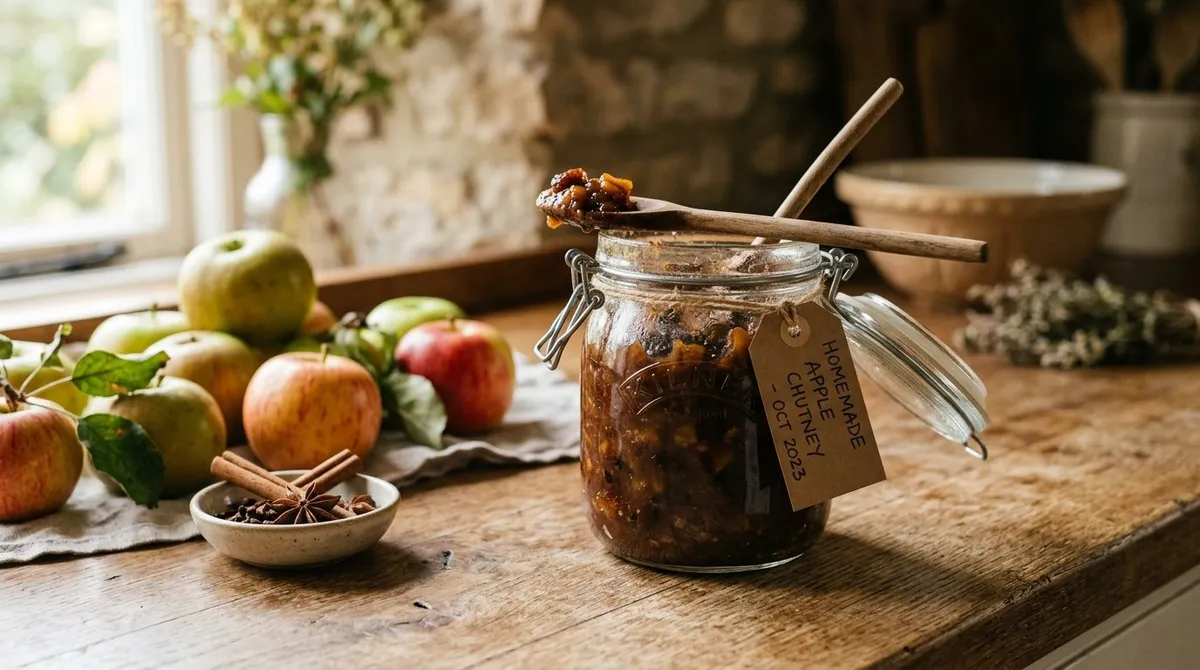
The chutney is ready when a wooden spoon drawn across the bottom of the pan leaves a trail that takes 3-4 seconds to fill back. The Bramleys should have collapsed into the sauce; the eating apple cubes should still be visible but very soft. Colour deep golden-brown.
- 7
Pot the chutney into the warm sterilised jars while still hot. Fill to 1cm below the rim. Wipe the rims clean. Seal immediately with the boiled lids.
- 8
Label with the date. Store in a cool dark place for 4 weeks before opening.
Storage
Unopened jars keep for 12 months in a cool dark place. Once opened, refrigerate and use within 8 weeks. The chutney darkens and deepens in flavour over the first 6 weeks. Best eaten within 12 months for peak flavour.
You will find the cooker-and-eater apple ratio that gives the best texture, the cider-vinegar choice that suits apple specifically, and the maturing schedule that turns a fresh harsh jar into the deep-flavoured preserve worth Christmas-gifting. Pair with the apple growing guide for crop-to-jar continuity.
Why this works
The two apple types do different jobs. Bramleys (and other cookers) collapse during the simmer, releasing pectin and natural sugars that thicken the chutney. Cox or Discovery (and other eaters) hold their structure, giving the jar a recognisable apple-piece texture instead of a uniform paste.
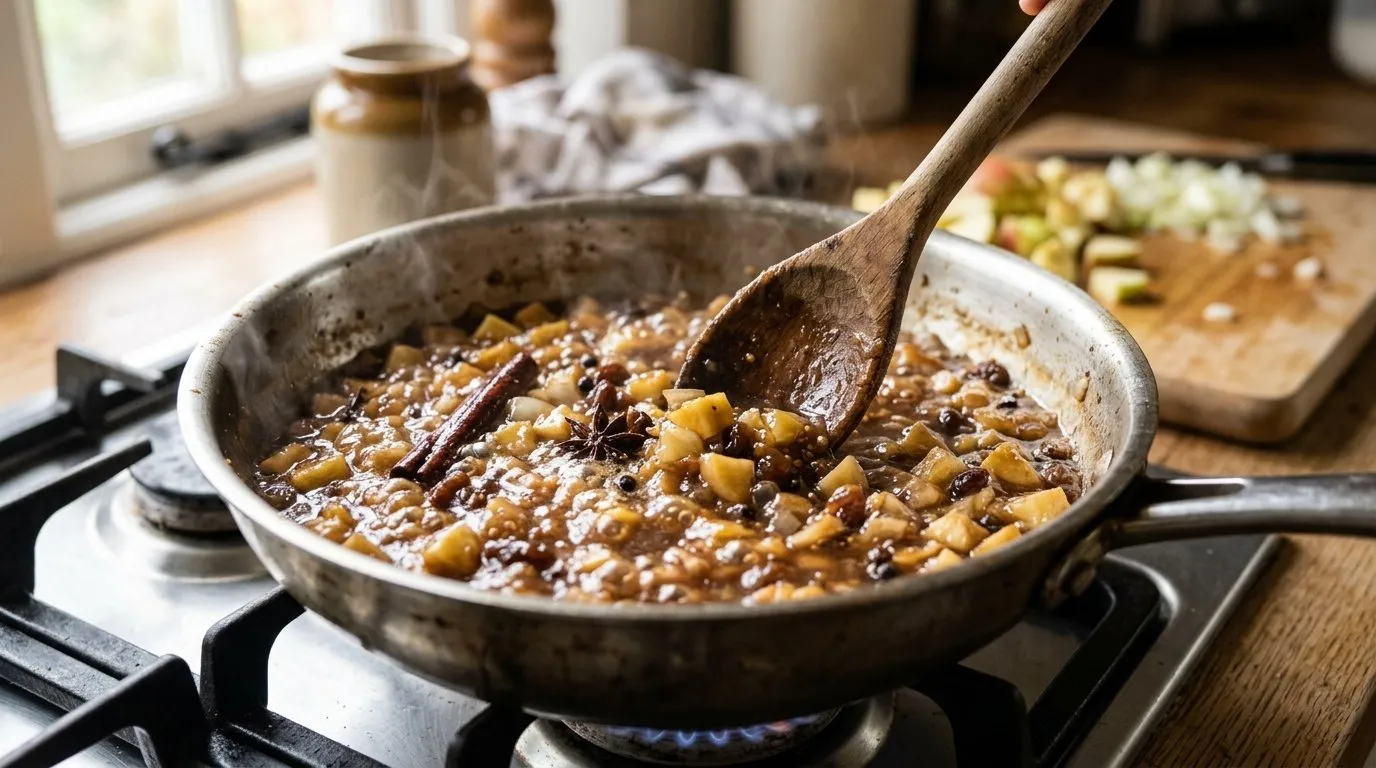
Cider vinegar replaces the more common malt vinegar specifically for apple chutney. The fruity-sharp profile of cider vinegar complements the apple base; malt vinegar’s strong malty notes can dominate.
The sultanas are non-negotiable. They plump up during the simmer and add chewy texture and natural sweetness. Currants, raisins, or chopped dates can substitute, but sultanas are the UK classic.
Variations
Apple and onion. Double the onion to 500g and reduce sultanas to 100g. Sharper, more savoury chutney that pairs well with pork.
Apple and ginger. Add 50g chopped crystallised ginger plus 1 tablespoon ground ginger. Warming version, especially good with cheese boards.
Apple and chilli. Add 2 finely chopped fresh red chillies. Modern UK take on the classic, brilliant with curries.
Apple and tomato. Replace 500g apple with 500g chopped ripe tomatoes. Hybrid version, good with bacon sandwiches.
Christmas apple chutney. Add zest and juice of 1 orange, plus 50g flaked almonds at the simmer stage. Festive variation worth gift-jar labelling.
Best uses for apple chutney
- Cold meat sandwiches. The UK lunch classic. Apple chutney with sliced ham on granary bread.
- Cheese boards. Mature Cheddar, Wensleydale, Lancashire, and Stilton all pair well.
- Pork pie. Apple chutney with pork pie is the ploughman’s lunch.
- Sausages. Cuts the fat of UK pork sausages.
- Curries. Especially mild creamy curries (korma, dhal); use as an Indian-style spiced relish.
- Christmas leftovers. Cold turkey + apple chutney + crusty bread = the best Boxing Day sandwich.
Common mistakes
Using only cooking apples. Gives a uniform smooth paste with no texture. Always add eaters.
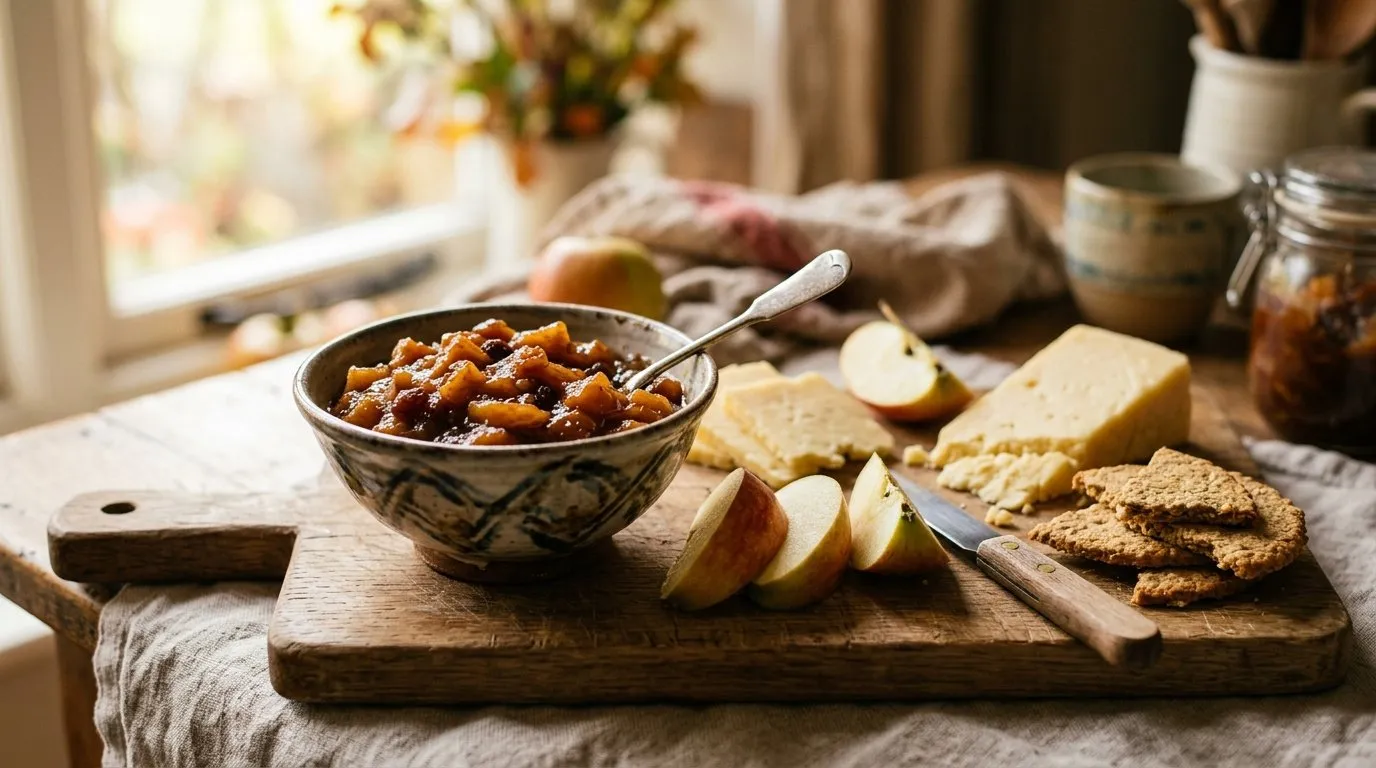
Skipping the sultanas. They give the UK character. Don’t omit.
Filling cold jars. Cracks them. Always pre-warm.
Eating too soon. 4 weeks minimum maturing. 8 weeks for best.
Skimping on the simmer. Under-cooked chutney is watery and short-lived. Look for the wooden-spoon trail before potting.
Frequently asked questions
Which apples are best for chutney?
A mix of cooking and eating apples works best. Cooking apples (Bramley, Howgate Wonder) collapse during the simmer and thicken the chutney. Eating apples (Cox, Discovery, Egremont Russet) hold their shape and give texture. The 2:1 ratio of cookers to eaters in this recipe gives a chutney with both jam-like body and recognisable apple pieces.
Can I use windfall apples for chutney?
Yes, windfall apples are ideal for chutney. Trim away any damaged or rotten parts; the rest of the flesh is perfect. Pick within 24 hours of falling for best flavour; older windfalls may be too soft. Wasp damage is fine; trim and use the surrounding flesh. Most UK home gardeners make chutney specifically to use up windfalls.
Why is my apple chutney too sweet?
Three causes: too much sugar (reduce to 250g next batch), too many eating apples instead of Bramleys (Bramleys are tarter), or under-cooking (the vinegar hasn't reduced enough to balance). For the current batch, simmer for 15-20 more minutes to evaporate moisture and concentrate flavour. The acidity will sharpen as it reduces.
Can I use cider vinegar instead of malt vinegar?
Cider vinegar is the better choice for apple chutney; it gives a fruitier, rounder flavour that complements the apple. Malt vinegar works too but the dark malty notes can dominate. White wine vinegar is too mild. Always use 5%+ acidity vinegar; below this the chutney won't preserve safely.
How long does apple chutney need to mature?
Apple chutney needs at least 4 weeks to mature before eating. Fresh chutney tastes harshly vinegary with the spices dominating. After 4 weeks the flavours marry. After 8 weeks the chutney reaches peak balance. The flavour continues developing for 6 months in the jar before any decline.
Our team produces practical UK gardening guidance from source research, contributor records and established horticultural practice. Editorial standards are overseen by Matt W.