Prep
15 minutes
Cook
20 minutes
Total
35 minutes
Serves
4 as a light lunch
Key takeaways
- British asparagus season is 23 April to 21 June - this recipe is at peak May to early June
- Snap the spears at the natural break point; the woody end stays in your hand and the tender part stays on the tart
- Blanch 60 seconds in boiling salted water then refresh in iced water for the brightest green colour
- All-butter puff pastry beats the cheaper margarine versions; the lift and flavour are completely different
- Ricotta plus lemon zest plus Parmesan is the classic UK pairing - replace ricotta with mascarpone for a richer version
- Bake at 200C for exactly 20 minutes; longer browns the asparagus tips and turns them woody
From the Garden
Grow these for the recipe: Asparagus (perennial bed, year 3 onwards), Lemon thyme (optional garnish).
Ingredients
For the tart
- • 1 sheet ready-rolled all-butter puff pastry (320g, chilled)
- • 250g fresh British asparagus, woody ends snapped
- • 200g ricotta cheese
- • 50g Parmesan, finely grated
- • Zest of 1 unwaxed lemon
- • 1 egg yolk, beaten with 1 tbsp milk (egg wash)
- • Pinch of fine sea salt
- • Black pepper, freshly ground
- • 1 tbsp olive oil
Equipment
- Large baking sheet
- Sheet of baking parchment
- Sharp knife
- Small mixing bowl
- Pastry brush
- Saucepan for blanching
Method
- 1
Preheat the oven to 200C fan / 220C conventional. Line a large baking sheet with parchment.
- 2
Snap the woody ends off each asparagus spear. Each spear breaks naturally at the point where the woodiness ends - the flexible top stays on the tart, the tough bottom goes in your stock pot.
- 3
Bring a saucepan of salted water to a rolling boil. Drop in the asparagus spears, blanch for exactly 60 seconds, drain and immediately plunge into iced water. This locks in the bright green colour and stops them overcooking on the bake.
- 4
Unroll the chilled puff pastry onto the parchment. Score a 2cm border around the edges with a sharp knife (do not cut through). This border puffs up and frames the filling.
- 5
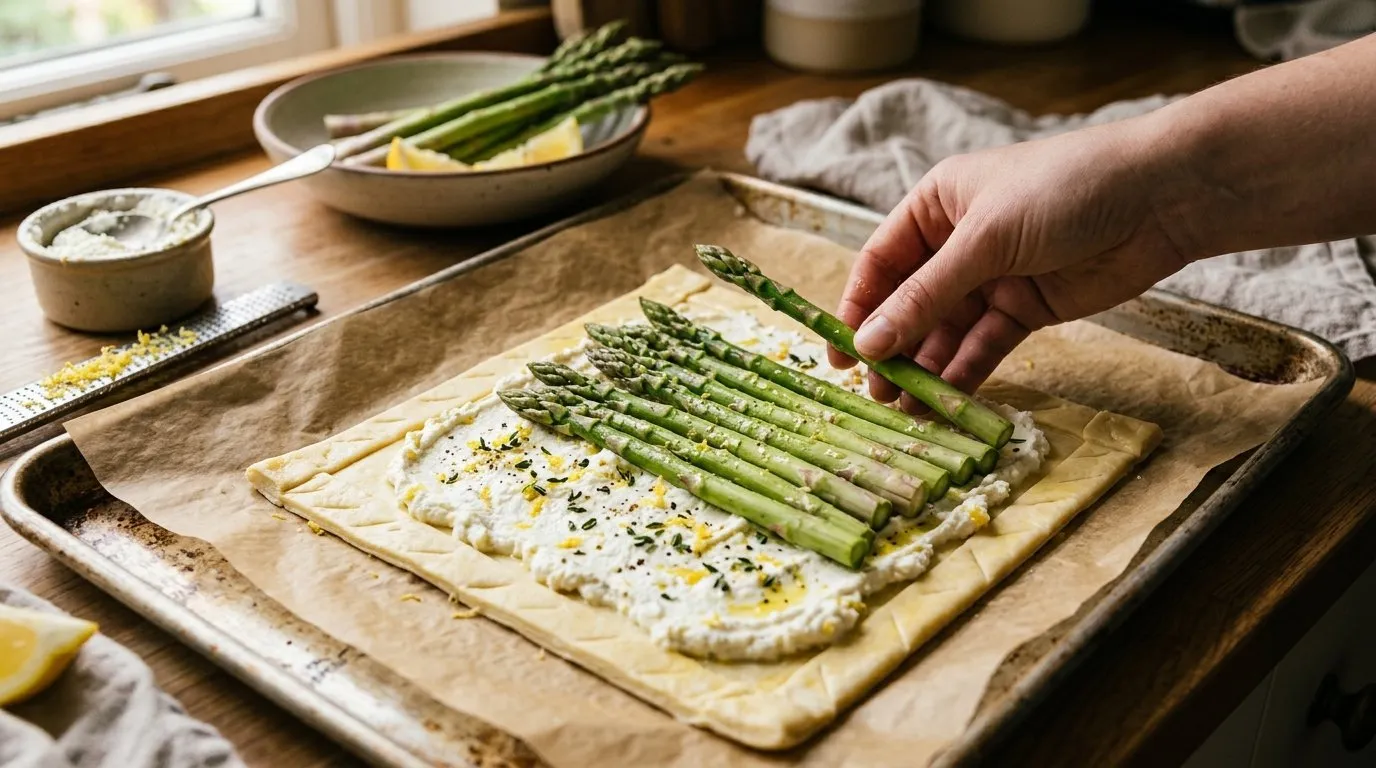
Mix the ricotta, half the Parmesan, lemon zest, salt and pepper in a bowl. Spread this mixture inside the scored border, leaving the edges clear.
- 6
Pat the blanched asparagus dry on a tea towel. Arrange the spears in a single layer on top of the ricotta, alternating tip-up and tip-down for a striped pattern. Brush the spears lightly with olive oil.
- 7
Brush the pastry border with the egg wash. Sprinkle the remaining Parmesan over the asparagus.
- 8
Bake for exactly 20 minutes until the pastry is deep golden and the asparagus tips are just starting to char at the edges. Cool 5 minutes before slicing.
Storage
Best eaten on the day of baking. Leftovers keep 24 hours refrigerated wrapped in foil but the pastry softens. Reheat in a 180C oven for 8-10 minutes to crisp the base. Do not microwave; the pastry turns to cardboard.
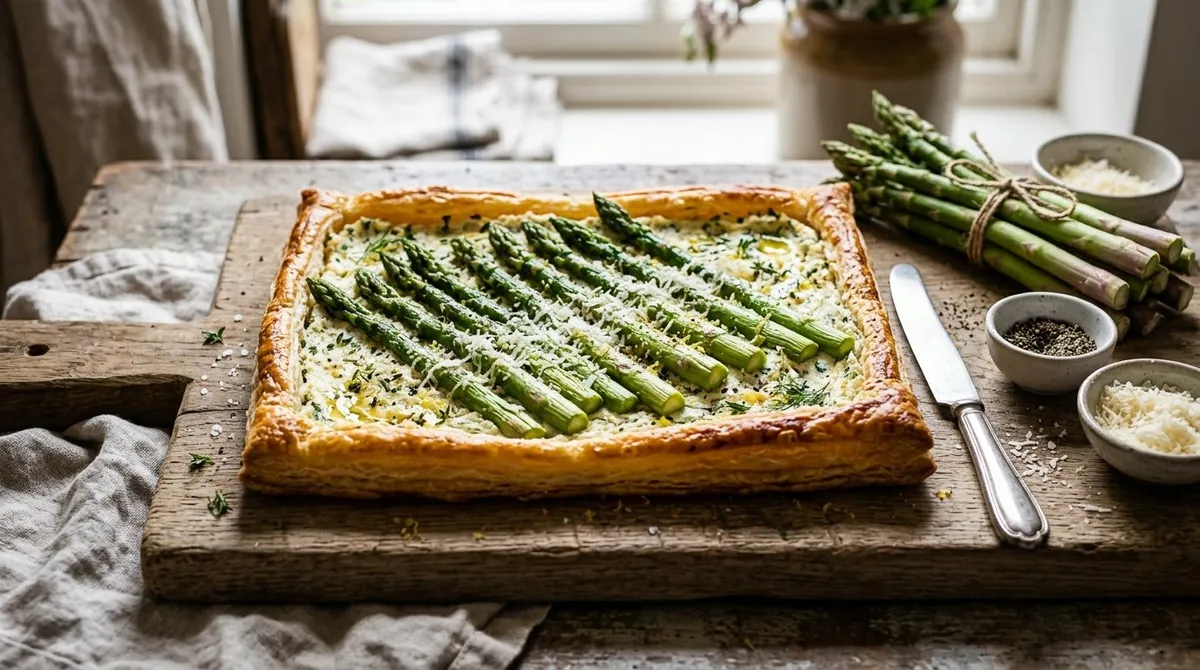
British asparagus is the seasonal headline of late spring. The season opens on St George’s Day, peaks through May, and closes on Midsummer’s Day - exactly 8 weeks where the flavour is genuinely special and the price drops as supply ramps up. This tart is what to make in those 8 weeks: 35 minutes start to finish, four ingredients beyond the pastry, and the bright green spears showing through a golden puff border in a way no other asparagus dish quite manages.
You will find the snap-not-cut technique that gets the woody ends out cleanly, the 60-second blanch that locks in the colour, and the ricotta-and-Parmesan filling that tastes far more sophisticated than the work involved. British asparagus growers run an active campaign on Love British Food if you want to find a local supplier rather than a supermarket bunch.
Why this works
Asparagus on its own can be too watery for a tart - the spears release liquid in the oven and turn the pastry soggy. The 60-second blanch fixes both problems: it pre-softens the spears so they need only 20 minutes in the oven, and the iced-water plunge stops further cooking, keeping the colour vivid green.
The ricotta acts as a moisture buffer between the asparagus and the pastry. Without it, the bottom of the tart goes claggy. With it, the pastry stays crisp and the filling stays rich.
Buying British asparagus
British asparagus is one of the few things genuinely worth seeking out in season. Imported Peruvian asparagus is available year-round at supermarkets but flies 6,300 miles and the flavour shows it - faint, watery, slightly bitter. British asparagus tastes nutty, sweet and grassy in a way the imports never do.
Look for the British flag or “Grown in Britain” label on the bunch. Local farm shops, farmers’ markets and box schemes are reliable. The Wye Valley, Worcestershire and Norfolk grow most of England’s asparagus.
Variations worth trying
Once you have the base recipe down, the variations are easy:
- Goats cheese instead of ricotta for a sharper tart
- Smoked salmon ribbons between the asparagus spears for a brunch version
- Herb the ricotta with finely chopped tarragon, chervil or chives
- Add a soft-boiled egg to the centre 5 minutes before the end of bake
Serving and pairings
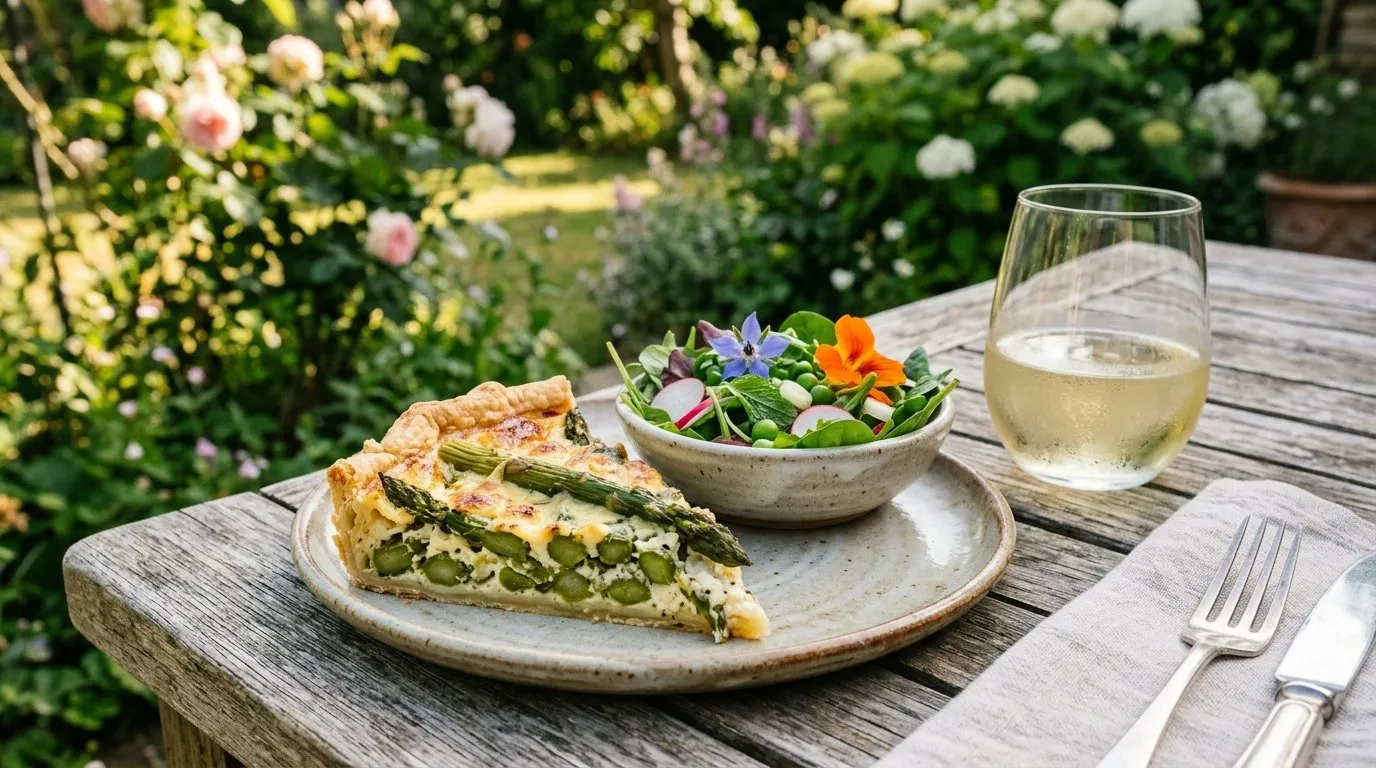
Serve immediately, sliced into rectangles. A green salad and a chilled glass of English Bacchus is the classic pairing. New potatoes with butter and mint work for a more substantial lunch.
Frequently asked questions
When is British asparagus in season?
British asparagus runs from St George's Day on 23 April to Midsummer's Day on 21 June - exactly 8 weeks. Peak quality is the middle 4 weeks (mid-May to mid-June). Outside this window asparagus is imported (usually Peru, sometimes Spain) and the flavour drops dramatically. Save this recipe for May and June.
How do I tell if asparagus is fresh in the supermarket?
Stand the spears upright in their bunch. Fresh asparagus stays rigid; old asparagus flops. Check the cut bottoms; they should be moist and smell sweet. Slimy bottoms or a sour smell mean the asparagus is past its best. Tight closed tips and bright green colour are good signs - flowery open tips mean it is overdue.
Can I use frozen puff pastry for asparagus tart?
Yes - frozen puff pastry works fine. Defrost in the fridge overnight (8-12 hours) before using. All-butter is significantly better than the cheaper margarine versions; the lift and flavour are completely different. The difference is about £1.50 per pack and it is worth it.
What can I serve with asparagus tart?
A simple green salad with a sharp lemon dressing and shaved Parmesan is the classic British pairing. New potatoes with butter and mint also work brilliantly. For a lighter option, serve with a chilled glass of English white wine; Bacchus or Pinot Blanc pair beautifully with both asparagus and ricotta.
Our team produces practical UK gardening guidance from source research, contributor records and established horticultural practice. Editorial standards are overseen by Matt W.