Prep
10 minutes
Cook
20 minutes
Total
1 hour 30 minutes
Serves
4 (250g cheese)
Key takeaways
- 1 litre whole milk + 4 tbsp lemon juice + 1/2 tsp salt = 250g fresh curd cheese
- Heat milk to 85C, add acid, stir gently until curds separate from clear whey
- Drain 30 minutes for soft cottage cheese, 2 hours for firmer curd cheese
- Whole milk gives the best yield and texture; semi-skimmed makes a thinner curd
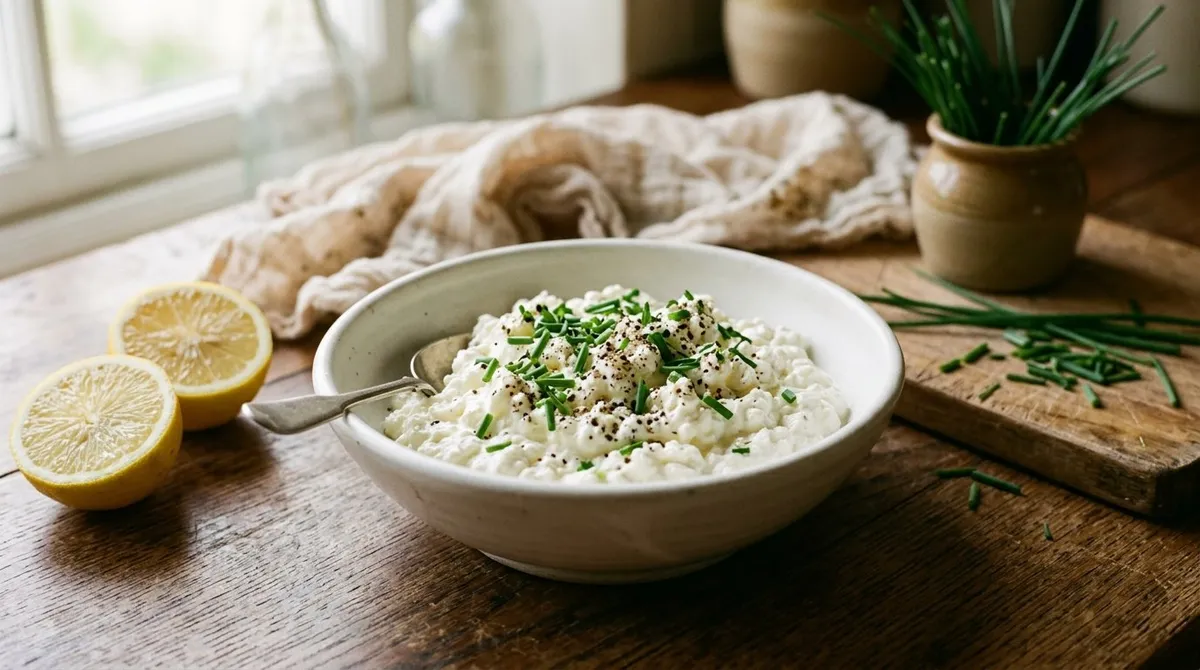
- Garden chives, dill, or parsley added at salting turn it into a herby spread
- Whey is not waste; use it for bread, soup stock, or watering acid-loving plants
From the Garden
Grow these for the recipe: Chives, Dill, Parsley, Garlic chives.
Ingredients
For the cheese
- • 1 litre whole milk (not UHT)
- • 4 tbsp fresh lemon juice (about 2 lemons)
- • 1/2 tsp fine sea salt
Garden herb option
- • 1 tbsp fresh chopped chives
- • 1 tbsp fresh chopped dill or parsley
- • 1 small garlic clove, finely grated (optional)
- • Pinch of black pepper
Equipment
- Heavy-based saucepan (2 litre minimum)
- Digital thermometer
- Sieve or colander
- Square of muslin or fine cotton tea towel (50cm x 50cm)
- Large bowl
Method
- 1
Pour the milk into the saucepan and warm slowly over medium-low heat. Stir occasionally to prevent the bottom catching. The milk needs to reach 85C; this takes 8-10 minutes from cold.
- 2
When the milk hits 85C, take the pan off the heat. Pour in the lemon juice slowly, stirring gently with a wooden spoon. Within 30-60 seconds you'll see the milk break into white curds and clear-yellow whey.
- 3
Cover the pan with a lid or tea towel and leave for 10 minutes. The curds will firm up and the whey will become clearer. Do not stir during this rest.
- 4
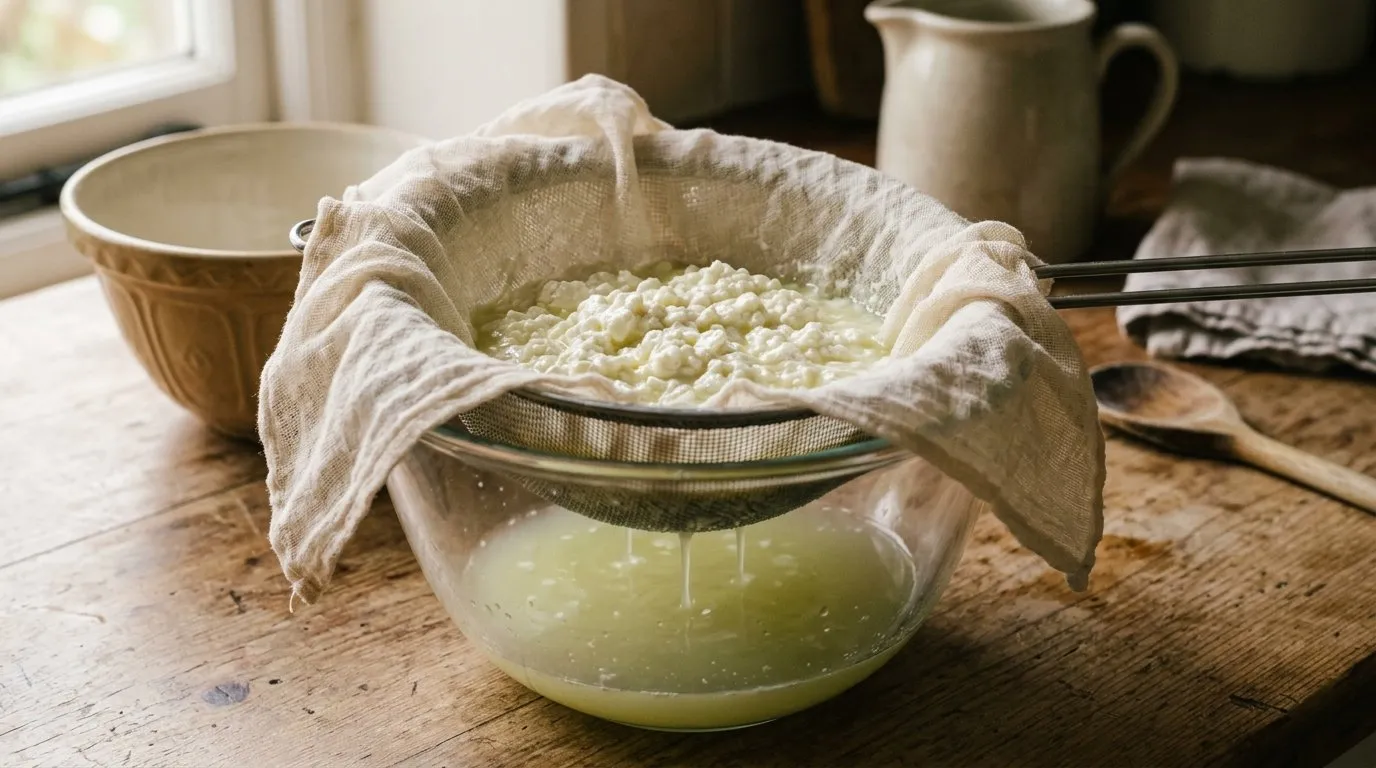
Line the sieve with the muslin and set over a large bowl. Pour the curds and whey through. The whey drips into the bowl below; the curds stay in the muslin.
- 5
Lift the corners of the muslin and tie loosely. Hang from a wooden spoon over the bowl, or set the muslin-lined sieve in the bowl. Drain at room temperature for 30 minutes for soft cottage cheese, or up to 2 hours for firmer curd cheese.
- 6
Tip the drained curds into a bowl. Add the salt and break up the larger lumps with a fork. Taste and adjust salt. For the herb version, fold in the chopped herbs and pepper now.
- 7
Transfer to a clean container with a lid. Refrigerate. Best used within 5 days.
Storage
Refrigerate in an airtight container for up to 5 days. The cheese firms up further in the fridge. Do not freeze; the texture breaks down. The drained whey keeps 7 days refrigerated and 3 months frozen.
This is the simplest cheese any home cook can make, and it’s perfect for using up garden herbs. Homemade cottage cheese (also called curd cheese, paneer in India, queso fresco in Mexico) needs only milk and an acid. It comes together in under 90 minutes including draining time. The texture is fresher and the flavour cleaner than any supermarket cottage cheese.
You will find the basic two-ingredient method, the herb variation, the temperature rules that determine success, and the seven uses for the leftover whey. Pair it with a few chives from the garden for the herby version that works on toast, in salads, or as a dip.
Why this method works
The science is simple. Milk is mostly water with proteins (casein) and fats suspended in it. At room temperature the proteins repel each other and stay distributed. When you heat milk and add an acid, the proteins lose their negative charge, clump together, and separate from the water. The clumps are curds; the water is whey.
The temperature matters because it controls how tightly the proteins clump. Too cool (below 80C) and the curds stay soft and won’t drain properly. Too hot (above 90C) and the proteins over-tighten, giving a rubbery texture. 85C is the sweet spot.
The acid choice matters less than most recipes suggest. Lemon juice is the cleanest-tasting; it leaves no aftertaste. White wine vinegar works but adds a faint tang. Citric acid powder works but is unnecessary in a UK kitchen.
Variations
Strained Greek-style. Drain for 4-6 hours instead of 30 minutes. The result is a thick, spreadable cheese closer to labneh than cottage cheese. Salt heavily.
Paneer. Press the drained curds in the muslin under a 1kg weight for 1 hour. The result is firm enough to cut into cubes for curries. This is exactly how Indian paneer is made.
Smoked. Cold-smoke the drained cheese over oak or apple wood chips for 30-45 minutes. Excellent on toast.
Whipped. Blend the drained curds with 2 tablespoons cream in a food processor. Produces a smoother, richer texture closer to ricotta.
Best garden herb pairings
The home-grown herbs that best suit cottage cheese:

- Chives are the classic. Finely chopped fresh chives at 1 tablespoon per 250g of cheese. Pair with a grating of black pepper.
- Dill is excellent with smoked salmon on rye. Use 1 tablespoon per 250g.
- Parsley (flat-leaf preferred) for a milder, cleaner herb hit. 2 tablespoons per 250g.
- Garlic chives combine the chive note with mild garlic. Use 1 tablespoon per 250g.
- Tarragon for a French-style fines herbes mix; 1 teaspoon is plenty.
Avoid woody herbs (rosemary, thyme, sage) which dominate the soft curd flavour. Mint is also too strong.
Frequently asked questions
Can I make cottage cheese with semi-skimmed milk?
Yes, semi-skimmed milk works but gives a thinner, drier curd. Whole milk produces the creamiest cottage cheese and best yield. Skimmed milk works for very low-fat curd cheese but the texture is grainy. Avoid UHT milk; the high-temperature treatment alters proteins and curds badly.
Why didn't my milk curdle?
The most common cause is milk that wasn't hot enough. The acid only separates curds from whey at 80-90C. If your milk was below 80C, return to gentle heat for 2-3 more minutes and add another tablespoon of lemon juice. UHT milk does not curdle reliably; switch to fresh whole milk.
What can I do with the leftover whey?
Whey is rich in protein and minerals. Use it instead of water for bread dough (improves crust and flavour), as a soup stock base, or in pancake batter. It also makes excellent feed for acid-loving plants (rhododendrons, blueberries, hydrangeas) when diluted 1:5 with water.
How do I make cottage cheese with garden herbs?
Add 1-2 tablespoons of finely chopped fresh herbs at the salting stage after draining. Chives, dill, parsley, garlic chives, and tarragon all work well. Add a small grated garlic clove for stronger flavour. Stir gently to distribute without breaking up the curds too much. Refrigerate for an hour before serving.
Is homemade cottage cheese cheaper than shop-bought?
Yes, marginally. 1 litre of whole milk costs around £1.30 in 2026 and produces 250g of cheese. Equivalent shop-bought cottage cheese is £1.50-£2.50 for 250g. The home version saves 20-50% per portion, with the bigger benefit being control over salt, freshness, and herb flavour.
Our team produces practical UK gardening guidance from source research, contributor records and established horticultural practice. Editorial standards are overseen by Matt W.