Prep
20 minutes
Cook
0 minutes
Total
6 weeks 2 days
Serves
23 (700ml gin, 30ml per measure)
Key takeaways
- 500g rhubarb + 200g sugar + 700ml gin + lemon zest = 700ml infused pink gin in 6 weeks
- Use forced rhubarb (Yorkshire Triangle) for the brightest pink colour; field rhubarb works but the gin reads more orange
- London Dry gin around £15-£20 per bottle is the right price point - cheaper gin tastes harsh, premium gin is wasted
- Shake the jar weekly to redistribute the sugar and accelerate flavour extraction
- Strain through muslin and a coffee filter for the clearest result; the second filter catches the cloudiness
- Age the bottled gin for 2 weeks after straining to round out any harsh edges
From the Garden
Grow these for the recipe: Rhubarb (forced March-April or field May-July), Lemon zest (mostly shop-bought).
Ingredients
Main ingredients
- • 500g fresh rhubarb stalks (forced for vivid pink, field rhubarb for orange-red)
- • 200g caster sugar
- • 700ml mid-range London Dry gin (around £15-£20 per bottle)
- • 1 strip of unwaxed lemon zest (5cm long, no white pith)
- • Optional: 2cm piece of fresh ginger, peeled and bruised, for spicy version
Equipment
- Large 1.5 litre Kilner jar or similar sealed glass jar
- Sharp knife
- Wooden chopping board
- Vegetable peeler
- Muslin cloth
- Fine mesh sieve
- Coffee filter paper
- Funnel
- Sterilised glass bottle (700ml or two 350ml)
Method
- 1
Wash the rhubarb stalks under cold water. Trim off any leaf remnants (rhubarb leaves are toxic - never use them). Slice the stalks into 1cm rounds.
- 2
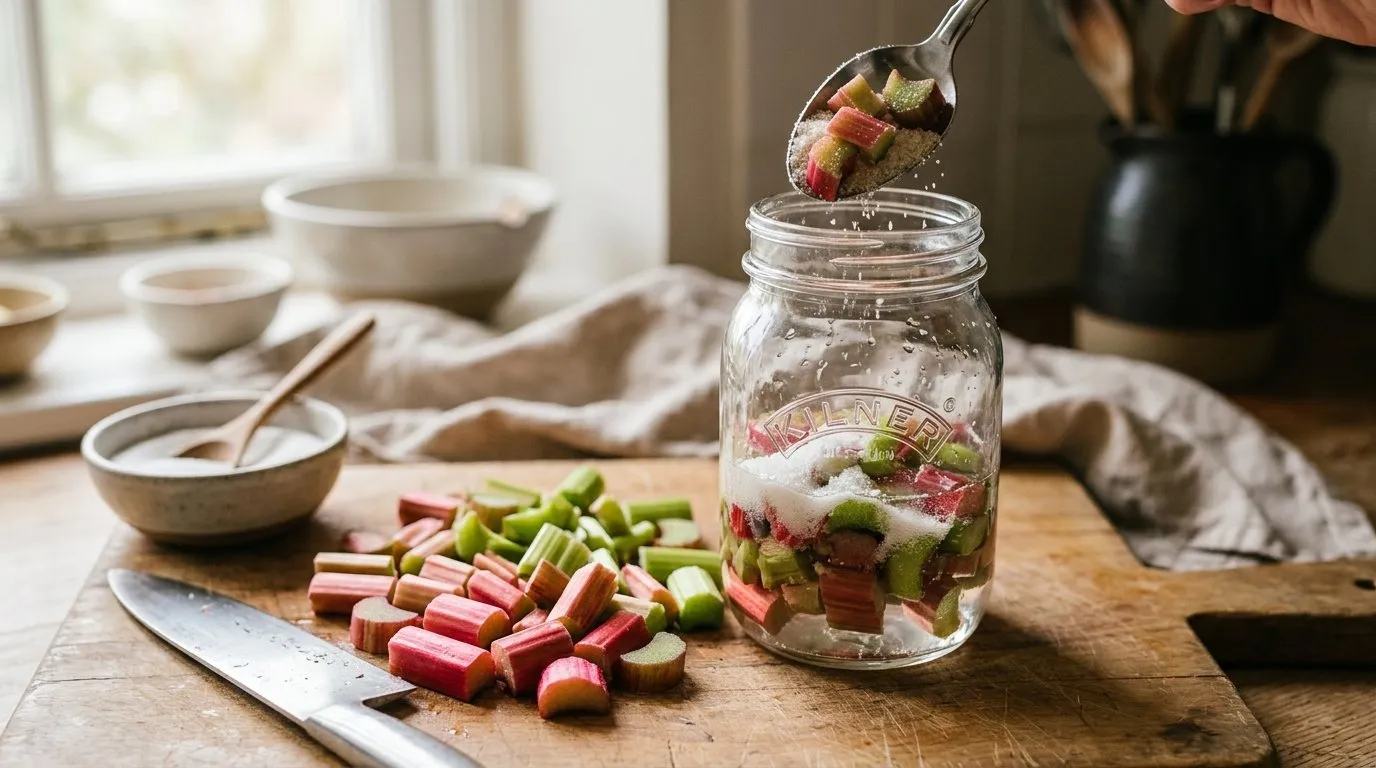
Add the chopped rhubarb to a clean Kilner jar with the sugar. Tip the jar gently end-over-end a few times to coat the rhubarb pieces in sugar. Leave for 30 minutes - the sugar starts pulling juice out of the rhubarb.
- 3
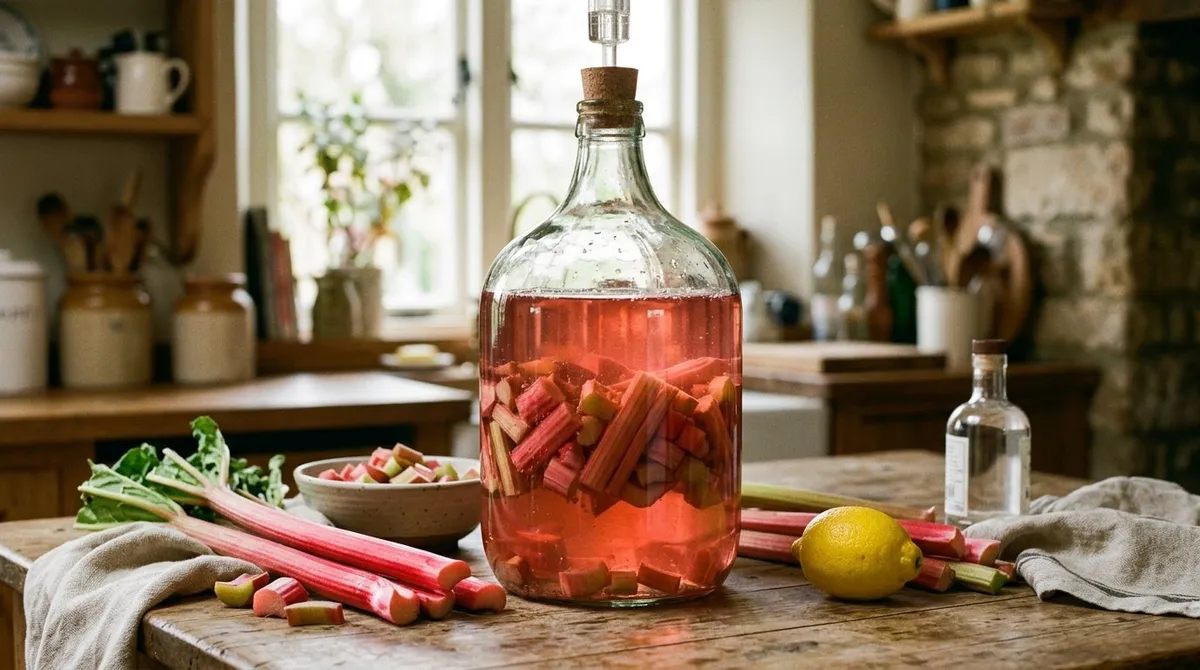
Pour the gin over the rhubarb and sugar. Add the lemon zest strip (and ginger if using). Seal the jar tightly.
- 4
Store in a cool dark cupboard at 15-18C. Shake the jar gently every day for the first week, then once a week for 5 more weeks. The liquid turns vivid pink within 48 hours and deepens for the first 2 weeks; flavour continues to develop for the full 6 weeks.
- 5
After 6 weeks, strain the gin through a muslin-lined sieve into a clean bowl. Discard the rhubarb pulp (or use it in a crumble - bake at 180C for 25 minutes with extra sugar).
- 6
Strain a second time through a coffee filter into a clean jug. This second filter catches the cloudy fines and gives you crystal-clear gin. Allow 1-2 hours for the slow drip.
- 7
Decant into sterilised bottles using a funnel. Seal and label with the date.
Storage
Store in a cool dark cupboard for up to 12 months. Age at least 2 weeks after bottling for the smoothest flavour - the harsh edges round out. The colour may fade slightly in clear bottles after 6 months; store in a cupboard or use amber glass for longer life.
Rhubarb gin is the spring infusion every UK gardener with a rhubarb crown should make at least once. Six weeks in a Kilner jar turns a £18 bottle of London Dry into vivid pink gin worth £45 in the bottle shop, and the timing means a batch started in early May becomes summer Pimm’s-season gin by the third week of June.
You will find the gin-grade guidance that stops you wasting Hendrick’s or buying harsh supermarket spirit, the steeping rules that get the best colour from forced versus field rhubarb, and the double-strain method that gives you crystal-clear gin rather than the cloudy stuff most home recipes produce. Yorkshire forced rhubarb carries Protected Designation of Origin status and is grown in 11 farms in the Wakefield Triangle.
Why this works
Alcohol is a solvent. Steeping fruit in gin pulls flavour, colour and sugar from the fruit into the gin. The 200g of caster sugar serves two purposes - it dissolves into the gin to soften the alcohol burn, and it pulls juice out of the rhubarb pieces (osmosis) which speeds up flavour extraction.
The 6-week timeline lets the rhubarb tannins balance against the sugar. Cut the steep short (2-4 weeks) and the gin tastes one-dimensional. Push it past 8 weeks and tannins from the rhubarb break down further and turn the gin grassy.
Forced versus field rhubarb
Forced rhubarb is grown in dark sheds in the Yorkshire Triangle (Wakefield, Leeds, Bradford) and harvested by candlelight from late January to late March. The colour is shocking pink, the stalks are slim, and the flavour is gentler than field rhubarb. This makes the brightest pink gin.
Field rhubarb is the regular outdoor variety harvested April to July. The colour is mostly green with red flushes, the stalks are thicker, and the flavour is sharper. Gin made with field rhubarb is more orange-red than pink but the flavour is more pronounced.
Both work. If you want pink gin for Instagram, buy forced rhubarb in March or April. If you want flavour over photos, use what is in your garden in May or June.
The 6-week timeline
Mark these dates on your calendar from the day you start:
| Day | Action |
|---|---|
| Day 0 | Combine rhubarb, sugar, gin in jar |
| Days 1-7 | Shake gently every day |
| Weeks 2-6 | Shake once a week |
| Day 42 (week 6) | Strain through muslin then coffee filter |
| Day 56 (week 8) | Gin is ready to drink after 2 weeks of bottle ageing |
If you started the steep on 6 May 2026, the gin is ready on 1 July 2026 - perfectly timed for the start of British summer.
Serving and pairings
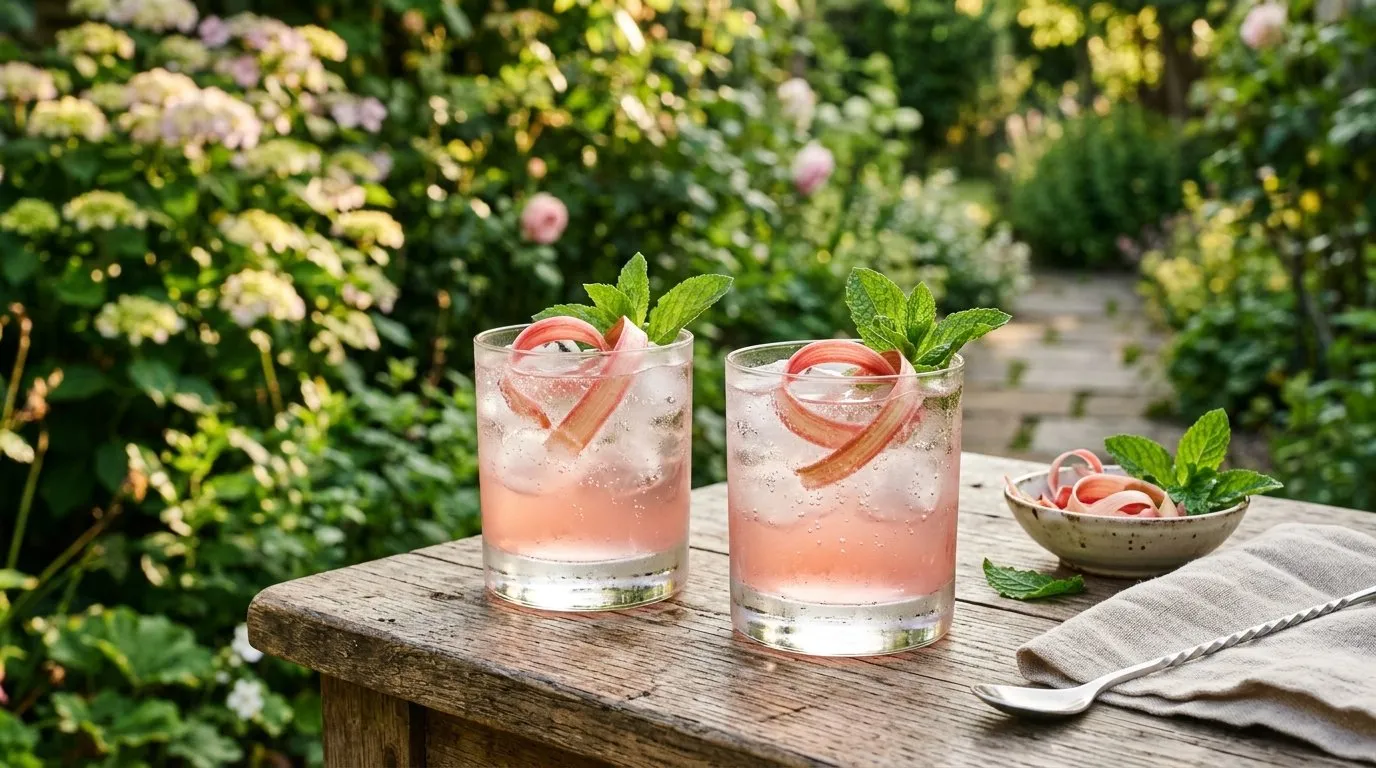
The classic serve is rhubarb gin and tonic - 50ml gin, 150ml tonic, plenty of ice, a ribbon of fresh rhubarb and a sprig of mint. Use a Mediterranean tonic (Fever-Tree Mediterranean, Fentimans, Three Cents) rather than the standard Indian tonic; the lighter botanicals do not fight the rhubarb.
Other excellent uses:
- Rhubarb gin spritz with prosecco and soda water
- Pink Pimm’s - replace the standard Pimm’s No. 1 with rhubarb gin in a Pimm’s jug
- Rhubarb gin sour - 60ml gin, 30ml lemon juice, 15ml sugar syrup, egg white, shake hard
A bottle makes a strong homemade gift. Decant into a 350ml dark glass bottle, label with the date, and tie with garden twine.
Frequently asked questions
What gin should I use for homemade rhubarb gin?
A mid-range London Dry gin around £15-£20 per 700ml bottle is the sweet spot. Beefeater, Sipsmith London Dry, Tanqueray Export and Bombay Sapphire all work well. Cheap supermarket gins under £12 taste harsh once the sugar pulls forward. Premium gins (Hendrick's, Monkey 47) are wasted because rhubarb dominates the base profile. Avoid pre-flavoured gins.
How long do I need to steep rhubarb gin?
Six weeks is the sweet spot for full flavour. Two weeks gives a pale pink gin with mild rhubarb. Four weeks is approaching the right depth. Six weeks lets the sugar fully balance the rhubarb sourness. Beyond 8 weeks the rhubarb starts to break down and the gin gets cloudy and grassy. Set a calendar reminder for the strain date.
Can I use frozen rhubarb for rhubarb gin?
Yes, frozen rhubarb works well and saves time on chopping. Use 500g of frozen chopped rhubarb directly from the freezer; the freeze-thaw cycle has already broken down the cell walls so flavour extracts faster. Steep for 5 weeks instead of 6. Defrosting first is unnecessary; the alcohol does the defrosting in the jar.
What can I do with the leftover rhubarb pulp?
The strained pulp is alcohol-soaked, sweet rhubarb with all the harsh oxalic acid removed. Bake into a crumble (top with oats and more sugar, bake 180C for 25 minutes) or stir into porridge or yoghurt for an adults-only breakfast. It is also excellent folded into vanilla ice cream as it softens. Use within 4 days of straining.
Our team produces practical UK gardening guidance from source research, contributor records and established horticultural practice. Editorial standards are overseen by Matt W.