Allium nigrum
Allium nigrum
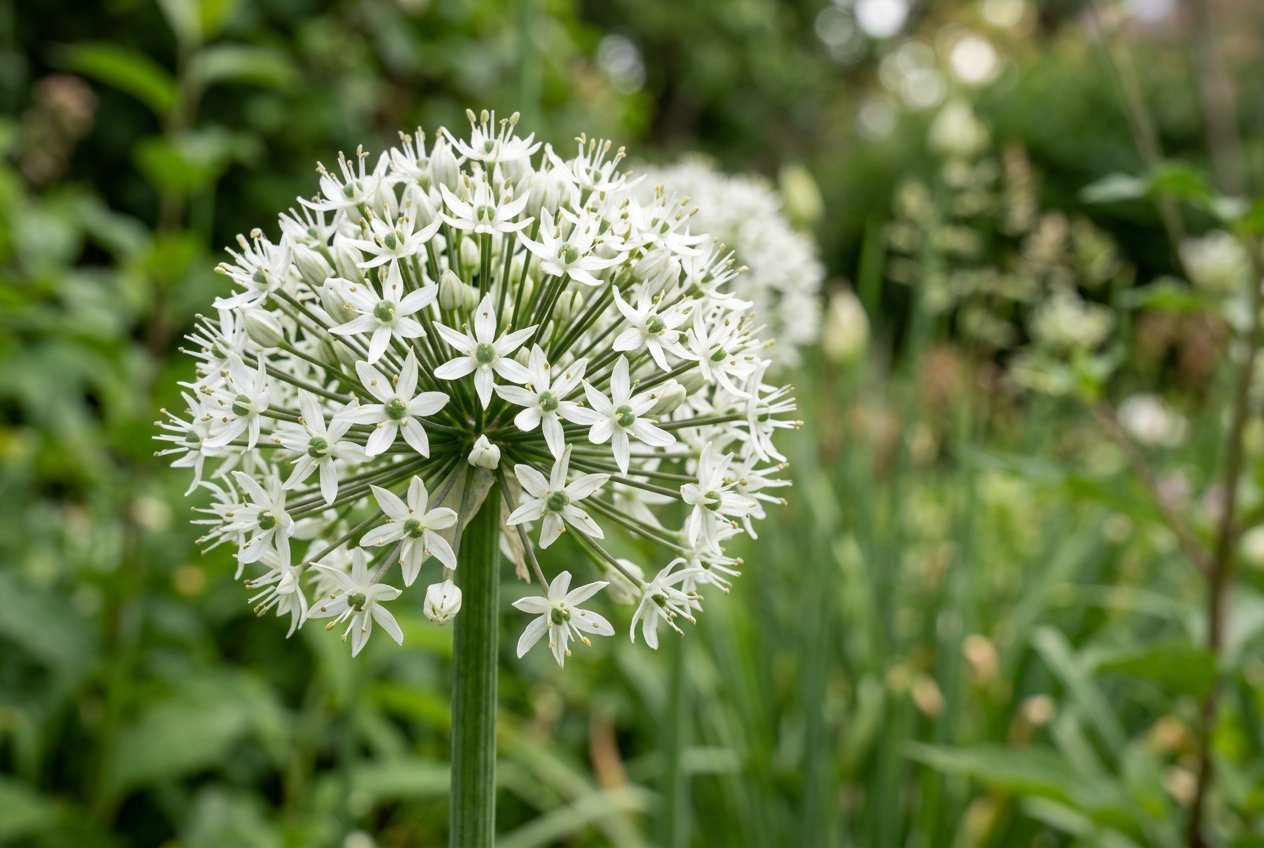
Black garlic produces dense domes of white flowers with prominent dark green ovaries at the centre of each floret, creating a distinctive two-tone effect. Broad strap-like leaves and sturdy stems make it one of the more structural alliums. Flowers appear in late spring and attract large numbers of pollinators to UK gardens.
Where to plant
Best aspect
Border position
When to plant and expect flowers
Plant
Flowers
How to grow allium nigrum
Plant 10cm deep in autumn in full sun. More tolerant of heavier soils than many alliums but still needs reasonable drainage. Excellent cut flower lasting over two weeks in water. Combine with dark-leaved perennials for contrast.
Soil requirements
Soil type
loam, sand, chalk
Moisture
well drained
pH
neutral, alkaline
Aftercare
Allow foliage to die back naturally after flowering. Remove spent flower heads to prevent self-seeding.
Propagation
- Offsets in autumn
- Seed
Wildlife value
Toxicity
All parts mildly toxic. Contains organosulfur compounds causing gastrointestinal upset.
Common problems
- Slugs and snails
- Squirrels digging up bulbs
Similar bulbs to grow
Related guides
The 70-30 Rule for Better Garden Borders
The 70-30 planting rule explained: 70% structure and foliage, 30% seasonal flowers, measured by area, so your UK border looks full in every month.
Air-Purifying Houseplants: What They Really Do
Do air-purifying houseplants work? The honest answer, the ten easiest plants to grow anyway, which are pet-safe, and what actually freshens indoor air.
Allium White Rot: The 20-Year Soil Problem
How to spot allium white rot on onions, garlic and leeks, how it spreads, and the easy ways to keep growing them if your soil has it.