Gardening Projects for Kids UK
12 fun gardening projects for kids in the UK, from sunflower races to pizza gardens. Age-appropriate ideas with costs, timings, and hands-on learning.
Key takeaways
- Cress heads cost under £1 and give visible results in 3-5 days for children aged 3+
- Sunflower growing races germinate in 7-10 days and reach 1.8-3m tall by August
- A runner bean teepee needs 6 canes, 12 seeds, and produces beans for 8 weeks
- Bug hotels use free materials and attract 250+ UK solitary bee species
- All 12 projects cost under £25 each, with 5 projects costing under £5
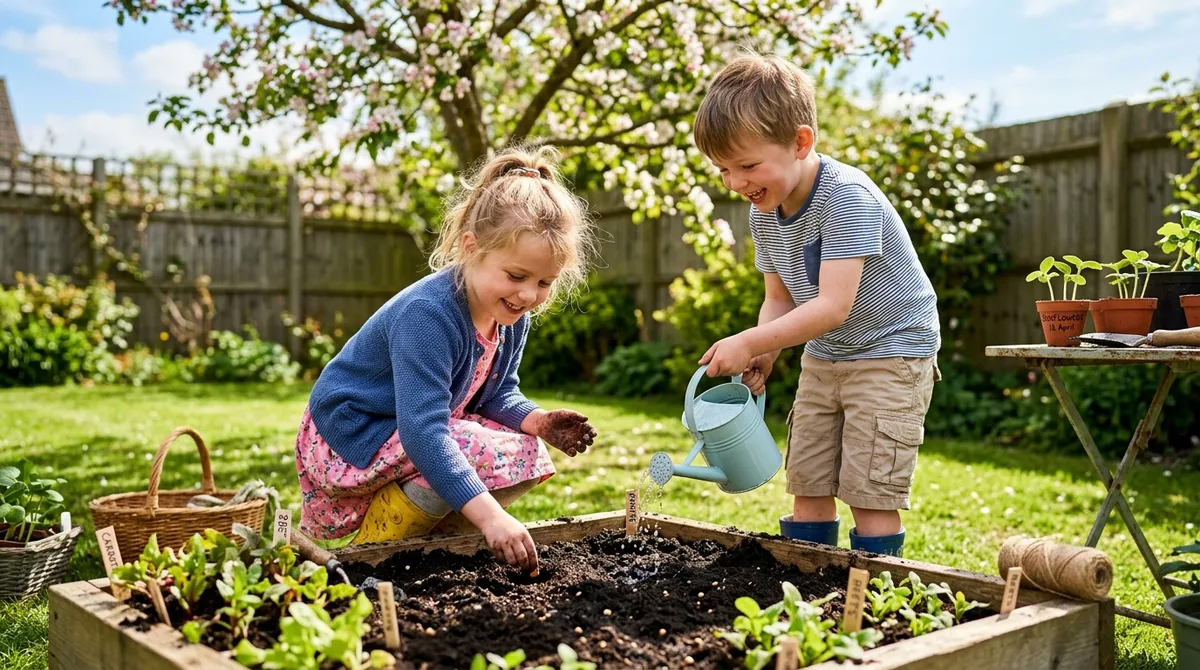
Gardening projects for kids in the UK turn any outdoor space into a hands-on classroom. Children who grow their own food are 82% more likely to eat vegetables, according to the RHS Campaign for School Gardening. These 12 projects work in gardens of all sizes, cost under £25 each, and cover every season from spring sowing to winter wildlife watching.
This guide is sorted by difficulty so you can match projects to your child’s age. Each project includes costs, timings, what you need, and the learning outcomes. Whether you have a large garden or a balcony with a few pots, there is a project here that fits. For full garden layout ideas, see our guide to children’s garden design ideas.
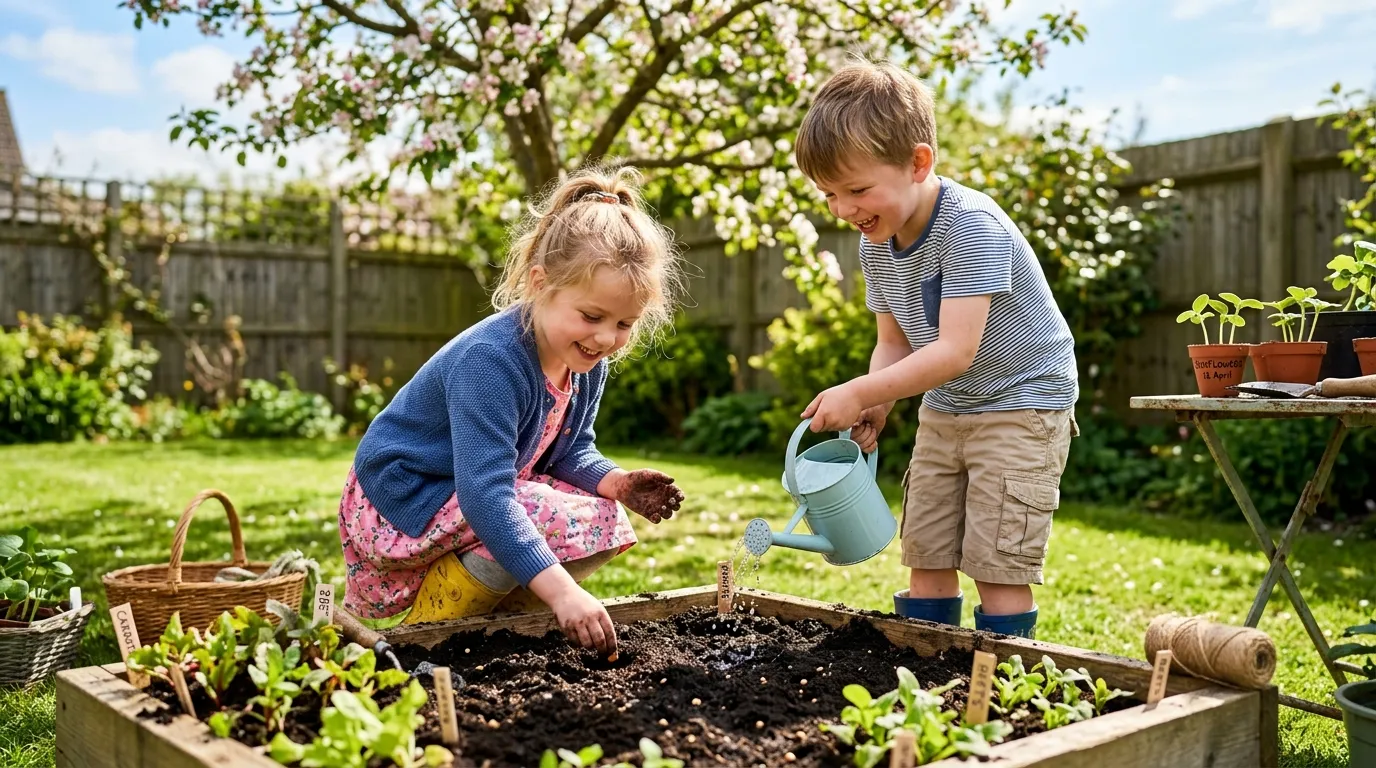
Raised bed projects give children their own growing space and produce results within weeks.
Which gardening projects are best for toddlers aged 3-5?
Young children need fast results and sensory experiences. Projects for this age group should produce visible change within a week and involve touching, smelling, and tasting. Avoid small seeds, sharp tools, and anything that takes longer than two weeks to show progress.
The three best starter projects for under-fives are cress heads (3-5 days to harvest), sunflower growing (visible shoots in 7-10 days), and a sensory herb windowsill (instant results through smell and touch). All three cost under £5 and work indoors or outdoors.
Keep sessions to 15-20 minutes for ages 3-4 and up to 30 minutes for age 5. Use child-sized watering cans (0.5-litre capacity, £3-£5) to avoid drowning seedlings. Let children get muddy. That is the whole point.
1. Cress head eggshells
Cost: Under £1. Time to result: 3-5 days. Best age: 3+. Season: Year-round.
Cress heads are the fastest win in children’s gardening. Children draw faces on empty eggshells, fill them with damp cotton wool, and scatter cress seeds on top. Within 24 hours, green shoots appear. By day 5, the “hair” is ready to cut and eat in sandwiches.
What you need: 4-6 empty eggshells (saved from cooking), cotton wool, one packet of cress seeds (£0.50-£1), felt-tip pens, and an egg box to stand them in.
The science lesson here is germination. Children can observe the root (radicle) emerging first, then the shoot (plumule) pushing upwards towards light. Move one eggshell into a dark cupboard and compare growth direction after 3 days to demonstrate phototropism. This covers Key Stage 1 science objectives on plant growth.
2. Sunflower growing race
Cost: £2-£4. Time to result: 7-10 days to germinate, 10-14 weeks to full height. Best age: 4+. Season: Sow April-May.
A sunflower race is the most engaging long-term project for children. Each child sows a seed in a 9cm pot filled with multipurpose compost, labels it with their name, and waters it weekly. Sunflowers germinate in 7-10 days at 15-20C and grow up to 5cm per day at peak growth in July.
What you need: Giant sunflower seeds (‘Mammoth Russian’ or ‘Tall Single’ varieties, £1.50-£3 per packet), 9cm pots (£2 for 10), multipurpose compost, and bamboo canes for staking from June onwards.
Sow seeds 2cm deep, one per pot. Harden off seedlings in late May and plant out 45cm apart in a sunny spot after the last frost (mid-May in southern England, early June in Scotland). Tall varieties reach 1.8-3m by August. Children measure weekly height with a tape measure and record results on a wall chart. This project teaches measurement, competition, and patience. For full growing detail, see our sunflower growing guide.
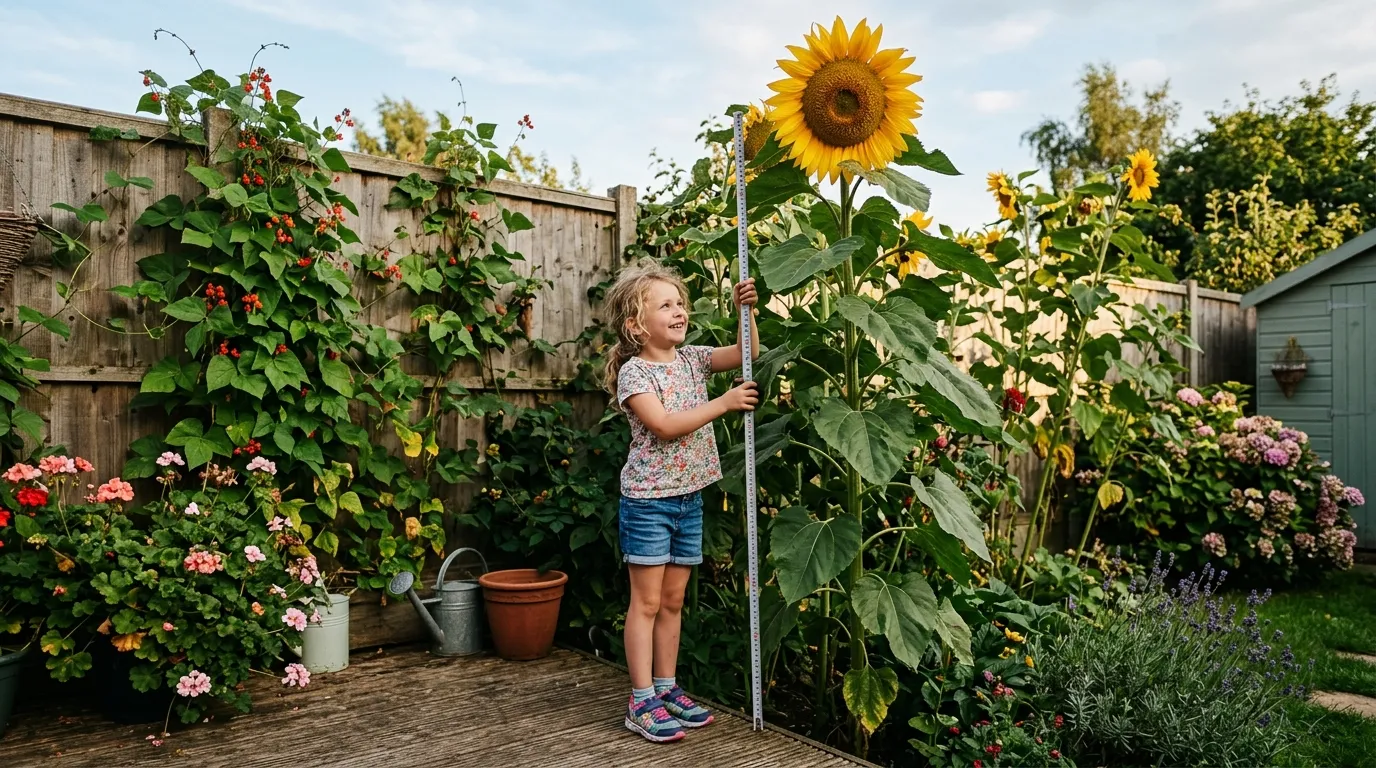
Sunflower races teach children measurement and patience as plants grow up to 5cm per day.
3. Pizza garden in a raised bed
Cost: £15-£30 for the bed, £5-£8 for seeds. Time to result: 8-14 weeks. Best age: 5+. Season: Sow April-June.
A pizza garden is a circular or rectangular raised bed divided into wedges like pizza slices, each planted with a different pizza topping ingredient. Children choose what goes on their pizza, sow the seeds, and harvest the ingredients to make an actual pizza at the end of summer.
What you need: A 1.2m x 0.6m raised bed (build from scaffold boards for £15-£25, or buy a kit for £20-£30), 100 litres of compost (£8-£12), string to divide into sections, and seeds: tomatoes, basil, oregano, courgettes, spring onions, and chilli peppers.
Planting plan by section:
| Ingredient | Sow indoors | Plant out | Harvest |
|---|---|---|---|
| Tomatoes (‘Gardener’s Delight’) | March, 18-21C | Late May | July-September |
| Basil | April, 15-20C | June | June-September |
| Oregano | March-April | May | June-October |
| Courgettes | April, 18-21C | Late May | July-September |
| Spring onions | March-July direct | N/A | 8-10 weeks from sowing |
| Chilli peppers | February, 20-25C | June | August-October |
This project connects growing to cooking. Children who grow their own pizza toppings are far more likely to eat vegetables they previously refused. For herb-growing details, read our herb garden guide.
What projects work best for children aged 5-8?
Children aged 5-8 can handle multi-step projects that take several weeks to complete. They can sow smaller seeds, use basic garden tools (with supervision), and understand the connection between effort and harvest. Projects at this stage should build responsibility through regular watering and weeding routines.
Give each child their own dedicated patch or container. A 60cm x 60cm raised bed section or a large 40-litre pot is enough. Ownership drives engagement. Label everything with the child’s name.
4. Runner bean teepee
Cost: £5-£8. Time to result: 12 weeks seed to harvest. Best age: 5+. Season: Sow May-June.
A bean teepee is a living den that children can sit inside by late summer. Push 6 bamboo canes (2.4m tall, £1 each from garden centres) into the ground in a circle 1.2m across. Tie the tops together with garden twine. Sow 2 runner bean seeds at the base of each cane, 5cm deep, after the last frost.
What you need: 6 bamboo canes (2.4m), garden twine (£2), one packet of runner bean seeds (‘Scarlet Emperor’ or ‘Painted Lady’, £1.50-£3), and a watering can.
Beans germinate in 7-14 days and climb the canes using tendrils. By August, the teepee is covered in red flowers and dangling beans. Harvest beans at 15-20cm long, every 2-3 days, to keep the plants producing. One teepee yields 2-3kg of beans over 8 weeks. Children learn about climbing plants, pollination by bees, and the value of regular harvesting. Runner beans that are left too long become tough and stringy, teaching a lesson in timing.
5. Bug hotel building
Cost: £0-£10. Time to result: Immediate build, insects arrive within 2-4 weeks. Best age: 5+. Season: Build in spring (March-April) for best colonisation.
A bug hotel provides nesting sites for solitary bees, ladybirds, lacewings, and earwigs. The UK has over 250 species of solitary bee, and many nest in hollow stems and drilled wood. Children stack natural materials inside a wooden frame or stack of pallets to create chambers for different insects.
What you need: Old wooden pallet or sturdy box frame, bamboo canes cut to 15-20cm lengths, pine cones, corrugated cardboard rolls, dry leaves, bark chips, and drilled log sections (holes 6-10mm diameter, 10cm deep).
Place the bug hotel in a south-facing spot, at least 1m off the ground, sheltered from prevailing wind. Solitary bees (red mason bees emerge in April) prefer the bamboo tubes and drilled holes. Ladybirds hibernate in dry leaves and bark. For a full build guide, see our bug hotel building guide. This project teaches children about beneficial insects and biodiversity.
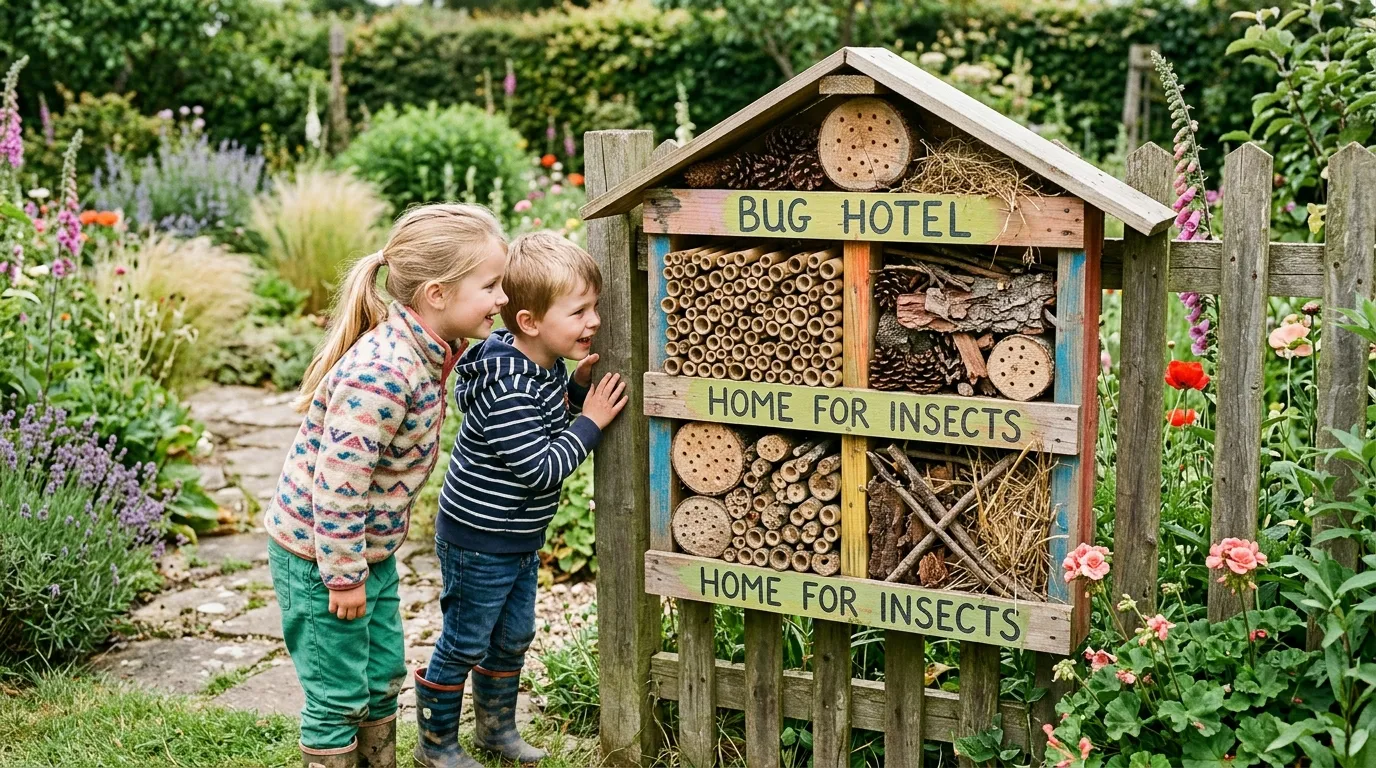
Bug hotels use free materials and teach children about the 250+ solitary bee species found in the UK.
6. Fairy garden in a container
Cost: £8-£15. Time to result: 1-2 hours to build, plants fill in over 4-6 weeks. Best age: 4+. Season: Build April-September.
A fairy garden is a miniature garden built inside a large pot, trough, or old butler’s sink. Children arrange tiny plants, pebble paths, twig fences, and handmade accessories to create a world in miniature. This project develops fine motor skills and spatial planning.
What you need: Large shallow container (minimum 40cm diameter), multipurpose compost mixed with 20% horticultural grit for drainage, miniature plants (mind-your-own-business, thyme, chamomile, small sedums at £1-£3 per plant), pebbles, twigs, shells, and any small decorative items.
Best miniature plants for fairy gardens:
| Plant | Height | Why it works | Cost |
|---|---|---|---|
| Mind-your-own-business | 2-5cm | Forms a tiny “lawn” | £2-£3 per pot |
| Creeping thyme | 3-5cm | Smells lovely when touched | £2-£3 per pot |
| Sempervivum (houseleek) | 5-8cm | Drought-tolerant, colourful | £1-£2 per rosette |
| Chamomile ‘Treneague’ | 3-5cm | Non-flowering, aromatic carpet | £3-£4 per pot |
| Small sedum varieties | 3-10cm | Varied colours and textures | £2-£3 per pot |
Children add and rearrange elements over weeks, making this an evolving creative project rather than a one-off activity. For a detailed planting and accessories guide, see our full fairy garden step by step guide.
What projects suit older children aged 8-12?
Children aged 8-12 can manage independent projects with longer timescales. They understand cause and effect, can follow written instructions, and take pride in producing something useful. Projects at this age should produce tangible results: food to eat, wildlife to observe, or something to show visitors.
This is the age to introduce real garden tools. A lightweight adult spade (border spade, shorter handle), secateurs with a safety lock, and a garden fork are all appropriate with basic safety instruction. Supervise until confident.
7. Potato bucket growing
Cost: £5-£10. Time to result: 10-12 weeks for first earlies. Best age: 6+. Season: Plant March-April.
Growing potatoes in a bucket is the most rewarding vegetable project for children because the harvest moment is genuinely exciting. Tip the bucket out and children dig through compost to find potatoes like buried treasure.
What you need: Large bucket, tub, or grow bag (minimum 30-litre capacity, £2-£4), multipurpose compost (40 litres, £4-£6), 3-4 seed potatoes (‘Rocket’ or ‘Charlotte’ for first earlies, £2-£3 per pack of 5), and a watering can.
Method: Drill 5 drainage holes in the bucket base. Add 15cm of compost. Place 3-4 chitted seed potatoes on top, eyes facing up, evenly spaced. Cover with 10cm of compost. As shoots appear, keep covering with compost until the bucket is full (this is called earthing up). Water when the top 5cm of compost feels dry. Harvest after 10-12 weeks, when flowers appear and foliage starts yellowing. One bucket yields 1-2kg of new potatoes. Children learn about tuber formation, the importance of light exclusion, and the satisfaction of growing their own food. See our potato growing guide for variety recommendations.
8. Herb windowsill garden
Cost: £5-£12. Time to result: 2-4 weeks from seed, immediate from plug plants. Best age: 5+. Season: Year-round indoors.
A windowsill herb garden works in any home, even without outdoor space. Children grow herbs they can snip for cooking, connecting the garden to the kitchen table.
What you need: 3-5 small pots (10-12cm diameter) or a windowsill trough, multipurpose compost with added perlite for drainage, and seeds or small plug plants of basil, chives, parsley, mint, and coriander.
Place on a south or east-facing windowsill with at least 6 hours of daylight. Water when the top 1cm of compost is dry. Feed fortnightly with half-strength liquid feed (Tomorite at 5ml per litre). Basil needs warmth (minimum 15C) and dislikes cold draughts. Chives and parsley tolerate cooler windowsills down to 10C. Mint grows aggressively and must stay in its own pot. Harvest by snipping the top 2-3cm of growth, which encourages bushy side shoots. This teaches children about different growing requirements and the science behind photosynthesis: plants turning light into energy to produce the oils we taste and smell.
9. Pumpkin growing from seed
Cost: £3-£8. Time to result: 14-18 weeks from sowing. Best age: 6+. Season: Sow April, harvest September-October.
Growing pumpkins is the ultimate long-term project. Children sow seeds in spring and watch plants spread across the garden all summer, building towards an October harvest in time for Halloween.
What you need: Pumpkin seeds (‘Jack O’Lantern’ for carving, ‘Baby Bear’ for small spaces at £1.50-£3 per packet), 9cm pots, multipurpose compost, well-rotted manure or garden compost for planting out, and 2-3 sqm of garden space per plant.
Sow seeds on their edge, 2cm deep, in 9cm pots indoors at 18-21C in mid-April. Germination takes 5-10 days. Harden off and plant out in early June after the last frost, into soil enriched with a full barrow of compost per planting hole. Water deeply twice weekly in dry spells (10 litres per plant). Pumpkins are 90% water by weight, so consistent moisture is essential. Harvest when the stem feels woody and the skin resists a thumbnail press. A single ‘Atlantic Giant’ plant can produce a 50-100kg pumpkin with dedicated feeding. Standard varieties yield 2-4 pumpkins per plant, each 3-8kg. For growing detail, see our pumpkin growing guide.
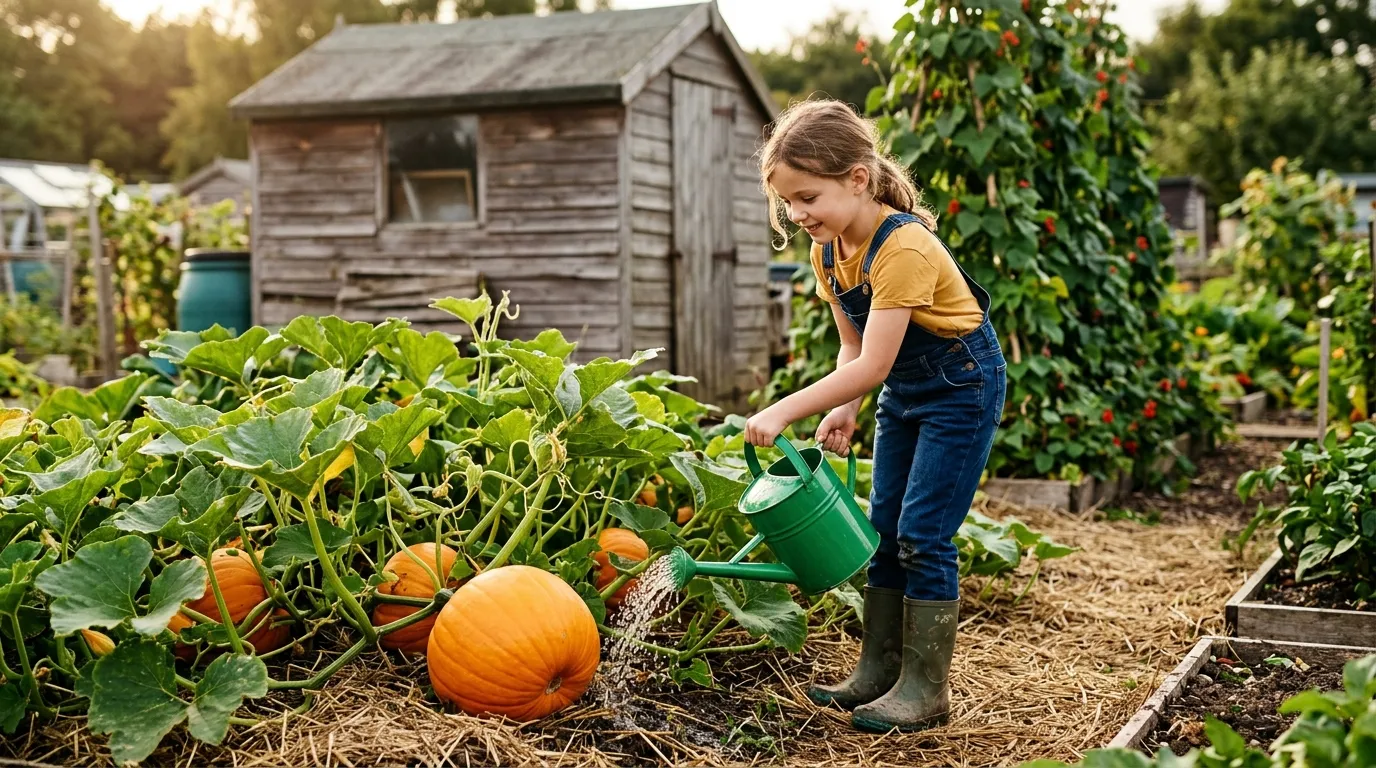
Pumpkin growing teaches patience as plants need 14-18 weeks from seed to harvest.
10. Mini wildlife pond in a washing-up bowl
Cost: £5-£15. Time to result: Wildlife arrives within 2-4 weeks. Best age: 8+ (with adult supervision around water). Season: Build March-September.
A mini wildlife pond attracts frogs, dragonflies, water beetles, and birds within weeks. A sunken washing-up bowl or large bucket is enough. No pump, filter, or mains water needed.
What you need: Large washing-up bowl or half-barrel (minimum 40cm diameter, 20cm deep), aquatic compost (£4-£6 per bag), native pond plants: miniature water lily (Nymphaea ‘Pygmaea Helvola’, £8-£12), water forget-me-not (Myosotis scorpioides, £3-£5), and marsh marigold (Caltha palustris, £4-£6). Add a few stones or a ramp for wildlife access.
Sink the container into the ground so the rim sits 1-2cm above soil level. Position in partial shade to prevent algae and overheating. Fill with rainwater, not tap water (chloramine harms amphibians). Add plants in aquatic baskets. Do not add fish, as they eat frog spawn and invertebrates. Within 2-4 weeks, expect water boatmen, pond skaters, and dragonfly larvae. Frogs may arrive in the first spring. For larger pond projects, see our wildlife pond building guide.
Warning: Never leave young children unsupervised near any water feature, even shallow ones. A child can drown in as little as 5cm of water. Fence off or cover ponds when toddlers are present.
11. Wildflower patch from seed
Cost: £5-£12. Time to result: First flowers in 8-12 weeks, full display in year two. Best age: 7+. Season: Sow March-April or September.
A wildflower patch is a low-maintenance project that teaches children about native plants, pollinators, and seasonal cycles. A 2m x 2m area of wildflowers supports more pollinators than the equivalent area of lawn.
What you need: A 2m x 2m patch of ground (or a large container), wildflower seed mix for your soil type (£3-£8 per packet covers 4-5 sqm), and a rake. Optional: yellow rattle seeds (Rhinanthus minor, £4-£6) to suppress grass competition.
Preparation is 90% of the result. Remove all existing vegetation. Rake to a fine tilth. Wildflowers prefer poor soil, so do not add compost or fertiliser. Mix seeds with dry sand at a 1:4 ratio (seeds to sand) for even spreading. Sow at 3-5g per sqm. Do not cover seeds; press gently with a board or roll. Water during dry spells for the first 6 weeks.
Annual wildflowers (cornflowers, poppies, corn marigolds) flower in the first summer. Perennials (ox-eye daisy, knapweed, red campion) establish in year one and flower from year two. Leave spent flower heads through winter for bird feeding and self-seeding. Cut once in September and remove all cuttings. Read our wildflower lawn guide for more detail.
12. Pinecone bird feeder
Cost: £0-£3. Time to result: Birds arrive within 1-3 days. Best age: 3+. Season: Best October-March, works year-round.
A pinecone bird feeder is the simplest winter project. Children spread peanut butter or suet into the gaps of a large pinecone, roll it in birdseed, and hang it from a tree or fence bracket.
What you need: Large pinecones (free from parks and gardens), peanut butter or lard (£1-£2), birdseed mix (£2-£3 per kg), string or garden twine, and a stick for spreading.
Tie 30cm of string around the top of the pinecone. Press peanut butter or softened lard into every gap and crevice. Roll in birdseed until fully coated. Hang from a branch or hook at least 1.5m off the ground to deter cats. Position near a window so children can watch from indoors. In winter, feeders attract blue tits, great tits, robins, greenfinches, and nuthatches within 1-3 days. Replace feeders every 2-3 weeks or when empty.
This project connects to bird identification. Give children a simple tally chart to record which species visit and when. Over several weeks, they build a dataset showing feeding preferences and seasonal patterns.
Seasonal calendar for kids’ gardening projects
Plan activities across the year so there is always something to do. UK growing seasons dictate what works when.
| Month | Indoor projects | Outdoor projects |
|---|---|---|
| January | Cress heads, seed catalogue browsing | Bird feeder building, garden planning |
| February | Chitting potatoes, sowing chilli seeds at 20-25C | Pruning, clearing beds |
| March | Sowing tomatoes, sunflowers indoors | Wildflower sowing, pond building |
| April | Sowing pumpkins, beans in pots | Fairy garden building, potato planting |
| May | Pricking out seedlings | Bean teepee, planting out after last frost |
| June | Windowsill herbs | Pizza garden planting, bug hotel building |
| July | Pressing flowers | Watering, measuring sunflowers, harvesting herbs |
| August | Seed saving from sunflower heads | Harvesting beans, courgettes, tomatoes |
| September | Drying herbs and seeds | Wildflower cutting, pumpkin harvest |
| October | Bulb planting in pots | Pumpkin carving, autumn leaf collecting |
| November | Hyacinth forcing in glass jars | Bird feeder making, leaf mould building |
| December | Indoor cress, planning next year | Winter bird counting, composting kitchen waste |
What are the benefits of gardening for children?
Gardening develops physical skills, scientific understanding, and emotional resilience in children. The benefits are backed by research from the RHS, the National Education Nature Park, and multiple university studies.
Physical development: Digging, raking, and carrying watering cans build gross motor skills. Sowing seeds and pricking out seedlings develop fine motor control. Children aged 5-8 who garden regularly show improved hand-eye coordination compared to non-gardening peers.
Science and maths: Gardening covers Key Stage 1 and 2 science objectives: germination, photosynthesis, life cycles, habitats, seasonal change, and food chains. Measuring sunflower height, counting beans, and recording temperatures teach practical maths.
Nutrition and health: The RHS Campaign for School Gardening found that 82% of children who garden regularly eat more fruit and vegetables. Children who grow their own food are more willing to try unfamiliar vegetables.
Responsibility and patience: Caring for a plant over weeks teaches commitment. When a plant dies from neglect, children learn consequences. When a sunflower reaches 2m tall, they learn that consistent effort produces results.
Safety rules for children in the garden
Keep gardening safe with these rules. Adjust supervision levels by age.
Tool safety: Children aged 3-5 use plastic trowels and watering cans only. Ages 5-8 can use metal hand tools with rounded edges. Ages 8-12 can use a border spade, garden fork, and secateurs with a safety lock, under supervision. Lock all tools away after use.
Toxic plants: Remove foxglove, laburnum, yew, monkshood, lily of the valley, and ricinus from areas where children play. Teach children never to eat berries, seeds, or leaves unless an adult confirms they are safe.
Chemical safety: Store all fertilisers, pesticides, and chemicals in a locked shed or cupboard. Use organic methods (companion planting, netting, hand-picking) instead of chemicals where children garden. Slug pellets containing metaldehyde are toxic to children and pets; use ferric phosphate alternatives if needed.
Sun and water safety: Apply SPF 30+ sunscreen before gardening sessions in summer. Provide a sun hat and water bottle. Supervise all water features. Cover or fence ponds when children under 5 are present.
Common mistakes to avoid with kids’ gardening
Choosing slow-growing plants. Children lose interest if nothing visible happens within 7-10 days. Start with cress (3-5 days), sunflowers (7-10 days), or radishes (25-30 days). Save slow growers like lavender and fruit trees for experienced young gardeners.
Over-complicated projects. A child does not need a 4m x 2m raised bed. Start with a single pot or a 60cm x 60cm patch. Expand once they prove they can water consistently for 3 weeks.
Correcting too much. Crooked rows, overwatered pots, and too many seeds in one hole are how children learn. Let them make mistakes. A pot of 30 sunflower seedlings crammed together teaches more about spacing than any instruction.
Gardening for the child, not with them. If the adult does the sowing, watering, and harvesting while the child watches, it is not a children’s project. Dirty hands, broken stems, and wonky labels are signs of genuine participation.
Forgetting to eat the harvest. The project is not complete until the child eats the radish, cuts the cress, or picks the bean. The connection between growing and eating is the most lasting lesson gardening teaches.
Gardener’s tip: Set a phone alarm labelled “garden check” for the same time each day. Children thrive on routine. A daily 5-minute watering and observation round at 4pm builds the habit better than sporadic weekend sessions.
Now you have 12 projects to fill every season, read our raised bed gardening guide to build the perfect growing space for your family’s first plot.
Related reading
Lawrie has been gardening in the West Midlands for over 30 years. He grows his own veg using no-dig methods, keeps a wildlife-friendly garden, and writes practical advice based on real UK growing conditions.