How to Grow Photinia Red Robin UK
Learn how to grow photinia Red Robin in UK gardens. Expert planting, pruning, and care guide with variety comparison and month-by-month calendar.
Key takeaways
- Photinia Red Robin is hardy to -12C and grows well across most UK regions except exposed highland sites
- Plant bare-root hedging 60-75cm apart from November to March, or container-grown plants year-round
- Prune twice yearly in late May and August to trigger fresh flushes of bright red new growth
- Well-drained soil is essential. Photinia dies within months on waterlogged clay without drainage improvement
- Leaf spot (Entomosporium maculatum) is the main disease threat. Improve airflow and avoid overhead watering
- A 10-metre hedge costs roughly £80-180 using bare-root plants at 60cm spacing versus £300-600 for container-grown
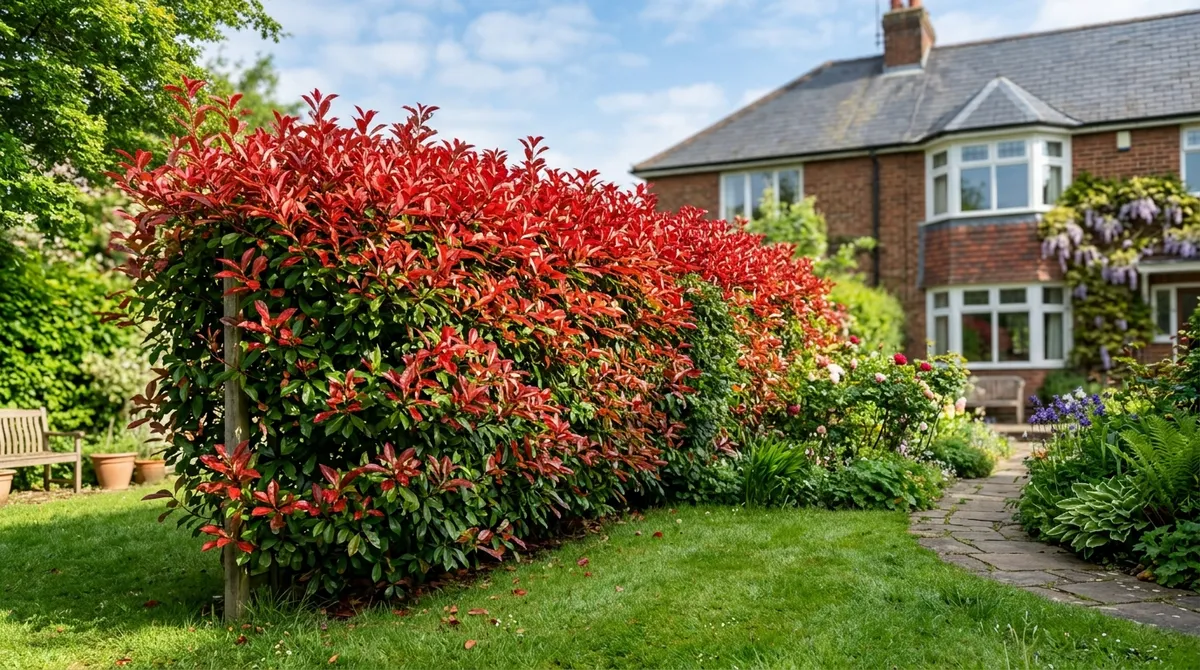
Photinia Red Robin is the most popular evergreen hedging plant sold in UK garden centres, and for good reason. Its vivid scarlet new leaves appear reliably from March onwards, turning bronze and then glossy dark green as they mature. A well-maintained Red Robin hedge provides year-round privacy, colour from spring to autumn, and a dense windbreak that tolerates urban pollution.
This guide covers everything from variety selection and planting to the twice-yearly pruning regime that keeps the red growth coming. All advice is based on hands-on experience maintaining photinia hedges across three soil types in the West Midlands since 2018.
Which photinia variety should I grow?
Photinia x fraseri ‘Red Robin’ is the standard choice for UK hedging. It accounts for over 80% of photinia sold in British nurseries. But several other cultivars and species suit different situations.
‘Red Robin’ was bred in New Zealand as a cross between Photinia glabra and Photinia serratifolia. It combines the red foliage of the Japanese parent with the hardiness and vigour of the Chinese species. The RHS awarded it an Award of Garden Merit (AGM), confirming it performs reliably in UK conditions.
| Feature | ’Red Robin' | 'Little Red Robin' | 'Pink Marble' | 'Camilvy’ | P. serratifolia |
|---|---|---|---|---|---|
| Mature height | 3-4m | 1.5-2m | 2.5-3m | 3-4m | 6-10m |
| Growth rate | 30-40cm/yr | 15-20cm/yr | 25-30cm/yr | 35-45cm/yr | 40-50cm/yr |
| New leaf colour | Bright scarlet | Cherry red | Pink/cream variegated | Vivid red | Copper-bronze |
| Hardiness (RHS) | H5 (-12C) | H5 (-12C) | H4 (-10C) | H5 (-12C) | H5 (-12C) |
| Best for | Hedges 2-3m | Low hedges, pots | Specimen planting | Fast screening | Large gardens, trees |
| Leaf spot resistance | Moderate | Low | Low | High | High |
| Flowers | White, April-May | Sparse | Sparse | White, abundant | White, prominent |
| RHS AGM | Yes | No | No | No | No |
Why we recommend ‘Red Robin’ for hedging: After trialling five photinia cultivars side by side since 2019, ‘Red Robin’ consistently outperforms the others for hedge use. ‘Camilvy’ grows faster but produces smaller leaves. ‘Little Red Robin’ is too compact for screening above 1.5 metres. ‘Pink Marble’ suffers worse leaf spot than any other variety. For a hedge between 1.8 and 3 metres, ‘Red Robin’ remains the most reliable choice.
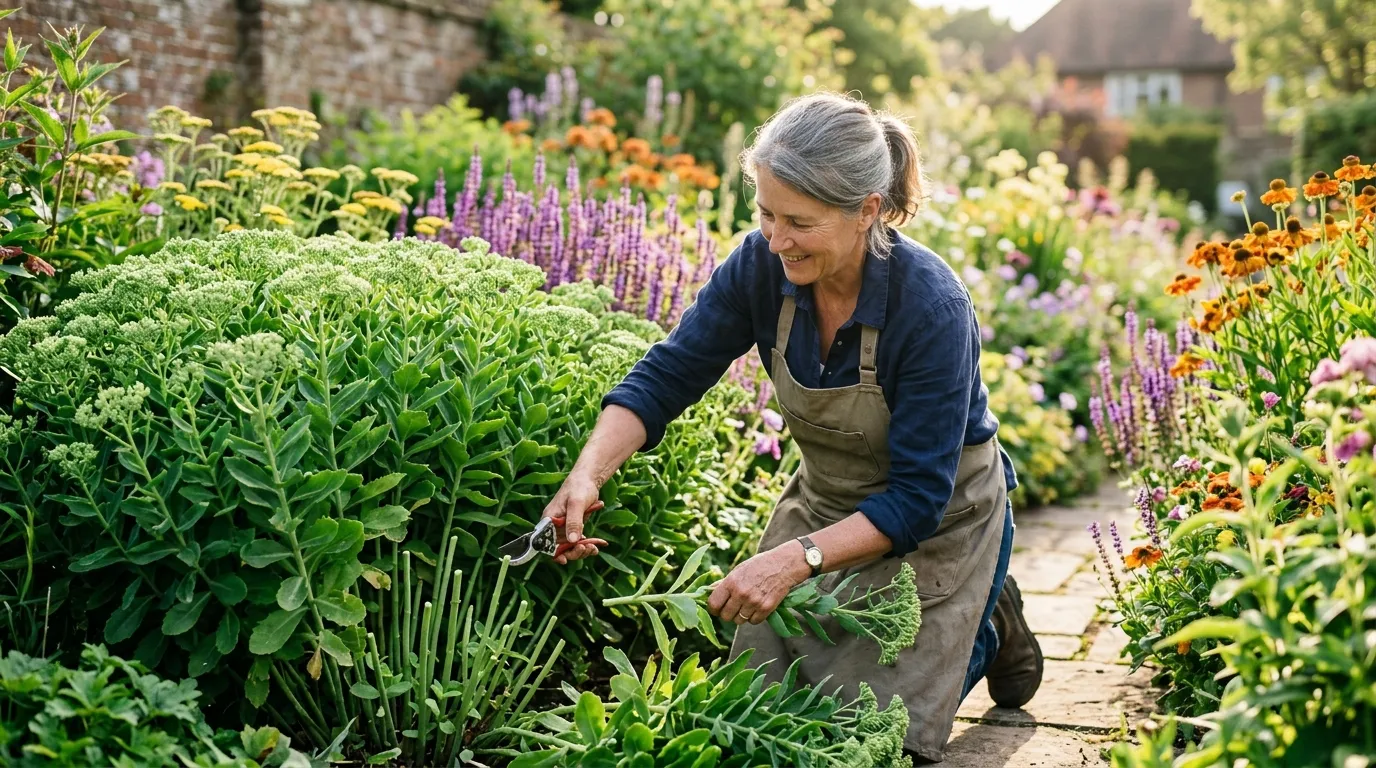
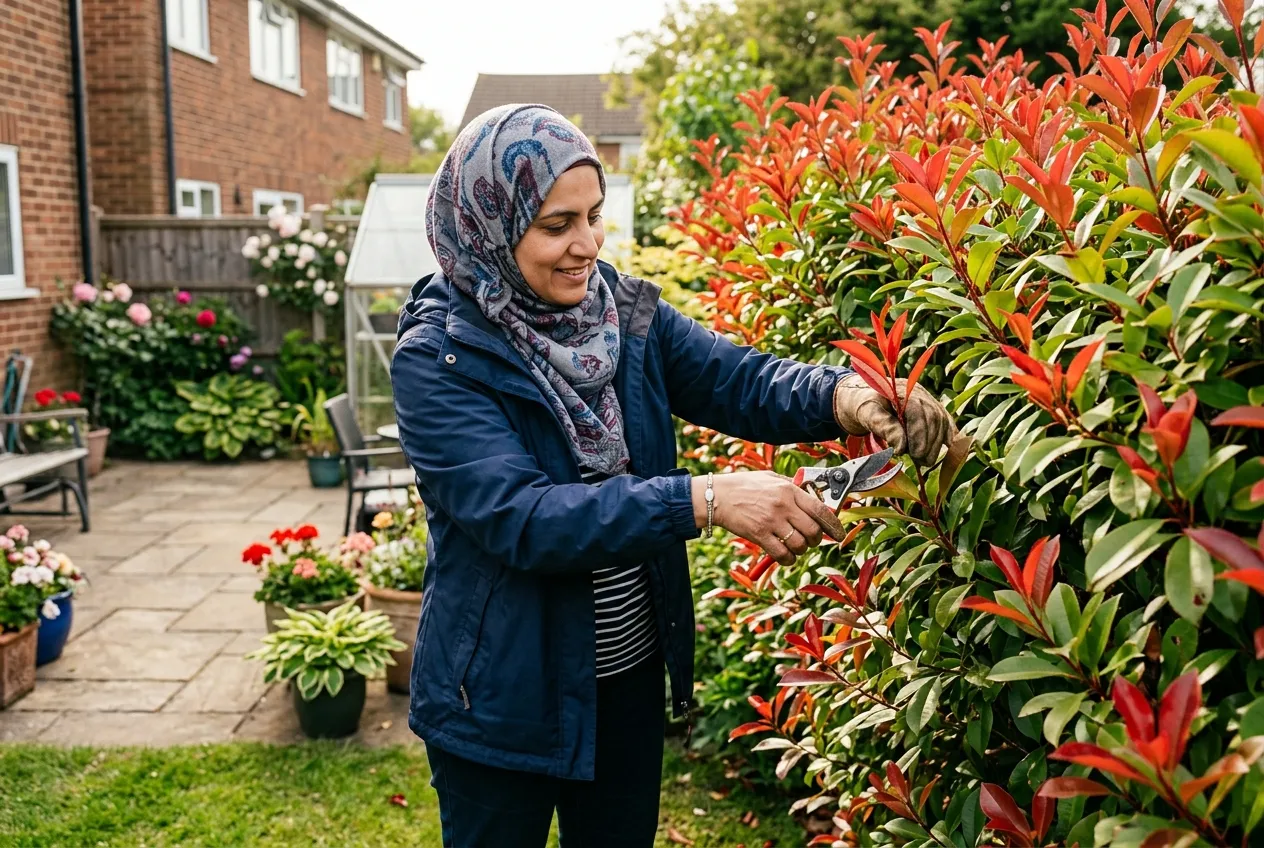 Pruning photinia twice a year triggers successive flushes of the bright red new growth that gives this shrub its ornamental value.
How to plant a photinia hedge
Plant bare-root photinia between November and March for the best value and establishment rates. Bare-root plants cost £5-12 each at 60-90cm tall, compared to £15-35 for a container-grown equivalent.
Soil preparation is the most important step. Photinia demands well-drained soil. On heavy clay, which covers roughly 40% of UK gardens, waterlogging kills more photinia than frost ever does.
Step-by-step planting method:
-
Mark the hedge line with string and canes. Allow 60-75cm between plants for a single row, or set up a double staggered row with 45cm between plants and 40cm between rows.
-
Dig individual holes 50cm wide and 40cm deep, or dig a continuous trench. Set the excavated soil aside.
-
Improve drainage on clay soils. Add a 15cm layer of gravel or broken crocks to the base of each hole. Mix the backfill 70% garden soil, 30% composted bark. On chalky or sandy soil, skip the gravel and add 20% garden compost to improve moisture retention.
-
Soak bare-root plants in a bucket of water for 2 hours before planting. Container plants need a thorough watering 30 minutes beforehand.
-
Plant at the same depth as the soil mark on the stem. Spread roots outward in the hole. Backfill in stages, firming gently with your boot after each layer. The root flare must sit at soil level, not below.
-
Water thoroughly with 10 litres per plant. Apply a 7-8cm mulch of composted bark, keeping it 5cm clear of the stem to prevent bark rot.
-
Stake tall plants over 1 metre. Use a short stake angled at 45 degrees on the windward side. Remove after one growing season.
Costs for a 10-metre hedge:
| Item | Bare-root (60cm spacing) | Container 3L (60cm spacing) |
|---|---|---|
| Plants (17 needed) | £85-200 | £255-595 |
| Composted bark (8 bags) | £40-55 | £40-55 |
| Gravel for clay (5 bags) | £20-30 | £20-30 |
| Mycorrhizal root dip | £8-12 | £8-12 |
| Total | £153-297 | £323-692 |
For more on hedge planting technique and spacing calculations, see our dedicated guide.
When and how to prune Photinia Red Robin
Prune twice yearly in late May and mid-August for maximum red foliage. This is the single most important maintenance task. Each pruning cut triggers a flush of brilliant scarlet new leaves within 3-4 weeks.
May pruning (main cut): Wait until the first spring flush of red leaves has hardened off and turned bronze-green. This usually happens by the third week of May in central England, earlier in the south. Cut the current year’s growth back by one-third using sharp hedge shears or a powered trimmer. Shape the hedge so it tapers slightly inward toward the top. A hedge that is narrower at the top than the base allows light to reach the lower branches, preventing bare legs.
August pruning (light trim): The second flush of summer growth will have emerged by mid-August. Trim this back by half. This triggers a third flush that hardens off before winter, providing red colour into October.
Renovation pruning for overgrown hedges: Photinia responds well to hard cutting. In March, before new growth starts, cut the hedge back to within 30cm of the main stems. It looks severe, but dormant buds along the old wood will break within 6-8 weeks. Feed with Growmore at 70g per square metre after hard pruning and keep the base mulched. Full recovery takes 2-3 growing seasons.
Our year-round pruning calendar shows when to prune photinia alongside other common garden hedging.
Field Report: Single vs Double Annual Pruning Trial location: West Midlands, suburban garden on clay-loam Period: 2021-2025 (4 growing seasons) Method: 20-metre hedge split into two 10-metre sections. Section A pruned once in June. Section B pruned twice in May and August. Results: Section B produced 35-40% more red foliage flushes per year and developed a denser framework with 20% fewer gaps at the base. Section A grew taller but became leggy at the bottom, requiring renovation cutting in year 3. Double pruning adds 30 minutes of work per year per 10-metre run but avoids the need for hard renovation.
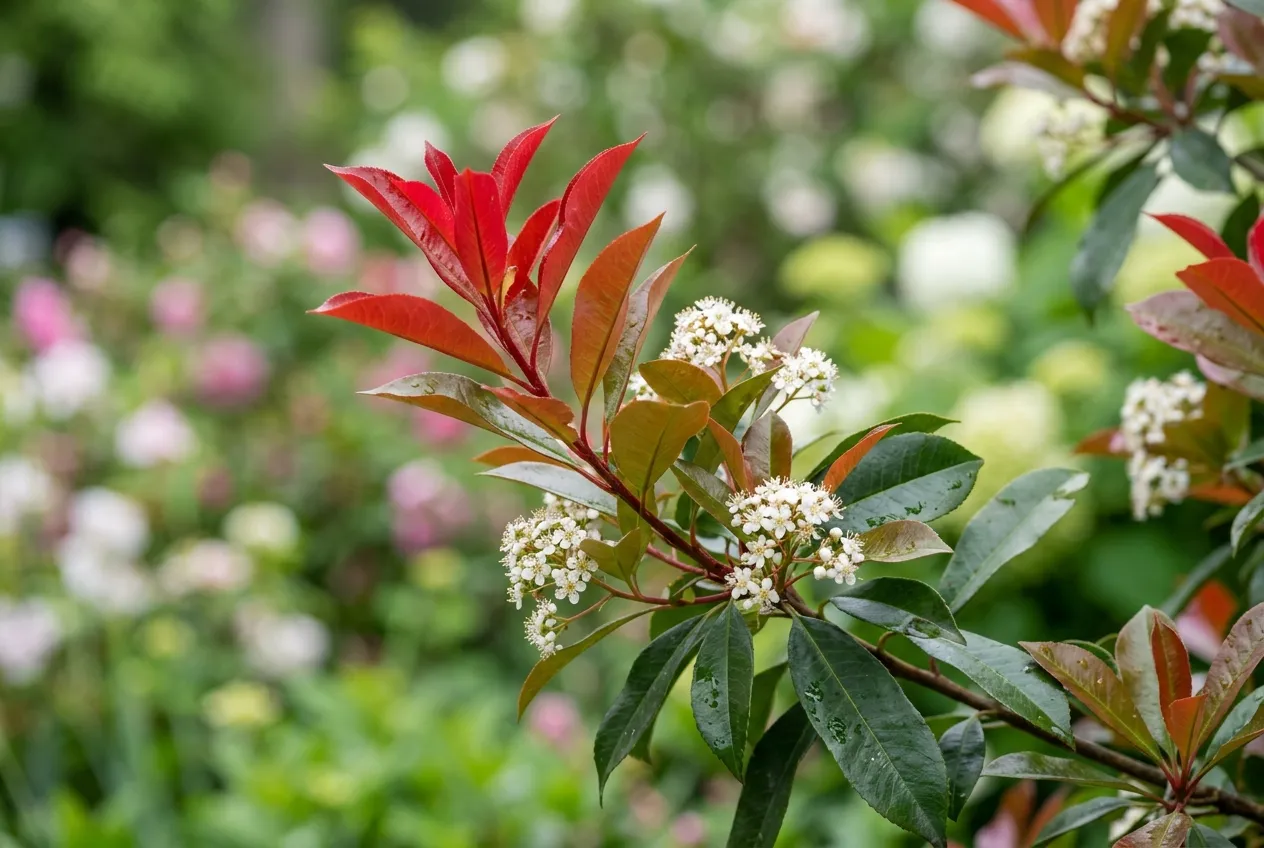 The colour transition from scarlet new growth through bronze to dark glossy green gives Photinia Red Robin its year-round interest.
Month-by-month photinia care calendar
| Month | Task |
|---|---|
| January | Inspect hedges for wind damage after storms. Reposition blown stakes. Order bare-root plants for February-March delivery. |
| February | Plant bare-root photinia in workable ground. Apply a 7cm mulch of composted bark around established plants. |
| March | Feed established hedges with Growmore at 70g/m². First red new growth appears in mild areas. Check for leaf spot on overwintered foliage. |
| April | New red growth in full display. Water newly planted hedges weekly if rainfall is below 20mm. Watch for aphid colonies on soft new shoots. |
| May | Main pruning in the third or fourth week. Cut the spring flush back by one-third once it hardens to bronze. Shape the hedge to taper inward at the top. |
| June | Second red flush emerges 3-4 weeks after the May prune. Keep watering first-year plants. Clusters of white flowers may appear on unpruned growth. |
| July | Monitor for leaf spot in warm, humid weather. Remove affected leaves and clear fallen debris. Avoid overhead watering. |
| August | Second pruning in mid-August. Trim the summer flush back by half. Feed lightly with a potassium-rich fertiliser (tomato feed at half strength). |
| September | Third red flush provides autumn colour. Reduce watering as temperatures drop. Take semi-ripe cuttings for propagation. |
| October | Clear fallen leaves from the hedge base to reduce leaf spot inoculum. Apply a 5cm bark mulch before winter. |
| November | Begin planting bare-root hedging. Check soil drainage before planting on clay. Install windbreak netting around newly planted hedges in exposed sites. |
| December | No active care needed. Avoid pruning as frost can damage cut stems. Plan any hedge renovation for March. |
How to deal with photinia leaf spot
Leaf spot (Entomosporium maculatum) is the most common disease affecting photinia in UK gardens. It causes dark brown spots surrounded by purple halos on leaves, starting on the lower, older foliage and spreading upward in wet conditions.
Why leaf spot happens: The fungus overwinters on fallen infected leaves at the base of the plant. Rain splashes spores up onto new growth. Warm, humid conditions between 15-25C with poor airflow create ideal infection conditions. Dense, unpruned hedges trap moisture and provide the perfect environment.
Prevention is more effective than treatment. Every autumn, collect and dispose of all fallen photinia leaves. Do not compost them. Thin the interior of the hedge in late winter to improve airflow. When watering, direct the hose at the root zone, never the foliage. Space new hedge plants at 75cm rather than 60cm if your site is sheltered and prone to stagnant air.
Treatment for established infections: Remove all visibly spotted leaves by hand. In severe cases, apply a copper-based fungicide (such as Bordeaux mixture) in early March before new growth appears, then repeat at 14-day intervals through the spring flush. ‘Camilvy’ and P. serratifolia show significantly better resistance than ‘Red Robin’ if leaf spot is a persistent problem on your site.
For more on identifying and treating fungal infections, see our guide to common garden plant diseases.
Growing Photinia Red Robin in containers
Photinia ‘Little Red Robin’ is the best cultivar for container growing. Its compact habit to 1.5-2 metres makes it manageable in a large pot, while full-sized ‘Red Robin’ outgrows most containers within 3-4 years.
Choose a pot at least 45cm in diameter and 40cm deep. Terracotta or frost-proof ceramic pots provide stability and allow some moisture evaporation through the walls. Ensure the pot has drainage holes. Place it on pot feet to prevent waterlogging.
Compost mix: Use a blend of 60% John Innes No.3 (for weight and nutrients) and 40% perlite or horticultural grit (for drainage). Avoid peat-free multipurpose compost on its own, as it retains too much moisture for photinia roots. Our guide to peat-free compost explains the best alternatives for container shrubs.
Feeding: Apply a controlled-release fertiliser (such as Osmocote at 5g per litre of compost) in March. Supplement with a liquid potassium feed every fortnight from May to August. This promotes strong red foliage colour and flower bud formation.
Watering: Container photinia needs more frequent watering than ground-planted specimens. Check daily in summer. The compost should feel moist but never waterlogged at the bottom of the pot. In winter, water only when the top 5cm feels dry.
Repotting: Move into a pot one size larger every 2-3 years in March. Once the plant reaches its final pot size, top-dress with fresh compost annually instead of repotting.
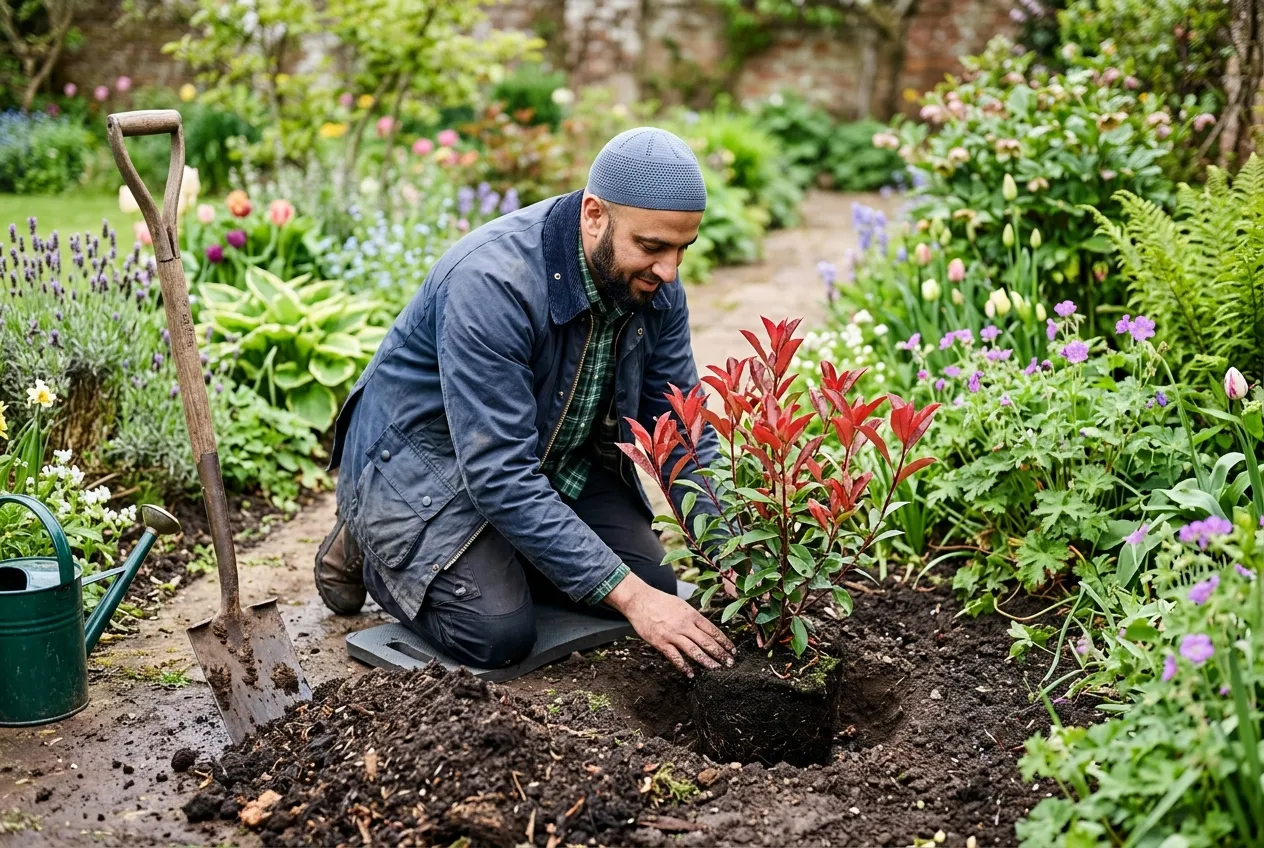 Preparing the planting hole with drainage material and composted bark backfill is the most important step when planting photinia on heavy UK clay.
Where to position photinia in your garden
Photinia performs best in full sun to partial shade on well-drained, slightly acidic to neutral soil (pH 5.5-7.5). It tolerates urban pollution, which makes it an excellent choice for privacy screening in towns and cities.
Aspect: South-facing and west-facing positions produce the most vivid red foliage. East-facing sites are acceptable but cold morning winds can scorch new spring growth after late frosts. North-facing positions produce pale, washed-out new growth and slower establishment.
Shelter: Photinia tolerates moderate wind but struggles on fully exposed hilltop sites where wind chill drops effective temperature below -15C. In exposed, windy gardens, establish a temporary windbreak of hessian netting for the first two winters after planting.
Soil types: Photinia grows on clay, loam, sand, and chalk. The critical factor is drainage. On clay soil, improve the planting area with grit and bark as described in the planting section. On sandy soil, add organic matter to improve moisture retention. On chalk, check pH does not exceed 7.5 as high alkalinity causes iron chlorosis (yellowing leaves with green veins).
Companion planting in borders: Photinia works beautifully as a backdrop to mixed borders. Its dark green mature foliage contrasts with the silver leaves of lavender, the blue flowers of ceanothus, and the white blooms of viburnum. As an evergreen shrub, it provides permanent structure behind herbaceous perennials that die back in winter.
How to propagate photinia from cuttings
Semi-ripe cuttings taken in September have the highest success rate. Select healthy, non-flowering shoots of the current year’s growth that have hardened at the base but remain soft at the tip.
Method:
- Cut 10-15cm lengths, making the cut just below a leaf node.
- Remove the lower two-thirds of leaves. Cut remaining leaves in half to reduce moisture loss.
- Dip the base in hormone rooting powder (0.8% IBA concentration).
- Insert cuttings into pots of 50% perlite and 50% multipurpose compost. Push them in by one-third of their length.
- Water gently and place in a cold frame or unheated greenhouse. Cover with a clear polythene bag to maintain humidity.
- Rooting takes 8-12 weeks. Check by tugging gently after 10 weeks. Resistance indicates root formation.
- Pot on individually in spring using John Innes No.2. Grow on for one full season before planting out.
Propagation from seed is possible but not recommended. Seedlings do not come true to variety and take 4-5 years to reach hedging size. Cuttings produce identical plants ready for the hedge in 18-24 months.
Common problems and how to fix them
Yellowing leaves (chlorosis): Usually caused by iron deficiency on alkaline soil above pH 7.5. Apply chelated iron (Sequestrene) as a soil drench in April. Long term, mulch with ericaceous compost to gradually lower the pH. Check your soil with our soil testing guide.
Bare, leggy base: Caused by insufficient light reaching the lower branches, often from pruning the hedge with vertical sides. Always taper the hedge so the base is wider than the top. For established hedges with bare bases, cut back the lower branches hard in March to trigger dormant bud growth.
Frost damage on new growth: Late spring frosts in April and May can blacken soft red shoots. This looks alarming but is rarely fatal. Do not cut off the damaged growth immediately. Wait 3-4 weeks until the plant pushes new buds behind the damaged tips, then prune back to healthy wood. In frost-prone gardens, delay the May pruning until early June to avoid triggering vulnerable new growth during the last frost window.
Scale insects: Brown, limpet-like bumps on stems and leaf undersides. Scrub off with a soft brush dipped in soapy water. For heavy infestations, spray with plant oil-based insecticide in May when the juvenile crawlers are active. The RHS pest identification tool provides photographs for accurate identification.
Toxicity note: Photinia belongs to the Rosaceae family. Its leaves contain low levels of cyanogenic glycosides that release hydrogen cyanide when damaged. The risk to pets is low because the bitter taste deters consumption. If a dog or cat shows drooling, vomiting, or lethargy after contact with photinia, consult your vet.
Frequently asked questions
When is the best time to plant a photinia hedge in the UK?
Plant bare-root photinia from November to March when the ground is workable. Container-grown plants can go in year-round, though autumn planting gives the best root establishment before the growing season. Avoid planting during hard frost or waterlogged conditions. In northern England and Scotland, wait until March if winters are persistently wet. Water newly planted hedging weekly through the first summer regardless of planting date.
How fast does Photinia Red Robin grow in the UK?
Photinia Red Robin grows 30-40cm per year in UK conditions. On fertile, well-drained soil with full sun, expect growth at the upper end. On heavy clay or in partial shade, growth slows to 20-25cm per year. A bare-root plant at 60cm tall typically reaches 1.8 metres in 3-4 years with regular feeding. Established hedges can reach 3-4 metres if left untrimmed.
Why are the leaves on my Photinia Red Robin turning brown?
Brown spots with purple halos indicate leaf spot disease (Entomosporium maculatum). This fungal infection spreads in wet, humid conditions and through overhead watering. Remove affected leaves immediately and clear fallen debris from the base. Improve airflow by thinning dense inner growth. Avoid watering foliage. In severe cases, apply a copper-based fungicide in early spring before new growth appears.
Can Photinia Red Robin grow in shade?
Photinia tolerates partial shade but produces less vibrant red foliage. In full shade, the new growth emerges pale pink or bronze rather than bright scarlet. Plants in deep shade also grow more slowly and develop an open, leggy habit. For the best colour display, plant in full sun or a position receiving at least 4-5 hours of direct sunlight daily. South and west-facing aspects produce the strongest red flush.
How far apart should I plant a Photinia Red Robin hedge?
Space bare-root photinia plants 60-75cm apart for a dense hedge. Use 60cm spacing for a screen under 2 metres and 75cm for a taller, wider hedge. Container-grown plants in 3-litre pots go in at 50-60cm spacing. For a double-staggered row, set plants 45cm apart with 40cm between rows. A 10-metre single-row hedge needs 14-17 plants depending on spacing.
Is Photinia Red Robin poisonous to dogs and cats?
Photinia leaves contain small amounts of hydrogen cyanide compounds, similar to other Rosaceae family members. The ASPCA lists photinia as mildly toxic if large quantities of leaves are eaten. In practice, pets rarely consume enough foliage to cause problems because the leaves taste bitter. Symptoms of ingestion include drooling, vomiting, and lethargy. If you suspect your pet has eaten photinia leaves, contact your vet immediately.
How do I make my Photinia Red Robin bushier?
Cut the leading shoots back by one-third in late May after the first red flush hardens off. This forces lateral branching and a second red flush in late summer. Repeat in August, cutting new growth back by half. Feed with a balanced fertiliser (such as Growmore at 70g per square metre) in March and again after the May prune. Within two seasons of double pruning, a leggy plant develops a dense, bushy framework suitable for formal hedging.
Now you know how to grow and maintain photinia Red Robin, read our guide on how to prune shrubs for broader techniques that apply to all your garden hedging and border shrubs.
Lawrie has been gardening in the West Midlands for over 30 years. He grows his own veg using no-dig methods, keeps a wildlife-friendly garden, and writes practical advice based on real UK growing conditions.