How to Use Up a Garden Glut
What to do with a garden glut. 15 tested ways to use, preserve, and share surplus courgettes, tomatoes, beans, and other UK-grown vegetables.
Key takeaways
- Courgettes, runner beans, and tomatoes are the three most common UK garden glut crops, peaking July to September
- Blanch and freeze surplus vegetables within 24 hours of picking for 8-12 months of storage at -18C
- A single courgette plant produces 20-40 fruits per season, enough for chutney, soup, and freezer stocks
- Chutney, pickles, and jams preserve glut crops for 6-12 months in sealed Kilner jars
- Succession sowing every 2-3 weeks reduces peak gluts by spreading the harvest over a longer period
- Community produce-share tables, food banks, and allotment swaps prevent surplus going to waste
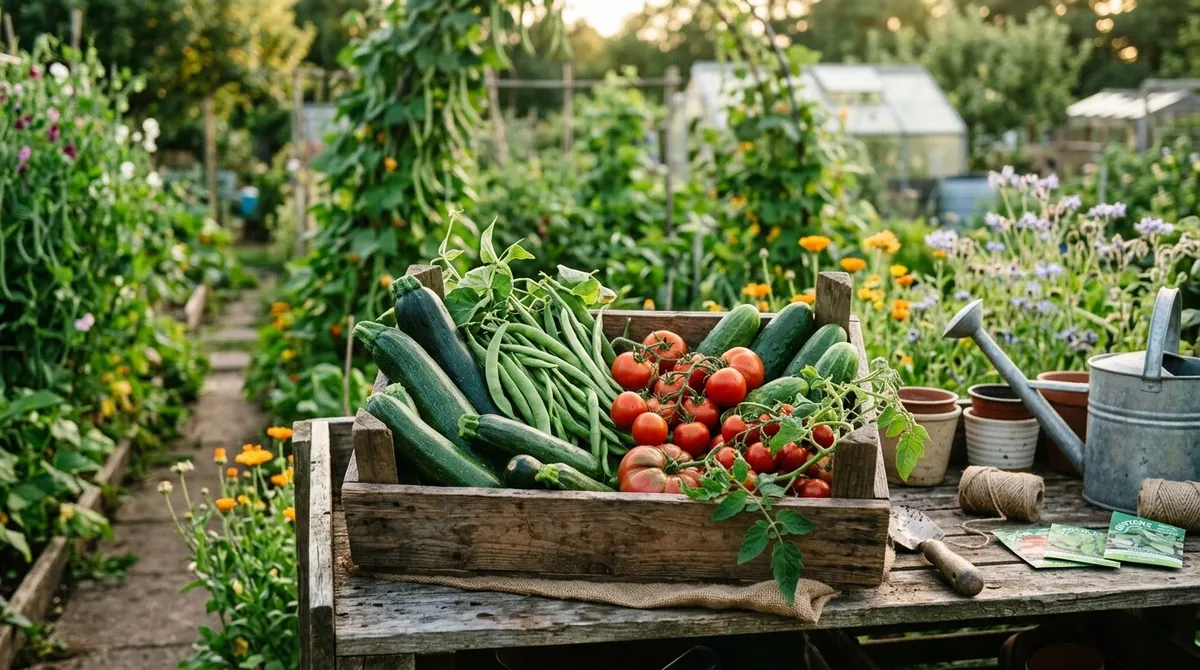
A garden glut is both a triumph and a problem. Your courgettes, tomatoes, and runner beans have thrived, but now the kitchen worktop is buried under more produce than you can eat this week. In Britain, the peak glut window runs from mid-July through September, when warm-season crops ripen faster than most households can consume them.
This guide covers 15 tested methods for dealing with surplus, from preserving in Kilner jars to community sharing. Every method here has been tested on our Staffordshire allotment over three growing seasons. The goal is zero waste: turning every courgette, bean, and tomato into something useful.
What causes a garden glut in the UK?
A garden glut happens when crops ripen simultaneously and output exceeds demand. The usual culprits are courgettes (20-40 fruits per plant per season), runner beans (up to 500g per plant per week at peak), and cherry tomatoes (200-300 fruits per cordon plant). British summers with consistent warmth and adequate rain trigger the heaviest gluts.
The root cause is usually planting too much at once. Six courgette plants sown on the same date in May will all peak in the same two-week window in August. Succession sowing staggers the harvest. Staggered planting every 2-3 weeks spreads production across 6-8 weeks instead of cramming it into a fortnight.
Weather plays a role too. A warm, wet July accelerates fruiting. Runner beans that produce 200g per plant per day in a cool summer can double that in a warm one. Monitoring forecasts helps you prepare storage and preserving supplies before the wave hits.
What can I do with too many courgettes?
Courgettes are the UK’s most notorious glut crop. A single plant produces 20-40 fruits in a season. Left unpicked for three days, a 15cm courgette becomes a 40cm marrow. The trick is picking daily at 15-20cm and having a plan for the surplus.
Grate and freeze for winter use. Grate raw courgettes, squeeze out excess moisture through a clean tea towel, and freeze in 300g portions. These drop straight into pasta sauces, soups, curries, and even chocolate cake. One courgette yields roughly 300g of grated flesh.
Make courgette chutney. Combine 1kg diced courgette with 500g onions, 300g sugar, 250ml white wine vinegar, and 2 tablespoons of mustard seeds. Simmer for 45 minutes until thick. Pot into sterilised jars. This chutney matures in 4 weeks and keeps for 12 months. The full chutney recipe collection covers six more variations.
Dehydrate into crisps. Slice to 3mm, brush with olive oil and salt, then dehydrate at 55C for 8-10 hours. Store in airtight containers for up to 3 months.
How do I deal with a runner bean glut?
Runner beans peak hard and fast. At their height in August, a 3m double row produces 2-3kg per week. If you miss two days of picking, pods toughen and the plant slows production. Daily harvesting is the single best glut-prevention measure.
Blanch and freeze within 24 hours. Slice beans into 3cm pieces, blanch for 2 minutes in boiling water, then plunge into iced water. Drain, open-tray freeze for 2 hours, and bag in labelled portions. Frozen runner beans keep 10-12 months at -18C and cook from frozen in 4 minutes. Full freezing instructions and blanching times are in our separate guide.
Salt-preserve the traditional way. Layer sliced beans with coarse salt at a ratio of 250g salt per 1kg beans in a large Kilner jar. Press down firmly. Salted beans keep 6-12 months in a cool larder. Rinse and soak in fresh water for 30 minutes before cooking. This method uses no energy and no freezer space.
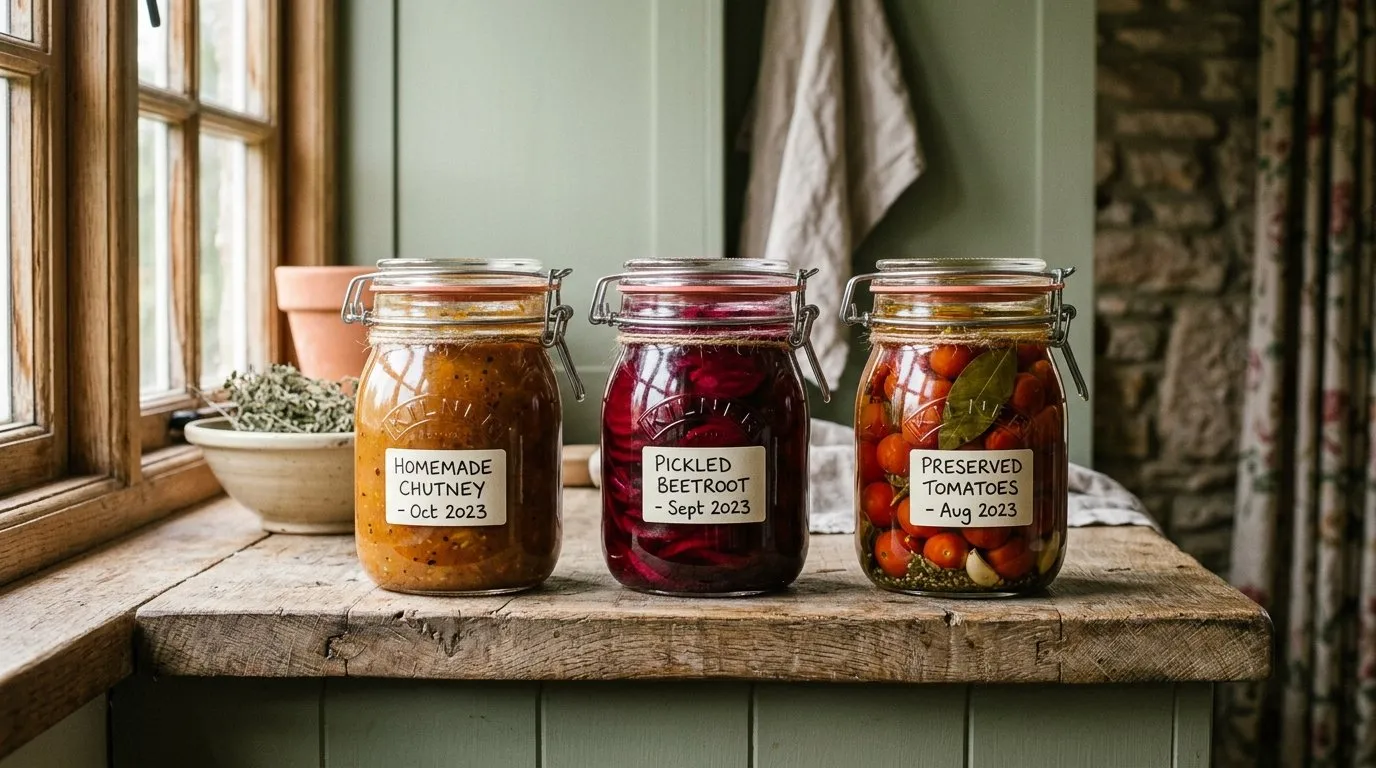 Chutney, pickled beetroot, and preserved tomatoes made from garden glut surplus
What is the best way to preserve a tomato glut?
Tomatoes are the third member of the glut trinity. A greenhouse cordon plant produces 3-5kg of fruit. Outdoor bush varieties yield 2-3kg each. When 8 plants ripen together in August, that is 25-40kg of tomatoes in three weeks.
Make passata. Chop 2kg of ripe tomatoes, simmer with a teaspoon of salt for 30 minutes, then blend and pass through a sieve. Bottle in sterilised Kilner jars while still hot. Passata keeps 12 months sealed and forms the base of sauces, soups, and stews all winter. Process in a water bath at 100C for 35 minutes for extra safety.
Oven-dry for intense flavour. Halve cherry or plum tomatoes, place cut-side-up on a lined tray, sprinkle with salt and dried oregano, then dry at 100C for 3-4 hours. Pack into jars, cover with olive oil, and refrigerate. These keep 3 months in the fridge and add concentrated flavour to pasta and salads.
Freeze whole cherry tomatoes. Spread on a baking tray, freeze for 2 hours, then bag. Drop frozen tomatoes straight into hot sauces and soups. The skins slip off once heated. This is the fastest method when you have no time for cooking.
Which preservation method works best for each glut crop?
Not every method suits every vegetable. The table below shows what works, based on three seasons of testing on heavy clay soil in Staffordshire.
| Crop | Freezing | Chutney/Pickle | Dehydrating | Soup/Sauce | Giving Away |
|---|---|---|---|---|---|
| Courgettes | Good (grated) | Excellent | Good (crisps) | Excellent | Easy |
| Runner beans | Excellent | Good (pickle) | Fair | Poor | Easy |
| Tomatoes | Good (whole) | Excellent | Excellent | Excellent | Easy |
| Beetroot | Good (cooked) | Excellent (pickle) | Poor | Good | Moderate |
| Cucumbers | Poor | Excellent (pickle) | Poor | Poor | Easy |
| Broad beans | Excellent | Poor | Poor | Good | Moderate |
| Apples | Good (sliced) | Excellent | Good (rings) | Excellent | Easy |
| Plums | Good | Excellent | Good | Excellent (jam) | Easy |
| Lettuce | Do not freeze | Do not preserve | Do not dry | Poor | Easy |
Field Report: In August 2024, our allotment produced 42kg of runner beans, 18kg of courgettes, and 31kg of tomatoes in a single month. We froze 15kg of beans, made 12 jars of chutney from mixed vegetables, dried 3kg of tomatoes, cooked 8 litres of passata, and distributed 20kg via our allotment’s produce-share table. Total waste: under 2kg (bruised or overripe items composted). Time invested: roughly 2 hours per week on preserving days.
How do I batch cook to use up surplus vegetables?
Batch cooking converts raw glut into ready meals. A Sunday afternoon session turns 5kg of mixed vegetables into 10-15 freezer portions. The key is choosing recipes that freeze well and use multiple glut crops at once.
Ratatouille absorbs courgettes, tomatoes, and peppers in one dish. Dice 1kg courgettes, 1kg tomatoes, 500g peppers, and 500g onions. Saute with garlic and olive oil for 40 minutes. Cool, portion into 500ml containers, and freeze. Each batch makes 8-10 portions and keeps 6 months frozen.
Soups handle almost any glut crop. Courgette and mint soup uses 1kg courgettes, 1 onion, 750ml stock, and a handful of fresh mint. Simmer for 20 minutes, blend, cool, and freeze in 500ml portions. Tomato and roasted pepper soup follows the same method. Both freeze for 4-6 months.
Pasta sauces provide another route. Slow-cook 2kg tomatoes with onions, garlic, and basil for 90 minutes until thick. Freeze in 400ml portions. Add the grated frozen courgette from your stash at cooking time for extra vegetable content. More recipes for home-grown vegetables are in our dedicated recipe guide.
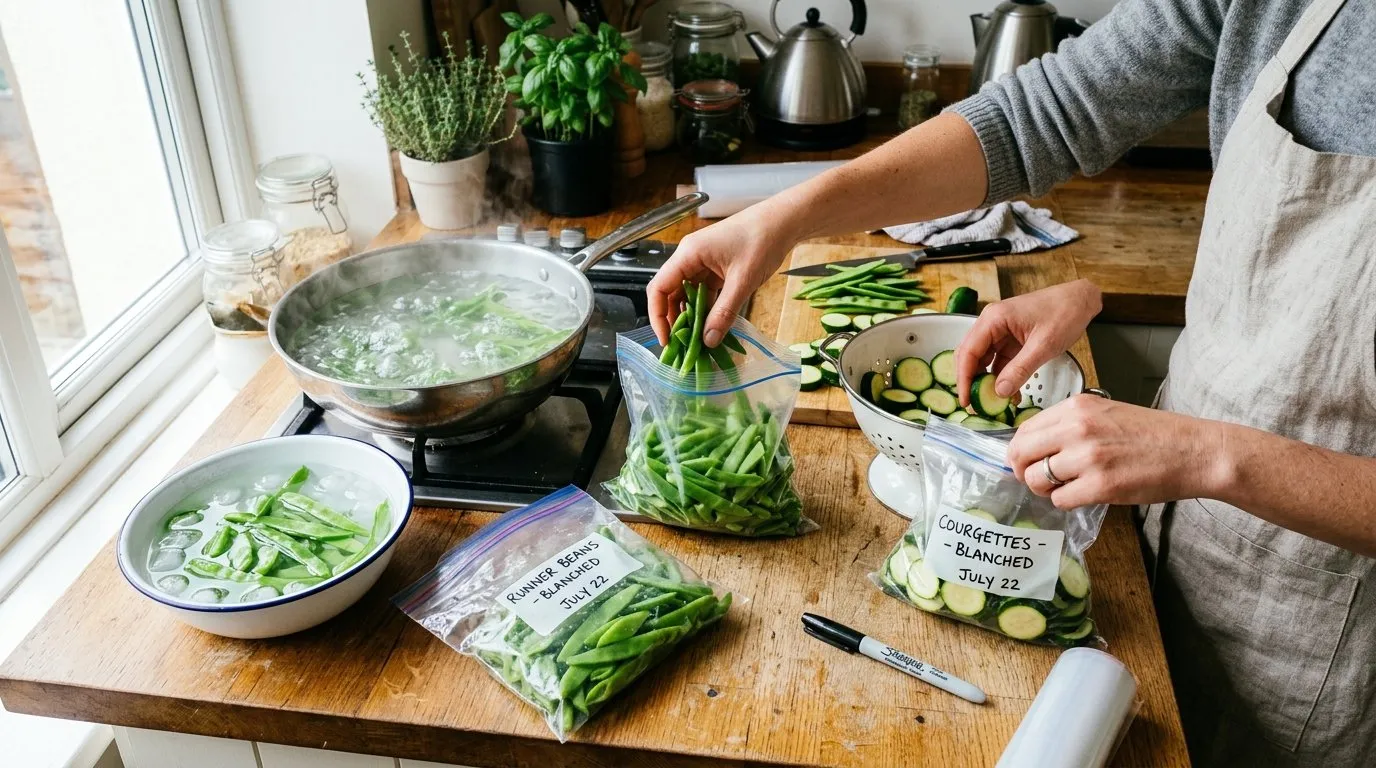 Blanching surplus runner beans and courgettes within 24 hours of picking locks in colour and flavour
Can I dehydrate garden vegetables at home?
Dehydrating removes 80-90% of moisture, shrinking bulk and extending shelf life to 6-12 months. You need either a dedicated dehydrator (from around thirty pounds) or a domestic oven set to its lowest temperature with the door propped open.
Best crops for dehydrating: tomatoes (halved, 55C, 8-12 hours), courgettes (sliced 3mm, 55C, 8-10 hours), chillies (whole or halved, 55C, 6-8 hours), apples (cored rings, 55C, 8-10 hours), and herbs (50C, 2-4 hours). Runner beans and broad beans dehydrate poorly and rehydrate to an unpleasant texture.
Storage matters. Pack dried produce into airtight glass jars or vacuum-sealed bags. Store in a dark cupboard at room temperature. Moisture is the enemy. If you see condensation inside the jar within 24 hours, the produce needs more drying time. One kilogram of fresh tomatoes yields roughly 80-100g dried.
How do I share surplus vegetables with my community?
Giving away surplus is the simplest solution and prevents food waste entirely. In the UK, community sharing has become increasingly organised.
Allotment produce-share tables are the oldest method. Set out a crate of surplus on the communal table. Most allotments have an informal rule: take what you need, leave what you can. No money changes hands.
Village and church produce tables serve a wider community. Many parishes set up a table outside the church or village hall during summer. Label your produce and include a recipe card. People are more likely to take unfamiliar vegetables like kohlrabi or chard if they know what to do with them.
Food banks and community fridges accept fresh produce. Contact your local Trussell Trust food bank to check their intake rules. Most accept vegetables in good condition. The OLIO app connects you directly with neighbours who want free food.
School and care home kitchens sometimes welcome donations. Ring ahead. They need consistent quality and reasonable quantities, but a weekly box of courgettes and tomatoes during peak season is usually gratefully received. Love Food Hate Waste provides further guidance on reducing food waste at home and in your community.
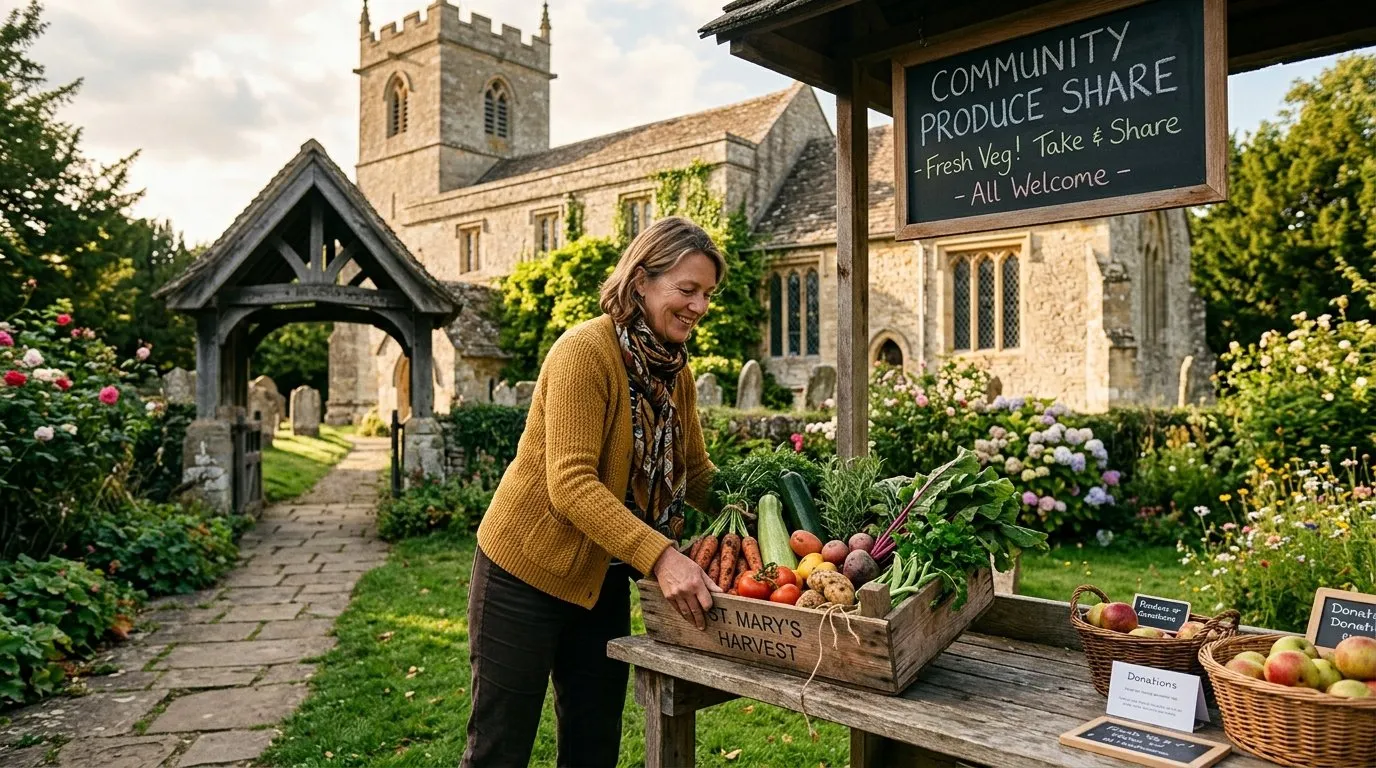 A village produce-share table turns a garden glut into a community resource
How can I prevent a garden glut next year?
Prevention is better than a preserving marathon. A few planning changes reduce peak gluts by 50-60% without cutting total yield. The goal is spreading the harvest, not shrinking it.
Succession sow every 2-3 weeks. Instead of planting 6 courgette plants on the same date, sow 2 in April (under cover), 2 in May, and 2 in June. Each batch peaks at a different time. The same principle applies to runner beans, French beans, and lettuce.
Choose staggered varieties. Grow one early tomato variety (Sungold, ripe from mid-July), one mid-season (Gardener’s Delight, August), and one late (San Marzano, September). This stretches the tomato window from 4 weeks to 10 weeks.
Pick relentlessly. Courgettes picked daily at 15cm keep the plant producing moderately. Courgettes left to reach 30cm signal the plant to slow down and put energy into seed production. Runner beans go stringy and tough after 3 days. Regular picking keeps output steady and manageable. Growing your own vegetables from seed makes succession timing easier to control.
What are the best recipes for using up a garden glut?
When you need to use 5kg of produce before Thursday, recipes that absorb large volumes are your best ally. These are the highest-volume recipes from our testing.
| Recipe | Main Glut Crop | Volume Used | Prep Time | Storage |
|---|---|---|---|---|
| Green tomato chutney | Tomatoes (green) | 1kg per batch | 20 min + 90 min cook | 12 months (jarred) |
| Courgette and ginger chutney | Courgettes | 1kg per batch | 15 min + 45 min cook | 12 months (jarred) |
| Ratatouille | Mixed (courgette, tomato, pepper) | 3kg per batch | 15 min + 40 min cook | 6 months (frozen) |
| Passata | Tomatoes (ripe) | 2kg per batch | 10 min + 35 min cook | 12 months (bottled) |
| Runner bean pickle | Runner beans | 1kg per batch | 20 min + 20 min cook | 12 months (jarred) |
| Courgette soup | Courgettes | 1kg per batch | 10 min + 20 min cook | 6 months (frozen) |
| Plum jam | Plums | 1kg per batch | 10 min + 25 min cook | 12 months (jarred) |
| Beetroot pickle | Beetroot | 1kg per batch | 15 min + 40 min cook | 12 months (jarred) |
Making jam from garden fruit is one of the most rewarding uses for a plum or apple glut. A 1kg batch of plum jam fills 4-5 standard jars and takes under an hour from picking to potting.
The key principle with all glut recipes is working in large batches. Preserve 5kg at a time rather than 500g. The effort of sterilising jars, heating vinegar, and cleaning up is almost identical whether you make one jar or ten. Pickling and fermenting offers another preservation route that adds probiotics and keeps for months without refrigeration.
Field Report: our 2024 glut season
Our Staffordshire allotment sits on heavy Keuper marl clay at roughly 120m elevation. The plot measures 250 square metres. In 2024, we grew 4 courgette plants, 2 double rows of runner beans (6m total), 12 cordon tomatoes (6 under cover, 6 outdoors), 2 rows of beetroot, and 1 row of broad beans.
Total harvest July-September 2024: 91kg of vegetables. Broken down: 42kg runner beans, 18kg courgettes, 31kg tomatoes (including 8kg green tomatoes at end of season).
How we used it: 15kg frozen (runner beans and broad beans), 12 jars of chutney (mixed), 8 litres of passata (bottled), 3kg dried tomatoes, 20kg given away to neighbours and the allotment produce table, 4kg composted (bruised, overripe, or slug-damaged). Waste rate: 4.4%.
Time spent preserving: roughly 2 hours per week for 8 weeks during peak season. Total: 16 hours of preserving for 91kg of produce. The garden to table approach we follow means nothing sits unused for more than 48 hours after picking.
Lesson learned: succession sowing the runner beans in 2025 (three sowings, 3 weeks apart) reduced the peak weekly harvest from 12kg to 6kg, making the glut far more manageable without reducing the total season yield.
Frequently asked questions
What is a garden glut?
A garden glut is when plants produce more than you can eat fresh. It happens most often with courgettes, runner beans, and tomatoes between July and September. A single courgette plant can produce 20-40 fruits per season. Without a plan for the surplus, much of this harvest goes to waste. The RHS estimates UK gardeners throw away a significant proportion of home-grown produce each year.
What can I do with too many courgettes?
Freeze them grated for winter soups and cakes. Slice courgettes to 5mm, blanch for 60 seconds, then open-tray freeze. Grate and freeze in 300g portions for adding to pasta sauces, curries, and chocolate cake. Make courgette chutney with onions, ginger, and malt vinegar. Courgettes also dehydrate well into crisps at 55C for 8-10 hours.
How do I preserve a tomato glut?
Make passata, chutney, or sun-dried tomatoes. For passata, simmer 2kg of chopped tomatoes with salt for 30 minutes, blend, then bottle in sterilised Kilner jars. Passata keeps 12 months sealed. Green tomato chutney uses 1kg tomatoes, 500g sugar, and 500ml vinegar, cooked for 90 minutes. Freeze whole cherry tomatoes on a tray for instant soup and sauce additions.
Can I freeze runner beans from the garden?
Yes, runner beans freeze well after blanching. Top, tail, and slice beans into 3cm pieces. Blanch in boiling water for 2 minutes, then plunge into iced water. Drain, spread on a lined tray, and freeze for 2 hours. Transfer to labelled freezer bags. Frozen runner beans store for 10-12 months at -18C and cook from frozen in 4 minutes.
How do I stop a garden glut happening?
Succession sow every 2-3 weeks instead of planting everything at once. Grow 3 courgette plants in staggered fortnightly sowings rather than 6 at the same time. Choose varieties with different maturity dates. Pick courgettes at 15-20cm before they turn into marrows. Regular picking encourages more moderate, sustained cropping rather than a single overwhelming peak.
Where can I donate surplus garden vegetables?
Food banks accept fresh produce in good condition. Contact your local Trussell Trust or FareShare depot. Many allotment sites have produce-share tables. Village halls, churches, and community centres often host swap events. The OLIO app connects you with neighbours who want free food. Some care homes and school kitchens welcome donations of fresh vegetables.
How long does homemade chutney last?
Properly sealed chutney lasts 12 months stored below 15C. Allow 4-6 weeks of maturation before eating for the best flavour. Use sterilised Kilner jars with new seals. Once opened, refrigerate and use within 4 weeks. Discard any jars with mould, broken seals, or off smells. High-sugar, high-vinegar recipes last longer than low-sugar versions.
Lawrie has been gardening in the West Midlands for over 30 years. He grows his own veg using no-dig methods, keeps a wildlife-friendly garden, and writes practical advice based on real UK growing conditions.