Passion Flower
Passiflora caerulea
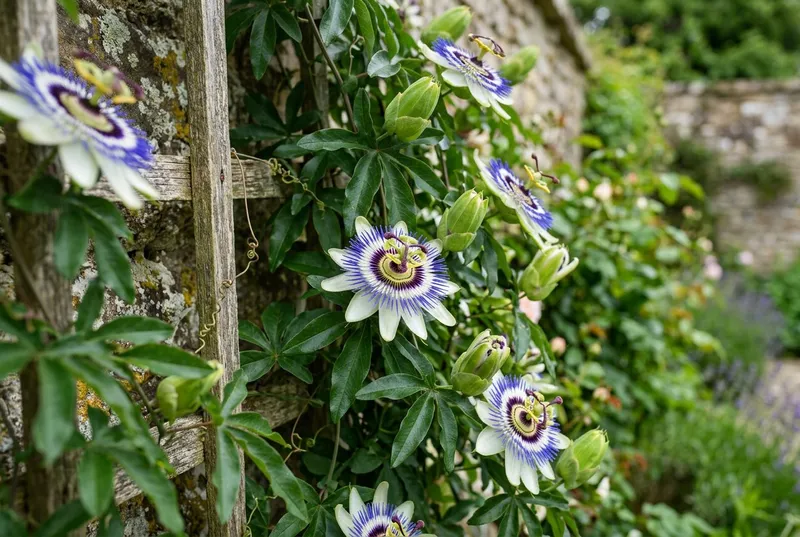
Passiflora caerulea is the hardiest passion flower species and the only one reliable outdoors in most UK gardens. It produces exotic, intricate blue and white flowers up to 10 cm across from July to September, followed by orange, egg-shaped fruits in warm autumns. Fast-growing and vigorous, it covers sunny walls quickly with its twining tendrils and semi-evergreen foliage.
How to grow passion flower
Plant against a warm, south or west-facing wall in well-drained soil. The warmth from the wall protects it through winter. Passion flower thrives in poor to moderately fertile soil; rich soil produces lots of foliage but fewer flowers. Provide horizontal wires or trellis for the tendrils to grip. Water moderately during summer and reduce in winter. In cold regions (below -10°C regularly), grow in a large container and move under cover for winter. Mulch the base thickly with straw or bark in late autumn for winter root protection. The fruits are edible but bland compared to tropical species.
Pruning
Prune in early spring, cutting back side shoots to a few buds from the main framework. Remove any frost-damaged or dead growth. Thin out overcrowded stems to improve air circulation. Hard pruning is tolerated if the plant has become tangled. Avoid autumn pruning, which stimulates tender new growth before winter.
Propagation
- Semi-ripe cuttings
- Layering
- Seed
Common problems
- Frost damage
- Red spider mite
- Whitefly under glass
- Root death in wet winters
Good companions
Related guides
Best Climbing Plants for UK Gardens
Best climbing plants for UK gardens covering walls, fences, pergolas, and small spaces. Planting advice, aspect guidance, and care tips.
Mediterranean Garden Planting in the UK
How to create a Mediterranean garden in the UK with drought-tolerant plants, gravel mulching, and planting for sunny, sheltered spots.
Vertical Gardening Ideas for Small Spaces
UK vertical gardening ideas for walls, fences, and tight plots. Living walls, trellis systems, pocket planters, and the best plants for growing upwards.