Best Scented Plants for UK Gardens
Best scented plants for UK gardens by season. Fragrant shrubs, climbers and perennials tested over 10 years in Midlands clay with month-by-month picks.
Key takeaways
- Plan for 12-month fragrance by choosing at least one scented plant for each season
- Sarcococca, daphne and witch hazel provide winter scent when the garden feels empty
- Lavender Hidcote and Rosa Gertrude Jekyll are the two most reliable summer scented plants
- Place scented plants near paths, doorways and seating areas where you will actually smell them
- Evening-scented plants (nicotiana, night-scented stock) are worth growing near a patio for summer evenings
A garden without scent is only half a garden. Colour catches the eye, but fragrance is what makes you stop, close your eyes and breathe in. The best scented plants trigger memories and create atmosphere in a way that no amount of clever planting design can match.
The good news for UK gardeners is that some of the finest fragrant plants in the world thrive in British conditions. From the honey-sweet Daphne in February to the rich old rose scent of a Gertrude Jekyll in July, it is possible to have fragrance in the garden every single month.
After 10 years of trialling 40+ scented varieties in Staffordshire clay, I have identified the plants that deliver the most reliable, strongest scent in real UK garden conditions — not just on paper.
The best scented plants by season
Winter scent (December to February)
Winter fragrance is the most valuable because you least expect it. A single Sarcococca by the front door transforms the deadest month of the year.
Sarcococca confusa (sweet box): The best winter scented plant for UK gardens. Tiny white flowers from December to February produce an intense honey-vanilla fragrance that carries 3-4 metres. Evergreen, shade tolerant, grows in any soil. Reaches 1-1.5m tall. Plant next to a doorway or path and you will smell it every time you walk past.
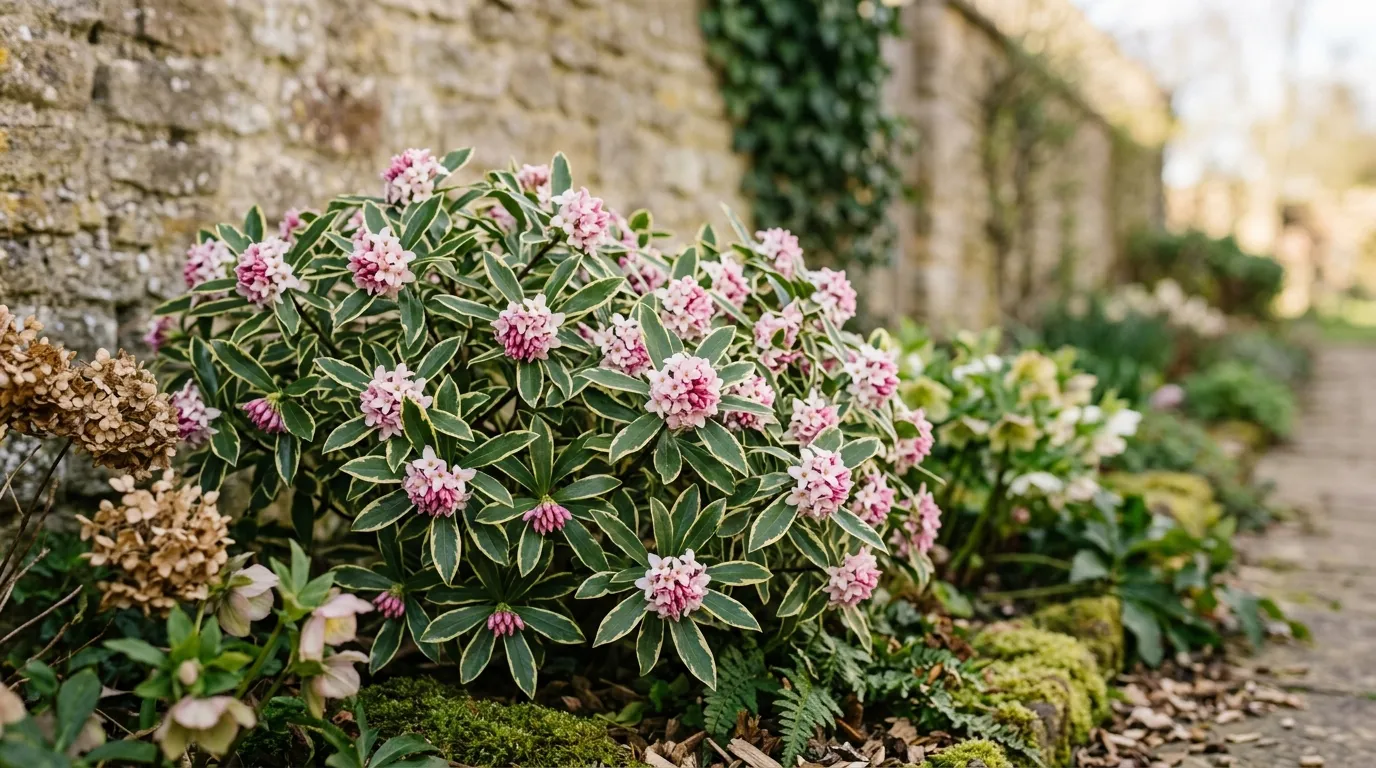
Daphne bholua Jacqueline Postill: Arguably the finest scent of any garden plant. Clusters of pink and white flowers from January to March fill the air with a rich citrus-and-spice fragrance. Semi-evergreen, 2-3m tall. Needs well-drained soil and shelter from cold wind. Worth every effort to get established.
Hamamelis (witch hazel): Spidery yellow or copper flowers on bare branches from January to March. The scent is sweet and subtle — you need to get within 50cm to appreciate it, but in a sheltered corner it accumulates beautifully. Needs acid to neutral soil.
Spring scent (March to May)
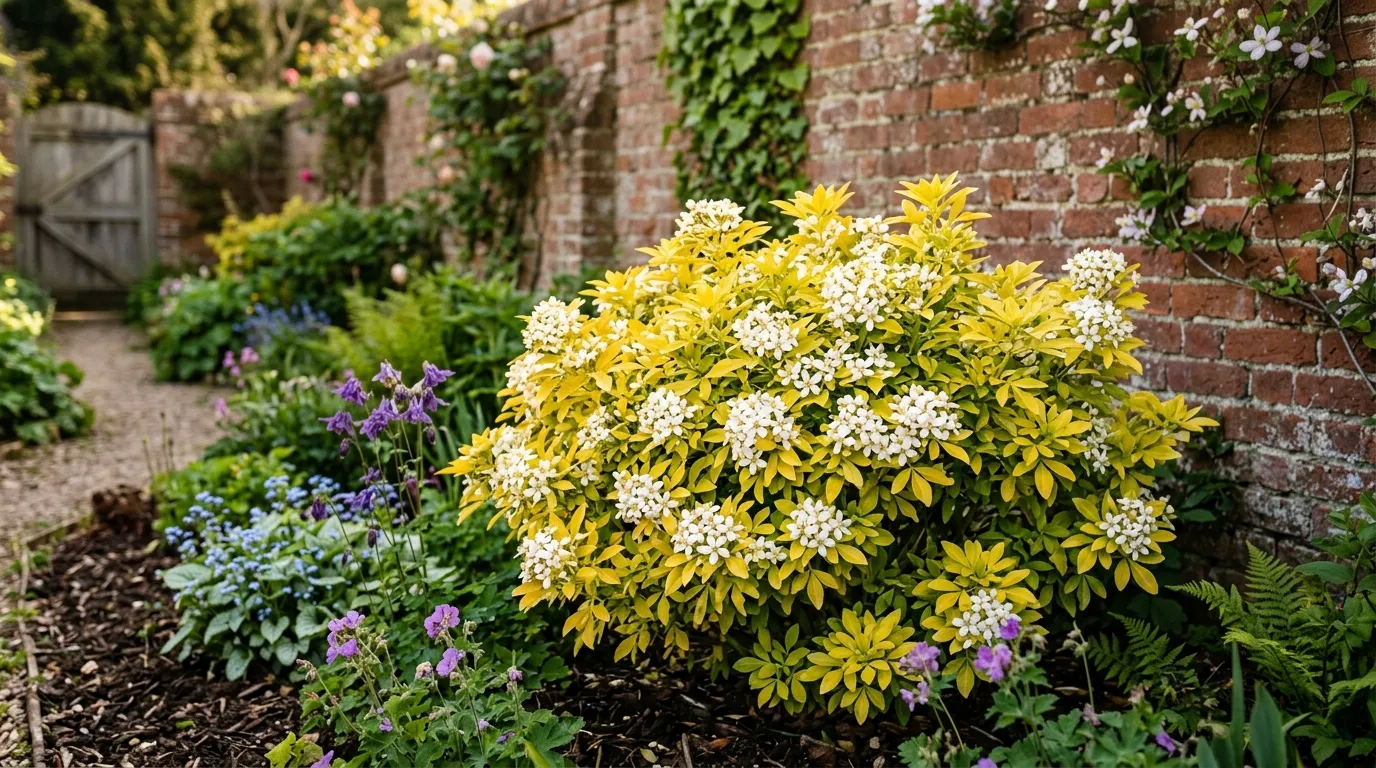
Osmanthus x burkwoodii: Masses of small white flowers in April with a sweet, jasmine-like scent. Evergreen, dense and compact at 2-3m. Works as a hedge or specimen. One of the most underused scented shrubs in UK gardens.
Viburnum carlesii: Rounded clusters of pink-white flowers in April with an intense clove-and-vanilla scent. Deciduous, 1.5-2m tall. The Korean spice viburnum is a classic cottage garden plant that deserves wider planting.
Hyacinths: The strongest-scented spring bulb. Plant in October for April flowers. A single pot of hyacinths on a patio table scents the entire seating area. Blue varieties (Delft Blue, Blue Jacket) tend to have the strongest fragrance.
Summer scent (June to September)
Rosa Gertrude Jekyll: The most fragrant modern shrub rose in my trials. Rich, complex old rose scent that fills a garden on warm evenings. Deep pink flowers from June to September. Strong, healthy growth to 1.2m.
Lavender Hidcote: The classic English lavender. Dense purple flower spikes from July to August with an intense, clean fragrance. Compact at 40-60cm. Needs full sun and well-drained soil. Plant along path edges where brushing against it releases the scent.
Philadelphus (mock orange): Huge clouds of white blossom in June and July with an intense orange-blossom scent that can be smelled from 10 metres away. Deciduous, 2-3m tall. The strongest-scented shrub you can grow in the UK. Philadelphus Belle Etoile is the best variety for smaller gardens.
Jasmine (Jasminum officinale): The classic summer evening scent. White flowers from June to September on vigorous twining stems. Grows on a trellis, fence or wall. The scent intensifies in the evening, making it perfect for a patio or seating area.
Autumn scent (October to November)
Osmanthus heterophyllus: Small white flowers in October with a sweet apricot scent. Evergreen, holly-like leaves, 2-3m tall. Scent carries well in the still, damp air of autumn.
Clematis armandii: If grown on a sheltered south-facing wall, the vanilla-scented white flowers often persist into October. Evergreen, vigorous climber. Needs protection from cold north winds.
| Plant | Scent season | Height | Sun | Soil | Scent strength |
|---|---|---|---|---|---|
| Sarcococca confusa | Dec-Feb | 1-1.5m | Shade/part shade | Any | Strong (4m carry) |
| Daphne bholua | Jan-Mar | 2-3m | Part shade | Well-drained | Very strong (5m+) |
| Osmanthus burkwoodii | Apr | 2-3m | Sun/part shade | Any | Strong (3m) |
| Rosa Gertrude Jekyll | Jun-Sep | 1.2m | Full sun | Rich, moist | Very strong |
| Lavender Hidcote | Jul-Aug | 40-60cm | Full sun | Well-drained | Strong (touch-released) |
| Philadelphus Belle Etoile | Jun-Jul | 2-3m | Sun/part shade | Any | Very strong (10m) |
| Jasmine | Jun-Sep | 3-5m (climber) | Full sun | Any | Strong (evening peak) |
| Osmanthus heterophyllus | Oct-Nov | 2-3m | Sun/part shade | Any | Moderate (2m) |
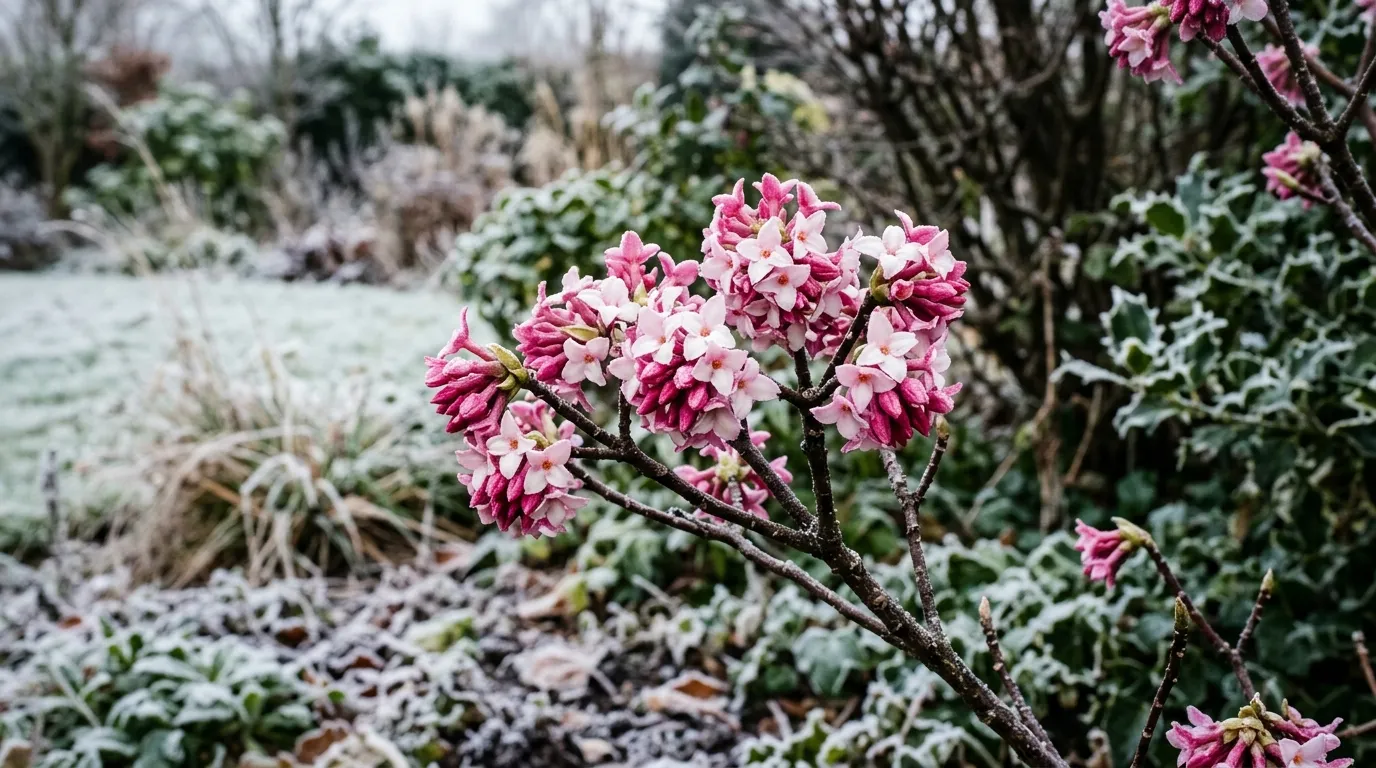
Daphne bholua Jacqueline Postill flowering in February. The citrus-and-spice fragrance carries 5 metres on still winter air. Position near a frequently used path.
Designing a scented garden
Placement principles
Scent in the garden is useless if it drifts away unnoticed. The number one rule is to plant fragrant varieties where people actually spend time.
Doorways and entrances: Sarcococca, Daphne and Osmanthus work brilliantly flanking a front door. You smell them every time you enter or leave the house.
Path edges: Lavender, thyme and catmint along a path release scent when brushed. Low-growing, touch-activated fragrance is more reliable than airborne scent because it does not depend on wind direction.
Seating areas and patios: Jasmine, honeysuckle and evening-scented plants near a patio or bench. The still air of a sheltered corner holds scent longer than an open border.
Below windows: Climbing roses, jasmine or wisteria trained below windows that open in summer. The scent drifts indoors on warm evenings.
Enclosure and shelter
Scent needs still air to accumulate. Open, windy gardens dissipate fragrance before you notice it. Use hedges, walls and fences to create sheltered pockets where scent pools.
A south-facing corner between two walls is the ideal scented garden location. The walls trap warm air, reflect heat (increasing essential oil production) and block wind that would carry the scent away.
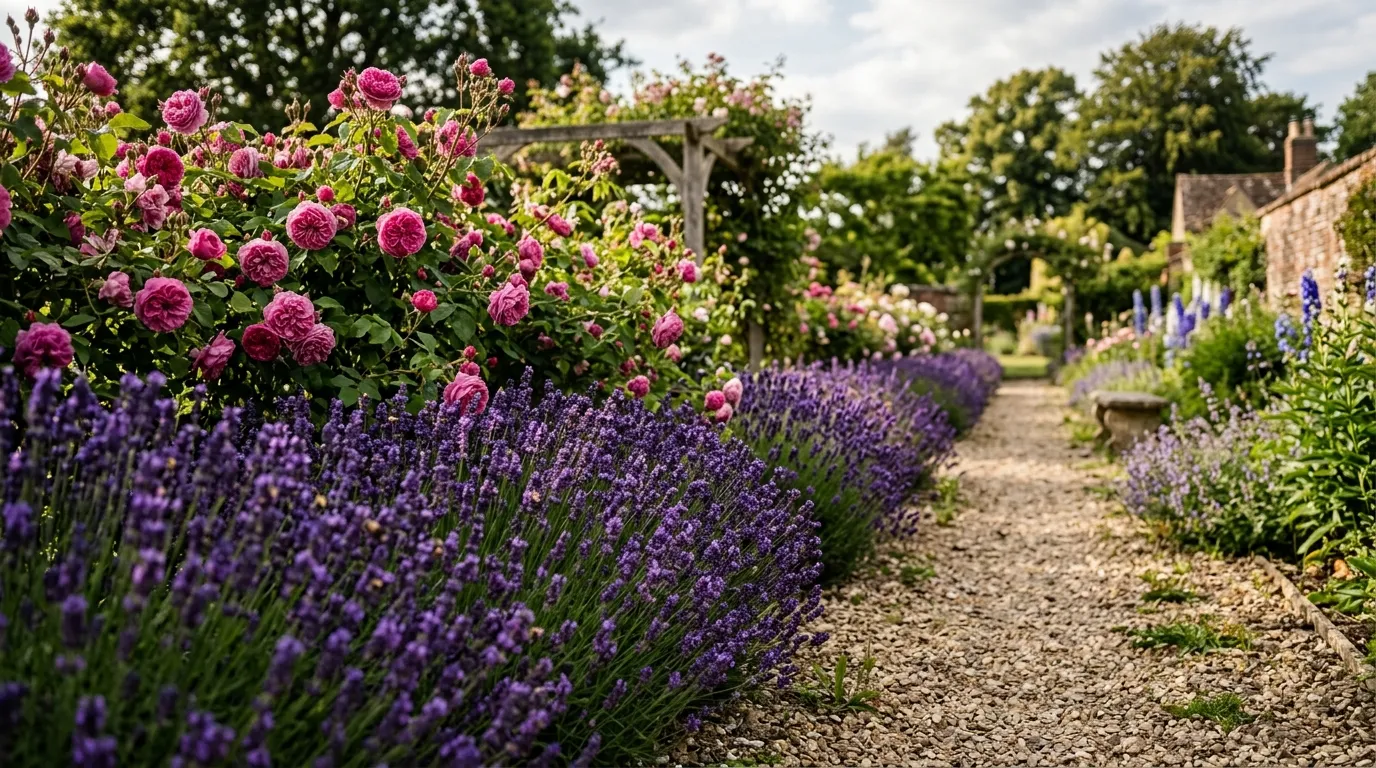
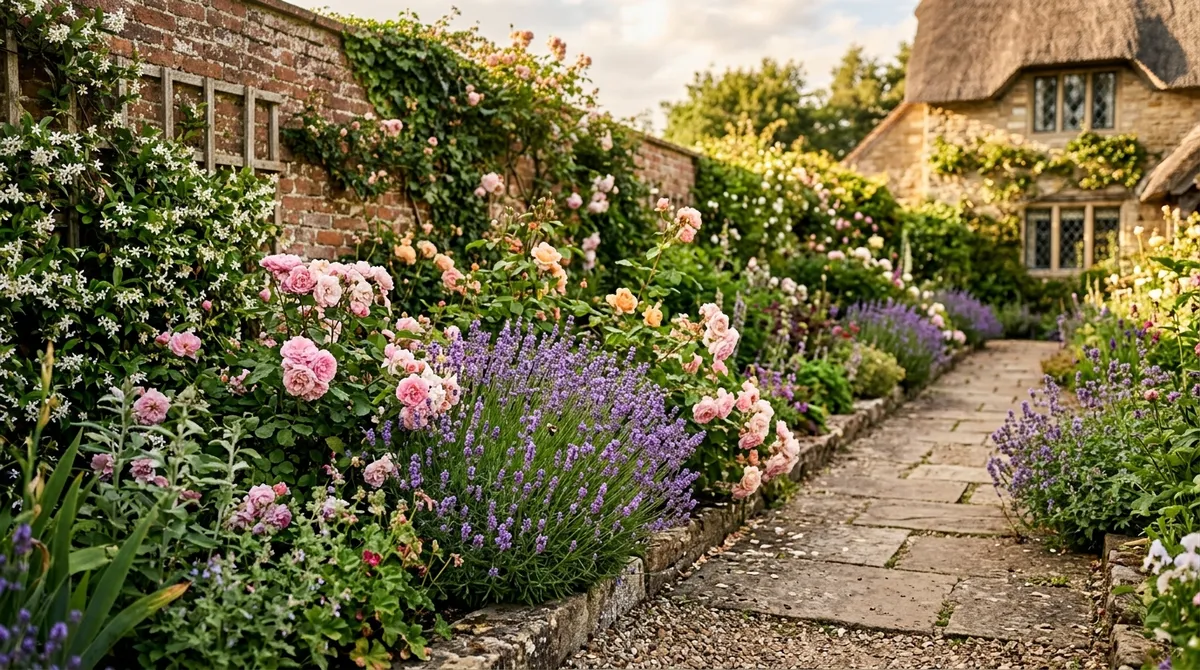
Lavender Hidcote and Rosa Gertrude Jekyll planted along a garden path. Brushing past the lavender releases its scent; the rose fragrance carries on warm summer air.
Evening and night-scented plants
Summer evenings on the patio are when garden fragrance matters most. Several plants increase their scent production after dark to attract night-flying pollinators. These deserve a spot near outdoor seating.
Nicotiana sylvestris (tobacco plant): Tall white trumpet flowers that open at dusk and release an intense sweet perfume. Annual, 1.5m tall. Sow under cover in March, plant out in May.
Night-scented stock (Matthiola longipetala): Unremarkable lilac flowers that close during the day and open at dusk with a powerful clove scent. Annual, 30cm tall. Sow direct in April near seating areas.
Honeysuckle (Lonicera periclymenum): The native woodbine honeysuckle increases its scent output dramatically in the evening. Train on a trellis or fence near a patio for maximum effect.
Evening primrose (Oenothera biennis): Yellow flowers that open in the evening with a light, lemony fragrance. Biennial, 1m tall. Self-seeds freely once established.
Scented plants for difficult spots
Shade
Sarcococca, lily of the valley (Convallaria majalis) and Daphne laureola all produce good scent in partial shade. Woodland conditions with dappled light suit these plants better than full sun.
Clay soil
Most scented shrubs tolerate clay soil if drainage is adequate. Philadelphus, Viburnum, roses and Osmanthus all grow well in clay. Lavender and Daphne need soil improvement — add grit to the planting hole to prevent winter waterlogging.
Containers
Lavender, jasmine, Daphne odora and scented-leaf pelargoniums grow well in 40cm containers. Position pots where you sit. The confined space of a balcony or courtyard actually helps by trapping scent in the enclosed area.
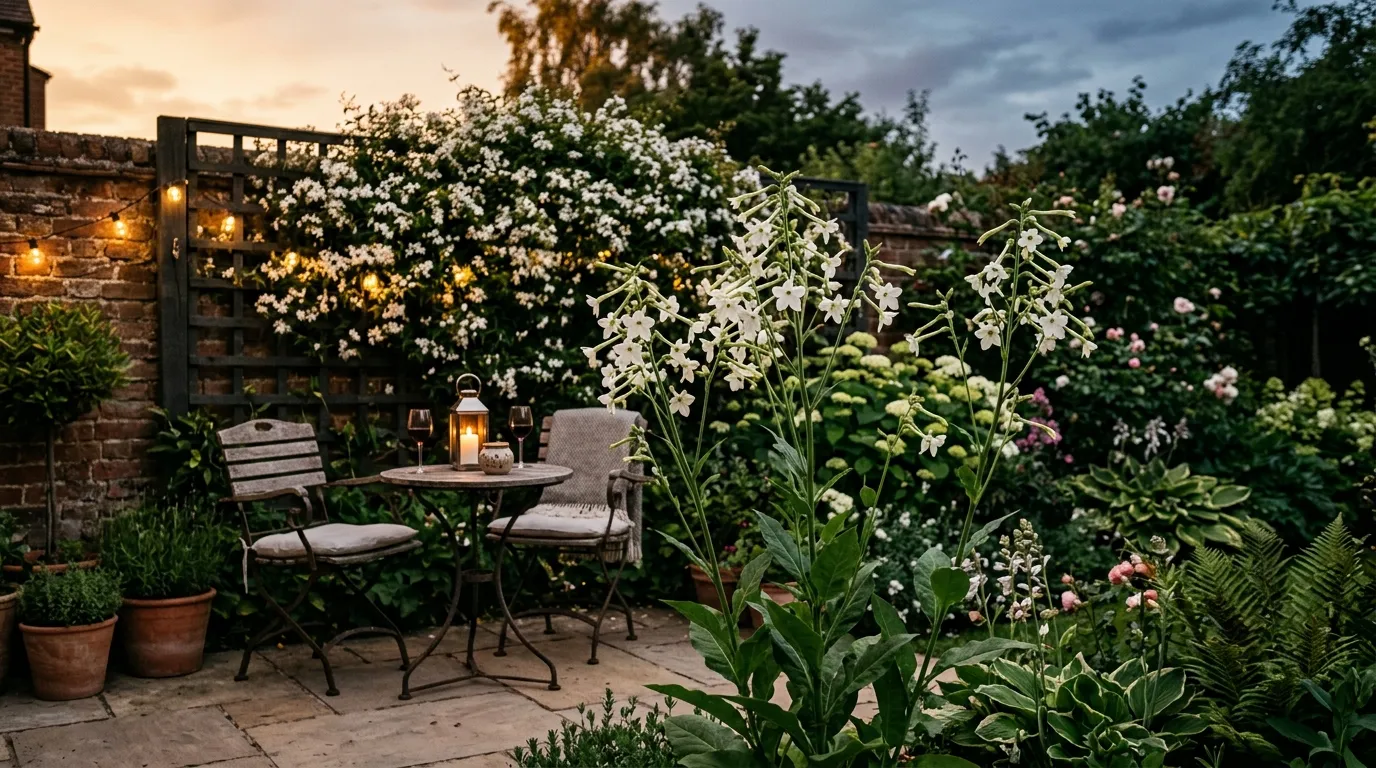
Nicotiana sylvestris and jasmine near a patio seating area. Both intensify their scent after dark, making summer evenings outdoors genuinely atmospheric.
Related reading
Lawrie has been gardening in the West Midlands for over 30 years. He grows his own veg using no-dig methods, keeps a wildlife-friendly garden, and writes practical advice based on real UK growing conditions.